How can TypeScript return types help with AI-assisted coding tools?
Answered by 2 creators across 2 videos
TypeScript return types steer AI-assisted coding by giving the AI a clear, contract-based view of what a function will yield, so tools can generate and validate code against explicit shapes rather than guessing. As Matt Pocock explains, strong typing and a test-driven, red–green–refactor loop provide stable feedback for AI writers, letting you verify requirements and keep AI output trustworthy through disciplined tests and incremental steps. This makes return types especially valuable when you’re using AI to implement or modify code, because the AI can rely on the declared signatures to avoid drifting behavior and to align with the project’s intended APIs. From Web Dev Simplified's guidance, you should specify returns for recursive or lib-facing code to prevent subtle bugs that inference alone misses (e.g., Fibonacci sometimes returns any because of self-referential inference). Explicit return types also protect against null or undefined surprises by enforcing a consistent signature across refactors, which helps maintainers and AI alike when modeling complex outputs or library boundaries. In practice, using hard-coded returns like tuples or discriminated unions narrows outputs and clarifies intent, making AI-generated changes safer and easier to audit. Finally, explicit return types aid AI tooling when modeling multiple possible shapes (e.g., unioned result types) by giving the AI a precise target to narrow toward, rather than guessing a structure from implementation. Key takeaways aligned with the videos: - Use red–green–refactor discipline to keep AI-assisted changes focused and test-driven, as Matt Pocock emphasizes, relying on TypeScript and unit tests to validate what the AI produces. - Always specify return types for recursive or library code to prevent inference gaps and drift, a point stressed by Web Dev Simplified with examples like Fibonacci and library APIs. - For complex outputs, export and enforce explicit return types (e.g., User | null) to maintain strict signatures as code evolves, ensuring AI-generated edits stay within the intended contract. - Consider hard-coded returns (tuples or discriminated unions) when modeling multiple outputs to narrow AI-generated possibilities and improve safety and readability. - Both creators agree that explicit returns help AI understand code intent, making the collaboration between human intent and AI capability more reliable during development.
- As Matt Pocock explains, strong typing and a red–green cycle provide stable feedback for AI writing, so you can guide the AI with precise return contracts and keep the generated code trustworthy.
- As Web Dev Simplified notes, recursion and library code benefit from explicit returns to avoid inference gaps (e.g., Fibonacci could infer any without a concrete return type) and to prevent signature drift during refactors.
- As Matt Pocock emphasizes, explicit return types in the AI-assisted workflow help enforce a one-test-at-a-time, verifiable contract, reducing large, unfocused AI edits and keeping the design aligned with tests.
- As Web Dev Simplified argues, modeling complex outputs with explicit return types (unions, option types) sharpens AI understanding and narrows possible results, making generated code safer and easier to audit.
Source Videos
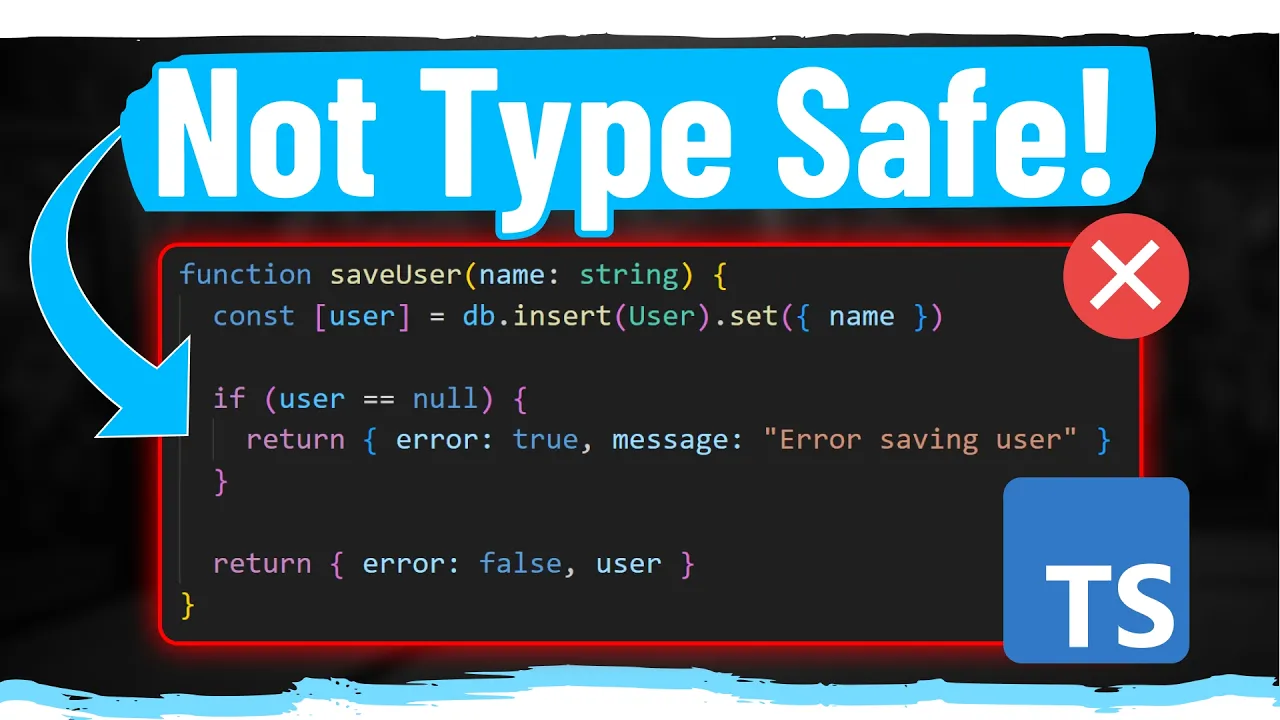
Stop Writing TypeScript Code Like This
""anytime a function calls itself, TypeScript doesn't know what the inferred return type is because obviously it doesn't know what the return type of Fibonacci is."" 00:02:15

Red Green Refactor is OP With Claude Code
""Red essentially means write a failing test and the CI goes red. In other words, any automated tests that you've got on the repo will be at that point red."" 00:02:30