What guardrails should a senior developer put in place when using AI for code generation?
Answered by 2 creators across 2 videos
Senior developers should treat AI-generated code as an accelerant—not a substitute for critical review and design discipline. As Traversy Media emphasizes, AI can introduce security gaps, sloppy patterns, and bloated PRs, so the proper workflow is to apply AI feedback before a PR goes up and to enforce layered reviews that never skip human oversight. The takeaway is to couple AI output with strong checks: enforce security testing (Veracode-like findings, OWASP Top 10 coverage), require targeted code reviews for correctness and maintainability, and keep pull requests reasonably bounded rather than letting AI-generated changes balloon. Nunomaduro reinforces that you should pair AI-assisted results with explicit design decisions, tests, and guardrails—don’t rely on AI to replace testing or architectural thinking; use AI for scaffolding but require end-to-end tests, clear end-user flows, and explicit code quality criteria. In practice, implement a guardrail stack that includes: pre-PR AI feedback, a security and quality checklist tied to your standards, static and dynamic analysis, architecture/design reviews, and mandatory tests (unit, integration, UI where applicable). Finally, codify accountability and keep your skills sharp beyond coding (testing, deployment, security, UX) so you can steer AI output responsibly, as both creators stress the need for human accountability and continuous learning.
- Traversy Media points out that AI-generated code can introduce real security vulnerabilities and bloated PRs, so guardrails must catch these issues early and prevent sloppy downstream review.
- Traversy Media notes that AI-generated PRs tend to be around 18% larger on average, underscoring the need for scoped, well-audited changes rather than broad, AI-driven rewrites.
- Traversy Media emphasizes that humans must be in the loop for accountability and that skipping review just defers work, so guardrails should ensure human review happens before merging.
- Nunomaduro highlights that AI tools like Codex/CodeEx can speed things up but require explicit design choices and tests; guardrails should enforce end-to-end testing and clear architectural decisions.
- Nunomaduro stresses that developers must diversify skills (architecture, security, testing, deployment) and maintain fundamentals, ensuring guardrails support resilience rather than dependency on AI.
Source Videos
🔴 Trying Theo's AI T3 Code and Codex & Reacting to: I Was a 10x Engineer.. Now I’m Useless!
"Confession, I sheep code and I never read." [00:15:42]
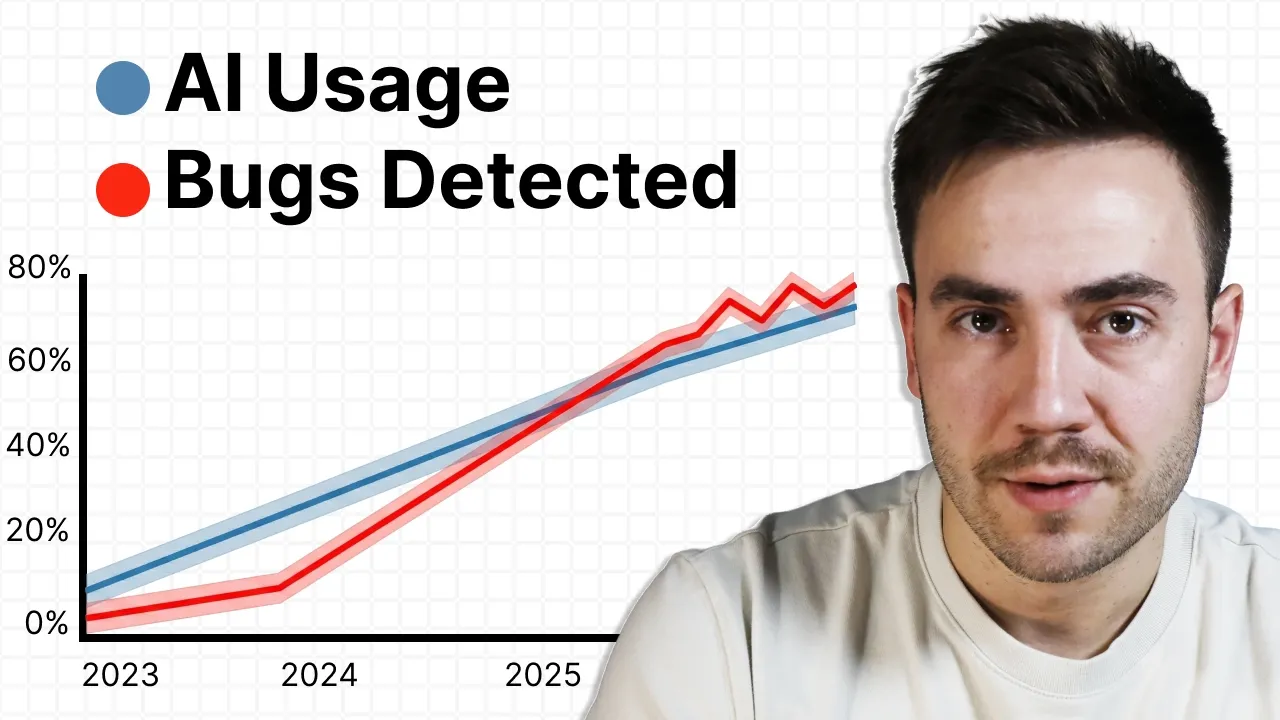
Senior Developers are Vibe Coding Now (With SCARY results)
"AI generated code is causing some serious problems. Security vulnerabilities that are introducing real threats into applications, sloppy code, and bloated pull requests." [00:00:15]