This ONE Phrase Makes Clients BEG to Pay You (Exposed by 42 Studies)

Chapters14
Introduces a four-word freedom-close phrase backed by research that increases client agreement, outlining the four-card framework and how to apply it to guide clients toward a voluntary yes.
Adam Erhart reveals a four-word, research-backed framework (the freedom close) that makes clients say yes by removing pressure and giving them a genuine out.
Summary
Adam Erhart walks you through a simple, science-backed close designed to replace pushy closing with genuine permission. He cites 42 studies totaling over 22,000 participants showing that a freedom-acknowledging phrase can nearly double compliance. The core idea, called the freedom close or BAF (but you are free), reframes requests so clients feel in control and decide to move forward, not because they’re coerced but because they want to. Erhart shares four concrete moves—value confirmation, surface obstacles, freedom language, and a deliberate pause—to separate value from commitment, surface real objections, and seal the deal with quiet confidence. He warns against fake freedom and rushing the pause, emphasizing authentic abundance thinking over manipulation. Real-world examples include a $35,000 deal closed without a deck, and how the approach works across contexts like street requests, emails, and face-to-face conversations. He also teases a companion technique called the gatekeeper method to flip the conversation from the very first minute. If you want a no-pressure path to high-ticket closes, this method is worth trying in your next client conversation.
Key Takeaways
- 42 psychology studies and 22,000 participants underpin the core four-word phrase that doubles compliance when framed as a freedom acknowledgement.
- Value confirmation separates the decision on value from the commitment, producing a yes on value before discussing price or next steps.
- Surface obstacles by asking, Is there anything that would stop you from moving forward? to reveal real objections early.
- Freedom close requires three elements: acknowledgement of a possible no, genuine permission to take more time, and zero-pressure language.
- The pause after delivering the freedom close is non-negotiable and should last 5–7 seconds to let the client decide.
- Authenticity is essential; the technique only works when you truly mean it and are willing to walk away if it’s not a good fit.
- The freedom close is most effective when stacked with other techniques, and it’s not a trick—good offers plus freedom equal yes, bad offers plus freedom still may equal no.
Who Is This For?
Essential viewing for coaches, consultants, and sales professionals who close high-ticket deals and want a non-pushy framework that increases consent and buyer confidence. Great for those skeptical of hard-sell tactics or who crave a science-backed closing approach.
Notable Quotes
"There's a four-word phrase backed by 42 psychology studies that gets clients to say yes without you needing to push."
—Introduction establishing the core claim and credibility.
"But you are free to say no."
—Core freedom-close line that reframes permission.
"No pressure, no pushiness, no awkward closes."
—Describes the desired closing experience.
"The pause is where the decision happens."
—Emphasizes the importance of silence after offering freedom.
"I genuinely think this could help you break through the ceiling, but there's no pressure at all."
—Illustrates real-world application of the method with a client example.
Questions This Video Answers
- How does the freedom close increase sales without pressure?
- What is the BAF technique and how is it implemented in first calls?
- Why is pausing after delivering the close so powerful in negotiations?
- Can the freedom close work for high-ticket clients at Google or Meta-level deals?
- How do you surface and address objections before making a close?
Adam ErhartFreedom CloseBAF (but you are free)Sales PsychologyValue ConfirmationObjection HandlingPause TechniqueGatekeeper Method
Full Transcript
Can I tell you a secret? There's a four-word phrase backed by 42 psychology studies that gets clients to say yes without you needing to push. The first time I used it felt like a cheat code. Instead of let me think about it, I got let's do this. Just like that. Now, you might have noticed these four cards sitting here. Each one represents a move inside what I call the freedom close. And by the end of the video, you'll know exactly how to use them to get clients to say yes. No pressure, no pushiness, no awkward closes.
But first, here's what most people completely misunderstand about trying to close a sale with a potential client. Most people try to convince people to say yes by pushing harder, by adding urgency, by handling objections like an old school used car salesman. But when you use the phrase that I'm going to show you here in just a minute, something strange happens. Clients start convincing themselves to buy. You stop chasing. They start leaning in. And it's not just me. I've used this same approach to help business owners close deals worth hundreds of thousands of dollars, including teams at Google, Amazon, and Meta.
So, in this video, I'll show you what the forward phrase actually is, why it works so well. There's research here you're definitely going to want to see, how to use it in your very next conversation, and the one mistake that ruins it, even if you say the words perfectly. And when you hear what the researchers found, you're going to understand why this phrase works even when everything else fails. But first, let me tell you a quick story that changed how I closed sales forever. Back when I was first getting started, I used to do everything right, like by the book, exactly how I'd been taught.
I'd build rapport. I'd ask great questions. I'd show them exactly how I could help. Then I'd hit the close and I could see it. The prospect's energy changed. Their eyes started darting side to side or avoiding looking at me. Their guard went up and I'd start to hear all of the usual excuses like, "Let me think about it. Uh, I need to talk to my partner. Can you send something over?" Same objections every single time. And the worst part was that I knew they wanted my help, but I could still feel them pulling away and I had no idea how to stop it.
That was until I flipped my approach completely. I stopped pushing at the very end and started releasing pressure instead. And that's when everything changed. So, let's talk about these four cards I have in front of me now. Each one is a move inside what I call the freedom close method. You see, here's something strange about human psychology. When people feel trapped, all they think about is the exit. But if you give them an obvious way out, make the door wide open for example, and suddenly they stop looking for it. The freedom close works in the exact same way, you're not trapping them into a yes.
You're opening the door so wide that walking through it becomes their choice, not yours. But before I walk you through the four moves, let me show you why this works. Because the science behind it is kind of crazy. So back in 2013, a researcher named Christopher Carpenter did something no one had done before. He didn't run just one study on this phrase. He analyzed 42 different studies with over 22,000 participants across multiple countries to see if this actually worked and the results were shocking. What he found was that by adding a simple freedom acknowledging phrase to any request nearly doubled compliance rates.
That's a 100% increase in people saying yes just from four words. But it gets better because this works across every context they tested. street requests, email asks, sales conversations, donation requests, surveys, face-to-face interactions, even written communication where you can't use tone of voice or body language. This is why someone asking for directions gets more help when they add, but no worries if you're busy. It's why a waiter saying, "No pressure, but we have a great dessert menu," actually sells more desserts than a hard push. And this is why someone is far more likely to make a donation to a fundraiser when they feel like there's no pressure behind it rather than when they feel coerced or manipulated or pushed into a decision that they don't necessarily want to make.
All of this works not because the request changed, but because the frame changed. Same request, completely different response. In other words, this phrase doesn't just work on easy decisions, it works on hard ones, too. Now, the official name for this technique is the but you are free technique or BAF for short. I call it the freedom close. Now, here's where most people completely miss the mark. They think that this is just a clever line that they can memorize. They throw, "But you are free to say no." at the end of a pushy pitch. Then they wonder why it doesn't work.
Now, here's where most people completely miss the mark. They think that this is just a clever line to memorize. And then they throw, "But you are free to say no," at the end of a pushy pitch, and then they wonder why it doesn't work. But that's like putting a cherry on top of a burnt cake and then wondering why nobody wants to eat it. The freedom close only works when you actually mean it. When you genuinely give someone permission to say no and you're okay with that outcome, well, when you do that, something shifts in how you deliver it.
Your voice changes, your body language relaxes, they can feel the difference, and that's when it works. And this is just one technique, but when you stack it with others, things get crazy. But I'll show you more what I mean at the end. For now, though, let me show you how to actually use this. Starting with move number one, the value confirmation. Let's flip over the first card, the Ace of Spades, which here represents value because that's your first move. Most people rush straight to the close. Big mistake. They say something like, "So, ready to get started?" Instead, try saying this.
Before we get into next steps, I want to make sure this actually makes sense for you. Based on everything you've shared, does this feel like it would solve the problem? When you say that, here's what's happening in their brains. You just separated the value question from the commitment question. Most people bundle these together, which creates resistance. The prospect hears ready to get started, and their brain immediately jumps to money and contracts and obligations. But by splitting these apart, you get a yes on value first, and that yes creates momentum for everything that follows. You'll know this is working when they nod before you finish the sentence.
They're not bracing for a pitch. They're confirming their own decision. Try this on your next call and watch how they lean forward instead of pushing back. Second card, the king of hearts, which represents the obstacle. This is where you surface what's actually holding them back. Now that they've confirmed the value, here's where it gets powerful. You ask one simple question. Is there anything that would stop you from moving forward? That's it. And here's the counterintuitive part. When people voice their concerns out loud, those concerns often feel smaller. It's kind of like turning on a light in a dark room.
Well, those monsters that were previously hiding in the corner seem to disappear. An objection that felt insurmountable only a few seconds ago now becomes a simple question when they actually say it. You'll know this is working when they actually tell you their real objections. Most people hide their concerns because they don't want confrontation. So, they'll nod along. They'll say, "Everything sounds great." And then they'll ghost you later. But when you invite [clears throat] these obstacles, they feel safe sharing them. I had a client a little while back who finally admitted that he was worried about the time commitment.
He'd been hiding that objection for weeks, literal weeks, where everything seemed perfect and then he'd just randomly disappear. But once he said it out loud, we addressed it in like 2 minutes and were able to quickly move forward. Okay, third card, the Queen of Diamonds, which represents freedom. This is the move that flips the conversation and where most people mess it up. Once you've addressed their concerns, most people go straight for the close, saying something like, "So, let's get you signed up." Well, don't do that. Say this instead. Look, I think this could really work for you, but there's no pressure.
You're completely free to say no, take more time, or tell me this just isn't the right fit. I'd rather you make the right decision than feel pushed into something. When you genuinely release pressure, you eliminate the thing that they were actually resisting. They weren't resisting your offer. They were resisting being controlled. Well, remove the control and the resistance disappears. You'll know this is working when they respond pretty much immediately. Nine times out of 10, they'll say something like, "No, I'm ready." or actually let's do it. The freedom you just gave them becomes permission to move forward.
Fourth card, Jack of Clubs, the pause. This is the move most people skip, but it's the one that seals everything. After you deliver the freedom close, you do nothing. Nothing. Stop talking. Just let the silence sit for 5 to 7 seconds. Don't fill it. Don't add more words. Don't backpedal. Don't say, "So, what are you thinking?" Just wait. Now, I promise you, the moment after you say you're free to say no, your instincts are going to be to keep talking. Every fiber of your being is going to want to fill that silence, but you got to fight that urge.
The pause is where the decision happens. You fill it, that magic disappears. Now, if they still seem uncertain, pull back even more, saying something like, "Honestly, if you're not 100% sure, I'd rather you take the time you need. I only want clients who are genuinely excited to move forward." Remember earlier when we talked about the open door? Well, we want to make sure that they don't feel trapped. We want to show them exactly where that exit is. Well, the pause is you stepping back from it. You not blocking the exit. You're not even standing near it.
And that's exactly why they decide to stay. You'll know this is working when they're the ones to break the silence first. And they pretty much always break it with a yes. That confident pause on your part communicates something that words just can't. It shows that you're not desperate. You're not anxious for their answer. You genuinely meant what you said about them being free to choose. And that security, well, it's kind of magnetic. The opposite of that energy is neediness, desperation, basically begging. And neediness is a sales killer. Let me show you exactly how this played out.
Just a couple weeks ago, a business owner reached out, runs a consulting firm about 5 million in annual revenue. But he was stuck at a plateau. He'd been at that number for around 2 years. He'd tried hiring, tried new offers, and everything that he could think of, but nothing seemed to move the needle. We had a great conversation. I understood his problem. I showed him how I could help. mapped out exactly what we'd do together. But when we got to the end, I could feel that familiar tension building. His energy shifted. He started talking faster.
He was about to give me the let me think about it. So instead of pushing, I said, "Look, I genuinely think this could help you break through the ceiling, but there's no pressure at all. You're completely free to say no or take more time if you need it. I'd rather you make the right decision than feel rushed." Then I stopped talking. 5 seconds of silence, as usual, felt like an hour, but I could see him processing, thinking, making a decision. Then he said, "No, you know what? I've been thinking about this for months. I keep putting it off and waiting for the right time.
So, let's just do it. $35,000 deal closed in that moment. No pitch deck, no pressure, no handling objections, no let me send you a proposal." The freedom I gave him became the permission that he needed to give himself. So, here's exactly how you implement the freedom close method starting today. Step one, separate value from commitment. Before you mention next steps, you've got to get them to confirm the value first by asking, "Does this feel like it would solve the problem you described?" Write this question down. Practice it in front of the mirror until it feels natural.
The goal here is to get a yes on value before you ever bring up commitment. After all, if they don't feel like this is going to help them, there's pretty much no point saying anything else. Step number two, invite obstacles. Now, I know this feels backwards, but it's pointless to try to pretend that objections and concerns just don't exist. So, you're much better off facing them head-on. So, after they confirm the value, ask what would stop them by saying something like, "Is there anything that would prevent you from moving forward?" This surfaces hidden objections so you can address them.
Please do not skip this step. Hidden objections don't disappear, they just show up later as ghosting. Step number three, craft your freedom close. Write out your version of the freedom close, and it should include three elements. Number one, acknowledgement that they might say no. Number two, genuine permission to take more time. And number three, zero pressure language. Here's a template you're free to use exactly as is or adapt. I think this could really work for you, but you're completely free to say no or take more time. I'd rather you make the right decision than feel pressured.
Step number four, practice the pause. After your freedom close, sit in silence for a full 7 seconds. Time it with a clock if you have to. It's going to feel uncomfortable, pretty much unbearable the first few times you do it. That discomfort, though, is the signal that you're doing it right. The pause is where they make their decision. So, you don't want to steal that moment from them. Step number five, mean it. This is the most important step of all. You cannot fake this. If you deliver the freedom close, but you're secretly desperate for the yes, they're going to feel it.
Your voice is going to tighten. Your energy will shift and the whole thing falls apart. You have to genuinely be okay with them saying no. You have to actually believe that a wrong fit client is worse than no client at all, which believe me, they are. That energy is what makes this work. Now, before you run out there and try this, three warnings. Get these wrong and the freedom close method will backfire. Warning number one, you can't fake freedom. Now, I know I just said this, but it's worth repeating here. If you say the words, but your energy is desperate, it's not going to work.
People can feel when you're genuinely okay with a no versus when you're using a technique to try to manipulate them. The freedom has to be real. If you're not there yet, if you need every deal in order to survive, work on your pipeline first. This method requires abundance thinking, not scarcity. Warning number two, the pause is non-negotiable. I've watched people deliver a perfect freedom close and then immediately ruin it by filling the silence with you're free to say no, so what do you think? I mean, no pressure, but just stop. The pause is where the magic happens.
Every word you add after you're free weakens the effect. Don't skip it. Warning number three, this isn't a trick. The freedom close method isn't about manipulating people into a yes. It's about transferring the decision back to them in a way that removes resistance. If your offer isn't good for them, this won't save it. Good offers plus freedom equals yes. Bad offers plus freedom still equals no, as it should. If you want to pressure people into decisions that they're later going to regret, this isn't for you. I only work with clients who are excited to work with me, and you should want the same.
The freedom close method is powerful, but remember what I said earlier. When you stack techniques together, things get crazy. Here's the thing. The freedom close handles the end of the conversation. But what about everything that comes before it? [snorts] What if you could flip the entire dynamic from the very first minute so that by the time you get to the close, they're already sold? Well, that's where this next technique comes in. See this red button? There's a psychological trigger connected to it that completely flips the sales game. Instead of chasing clients, they start chasing you.
Instead of you trying to prove your value, they start proving they're good enough to work with you. It's called the gatekeeper method, and I break it down for you step by step in the video that I've got linked up right here, including the exact scripts I use in the first 60 seconds of every conversation to flip the power dynamic. So feel free to tap or click that video now and see you in there in just a
More from Adam Erhart

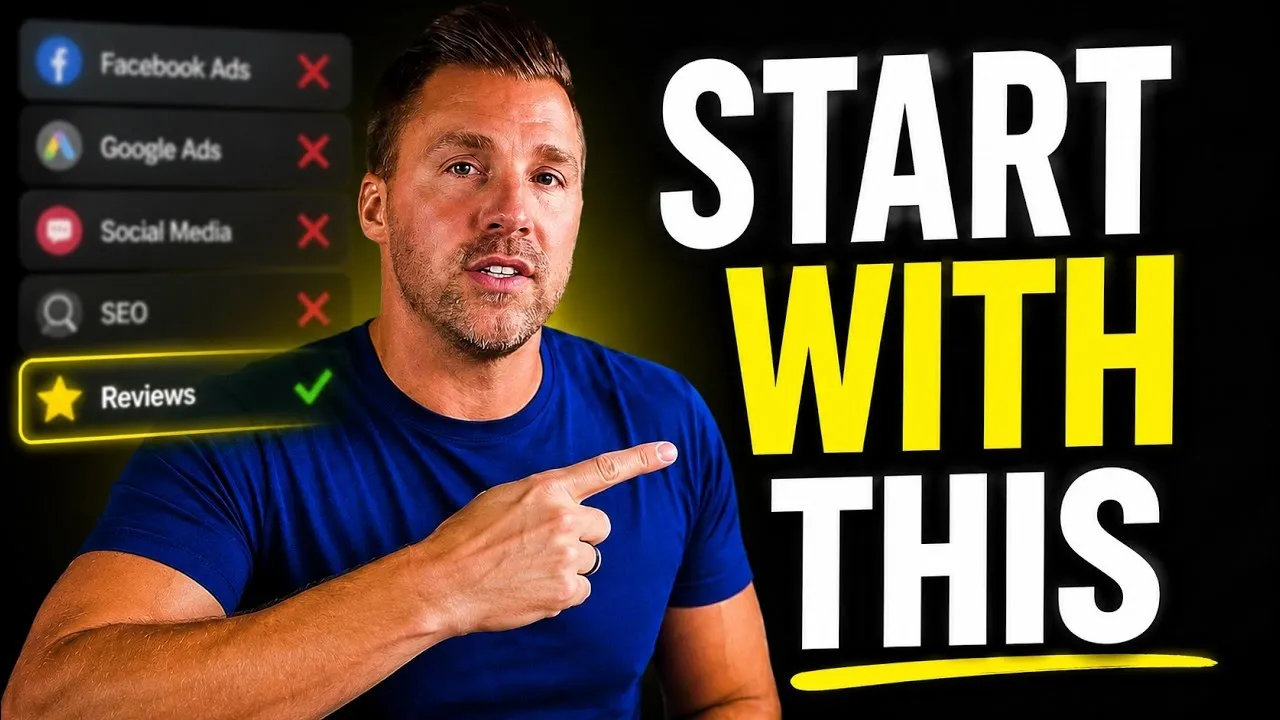

Get daily recaps from
Adam Erhart
AI-powered summaries delivered to your inbox. Save hours every week while staying fully informed.