It's all crashing down..

Chapters8
The speaker discusses a broad shift across gaming and media as traditional industry norms are being erased and production cycles reinvented.
Asmongold argues that AI and agile practices are reshaping games, media, and production faster than traditional big-studio models, favoring smaller, adaptable teams over hulking corporations.
Summary
Asmongold uses the Destiny 2 and Marathon situation as a springboard to critique how modern production cycles are being upended. He argues that AI, faster iteration, and a shift away from long, bureaucracy-heavy development are redefining what a 'successful product' looks like. He contrasts Western studios with nimble opponents from Asia and cites Crimson Desert as a case where rapid patching salvaged a rough launch. The core thesis: big studios are “too big to adapt,” while smaller teams embrace an agile vision, reducing risk and time-to-market. He predicts a longer-term recalibration across games, movies, and news, driven by AI-generated content and a market that rewards speed and scope over megaprojects. The takeaway is that the industry is undergoing natural selection, favoring adaptable, vision-driven studios over traditional, process-heavy giants. Throughout, he stresses the need for intuitive, multi-level decision-making in an era of rapid change. Finally, he ties these trends to consumer demand shifts, noting that audiences may gradually accept AI-generated content as quality improves and market dynamics evolve.
Key Takeaways
- Smaller studios (roughly 15–200 people) can outpace mega publishers by shipping fast, iterating with day-one and day-two patches, as Crimson Desert demonstrated.
- AI-driven production is reshaping quality and speed; the top 10% may replace the bottom 90% by leveraging automation and faster decision cycles.
- Industry standards from the early 2000s are outdated; new workflows, marketing tactics, and production pipelines are needed to stay competitive.
- Big studios (Bungie, Ubisoft, Blizzard-era giants) struggle with bureaucracy and misaligned incentives, often failing to deliver products that meet current market needs.
- Examples like Marathon and Destiny 2 show that products targeting shifting consumer tastes can fail if development timelines don’t adapt to rapid audience feedback.
- Capcom, Nintendo, and From Software are cited as large studios maintaining a clear north star and steady output without chasing quarterly trends.
- AI-generated content will become mainstream; consumer acceptance hinges on perceived quality and clear vision rather than ideology.
Who Is This For?
This is essential viewing for game developers and studio leaders who want a lens into why big-budget projects are struggling to adapt, and for fans curious about where AI and agile methodologies are taking the industry.
Notable Quotes
"And I think what's this doing? I think that it's opening up windows for places like China to be able to come in and succeed in and Korea to come in and succeed in these huge ways that, you know, I think that these western studios aren't doing because they are trying this uh lite well, let's not do it. It's not the same. It doesn't have the soul to it."
—He argues AI and riskier experimentation create global competitive gaps where Western studios lag behind more adaptive regions.
"The top 10% replace the bottom 90%. That's what I think is happening."
—A core claim about AI enabling a small group to dominate outcome through efficiency.
"Now you're starting to see a lot more Subnotica 2. We're going to start seeing a lot more... Hell Divers 2, right? Arrowheads kind of big, but they're not massive."
—Examples of successful smaller-title development bucking megastudio trends.
"Big studios are using an industry standard from a time that doesn't exist anymore, and they're still trying to deliver a product to a market that also doesn't exist."
—Critique of outdated pipelines and misaligned market timing.
"Crimson Desert comes out the game, let's be honest, a lot of things in that game suck big dicks, right? They were really bad. But what they did is they immediately did day one patches. They did day two patches... and they're still doing patches."
—Illustrates agile response salvaging a rough launch.
Questions This Video Answers
- Why are big game studios struggling to adapt to AI and modern production cycles?
- How can small studios outcompete giants in the video game industry?
- What makes Crimson Desert a case study in rapid patching and agile development?
- What is Marathon's impact on Destiny 2 and why does it signal a broader industry trend?
- Will AI-generated content become mainstream in games and media, and how quickly?
Destiny 2Marathon (game)BungieAI in game developmentAgile development in gamesCrimson DesertNo Man's SkyCyberpunk 2077Industry trends in gamingWestern vs Eastern studios
Full Transcript
Hi guys, it's me again and today we've got a little bit of a situation. I took the day off, but apparently the world didn't. I woke up and I read Bungie decided to kill Destiny 2 so Marathon can die. And I figured, you know what? This is perfectly the opportunity for me to talk about what I think has happened with gaming, entertainment, media, and everything else in between. Because right now, I think that we're seeing a huge recalibration with all types of media, whether it's gaming, uh making uh like [ __ ] movies, making TV shows, we're talking about art, obviously with AI, you're talking about everything is being completely reinvented in terms of what does a production cycle look like?
What does a successful product look like? and all of the things that people said were just industry knowledge, industry accepted standards. Many of these things are being deleted. And I noticed this, this is the big one, right? Because Destiny and and Marathon, right? I think that we all kind of knew this was going to happen. But I think that another big one was I was watching a trailer for it was the Mandalorian uh and I think Grou, that's like the little baby Yoda thing. And I was watching it and I was thinking to myself, does this really look better than AI?
And the answer really in my opinion, right, where they're fighting around with the AT-AT walkers. Uh, no it doesn't. It doesn't. It's basically the same thing. And there have been a lot of people, and I've noticed this, there's a lot of AI, anti- AI sentiment. I want to let you guys know, I'm totally in on AI. I'm completely bought in. I think it's totally going to be the future. It's not going to replace everybody, but it's going to let the top 10% replace the bottom 90%. That's what I think is happening. And unfortunately, a lot of these companies, especially in the west, are held hostage by a ideology that is keeping them from being competitively uh, you know, like advantageous with AI.
And I think what's this doing? I think that it's opening up windows for places like China to be able to come in and succeed in and Korea to come in and succeed in these huge ways that, you know, I think that these western studios aren't doing because they are trying this uh lite well, let's not do it. It's not the same. It doesn't have the soul to it. I'm going to tell you guys something, okay? And if you think this isn't true, go to your YouTube highlights, go to your shorts, go to Instagram reels, go to Tik Tok, and you're going to see a bunch of AI slump that has a 100,000 likes, 100,000 favorites.
Everybody's loving it in the comments. And you might not like it, but the Goyam, they [ __ ] love it. And the fact is that there's a lot of Goys out there, and they've got a lot of money for a lot of [ __ ] slop. And the fact is that what we've got now is there is such a huge market for this that I think we're starting to see a turnover because the idea of perceptive quality is going away with AI. I think that it is like you're seeing AI quality stuff that's coming out. People don't even know it.
They say, "Oh, well, we don't see as much obviously AI stuff made anymore. That means that we're winning against these corporations." Oh man, who's going to tell them, right? And so this is the problem. I think a lot of these people are running into is that the quality of these products is becoming so good that now I think it's hard for people to tell the difference. How does this tie into Marathon, Bungie, and everything else? Well, what it's tying into is that we have an antiquated old school style of how do you make a product?
How do you deliver a product to market? And when you use all of these industry standards, antiquated methods, like this is something that was a great idea in 2005, right? But that was over 20 years ago. And so now the way that you have to do something things is totally different. And you know the uh workflow is different. The way that you you know bring a product to market is different. The way that you have to market is different. And everything is different. And I think that what's happening is that things are changing so fast that only the people that have the intuitive multi-level knowledge are going to be able to navigate this.
and it's making it even harder for people who might have a lot of industry crystallized knowledge, but they don't have that fluid liquid decision-making intelligence that I think you need now in order to stay competitive. So, what you're seeing is you're seeing these smaller studios, you're seeing smaller productions, and you're seeing smaller forms of media that's totally overtaking larger ones. And I think that this is especially true like you can look at raw numbers. And I think that in raw numbers, you definitely have some instances of this, but it's less common. But in the times where it's really common is whenever you look at the costbenefit analysis.
You look at something that costs like maybe $1 million to make and they make $20 million. Well, that's insanely successful versus something that took $90 million to make and you know it made you $100 million, let's say, right? Because even if you're making $10 million, even if you make the same amount of money, the investment that that takes and the opportunity cost of it is just the ratio is just totally distorted. So what I think is happening is that people are realizing that you know with these other forms of process uh you know process analysis, other forms of process automation and just in general other forms of uh you know just like basically being able to create things more quickly uh algorithmically and also this is it it's bigger than that too.
It's also that these companies like I always think about it like the Titanic, right? How which ship is going to be able to avoid the iceberg? Is a Viking longboat that can go can it can that can that avoid an iceberg? Well, I'm pretty sure they did because they did it all the [ __ ] time back then. And so what about the Titanic? Well, that's at the bottom of the [ __ ] ocean. So what happens is that these big studios and these and and this is movies, TV shows, media, art, other types of institutions. I think it's going to happen to news as well.
That's very exciting, isn't it? And so the fact is that I think all of these things are happening simultaneously because of the agile development and also the fact that these things are much smaller but they can navigate around risks, pitfalls, mistakes or potential event horizons that they don't even have to worry about now. They can just simply turn around. You don't have to spend, you know, three years to resituate something. You don't have to go through seven levels of bureaucracy. So what you have is an engineered obsolescence. You have companies that are not too big to fail, but they're too big to succeed.
And I think that what's happening is that now you're starting to see this happen in media. Now you're starting to see this happen in video games. Before it was just maybe a few art things and art assets, etc. But now it's getting a lot bigger. And you're seeing big studios like, for example, Bungie that really are using an industry standard from a time that doesn't exist anymore. and they're still trying to deliver a product to a market that also doesn't exist. And so what you're having is that there are smaller studios now that are operating with like let's say I would say a what is a smaller studio?
I'd say a smaller studio is 15 to 200 people. Like that's I I'm just making up a number. I have nothing to go off of. I'm just making this up. But like you know a smaller studio and compare this to like Ubisoft for example has like thousands of people or Blizzard has thousands of people or Activision. Well, I guess the same thing, but they have thousands of people. Like these companies are huge, right? And so when these companies are so large and there's so much bureaucracy, HR, oversight, managerial uh you know, like input, everything you're you're really setting yourself up to fail because ultimately people want a product.
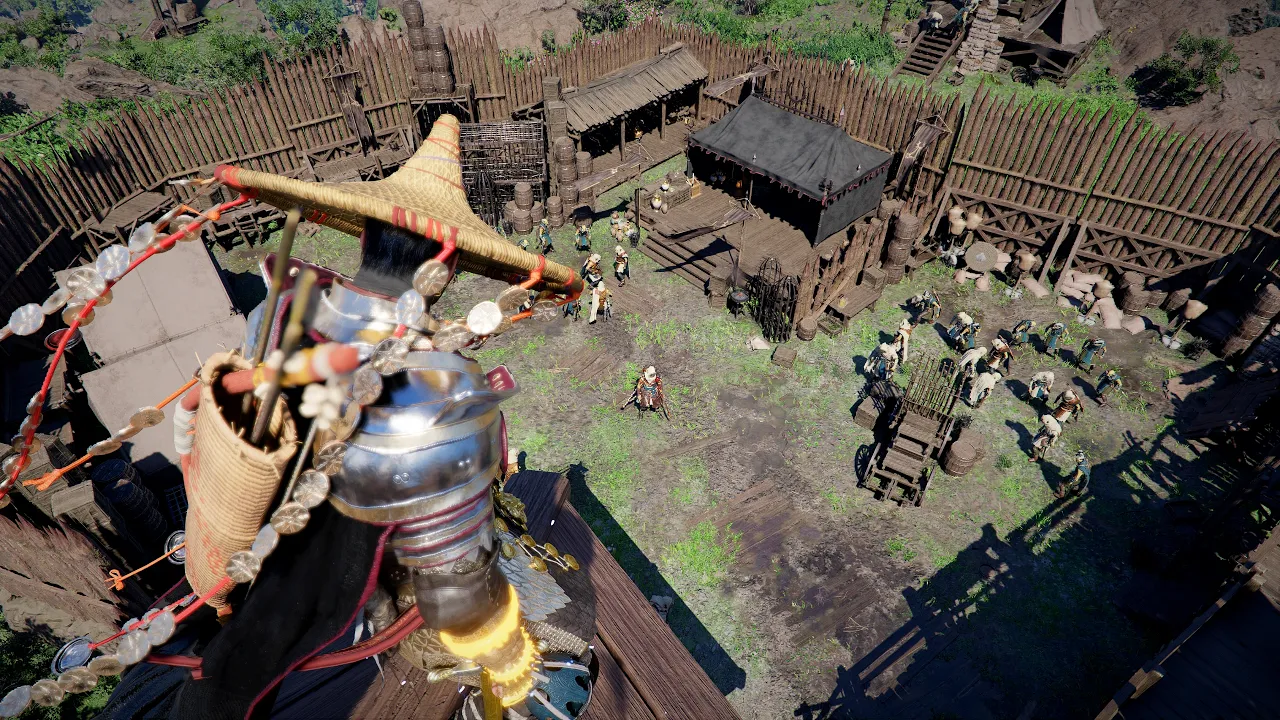
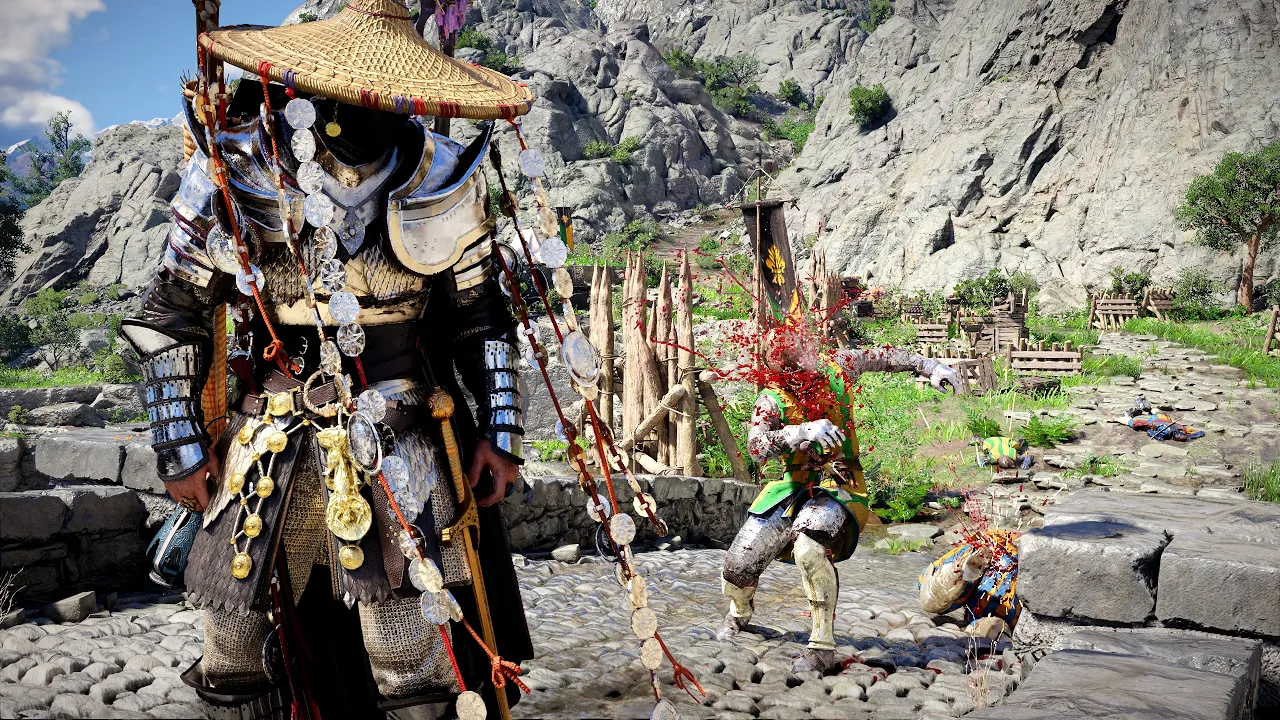
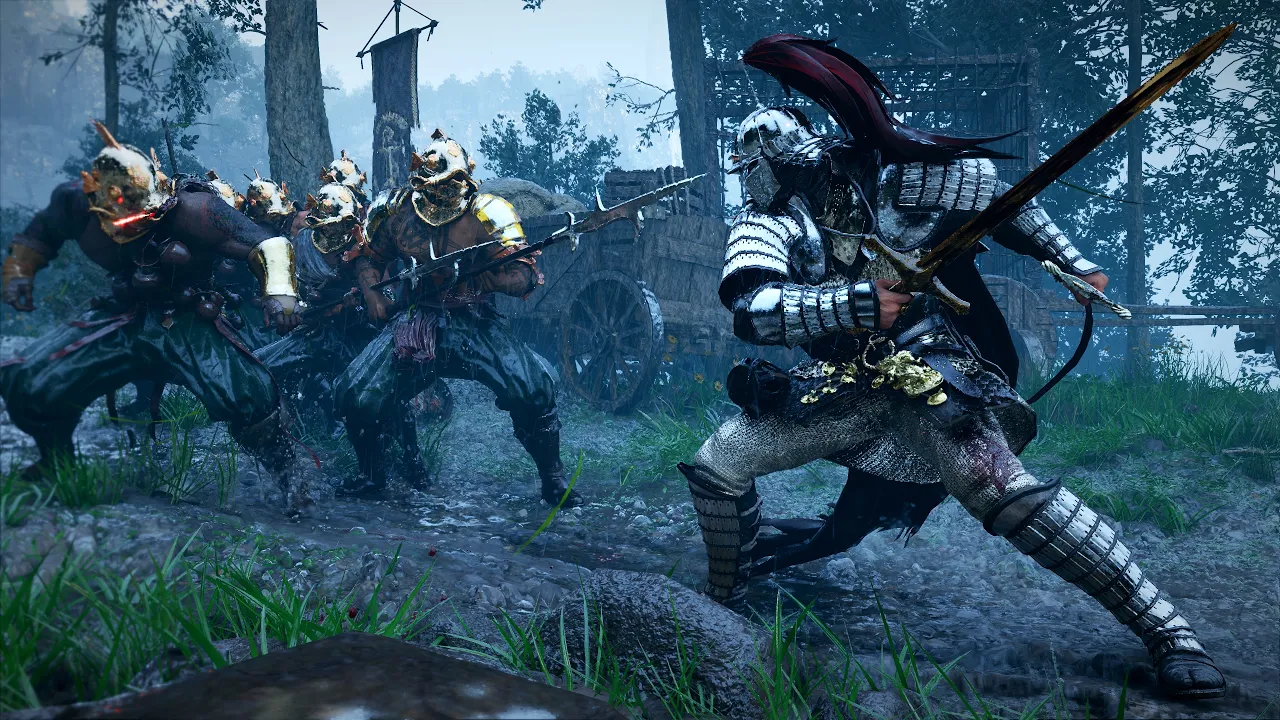
They want that product to come immediately to market. And if you're not able to do that, your product fails in the market. I'll give a great counter example to this and give you kind of I would say probably the best example of how something like this happens uh is that Crimson Desert. Crimson Desert comes out the game, let's be honest, a lot of things in that game suck big dicks, right? They were really bad. But what they did is they immediately did day one patches. They did day two patches. [ __ ] they're still doing patches. They're still adding in like replay modes.
They added in a hard mode. They added in a boss uh you know, farming mode. They added in a new game plus. They added in everything. And so because this studio is agile enough to make these decisions and quickly change things, I think that they were able to salvage the reputation of their game before it went down the path of something like No Man's Sky or Cyberpunk, which were eventually salvaged, but the amount of effort and resources that it took in order to do that was just astronomical. But because now a smaller company like for example the people that made uh you know Crimson Desert and they're not a small company but they're a company that can move quickly.
They're uh they're able to change that. I'm not really seeing these big companies able to do this anymore. I think that the big thing right when you take a step back right because we're talking about game mechanics let's talk about games because really you look at something like Marathon for example. Marathon is a game that's made for an audience that doesn't exist. And I think that the Steam charts prove this to be true. I know that obviously some people like Marathon, and if you do, you're not wrong for liking Marathon. And I can see why.
There are nice things about the game. But you have to admit that, you know, making a large scale um you know, like something that's very accessible to the average person, making a game like that and then making it an extraction shooter is like making bacon flavored ice cream. It's like making uh you know I don't know like just something else like a car that doesn't have any wheels on it. It's like these are oxymorons. They they shouldn't non sequators. They shouldn't even work and they don't work. And so you have companies that are chasing these very large trends.
And that's what I was saying before about how you know you're trying to avoid this iceberg. The consumer demand shifts on something and it shifts you know five years into a seven-year development cycle. Well, [ __ ] It looks like they're going to the bottom of the ocean, which is exactly where Destiny is. And it seems also Marathon's right behind it. So, what's happening is that I think that you're seeing these bigger studios dying. And I want to say that this is I mean, it is this is what happened in nature. Why the [ __ ] do you see there's no bronosauruses running around anymore?
There's no woolly [ __ ] mammoths running around anymore. It's because a lot of those really big [ __ ] animals don't have the ecosystems to survive, right? the environment changes and it's not the strongest species that survives. It's not the most intelligent one, but it's the one that is the most adaptive to change. That's from Charles Darwin and he uh I think he invented evolution or something. So basically what happens is that these companies are not able to adapt to, you know, changing consumer markets, right? And I think that what happens is that they're failing. And so now you're seeing these gigantic companies, multi-billion dollar companies.
Sony bought Bungie for I think $3.6 billion. That's a lot of money. And so now you're recalibrating the value of this product by like it's it's down like $734 million. Like did you just lose that money? Like man, you really [ __ ] up, didn't you? And so what happens, I think, is that these companies are trying to make decisions and they're just simply too big to make these decisions effectively. And the only companies that can truly do that and still succeed because there are the instances of doing that. I'll give three examples. Nintendo, Capcom, and From Software.
All three of those development studios are very large, but they have a north star that they're working towards that's not contingent on, you know, when is the video game, you know, which when is this game going to be popular? When is it not going to be popular? They just make the video game and people are going to play it. like Resident Evil 9 Reququum, like for example, this is a new Capcom release. Um, if you would release Resident Evil Reququum 10 years ago, people would have loved it. If you would release it 10 years from now, people probably still would love it, right?
Can't predict the future, but it's what I guess. So, there's a certain level of quality that's timeless, but whenever these companies are chasing trends and they're chasing quarterly profits, you'll see that they engineer themselves for long-term failure. And that's something that many studios, especially eastern studios, don't have the same risk management for. I think western studios [ __ ] this up a lot more. But, you know, everybody really makes this mistake. And I think that we're seeing a recalibration from these larger massive, you know, bronosauruses and woolly mammoths of studios and we're seeing them kind of go extinct.
And I think this is what we're going to start seeing in the next 5 or 10 years is that these studios will break up. They'll break off. The same as like for example the people that made expedition 33, Sandfall Interactive, many of those people came from Ubisoft. And so how is it that these you know like 30 or 40 people from Ubisoft and not exclusively from Ubisoft but you know some of them were from there. Uh you know how were they able to make the game of the year that won more awards than any other game in history.
Uh well it's very simple. It's having a cohesive, defined, singular vision with a direct purpose with very little oversight and other types of company uh, you know, chatter and noise that's going on. So, I think that we're going to start seeing a lot more of that. I think we're going to start seeing a lot more Subnotica 2. We're going to start seeing a lot more even, you know, bigger games like Hell Divers 2, right? Arrowheads kind of big, but they're not massive. Uh, you're going to see more uh, you know, Slay the Spires. you're going to see more of these games and you'll always have room for the latest big Cojima production, right?
You'll always have room for that. But I think that in the same way that movies have changed over the years, right? We don't get all these like huge massive movies the way that we did in like let's say the year 2003, right? It's not, you know, gladiators coming out, then it's Lord of the Rings, and then it's, you know, some other crazy movie too that's happening, right? Uh, you know, Independence Day. Uh, no. But every once in a while, you do have a really big movie that comes out, you know, a Christopher Nolan movie or like, you know, a big Marvel movie or something that everybody goes out and sees.
And I think that, you know, again, I thought I I've said Marvel and it just made me brought me back to the [ __ ] slop idea is that fundamentally I think users will accept um artificially generated content. I think that they will. I think that there is a deliberate astroturfed and intentional movement in order to demonize the t this type of content on the internet right now. And I think the reason why is it's being led by people who it's in their best interest for this content not to be popular because those people stand to lose money if that pop content is popular.
So, uh, you know, these are artists, right? Like, big surprise. The artists don't want to have automatically generated art. Like, oh my god, I would have never guessed this, right? I wonder what people that, you know, like were, uh, you know, making black their blacksmiths that were making horseshoes. I wonder what they thought about cars, right? You know, stable masters. I'm pretty sure they thought cars were bad. And I think this will definitely go the same way. And I think that consumers will gradually accept it the more that it becomes synony the the less that it becomes synonymous with low quality in the same way that made in China used to be a meme right back in the day.
Now people don't perceive it in that same way. They might think China is you know like an adversary or something like that but fundamentally that lowquality expectation I think has diminished and I think that AI will follow suit as well. And ultimately people will always pursue quality. They will not pursue ideology. They will not pursue a value system that is being given to them by people who it's in their best interest to believe that. They will simply do what is in their best interest. And it seems like right now what is in most people's best interest is making small studios, making small scope products and making things with a defined scope rather than trying to develop the everything product that has to hit 80% of a global market in order for it to be profitable.
And I think this is a good thing. It's a recalibration. It's evolution. And it's also, as with Destiny 2 and Marathon, inevitably, it's natural selection. So, anyway guys, I wanted to make a video and talk about that and just kind of have a little bit of a conversation. I think a lot of people don't really talk about this in like a, you know, like kind of like a both sides kind of way. And I want to explain kind of where I'm coming from, where I'm seeing things going, and in general, just kind of where I'm seeing media go overall.
I think this is going to happen with movies and TV shows, too, and and everything. And uh maybe it'll happen with streaming, too. And yeah, maybe I'm AI already. Maybe it already has happened. Uh unfortunately, it hasn't. I I actually have to sit up here and do this myself. Hopefully, in a couple of years, that'll change. So, anyway, guys, thank you all very much for watching. I appreciate it. I'll be curious to hear what people say in the comments and what their opinions are. But other than that, that's all I've got. I'll see you guys later.
Peace.
More from Asmongold TV





Get daily recaps from
Asmongold TV
AI-powered summaries delivered to your inbox. Save hours every week while staying fully informed.