8 Steps to Reclaim Your Life

Chapters12
Introduces the idea that motivation alone is unreliable and often leads to inaction.
Eight practical steps to align your life for real change, moving from motivation to consistent, repeatable habits.
Summary
Bryan Johnson lays out a blueprint for reclaiming your life through eight concrete steps, contrasting gritty realism with motivational fluff. He reframes personal growth as a systems problem, not a pep talk, and emphasizes friction, ownership, and consistency. Step 1 pushes you to do hard things and rewrite the stories that hold you back. Step 2 reframes morning routines as the product of an earlier wind-down—sleep is the foundation. Step 3 argues that purpose starts the moment you wake and fight chaos with simple, present actions. Step 4 urges futureproofing the body through resistance training, mobility, and cardiovascular fitness. Step 5 treats food as medicine, warning about ultraprocessed foods and advocating whole, nutrient-dense choices. Step 6 calls for killing distractions by curating inputs and using blockers. Step 7 stresses removing isolation and investing in real relationships. Step 8 debunks motivational hype, insisting real change comes from small, repeatable promises to yourself. The host even injects humor and meta-notes to remind viewers this is about long-term alignment, not quick hacks. By the end, the message is clear: “Don’t die”—reclaim your identity by doing one thing right today.
Key Takeaways
- Do hard things now to dislodge limiting narratives; start with a small challenge and build from there.
- Sleep is the true foundation of productivity; finish meals four hours before bed and wind down without screens.
- A strong morning routine starts the night before; you win the day by aligning sleep, light exposure, and movement.
- Regular resistance training, mobility, and cardio build a future-proof body and independence, not just aesthetics.
- Treat food as medicine by prioritizing whole, unprocessed foods and avoiding ultraprocessed items and added sugars.
- Cut distractions by limiting smartphone and media inputs; use blockers and time caps to protect cognitive clarity.
- Combat loneliness actively: meaningful conversations and shared activities are essential for long-term vitality.
Who Is This For?
Essential viewing for anyone who wants lasting life-change beyond quick hacks—people seeking a disciplined, science-informed path to health, productivity, and deeper connections.
Notable Quotes
"The motivational trap. Are you familiar? Trust me, you will win. Limits like fears are often just an illusion."
—Sets up the critique of hype-driven self-help and introduces the eight-step framework.
"Everything worth doing is hard. And the more worth doing it is, the harder it is."
—Emphasizes the core principle of Step 1 and the call to embrace friction.
"Sleep is your number one priority above everything else."
—Key claim from Step 2 about sleep as the foundation of alignment and performance.
"There’s no reason to ever put [the smartphone] away. Endless feeds, breaking news, background television, games designed to keep you hooked."
—Highlights Step 6 on killing distractions and guarding attention.
"Pick one small thing. Do it today. Do it again tomorrow."
—The practical core of Step 8: sustainable change through tiny, repeatable acts.
Questions This Video Answers
- How can I apply Bryan Johnson's eight-step framework to my daily routine?
- Why does sleep play a bigger role than morning routines in productivity according to this video?
- What counts as 'futureproofing' the body through exercise and nutrition?
- How do I reduce distractions and combat ultraprocessed content effectively?
- What makes real change different from motivation, based on this video?
Bryan JohnsonDon’t Die8 Steps to Reclaim Your LifeSleep optimizationResistance trainingNutritionDigital minimalismLonelinessMotivation trapFutureproofing the body
Full Transcript
The motivational trap. Are you familiar? Trust me, you will win. Limits like fears are often just an illusion. First you feel bad, so you watch something inspiring. You feel good. Great even. And then here's the best part. You do nothing. Repeat. This is not a motivational video. This is not self-help fluff. This is systems level personal alignment. Most people are underinformed, over stimulated, and biologically misaligned. We didn't choose this environment, but we are responsible for how we respond to it. Today, I want to show you how to realign your life, not through motivation or hacks, but through a set of principles that actually work.
Eight steps to move you from stuck and depleted to aligned, capable, and fully engaged with your life. In other news, scientists have confirmed that the future is dim. Life as we know it is going downhill, seemingly forever. Brian Johnson has announced that Yolo is dead and that he plans to reach immortality by the year 2039. That's you. That's us. And you? I'm you. But how? Eh, the Brian verse, it gets complicated. The point is, I'm you in the future, and my life is awesome. So much better than whatever this is. Today marks the death of YOLO and the beginning of Don't Die.
Don't die. What the Do you want to die? Well, I mean, eventually. Do you want to die today? Definitely not today. Exactly. Look, I know life feels grim, but the truth is you're out of alignment with it. This year, we're going to fix it for good. I mean, it sounds nice, but I wouldn't even know where to start. Oh, I'll show you where to start. Who are you talking to? Roll the tape. Step one, do hard things. It's 44° and it's nice and rainy outside. Nothing changes until you're willing to be uncomfortable, willing to do hard things.
I'm up early in the morning. I'm up 4:00 or 5 in the morning. I really enjoy working hard. Most people aren't stuck because they don't know what to do. They're stuck because they're comfortable. Excuses sound reasonable. I don't have time. It won't really matter. This is just who I am. friends. Most of what holds you back isn't reality. It's the stories you repeat. Stories that feel convincing, but they aren't truth. You have the power to change the narrative, but this requires friction. Stepping outside the stories that keep you safe. I urge you to make the decision.
You can do hard things. You must do hard things. Everything worth doing is hard. And the more worth doing it is, the harder it is. Start where you're at and do something that's maybe a little bit out of your comfort zone, maybe a little bit of a challenge, and see how it goes. Take ownership of everything in your world, the good and the bad. This is how change begins, by choosing discomfort in the service of growth, and slowly the false narratives and excuses lose their power. This is the beginning of self-alignment. Step two, the end is the beginning.
Most self-help videos start with the perfect morning routine. Everyone knows if you win the morning, you win the day. Your morning routine is actually the most important part of your whole day. But that's where they fall short because the truth is your day doesn't begin when you wake up. It begins the night before. Every successful morning starts with an early night. The secret to owning your mornings doesn't begin with an alarm clock. It begins in the quiet hours before sleep. Your morning routine begins the night before. In order to regain control, clarity, and alignment, it all starts with sleep.
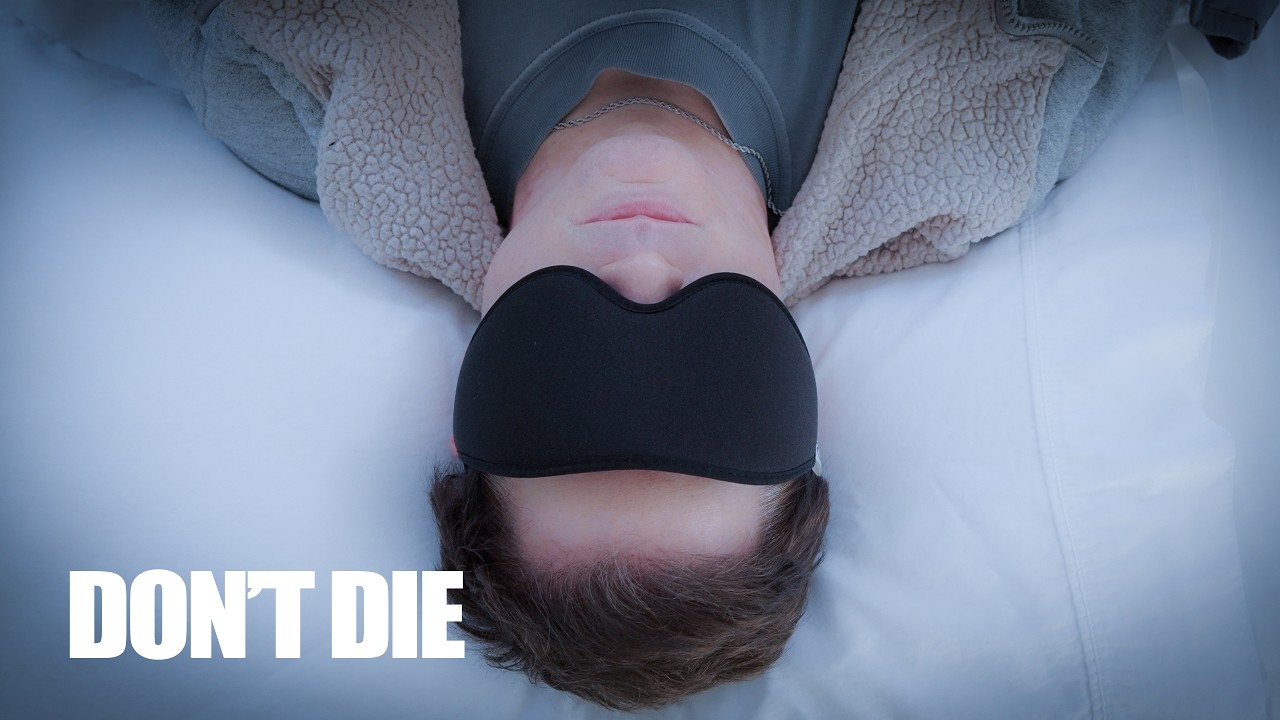
There's a global sleep loss epidemic shaped by this thing called the modern world. Every single thing that you do, you do better with a good night's sleep. Make sleep your number one priority above everything else. It sounds counterintuitive, but I promise you'll be more productive, more energetic, more present for the people you care about. The benefits aren't subtle, they compound. So, become a professional sleeper. It starts with a windown ritual, something you do every night with no exceptions. These aren't just habits, they're instructions. Finish your last meal at least 4 hours before bed. Give your body time to digest.
Slow down and enter repair mode. Lower the lights. Eliminate blue light. Shut off screens. Remove stimulation. Prepare your mind for sleep. Read. Walk. Breathe. Stretch. Meditate. Feel that? That's your resting heart rate lowering. quietly predicting the high quality sleep to come. If your sleep is best, you will be at your best. Having good sleep habits and consistent sleep habits actually can help you heal. Go to bed at the same time every night. No exceptions. Because when sleep is aligned, everything else follows. Step three, start your day with purpose. The first few hours after waking quietly decide the fate of the rest of the day.
Most people wake up already behind, reacting, rushing, scrolling, absorbing chaos before they've even left the bedroom. And then they wonder why their life feels scattered. Chaos in the morning becomes chaos everywhere else. This is why a morning routine matters. Not because it's trendy, but because consistency creates stability, and stability gives you leverage over your day. Wake up at the same time every day. Get bright light in your eyes, sunlight if it's available, full spectrum light if it's not. Move your body, walk, stretch, breathe. Nothing heroic, just enough to shift from passive to present. Whoa, whoa, whoa, whoa.
Hold on a second. Two things. First, I'm not a morning person. And second, that bedtime routine, no screens, no Tik Tok. H yes, that is a problem and we will get to that. I don't know, future Brian. This sounds like a lot of work. Fear not, young, you can do hard things. Now, may I continue? Step four, futurep proof your body. Exercise isn't about today. It's about who you're allowed to be. At 60, 80, 100. Being sedentary, being physically inactive is a disease. There's nothing more important for maintaining health and wellness than taking care of muscle health.
Most people treat movement like an optional habit, something to fit in if there's time. But the truth is the body adapts to what you ask of it or to what you don't. Resistance training or endurance training that's a stimulus for stress and the adaptation to that stress is how you get better. Weight training is one of those things where you get a dose of it and for days after under the hood it's upgrading your body. So make movement non-negotiable daily. Not for aesthetics, not for punishment, but for capability. Build strength. Practice mobility. Flexibility. Train your heart.
Increase your V2 max. Each of these are major predictors of longevity. Yes, we all want to look hot and be jacked. That's an excellent benefit, but this is really about lifelong ability. It's the difference between independence and dependence. Train now so your future self stays resilient, building a body that carries you forward. Step five, treat food as medicine. Food isn't just food, it's medicine. It's fuel. And over time, it becomes your health or your illness. This is one of the hardest shifts for people to make. Not because it's complicated, but because the system is stacked against you.
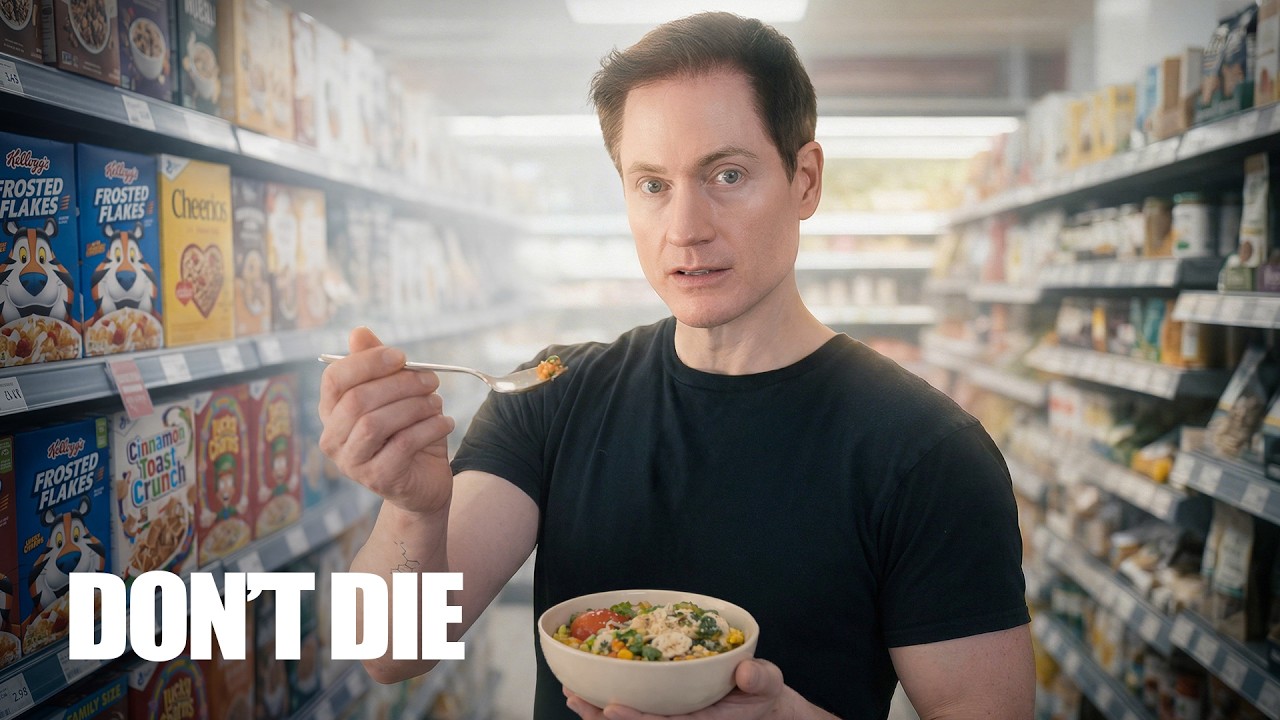
It's laughable. We don't have the safest food system in the world. Processed foods in the UK and the US are being linked to around 14% of early deaths. We live in a food environment designed to exploit human weakness. Additives, sugar, hyper palatable combinations engineered to keep you hungry and sick. And much of that isn't your fault. But once you see it, responsibility takes hold. And awareness demands action. Ultimately, we're the ones who decide what to buy, what to eat, and how much. If you change your diet at any point in your life, you can add lots of healthy years.
Prioritize whole foods, nutrient-dense foods. Eat clean protein, unprocessed carbohydrates, fruits, vegetables, healthy fats, and reduce aggressively processed foods, added sugar, artificial additives, dyes, alcohol, and smoking. A simple truth, all food is guilty until proven innocent. Yes, it's harder, but the alternative is harder later. What's the biggest threat to our dietary health today? Ultrarocessed food. Do you have a healthy relationship with food? Have a think about it. And I'll say this from experience. If you're tired, unmotivated, moody, poor food choices are almost always the culprit. Fix what you eat. And you don't just change your body, you change how you think, how you feel, and how capable you are of showing up for life.
Step six, kill the distractions. Smartphone addiction, internet gaming addiction, binge watching addiction. You are what you repeatedly expose yourself to physically, mentally, emotionally, and neurologically. Every input shapes you. And right now, most people are drowning in noise. The game is getting attention at all costs. Smartphone said this thing's a slot machine in your pocket. There's no reason to ever put it away. Endless feeds, breaking news, background television, games designed to keep you hooked. This is ultrarocessed content, junk food for the mind. It feels stimulating, but it leaves you scattered, anxious, reactive. It's actually changing the physiology of our brain.
We are all becoming more ADHD like. So, lessen the inputs, strengthen the signal, set boundaries, decide what earns your attention and what doesn't. And if you need help, use limitations, time caps, app blockers, viewer notifications. This isn't about cutting yourself off from the world. It's about protecting your clarity. Step seven, remove isolation. Chronic loneliness and social isolation can be as bad or worse for you than smoking about a pack of cigarettes a day. Talking to somebody actually feels good. It increases your positive emotion. It gives you a sense that your life is going better. Doing hard things doesn't stop with discipline or routines.
One of the hardest things in the modern world is showing up for other people. Happiest part of my day. We weren't meant to do life alone. Isolation isn't strength. It's damage slowly accumulating. When we are lonely, we are more likely to create addiction. Loneliness is killing us. Humans thrive on connection, on emotional bonds, on being seen, heard, and understood. A life without connection may look efficient, but it's empty. So prioritize relationships, friends, family, love, have real conversations, share meals, take walks, laugh together. These moments ground us. They remind us why we're doing all of this in the first place.
You need friendship. You deserve friendship. And you deserve to have fun. These connections require effort, vulnerability, presence, which is why they matter. Step eight, stop watching motivational garbage. Yes, including this video. Because if you're watching this just to feel inspired and then planning to wake up tomorrow as the same person, this video will not help you. In fact, motivation might be the thing holding you back. Here's the trap. You feel bad. You watch something inspiring, you feel good, and then you do nothing. Repeat. Motivation gives you the feeling of progress without the cost of change.
So, what actually creates change? Self-rust. Real change doesn't come from hype. YOU DON'T HAVE TO BE PERFECT TO GET WHAT YOU WANT. It comes from keeping small promises to yourself. Little by little, day by day, building trust, advancing capacity. No more big declarations. STOP FEELING SORRY FOR YOURSELF. NO more New Year's vows. This is your year. No more identity overhauls that last a week. If you take one thing from this video, let it be this. Pick one small thing. Do it today. Do it again tomorrow. Do it when it's boring. Do it when it's uncomfortable.
Do it when you don't feel like it. Repeat that long enough and something begins to change. You start to trust yourself. And when you trust yourself, you can do harder things. Keep bigger promises to the people around you and to yourself. This is the real work. This is alignment. This is how you reclaim your identity. Be someone you can count on. Wow. I I wonder if this kind of life is really possible, Brian. It is. I exist because you follow through. Holy smokes. Future Brian just unf my life. Don't die.
More from Bryan Johnson
Get daily recaps from
Bryan Johnson
AI-powered summaries delivered to your inbox. Save hours every week while staying fully informed.