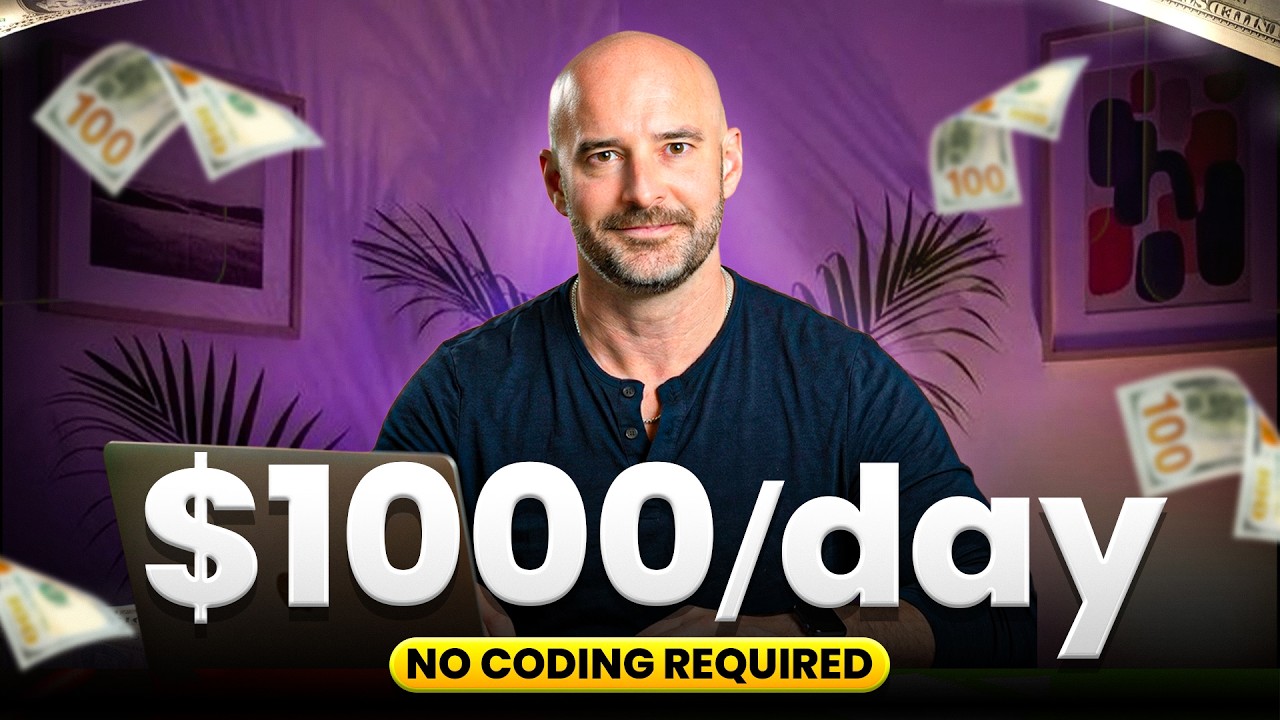
How Can You Make $100/HOUR Tech Career Without Coding?

Chapters9
From a teen mom with no experience to a senior project manager, the chapter highlights the power of obtaining the PMP certification and proving that high pay is possible, even for those who started with little direct PM experience.
From $17/hour to over $100/hour as a PMP-certified project manager, Veronica White reveals the path, mindset, and hacks that make it possible.
Summary
Chris Schwenk sits down with Veronica White of ANU Consultants to demystify how mid-career professionals can command top rates in project management without coding. Veronica opens with a personal origin story, explaining how she rebuilt her career after becoming a teen mom and deciding to pursue PMP certification. She highlights the turning point: landing a senior PM role in biotech at a total comp around $165K after originally earning just $17/hour. The PMP certification, which she financed by borrowing, became the differentiator that helped her stand out in a crowded field. Veronica also emphasizes the importance of leveraging prior healthcare experience and a chemistry degree to create a solid foundation for PM roles. On the day-to-day, she notes that project management is about driving work, facilitating meetings, and relentlessly removing obstacles so the team can succeed. She also shares a strategic tip: look for gaps like Jira usability, where specialized customization can dramatically increase value and pay (from $65–$125/hour). The conversation wraps with a blunt reminder that accountability—being willing to own outcomes and outcomes only when necessary—separates successful PMs from others. Veronica confirms she achieved PMP certification in January 2021 and is now earning well over six figures, proving the path works for those willing to show up. For listeners interested in the practical steps, Schwenk points to Veronica’s ANU Consultants for further resources.
Key Takeaways
- PMP certification can be a career accelerator: Veronica borrowed $1,200 for a two-week PMP prep course and landed her first PM role three months later.
- A biotech senior PM role paid about $105K, showing a dramatic salary jump from $17/hour prior to certification.
- Total compensation can reach the mid to high six figures (e.g., $163–$165K) after transitioning into senior PM work.
- Specializing in tools like Jira and tailoring processes for organizations can push hourly rates from $65 to $125+ and unlock senior opportunities.
- Your background (healthcare experience, chemistry degree) can be leveraged to establish a strong PM foundation when paired with PMP credentials.
- Accountability is central to PM success: outcomes hinge on the manager’s ability to drive the team, not the other way around.
- With 5–10 years of experience, obtaining the PMP is a realistic and impactful step toward higher-paying PM roles.
Who Is This For?
Mid-career professionals (5–10 years of experience) considering a switch into project management, especially those seeking high hourly rates without coding. It’s also a tune-up for those wondering how certifications and domain experience combine to unlock senior roles.
Notable Quotes
"I was a teen mom. So, I had my daughter when I was 17"
—Veronica introduces her background to illustrate how far she’s come and set the stage for the PMP-focused career pivot.
"You can make over $100 an hour."
—A core claim that anchors the video’s promise and hooks viewers seeking high-value PM roles.
"I landed a senior research and development PM for a biotech company."
—Shows a concrete salary milestone and a tangible career outcome after certification.
"the first thing that pops up is the PMP certification, which stands for Project Management Professional."
—Clarifies what the PMP is and why it’s relevant to the transition.
"If you have 5 to 10 years of professional working experience, we can leverage that into a successful application for the PMP."
—Offers a practical threshold for when the PMP becomes a viable path.
Questions This Video Answers
- How can PMP certification impact your salary in project management?
- What are realistic paths to a $100+/hour PM role without coding?
- What gaps exist in Jira that you can fill to command a higher rate as a PM?
- What background helps most when transitioning into PMP-certified project management?
- How long does it typically take to go from PM aspirant to six-figure PM role?
Project ManagementPMP CertificationANU ConsultantsJiraCareer TransitionNon-Coding Tech CareersHealthcare to TechSenior PM Roles
Full Transcript
How did you get a senior role with no experience? I was a teen mom. So, I had my daughter when I was 17 [music] years old, single mom, um had planned on going into [music] college and being the first one to graduate, the whole I was making $17 an hour and I had quit my job to take the freaking [music] PMP certification course. Before I had gotten certified, I had been working for 10 years. [music] When I lost that, you know, when I saw that they were getting shut down, I was really afraid. Um but then when I got the next job, that one was paying like total comp $163, $165, K.
Cuz I placed a ton of PMs in my career. You can make over $100 an hour. People are so quick to be like, "No, you can't. Right. Nobody makes $100 an hour." I'm here to tell you that there's plenty of us out here making over $100 an hour. Okay, guys, welcome back. Now, anyone that follows me on LinkedIn can see that one job I post, probably more than anything, is project management. And a lot of people see some of the high hourly rates and the salaries that are being paid for these roles and they say, "Hey, how do I get into this?" And I actually have no idea.
I actually I only deal with mid to senior level people, so they come to me already with the skills they need. So, I thought, why not bring on the person who is training more PMs than anyone I know, that is Veronica White of ANU Consultants. Woo! Thanks for having me. when I was 17 years old, single mom, um had planned on going into college and being the first one to graduate, the whole shebang, and then I had to drop out. And for several years, I was just like working at call centers, doing whatever I could do to kind of bring in some money.
And then eventually I got the opportunity to go back to school full-time when I was around 25, 26. And the plan was to go to medical school. Mhm. So, I went through, I graduated with a chemistry degree, and that was in 2020, and then I applied to medical school, and I didn't get in. [clears throat] So, obviously I'm broke, I'm emotionally distraught, and I don't really know kind of kind of what to do, and I have an aunt who is a software engineer. And she says, "You know, you should become a project manager." She said, "You're organized, and you're really good with people." And I asked her, you know, "Well, how do I do that?" And she said, "Well, I think they have a certification, and you just go and get certified." She didn't even know what it was called.
She just told me to Google it. So, of course, I go and do my Googles, and the first thing that pops up is the PMP certification, which stands for Project Management Professional. So, I go to take a PMP certification class to kind of prepare me. And it's $1,200. I can't afford that, so I borrow the money from my sister. And I take the class, and it's 2 weeks long, take the exam, and I pass on the first try. 3 months later, I got my very first project management role, um and it was a senior research and development PM for a biotech company.
with no experience? This is one thing I was like, "Wait." Yeah, yeah. How does it work? So, well, before I had gotten certified, I had been working for 10 years. Okay. Right. And even the call centers I worked at were in the healthcare space. So, like, maybe you're answering calls and telling people where they can pick up their prescriptions or giving them their, you know, the insurance information, doing verification, that type of thing. So, I have a healthcare background already, and I had a chemistry degree. I was fresh out of college. So, I think that mixed with the fact that I had like 10 years of I guess what you could call corporate experience really gave me a solid foundation to stand on.
And having the certification just kind of put me over the top. What were those salaries? So, when I worked at the biotech company, it was 105 a year. Mind you, before that, I was making $17 an hour, and I had quit my job to take the freaking PMP certification course cuz it was all day. So, It's like mind-blowing money for you at that point. It was insane. And obviously, I felt like, oh, you know, I've made it. I'm balling out of control. Nobody in my immediate family has ever touched six figures before, so it was a huge deal.
And when I lost that, you know, when I saw that they were getting shut down, I was really afraid. Um but then when I got the next job, that one was paying like total comp 163, 165 K. Um and then I was really like, oh, oh, this this is like an actual thing. This is a career. Um and I asked, you know, kind of what made me that ideal candidate, and one of the things that they pointed out was, well, we have other project managers here, but they're not PMP certified. Mm. Okay. And I was like, oh, that's when I realized kind of the weight of the certification and, you know, what it had done for me and what it could potentially do for other people who were looking to transition, but didn't really know where to go.
Tell us a little bit about the job. The day-to-day. So, the thing with project management is that your day-to-day will change, right? It will fluctuate. And for me, that's one of the things that keeps it exciting because no day is going to be the same. Um there are a few threads that you could draw through the job that you will always have. Number one, you're going to be in meetings. Yeah. If you're the type of person that doesn't like meetings, this is not the role for you because you will be scheduling them, you'll be sitting through them, you'll be facilitating them, right?
A ton of that. Um you're also going to be driving the work forward. And that sounds like kind of a general thing to say, but think about anything that you have tried to accomplish with a group of other individuals. And imagine being the person who is driving that work, which means I have to make sure that the tasks are clearly outlined for my team. If they're running into issues or obstacles, it's my job to help get those issues resolved or get those obstacles out of the way. So that this so that they can show up as their best selves.
You know what I mean? So I'm consistently troubleshooting, I'm consistently in meetings, I'm consistently kind of giving updates to our senior-level leaders. And one of the things that's important about project management from the actual project manager's perspective is that you have to keep in mind if the project is successful, it is because your team was successful. It's not about you. It's not the you show. But if the project fails, it is because you failed to make the team successful. I know a guy I placed him as a PM, you know, um made the senior 65 an hour, you know, so he's making decent money.
He picked up um you know, he just kind of ran with Jira and now he is a Jira architect making, you know, 125 an hour to his LLC, you know, so Oh my gosh. Yeah. Yeah, but I mean he got that from just getting a you know, senior PM job. They're like, okay, you know, you kind of talk you know, he was kind of a good guy to deal with. And ran with the ball from there. So, I think that's something, you know, if you do go with A and U Consultants, you do get the PMP, keep your eyes and ears open for those skills to pick up, add to your your kind of tool chest.
then you're a specialist in that. I mean, and that's I'm so glad that you said that because you have to have a keen eye for opportunity to be able to identify where there is a need, right? Think about Jira is the perfect example. Jira dominates the space where there's an Agile project, right? Almost all the organizations that we work with are utilizing Jira as their management system. Everybody hates Jira. Because it's not user-friendly, you know, it can be a little complicated to learn. Um, so if you can identify the fact that everybody uses it, but it's hard to use, and you know that there's a need for you to maybe build it out the way that it can be customized for the ease of use for a specific organization or even a specific um industry, they will pay you for that.
Much more than, you know, you go from 65 to 125 an hour, I mean, you're living a different life, you know? And it's it's feeling Double your income. You know. Things are feeling good. When someone comes to me and all they have is a list of excuses about why they are not where they want to be in life, I know it's not going to work out. You know, um the whole thing about being a PM is that you are taking accountability even when things are not really your fault. Because you have to. Like there's a That's the reason you're the project manager.
It's not the team, it's your ability to manage this work and drive it into completion. So, I mean, I've had conversations with people and they say, "Oh, yeah, I had this job and you know, then I got fired, but it was because my boss, they just didn't like me and then I you know, I jumped to another role and then they just didn't want me to to succeed and then you know, everybody's against me." And I know immediately this isn't going to work. It's not going to work because you can't take accountability. Just that simple aspect of somebody's character tells me immediately whether or not I I want to work with them.
I mean, they can offer me their money all day. I I won't take it because you will not be successful in the role. So, for us specifically, mid-career professionals. Okay, if you're fresh out of high school, it's too soon. Go out there, get some experience. You're not quite ready yet. If you have 5 to 10 years of professional working experience, we can leverage that into a successful application for the PMP. Like we have to be honest with ourselves about how it looks. It doesn't look great, but if you're willing to show up where nobody else is, the money will come.
The opportunity is there. It's just Do you feel like getting up and getting dressed and leaving your house? Up to you. This is a career that you can grow through and [music] um you know, it didn't take me a long time. I got PMP certified in January of 2021 and now I'm one of those consultants doing over $100 an hour. I mean, it's it's [music] been 4 years. Zero time. Wow. Wow. Yeah, that's four grand a week. So. it great. [laughter] Yeah, awesome. Well, uh thanks so much for making this happen. Of course. You know, we've we've been talking for years.
She finally came through Miami for Formula 1. Uh so, she's about to go have some fun this weekend. [music] But, uh Veronica, thanks so much for making this happen. We will have all of her links for ANU Consultants down below. We'll catch you guys next time. Thanks.
More from Chris Schwenk | Tech Jobber Podcast
Related Videos
Product Thinking And Agile Frameworks Full Course 2026 | Product Thinking Tutorial | Simplilearn
 Simplilearn
 03:39:50

![CBAP Full Course 2026 [FREE] | CBAP Certification Tutorial For Beginners | CBAP Course | Simplilearn thumbnail](https://rewiz.app/images?url=https://i.ytimg.com/vi/6M5oKNBBsIM/maxresdefault.jpg)
CBAP Full Course 2026 [FREE] | CBAP Certification Tutorial For Beginners | CBAP Course | Simplilearn
Simplilearn 09:03:27
0Certified Business Analysis Professional Full Course 2026 | CBAP Course For Beginners | Simplilearn
Simplilearn 09:02:46


Foundations Of Project Management 2026 | Project Management Tutorial For Beginners | Simplilearn
Simplilearn 01:19:10
Get daily recaps from
Chris Schwenk | Tech Jobber Podcast
AI-powered summaries delivered to your inbox. Save hours every week while staying fully informed.