I Researched Every Network Engineer Specialty — Here's Which Pays the Most

Chapters1
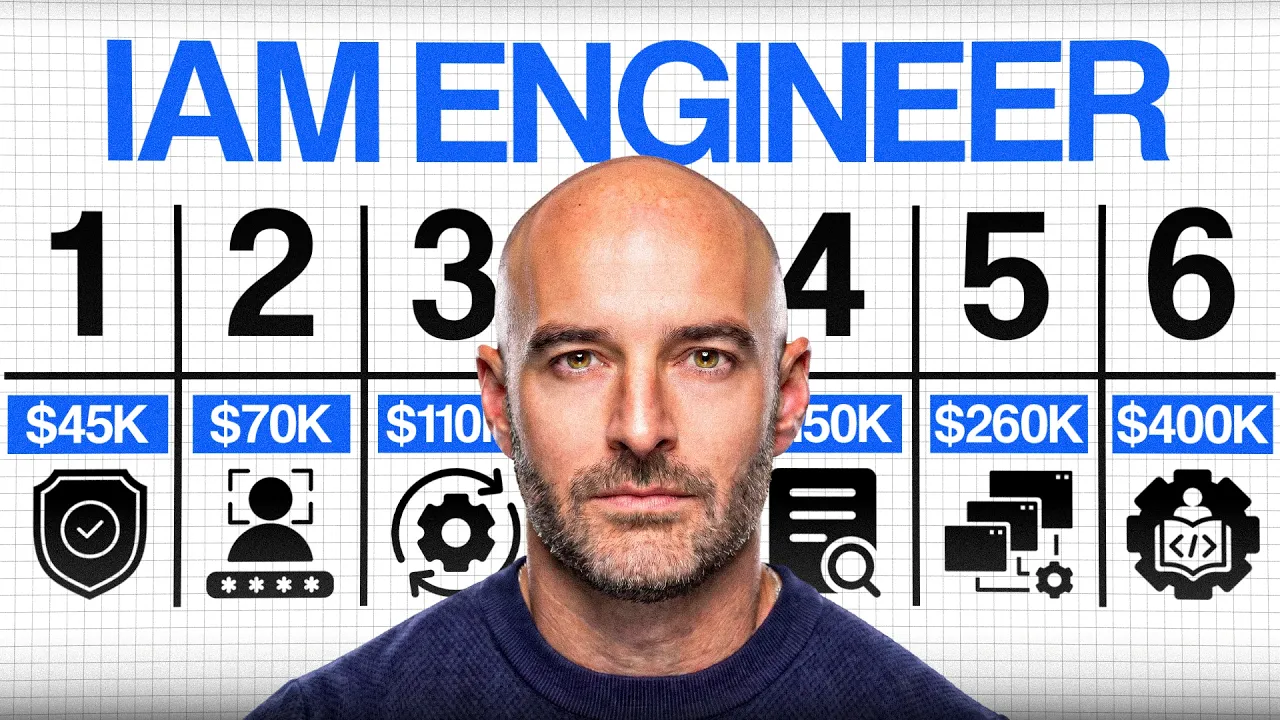
The video argues that generalist network engineers must specialize in niche skills (like Tufin, Arista with CloudVision, bank-grade automation, zero trust architecture, Nvidia AI infrastructure, and broadcast/media transport) to command top pay. It also outlines six market trends and a four-year roadmap to move from a generalist role to a high-paying specialist track through focused learning and practical certification.
Specialize in high-demand network skills—like Tufin, Arista, zero trust, and AI-focused infrastructure—to dramatically boost your pay and move from generalist to top-tier expert fast.
Summary
Chris Schwenk, aka The Tech Jobber, delivers a sharp, data-driven look at which network engineer skills actually pay off in 2026. He identifies six hyper-niche specialties—Tufin, Arista with CloudVision, bank-grade network automation, zero trust architecture, Nvidia AI Enterprise/InfiniBand, and broadcast/media transport—that consistently top the pay bands in large banks, hedge funds, and Fortune 500s. The core message: in today’s market, being a generalist puts you at a significant salary disadvantage compared to a focused expert who can automate, secure, and scale complex networks. Schwenk backs this up with real JD examples showing rates from $700 to $875 per day for niche roles, and he maps out a four-year roadmap to transition from beginner to senior specialist or trusted architect. He also highlights six market trends—networking as code, firewall specialization, cloud networking as baseline, EVPN/VXLAN mastery, ServiceNow and GitOps, and the return of on-prem AI infrastructure—that are reshaping demand. Throughout, Schwenk emphasizes practical steps: earn a CCNA, pick one of four deep-dive tracks (cloud networking, firewall automation, data center fabric, or AI infrastructure), then layer Python and IaC to monetize your expertise. If you want to ride the next wave in network engineering, this breakdown gives a concrete path and the competitive context to pursue it.
Key Takeaways
- Tufin expertise is a rare, high-pay skill because banks need automation for firewall governance, rule recertification, and compliance auditing, making candidates with Tufin extraordinarily valuable.
- Arista fluency—specifically CloudVision and validated designs—yields top-tier rates in financial data centers and hyperscale environments, far beyond general Cisco know-how.
- Bank-grade network automation (Python, Ansible, Git, ServiceNow) turns a stack of separate skills into an integrated capability and commands 180K–220K salary range or 80–91 USD/hour on contracts.
- Zero trust architecture expertise (designing migration paths with Zscaler, Cloudflare, Netskope, Palo Alto) enables consultants to bill at 400–600/hour and positions specialists as strategic hires for Fortune 500s.
Who Is This For?
This is essential viewing for network engineers aiming to jump from generalist roles to high-paying specialist tracks. If you’re weighing which certifications or technologies to prioritize in 2026, Chris Schwenk’s framework helps you pick one path and go deep.
Notable Quotes
"One skill, Tufin. I almost never see this skill on resumes, but every bank job description that lists it is paying top of the band money."
—Introduces Tufin as a high-value, rare skill with premium pay in banks.
"Arista fluent engineers are extremely rare. Specifically, engineers who know CloudVision portal and Arista's validated designs framework."
—Highlights the scarcity and value of deep Arista expertise.
"Python showed up in five of the six jobs I looked at. Five out of six. Not as a nice-to-have, as a required skill."
— Emphasizes the shift to network development via scripting.
"These projects are massive, multi-year, and the people who can actually architect them end to end are extremely rare."
—Underscores the importance and scarcity of zero trust architecture skills.
"If you are a network engineer in 2026 trying to figure out where the puck is going, well, this is it."
—Summarizes the market direction toward on-prem AI infrastructure and data center skills.
Questions This Video Answers
- What are the highest paying network engineering specializations in 2026?
- How can I convert a traditional network role into a bank-grade automation specialist?
- What is EVPN and why is VXLAN becoming essential in data center networking?
TufinArista CloudVisionAVDbank-grade network automationPythonAnsibleGitServiceNowzero trustZscaler","Cloudflare","Netskope","Palo Alto Prisma","EVPN","VXLAN","SPINE-LEAF","InfiniBand","NVIDIA AI Enterprise","AI infrastructure","broadcast and media transport
Full Transcript
One skill, Tufin. I almost never see this skill on resumes, but every bank job description that lists it is paying top of the band money. Today, I'm going to explain exactly what it is, why it's printing money right now, and five other skills just like it that you can acquire in the next 15 minutes. Because I just tore apart six real network engineer job descriptions that hit my inbox within the last 30 days. We're talking $700, $800, $875 a day type money. Big banks, hedge funds, and Fortune 500 enterprises are all hiring these skills. What I found inside those JDs is going to change how you think about your career.
Let's get into it. So, you might be saying, "Who is this guy talking about network engineer skills?" Well, my name is Chris Swank, aka The Tech Jobber, host of The Tech Jobber podcast and YouTube channel that you're watching right here. I also have 15 years in the tech recruitment space, where I get these type of jobs on a daily basis from major clients. So, these weren't pulled from some LinkedIn or Indeed article. I didn't find these on some Reddit thread. These are actual opportunities I have received in the recruitment business. And what I'm seeing right now in 2026 is the biggest pay gap I've ever witnessed between generalist network engineers and specialist network engineers.
That gap is what this whole video is about today. So, let's start with Tufin. Tufin is a firewall governance platform. And it automates rule recertification, compliance auditing, and change reconciliation across multiple firewall vendors. But, here's why it pays so well. Banks and large enterprises are getting hammered by auditors. They need someone who can automate firewall compliance. So, right now the pool of candidates is microscopic, but the demand enormous. I almost never see Tufin on a network engineer resume. But, when it shows up in a JD, that pay range is always at the top of the band.
Always. That's what a skill shortage looks like in real time. Niche skill number two, Arista. CloudVision and AVD Cisco engineers are everywhere. You can throw a rock and hit one. However, Arista fluent engineers are extremely rare. Specifically, engineers who know CloudVision portal and Arista's validated designs framework. Finance shops absolutely love Arista. Broadcast and media shops also love Arista. Hyperscale data centers really love Arista. And there are not enough engineers who actually know it deep. If you can speak fluent Arista plus automation, you can basically name your rate inside a financial data center team. Cisco fluency gets you in the door.
Arista fluency gets you to the top of the band. That's where we want to be. Okay, niche skill number three, bank-grade network automation. This is Python plus Ansible plus Git plus ServiceNow, all working together as an integrated system. Not four separate skills on a resume, one integrated capability. One of the bulge bracket Wall Street banks that I reviewed was paying 80 to 91 dollars an hour on a contract basis for this exact profile. And this same profile on the salary conversion was looking at 180 to 220K range. Basically, for network automation inside a bank. The automation layer is where the generalist ceiling disappears.
Niche skill number four, zero trust plus sassy architecture. Every Fortune 500 is migrating to a zero trust model. Literally every one of them. Zscaler, Cloudflare, Netskope, Palo Alto Prisma. These projects are massive, multi-year, and the people who can actually architect them end to end are extremely rare. If you can sit in a room with a CISO and design the migration path from a legacy perimeter network to a full zero trust model, you're a specialist. And specialists in that space are billing out as consultants at 400 to 600 an hour. That's the consultant track, and this is one of the fastest paths to it.
Okay, niche skill number five, InfiniBand plus Nvidia AI Enterprise. This is the one that Ed Morando mentioned on our interview last week. If you want to play in the cutting-edge AI infrastructure space, GPU clusters, the largest models, the most expensive compute on Earth, you need to learn InfiniBand. Ethernet doesn't move data fast enough between GPUs, InfiniBand does. And Nvidia, the 500-lb gorilla of AI, has its own networking stack now. If you go become an expert in Nvidia AI Enterprise in deploying and managing the networking layer inside Nvidia GPU cluster, you are in a club of basically nobody.
And as Ed said in our interview, look to get certified in Nvidia. They've got great material out there. Become an expert at deploying and managing AI models. But we didn't talk about Nvidia. That's another area where I would look to get certified, and they've got some great material out there. Nvidia's the the 500-lb gorilla. They're not going anywhere. If you are a network engineer in 2026 trying to figure out where the puck is going, well, this is it. This skill set in 3 years is going to be like being a CCIE in 1999. Get there first.
The people who get NVIDIA certified today are going to be the CCIEs of the AI era. Okay, niche skill number six, broadcast and media network transport. This is the last one of the hyper niche. But I want you to hear because it shows what specialist pricing looks like at the extreme. There are network architects who specialize in broadcast video transport networks. The kind of networks that carry live sports, live news, and live entertainment for major media companies. That work uses very specific protocols. SMPTE 2110, PTP timing, multicast at scale. The pool of engineers who can design those networks is maybe a few hundred people in the entire country.
And I'm not exaggerating in that. These people basically name their price. I just reviewed a candidate profile last week who fits this description exactly. 20 plus years, CCIE, Arista plus broadcast plus automation. That candidate is functionally unreplaceable. That's what extreme specialization looks like. Six skills, six different paths to the very top of every pay range. [clears throat] Now, let me show you why these skills matter and what the job market actually looks like right now. Now, here's where it gets really interesting. Let's look at six trends across all these job descriptions. So, trend number one, network engineer is now network developer.
So, Python showed up in five of the six jobs I looked at. Five out of six. Not as a nice-to-have, as a required skill. The job has changed. If you can't script, you can't compete for the high-paying roles anymore. The companies are tired of engineers who configure devices one at a time. They want engineers who can write code that configures 500 devices at once. Python fluency is the difference between 95k and 140k at the same company. Trend number two, firewalls got promoted to a specialty. So, three of the six job descriptions were essentially firewall-centric roles.
Palo Alto, Check Point, and firewall governance platforms. And these aren't configure a rule and go home jobs. These are firewall as code jobs. You're writing automation that audits rules, recertifies policies, and integrates with the ITSM workflows. Pure routing and switching jobs I used to see years ago, those are getting absorbed. Firewall specialization is breaking off as it's totally own track. And good thing for you, the rates on that track are noticeably higher. So, firewall specialist plus automation is the top of the band every time. Okay, so trend number three, cloud networking is table stakes. AWS or Azure showed up in five of the six JDs.
VPC architecture, direct connect, transit gateway, and route 53. These are no longer bonus skills. They are CCNA level expectations now. If you don't know how a VPC peers, how a transit gateway routes between accounts, how direct connect actually works, you're going to get filtered out before human ever reads your resume. Cloud networking isn't a differentiator anymore. The absence of it is actually a disqualifier now. Okay, trend number four, VXLAN and EVPN is the new BGP. So, every data center focused JD in the stack listed VXLAN and EVPN by name. Spine-leaf architecture, fabric design, overlay networking.
This is what separates the $80 an hour engineers from the $700 a day engineers. And if you can troubleshoot EVPN control plane inside a multi-site Arista or Cisco fabric, you're in a tiny club. And that club gets paid like one. EVPN fluency is a genuine moat. And almost nobody has it deep. Okay, trend number five, ServiceNow plus GitOps. This is the boring one. This is the trend nobody talks about on YouTube. The top paying JDs, especially out of banks, all require network engineers to integrate their changes into ServiceNow workflows and version control through Git. It's not exciting.
It's not what you put in your LinkedIn bio. But it's quietly the difference between a senior network engineer and a senior network engineer who works at a bank making double. The boring skills are often the biggest multipliers. This is one of them. Trend number six, AI is dragging networking back to on prem. Lean in on this one. Because this is the trend that is going to define the next five years of this entire field. For the last decade, everyone told you on prem data centers were dead. Cloud, cloud, cloud. Networking is commodity skill. Just learn AWS and shut up.
That story just totally flipped. AI infrastructure is bringing the data center back hard. You've probably seen this in the news all over the place, these big companies building the massive data centers. If you think about the infrastructure space right now, we're in a period where people are finding cloud-native infrastructure a little more expensive. So, it's transitioning back to data center. So, data center was dead and then we have this this super cycle here with AI and it's it's it's the real deal. Um this isn't pixie dust. I mean, this is going to be our future.
Here's why. Modern AI workloads need GPU clusters that talk to each other at 400 gigabits per second. Traditional cloud networking can't handle that economically. So, what's happening? The Fortune 500 is going back to hardcore old school on-prem builds. Bare metal hardware, connected GPUs, liquid cooling, converged storage, and 400 gig fabric. The skills that everybody told you were going extinct in 2018, they're actually the most valuable skills in the building right now. On-prem data center expertise went from legacy to premium in 18 months. And we're still early on this. Okay, so you've got the skills, you've got the four trends.
Let's do a four-year roadmap of where you go from here. Okay, so year one, absorb. Get your CCNA. Stop debating it. Just go get it. Land any role that puts hands on real production gear. NOC, junior network engineer, network admin, doesn't matter. You're there to learn how packets actually move, how a real production change ticket works, how to troubleshoot at 3:00 in the morning without breaking the entire company. That's year one. Now, let's move. Year two, pick your specialty. This is the most important year. Most engineers blow it because they try to be good at just about everything.
Don't do that. Just pick one. You've got four options. Option one, cloud networking. Get the AWS Advanced Networking Specialty Cert. Build VPCs. Set up transit gateways across accounts. Option two, firewall automation. Get the Palo Alto PCNSE. Spin up a Palo Alto VM in your home lab. Automate rule changes with Python and the Palo Alto API. Option three, data center fabric. Get the CCNP data center or work with Arista vEOS in EVE-NG. Build a spine-leaf fabric and run EVPN. Break it and fix it. And option four, AI infrastructure. This is the new one for 2026. Cisco ACI to start, then Kubernetes, then NVIDIA AI enterprise certification and Infiniband.
That stack right there is the highest ceiling specialty in the entire field for the next five years. Pick one of those four, not all four, just one and go deep. By the end of year two, you're no longer a generalist. You're an actual specialist. Year three, monetize. Whatever specialty you picked, now you layer Python and infrastructure as code on top. Ansible playbooks, Terraform modules, Git workflows. These are every job description I'm seeing right now. Now you're not just an AI infrastructure engineer, you're an AI infrastructure engineer who writes Terraform and integrates with ServiceNow. That's when your rate is going to jump up.
That's when you start seeing senior W-2 offers in the 150 plus range or your first contract offer at 80 plus an hour. And year four, decide. This is where you choose your end game. Path A, go architect, senior architect, principal architect, eventually a distinguished engineer. Enterprise architects routinely land between 250 and 350K. I've recently seen cloud architects over 400K total comp. That's the individual contributor track. You don't even have to manage people to get rich. Plan B, go consultant, independent, bill your hours, specialize in one thing, SASE migrations, firewall governance, EVPN fabric builds, AI fabric design, and charge 200 to 400 an hour.
Both paths lead to the same place. You just have to pick the one that fits how you want to live. Okay, so here's the takeaway. In 2026, being a generalist network engineer pays you okay money. Being a specialist pays you pretty much what a lot of surgeons make. The gap between those two outcomes is two or three specific skills and 18 to 24 months of extreme focus. That's it. Pick your specialty and stop being a generalist. It's transitioning back to data center. So, data center was dead, and then we have this the super cycle here with AI, and it's it's it's the real deal.
Um this isn't pixie dust. I mean, this is going to be our future. Okay, and if you haven't watched that interview with Ed yet, it's linked below at the end screen. Go watch it right after this so he can validate everything I'm talking about right now. And if this video helped you at all, please hit subscribe. I'm doing one of these breakdowns for every major tech career track this year. We're doing cloud engineer, devops, cybersecurity, basically everything you can think of. I've seen it in my recruitment [clears throat] business. We're going to break down the roles and see what is actually getting hired in 2026.
Thanks. I'll catch you in the next one.
More from Chris Schwenk | Tech Jobber Podcast



Related Videos
![Applied Data Science With Python Full Course 2026 [Free] | Python For Data Science | Simplilearn thumbnail](https://rewiz.app/images?url=https://i.ytimg.com/vi/T9ricGdHz1k/maxresdefault.jpg)
Applied Data Science With Python Full Course 2026 [Free] | Python For Data Science | Simplilearn
 Simplilearn
 08:09:43
![Applied Data Science With Python Full Course 2026 [Free] | Python For Data Science | Simplilearn thumbnail](https://rewiz.app/images?url=https://i.ytimg.com/vi/JDno0vHtoiw/maxresdefault.jpg)
Applied Data Science With Python Full Course 2026 [Free] | Python For Data Science | Simplilearn
Simplilearn 08:09:50
![AI With Python Full Course 2026 [FREE] | Learn Artificial Intelligence With Python | Simplilearn thumbnail](https://rewiz.app/images?url=https://i.ytimg.com/vi/SzD52e4Scgs/maxresdefault.jpg)
AI With Python Full Course 2026 [FREE] | Learn Artificial Intelligence With Python | Simplilearn
Simplilearn 03:20:30
![AI With Python Full Course 2026 [FREE] | Learn Artificial Intelligence With Python | Simplilearn thumbnail](https://rewiz.app/images?url=https://i.ytimg.com/vi/T0Bzh5JEDzc/maxresdefault.jpg)
AI With Python Full Course 2026 [FREE] | Learn Artificial Intelligence With Python | Simplilearn
Simplilearn 03:20:38
![Machine Learning With Python Full Course 2026 [FREE] | Python Machine Learning Course | Simplilearn thumbnail](https://rewiz.app/images?url=https://i.ytimg.com/vi/UW3-UUyh3Lo/maxresdefault.jpg)
Machine Learning With Python Full Course 2026 [FREE] | Python Machine Learning Course | Simplilearn
Simplilearn 11:18:44
![Machine Learning With Python Full Course 2026 [FREE] | Python Machine Learning Course | Simplilearn thumbnail](https://rewiz.app/images?url=https://i.ytimg.com/vi_webp/EkhpHYXMuAk/maxresdefault.webp)
Machine Learning With Python Full Course 2026 [FREE] | Python Machine Learning Course | Simplilearn
Simplilearn 11:18:51
Get daily recaps from
Chris Schwenk | Tech Jobber Podcast
AI-powered summaries delivered to your inbox. Save hours every week while staying fully informed.