Google’s March Core Update: The Semrush Glitch, YouTube’s Takeover & a New SEO Threat

Chapters8
Discusses the mixed reactions to Google's March core algorithm update, noting notable gains for several sites while acknowledging some that did not benefit. The creator shares early impressions and observations from social data and screenshots.
YouTube and YouTube-driven signals are skyrocketing during Google's March core update, while Semrush data glitches complicate early readings and fake AI-content trends are being weaponized in reviews.
Summary
Edward Sturm breaks down the ripples from Google’s March core update, highlighting how YouTube remains a clear winner in search influence while Semrush’s data spikes create conflicting signals. He notes a surprising revival for some sites—despite reports of global volatility—yet cautions that Semrush data can be unreliable around early April. The episode dives into how YouTube has become the most cited and clicked site in AI workflows, with Clauss of PromptWatch observing a surge in YouTube’s citation share for AI mode. Sturm explains a troubling new tactic: brands paying creators to publish “review” videos that break down competitors without using the product, often aided by AI, which is driving misleading sentiment on Google and ChatGPT. He also shares a practical coping strategy—aggregating genuine brand reviews into montage videos to outrun misleading transcripts and preserve authentic signal. Beyond warnings, Sturm points to actionable paths, including leveraging YouTube and Reddit for defense and recommending his own compactkeywords training as a stable, non-spammy SEO approach. Finally, he calls out the ongoing debate around scaled AI content and the risks of linking patterns from satellite domains to your money site. The episode closes with a plug for his course and a firm reminder to stay vigilant as data sources clash during update waves.
Key Takeaways
- Semrush data showed explosive spikes around April 2–4 that did not align with Google Search Console results, signaling a reporting glitch users should beware of.
Who Is This For?
Essential viewing for SEO professionals, content marketers, and brand strategists who want to understand the real moves behind Google's March core update and spot deceptive review tactics influencing YouTube and AI-powered search.
Notable Quotes
""Seemrush data around April 2 confirmed false. Many sites are experiencing explosive growth according to Seemrush from April 2 to April 4th.""
—Sturm alerts viewers to a data reliability issue with Semrush during the update window.
""YouTube doubled in citation share for AI mode. Same with Tik Tok.""
—Cites Clauss from PromptWatch on rising YouTube influence in AI contexts.
""What people are now doing, black hats are now doing is they are paying creators and it's not a it's not an existing creator with their own YouTube channel.""
—Describes a manipulation tactic where paid review videos skew brand perception.
""The safest way to do it is to scale it on a satellite domain that is not connected to your Google search console...""
—Sturm shares cautious guidance about scaling AI content without harming main sites.
""If you want to get my method of doing search engine optimization that is very immune from the crazy volatility of Google core updates... compactkeywords.com.""
—Promotes his SEO course as a stable alternative.
Questions This Video Answers
- How reliable are Semrush spike reports during Google's March core update?
- Why is YouTube becoming the dominant signal in AI-powered search and citations?
- What are the risks of brand review videos paid to sway comparisons in SERPs?
- How can brands defend against manipulated transcripts and AI-driven content, according to Edward Sturm?
- What does Edward Sturm recommend instead of scalable AI content on money sites?
Google March Core UpdateYouTube SEO signalsSemrush data anomalyAI-generated content risksBrand review videosPromptWatch ClaussReddit SEO dynamicsHubSpot update impactSatellite-domain SEOCompact Keywords course
Full Transcript
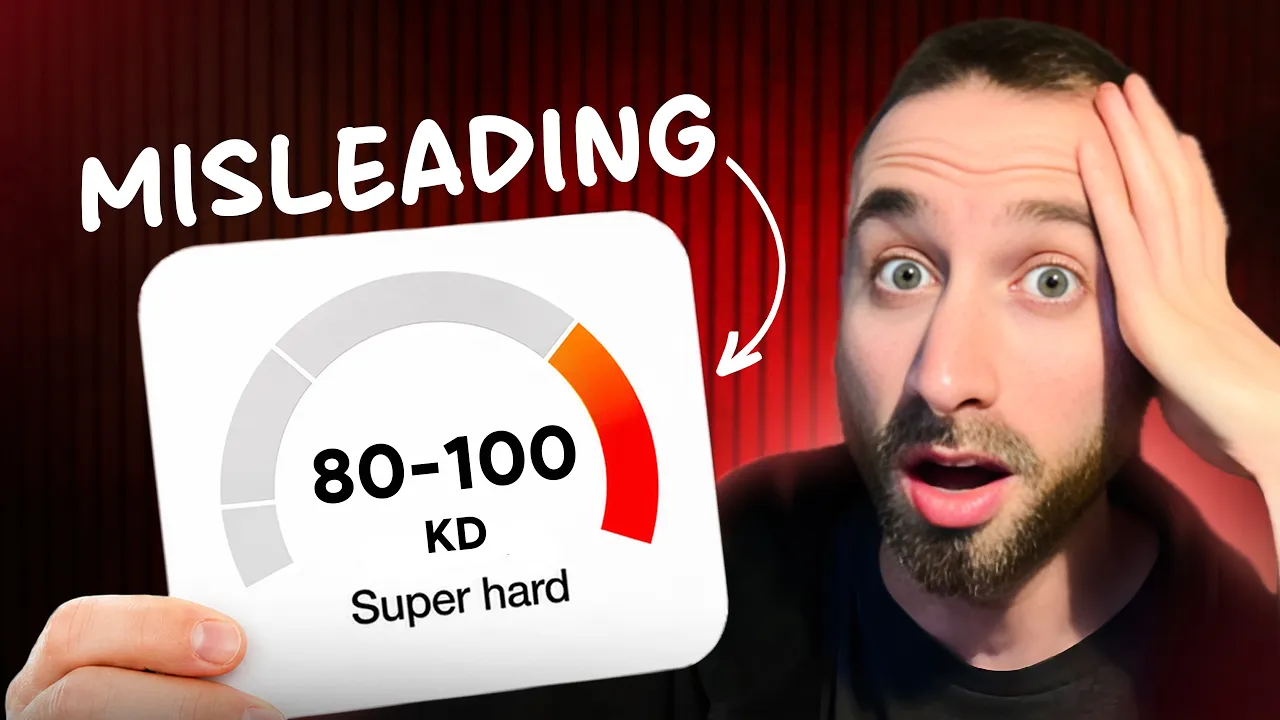
Google's March Core algorithm update is definitely not a nothing burger, but at the same time, it is not as crazy as people originally thought, including myself. I actually made an episode before this. I recorded for 30 minutes about all the crazy stuff happening with Google's March core algorithm update. Scaled AI SEO content seemed to be hopping. AI Invest, a financial AI news site, was way up after originally getting hit by Google's August spam update. HubSpot, which got hit, went up again. Reddit going up as well. YouTube, according to Semrush, is popping so much that Seamrush created a new unit for it and called it big at 1.4 trillion clicks a month from search, even though there's only around 400 billion searches every month.
So many sites. Now, not all sites were up, but so many sites were up. And so I originally thought because I found some that weren't up. I originally thought that actually this is crazy. This is crazy. What is happening with Google's March Core update? I was sharing sem screenshots, other people were sharing Semrush screenshots. I recorded this episode and then I looked at another site. I looked at a site that I have, one of my sites, and I saw that Seamrush gave me a 10x increase for this site. I don't even maybe it was even more than that.
And I looked at Google Search Console and that did not happen in Google Search Console. And it's all the crazy thing about this is it's all around the same dates. And so Semrush is not reporting properly. Seamrush shows from April 2nd to April 4th crazy spikes up with tons of websites. So if you are seeing that on X or LinkedIn, there's a problem with Seamrush. However, the spike in YouTube though not getting 1.4 trillion clicks every month from Google still is legit. YouTube is still getting even more cited, even more clicked, even more referenced than it was before.
And prior to this update, YouTube was already the most clicked site according to Datos. It was the most clicked site in search and according to Ade, the most cited website in Chat GBT. I just came across this post by Clauss, founder of PromptWatch, and Clauss has been on the show before. He said, "Looks like YouTube doubled in citation share for AI mode. Same with Tik Tok. Again, if you want to show up in organic search, make videos. And I really can't tell you how true this is. I'm seeing a new trend that is so it is blowing my mind and also really annoying me because if you have a popular brand that people search for.
What people are now doing, black hats are now doing is they are paying creators and it's not a it's not an existing creator with their own YouTube channel. They're paying someone to make quote unquote review videos breaking down their competitors and then at the and without buying the products. So what will happen is one of these creators they're using AI too, but AI is more of a risk. So human creators, they they convert better, they're more trusted, it's less likely to be seen as scaled AI content on YouTube, which YouTube has a policy about. And so the way that these videos look is it targets the brand name plus the word review as a legitimate review on YouTube when in reality the creator is recording their screen breaking down the landing page of one of these competitors giving their opinion and then giving the company that they were paid to promote as the better alternative.
And I'm seeing this all over the place. And it's working scarily well. And I am seeing it firsthand getting cited in chatt getting cited in chatpt getting referenced on the first page of Google. And when you look at one of these creators on YouTube, one of these YouTube accounts, all of their videos are brand name plus review. And it is the same exact format. And the the transcript is rich. I'm going to review this brand today. This is a review, the this brand review. And here's what you need to know before jumping in. That's what the transcripts look like.
Again, it is literally just a creator giving commentary on a landing page without using the product and then recommending their own product or a product that they're paid to recommend as an alternative. It's so crazy and it's working really, really well right now because YouTube is so heavily cited in chat GPT and it's so widely clicked within search. I'm going to be making more content about this because I'm thinking about the best ways to combat this cuz I am seeing this happen with brands that I have. So now I'm like, okay, well, I need to stay on top of this.
How am I going to do that? What I think a good way to do will be to actually aggregate your own reviews and make almost like a montage video of your reviews with your own commentary with it. So, you're saying all the things about your brand that you want to say and maybe you even say other brand other brand review videos are false and the people didn't even get the product and maybe you have to say that and that because then LLMs are going to come across that transcript and maybe disregard the other transcripts because you see you see that actually as a pattern within large language models.
They will do initial query fanouts. So they will do initial searches and then they will go deeper into the brands that they found with the language that they found around those brands. So this is something that I'm thinking a lot more about right now. It's really crazy what is happening. YouTube's March core algorithm spike is not false. It is serious. Aside from this, Charles Float put out a post about Google's March core algorithm update. It's really good. Charles said, "Welcome to day 11 of the core update. So far, we have seen the initial surge of listical/parasite domains from the spam update falling back off again.
So, keywordrich posts on USA Today or things are are not working as well anymore. Subdomain/cononical abuse getting more prevalent than ever, especially in international SERs. I've seen that, too. The biggest winner so far, YouTube. There we go. Reddit saw some initial declines and is now going to the moon from our tracking this. It is because it hadn't rolled out as strongly internationally as it did in the United States, United Kingdom, and Canada, but has now gone fully global. Thin, lowquality pages, and by extension, techniques like programmatic SEO are still being targeted. There seems to be large overlaps between these last two updates and the testing we saw in the weeks leading up to it and the August 2025 spam update.
HubSpot, which got hit hard by the August 2025 update and several previous updates, has continued losing positions and traffic. This is exactly the opposite of what Seamrush shows. And it's another example of why this data that is going so cuz you see these spikes in Seamrush and it is going so viral there. If you are very into search engine optimization, there is a chance and I put out posts like this myself cuz I couldn't believe it. When I see crazy things in SEO, I share it. That's what I got to do. But I also put out a post, if you're following me on any social media, I put out a post saying, "Okay, Seamrush data around April 2 confirmed false.
Many sites are experiencing explosive growth according to Seamrush from April 2 to April 4th." And yeah, the number one thing is YouTube is easy. YouTube is being abused and YouTube needs to be taken advantage of for defense in the same way that Reddit should be taken advantage of for defense. But Reddit is harder to do. It's harder to age an account on Reddit than it is to have an account that you can post with on YouTube. YouTube is much easier to get started with. And that's one of the reasons why we see it so abused now.
All of these patterns are absolutely insane. I originally thought that the winner of Google's core algorithm update was AI content, which is funny because Replet, the vibe coding tool, just put out a post. There's no longer an obstacle to creating SEO optimized content at scale. And the comments in this post are just all jokes. Sean Anderson, who's been on the podcast before, he said the one obstacle and he shares Google's spam policies from Google Search Central. Marie Haynes shares that as well. She shares their scaled content abuse policy. And anybody who's been in SEO for a while knows that if you are scaling SEO content with AI, you are going to get hit.
It is not a matter of if, it is a matter of when. The safest way to do it is to scale it on a satellite domain that is not connected to your Google search console and that does not link aggressively to your main site. It links to lots of other sites as well. So, it is hard to pin back to your domain if the patterns with that site were to be analyzed and so it can't be pinned back to your brand. It is a satellite domain. It is not your money site. That is a safe way to do it.
But lots of huers out there suggesting that you do it on a money site, which is not smart. Do not listen to the people saying that. But yeah, so I thought that these scaled AI content sites that had gotten hit were making a comeback. That is not the case at all. The biggest guarantee we have is YouTube. If you want to get my method of doing search engine optimization that is very immune from the crazy volatility of Google core algorithm updates, that is at compactkeywords.com. It is my 13 and 1/2our SEO course. A lot of people they told me that they were burned by other SEO courses because there are so many bad courses out there.
And what a lot of people who make courses will do is they will spend a weekend making their course and it's not very good and it is just a money grab. I spent and maybe maybe some of them will spend a month but still in order for it to be good that has to be the only thing that they do. I spent a year making compact keywords and I update it about every week or every other week. So I spent a year making it. It is constantly updated and the reviews speak for themselves. You just go to compact keywords.com, see the reviews, see the people who are giving the reviews because I share their LinkedIn, read the frequently asked questions, just hear about the methodology and you'll be like, "Oh my gosh, this makes a lot of sense." And that is my method of doing search engine optimization.
It is very stable with Google core updates because you are literally giving searchers what they want and you are not trying to spam. You are just trying to take advantage of the gap that there is where there are all these high purchase intent keywords for your brand that your competitors don't know how to target. And I show you how to find these keywords, how to target these keywords, how to structure your site for the pages that target these keywords, how to build links, how to do a site audit, and so much more. And that is at compactkeywords.com.
I hope you will check it out. And that is everything that I've got for you on episode 108 of the Edward Show. 108 days in a row doing this podcast. This is my second time doing this podcast today because I want to give the best information that I can. And when I realized that that Seamrush data was false, I said, "No, no, no. I got to re-record." So, if you watch this on YouTube, thank you so much for watching. If you listened on Spotify or Apple Podcasts, thank you so much for listening and I will talk to you again tomorrow.
Bye now.
More from Edward Sturm
Get daily recaps from
Edward Sturm
AI-powered summaries delivered to your inbox. Save hours every week while staying fully informed.