Wil Reynolds: Why Most SEOs Are Playing the Wrong Game

Chapters14
Wil Reynolds discusses his lengthy SEO career, authority in the field, and the value of tenacity over tenure, highlighting his early experiences and ongoing passion for the craft.
Will Reynolds argues that real SEO impact comes from human insight, senior-level strategy, and scalable AI-driven systems—not just chasing quick wins or tool-led tactics.
Summary
Will Reynolds—speaking on Edward Sturm’s show—frames a career-wide philosophy: the value in SEO isn’t just years on the job, but relentless tenacity, human-centric research, and honest client conversations. He critiques common SEO mentalities, from vanity keyword ranking to overreliance on listicles, and he shares how SEIR Interactive shifted toward “compact keywords” to drive sales with fewer pages. Reynolds emphasizes talking to real users, analyzing intent, and aligning content with what searchers actually want, rather than building content to chase the algorithm. He reveals practical workflows that blend PPC and SEO data, AI agents, and CRM transcripts to automate higher-value tasks while keeping humans in the loop. The discussion also covers the dangers of spammy or misleading tactics in AI-assisted search, and the importance of brand credibility and trust over hollow ranking signals. Reynolds also reflects on lessons learned from failures, the value of renewal-driven growth, and how to balance quick wins with long-term brand building. Throughout, he advocates for building scalable systems (agents, orchestrators, MCPs) that let teams react quickly to change without sacrificing quality or ethics. The conversation weaves in personal stories about mentorship, resilience, and staying grounded in real marketing rather than merely chasing tools.
Key Takeaways
- Connecting PPC and SEO data reveals term-level performance and true conversion potential, replacing guesswork about which keywords deserve effort.
- Compact Keywords convert better than traditional long-form SEO because dozens of pages target real buyer intent with minimal word counts (~415 words per page).
- Talking to humans—searchers, users, and clients—unlocks insights that aren’t visible in tool outputs alone, guiding better content and product-market fit.
- AI orchestration (agents, MCPs, and workflows) can automate frequent, high-leverage tasks (like internal linking) and speed up project delivery without sacrificing quality.
- Focusing on brand credibility and retention (renewals) produces steadier, longer-term value than chasing constant new-client wins.
- Beware exploitative AI tactics (anonymous reviews, misleading comparisons) that can mislead LLMs; transparency and relevance protect long-term results.
- Long-term strategy beats rapid, hacky wins: articulate a clear time horizon for clients and present short/medium/long-term plans with tradeoffs.
Who Is This For?
Essential viewing for SEO leaders, agency owners, and digital marketers who want to future-proof growth by combining human insight with AI-driven processes, not just chasing rankings.
Notable Quotes
""Compact Keywords is a 13-hour deep course on getting sales with SEO.""
—Reynolds promotes his compact keyword framework as a scalable path to sales-driven SEO.
""Talking to human beings. Too many of us want tools. We don't watch real people do search.""
—Critique of overreliance on tools and prompts without human-grounded research.
""The least disruptible skill in marketing is understanding why people buy.""
—Core philosophy on buyer psychology as a competitive moat.
""If you just spend some time trying to understand humans, it can take you in so many places that are greater than just the things that your client asked you to do.""
—Advocates for deeper user-centric insights beyond client briefs.
""Renewals are better than new clients. Renewal means you did it.""
—Emphasizes revenue stability through client retention and outcomes.
Questions This Video Answers
- How does Will Reynolds redefine successful SEO beyond top rankings?
- What are compact keywords and how do they outperform traditional SEO pages?
- How can PPC data be combined with SEO data to improve keyword strategy?
- What are AI agents and MCPs, and how do they affect SEO workflows?
- Why should marketers fear exploitative AI reviews and how can brands defend themselves?
SEOWill ReynoldsSEIR InteractiveCompact KeywordsAI in SEOLLMsInternal linking automationBrand credibilityGrowth strategyContent marketing
Full Transcript
Will Reynolds, you and your agency, Seir Interactive, are extremely well known in SEO. Um, so thank you for coming on the podcast. I'm really excited for this. It's my pleasure. Thanks for having me. Thank you. Um, for people who don't know, could you share your background? Oh, Jesus. Where do you want me to start? Um, I don't know. Just talk about how long you've been doing SEO for. you've been I mean you have you've been on so many stages like it's just for the few cuz because there's a lot of people who are new in SEO who listen to this show.
So I guess for those people got it. All right. Well um there's a reason why I asked that question. Um I used to really suck at sales and one of the reasons why I sucked at sales and when I work with my sales coach what he taught me was like people would ask a question like you asked. Hey, tell me about, you know, your background. And I'd be like, oh, I started sear out of my apartment and blah blah blah blah. And he's like, you qualify a question with a question. So that when you finally open your [ __ ] mouth cuz I talk too much, you know what to [ __ ] say instead of me assuming I knew what you wanted.
So that is like 14, 15, 16 years ago training back when I knew what I was doing in SEO, but I was not selling well. And it was one of those like, oh [ __ ] like I'm getting beat on sales not because I don't know what I'm doing. It's because I'm not qualifying what people are asking. So with that said, um I started the company in 2002. Um August 2002, I started doing search in August of 1999. I worked in I got I I I got out of college. I worked in an agency for about a year and a half.
I worked in house at a Fortune 500 for about a year and a half. And then I decided to start Seir uh shortly thereafter. So that's how it got started. I mean I've seen you know it's you gotta be really careful what you say because so many people are so like braggy. It's like but when I say I've kind of seen all the things I've seen a lot of the things. Don't brag. Let's hear it. No no no no no. I'm qualifying with receipts. The fact that when I say like I've seen a lot of things.
It's like when I started doing SEO, we did not optimize for Google because the only role that Google had was to be the back-end provider for Yahoo when their search results failed. So like in my brain, I've got some rolodex of every major algorithmic change cuz I was there for it, right? So I've just seen a lot of shifts. That's it. That's a long-winded answer is I've been around. I've been doing this forever. I think how long you've been doing something is different than how much you love doing it during that time frame. And I think the real thing for me is that I have woken up loving what I do since August of [ __ ] 1999 in terms of the work.
And now there have been lols, you know, like I think like three or four or five years ago, preAI was like a yeah, you kind of just get a client with a big enough domain authority and the job was kind of was the it wasn't easy, but the job took on less testing and figuring things out and making educated guesses and it was more like how do I convince my client to make these changes and that's a very different skill than the tinkerers who like to figure out things. So yeah, that's it. I'll brag for you.
You are a legend and I'm lucky to have you on this podcast. That's I'm like, yeah, I'm I'm so happy. You know what I think you do is you earn your status every [ __ ] day. It's another thing that I love about this industry is doing something for 25 years. People like, "Oh, you've been doing it for years." It's like the way that I optimize for Northern Light, Infosek, and [ __ ] WebCrawler have zero value today. So, it's not about your tenure. I always say it's about your tenacity and it's like I'm not gonna let somebody starting off an AI search or whatever just knock my rock off like no way like not happen right so I think it's the tenacity that I bring to it not the tenure that creates 95% of my value this method of marketing is so effective I had to make sure it wasn't against Google's rules before I kept doing it a form of SEO I call compact keywords whereas most SEO focuses on putting up articles to answer questions.
How, what, when. Compact Keywords focuses on putting up dozens of pages that sell to searchers who are actually looking to buy. These pages rank on Google and convert so much better than normal that when I discovered this years ago, I couldn't believe this was allowed. It's less work, too. The average compact keywords page is only 415 words. Compact Keywords is a 13-hour deep course on getting sales with SEO. A customer recently said, "Each lesson is dense with information. You're giving years worth of experience boiled down into 15 to 30 minute lessons with no filler or fluff.
I feel like I'm gaining a new superpower. Compact Keywords is about setting up an SEO funnel that brings you sales for years and years and years. It works with AI. It's less work than traditional SEO and it makes way more money. You can get it now at compactkeywords.com. Back to the podcast. What's something happening in search engine optimization right now that most people are completely underestimating? Talking to human beings. Too many of us want tools. We don't watch real people do search. We don't watch real people put in prompts. And we sit behind these tools with our bots and our automations.
And we're automating things that have no It's like you create workflows that automate things that are not grounded in the real world. It's like, you know, if you saw a bird, I just read this last night in a book I was reading, but it's like, if you saw a bird and you're like, "Oh, if I just tape a bunch of feathers to my arms and do this, I'm going to fly." And it's like, "No, like it's deeper than that, right?" I think we have to go a little bit deeper than just like put this prompt in and track this and track that.
So, that's probably the thing I think most folks are probably missing right now. It's, you know, it's it's crazy. I'm I'm funding this new company and we wasted like three weeks trying to vibe code a visual editor for our site when we could have just been using WordPress. Jesus Christ. Yeah, I think that's a that's a different thing. But I will tell you it is different from talking to humans. But but no, I I'll tell you like the amount of things that you kind of like start vibe coding and think you're [ __ ] cute and then somebody in your team taps your shoulder and is like There's a tool that does that.
Yeah. You know, but you know, I also believe honestly that pain is part of the journey. You know how like for some some things you have to go through the pain of and you got to remember the sting enough to not go back to. And I feel like wasting your [ __ ] weekend vibe coding something, thinking you're hot [ __ ] and having somebody come in on Monday and be like, "Yo, you could have gotten this tool for $6.99 a month that does 80% of what you just built." And you're like, "Okay, next time I'm going to go look for a solution before I build something." Ding, ding, ding.
Check. Yeah. Yeah. And even what we made after 3 weeks was was clunkier and worse than WordPress. Like to a dramatic degree. And it it was it a major lesson. Um talking to humans, I also really believe that I'm one of these people. A lot of people disagree with me. I like doing keyword research. I like talking to searchers. I like talking to users. I like talking to people. Why do you think that? What what sort of outcomes do you get when you actually go and talk to people? Like why does that actually improve your results?
I think it gives you places to look no one else is looking at. So the thing I always loved about keyword research was less about like what's the MSV and it's more like what's in this person's head that made them add these words and then how well does Google understand that intent? Why do they change the results the way they changed them? What do they understand about what the right answer is for this person? Right? Um, so what happens when you watch people, uh, I've seen people look at title tags that have dates in them that don't match the date tag on the answer and not realize that those two things can be different.
Like, so then you're like, "Oh, let me update my title." But you're like, "If everybody that we looked at was looking at this date of your old publish date, they don't think that it's actually 2026. they think it's 2025 cuz they're looking here. It's like [ __ ] like that has been crazy. Or when we would um build like certain like major assets like not just content but like major like chunky assets, calculators and things like that. It was so cool to listen to somebody actually go through the calculator or go through the application. And I'll never forget this.
We built an application for a client of ours and it was to help you figure out how to build a deck. and we gave it to a contractor and videoed him going through it. And at one point in the middle of him going through it, he said, "Do you know how many trips this would have saved me to Home Depot?" And I went, "There's the magic." Because everybody else is like, "Want to build a deck? Let's put that in our title tag. Let's do this. Let's do that." And now everybody looks the [ __ ] same because everybody's looking at who ranks above me, what do they do, semantic relevance, blah blah blah blah blah.
And we were able to pull ourselves out of the sea of sameness and go use this tool if you're sick of making multiple trips to Home Depot, which everybody hates that, right? So we were able to by talking to a human completely change the way that we looked at solving a problem and how we were going to go to market for this client in ways that they hadn't even thought of. But it came from caring enough about building an an asset that we wanted it to work well. So we wanted to show it to humans first before we launched it on the website.
Clickthrough rate is really important. Saying what is going to get people to click. Understanding their pain points and then understanding them well enough that that searchers aren't going to pogo stick like where where a searcher gets to your page and says this business understands me. Looks like you're muted. Yeah. One second. There we go. Um, no. It's like like Yes. Like we act as if just being visible for something is enough to convince somebody to buy your service. So like I rank for huge in SEO. It's huge in SEO. Yeah. Like you rank for it.
So what? Like you know. Um and again I think so much of my learning my my best learnings come from failure you know. Um, so you know, I spent three years of my life trying to rank for SEO company, SEO consultant, and SEO um SEO company, SEO consultant, SEO agency. I spent three years of my life trying to rank for that [ __ ] And I finally got in the top three for all of them. Singular employee, right? No, this is premaps being embedded into Google, so I didn't have the clue that Google learned. Today if you type in SEO company or SEO agency gives you a freaking map pack once Google turned on the ability to understand to take the map and put it in the result and connect those data sets.
Google's like this is a local search. People don't want enterprise level company big company logos. They want a company that's local because SEO company is a local search. I wasted three years of my life trying to rank for a keyword and the only thing it did was cause my BD team to ask me for more resources because they got so many deals that weren't going to close. None of them closed. It did nothing for my business. Wow. It was cool to brag about. It was cool to sit in a room of SEOs and be like, "Yo, I outrank all you motherfuckers." Yeah.
You're on an SEO podcast. And I'm like, "All right." So it felt good but like and it was a sign of credibility I could use with my clients but really I think longterm it was a waste of my time to have ranked for that and I spent three years of my my brain power um learned a lot in the process. Um but yeah you know I spent a lot of time uh to do that and it didn't really have the return on the investment. That's what a lot of SEOs do. They go after keywords that aren't going to bring them customers, users that aren't going to bring them like actual leads, the type of leads that they want, qualified leads.
So, how do you how do you find um keywords with proper intent, qualified searchers? I think one of the things that Well, we just connect all of our PPC and SEO data. I I can't believe people don't do this. Like it's easier now with Claude than ever. But once you connect your PPC and SEO data together, you can actually see the search terms and whether or not they freaking converted. So I don't have to guess anymore. Like, hey, these words convert, these words don't. Hey, you're not paying for the word SEO company. Why not? H I don't know if I want to pay that much for that.
Well, then why do you want me to go after it? Right? It's like one of those things. It's like, oh, it's an ego term for you. You don't want to bid on it and actually spend money, but you want me to go after it for you. Got it. Right. Let's have a different conversation about what the KPI is then because the KPI sounds like you want to see yourself at the top. Not necessarily you want this to drive the business forward because if it was a if it was worth going after, not for every client, but for a lot of client, you'd be like, well, why aren't you bidding on it?
And then you find you find a good keyword. You find a you find a search term that you think has qualified searchers, good intent, and what what type of content do you make for that? First, you got to show it to your client and be like, "Do you think we So, before you even make the content, I like to look at the search result. Do we see any of our competitors there? Which ones do we see? What has Google learned? What is the suggestions look like? What is the related searches at the bottom look like?" I want to take all that understanding from Google, harvest it, and ask myself, should I even be there?
And I think that's the first question people should really ask is, should I even be there? And something I've been showing a lot on stage is how people are building listicles right now to rank well in AI. And I like to pull the Reddit threads that rank for the core keyword. And then once you pull all the Reddit threads, you just have Claude go through and tally up what brands have been mentioned the most. And then you turn around and show people that the company that built the listical and put themselves at the top is mentioned by zero humans in across 30 Reddit threads as a proper solution.
So, if you think about it, right, I think what Reddit gives us is the ability to also say, "Wait, no humans are mentioning your brand at all as a solution to this problem across 30 Reddit threads. Are you really sure we should make a piece of content that not only lists us, but then also lists us as the number one solution? Do you think we're going to turn around and get really high visibility, but then do you think any of those people are going to have any believability that we can actually solve their problem?" I don't think so.
So, yeah, even before you make the content, I like to think like, should we even be there before we get into this fight? What do you think of the listical tactic? It's still uh it's Yeah. You know, listicals are for people that don't know how to do marketing. That's okay. Like, there's no strategy there. It's a loophole. You know, I stole this from Lily Ray. It's like a lot of I was gonna say she'd she'd be she was on the podcast a few weeks ago. She'd be so happy hearing this. Well, like a lot of us um a lot of us are loopholeists, not strategists.
You find a loophole and you do it. Cool. When somebody else finds the same loophole, you're on whack-a-ole, right? I think the least disruptible skill in marketing is understanding why people buy. Now, go and ask people, "What's the last book you read or tell me the books you've read around like buyer psychology?" And people are like, "Oh, no, but I read this new thing from uh, you know, Chris Long about blah blah blah." And I'm like, "All we're doing is lading up to why people buy." And that's another great to me in an AI world where everybody where the machine knows how to do an SEO audit, right?
The machine knows how to find the negative matches in your paid account or whatever. What it's not going to do is be like based on human behavior, based on it just because we also don't prompt it that way, right? But I think it's like yeah, if you just spend some time trying to understand humans, it can take you in so many places that are greater than just the things that your client asked you to do. you know, I remember I would like one of my favorite questions to ask a client since I started off talking about how to ask questions, I've gotten decent at it, if I found another way to hit your goal, would you be open to having that conversation?
That's the kind of question that when you ask a client, you're getting future permission to show them something that's not what they signed you signed on with you for. Hey, I want you to do this thing and get me AI visibility. Got it. Why are we doing that? I need to I need to get at least 20 leads a month. Awesome. If I came up with another way to deploy this exact same budget to hit that goal easier, better, or faster, would you be open to hearing it? I've never had a client say no. That's so useful for all the people with agencies who are listening and who are so tired of getting that question.
We need more LLM visibility. Can you can you do this? Here's what we'll pay right now. The other thing I think that most people are really not good at is um they put their needs before their clients. So then what happens is people try to preserve revenue. And I think the minute that you try to preserve revenue for yourself, you have forfeited your ability to be a true consultant. Because what I've had to do at times after asking that question is you have a client tell you something or or or like you see something and you're like, I think you should go and buy ads.
I think it's a better use of your time. Oh, can do do you manage that? No, we don't manage that. What? Will it's like, yeah, we'll be here when you need these things, but like I think what you need right now is this. So, go ahead and divert 80% of your budget to that and we're just going to take a step down. Agencies suck at at that. And then you lose trust. And then once you lose trust, you lose referrals. And once you lose referrals, you got to pay for paid ads and do listicicals to get your business to grow.
do listicical. Um I I really like what you said about uh reading books to actually understand how to get people to buy. One of uh something that I posted a while back was that like everybody in SEO should read How to Win Friends and Influence People. I've read that book several times. One of my favorite books ever. What are what are books uh that you would recommend to people? Oh, um What's Your Problem is a really good one about reframing. Um Switch is awesome. It's another book around reframing if you uh in my opinion. Um Nudge is a lot like Switch.
Those two are great. Um there's one called Biology. B U Y O L O G Y. That's really good. Um anything by Klay Christensen I tend to love. Just like you know that whole like what's the job to be done of this milkshake? like that kind of stuff that makes you be like, you know, we thought people were getting milkshakes for this reason or that reason, but then when you actually watch the behaviors of people, you know, so I I just love the process of thinking that people are like that you think you know how people make decisions like um there's one book around luxury like luxury goods and it's just really interesting to see how people attribute value to logos and like how that process works.
Like nobody buys a Louis Vuitton bag because it holds [ __ ] better than another bag. So it's like, oh, you're not buying holding things. You're buying I'm a person who can afford this thing and you're not. And it even got into like um uh or I've made it. It could be internal like oh I can buy this thing. I have now made it cuz I can afford that, right? Um, but it's interesting that like I read this somewhere recently. It was like the difference between utility and the price you pay is brand. And I was like, "Oh, that's a bar." Like that's really good, right?
Like so the utility of a thing. Stanley's those freaking mugs, right? Or those those those like water jugs. Like kids love those things and they're like 40 50 bucks like to hold water and it's like it's a status symbol. So you're like, the utility of a water bottle is to hold water. You can get those for free at a conference, but instead we're gonna spend 50 bucks for something to hold water that basically does the exact same thing. The difference between a $5 jug that holds water and a $50 jug that holds the exact same amount of water.
The value of the Stanley brand. Utility versus price. I want to I want to uh talk uh talk about AI and I want to find out how AI has changed uh the way that your team approaches SEO like especially your workflows. What has changed? Maybe it hasn't been dramatic and that's fine too. So I don't run the SEO team anymore. So that's one thing is like I I stopped doing that years ago. People are a lot better at running things like once something gets to a certain size. I'm not a good leader because I'm always trying to change it, you know.
Um, I have a certain personality type. I love change. I love chaos. I love not having to do the same thing every day. And that's not normal. Um, so once a team gets to a certain size, I'm not the right person to run it because what happens is I start changing [ __ ] so fast that they're like, "We didn't even roll out your last change to the keyword process and you've already got a new way to do it, bro." Right? And you're like, "Yeah, I probably shouldn't run a team like that." Um, I can talk about my own personal use.
Um like right now uh like I got this orchestrator called Paperclip and it's pretty much I would say like Claude called uh coworker whatever. Um it's crazy when you start building agents and you realize there's a moment at least for me that I had a couple of like a week ago where I'm like my job is to have is to almost have like two inboxes. my inbox, which is what I work out of, and then my orchestrator inbox, which I I like I like the layout of paperclip a lot. And anytime I've got to open a new tab, oh, let me update my timer so I can track my time.
No, that's now in my agent. So, I'll just tell my agent, build a build a bot that I can change my time with. And then I'll be like, huh, I should go download this uh transcript for this sales call. And then once I download the transcript, then I'll go into like my Readwise where I have all my highlights from all the books that I've read. And then I'm like, "All right, now help me to think about this." And then I go, "All right, now I go to copy all paste all that into Claude." And I'm like, "Help me build out something like a script so I can record a video in Loom for this client or whatever." Right?
I'm like, "No, I shouldn't have to do that anymore. I shouldn't have to open up a bunch of tabs and copy and paste shit." So, what I'm doing is I'm starting to stop that. And then I just spent all my time building out an agent. And then once the agent's built, I'm like, "Well, now you know how to go through all my transcripts, pull out the things that I care about, run it against all the things that I've read using that MCP, extract all the things that I've read, come back to me with three or four things that might apply to this client's current situation, and then give me a script that I can now read through when I'm recording my Loom that sounds like me." Like, I built that this morning.
Oh, man. I've already run it on three clients. The scripts are ready. Now I'm just going to click loom and start recording. Right? Before that would have been copy paste, open this, open that, go into pipe drive, go into your CRM. What deals are sitting in the late stage of the pipeline? What deals have come in? It's like, nah, dude. Like I'm over that. So like that's an example of like I just sit across an orchestrator and anytime I need to go outside of my inbox, my mind now instantly triggers into like, nope, you should be able to have your agent build.
You have your you have one agent build your next agent that goes and does all the things so you don't have to go outside of this inbox anymore. You have one agent that's building your next agent. Yes. Yeah. Of course you have an agent builder because there's a certain way you build an agent. Well, you need to codify that which my team has done in a skill. So now it automatically picks it up and it's like, "Oh, this is how we build agent sets here. So you want to have this, you want to have this, you want to have that, you want to have this.
Great. Thank you." Right. Um, we also have an MCP custom that we built and I'm really starting to believe like that's an unlock. Like I can right now I could by the end of this call literally have this agent bill and I would say go across all my clients that had a phone call today with the team, look at the transcript, see how we talked about their results and then go into BigQuery and tell me if the way we talked about the results matches the actual results of the client instantly. Then I say, "Go into the project management tool, tell me all the different to-dos that we have coming up, and tell me why those to-dos are the right thing to do relative to the client's problem." I could take this part of our transcript, paste it into my CTO agent that builds all of my freaking um agents for me, and say, "Go run and build the agent and let me know when you're done, and I'll test it, and then I'll just evalot and run it and run it and run it." Like, that's the power of having all your stuff connected.
All my transcripts are in my MCP. All my CRM data is in my MCP. All my client results are in my MCP. Are you doing sentiment analysis to detect for like if if churn if churn might come and then to prevent it? Yeah, we did that like months ago like um I get like a distilled down version of that. But it's not just churn because when you operate of being afraid of churn, you're operating from a place of fear. Um, so you want to look at it both ways. Like what are the clues? One of my leaders built built an agent and now my girl give me your MD file, right?
But she built an agent that looks for both sides of the sentiment. Cuz you know what? I'll say this to most people that are in SEO. There's a reason why we're in SEO. Most of us are a little bit [ __ ] nerdy. Oh yeah. I bet you there's not going to be a lot of prom kings listening to this [ __ ] podcast, right? So, we're not the kind of people to just go up to people and sell [ __ ] We don't like that. The problem is is there's a lot of opportunities to really help your client and upsell, but the people that are on the day-to-day calls are afraid to ask for money.
I still am, right? Like, I'm just I've never been good at that. Like, I have I hate doing it, dude. I've pitched clients on deals for a hundred grand and then had one of my sales people be like, "Nah, triple that." And you're like, "Really? we're worth that much. They're like, "No, no, no, Will. Like, you're going to work on this client's project. Like, you don't understand your own value." And I'm like, "I'm just excited to get something I can work on that's going to be fun." Because I don't think that way. But that's a I just want to do this work, right?
I just want to do this work. So, that's a net negative to my company, right? So, like that's an example of the way that I think about that. Uh, do you have any I I want to talk about influencing LLM. So for the people who it does make sense to do it for, do you have any favorite tactics for influencing large language models? Yeah, it's called transparency. Um, you know, so one thing I will go back to before we get to like influencing LLMs is one of the things I did do, um, and I think it's a different mindset shift is I now have an agent that does my internal linking.
So, I had a team member once. This is I'm going to walk you through this because this is like how I think we all need to kind of get stimuli that then make us think not when am I going to find the time, but more like let me document this problem and build an agent to do it so I never have to do it again. So, um I think a lot of us are like so heads down and hustly and like oh I got all this work that when something comes right by your path that's like you should build an agent and you'll never have to do it again.
You're so Oh, I gotta I gotta I gotta that you don't even see the thing go right by your [ __ ] face. Right. So, um, a team member got a Screaming Frog export and she was like, I got to do this like linking linking analysis and the file was really big and we're talking about it. I'm like, well, I can make the file smaller. So, I'm working with Claude and I'm showing her how to make the file smaller so that she can like use it in a faster way. And then I'm like, what are you ultimately trying to do?
And then she tells me and then I'm like, "Oh, we should build a vector database of every page on the client's website." And then we can see what should link to what based on their semantic similarity. Like, and she was like, "Oh, that'd be helpful." I'm like, "And then we should just turn that into an HTML thing so that you can just click on all the drop downs and figure out what section you want to work on and yada yada yada." Man, I built that on my desktop. My CTO agent has access to my desktop.
I'm like, can you go through all the little tools that I built and turn them into agents and then connect them to my CRM so that when a client closes, they instantly get a link analysis? No, they're not going to get it sent to them cuz I don't want that [ __ ] I create value in the process. But send me that instantly. So now imagine a world where you're like wait like old seir and current seir on 80% of our deliverables but now that I've seen this light I'm moving fast to change it. Old Seir is like, "Great, client just signed.
Let's send out a bunch of emails to coordinate calendars and when we're going to have the kickoff and blah blah blah blah blah blah blah blah, right? And then we're going to sit down and then we're have a kickoff and then we're going to figure out when we're going to deliver these different things and blah blah blah blah blah." News sear is like, "No, I have this thing connected to our CRM. So the minute I saw that they paid us and start the project, these three deliverables got built. So I'm going to create value in day two." Right?
Like so like that's like an example of and that got built again. I had already built it. I vibe coded it back and clawed back in the old days. Now that I got an AI orchestrator, I'm like just look at the code and turn it into a freaking agent and connect it to my CRM so that when a deal closes, it gets instantly built. And then your mind starts to look at an internal linking document differently. You're like, why am I doing it once every couple months? Can't I just do it every week? So now I'm taking all your new pages the week that they're launched, and I'm instantly telling you what they should link to based on our goals and objectives, based off of our transcripts, and based off of how you're currently performing.
What does a bad internal linking strategy look like versus a good one? I don't know. I'm trying to build the infrastructure to let my teams work faster and better. Like it's up to them to be like, hey, like because that answer is different for every client. What I will tell you is If your internal link If your internal link approach is that you only link the keywords that you want to rank for to pages you want to rank for. What are we doing, dog? If that's your job, one, you have a pattern, which is fine.
Two, you've been automated. Your boss just doesn't know it yet. Because all you're doing is saying, "I got these pages. I'm optimizing for these keywords." That just sits in a freaking Excel sheet. So why don't you just connect the Excel sheet to the agent and be like, "Go find all the pages that I should link to from this." You're not adding any value. So your job is over. You just don't know it yet. And your boss doesn't know it yet. Which means your whole agency is [ __ ] because you're out here doing lowquality basic [ __ ] charging clients hours, hours and hours and hours.
And somebody else is like, "Oh, when the client signed the contract, my CRM automatically built it for me and I had their first internal linking things to do 10 days before the kickoff, which meant we went into the kickoff with results. What does it look like when uh when you get a new client? What does that process look like?" No, I don't run the business. Like Crystal's my co-CEO. She runs the business. Mhm. The things I will say that I have done is um I think it's I I I think it's more important to celebrate when you get a renewal than when you get a client.
Because getting a client, yeah, is based on hope. They hope that you can do what you said you could do. Renewal means you did it. 100%. I I I uh I have this SEO course that I sell, the thing on my shirt, compact keywords. It's so much more exciting uh when I get somebody saying I like my business is making money. Like I'm ranking, my business is making money. Like I I can't believe how much money I wasted on agencies that did nothing for me and like I can't believe this. That is so much more exciting than just selling new selling to more people.
It it feels so much better. Every time I get those emails, I have the biggest smile on my face opening it up. Yeah. No, like you was just at SEO week and there were some people there, you know, my mom passed away back in November, so like Sorry to hear that. You know, thank you. And um we all got to go sometime, right? Uh dude, my parents are getting older. It's something that scares me a lot. Yeah, I wrote a blog post about was I the son I should have been like to my mom after she passed away because it's my mental process on how I judged myself after she passed away.
So like I can share that with you if you haven't read it. Um I think it helps people to you can leave it in the description for this episode. I've had people in my own company come up to me and be like I spend more time with my parents because you wrote that [ __ ] Like that's meaningful, you know? That's that's that human [ __ ] right? like you know um but you know when I was at SEO week and I was only there for like half a like a little bit more than like half a day there were certain people that came up to me and you could really feel like and I was like super like down cuz you know I walked by this hotel that I once taken my mom to so I didn't even know we were close to that hotel on Fifth A and one day I took her up to like go see a Broadway show and I was like I was like mom we're going to stay in this like great hotel and all this.
So, I I walked by it randomly and I'm like, "Oh, shit." Like, so it brought back the feels. And one of my things I've struggled with is like I didn't realize how much of my motivation to be great at my job came from like making my mom proud until she wasn't here. And I was like, damn, now there's this [ __ ] void. Now there's this void that I didn't know was going to come. And now I'm trying to deal with that void. And I was thinking about that literally that morning. Then I walked by this thing, this this hotel that I put my mom up in once um when we went up to New York.
And then I had like a real outpouring from people at like SEO week for some reason where people just said the kindest [ __ ] [ __ ] to me and on like the impact that like me putting myself out there has had for them. And I was like none of them knew like cuz I'm not like sad sad about like what's what happened with my mom. Like I'm like everybody's got to pass away. She lived a great lifelong life and I made her proud. So like this is this is part of the agreement. None of us get out of here alive, right?
Um so there was nothing about the way that I was walking through the venue where people felt like I was like, "Oh, is he down or is he this or that?" Like no, I just was in my mind trying to figure [ __ ] out and uh and people came up and just said the kindest [ __ ] [ __ ] And it was like really [ __ ] cool about like how they've watched videos I've been putting out there for years because you know my videos get like no views and [ __ ] on YouTube. I haven't figured out how to grow on YouTube.
So you know you put a video out it gets 85 views. You're like nobody gives a [ __ ] right. And to have people come up and like be like yo this thing you're like I literally felt that nobody gave a [ __ ] So yeah that was that was like really cool. The SEO week thing was like really really really cool. when you hear from people who who you've you've helped, it's the most really the most amazing thing. It is. And and I think um most people have no idea. Well, if you write shitty content, you're helping [ __ ] zero people.
Right. So, if you went and went to Claude and said, "Write me an article on this." Don't ever get it [ __ ] twisted. You have helped [ __ ] no one. But when you take your ideas and your thoughts and you sit with them and you might use Claw to challenge you or you might use Claude to refine your writing style, but when you're putting original hard thoughts out there, you'd be surprised that you don't even know the number of people you're helping and you almost have to like just sit with like the somewhere out there today, you know, I think we look at views and numbers as like, oh, this thing got 85 views and it's like that's 85 people who chose to watch this thing that you do not know whether or not it helped them, but there's a good chance that it might have.
Otherwise, it's hard to make content waiting for numbers to come back because you just like literally feel like nobody gives a [ __ ] sometimes. Well, you have to do it for yourself. You got to do it because you enjoy it. That's it. You got to be like, and that's I think, you know, one of the things that has made me, I think, decent at my gig is I went to school to be a teacher. So for me, getting on stage, it was funny. Getting on stage for everybody else was business development. And for me, I was like, I get to teach people what I do and they want to hear it, right?
So what do you mean? You don't give them everything. Like hold some back. So then they call you. I'm like, the [ __ ] are you talking about? Like this was early in Seir. When I was first building a business, I would tell people I don't do BD. And they'd be like, you speak at these conferences. And I'm like, that's not BD. That's education. That's fun. That's fun. And they looked at me like I was a freaking liar. They were like, they were like, "No, you do BD." Because I was saying it and it was interesting because I was naive.
I started the business when I was 25. So, I would tell people like, "I don't do BD." And they're like, "Yes, you do." And I'm like, "No, I don't." And they're like, "You speak at conferences, jerk off." And you're like, "Yeah, but that's not BD. That's me helping people to like learn how to do this stuff themselves." And they're like, "This guy's full of shit." Well, I wanna I want to ask you, you've been in you've been in SEO for so long. What have your biggest epiphies been in in the industry? Oo. Um, you know, it's interesting like all the penalties that come that have come along over the years.
I all knew that they were coming. I got a pretty good spidey sense on just like if this is the way I don't think enough SEOs risk mitigate well. So sometimes you got to look at the thing that works and be like, but this is so easy that if this is how everybody gets their rankings in the future, there's got to come a time at which they figure out a way to not not not reward this, right? Um, I think one of the biggest ones was when not provided happened and all of us were freaking out that we no longer had keyword level data and I got my Adwords sir at the same time and I was that's when I was like wait a second guys I'm watching an entire industry pissed off at Google you know don't be evil whatever you know people love all that crap none of which is a solution to anything and I was like wait paid search gets all the search terms and the conversions.
So, why don't we just use that? You know, it's like one of those like, "Hey guys, like over here." So, for me, it's like stuff like that. It's like all the times that we've like had clients that believed us enough to let us go and talk to real humans because it costs money to do that and extract those insights. Like those have always been my like how are more people not doing this? But, you know, I understand that there's different SEO agencies and whatnot for different types of people and different types of problems that they're trying to solve, right?
So, I don't I don't get too judgy about it. Um, but I also don't want people to think that they're building listicles and calling themselves marketers. You know, the same person who spams you on your phone, if you go to their LinkedIn, they're like, I'm an SMS marketer. No, you're a spammer. I didn't want none of that [ __ ] Right? Um, so that's how they see themselves. And then you got to say, "Oh, how many of us see ourselves as some like I'm a search marketing professional." It's like, so what you do is you probably use AI do back button hijacking.
Well, that AI generated slap, right? It's like you go to Claude, you type something in, you take like I can tell you how strategic you are based on where your strategy lands on the page or on the site. So, oh, we made a subdomain for all our SEO pages. Oh, so you relegated me to the the kitty table. Oh, you know where your section is? This hidden div that we have because we don't want anybody to see what you wrote because what you write is [ __ ] but we but we need to do it unfortunately. So, we're going to give you this area.
So, it's like, you know, I want to start to play areas where my work is visible, not places where my work is swept under the rug and completely hidden. What are some of the uh most creative marketing moves you or your agency have done that you're really proud of? Oh man, my favorite one, I'm glad you asked. Um is we had a client that was in the sex toys space, right? And um and and we took we took on Dr. Sandor Gardos. Um and what we loved about him is he was on like Dr. Oz and Oprah and [ __ ] and he was like this guy really cared about like sexual health.
It wasn't like some dude just selling dildos at a high margin, right? So, so it's like this guy was like a real he like really cared like he would like after like the Iraq war like he worked with like soldiers who lost their limbs because when you're trying to be intimate with your spouse when you left you had two legs and two arms and now you may have one arm missing. you might have a knee like below the knee missing. He's like that messes with people's confidence in the bedroom. And he was like really about like sexual health in a real way.
So I'm like if I can help anybody sell dildos, it's going to be this guy. Right. And one of the coolest things we did and dude this was like oh man this had to be like 2009 and [ __ ] right? We came up with we came up with the whole concept for um Sex Toy Day. And me and Adam Nelson like OG see your guy. He left a couple years ago, but we worked together for like 13 years. We pitched him this idea. We're like, "Dude, let's take like a let's take like a 100red 200 like free sex toys and let's make Sex Toy Day and be like people should not like this not this isn't something that people should be like afraid of or afraid to talk about or whatever, right?" Sure enough, we build sex toy day.
some [ __ ] SEO people. He ended up on the news. So, I'm boarding a flight the day it launched coming from Vegas home, right? I'm getting messages that the sexy day.com is down. Don't go there now because like the whole site's been like, you know, the domain went away and somebody took it and like I don't know what they're doing with it, right? But you probably won't like what you see. But it was a thing about positivity around sex toys, helping people to like figure out how how like it's a thing of positivity. Yeah. So, I'm getting on a plane and I find out the website's going down and all this [ __ ] We ended up on like 15 or 20 radio stations.
We ended up on like TV and the New York Times covered us and linked to us. Oh, wow. It went crazy and the client ended up ranking um it's funny, the link to the New York Times with anchor text did nothing for our rankings, which at the time, right, our rankings did not move at all. And like that was an interesting thing. Another thing, why do you think that was? I don't [ __ ] know. That's like me trying to figure out Google. Like I don't know. What I know is is we were all thinking at the time like if I got a anchor text link from the New York [ __ ] times, it's like a real sex toy day is a real thing.
It's corroborated by all these um radio shows and it was huge. I'm like, "This has got to work." And we just sat back and it was interesting. We waited day one, day two. Then you're like, "Let me make sure this page got indexed." Oh, it's indexed. Cool. Like the anchor text isn't no followed, right? No, it's followed and this, this, and that. Nothing. Nothing. But we did end up getting that client over the long term. I think we got them in like the top three or four. I I've always loved working in places that are dominated by Black Hat Tactic, but finding a it's so much more of a challenge to find a way to do it in a way that like you can stand on it.
Um, we even had a client who was uh in the um payday loan space for a while and um and like we found ways to get them into the top by doing like real [ __ ] marketing that was geared towards helping search and then man they couldn't help themselves. They had to turn it into some aggressive black ad [ __ ] and we lost all of our stuff and they ruined it. But one of the things that I learned and I can't really talk about this. Well, it's so long ago. I mean, it must have been 12, 13 years ago.
I have a pretty good confirmation that that result was handed. Like before the algorithm was good enough, that top 10 was hand edited for that. Um, but back then, like, you know, I was like, "Oh my god." Like, wait, Google can handedit like a result page and it's like, well, if we think there's a bunch of spam or we think there's not just spam, if we think it could hurt people, like we got to have like an emergency valve and they don't like to use it. But that that was an interesting that was an interesting thing, too.
That's a crazy story. How did you do um how did you do awareness for Sex Toy Day? How do you actually get people to find out about it? We we we that was the thing I love about the way that I tried to build this company's SEO division is I didn't hire a bunch of freaking JavaScript junkies. I hired people that could think how might I ch make this something that a journalist would want to cover, right? And luckily when you're around a bunch of people that think that way, you end up doing stuff that creates enough high quality and value that you feel like you can reach out to somebody that's a journalist and legitimately be like, "Yo, this is what I this is what I think.
This is what I this, this is what I that. This is like something that needs to be talked about. Here's Dr. Sandor Gardos. Like he's a good guy. Like this is the kind of stuff he does. And he did his part because he was on he was in magazines. He was in places that then we could use as social proof that this guy was a legit dude. So I, you know, it's like most things. It's the combination of multiple people coming together to do something dope and it happened to work out. It was really cool.
Think white hat SEO is underrated. No. Um, I think you can use whatever kind of hat of SEO you want to do. I just choose to take the harder path and get results that are resilient. Like I don't want to play whack-a-ole. Like I don't want to be one step ahead. One step ahead. One step ahead. And if you ever burn a client's brand, like I work with some pretty big brands, too. Like, you know, you can't burn their brand. You can't you can't burn their brand on like some like I want to rank higher for this keyword thing and now their brand is out there like that.
Like that's not good. What was it? It was a it was I think it was either like J C Penney or Macy's and it was exposed because their agency was like buying tons this was like way back in the day. Their agency was like buying tons of links and then they got a manual penalty. It was J. C. Penney. Yeah, it was. Yeah. You you can't you can't have that happen to one of your clients. You can't you can't and the but and the thing is like uh if you are not doing the churn and burn thing it's just way easier to get results when you build up a brand to a huge degree.
Oh yeah. When you let a brand compound, when you let top of- mind awareness compound, when you let authority compound, when when you when you start to develop a strong reputation, then then you can get you get more clicks because people see your name in the SERs and they recognize you and they give more patience to your content. Yeah, it's it's uh it's it's the best 100%. So, wait for LLMs. Are there any tactics that you've seen and and I know that you know you you're not heading up the SEO team, but are there any tactics that you've seen where you're like, "Oh my gosh, like what is going on here?" Yeah.
No. Um the thing is I I helped to run a lot of our experiments. So, um I was surprised that in 36 hours we were able to change something that chat GPT said about us. Um that was a surprise. Um, you know, it's interesting. I think, God, man, people, there's value in automation. There's value in agents. There's also value in sitting with a thing and doing it manually. Because what happens is an agent is built to like go right through the thing and get you exactly what you asked for. What we what we what we forget is that on the path to getting to where like have you ever driven somewhere where you're like my goal is to get here but then on the way there you saw something cool and stopped and pulled off from the side of the road.
That's why most that's why you got to do it manually sometimes just to keep your like oh I didn't see the I didn't see that. So, so I do a lot of manual searches for things related to my brand in AI. And um I was like, what? It's interesting. They always they always really seem to highlight Sears remote, remote, Sears remote, blah blah blah blah blah. And I'm like, oh my god, my footer, my footer is like remote first and Philly founded and blah blah blah blah blah blah. And I'm like, no client gives a [ __ ] where we are when we get their results.
So then what we did is we changed our footer to say like we have 130 clients and at the time a 97% retention rate and last that's what we had last year the year before last and uh and I was like we should probably put that in our footer because it I got this spidey sense of looking at the results manually that like they're taking what's in our footer because it's repeated a ton that checks out. Same way listicles work because it's repetition. So you're like, "Okay, if repetition works this well, then what am I repeating on my own site over and over and over again that doesn't serve what people should know about my brand?" And we changed our footer and then within 36 hours it was mentioning our client retention rate as part of the answers about Seir Interactive.
That's awesome. Yeah, it was like it was like one of those like damn like that basically works and it happened so fast. I was really really really surprised. Um, I was really surprised by that. So, that was one of my earliest experiments that I just was sitting there like scratching my head like, man, like that's that's interesting to see. What are some other experiments you've done? Um, okay. So, um I So, a client left um a competitor in an email so we knew who we were competing with. We were down to one or two and I dropped into deep research.
I was like, "Okay, here's all the transcripts." This is back before I had agents built. Now, I just like do them with an agent. But um you know I dropped in the transcripts and I was like based on us versus this client why would this client pick who would who would they pick and it was like you know the other agency for whatever reason right and it was like okay well what do you know about Seir? And they were like, "Oh, well, um, you have high turnover, uh, account turnover." And I'm like, "Do we?" I'm like, "Maybe we do, right?
I don't know. I've never really benchmarked that against other people." But what what we realized is in an AI world, somebody could have Oh, search is so much different than AI in this regard. Humans run out of gas of doing research. AI doesn't. So, we were always safe with the fact that like, yeah, somebody did some spammy, negative review [ __ ] to us, one time, x number of years ago, on all these websites. And I'm like, I don't care because they're like page three, page 10, whatever. Like, nobody goes there. In an AI world, the deep research is going everywhere.
In an AI world, it's going deep. So, it's like pulling [ __ ] in that you're like, no human ever saw before, and now you're just bringing that into the answer. So, we started seeing that showing up and I was like, "Huh, okay, well, I guess I can just allow that to persist." And I started asking clients to review us on these [ __ ] sites, which broke my soul because I don't believe in that. Um, why don't you believe in it? I think I should earn it. I think I should earn it. Like, I shouldn't ask you to review me.
Like, I should earn it. Um, so but like now it's like showing up on my [ __ ] [ __ ] And like we have so many positive reviews from clients internally, so many shout outs that I was like, I know that there's real [ __ ] but it's sitting inside of my Slack. So what we did is we created a page of all of our client shoutouts and we just added to it every couple weeks. We take their names out cuz I don't even want to get into like, well, you can't mention my name or you can't mention my company.
Fine, we're going to mention it anonymously. But now I need Is it a page or or an or an EMD and exact match domain? It's a page on your site. We put a page on our website of all of these um shout outs and we add to it like every week or every two weeks because they do come in. So let me let me tell you let me tell you what I'm doing because it's very similar. I was talking about this uh with Kai Cromwell on the show and it's um so we're talking about consensus.
We're talking about you want to appear in lots of different places. So I am literally going to take and I'm going to make this very transparent but I'm going to take all of my reviews. I'm I've already bought a domain which is the brandname plusreviews.com brandame plusreviews.com linking to this from the landing page from the other site and I'm just putting the same exact reviews but on on the the new reviews page and the only difference is when I have videos on the landing page I'm not using the entire transcripts in the quote section you give quotes from the video testimonials that you get I'm not putting the entire uh transcript because that's just too much text.
You don't put that in the quote section. But for this reviews exact match domain, you put the entire transcripts. So, it's a lot of positive text and it's actually different subject matter. And then the only link that you really need to get is from your landing page. And and that landing page also has all the links because it's a it's a product landing page and lots of people are are linking to it. And uh and and then what you can do is you can actually go a step further and you can get another review site where you are using AI to summarize the reviews because now you have all this text from all these videos.
You have all these positive video testimonials and you have all of these you have all these transcripts. Will and they're so long no one wants to read all of that. So you use AI to summarize it and you put that on another exact match domain. And then when somebody searches your brand plus reviews, they're seeing all of these sites, they're seeing the reviews that you're sharing on YouTube, the reviews that you're sharing on Facebook, the reviews that you're sharing on Instagram, all targeting brand name plus review and and with on with YouTube, with Facebook, with Instagram, you're also putting the full transcripts in the descriptions.
And uh are you putting it are you also putting them on your site as well? Yes. On the landing page, too, because I I'm trying to convince people to buy the product. You want to show you want to show you want to show these things 100%. That's super. I like the because as long as you put it on your site because one of the things I'm worried about is um not worried about, it's good for me. Um but it's like uh the way that the query fanouts are starting to dude, it's really interesting that query fanouts are starting to use site searches for brands that it expects.
So, it's like your brand needs to be something that is expected for them. Well, hold on because I've seen that and I haven't been able to recreate it. What I've seen is that Oh, dude, it's easy. I've seen is that I've seen that they're doing they're doing research. They'll find brands and then they will do the site search after they found found the brands. So, they do the initial research, they see all these listicles and then they go deep into the brands that they found. At least in B2B SAS when it's like I'm going to check out reviews on this company.
It's like I know to go to G2. Yeah. Yeah. People because when you add reviews, you're like, "Oh, once you add reviews, I know the review sites. You gave me a clue that you want reviews of these companies." So any even sounds like I'm looking at a review or I could use a review, they know to search G2 because the humans know. I mean, these things are like they think like humans in many ways. I know I should never go to your website to get reviews about your company. That's why you have the separate websites.
You could even make you could even make a website. Oh man, it's is your brand is brand name legit or not.com? You could I don't but I actually the thing I'll challenge you on is like I don't like building a bunch of separate domains. I just don't like consistently. I hate it. I I I hate it. I'm like I invest everything. I would rather work on my domain and figure out what I need to do. Um I'm the I'm the same. I'm I'm the same. But when when but when dirty players are That's what I'm saying.
Yo, you know what's gangster, man? Search bloom. If you type in site searchbloom.com and then you do intitle colon versus they've made a 100 autogenerated pages comparing them to every agency. Oh yeah, people are going crazy with this. So now these agencies, it's a great tactic, but when you spam and like like any tactic, when you spam it, you're going to get hit. It's a great tactic. Comparison pages, alternative pages, great SEO tactic. when you spam it in a repeatable format. Well, here's here's the thing I don't like about them. They can work in some places, but like for an agency, like you purport to know my agency, but you don't know my agency.
You don't know my client retention. You don't know my team retention. You don't know none of that [ __ ] Yep. So, like, you're just making [ __ ] up about me, which if you're going to build the page, okay, let me let me scare you. Let me scare you even more. I'm going to I'm going to scare you even more because this is something new that's happening and it's really crazy. So, because YouTube is ranking so well and influencing LLM so well, what people are doing is they and I I am seeing this with my brands. They are putting up anonymous AI channels and these channels all they do is review competitor like possible competitors.
They don't use the products. They don't buy the products. They literally review the landing pages and just comment on the landing pages giving their opinion like it is fact. And then at in the description for the YouTube it says top alternative and it's their product. And then in the video they say you should use this instead. They don't use the products. They don't buy the products. They've never used them. It's all lies. It's commentary that is that is made to seem like a real review. And I'm going to tell you what happens. these videos rank, but more than that, they are literally influencing LLMs and LLMs will quote them as if they are actual customers of the product.
It is so and that's why I'm saying there are dirty players out there. And so like you can I think you really can with you can only get when when the dirty players like this start to emerge, you can only get so far with your own site. You need to have you need you need to put more into the SERs. Yeah, man. Like uh No, I am 100% a believer in this is why the I don't even like to say why that black hat [ __ ] It's just more like it's like oh my gosh, the coolest thing is like can I beat this lowquality [ __ ] by actually using my brain and not taking the easy route?
Like is there a way that I can win against this? That was like us. That's what I loved about working in the sex toy space because it was so spammy, you know, sex toys, Dish Network, Payday Loans. I liked once in a while stretching my freaking skill set to be like, "Well, you say all this, but like, let's go get some street cred. Can you actually in some of the most spammy freaking industries beat people if you get the right client who's willing to let you do the right things?" and you know to have one in rankings um ages ago in sex toys and uh yeah and and and payday loans and like Dish Network lead gen.
Yeah, I'll take it. That's Yeah, that's legit. What What is something uh what is something that you believed about SEO 10 years ago that you're that you've completely changed your mind on? Maybe there's not much. I think I have these like core pillars of beliefs that usually I when I believe them they're so far future forward and they're so resilient to like day-to-day buffering of changes that they don't my mind doesn't change. It's like one of those things where I'm like I have one thing I'll give you but like usually when it comes to like SEO I'm like man at some point we got to do real marketing right guys?
Like I'm not changing my mind on that. And so much of my north star has been like I want to do some real marketing [ __ ] Like I want to do some real How much easier is SEO when you do real marketing? How much easier does it become? Well, I think the hardest part is trying to give your client the like patience to be like like so I'm I'm even working on this now. Like I haven't had time today. No, not I haven't. I haven't made the time today to do this. saw it. It's like sitting on the tip of my tongue that I'm like I want to get out this POV around like time horizon cuz everybody's like quick wins geo quick wins AI optimization and I'm like the quickest way to win is listicles.
Full stop. I will completely admit that. Right. Um I can beat a listical with an award that we create and we do real marketing but that takes time. That's not a quick win. Right? So I show them listicles and I'm like, if your only goal is to be as visible as fast as possible, here is a case study from a company that shows they got all these results in a week. Oh, also here's Href showing that they fell off a cliff 6 weeks later. So like if you want speed, you can do Are you going to sell your company in the next 6 weeks?
No. Well, then you need to be around six months from now or maybe even, god forbid, six years from now. Then I don't want to take that risk for you. You can go find these guys. I'll tell you exactly who they are. Go use them. Now, you say to your you say to your client, "Here's the medium stuff we can do. Short-term stuff we can do is how about we fix your freaking brand perception. Your footer says remote first and Philly founded. Why don't we actually tell them how great your retention's been?" Because what you also don't realize that most geo people don't realize is we've done the research to look at real humans doing tasks on chat GPT and Gemini 50% of the people are putting brands in their prompts dog.
Well, where did you learn those brands from? Oh, I saw them somewhere. I heard about them. My friends told me. Oh, you mean you just didn't see them in listicles? So like if 50% of the searches that we're seeing have brands in them, then how do we become a brand that people will remember and type in? So like to me, one of the things that I thought is I've recorded a video like two and a half years ago. I was like maybe SEOs will be the right people to do GEO, right? And then I had to step back from that and I was like no, I don't think so.
And I I recorded a video being like, I think I was wrong about that because we love a loophole. We love a quick win and we don't love watching real people do [ __ ] We don't like reading books about psychology. We don't like reading Keiny and like, you know, people like that. So, we like to drop URLs and tools. And you love tools. Remember back in the day, man, every conference, if you wanted to be the top rated speaker at a conference, you didn't try to teach people to think on their own. You were like, "Yo, here's these 10 tools.
Top speaker every time. 10 tools to do 10 10 shitty ways to build a landing page with these tools." Right? So, I think that we are so addicted to speed, we've addicted our buyers to speed. What's the quick wins? What's the quick wins? It's like in some places those quick wins don't exist. So, what I'm trying to do is show clients like, and I'm going to try to build this in the next few days, but it's like this is what a quick win strategy looks like. This is the pro. You're going to get your boss off your ass instantly.
This is the con. You could also have this happen, right? The con is GPT55 could change that they do a bunch of site searches and because you don't have a brand and you're not doing it and I'm not helping you get your brand [ __ ] out at all that when they search for brands and site searches they're not searching for your name because your name doesn't connect as a brand they believe is even the right answer. How do you show up now? So, you know, you want to kind of outline like the short-term wins, the medium, and the long term and try to help your clients to architect out which one of these are you?
I think that's the real thing. It's like, which one of these are you? Because here's the toolbox for shortterm, quick-term wins. Here's the pros and cons. Here's the mean. Here's the long. We already know the long cuz look at what happened with Google. Dude, I could beat Disney for all kinds of words with a page that I built same day back in 2003. I could beat Disney for the word Donald Duck. And then all of a sudden, isn't it interesting how they're like, "No, we understand that that's part of that brand and all your little loopholes won't work at some point.
So like they find these things out. The question is is how quickly will they find them out? I don't know. Uh that's the that's the real question. But you can see they're already starting to do like site colon searches try to avoid your list of or Google's penalizing them or we've seen disclaimers around answers that are like these companies have all said they're the top on Google SER. They'll literally say these companies are listing themselves. Beware. So Google's already signaling. Open AAI is already signaling, we don't think this is good for our users, but we haven't figured out a way to get it out of the algorithm yet.
So, we're going to start putting things around it to warn you. We're going to start doing things like siteons to try to avoid it. So, they're already saying they don't want it. If you want to roll those dice on the craps table, be my guest. But, if you're a brand that's got to be here five years from now, I don't think it's a risk you want to take. bang the long game. That's the best. That's the best short game. Don't want to always hear that. And you got to be willing to walk away and say, "I could be wrong.
You could be completely right and this could get you exactly what you need. Go try it because ultimately I'll still be here in a year if it doesn't work." Well, you got to go. I know we got to go in five minutes. So, last question is, what skills outside of SEO have helped you the most in your career? been saying this for a while. It's less of a skill and more of a mentality cuz skills can come and go. Mentality is like your foundation and your bedrock and how you wake up in the morning every day.
Right? When I was a teenager, I played goalie. I was a hockey goalie. And I think it was the best thing that ever happened to me because everything is my fault, you know. Oh, yeah. And I think for a lot of people, they run away from that, you know. I remember when my company wasn't growing like in the early days and like the economy was bad in 2008 and all that and I would look in the mirror and I would say to myself like somebody bought your service today. They just didn't buy it from you.
I would say it every [ __ ] week, my numbers look like [ __ ] To remind myself that the I can't change the economy. I can recognize that somebody got in front of people who bought what I sell. So, like being a goalie, I think to me is very like you can't take credit when you stop a puck from going in the net and then somebody shoots the exact same shot one day and it gets by you. It's all it's all your fault. Like anytime the puck goes in the net, you could have stopped it because you stopped it 30 times today.
Three of them got by you. You lost three to two. You could have stopped the other three. You didn't. Right. And I think it's that ultimate accountability to to outcomes and numbers that has kept me from getting it [ __ ] twisted on my journey. So it's less about a skill and more about a mentality that I'm very glad I started cultivating at 14 because I've never I've never been like Google did this. No. Uh-uh. I had a chance to see what they were doing and I chose this [ __ ] and now my clients got banned. I want to go on [ __ ] Twitter with a bunch of other sad [ __ ] [ __ ] and complain about Google and everybody says don't be evil and they like it all but that don't get my client back in the index, right?
That's the that's the puck in the net, right? Did I keep my client in the index and help to grow them in a way that doesn't expose their brand? Yes. Great. Like it's your fault that you didn't Google did this to me. The economy is bad. [ __ ] that. The economy is not bad. Somebody sold what you sell. You did not get in front of them. You probably watched a lot of [ __ ] Netflix. Hey Will, did you see that show? No, I was too busy trying to pay your salary. Right. So that would be my advice is like take that ultimate accountability and that ultimate ownership of outcomes.
I think too many of us are like too many of us love to pass the responsibility for the overall outcome to somebody else. Right? So what I mean by that is like can you imagine a center who wins the faceoff and is just like did my job win the face off. No. Like skate down the [ __ ] ice and help us to score the goal. Like that's not the job. And I think so often we get we get it kind of [ __ ] up that we start thinking we did the job by doing the one part that we contribute and then we're just like, well, I got it to you now, so it's you.
So then you got to go score. And it's like, no, we're a freaking team. Like we should be supporting each other the whole way down the ice. You know what I'm saying? Like if you think about it, like when a penalty is over, the goalie 10 seconds before is slapping his stick on the ground being like, "You guys got 10 seconds to score." The goalie is not like, "Well, you guys got the puck. I don't score. I'm a goalie." No. How can I stay locked in and help the team win this overall thing? Right? So, I just feel like it's the mentality more people need to wake up with, right?
Like, oh, this time that we're in is overwhelming and Claude changes something every day. Awesome. Awesome. Let me find a new system. Let me find a new system that can get on top of it. Let me make some friends and we're going to divide and conquer this and we're going to get back in a mastermind group so we can all learn from each other. And like I don't have to now learn five things. I can learn one thing really well. That's my responsibility. you all learn, you're four, let's figure it out versus like, and I also think that it came from a time in my career where I was just really complaining, you know, before I started Seir, I was just really complaining about work.
And it's really easy to find other people to complain about work to. And like I didn't realize it cuz I fell into it my [ __ ] self, you know? And I'm so glad that I had like a slap myself around moment where I was like, damn, look at you, bro. Look at what you've become. like you act like all this stuff is happening to you. It's not. You can quit. You can do this. You can do that. Nobody's like forcing you to be here. And that's when I decided that's how the company actually got started in large part is I was like, I'm going to stop hanging out with these three people at work.
And I'm going to start using my lunch break to do like side work for nonprofits to keep my skills sharp because complaining about the company was never going to help me to do my job any better. It made me feel good, but it never made me do my job any better. And I was like, well, nobody's like, you know what I want on your resume? I'm really good at complaining about work to my other co-workers. But if I go and use my lunch break to not complain to them, but instead to find a way to get better at my craft, maybe that would open some doors for me.
The door it happened to open was building sear. Play the long game and take responsibility. Will Reynolds, thank you again for coming on the show. Thank you for having me on the show. It was really, really, really cool. Thanks for giving me the opportunity and giving me the platform. I appreciate you having me on. I'm going to put all of your links in the description for this episode. If there's any quick uh places that you want to tell people to to follow you on, watch your stuff. No, you know why I've always said like watch speakers do this, you know?
It's like here's my this, here's my that, here's my this. It's like no, I should do such a great job on stage that you want to go find me, right? Isn't it interesting that search professionals will start off presentations like here's how to follow me on LinkedIn and Twitter and this and that and you're like no we all do search if you blow my mind I know how to find you right you know and this is another one of those things that we do even my company does this at the bottom of blog post will be like and if you need help and you want to work with us like here's a link to our contact form why would you do that think about this open a new I don't want you to open on my window because you might not come back and it's if the [ __ ] that I wrote was that good, you're going to find your way back to it.
It's not that like oh my god if you click on right but think about the default states of so many things we do. So yeah, for me on my post I'm always just like unless somebody's like, "I'll help you with it."…
Transcript truncated. Watch the full video for the complete content.
More from Edward Sturm
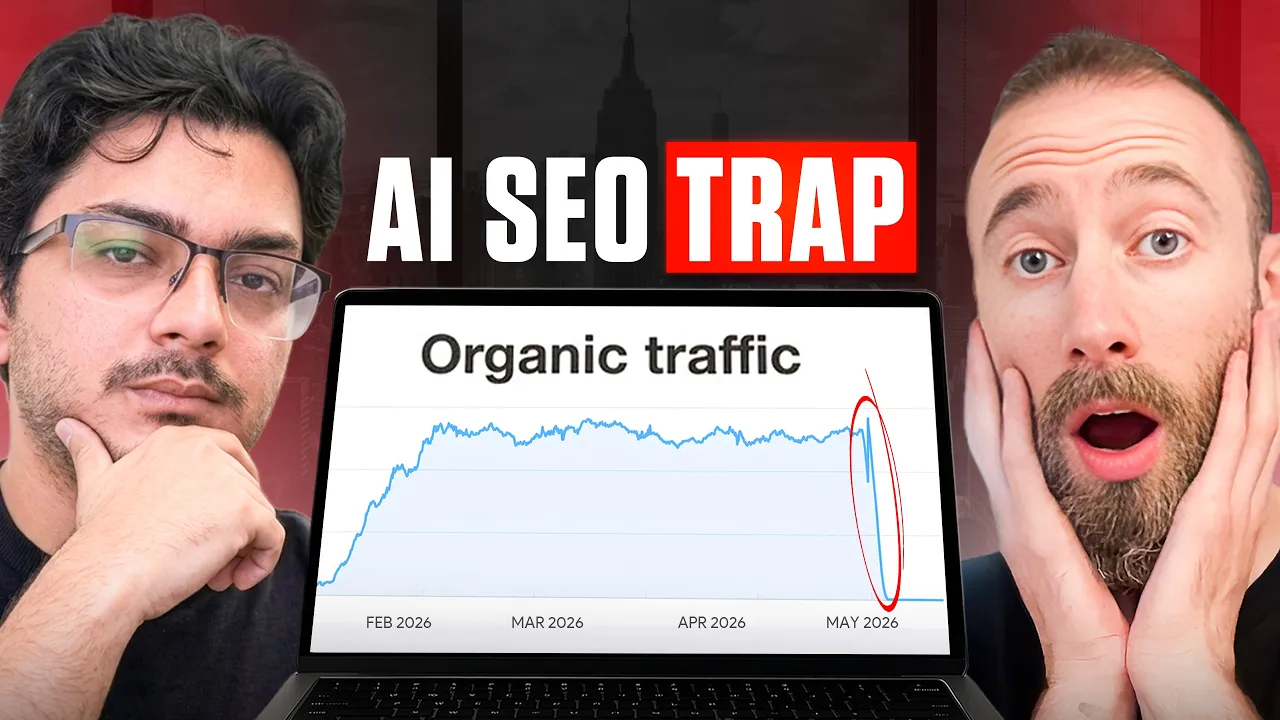
Related Videos
How LLMs Work? | How Large Language Models Work | What Are LLMs? | LLMs Explained | Simplilearn
 Simplilearn
 00:09:59
Artificial Intelligence Tutorial For Beginners 2026 | Learn AI Basics From Scratch | Simplilearn
Simplilearn 00:22:48
![Digital Marketing Full Course 2026 [FREE] | Digital Marketing Tutorial For Beginners | Simplilearn thumbnail](https://rewiz.app/images?url=https://i.ytimg.com/vi/O8dbND5jrOI/maxresdefault.jpg)
Digital Marketing Full Course 2026 [FREE] | Digital Marketing Tutorial For Beginners | Simplilearn
Simplilearn 05:30:20
![Social Media Marketing Full Course 2026 [FREE] | Social Media Marketing Tutorial | Simplilearn thumbnail](https://rewiz.app/images?url=https://i.ytimg.com/vi/XMnsLPIUfWs/maxresdefault.jpg)
Social Media Marketing Full Course 2026 [FREE] | Social Media Marketing Tutorial | Simplilearn
Simplilearn 07:03:54
![Digital Marketing Full Course 2026 [FREE] | Digital Marketing Tutorial For Beginners | Simplilearn thumbnail](https://rewiz.app/images?url=https://i.ytimg.com/vi/XzbtQsg1ykw/maxresdefault.jpg)
Digital Marketing Full Course 2026 [FREE] | Digital Marketing Tutorial For Beginners | Simplilearn
Simplilearn 05:30:07
Get daily recaps from
Edward Sturm
AI-powered summaries delivered to your inbox. Save hours every week while staying fully informed.