It Started: Trump Just 'Reset' Your 401K

Chapters10
Introduces the Trump IRA as a potential replacement or supplement to the 401k and the expected rollout timing.
Trump IRA could give low-income workers a 50% match up to $1,000 by 2027, but strict income limits and a $2,000 saving hurdle limit who truly benefits.
Summary
Graham Stephan breaks down the Trump IRA proposal and its potential impact on Americans without employer-sponsored retirement plans. He explains the core idea: a government-backed, low-fee private IRA platform accessible via trumpirra.gov that would simplify choosing funds and reduce costs. Stephan highlights the savers match, where the federal government deposits up to $1,000 per year for qualifying earners starting in 2027, matched on the first $2,000 contributed. He contrasts this with the traditional 401(k) and discusses the new possibility of including private investments in 401(k) plans, a move meant to broaden access to higher-return assets but with additional fiduciary risks. The host reviews who benefits most (gig workers, freelancers, and those under certain income thresholds) and flags two critical catches: the $1,000 match is capped and you must save $2,000 to trigger it. He also offers practical guidance, suggesting Roth IRAs for many, given their tax-free growth, and notes that the Trump IRA, while appealing, isn’t a panacea. Throughout, Stephan cites the New York Times’ warning about potential risks and stresses the need to understand fees, access, and tax implications. Sponsorship shoutouts (SoFi) are interwoven with a reminder that earning interest is a small but meaningful step toward wealth-building. The video ends with a candid assessment: if you qualify, take the match; otherwise, consider established options like a Roth IRA or a taxable brokerage account depending on your tax bracket and goals.
Key Takeaways
- Up to $1,000 per year is matched by the federal government for qualifying Trump IRA holders, starting in 2027, on the first $2,000 contributed.
- Qualifying singles have an income threshold (roughly $20,500 to receive the full match, phasing out by $35,500); married couples have higher limits (phase-out begins around $71,000).
- Trump IRA is designed to be a low-cost, government-vetted private-IRA marketplace with fees capped at 0.15% annually, lower than many employer plans.
- Private investments in 401(k) plans could be allowed, introducing opportunities in private equity, private credit, real estate, and digital assets—risking higher fees and valuation challenges.
- The recommendation to most investors: if you can qualify, take the $1,000 match; otherwise, a Roth IRA or traditional IRA may offer greater long-term tax advantages.
- Two major catches: the match is capped at $1,000 and you must contribute $2,000 to obtain it; go beyond this if you seek broader retirement options.
- The Trump IRA proposal targets gig workers, freelancers, and those without employer plans, but the thresholds limit widespread applicability for many aspiring savers.
Who Is This For?
Essential viewing for freelancers, gig workers, and people without employer-sponsored retirement plans who want a low-cost, government-backed path to retirement savings. Also relevant for current 401(k) users curious about potential reforms and the risk/return tradeoffs of private investments in retirement accounts.
Notable Quotes
""Starting in 2027, the federal government will deposit up to $1,000 a year into a qualifying retirement account as a dollar-for-dollar match on the first $2,000 you contribute.""
—Explains the core Savers Match mechanism.
""This could in theory standardize retirement investing... and simplify the process.""
—Describes the intended simplification and access benefits of Trump IRA.
""Two catches you have to know: the match is capped at $1,000, and to get the $1,000 you still have to save $2,000.""
—Outlines the practical limitations of the match.
""If you qualify, you may as well just get the $1,000 because it's free money.""
—Graham’s practical takeaway on the match.
""Private investments are not like buying the S&P 500... they come with significantly more risk.""
—High-level caveat about private investment options in retirement plans.
Questions This Video Answers
- How does the Trump IRA differ from a traditional 401(k)?
- Who qualifies for the Trump IRA savers match and how is the income phased out?
- Should I choose a Roth IRA over buying into a Trump IRA if I earn under $40k?
- Can private investments be added to my 401(k) under the new executive order, and what are the risks?
- When will the Trump IRA go live and how will contributions be tracked for the $1,000 match?
Trump IRA401(k) alternativesSavers matchRoth IRA vs 401(k)private investments in retirement plansfee transparency in retirement accountsSoFi sponsorshipGraham Stephan
Full Transcript
What's up, Graham? It's Guys here. So, it's official. President Trump just signed an executive order that's about to completely change the way you save and invest for retirement. And what's crazy is that this is supposed to go into effect in less than 7 months from now. Yeah. Believe it or not, this entire concept is known as the Trump IRA. And this is soon going to act as a replacement or alternative to a 401k with, get ready for this, a $3,000 investment match for anyone who qualifies. I'm honestly kind of surprised that so few people are talking about this because depending on who you ask, it's either one of the biggest investment opportunities of the last few decades or a disaster waiting to happen.
That's why we really need to break down exactly what this executive order actually says, who qualifies for the $3,000 investment, how to apply, and the one catch that almost everyone is missing. because I've scraped through every piece of data, looked through their website, and I'll give you everything you need to know about this account as soon as you hit the like button and subscribe if you haven't done that already. Yes, it seriously helps out the channel more than you can imagine. Really means the world to me and as a thank you for doing that. Here's a picture of an elephant.
So, thanks so much and also big thank you to SoFi for sponsoring this video, but more on that later. All right, so before we talk about the Trump IRA and who qualifies for free money, we have to talk about the system it's trying to fix. And that all starts with the traditional 401k. For those unaware, a 401k is just a retirement account that your employer sets up for you for the purposes of investing. And the concept is pretty simple. Every paycheck, you contribute a portion of your income to this account. And since this is done with pre-tax money, whatever you contribute to this account is deducted from your taxable income.
So, for example, if you make $100,000 a year and contribute $10,000 to your 401k, the IRS basically treats it like you've only made $90,000, meaning you pay less in taxes upfront. That extra money that would have gone to the IRS gets invested instead. And then decades later, when you eventually withdraw it in retirement, that is when you begin paying taxes. Of course, in terms of who's eligible for this, it's really any full-time employee at a company who offers a 401k. And if that's you, you can contribute up to $24,500 a year in 2026 if you're under the age of 50.
Then by the time you retire after the age of 59 and a half, you begin paying taxes on just the money that you withdraw. But there is a massive problem. Not everyone has access to a 401k. In this case, if you're a gig worker, freelancer, or work for a small company who doesn't offer a 401k, then unfortunately, you are out of luck. You don't get easy contributions. you don't get access to a 401k and in this case more than 56 million people are without access to retirement plans their job which is why we will soon have drum roll the Trump IRA.
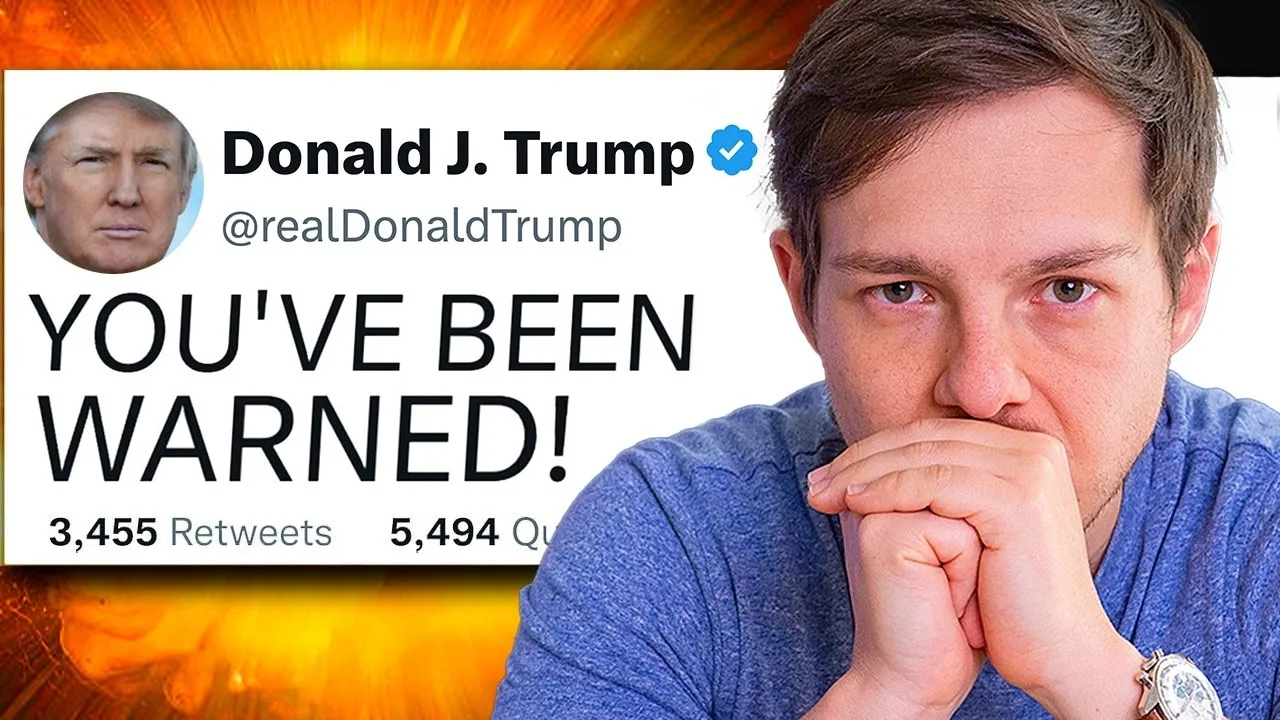
Now first I want to be clear there's a lot of misinformation floating around on exactly what this is and how it works. So these are the facts. On April 30th Trump signed an executive order to set up the website trumpirra.gov which is designed to connect American workers who don't have access to employer sponsored retirement plans with highquality lowcost IAS offered by private sector financial institutions. Essentially, this will make it extremely easy for everyday workers without a retirement plan to set up a private IRA, compare lowcost options, and essentially become a one-stop shop to list, compare, and select from a variety of different financial products.
That way, you don't have to sift through thousands of options and wonder which one's secretly ripping you off. Like, I'm just going to rant here for a moment, but most employer sponsored retirement plans are awful. I mean, the funds they offer are atrocious. The fees are so high, and they don't care what you invest in because they couldn't take the time to take 30 minutes and pick some funds that actually have some reasonable fees to them that don't charge you an arm and a leg. It's awful. But, uh, you know what? I digress. The point is, for the millions of people out there who don't have access to a 401k, this could in theory standardize retirement investing.
It could make the process a lot smoother and it could be a lot cheaper because instead of starting out from zero, opening up your own account, choosing your own funds, and wondering whether or not you're making a mistake. This is basically just a governmentbacked website that shows you exactly what the funds are, what the fees are, what your options are, and simplifies the entire process. Plus, the standards for the Trump IRA are actually pretty strict. Like, financial institutions have to charge total fees of 0.15% or less a year, which is actually relatively low compared to a lot of the other plans I've seen.
Like, some funds charge between.2 to 5% a year, which is just insane. So, yeah, even though 0.15% is still higher than a Vanguard ETF that charges you 0.03%, it's still saving you money compared to the alternative. So, uh, I'll take it. On top of that, we also have another component that everyone loves, and that is what's called the savers match. Starting in 2027, the federal government will deposit up to $1,000 a year into a qualifying retirement account is a dollar for-doll match on the first $2,000 you contribute. This means that's a guaranteed 50% return before your money is even invested, just as an incentive to save more money.
However, it is important to mention that even though theoretically anyone could go and open up a Trump IRA, not everyone qualifies for the $1,000 match. So, in terms of who gets it, if you're single, you get the full $1,000 match when you make $20,500 or less, and the bonus phases out entirely above $35,500. If you make more than that, then uh unfortunately, no free money for you. or if you're married filing jointly, the full match is available up to $41,000 in household income, again phasing out above 71,000. So, in terms of when this goes into effect, whether or not it's actually worth it, and why this new proposal could accidentally put millions of American retirement savings at risk, yeah, seriously, that's an actual warning from the New York Times.
We need to talk about the downsides, the fine print, and the one catch that almost everyone is missing because uh yeah, it's pretty crazy. Although before we go into that, I have to say one of the simplest, most powerful ways to build wealth is by actually earning interest on your money. It sounds easy, but what's crazy is that most people completely overlook it, and most banks pay you next to nothing. I'm talking about a fraction of a percent, which is ridiculous. Thankfully, though, our sponsor, SoFi, could change that. For those unaware, SoFi is an all-in-one finance app that allows you to bank, borrow, and invest all in one place.
And when you open a SoFi checking and savings account and set up an eligible direct deposit, you could earn a competitive APY with no account fees. Plus, to help get you quickly started on the journey of saving right now when you open up a new high yield savings account and set up an eligible direct deposit of $1,000 or more, you could either get a $50 or $400 cash bonus. You'll even get paid up to 2 days early with direct deposit. And you could access additional FDIC insurance up to 3 million on deposits through a seamless network of participating banks.
So if you want to start putting your money to work, just head to sofi.com/grambanking. Click the link down below in the description or scan the QR code on the screen to learn more and get started today. Seriously, just earning interest on your money is one of the lowest lift activities that you could do that'll actually give you a noticeable difference. and you can get started today at sofi.com/grandbanking with the link down below or the QR code on the screen. Thank you again to SoFi for sponsoring this portion. And now let's get back to the video.
All right, so before we go into the details about the new Trump IRA, who should take it and my honest thoughts going forward, there is another topic that's worth discussing, and that is this executive order that would allow private investments in a 401k. So for those unaware, as of now, 401ks are pretty standard. like you have a mix of funds that you could buy into. Almost all of them track a broad index and that's it. It's pretty basic. But coming soon, Trump signed an executive order that would allow for alternative investments to be held in your 401k, which could include private equity, private credit, real estate, and digital assets like cryptocurrency depending on how the regulators finalize the rules.
Why? Well, the argument here is that wealthy investors, pensions, and institutions have had access to these types of investments for decades that have made them outrageous amounts of money, but regular workers have mostly only had access to public market funds that earn a lot less. This is why in theory, opening up your 401k to practically anything would democratize investing by letting 401k plans offer professionally managed funds that include private investments. This would give regular people access to the same type of deals that endowments, pension funds, and billionaires often use to build a lot of wealth.
And the White House said the goal here is to allow people to get better diversification and potentially earn stronger returns. And the Department of Labor has been directed to clarify how employers could offer these plans without getting sued into oblivion for violating their fiduciary duty. I kid you not, that's an actual thing. Like, I'm going to read you what they said word for word. workers have successfully sued their employers for breach of fiduciary duty for failing to do due diligence in the selection of investments, failing to monitor their performance, and paying high fees. Essentially, as of now, employers need to at minimum make sure the funds they offer in a 401k are safe for their workers.
And there's a chance by opening them up to private equity and private credit and private investments that their workers invest into this, lose all of their money, and then sue the employer. Like here's the thing. Private investments are not like buying the S&P 500. They are a lot harder to value, a lot harder to sell, usually much higher fees, and they come with significantly more risk. Like compared to an index fund, you could see exactly what you own, what it costs, and what it's worth every single day. But private equity is mostly this elusive number that sometimes isn't realized for years or even decades, if at all.
Or the other risk is that workers might not know what they're buying into because private credit and private equity is packaged into these target date funds that appear safe on the surface, but beneath the surface, who knows what's going on. This is why, yes, you can make significantly more money with a lot more upside investing in private equity, similar to how Peter Teal was able to grow his IRA to $5 billion by buying preIPO shares of PayPal and Facebook. But critics argue that this is simply a massive payday for Wall Street at the expense of everyday workers who inevitably get stuck with expensive complicated products that benefit the managers more than the retirees.
So, in terms of everyone watching what this means for the general population and whether or not these 401k accounts are good for people, here is my honest 401k breakdown. In terms of the Trump IRA, this is probably best for gig workers, freelancers, solo entrepreneurs, and anyone else who doesn't have access to a 401k, who makes under $35,000 single or $71,000 married. If that's you, then no joke, this is probably one of the best financial moves that you could make in 2027 because you get access to lowcost funds with a 50% government match up to $1,000.
It's pretty good. Again, it's like free money. However, there are two important catches that everyone has to be made aware of. And that's number one, the match is capped at $1,000, which is a lot less than most employer sponsored retirement plans. And number two, to get the $1,000, you still have to save $2,000. So, it's not without any work on your end whatsoever. Beyond that though, as it stands right now, Trump.gov is scheduled to go live on January 1st, 2027. And if you qualify and meet all the requirements, the government match is most likely going to show up in 2028 once you submit your 2027 tax return.
Separate from that, I also just want to say that as nice as it sounds to have a lowcost 401k, even if you don't have one, there is nothing stopping you today from opening up a traditional IRA or a Roth IRA and contributing up to $7,500 a year. Personally, if this were me and you're already in a low tax bracket, especially if you're young, I tend to believe the Roth IRA to begin with is still the superior choice. Since this is paid for with after tax dollars and when you're not paying a lot of money to taxes, you may as well use this instead and then compound all of your growth tax-free for the next few decades.
Like, here's an example. If you contribute $7,500 a year into a Roth IRA at the age of 20 and you retire at the age of 65, you're going to have nearly $2.5 million tax-free and over $2 million of that is profit that you owe no taxes on. Compare that to a 401k where if you're in a 20% tax bracket, that would give you about $9,400 a year to invest and you'd end up with $3 million while owing taxes on more than $2.5 million with a profit. Personally, I would rather have $2.5 million taxfree than $3 million in the future and have to pay ordinary income taxes on it.
But uh again, that's just me. Anyway, in terms of my honest thoughts, what this means for you and how you can make the most of it, here is what you came for. Look, I'll be upfront. On paper, it's actually a pretty good idea. Like, it's a real problem. More than 50 million Americans have no employer retirement plan. A lot of those people are working hard, living paycheck to paycheck, and contributing to retirement just isn't on the list of priorities. To me, having a simple, trusted, government vetted website that just says, "Here are the funds that we've pre-screened for you that have the lowest fees that make it as easy as possible, and here's up to $1,000 that you could invest for free." Just seems like a pretty good idea.
But I got to say, the income thresholds here are insanely low to get the match. like $20,000 for a single person to qualify for the $1,000 match is pretty dumb. I would venture to say that most single people making that amount of money are probably just not able to save up that amount to begin with to even get the match. So, it's kind of a moot point. That's why I think unless you're earning minimum wage and living with your parents, I wish these limits were a lot higher so that more people would qualify. But assuming you do qualify, then uh you may as well just take the money.
Beyond that though, if you're single and making $35,000 a year, if you want to save up for retirement, I'd venture to say you're probably better off because you're in a low enough tax bracket. Open up a normal taxable brokerage account and all of a sudden under a certain income limit, your capital gains are completely tax-free anyway. The second, in terms of privatized investments within your 401k, I am personally in the mindset that people should have the ability to buy into whatever they want as long as they understand the risks involved with it. If someone wants to speculate their entire retirement on a company that no one's heard of for the chance of becoming multi-millionaires a few years from now, then, you know, by all means, I think we should allow people to do what they want.
But at the same time, for the average person, it's probably not a good idea, and they'll wind up losing a lot more than they end up gaining. So, for the few people that make a lot, there are going to be way more people who make next to nothing or uh very little. That's why I think the Trump IRA is an improvement. I like the fact that it's offering low fee funds for people to buy into, but it's nothing revolutionary that people couldn't accomplish on their own with a taxable brokerage if you're in a low enough tax bracket or in a Roth IRA that anyone could set up in a few minutes right now.
So, yes, if you qualify, you may as well just get the $1,000 because it's free money. Otherwise, I tend to think the Roth IRA is still the superior choice as long as you hit the like button and subscribe if you haven't done that already. Oh, and by the way, if you want early access to these videos, as well as bonus videos every single week that are not as algorithm friendly, feel free to join as a channel member, you'll get access to additional content. And anytime you leave a comment, by the way, as a channel member, I get them as a notification on my phone.
So, I respond to every single channel member comment out there. And I take requests for videos. So, if you want me to cover a specific topic, I'm more than down to do that. So, feel free to join, get extra content. Thank you so much and until next
More from Graham Stephan


Get daily recaps from
Graham Stephan
AI-powered summaries delivered to your inbox. Save hours every week while staying fully informed.