Ruthless Game of Survival (Full Episode) | Africa's Deadliest: Botswana | Nat Geo Animals

Chapters12
Introduces the idea that wildlife battle for survival with tactics, weapons, and strategy as the key to winning.
Nat Geo’s Botswana episode reveals brutal survival tactics in the Kalahari, where teamwork, stealth, and weaponry decide who eats.
Summary
Nat Geo Animals takes us into the heart of the Kalahari, where every animal fights for top position in a ruthless arms race. The episode highlights how strategy, not just strength, governs success—from the wild dogs coordinating to protect their pups to the stealthy leopard stalking prey from long grass. Buffalos counter lions by keeping calves central and challenging ambushes, forcing the pride to readjust their plans. Leopards rely on camouflage and timing, often attempting a strike from just five yards away before the hunt is spoiled by a noisy moment. Night battles matter as much as daytime skirmishes, with lions leveraging superior night vision to outmaneuver other predators and take easier targets like unsuspecting elephants. Hyenas demonstrate that “steal the kill” can require precise timing and formidable jaws, while porcupines use venomous spikes to deter predators from close range. Across the savanna, communication and awareness—like the vervet alarm calls—become extra weapons that keep troops safe and predators at bay. The episode wraps with a reminder that in Africa’s wildest arenas, there can be only one winner, and every species has a tailored plan to survive another day.
Key Takeaways
- Wild dog packs travel together and can cover up to 25 miles a day while using cooperative tactics to overwhelm prey.
- Leopards rely on stealth and camouflage to approach within five yards of their prey before making a move.
- Lions rely on night vision—eight times better than humans—to hunt at night and to protect their cubs from ambushes.
- Buffalo calves survive attacks when a defending bull disrupts a lion’s kill with its horns and harbors the calf behind the herd in a risky counterattack at close range from a safe distance when possible for healing and regrouping (illustrated in the calf-and-mom scene).
Who Is This For?
Essential viewing for wildlife lovers and biology students who want concrete examples of predator-prey dynamics in Africa, plus practical takeaways on animal defense strategies and hunting tactics.
Notable Quotes
""Strategy is everything when it comes to winning the arms race.""
—Sets up the episode’s core idea that there’s more to survival than brute force.
""A lone hyena without its pack... the wild dogs have a strategy to beat it: teamwork.""
—Shows how cooperation changes the odds in predation.
""With three young cubs to look after, the lions are equally nervous.""
—Humanizes the risk lions take to protect cubs during hunts.
""Night vision is eight times better than a human's.""
—Highlights the tactile edge that can decide nocturnal encounters.
""Hiding can be a clever survival tactic for both predators and prey.""
—Emphasizes that stealth and concealment are as vital as strength.
Questions This Video Answers
- How do African wild dogs coordinate attacks to protect their pups?
- What makes leopard stealth so effective in the Kalahari?
- Why is night vision a game changer for lions and other predators?
- How do zebra stripes help them survive against big predators?
- What defenses do porcupines use against lions and other large carnivores?
African WildlifeKalahariLions vs BuffaloLeopardWild DogsPorcupineVervet CallsNight VisionZebra Stripes
Full Transcript
(growling) (groaning) (snorting) Around the clock, animals are engaged in a brutal arms race, a never-ending battle to come out on top. Everyone has their own tactics to survive with weapons to protect or to kill. There's a fine line between success and failure. (squeaking) And there's no room for second place. (music) The Kalahari, Botswana. In this demanding landscape, animals must fight with everything in their arsenal. (yelp) Instinctive skill... effective weapons... and most important of all, a well-worked strategy. It's an evolutionary struggle of life and death. (grumble) A constant challenge to outdo your adversary. No one is safe.
Strategy is everything when it comes to winning the arms race. A pack of wild dogs must work together if they're to protect their pups. Under a year old, they're vulnerable. And they've come face-to-face with their sworn enemy. A hyena is a huge threat. Twice the weight of a dog and with an impressive armory. A jaw that can crush a pup in an instant. And teeth capable of ripping it apart. (barking) But this is a lone hyena without its pack, and the wild dogs have a strategy to beat it: teamwork. Led by the alpha pair, they are relentless in their attack.
Taking it in turns to face their foe down. Together they can take on an opponent far stronger than any individual dog. (barking, yipping) The hyena is hounded off. Teamwork always pays off, and the pups are safe for now. Life in this ruthless combat zone is harsh and unforgiving. (bellowing) Even for the kings and queens of the Kalahari, it's tough going. Only one in three of their hunts will end in a kill. But to improve their odds, they also have a clear strategy: avoid the fully grown adults; pick on the young and defenseless. And they've identified a suitable target.
All they need to do now is separate the calf from the herd. Buffalos aren't without their own countertactics in this theater of war. They keep their young in the center and put the bachelor males, the old, or the sick on the outside. Running at the herd, the lions try to break up the defense. The group scatters in all directions. And they manage to isolate a calf. (lowing) (calf grunts) (groans) Alone, a calf can't compete with the lion's superior power and savage teeth and claws. And the big cat has it in a stranglehold, slowly suffocating it.
But the calf manages to give out a dying distress call. (bellows) And a bull hears the cry for help. (bellow) Even though the young bull is hurt, these horns force the lions to retreat. Fearless, he keeps the enemy at bay... ...buying the calf valuable time to recover. Miraculously, it gets to its feet. But the lions aren't going to let it rest for long, and they launch wave after wave of attack. Without their herd for support, the buffalo are lacking a backup plan. (growl) (squawking) They can't resist the onslaught any longer. Targeting young prey has worked.
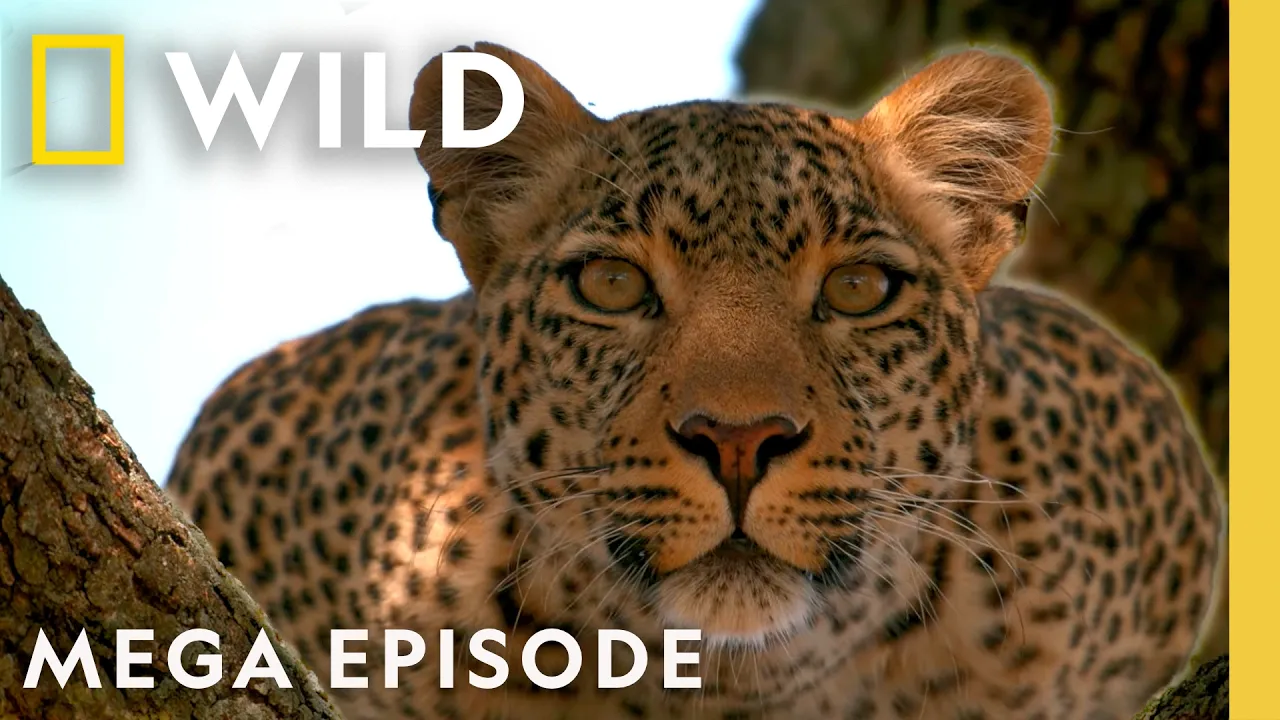
And the lions get their feast at last. (bird squawks) On the front line, not everyone is part of a well-organized militia. Those who hunt alone have to employ very different tactics if they're to survive. Leopards rarely go head-to-head with their foes. They have a more devious way to win the arms race. Stealth. A silent assassin, it can get to within five yards of its prey without detection. Long grass makes the perfect hiding place, the leopard's spotted coat helping it blend in to the background. All it has to do now is wait. And a francolin will do nicely.
(birds chirping) In its eagerness, the leopard blew its cover a little too soon, giving the bird a split second to react to the surprise attack. Timing is a talent it still has to perfect. (elephant trumpets) Winning the wild arms race isn't all about combat. (grumbling) Having the experience to know when to pick your battle is a key strategy. In this heated arena, a precious water hole is a regular battleground for Africa's deadliest. The rulers of the Kalahari are already here to stake their claim. Others back off... ...no matter how thirsty they are. No match for the combined force of the pride.
That is, all except one. As the largest land animal in the world, a bull elephant is not easily intimidated. But these two have history. In this corner of Botswana, lions have become specialist elephant killers. With three young cubs to look after, the lions are equally nervous. A four-ton elephant could easily trample them to death. The lions have a lot to lose. (trumpets) In Botswana, a bull elephant is spoiling for a fight and threatening a pride's cubs. The lions have a choice: fight or flight. This time, they decide to move their precious cubs out of the way.
Knowing when to retreat is an important survival tactic. Only fight the battles you have a chance of winning. For some, the best plan to win the arms race is to let others do the hard work, and then reap the rewards. (whooping) Hyenas are the ultimate robbers. But there's more to their strategy than that. You can't just steal from anyone. Pick the wrong target, and it could be game over. (yelping) (yipping) Wait for the perfect moment. And this time, they have. They've marked a contender. A lone leopard. Faced with this unstoppable army on the rampage, a leopard can only watch as they feast on its hard-earned kill.
The mob takes the prize. For hyenas, stealing is an easy way to win, but their armament doesn't stop there. With crushing jaws and teeth specialized for cracking bones... (cracking) ...there's very little they can't eat. It's a scorched earth policy. They make sure there's nothing left for their enemies once they're done. For a solitary hunter, you must have a clear strategy if you're to beat the scavengers and avoid starvation. Protect the kill at all costs. Leopards are impressive climbers, able to outdo any of their competitors. Experience has taught this female to be quick and stash the kill up high...
safe from the prying eyes and jaws of her opponents. Her cub waits patiently below. (cries) Safeguarding their food is the only way they can survive and thrive. Putting one over on their arch enemy. (bird screeches) When it comes to winning the arms race, hiding can be a clever survival tactic for both predators and prey. (quacking) At just 14 inches long, a teal would make the perfect snack for any number of nighttime prowlers. And their small pond is undefended, open to an easy raid. For a young lion unafraid of getting wet, the teal are sitting ducks.
In the darkness of night in Botswana, a small band of teal are in the firing line. Like all cats, the lion can see well at night and easily spots them swimming on the surface. But the teal are ready. One minute they're there... the next, gone. It's a clever game of hide-and-seek to avoid being eaten. The young lion is completely confused and leaves empty-handed. The underdogs have outwitted her brute strength. Having a well-worked strategy is one thing. But some animals have to rely on the skills they are born with to help them win the arms race.
A pregnant impala isolates herself before giving birth. Away from the safety of the herd, she's vulnerable, and so is her newborn. Cleaning her calf, she tries to get rid of the scent, but with predatory noses constantly sniffing out opportunities, this calf won't be able to rest for long. Luckily, it does have one thing in its favor. It's able to stand just 15 minutes after being born. And in less than two days it'll join the herd, along with the other newborns. Just in time. Already a leopard has got them in its sights. Under cover, the cat creeps in to avoid detection.
One calf has strayed from its mom. Just the chance the leopard is waiting for. Time to put those new legs to the test. Being quick to their feet helps impala calves outstrip an experienced deadly hunter. To stand any chance of winning for some it's all about a sprint to the finish line. A family of warthogs forages in the day to avoid nocturnal predators. But with such poor eyesight, even in daylight they're at risk of an ambush. A lioness with a litter of hungry cubs to feed is on the lookout for her next meal. Joined by her sister, they make a fearsome team.
(cubs mewing) And warthogs are an easy target. Stalking low, they move into position. The pigs are oblivious to the danger just a few feet away. (grunting) In the African bush, a warthog family is walking into a death trap. The lions flatten themselves against the ground, their presence undetected. (grunt) This isn't a fair fight. One sister starts the chase... ...while the other hides, until the perfect moment. For such a short, stocky creature, the warthog is surprisingly fast at 34 miles an hour, just enough to stay inches ahead. The big cat can match the speed but not the distance, only able to keep up for 100 yards.
(snort) This time, the pacey pig has turned the tables and beaten its most deadly rival. To win the arms race, sometimes you have to stay in it for the long haul. With large hearts and lungs, wild dogs are strong marathon runners, traveling together up to 25 miles a day in search of food. And their prey doesn't make it easy. A reedbuck does its best to hide, remaining undetected even when the dogs are as close as 10 yards. But the wild dogs can smell it. (sniffing) (chirping) And they get it on the run. In the chase, the balance of power swings in the dogs' favor.
Able to run at a steady 30 miles an hour for over 3 miles, their endurance is second to none. They run the reedbuck to exhaustion. But the race isn't over yet. The dogs must eat the reedbuck alive as quickly as possible. In these killing fields, you never know who could be watching and waiting to steal your dinner. A lone jackal fancies his chances. But is quickly taught a painful lesson. In less than half an hour, the whole pack has had their fill. Strategy and skill can only get you so far. For some of Africa's deadliest, to beat your opponent, you need extreme weaponry.
And when two giants of the Kalahari meet, it's hard to know who will win. Lions have the muscles, claws and teeth to drag their enemy down, no matter how big. But one ton in weight, a male buffalo has yard-wide lethal horns, capable of goring a rival to death. This is an evenly matched arms race. (growling, bellowing) The lions will take their chances if the prize is this big. And now, they have trapped the buffalo in an ambush. In the Kalahari, a pride of lions is on the attack using their deadliest weapons. Striking the buffalo's back leg, the lion tries to trip it up, and the pride moves in for the kill.
But swinging its horns, the buffalo takes aim. And one kick could kill a lion They go on the countercharge. Their impenetrable wall of horns too dangerous for the lions to break through. And the pride is forced to withdraw. To gain an unbeatable advantage over any of the big beasts of Botswana, lions need a change in the battle conditions. And nightfall is just what they're looking for. With extra-large pupils and a light-reflecting layer on the retina, a lion's night vision is eight times better than a human's. This is their super weapon, and it gives them a critical edge.
They've got an elephant and her calf under close surveillance. The elephants can't see the danger, but they can smell it, and hear it. (shrieks) The calf sticks close to mom. Three tons of muscle and tusk, she is his best chance of protection. And she'll do anything to defend her baby. (grumbles) (baby squeaks) (trumpeting) (lion growling) She goes on the charge, standing tall and spreading her ears to show the lions who's boss. But these warmongers won't let up. And they've got the calf on its own. (distant trumpeting) (roars) Unable to see, the calf has no idea where the next attack is coming from.
(calf cries) And together the lions overpower it. Their superior night vision puts them over the line to win this race. (purring) Still feasting the following morning, a meal this big will keep the pride going for days. (zebras braying) It's not just the Goliaths of the Kalahari who pull out the big guns in the race to survive. This porcupine is a nocturnal forager and should be safe in its burrow by now. Being out past its bedtime could be deadly. In a corner of Botswana, a porcupine has run into a deadly opponent. This young male lion is nine times heavier and just needs to get to the soft underbelly.
But with 20-inch spikes, the porcupine is well prepared for such a challenger. Whenever the cat gets close, it sticks a bunch of pointy quills in his face. The spikes detach on contact, and a lion with quills stuck in its mouth could die of starvation. This small, weaponized warrior has beaten its biggest rival. Not all weapons in an animal's armory are clearly on display. With over 30 different calls, vervets are extraordinary communicators. But they don't just chat to keep in touch. It's a vital weapon in the fight to stay alive. By 6 months old, young vervets are growing more independent, foraging on the ground with the rest of the troop.
But wander away too far from the safety of the group, and danger is never far away. A cutthroat killer. The vervet troop always posts a lookout. And this keen-eyed monkey has spotted the danger. Immediately it raises the alarm. Vervets have different calls for different threats. And this one is clear: leopard. Run to the top branches where the cat is too heavy to reach. Even the young know what to do. Their calls are a powerful weapon in the arms race. Secret weapons are a vital part of any animal's arsenal, helping them stay one step ahead of the game.
Across the African savanna, animals are on the move. Thousands of zebra migrate towards the river as the dry season kicks in. (braying) The kings of the Kalahari are drawn into this bonanza. Just waiting for the opportunity to pick off a straggler. With no claws or sharp teeth to defend themselves, the zebra are in extreme danger. But they have a surprising trump card: their stripes. Sticking together in a herd, their black and white stripes become a confusing blur. And the lions struggle to pick out an individual. Hiding in plain sight, the zebra avoid a battle they would otherwise be odds on to lose.
For Africa's deadliest, it's not always the biggest or the strongest who triumph in the arms race. But everyone must be at the peak of their game. There can only be one winner in this never-ending fight to survive.
More from Nat Geo Animals


Get daily recaps from
Nat Geo Animals
AI-powered summaries delivered to your inbox. Save hours every week while staying fully informed.