Summer of CCNA - 90 Minute - Session 2

Chapters8
Hosts introduce the Summer of CCNA, the goal of the 90 minute live session, and the emphasis on labs as a core part of CCNA prep.
NetworkChuck’s Summer of CCNA Session 2 dives into labs—hardware, emulation, and best practices—featuring Jeremy McDow (Jeremy’s IT Lab) to help listeners pick the right lab setup for CCNA prep.
Summary
NetworkChuck kicks off the session by emphasizing the goal: get CCNA-ready by August through hands-on labs. Jeremy McDow from Jeremy’s IT Lab joins to discuss practical lab options and what labs look like in real life. The hosts compare virtual simulators (Packet Tracer, GNS3, EVNG, CML) with physical gear, explaining the trade-offs, costs, and learning curves. They underscore the importance of hands-on experience for both exam simulations and troubleshooting, and they share personal journeys into CCNA, CCNP, and even CCIE as motivation. The conversation touches on hardware buying tips (eBay finds like 2960 switches and 1841 routers), the realities of emulation (iOS images and legality), and the value of building a lab with a clear purpose and a journal to track progress. They tease future content, address AI’s role in networking, and invite viewers to join the Summer of CCNA premium program for daily check-ins and deeper guidance. The lively banter, cross-pollination of ideas, and practical lab-rooted advice aim to demystify how to study effectively for CCNA while acknowledging the realities of cost, setup, and time. The episode closes by inviting audience questions and promoting Jeremy’s channel and the course’s inclusive, community-driven approach.
Key Takeaways
- Labs are essential for CCNA prep because practical CLI experience and real-world troubleshooting exceed book-only study (Chuck and Jeremy agree this is non-negotiable).
- Packet Tracer is convenient but limited; you’ll miss commands and behaviors that exist in real IOS, so pair it with other tools for a fuller picture.
- Emulators like GNS3 and EVNG offer real IOS images but require setup work and can introduce compatibility issues; CML (Cisco Modeling Labs) is a reliable, Cisco-endorsed option with a free tier.
- Hybrid labs work best: combine a small physical lab (two 2960 switches and two 1841/Router devices) with virtual labs for scale and depth, keeping costs manageable.
- Keep a lab journal or GitHub log to capture problems, fixes, and interview-ready scenarios; it differentiates you in a job search and shows real hands-on progress.
- AI will augment but not replace networking roles in the near term; learning CCNA fundamentals remains critical as AI tools scale and assist with troubleshooting.
- The CCIE path remains a distant goal and requires sustained, rigorous study; most CCNP/CCNA learners should focus on solidifying core CCNA skills and practical labs.
Who Is This For?
CCNA students and aspiring network engineers who want practical guidance on building an affordable, effective home lab and choosing between physical gear, emulators, and cloud options. Also valuable for educators and mentors who want a community-driven path to CCNA success.
Notable Quotes
""There is a constant question that keeps coming up... lab. So that’s where we sat down and said, let’s talk only about labs and make that the focus.""
—Chuck frames the episode’s core theme—labs—early in the stream.
""Labs are absolutely essential for preparation... not just for the simulations on the exam but even for the multiple choice questions""
—Jeremy McDowell emphasizes hands-on learning beyond theory.
""Packet Tracer is good enough but very limited for sure""
—Addressing Packet Tracer’s limitations versus real IOS behaviors.
""GNS3 is real and it's real illegal""
—Humorous caution about IOS images and legal/ethical considerations.
""Keep a lab journal. Jot stuff down. What broke, how you fixed it, and this becomes your interview prep material""
—Career advice tying lab work to interview readiness.
Questions This Video Answers
- What are the best CCNA lab setups for beginners on a budget?
- Should I use Packet Tracer, GNS3, or Cisco Modeling Labs for CCNA practice?
- How can I balance physical hardware with virtual labs to stay cost-efficient?
- Is AI ready to replace networking roles, or should I still focus on hands-on CCNA skills?
- What’s the difference between CCNA, CCNP, and CCIE lab requirements and study paths?
CCNANetwork Lab SetupPacket TracerGNS3EVNGCisco Modeling Labs (CML)Physical Lab GearLab JournalsAI in NetworkingCCNP/CCIE paths
Full Transcript
Down. Hey. Hey. Heat. Heat. What is going on YouTube, Twitter, LinkedIn, Twitch, all of the platforms. Welcome to the summer of CCNA program. This is our second full live stream that we're doing with y'all. It's going to be 90 minutes long. I'm super stoked to be here because we have some well, we have an amazing guest joining us. We of course also have Jeremy and Chuck here. But we are welcoming Jeremy McDow from Jeremy's IT Lab with us as well today to talk about labs. So, if you guys are excited about that as I am, then you are in the right place.
If you haven't signed up for the summer of CCNA yet, you still can. There's still time to do it. Uh we would love to have you part of the program. So from now until the end of August, we're going to be going through and learning everything that we can about the CCNA. So by the end of this program, you will be prepared to take that exam and we are so stoked about that. So join us because we do these live streams every single day, not like this one. These are special. We do these twice a month where they're live for everybody, but you can join us for our premium CCNA where you can uh sign up for the uh daily check-ins that we do.
So Jeremy and Chuck join us every single day where we do this daily check-in. You guys can ask questions and of course you get to learn from Chuck and Jeremy which is absolutely a phenomenal experience. So I put a link there on the screen. There's a QR code. You can click on that. I'll also make sure that I put links into the chat for you guys as well so you can join that program. But I don't want to take up any more time. I want to get things started. So I am going to welcome our amazing guests to the live stream.
Hello, Jeremy Squared and Chuck. Jeremy Squared. It's gonna be a a lot of Jeremy. I think uh we were joking in the uh the the Slack chat this morning. We're like, we need another Chuck. And so we were renaming you to to Chuck Z. Chuck Z. Balance the force. Um but if if you guys have been with us since the beginning, you know exactly how these things are going. And it's it's like, okay, we're we're in in a longer session this time. Uh Chuck and I are are connecting with you every single uh day for the summer of CCNA program.
We've been talking I mean Chuck, I don't know about you, but I am like at the at the end of the day when we start these sessions, I'm like it is so awesome just to be able to connect with people, hear where they're at, hear where they're at in their journey and and um it's it's it's a blast. But nonetheless, as we've been going through uh these day by day, there is a constant question that keeps coming up uh and it's phrased a thousand different ways. It's like what lab should I build? Do I need to build a lab?
Do I need to buy equipment? Do I need to just use Cisco modeling labs? What are Cisco modeling labs? What about GNS3? What about EMG? Like now where do I get the like it's and it's like lab. Um so so that's where as we sat down we were looking at this 90minute session why don't we talk only about labs and make that the the focus and I was thinking who do I know that knows a lot and and that's where I was like oh yeah Jeremy's IT lab where I I think Jeremy I don't know if uh this happens to you but I always get people that are mixing you and I up that to where it's it's just uh like you're from CBT Nuggets and I created a YouTube channel online with a free CCNA course.
Yeah. People are like uh someone asked about Jeremy's IT lab and they're like, "Oh yeah, I got his uh I got my CCNA using his course on CBT nuggets like 15 years ago." Jeremy, how dare you guys like both teach the CCNA and have the same name? Like just poor planning. Poor planning. So, so Jeremy is joining us from Japan. Where what time is it in Japan right now, Jeremy? It's 6:05 a.m. So early morning. 6:05. This canned coffee. Yep. This is commitment. Thank you for waking in the early hours. Um, Chuck, you just came from Japan.
Uh, you almost, I think, collided with Jeremy at one point, but never actually saw each other. So close, but so far. Yeah, he saw me at Disney. Yeah. Yeah, we were there in the same day. just happened to be and he just didn't want to say hi to me. I don't know. Maybe I don't know. Yeah, I was in line. I looked for you. I couldn't find you after that, but so close but so far. That's funny. That's funny. So um this session I would love to uh I think starting off with a good introduction um of uh of the three of us just giving a sense of CCNA um when did we do it and how important was labs at that stage and I'll I'll I'll start just to frame it and then I'll hand it to Jeremy and then uh Chuck you jump in as well.
Um my experience with CCNA. So, so I have um I it's funny I had to pull my transcript because um I run an MSP and we actually get discounts on Cisco equipment by having certified people and so I had to pull up my transcript and the people were like whoa like they're like you've taken the CCNA exam like 10 times you know just like attempt just because over the years uh 2000 2000 actually was when I first got CCNA certified like Y2K was happening people are the world is going to and and Jeremy gets CCNA certified.
Um, back then it was it was a RA there was no simulations. It was multiple choice. It wasn't that big a deal. Uh, it was just more like did you study the book? You'll pass the exam if you can answer some multiple choice questions. But as time went on and as I began teaching CCNA classes over the years, uh joining CBT nuggets and and uh leading those um they started introducing simulations and then adding troubleshooting and things like that. Um and I'm like, "Oh man, uh it is it is super essential that you get some hands-on before you're you're able to do it." So that's where I really started leaning in and recommending that people build their own labs.
Jeremy, what was your what was your experience and story? Sure. Um, I came to Japan as an English teacher in 2014 and uh, you know, after a while thinking about a career change, looked into a bunch of different things and I found a guy called Network Chuck on YouTube and he was talking about the CCNA. So, um, yeah, that's how I got into it really. Um, I got it I got my CCNA in 2018, I think. And you know the CCNA was quite mature by then. There were labs and stuff on the exam. So you know everyone was saying you have to you know you have to do labs, you have to do packet trace or whatever it is to prepare for the exam.
And um that is still the case today. Like I think labs are absolutely essential for preparation like not just for the the simulations on the exam but even for the multiple choice questions like to really understand and answer those questions correctly you have to have experience in the CLI you know configuring things troubleshooting looking through the show command output so there's really no alternative I think just reading a book isn't going to cut it be actually check before You you talk about it. What's funny, I didn't even realize until this very moment that Chuck, you were the one that brought Jeremy McDall into the the CCNA world.
And it's funny right now because Jeremy Charara is the reason I'm in the CCNA world. And they just kind of cascaded through their torch. Yeah, this is awesome. I'm like I'm like the CCNA godfather or something or or greatgrandfather or whatever you want to look at it and then it's the the torches continue in the future we'll get one of my students on and then you know yeah I know eventually we'll have four generations of CCNA um now now Jeremy before before Chuck brings his story into it um I'm curious at what point now you just mentioned where where the labs became pretty critical to you at what point did you decide I'm going to build Jeremy's IT lab.
Okay. So, as I said, I was an English teacher at the time. I got my CCNA and actually got my CCNP2. I mean, like I had, to be honest, a lot of spare time in that job. So, you know, before work, after work, sometimes during work, I'd be studying. So, I got my CCNA and CCNP and I still had a bit of time left in my contract. So, I didn't want to forget everything that I learned. So, I thought that, you know, I'd make a YouTube channel and just uh, you know, make some CCNA practice labs, walk through them, make some tutorials, things like that.
And that'll help me both retain what I studied so I don't forget it and, you know, help other people out, people who um, were going through the same process that I just finished getting my CCNA and CCNP. Got it. And, you know, ended up growing a lot bigger than I ever expected. So here I am. Yeah. Yeah. Yeah. Awesome. Well, Chuck, Chuck, give me a sense of uh your CCNA journey. Yeah. So, I was actually already kind of a uh junior network engineer and I got thrust into that like right in the middle of my CCNA studies.
And I remember I was uh on the help desk and I saw the network engineer working and I'm like that looks so cool. And the first thing he tried to teach me was subnetting. And I'm like ew. like that scared me away initially, but I had the blessing of being able to like work on equipment immediately immediately at work and that made all the difference and it it I remember trying to set up GNS3 and and uh I don't think we had CML back then it was called uh what do they call it before? Oh, it was called viral which they changed that name for obvious reason.
Yeah. Um but yeah the lab is so essential for taking the concepts of the CCNA because initially it is going to be kind of theory learning how networking works but as you go through each topic you need to solidify it in your brain somehow. Um and going through the process of actually doing a lab helps it just click helps it click. Helps it make it so real world. So yeah I um I ended up buying stuff off eBay as well. So I set up a physical lab. I I think I did everything. I wanted to be able to lab wherever I could be.
And back then it was GNS3, which you would actually uh emulate the software on your computer and I would have my home lab at home that I would try and work on and then of course I would break things at work. Um but and it happens sometimes. Uh they didn't know though. Uh I fixed it before they noticed. Uh, but it's it's so essential to be able to lab this. That goes for anything in IT, but especially in networking because um it gets boring if you don't actually get in there and do it. You have to actually do it.
Um, yeah, that's my journey uh with the labbing so far, at least back then. Now, Chuck, when when you and I and this I don't even remember how long ago this was. You and I did a YouTube video on your channel together, and it was it was uh we were arguing physical lab. Physical lab versus virtual lab. And we were we kind you created a pretty killer thumbnail where we're Yeah. It's almost like a Street Fighter uh kind of pose. I remember that video. Yeah. Perfect. Well, and I I'd love So, so we're now we're now speaking to thousands of people across all of the the the channels uh and thousands more that will be watching this in the recording.
I'm looking at it and it's what's what's wild and fun is uh yesterday, maybe even the day before, within the last two days, Cisco just announced there's a new CCNA that's that's coming this next year. Oh, yeah. Um and it's it's comic to me that they they go through this this like like in in the current version of CCNA, there's really not that much troubleshooting. It's more of like do you do you know how to do the base configurations? Do you remember commands, OSI model concepts, all that kind of stuff? Um, uh, in the next version, which comes out in 2027, they're bringing a whole chunk of troubleshooting back in.
Like a quarter of the exam is going to be troubleshooting. Like, if you if you don't if you don't play with this stuff and and know how to fix it when it's broken, you're you're probably not going to pass the exam. Um, so I'm I'm curious of of your perspective. So all and it's funny because I'm used to talking to Chuck now Jeremy like all of your perspective. I'm still like if we were to rewind to that video you and I did Chuck of physical versus virtual labs I would still be like dude go buy some gear and we're we're going to talk about what gear to buy.
like set it up, build it literally next to you or or you know eventually when you're feeling good, go ahead and route your home internet through it and start doing that and then have your spouse complain when you take it down. The kids are like my Xbox isn't working. You're like that's because I'm a network engineer now. And you start fixing that translations all that like like I'm like physical is still the way to go in my mind. I'm curious of your perspectives. Yeah, Jeremy, you go ahead first. I'll get started. Sure. I think that there are pros and cons to all the options.
So I'd say there are three main options, right? There's a simulator like Packet Tracer. There is there are emulators like there are bunch of different options, CML, GNS3, EVG, and then there is physical hardware. And I think they all have their advantages. Um I would say a simulator like packet tracer is good enough but very limited for sure like um even at the CCNA level there are things that I teach in my course that students are like hey why doesn't this command work and the answer is well it's packet tracer they didn't program that command into packet tracer so it doesn't work and um you know there's a lot of things that just don't behave exactly as they would on a real router or switch so if you really want to know like if you're troubleshooting something and you're like did I do this wrong or is packet tracer just not working properly.
It's hard to distinguish between that especially as a beginner because you don't know like how a real router would actually work. So that's a limitation of things like packet tracer and let's say going up a step to an emulator like CML in that you at least get real Cisco IOS. So the downside is that it takes a lot more hardware resources on your computer compared to Packet Tracer. So unless you have a pretty solid device, solid computer, um you're going to have to keep your labs pretty small, which is manageable, but again, not ideal. And then you can get into hardware.
And that that I would say is the ideal, especially as a beginner if you've never touched a real physical router or switch, never cabled them together, you know, see those link lights going as uh you pass traffic through them. Um, well, Jeremy, like I'm so glad you said that, but I wish you would have said it at the beginning where you're like like like because I'm looking at the the comments coming in, uh, and someone said, "Will" and I think he meant it as a joke, but I'm like, "It is so true." He said, "Will CML fill the hole inside me?" Like, and I'm like like, "No, CML will not fill the hole inside of your soul." Like when you when you actually build it and you see the lights blinking and you're like that's my internet traffic like like and I don't know if you guys have had this experience but when you actually like like we went um and built the network chuck data center and uh we went down there we racked it all up and and there's just something magical where I'm sitting there I'm watching the lights and I'm like those are people watching our packets right now now I I have a counter to this though and I I think okay so I'm not going to lie it is very fun to get that piece of equipment and be like this is mine and you can touch it you can smell it whatever you want to do to it and you can plug stuff in you see like the same link lights it's like a Christmas tree it's it's just a decoration for me um the wife did not agree um so you have to end up moving it to your closet it makes your clothes hot um just everything in there is just like it's like a sauna but I think when you go the emulator route and again Jeremy pointed this out very well.
McDow, uh, emulator is real iOS. Like, you're actually loading up the software, but what that means is that you're going to be using your laptop or your desktop machine to take hardware resources away from your your base operating system and create these images. But it's so cool because you're having to learn a lot in that process. You have you're having to learn how to even load up the software. You have to learn about emulation. You have to learn about uh virtual machines and potentially Docker containers. There's a lot of learning happening in that moment. And then there's this too.
You're kind of realizing that a lot of networking, a lot of devices are virtual. So if you think about the cloud, AWS, Google Cloud, Azure, a lot of the networking appliances you'll deploy, even Cisco will be virtual and you'll actually deploy that in the cloud. So I think just kind of jumping into that concept is fun. Um, again, I like physical, but the biggest reason I love the virtual labs is like there's a very low barrier to entry. Like anyone can just jump in if they have a decent laptop. And I think GNS3 and CML can run a lot of things now.
And um I don't know, memory is pretty hard to come by right now. I realize that saying that it's it's kind of scary out there. But if you have a decent sized laptop, you can run a very fun lab. And to Jeremy's point, you can even connect it to a real network. It's dangerous. and it it might break. But it is fun to try and like pull up a real firewall, pull up a real um a router and a switch that's emulated. You can't really do a switch, but well, but it's emulated. You can actually connect that to your real network and it does stuff and figuring that process out.
That's an education. It's super fun. Um but yeah, that's my argument. Jeremy, what you got? Yeah. Um, honestly, I think the answer is a combination. Like, you could get a small lab with a few hardware devices, couple routers, couple switches, and get that experience of really cabling them together, connecting your console cable, setting up SSH, TNET, whatever, and then, you know, opening up Putty on your PC, SSHing to the devices, all of that is very valuable as opposed to like Packet Tracer where you just click an icon and open the CLI. And like Chuck just said, you know, learning how to set up a virtual machine and get GNS3 or CML running connected to your real network, that is it.
That is an education on its own, right? Figuring all that stuff out. So honestly, I think like you don't have to pick one. I think there's value in using two or even all three of the options. Like one benefit of packet tracer is that most CCNA instructors have some kind of pre-made lab that the student can go through and I think making your own labs is very valuable but also going through someone else's labs step by step is very valuable also because you know even just from an exam perspective that's what the exam simulations are.
You have a pre-made lab and you have to go step one step two step three configure this troubleshoot this and go through it step by step like that. So yeah, I think there's there's value in all the options. Good. Um the the I'm going to add a piece. Um and and I'm not I'm not prolonging the argument, but I just want to make sure everybody that's hearing understands um there's a price to pay for every one of them. Um like the current course on summer of CCNA we built around packet tracer and my my goal was I had heard enough that people are like I'm in I'm in fill in the blank country of the world you know I'm in Japan I can't get a Cisco router you like it's not as easy as you on eBay you just click and for $20 you end up with a pretty sweet Cisco router sitting at your door in a couple days I can't get that and and I'm like okay so so we built it around Packet Tracer the price to pay for packet tracer is initially I'm like okay not bad we're going through and then I I I I remember because I was so mad I was so mad I I came out and you know it was like one of those kick the dog moments um and I don't even have one and so so um I was doing a demonstration I was recording I'm like okay we're config I I can't even remember what I think it was an access list or NAD or something and I'm doing it and I'm configuring it and I'm like okay and then boom and I'm like okay here it is you ready let's start the ping and it's like ping and it's like request timed out request time out and I'm sitting there I'm like why is not working but of course you know I'm I'm recording it so I'm like oh it's not working what a great troubleshooting opportunity you know and I'm like let's check the and I'm like this is all right and I'm like okay and so so at that point I'm like okay I'm not recording anymore I'm like that people are going to be like okay what what are we doing here and so so I I stopped recording I'm like okay what is the deal so I I'm sitting there I'm like you know and and and I'm a I'm a CCIE.
Like I've gone all the way. So So I'm like, I know this stuff. What is the deal? And I'm going I'm going and I'm like, I don't get it. So I'm and I'm like, you know, and then I'm like questioning like my competence to even be teach. I'm like, what? And so finally I'm like, all right, all right, I'm just going to reboot. I literally I'm like like I'm just going to reboot. And and so I close it down. I restart the whole thing. I bring it back up and I'm like, "Okay, got the lab and let's let's let's start again." and I ping and it immediately starts working and I'm like what the you know and then that's the kick the dog moment where I'm just like what are you are you like then I'm just like because what what happened then is I put myself in your shoes and not you Chuck or Jeremy I'm talking like the people that are learning this stuff who don't have the confidence of being in the Cisco world for decades right and seeing just about every network situation you can like like at that point I'm Like, oh my gosh, now I'm feeling the pain of somebody who's like, why did this start working?
Like, what did I do wrong? Do you have to reboot Cisco routers to make them work? And like, then then you're just like, I don't know if I should be aware and I'm just like, oh my goodness. Like, like at that point, I'm like, Packet Tracer like like I'm like, I have no patience for this anymore. Um, but so I would say that's the price to pay on the Packet Tracer world. But when you when you also start getting into um like I'm gonna I'm gonna share my screen real quick. I I just literally before this installed uh GNS3 and while Jeremy's doing that, hold on.
I do want to say that if you're just joining now, you're like, "What the heck is happening?" We're talking about the summer of CCNA. Um this is an initiative that Jeremy Charara and I have put on this summer to get you guys focused on learning some real solid skills that you're going to need for it. AI is fun and I just posted a video yesterday. Trust me, it's fun. But don't get distracted from learning the things you need to learn. You will enhance everything you do with AI if you know stuff, real stuff. CCNA is one of those things that will get you a job that will be a great foundation for your career.
So, this is what we're talking about today. Specifically, we're talking about the lab stuff. And Jeremy's about to nerd out on that here in a moment. If you want to join, it's not too late to join. Check out our links below. We'll throw a QR code somewhere. Zach might make some magic happen. There it is. Man, that was so cool. We have magic people behind the scenes. But yeah, it's not too late to join. It's very fun. And um trust me, like you want to be able to get into our Discord and be surrounded by like-minded people to get this.
Just do it. If anything, just have some curiosity and jump in there and see what's going on. That's all I got to say. Jeremy, go for it. Yeah. Yeah. No, it's it's good. Um, and and I do but I do want to and I don't want to I don't want to dive off too far on this land. Um, but I because I saw it in the question somebody said, "Well, AI is going to replace all this stuff anyway. Before I before I go on my rant of that, I'm curious, Jeremy McDall, because I haven't I haven't heard from you.
What is your opinion? Is is it all replaced by AI anyway?" I really don't know, but I I doubt that we're going to like not need network engineers anytime soon. Like I I just don't see I don't I don't see that happening like within the next 5 years, 10 years or whatever. But, you know, I could be wrong. But honestly, the way I see it is you just got to take the best next step that you can now. And learning more never hurts, you know? Yeah. So, learn as much as you can. And, you know, the way I I like to see it, and a lot of people are saying this, is that, you know, AI isn't going to get rid of jobs or replace jobs.
It's just going to make what you do, let me see, it's going to let you do what you do now faster and better, basically. So, it's a tool. It's a tool. And and that's that is a a great bulletointed perspective right there. like it and it I know Chuck myself we've been doing AI we've been creating AI videos we're now doing a Hermes video right now and a Hermes series on the academy and it I've seen it enough I mean I've been immersed in it for a year and I'm like if you don't know what you're doing like for instance if you don't have CCNA equivalent knowledge and you step in and you're like AI help me do the network like you're toast like it's it's it's it is Yeah.
So, so off the soap box, what you're staring on the screen right now is called GNS3. Um, now I just I I went on and actually before I even uh talk about that, this is Packet Tracer. Um, oh, oh, I didn't realize it wasn't there. Thank you, Zach. Uh, so you haven't seen GNS3. So, this is Packet Tracer where uh you're bringing routers and switches onto the map and uh this is probably very very small, so let me let me zoom in a little bit. Um, and you're connecting them and all of this is is simulated.
I didn't click my little lightning bolts. All of this as I connect it up is simulated. Okay, it's working. Okay, now we can turn them on and you can actually see the the iOS prompt that pops up, which is all a complete simulation of what's happening. GNS3 was actually the original. So, I minimize this. Now, the benefit of GNS3 is that it's real. Um, meaning uh literally 10 minutes before this this uh live stream began, I installed this and I was like, "Oh, let me let me let me go grab an iOS image." So, now now let me let me immediately go into the controversial stuff of GNS3 and Evang and and all of these other ones out there.
Um, because I'm like GNS3 is real and it's real illegal. Um but it's let me let me frame it this way. Um why do I feel like like I'm I'm in front of a court right now. I'm like your honor very fun to see I haven't seen GNS3 forever and it looks it it is the same. I know it's funny. It's like new version when I came on the site and I downloaded I'm like it's exactly like I remember it a decade ago. Um, and so, so first off to run GNSS3, and you can see I'm going to hang on, let me grab my mouse.
I'm coming over here to the the routers, um, if I click new template, uh, and it it walks you through setting up each one of your they're called appliances on here. Um, it's going to ask for the IOS. Now, technically, the IOS, the internetwork operating system, is a Cisco copyrighted product. And so what I'm about to show you when I drag this browser window over right like this is is technically illegal. Um meaning you're going to download copy copyrighted copywritten copy protected private property. Um and so you go to Google and type in download GNS3 iOS images.
And the funny thing is is link right here. Oh, can you can you still hear this? I just got a weird echo. Can you say Okay, good, good, good. Um, so when you um when you type this in, you first get GNS page where it's like, where do I get IOS images? And they're like, well, of course you need to go to direct from Cisco. uh which is like uh so I know if you haven't been there before you're like oh okay because then I want to sign up for a Cisco thousand software subscription smartet all that kind of like no you're not going to do that uh that is just GNS3 keeping themsel out of court but if you look at the second link right here which is a GitHub repo you click on this and it's some guy who's going to say hey buy me coffee and then you scroll down a little bit and right there are all the images that you will need for uh GNS3.
Um now those images so and this this is where I I don't know um I'm trying to think of a good analogy and the fact that it's escaping me probably should tell me something but but there's a good analogy I should tell right now somewhere between a man sinking in a river and you're giving him a lifeboat. There's something there, right? But I'm not even going to use that because I'm like these first off are have not been in production in more than a decade. These I these are iOS images. Yes. Technically are they Cisco copyright?
Yes. Is Cisco going to come kick down your door? Are the police going to come? No, they are not. Um these you can download and you can load them into GNS3 right here. And now when you when you run this little guy, matter of fact, let me uh let me hit the play button real quick. Yes. Let's go and start all devices. Um, and I open the console, which will open on my other monitor, and I drag it over right here. So, this is the real iOS that I downloaded from that dude's GitHub repo. Didn't even buy him coffee.
And it's now loading the real iOS. And it's funny, I just heard the fan on my computer go. It's spinning up because I'm it it's using part of the processor, part of the memory. Yeah, I thought we were about to lose you with that. Good like that. It's a good Um, so, so, um, this, this is the real iOS that it's decompressing into, uh, memory right now. Now, I'm sitting here wondering why it's not doing anything on my loading, but but this is maybe I'll use this as my point in this packet tracer. The challenge with the simulator is that it'll just not work and you won't know why it won't work.
or just like uh Jeremy McDow said it's like oh well they just haven't put that command in it. this one you're going to end up spending some of your time I'm not going to say how much because it's different by person just getting the emulator to work like I I didn't plan on this and actually before I started this I tested this and it worked and now it doesn't like now I'm like oh well there you go it's it's not it's not booting so let's let's stop it and let's res so so part of this is like okay GNS3 I don't know if it's open source but it's definitely open something um and You may find yourself No, you may find yourself troubleshooting emulator issues um that that are there.
Jeremy, have you run into this? Oh, yeah, for sure. All the time. And um yeah, I guess that could be you could consider that a distraction, I guess, from the CCNA studies. You're like, I just want to study OPF and I'm having having to figure out GNS3 and getting these routers booted up. So, you know, that could be, I'd say, a distraction, but you could also learn from it, I guess. Like, you know, learning how VMs work and troubleshooting all that stuff is a valuable skill, but it's not necessarily what you want to be doing right now as you're trying to, you know, troubleshoot OPF, not GNS3, you know.
And that's a that's a really good point, Jeremy, because uh just approaching your time to study and like getting yourself motivated to for that point is hard enough. Like, I totally understand like some days you're like, I'm ready. But when you've had a long day at work, you're coming home, you're like, the last thing you want to do is have to study something. And then all of a sudden, your lab isn't working. You're like, yeah, I was looking for an excuse to not study There it is. That happens. Like I just I just want to do the CCNA lab and now I'm having to like Google for how to get GNS3 working or something.
Yeah. It's like not what I want to be doing right now. Yep. Um now, and that that's where I'll say the pain of physical gear. So, this is a Cisco 1921 router. I can get in there. An out of focus one. Right. Right about there. Um, so this is a 1921 router. Uh, right there. Come on, please. Please. Sorry. Oh, there we go. The cafe router that uh that is right there. Um, and you can see this has two gigabit e Oh, beautiful. Oh, Zach, just went I thought. Um, right there. Uh, two gigabit Ethernet ports right here.
You've got your console port, your aux. I bought this off of eBay and the minute I got it, I was like, "Oo." I pull it out of the box, I plug in the console cable, which is sitting right here on the top. Um, and I turn it on and there's no iOS in the router at all. It boots up. It's like, oh, ROM on where which pretty much is the mode that you end up in if you have no iOS image. So, so even though I'm like, "Oh, I'm going to go the real device route," um, you still may find yourself searching the web for pirated iOS images that you can download and put on your device to do it.
Because again, sis and Cisco long ago came out, they said, "We are a software company. We're not a hardware company." Even though they make hardware. Um but but uh but that the the benefit that I will say is one in in the real world when I started doing this, one of the number one things that would go wrong with Cisco devices is the flash memory would go bad and at that point you've got a device that won't boot. So So I not going on this long story just to come up with my final counterargument against you, Chuck, but um did but but I did but I did.
So the skills that you learn in repairing that that iOS is definitely something that you would need to have when you are using real devices in the real world. Um so emulators not bad, simulators little less than not bad. Um, but at the end of the day, I think having something that you can go in quickly and get the practice that you need, that's the pinnacle. Yeah, for sure. For sure. Like I think I'm repeating myself and stuff that you guys have said, but you like when you're studying when you're sitting down to study for your CCNA, you want to study for your CCNA, right?
So you know if if you got all these issues with the lab going on they can sort of be distractions even if those will help you learn valuable skills you know sometimes you just want to study what you're studying you know so having as little friction as possible I think is always a good thing especially at the beginning like if you're starting completely from zero you don't know anything really much about it networking virtual machines all that stuff uh keeping the friction as low as possible I think is really important so Just having a lab that is easy to set up, reliable, and you know, just works, I think, is really valuable.
Yeah, it totally is. But also, and it can get kind of expensive to try and buy a lab. We totally understand that. So, you could also just like maybe buy one router, one one switch, and then also connect your laptop to that and run emulated switches and routers. You can do that. There's a way to do that. It's very cool and it's fun to figure that out. So there are options and you can mix and match, but the point of all this is labbing is awesome. And either way, whatever situation you approach, you're going to end up learning something.
Just don't get too frustrated. I want to pause for a minute um uh because I think it's I've been watching these these questions on the side uh just tickering up. I I want to take just a minute and let's let's answer some of the questions that are uh are coming in. Some of them are are on topic and some of them are all over the place like um like uh anyone going to be at Cisco Live next week. Chuck, are you going? No, I I Yeah. Yeah. Yeah. Yeah. So, um Jeremy's going to be here in my office.
Jeremy Charara, not McDall. McDall's gonna be Am I? I don't know. Maybe. So, you'll be in my office what next week and then right after you guys leave, I'm flying out to Cisco Live. Um, I'll be moderating a panel there. So, y'all should come find me and I'll be doing a meetup and I'll be giving away um stickers for the summer of CCNA. Look at that. Very cool. Um, awesome. Yes. Uh, Cisco Live. So, I will not be I will be at Chuck's office uh actually still uh hanging out there. Um but uh I did Cisco Live for actually back when it was called Cisco Networkers.
Um uh for 12 years um and so I was I was a presenter at Cisco. I'm the I'm the I'm the I like Godfather better than grandfather. Um but yeah, so I've I've uh I've had my my time and season there. Um, let's take a few more questions. Zach, I know you're still there. Have you been watching the questions? Have there been any great ones that you see coming in? Um, it's hard to hard to talk and and watch the scrolling questions that Zach appeared. He's like, I'm out of here. Uh, I mean, there are some definitely good.
I'll have to go through again, but I just want to let you guys know if you guys see questions in that chat over there on the right hand side in reream. If you click on it, it'll pop up on the screen. So you if you want to do that, please feel free to go ahead and do that. But uh yeah, I'll try to grab some and I don't think it works for me. Are you sure? And I get nothing. Oh, it's because you guys aren't logged in with your reream accounts. W I'll do it. I got you.
So there is a question uh from uh I won't even try and say the name. It says is are the is the iOS like the OS for the router? Um Jeremy iOS is that like the OS? Uh it's not like the OS. It is the OS for the router. Yeah, it is. So it's just an operating system like on a PC you'd have Windows or Mac OS or some kind of Linux. IOS is that operating system but for a Cisco router or switch. Yep. And and so and actually let me um that actually Okay, now now you got me going.
Uh that that is um I'm going to draw something. Um that's uh now I got to close all these GNS. I saw a good question here. Is it safe to download those images on GitHub with everything that's been happening recently? Um, this doesn't matter if there's been a recent outage or not or recent uh GitHub infiltration, you should be wary of anything you download. So, like even that thing Jeremy showed you, like be careful with what you're downloading. They may say old Cisco images, they may be masquerading as something else. Just be cautious. Um, run some malware scanners on it when you download it.
Um, do not take our word for it if it's good or not. Check it yourself always. Yep, agreed. Um so those iOS images you'll download them and and I just want to make sure you I mean since the question was asked they are actually bin file which is a compressed version of uh the iOS it's it's and it's only it's it's fairly small it's somewhere between depending on the iOS version like five megabytes maybe 20 megabytes in a in a featurerich version um but that's the compressed version and you put that into the flash of the uh router or switches use the same operating system Um, and so that'll sit in there and the flash is like the hard drive.
So you kick the power on on that thing and that's where you see the pound symbol. I can't do it so fast. Uh, I'm like a 386 processor. Pound pound. It's it's putting pound symbols across the screen as it's booting. And what it's actually doing is taking that image from flash into memory and decompressing it. And so uh, so that operating system is now running in memory and that's what allows it to sit there with your blinking cursor in the terminal blink blink blink. and then you type in enable. Uh you're now sitting in the iOS.
So So that's that's the process. That's what the iOS uh is and that's that's what you're downloading is just the compressed version. So what the emulators do is they actually make the BIN file believe it's actually running on uh a Cisco device. So, so it it simulates the hardware of a Cisco device to the BIN file which allows it to boot and then you actually use the real IOS image. And again, uh, Packet Tracer is a simulator. GNS3 is an emulator. Even uh, EV- NG is another emulator. Jeremy Chuck, are there any others that you guys use besides Cisco Modeling Labs?
I'll I'll keep that one out. No, I I use CML and EVG. I'd say CML is a good option. Like you're talking about the risk of downloading files, you know, sketchy files off the internet. CML is a good way to sort of, you know, avoid that situation because it's directly from Cisco, who, you know, I think we could agree is trustworthy. Yeah, CML does have a free option. It's fairly limited. I think you can use at most five devices, five nodes at once. But, you know, for the CCNA, you know, you can do a lot of the stuff that you need to lab with just five devices.
So, that's a pretty good option. So, so I'm curious, why did you choose So, I will be fully transparent. Even G, um, I've installed it once, I got it running, and I was like, oh, why why do you like Evang over GNS3? Um, well, I'm studying for my CCIE now and most of the CCIE labs that you can get from instructors, they're made in EVG. So, that's why I'm using it to be honest. Now, I'm not sure why. Like, it seems like EVG is the standard for like sort of higher level studies. And you know, to be honest with you, I don't know the reason for that.
Mhm. But um like personally if I'm doing my labs I like CML because you know it's that's sort of like the that's the legitimate option. It's from Cisco Cisco approved. So that's what I like to use. But for um you know when I'm doing other people's labs for CCIE I have to use uh Evang. Yeah I think EvanG it I there was a point in time where it was just the hottest emulator out there. I think everyone just gravitated towards it. The new kid on the block. Yeah. Yeah. It was the new kid on the block.
You could run it could run more stuff than GNSS3. And I think it definitely feels like you can it has more um it can run more than just Cisco, right? It can run other uh Yeah. Yeah. routers and switches as well. So that's that's pretty sick. Um I saw a question real quick just a sidebar. So please, if a person wanted to start hacking, what is the course to cover? CCNA. What do you think you're going to be hacking, dude? The network. You got to learn how it works before you can hack it. Sorry, I just wanted to answer that one question.
Now, I will say little fun fact about iOS. Let's go iOS. It used to be like some weird proprietary thing, but now more modern versions are actually based on Linux. You can actually run some Linux- based commands like cat, tail, man, ls. So, it's actually pretty cool now. Yep. Good. And I think I I saw and I've seen this feedback as well online is Evang is a lot more stable than GNS3 and rightly so. It's a paid product. When you pay for something, you're going to expect it to be reliable and and awesome. Uh whereas the free stuff is like, hey, you get what you get.
And so GNS3 is one of those if you want to hack your way through it. Like even even doing this right before like as soon as I came up powered it on, it's like oh your Dynam version is not compatible with S. And I'm like what? And so I'm I'm sitting there like trying on a clean install of the thing. I was already getting errors right from the onset. Um I got it working mostly as you saw in my demonstration, but it's it's uh it's it's definitely a hack your way through it, but again, free free is a good price to pay.
Oh, I saw a question flash up there really quick. Now it's gone. Now it's gone. Um, okay. I'm going to step into uh a part of the conversation that I'm hesitant to do because I've done this before. Um, and I think it I think the last time I did it, Chuck, was when you and I had our physical versus virtual conversation and I said, "Uh, here's what you should buy on on eBay." Um, and and I started listing off all of the different routers that you could purchase um to to do it. The challenge that I have with doing this is I know we're talking to thousands of people and thousands more will see it.
When you see these model numbers, people are like, "Oh, I'll just go get that then." And so basic supply and demand happens. And so shortly thereafter of doing one of these live streams, all the prices of those devices are like through the roof because everybody's like, "That's what I need to buy, right?" And so they all get gobbled up. Um so so what I did, I'm I'm gonna I'm gonna try this. Let's see if um let's see if it works. Zach, I'm sharing the screen again. Also, keep in mind like Jeremy's going to show you eBay and that's obviously the most convenient option, but you can also find local places around you that will sell used equipment.
Um, there are companies that actually their entire business structure is going to um other companies and taking their Cisco hardware, their old Cisco hardware, and recycling it. And what that means is they're going to take it, wipe any proprietary information, and then sell it at a cheap price. And you can find these in your local area. Yep, you can. Um, and obviously if you see anything that is a disco router, you probably don't want to buy that one. A Crisco router. So I fed my notes into AI to to create the slides. And uh and obviously it it it saw a disco.
Um but um uh so so um physical gear, why it still matters, etc., etc. We talked about that already. So, I promised when when I was uh first putting the summer of CCNA group together, I said, I'm going to show you for under $200 how you can build a pretty awesome home lab. And so, so what I've got here is uh the $100 $150 starter lab. Um so, two Cisco and actually I've got them right here. Um these right here are probably one of the most fundamental switches that you can use. It is a Cisco 2960.
Um, they are 100 megabit per second fast Ethernet uh connections. These two are gigabit uh connections over here, which used to be like, wow, those are killer. And that's why, as you can see on the screen, you can get these and like 30 to $45. I'm like, including shipping, right? Because you can usually get these for for 10 20 bucks uh if you're if you're looking on eBay. Um, you know what's funny? Um, I was I was just having lunch with Anthony Garon, um, who many of you in this program know we've had him on a number of times.
And he's like, "Where can people get get this stuff?" And I'm like, "My garage." And and I literally have cabinets full of switches like this. And the funny thing is I is I put them on Where did I put I put them on Facebook Marketplace and Craigslist um for 10 bucks each. I'm like, "Come come get like these Cisco switches, 10 bucks each." Nobody like I have stacks of them. He's like, "Dude, you should like sign them and ship them to people." And I'm like, "I don't want to ship them to people. That's hard, you know." And so, so nonetheless, like sometimes those local places you can find stuff like this uh 2960.
And by the way, when you buy this stuff, I mean, you can use like I still have an old Cisco switch right now running live my production network that runs the the storage servers that help us produce the videos we do. So, you're buying the way you can convince anybody who is could prevent you from purchasing it, like a spouse or a friend or someone, you're investing your network. That's what you can say. You're going to use this for a long time. Yeah. Yeah. And it is true. So, two of those switches, two 1841 routers.
Uh, and again, there what I what I would suggest is if the prices skyrocket, take a screen cap of this slide right here, throw it into chat GPT or whatever AI engine you're using and just be like, "Hey, prices are too high on this. Give me equivalent model numbers of of Cisco." And it'll it'll give you alternative because these are not the only ones that you can get cheap. Um, you want to get uh a console cable. Now, this is a uh USBC to RJ45. So, this side goes into the uh Cisco device. This guy goes into your computer.
Um, and this is what allows you to configure these things out of the box. Um, they also have many, many different flavors of these kind of adapters. Uh, and then you need some patch cables. like 150 bucks, you now have a physical home lab that you can study almost everything that's in the CCNA exam inner VLAN routing. I mean, you don't you don't Okay, Chuck, I know you're like, "What about the layer three switch?" Because we were talking about that yesterday. Don't have a layer three switch, but you don't need one at this level. You you just bust out the old router on a stick and and you're and you're awesome.
And you know if you want to lab something that you can't do like if you don't have a layer 3 switch then you can spin up Packet Tracer and try it out in there. Right. Actually that's a great point. And and actually one of the things you may find like when you move from iOS 12 to iOS 15. I've gotten that question a lot is like what if I can't run iOS 15? The only thing that you miss is IPv6. Um which it's a thing but it's not a thing. like yes, people use IPv6, but if you're studying for CCNA, it's going to be an honorable mention at best.
Um, it's not going to be a core part of the exam. Um, and just like Jeremy just said, that's what Packet Tracers for. Yep. All right. You ready for the the next step up? This is this is for CCNP studiers. Um, oh wait, no, I have another slide. Um, so so what you can lab, what you can't, yada yada. Okay. uh the middle tier CCNA sweet spot uh which is pretty much everything that you can do and this is where and I would say if you're planning to go on in your Cisco journey this would be a good way to go.
So 400 bucks and I every time I talk about money I'm like I'm selling something this like this is just a general budget of what you're looking at. So again same routers or you might go with 2811 routers. I don't have any of those sitting beside me. Uh but those are those are nice beefy ones with a lot of modules that you can you can interchange. Um there your 3560 that is your layer three switch. Um layer three switching allows you to move data between VLANs without needing a physical router. So you can then at wire speed.
Everything else is the same. So you can see once again pretty much the budget increase goes for that layer three switch and that is that and also feel free to like if you work in IT right now like if you're on a help desk like ask the IT department they might have some old stuff just collecting dust see what you can do also talk to other people in your department like they there may be network engineers who have a lab that they will let you use or they got old stuff and there you have a connection suddenly you're networking and networking people and data.
Um so let me flip on middle tier gives you the full CCNA coverage that that's why I'm saying by bringing that layer three switch um and you can also start doing multi- uh router OPF um redistribution between different routing protocols. I mean you're kind of tiptoeing into CCNV at that point. Yeah. Yeah. Um I you you won't see much OPF to EGP uh EIGRP redistribution on a CCNA exam. Um the mother of all no compromises uh here. So this is this is where you're going for the CCNP. Oh man, I should have I'm I'm trying to think is there um No, I don't have it.
EA I have a picture of when I was studying for the CCIE. Maybe maybe you guys can have a conversation. I'll go find it. Um, but it's it's uh I literally had racks I mean it was literally racks of equipment running in my in my office. Um, but I do want to back up something Chuck said. Um, once you go with this $800 full pod. So, let me let me flip the slide over. This is this is the the stack. You're going to start kicking out some serious heat. Like I'm in Arizona right now. It is summer of CCNA.
It will easily hit 100 degrees outside and it's real. Like when you I Chuck, your studio, you built a full enclosed air conditioned thing. Yeah. Yeah. I I uh I have a house here that I operate as a studio and I I made sure to get another AC unit um a mini split to feed air into my studio because yeah, they get hot. You're going to feel that. So thankfully for most people, you can just turn your stuff off when you're not using it. But yeah, you're like me and you run it for a long time, you're going to need something to cool it off.
And also that's going to prolong the the life of your devices. If it's sitting there trying to cool itself off and it's not able to, those chips and things are going to degrade faster over time. Yep. And keep in mind fans are a thing. Like it's hot and noisy. Yes. Uh especially when it starts getting hot, they'll have variable speed fans. So it's like I mean you've you've heard it on servers and things like that. Um, you know, real quick, I'm curious in the chat and we'll we'll we'll show you off in a moment. I want to hear if anyone has a crazy lab right now.
Like, describe what you have and we'll talk about it because I know some someone here has to have just an insane that lab that beats out any of us right now. I remember when I was studying people were like I have a whole they would tour their basement and they had transformed the basement of their home into a fullon giant Cisco lab. Um, and uh it it uh it was impressive. Now I'm I'm curious. This is my first time seeing it. Uh Jeremy, you literally have a sword to protect your rack of equipment back there.
Oh, yeah. Yeah. Yeah. I'm not letting anyone touch my rack. That's why I got the long sword. That's good. Um, but I I do want to mention while while people are are still chatting in on on the different types of labs that they have, um, I do want to make sure that I mentioned building labs itself, and I I fell right into this, can become an addiction. Um, to where like you start you start like you you get this little hardware breakdown. You're like, awesome. Well, and then you then you'll start seeing like it it becomes like you know when you when your spouse come home and and uh uh she's like look what I got.
Um and it you're like oh she's like it was on sale. I I came up with a word literally descending us some money where she's like I bought it because it was on sale but we don't really need it but it was on sale. And so so you run into that same thing and that's all she has to do is point to my stacks of equipment is I'm like okay fine. Um to where it becomes an addiction and you start building this massive lab. But the challenge that you'll have and I Jeremy I don't know if you've ran into this studying for your CCIE.
The challenge that I had probably not because you probably had a lot of virtual stuff but I was just constantly reabling the whole rack. I was I was like, "Okay, new scenario, click click click." And I mean, back in my day, it was 2500 series routers. Um, like the the black ones with Ethernet transceivers and things like yeah. You're doing everything virtual. Yeah. For my CCI labs, it's basically all virtual, so I don't have to go through that. But, um, I can relate to that story of buying things that you don't need. Not for my physical lab, but anyone who plays guitar, I think, has that experience.
Like you already have five guitars, but you find another shiny one that you want and bring that home and then you know few months later you get another one. Jimmy McDow, do you mind describing a bit how your lab works right now? What do you like what's the hardware you have it running on? What are you doing? Oh, my um the lab. Yeah. Um so for CML, I just run that directly on my PC. So I have 64 gigs RAM. So I give 32 to the VM and uh that's enough. But for the larger scale stuff, I run EVNG on Google Cloud.
So yeah, that's a pretty it's a pretty convenient option. Um but you have to be very careful to shut down the VM when you're not using it or else you're going to go bankrupt. So yeah, like if you're going to do a lab, turn on the VM, get the server running, do it for a few hours, and then reme remember to turn that off, or else you're going to have a pretty big bill at the end of the month. Yes. Yeah. Yeah. Yeah. Cloud is nice and convenient, but not always the most cost-effective, I'd say.
You have to be careful. Yeah, it's definitely a luxury. Um, and it's extremely convenient, but yeah, always make sure you turn it off. I've made that mistake a couple times. That's not Now I do want to lean into a little bit of the scenario side of things um running no matter what you have run packet tracer GNS3 Cisco modeling labs they're all just platforms you want to have scenarios that you can not only um put your put yourself against the to to test yourself but also that can tell you if you're right or wrong you know and be like okay you're going the right direction.
Um, I'm going to So, so the Cisco modeling labs, we actually, uh, the summer of CCNA, uh, we bundled those into the course and I I was watching my time, I'm like, oh no, I'm going to run out of time. Um, we bundled those into the into the course and you can see, so this is what the summer of CCNA looks like where it's, you know, here's here's your uh, content that you want to consume for each day. We have 78 labs spliced in there. This is what where where it it gets good. We have CML actually put together here so you don't have to worry about hosting CML or figuring out the VMs you're installing or shutting it down or anything like that.
We have it all hosted for you. But right here are the scenarios and this is this is actually the the real live device. It's running the real iOS and so you can and obviously you can pop any of these out if you want them in a different windows. It's just all you know side by side by side. Um, but if I go in here and type in uh show ip interface brief, I mean it's it's it's the real devices that that are running here. And it walks you through like here's your scenarios and then if you get stuck, here's the exact command that you can use to to go in and actually now this is one of the very intro labs of navigating.
But that's one of the reasons Chuck and I put this together was because it was like you can build the lab even physically have it all there and you're like what do I do with it? And I I remember there was a guy um back when I used to teach in the classroom world where um uh he would he would he fell into the the buying stuff addiction. He would come in and be like, "Dude, I just bought all D." And I I would have them for multiple classes back to back. And um uh he actually I finally asked the question.
I was like, "That sounds awesome. What are you doing with that?" And it was funny because he kind of looked at me. It's like I'm building a lab and I'm like to do what exactly. It's like like it shifted and I that's where I was like okay I need to talk about this. It shifted in his head from like I'm going after the CCNA and I'm going to use it to study the objectives to I'm building a lab. And that's that's one of the dangers and that's one of the things I want to make sure I call out on this this stream where we're talking all about labs is you can end up getting addicted to building your own lab and lose yourself in not just the buying of it but also the constructing the maintaining the supporting the okay I'm getting this up and running the VMs even uh running CML is I mean it it I'm guessing Jeremy it took you a minute to get CML running on your computer with all of the VMs that you need to uh power this thing up.
Oh, yeah. For sure. For sure. And I think what you just showed, having those labs built right into the course is just amazing. Like that's awesome. Because, you know, like you said, h having the scenario pre-built. So, like, you know, they know what to do with the lab. It's not just building a lab. It's like you said what you do with the lab, but also going back to what I said earlier about uh reducing the friction like having the labs right there so you can just do them as you're going through the course without any special setup or anything.
I think that's that's amazing. Like I wanted that when I was studying for my CCNA. Yeah. And that's that's one of the reasons we we set that up because I remember how frustrating it was to just want a scenario or just something like I just learned to talk and I could go out and like try to figure out how to make it, but I just want to just do it real quick. I just want to I want to see an example of it and be walked through it. I can do it after that myself, but I just want to see it real quick.
And that's that's such a helpful thing to happen. Um there's a question here and I want to see if you guys uh what your opinion is on this. Someone said, "Watching this after just watching Network Chuck fully manage his UniFi equipment via Hermes makes me feel like certain labs might be going by the wayside." Uh, now Jeremy McDow, I'm not sure if you get into the the agent world yet, but Hermes is just like it's um like OpenClaw or or Chad GBT that gives you tools to be able to manage things. And uh so I connected it to my UniFi equipment and had to just do fun things.
Um do either of y'all have an opinion on that? I don't know enough to have an opinion, so I'll skip this question. Sure. Sure. Sure. Um I know I know what they're they're talking about because uh you and I are building Hermes right now together, Chuck. Um it's having an agent. So So I've done this, by the way. Um I've done this. Um so so um at of course you try just about everything at your home and so Uh, Ubiquiti is right now it's kind of um uh it's a great what do they call it proumer platform where where it's for people that know enough to be dangerous but it automates a lot of the things but you got to be kind of technical to get into ubiquity.
So uh the beauty of ubiquity is it is very low cost. They're creeping up but but for the most part you can get some pretty solid waps. So, so, uh, long story short, um, I went I went nuts. And this I'm getting to your question, Chuck, because I'm going to tell you the danger of this. Um, I went nuts. I have, um, 18 wireless access points um, for my home. In your Wow, shut up. Your manor. Is that your manor? The manor. I mean, all of Jeremy cells right now in different areas. I know. I know.
It's like this is my third arm that's growing from all of the So, so um I have 18 ws and yes, it is uh it's indoor, it's outdoor, it's updo, down door, it's it's everywhere. Um do I need that many? No. But I bought so I'm like I've got them. Why not use them? Right? And so so the one of the challenges is the channel coverage, right? Um, with wireless you end up with all these different channels and all. So, so I'm like, "Oh, this is going to be so perfect." So, I I set up, this is before Hermes, I set up an OpenClaw uh instance.
I tie it into the Ubiquiti API. Um, and I go, "Okay, can you see my Ubiquiti network?" And of course, OpenClaw's like, "I see it all. I've got it all right here. I'm seeing." And I'm like, okay, tune the channels of my 18 WAPs so that we can have good non-over overlapping coverage. Jeremy's thinking like, okay, because this is going to go in and be like, okay, let me let me ask some intelligent questions and all that. And it's like, I got you. And and I'm like, you got me. What? And and then it's like and like as I'm watching it go through, it's responding.
All of a sudden, it dies. And I'm like, which is And the whole thing went offline. it like went in and it started taking it was like so I was like what have I done? Why did I do this? And and so now then I'm I'm spending the next two hours manually reconfiguring because it was like oh I just decided to do this and I decid and so so this is where I come back to uh people that are like AI is going to take all of our jobs. I'm like now you got a minute on that.
Um like it like just keep taking those as you said McDow next the next best step next best step like like AI is an awesome tool sometimes but my word it is not ready to take over take over anything and like far from it. Yeah. And someone someone who really knows what they're doing with AI even if even in its sort of imperfect imperfect state incomplete state as it is now. Someone who knows how to use it well is really dangerous really capable like you can do a lot with it. But someone who doesn't really know what they're doing on their own using it is dangerous in in the other meaning of the term as in like gonna cause a lot of damage somewhere.
So yeah. Yeah. Most definitely. Chuck, have you thrown AI at your network yet and had any great or terrible things that have happened to you? You know, so I'm at the point where I won't let it do anything without extreme explicit approval. Um, it's fantastic at discovering things. It's actually amazing at troubleshooting things. So, I'll point it and say like, "Here's my network. Go figure it out." It does a pretty good job at getting the lay of the land. and I'll say, "Hey, you know, tell me if there's anything any port that's flapping." It'll find it.
It connected to my micro tick switch, found some flapping ports. Fantastic. Um, so I would say it's getting better, but for very simple situations, if you were to connect it to an enterprise network that has more than just one switch, it has maybe the size of Jeremy's house, maybe. Um, it might struggle laps. Um, Zach, do you mind sharing my screen real quick? Um, so this this is actually from the uh the new CCNA coming out in 2027. They're like, "Yes, AI is on the exam." And one of the things you have to be able to do is evaluate output from digital network assistance, which is their very fun way of just describing Hermes or Open Claw or Chad GBT.
And that's going to be a skill like knowing when it's lying to you, knowing when it's giving you bad information, knowing that it doesn't have enough context to even tell you a good thing. Because AI is extremely agreeable. It's going to try and tell you what you want to hear even when it has no idea what it's talking about. So, this is going to be key to knowing how to equip your AI with the appropriate information. I was just talking with a very high up network engineer at a certain company yesterday about this and everyone's trying to figure this out.
No one has figured out. But here here's the thing though, and this is this is I want to kind of put you guys at ease. every every network engineer I talk to, they're hoping this part gets better. They want the AI to get better because right now we have a network engineer shortage and every network engineer I know is extremely stressed out because they can't do the stuff they want to do because they're always putting out fires. So I think right now the industry is begging for AI to help them troubleshoot better. And also we have a dire need for new engineers.
So if you're watching this right now like, ah, should I get my CCNA? Yes. Yes, dude. you're gonna get a job and you're at the forefront of where AI is coming in. It's a really good time to get in on this. It's exciting. It's fun. So, do it. Yep. Yep. That question. People have been asking that question for years. Like, it's 2020. Should I still get my CCNA? It's 2016. Should I still get my CCNA? And like, you know, people are always catastrophizing like a cloud's going to get rid of the need for network engineers.
Automation's going to get rid of the need for network engineers. AI is going to get rid of it. It hasn't happened so far. Who knows, you know, 50 years in the future how it's going to be, but you know, still going strong. Yeah. Yeah. I mean, you remember back in the the programmability days when um every network engineer was supposed to become a developer. It's like, oh yeah, we're gonna all be replaced. No, no, never happened. Yeah. Right. The job evolves, but it's not going away. Yes. and from the CCNA grandfather, I can tell you that when when I remember when I was in my youth and they were like, and this is they they I was teaching MCSE, Microsoft content as well.
And uh they were like, "Oh my goodness, Windows small business server. It's going to get rid of all the CIS admins because you've got this one server that can be your exchange server and your active directory and it's supposed to be so turnkey." Like that was like 2000, 1999. like Windows small business server. It's we're all out of jobs. And I'm like, okay, just let's just let's just slide that aside. Um so, so I want to I I I threw this um this slide together because I thought it could spur on some good discussion here.
How to actually use your lab. Zach, hooked me up with a screen sharing. Um perfect. Um so, so this is what I was talking about. Most people build a lab and stare at it. So, first off, lab to a blueprint. And obviously, you've got the summer of CCNA stuff where where we've put together 78 labs and scenarios that are like that's your blueprint and you're literally diving right into the configuration. Um, but if you're building your own lab, then make sure you're building it to a purpose. Jeremy, do you know places that people can go or actually you've like who am I talking to?
Jeremy's IT lab. I'm assuming you have scenarios that people can download and and test out in their own environments. Yeah. So, basically for every lecture in the course, I have at least one lab that people can download. I use Packet Tracer in my course, but um I mean you could you could build those labs in CML or anything else. But yeah, like you have to get that hands-on experience like it's essential. And I think any good CCNA course will have those labs available for you. So you don't have to build it all yourself. Yeah. Um, you don't want to stare at a blank slate because even after you build a network, you're gonna sit and go, okay, now what?
You you end up in the now what scenario and then you just start wasting time. You're like, I guess I turn it on and turn it off. You just you end up discouraged and that's I don't go ahead. especially at the beginning of your studies like you know I think it's always good to build your own labs but you don't know what what the scenario should be what should the steps be right so you sort of need someone to get you started with that with those pre-built scenarios and then once you have that experience you can go and do it on your own if you want after that yeah um second thing and I'm going to I'm going to um give you some major career advice vice um in this keep a lab journal.
And I know it sounds like and I'm goofy. Chuck laughs at me all the time. I'm not a digital journal guy. I literally write by I mean that that's why you see me anytime I'm sharing my screen. I'm like scribble scribble scribble scribble. I'm just I think as I write I've kind of regressed. I carry this around with me everywhere now. Congratulations on your regression, Chuck. That's fantastic. Yes. Um, it's it's uh there's just something magical that happens when you write things down. And and I know I I think the number one comment I've seen people are like, "Have you heard of remarkable yet?" I actually have three remarkables um where where you they're like a but I'm telling you it's it's I it sounds weird, but it's still not the same as like like I just I just grabbing a pen and paper.
Um, there's something I don't know, maybe maybe I'm nostalgic. My point is, keep a lab journal. Jot stuff down. What broke, how you fixed it, and I added a line there. This becomes your interview prep material, a good interviewer, which I am one. uh when I interview somebody, I will always ask for situations they've been in uh that they they were stuck like like as I like if it's a technical interview, if I'm hiring a network engineer, I will say okay, tell me about a time like like what what's you know I'll ask generic questions initially um of like what have you done and they're like oh well I built this network da da I'm like okay tell me something that happened when you were rolling out those VLANs like how did you how did did you plan that out?
Because I know and a lot of times people are like they're assuming the the interviewer is not technical. But I'm I'm going to ask him like tell me problems you ran into. How did you solve that? And all that kind of stuff. Um the lab environment if you don't have real world experience, which I know a lot of you are trying to break into that network industry. And and Chuck, I do want to actually hear from you. You said there's a shortage of network engineers. I would love to hear you talk to that in in just a second.
But when you're getting in, a lot of times you're like, "Well, actually, I was trying to troubleshoot VLANs. There was a layer three switch. It wasn't routing correctly." The way I solved it, I was like, "Oh my gosh, I totally forgot to do a no shutdown command on the SVI interface." And I'm like, "Oh, like I'm thinking of the sword in Jeremy's background there." I'm like, "You have a sword. You like you've you know what? Like you use SVI in conversations. You're I'm like, "Okay." I'm like, "Okay." It was very basic, but at least now I know you've done this stuff because there are so many people, so many people that have either passed an exam or they've got all this quote unquote experience on their resume that when you actually ask them what they've done, it becomes a mile wide and and like half an inch thin.
Um so the lab environment itself can give you experience that you now now don't lie if if somebody's like wow where did that happen be like well actually in my studies I was building this lab but just knowing that you built a lab is huge and I would take it a step further like definitely keep that journal such a smart idea but also like set up a GitHub like set up a GitHub and whenever you lab something document what you built document what went wrong and how you figured it out and solved it. That I mean if if I had an engineer or a potential employee come to me and they're like looking for a job and they had a GitHub with that I'm like come on I want to hire you right now.
That's amazing. That will set you apart. Yeah. Getting into it with zero experience can be difficult. So you want to do what you can to sort of disting differentiate yourself from other people, right? So having that sort of that study log whether it's on paper or on GitHub I think that would be a big advantage for sure on top of having your Oh yeah. Yeah. Which which you studied for via the summer of CCNA. Look at that. He's Chuck. Tell me about what you're hearing on network administrator shortages. So I'm hearing it from multiple sources right now.
Um there is a uh a podcast called the art of network engineering. If you get into network engineering, which you are right now, it's a great podcast. And they were on there talking about it, how like there is a shortage. There is a need. And we're actually seeing salaries rise for network engineers because like, okay, please, please, anyone, we'll keep upping the amount until someone gets hired. And that's in the effect to try and steal a network engineer from somewhere else because there's not enough people coming into the workforce. Yeah, we're enough people are just believing the lies that AI is going to take over everything, so we're not getting into network engineering.
No, we're fine. Stay the path. You learn this stuff. No matter what happens with AI, you're still going to be on top. You still have that knowledge. You're still going to be smarter than the person who doesn't have their CCNA. Keep going. And can I can I add to this that um remember every company has a network like all of them. It it's it's not like when like some people like and I I think I think what's causing some of the shortage is all the it's like within the last 5 years I was I was talking to a school and so so my MSP actually does IT administration in schools right that's that's our primary vertical that's that's what we go after and uh I was in a school that they actually have 30 nationwide schools and they go um could you teach…
Transcript truncated. Watch the full video for the complete content.
More from NetworkChuck
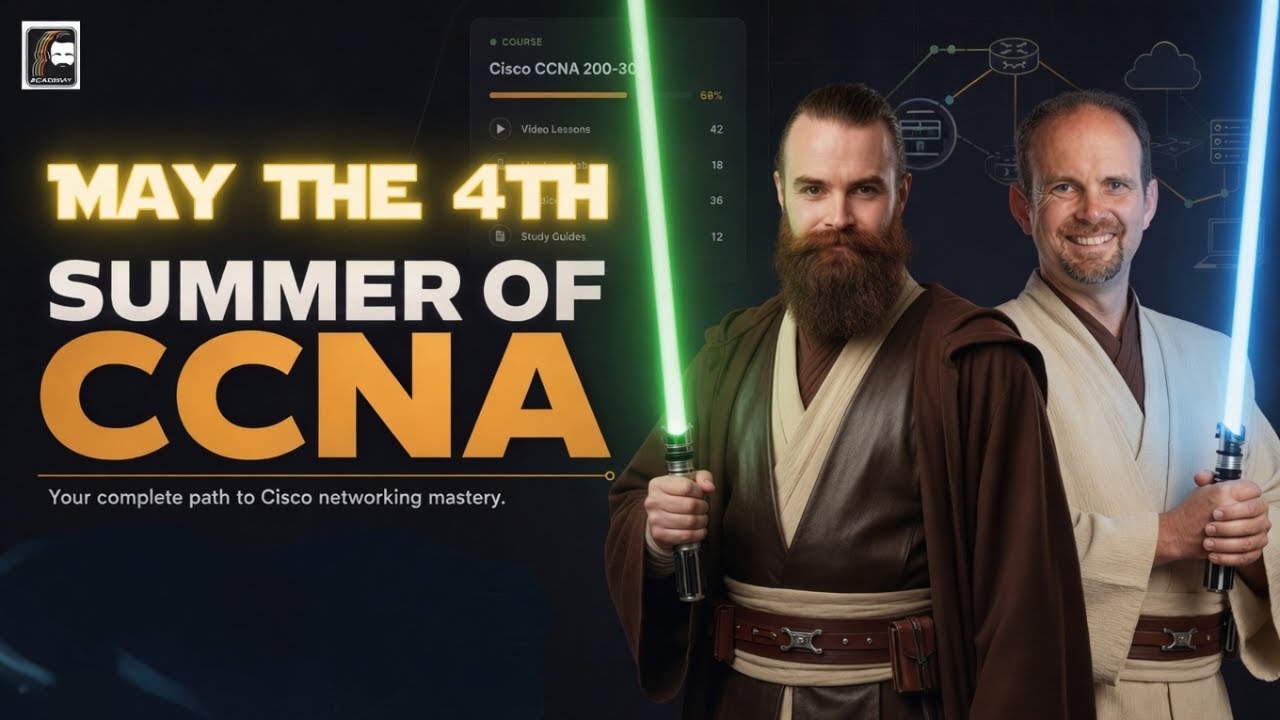

Get daily recaps from
NetworkChuck
AI-powered summaries delivered to your inbox. Save hours every week while staying fully informed.