Top 10 Agentic AI Project Ideas 2026 | AI Agent Project Ideas | Build AI Agents In 2026 |Simplilearn

Chapters4
AI agents are autonomous software that perceive, think, and act to achieve a goal without human input, evolving from basic AI to multimodal systems in 2026. The chapter also highlights their real-world impact on productivity, time savings, revenue potential, and market opportunities.
Discover 10 practical AI agent ideas for 2026, plus a starter project you can build this weekend to boost productivity and revenue.
Summary
Simplilearn’s video with the host breaks down top-10 AI agent project ideas you can actually build in 2026. From turning customer support into autonomous help to automating social media, each idea shows how agents can act across tools and platforms. The host explains core concepts like what an AI agent is, why agents are exploding in 2026, and the three building blocks—NLP, automation, and APIs—that power these agents. You’ll see concrete examples such as an email/calendar automation agent, a content-creation and scheduling agent, and a multilingual help-desk agent, with real-world impact numbers attached. The video also covers the essential tools and frameworks (LangChain, Autogen, Google Cloud AI Studio, OpenAI API, N8N, Hugging Face) and a staged approach to learning: beginner, intermediate, and advanced projects. Finally, it highlights a high-value starter project called Home Automation Masterio—the recommended weekend build to demonstrate how a centralized brain can orchestrate multiple smart-home devices and save time. If you’re serious about building autonomous AI systems, this video maps a clear path from concept to a tangible, revenue-driving project.
Key Takeaways
- Autonomous AI agents can drive 3x efficiency gains by handling tasks across multiple tools and data streams.
- A practical starter project, Home Automation Masterio, can be built in 3–4 hours to demonstrate cross-device orchestration.
- Email/calendar automation agents save about 12–15 hours per week by automating routine communications.
- A content-creation and scheduling agent can post up to seven times per day across six platforms automatically.
- Multilingual help desks can respond in 85 languages with sub-30-second response times, boosting scalability and customer satisfaction.
- Expense-tracking agents can help users save around $450 per month through smarter budgeting insights.
- Impact metrics for agents include revenue potential ($5,000–$50,000/month) and market opportunity (over $2B).
Who Is This For?
Essential viewing for developers, solopreneurs, and product teams aiming to build real, revenue-generating AI agents in 2026. The video provides a practical ladder—from basic chatbots to fully autonomous systems—for hands-on learning and product strategy.
Notable Quotes
"What if I told you that you could build an AI agent in the next two hours that makes you money while you're asleep?"
—Opening hook that sets the promise of rapid, revenue-driving AI agent projects.
"These agents can automate workflows, make decisions and execute actions across multiple tools."
—Core claim about the capabilities and impact of AI agents in 2026.
"The bigger advantage is time. Tasks that used to take 40 hours a week can now be done significantly reduced."
—Quantifies productivity gains from agent automation.
"You can save around 12 to 15 hours every week just by automating repetitive communication tasks."
—Concrete benefit from the email/calendar automation example.
"Build the Home Automation Masterio this weekend. It takes maybe 3 to 4 hours."
—Recommended starter project with a concrete, time-bound takeaway.
Questions This Video Answers
- How do AI agents differ from traditional automation tools like Zapier or IFTTT?
- What are the fastest ways to start building autonomous AI agents in 2026?
- Which tools (LangChain, Autogen, N8N) are essential for multi-tool AI agents?
- What is a practical path to go from beginner chatbots to fully autonomous agents?
Full Transcript
[music] What if I told you that you could build an AI agent in the next two hours that makes you money while you're asleep? And yes, seriously, from automating customer support to creating social media content, these are AI agent projects that are literally changing how people work in 2026. In this video, I'm breaking down the top 10 AI agent project ideas that can actually go viral right now. Whether you're a developer, a soloreneur, or someone looking to build their first AI site project, you will learn what AI agents actually are and why they're exploding in 2026.
Next, you will also learn the core technologies and tools you need to get started. And finally, we'll cover the 10 real world project ideas with business potential. By the end of this video, you won't just understand ER agents, you'll have a concrete project idea you can start building today. So, let's dive in. Before we get started, if you're serious about building the next generation of AI products, the applied agentic AI system design and impact program in collaboration with Microsoft and simply learn is 10 week practitioner level experience designed for professionals who want to move beyond basic generative AI and start designing orchestrating and leading agentic AI systems.
You'll gain hands-on expertise in multi- aent systems, rag, mcp, planning frameworks, workflow automation, and agentic UX while working with 25 plus industry tools like Langchain, Autogen, QAI, N8N, Langraph, Azure, and more. Learning is deeply practitional with 40 plus demos, 10 plus guided practices, seven real world projects and a capstone focused on product strategy delivered through live interactive sessions, mentoring and cohort-based collaboration. The program also offers career support via job assistance, Microsoft learn badges and a joint completion certificate from Microsoft and Simply Learn. If you're aiming to build autonomous AI systems led by a driven product strategy and stand out in the fast growing market, this program isn't just an upgrade, it's your launchpad.
Enroll now and step into the future of AentKI with confidence. The link is given in the description box below and in the pin comments. Now before we start, here's a quick question for you to answer. Which tool is used for AI automation? Is it NAT, Zapier, Lang Chain, or is it all of the above? Let us know your answers in the comment section below. So let's get started. Now let's start with a simple question. What exactly is AI agent? An AI agent is essentially a software program that can understand what's happening around it, make decisions and take actions on its own.
Think of it like a smart assistant. It observe its environment, processes the information and then acts in a way that helps achieve a specific goal. The key difference is it doesn't need consent human guidance. Once set up, it can be operated independently making decision based on the data it receives. In simple terms, an AI agent is a system that can perceive, think and act all with the objective and completing a task efficiently. Now, the bigger question is why are AI agents exploding in 2026? To understand this, we need to look at how AI has evolved over the time.
It all started in 1950s when AI was just a concept, very basic system with limited capabilities. Then came the 2010s where deep learning changed everything. Machines started learning patterns from massive amounts of data especially through neural networks. The real breakthrough happened in 2022 with the conversational AI like chat chibit. Suddenly AI could understand and generate humanlike language making it accessible to everyone not just researchers. And now in 2026 we are in the era of multimodel AI. This means AI can process text, images, audio and even video all together. Because of this AI agents are no longer just answering questions.
They are actually doing task. That's where the 10 times productivity increase comes in. These agents can automate workflows, make decisions and execute actions across multiple tools. So it's not just an improvement, it's a shift. We have moved from AI that assist to AI that can act. And that's exactly why AI agents are growing so fast right now. Now let's talk about the real world impact of AI agents. And this is where things get really interesting. We are looking at the virality and efficiency impact with the AI agents. Creators and businesses are seeing a massive reach over 500,000 YouTube views consistently.
But it's not just about views. The bigger advantage is time. Tasks that used to take 40 hours a week can now be done significantly reduced because AI agents can handle repetitive time consuming work. And because of this automation overall efficiency has increased more than three times. That means faster execution, less manual effort and a better result. We see the business impact as well. AI agents are directly contributing to the revenue, generating around $5,000 to $50,000 per month in some cases. That's a huge shift from just being a tool to actually becoming a revenue driver. Adoption is also growing rapidly at the rate of 300% yearover-year.
This shows that companies are not just experimenting anymore. They are actively investing in AI agents. And finally, the market opportunity is massive, expected to reach over $2 billion. This indicates that we are still in the early stages with huge growth potential ahead. So overall, AI agents are just not improving productivity. They are transforming how business operate, scale, and generate value. Now let's look at the core technologies that are actually make AI agents possible. The first one is natural language processing or NLP. This is what allows AI to understand and respond to human language. Whether it's text or voice, NLP helps the system interpret meaning, context, and intent just like how we communicate with each other.
The second one is automation. This is where real power comes in. AI agents can prefer repetitive task without any manual intervention. Things like sending emails, updating data or managing workflows. Instead of humans doing the same task again and again, the agent handles it efficiently and consistently. And the third is APIs or the application programming interfaces. Allow AI agent to connect with external tools and services. For example, an AI agent can pull the data from database, sends messages through a platform like WhatsApp or trigger actions in other software. When you can combine all these three, NLP for understanding, automation for execution and APIs for connectivity, you get a complete system that can think, act and interact with the digital world.
And that's exactly what makes AI agents so powerful. Now, let's look at the essential tools and frameworks used to build AI agents. Starting with lang. This is one of the most popular frameworks for building LLM powered application. It helps in chaining multiple steps together like combining prompts, me and tools into single workflow. Next is autog. This makes things a step further by enabling autonomous AI agents. Instead of just responding, these agents can plan task, execute them, and iterate almost like working independently towards a goal. Then we have Google Cloud AI Studio, which is used to develop and deploy AI models at scale.
It's especially useful when you want to production level application with strong infrastructure support. Moving on to the open AI API. This is what powers many modern AI application. It provides access to powerful language models that can understand, generate, and reason with text. Next is NAN, a workflow automation tool. It allows you to connect different apps and automate processes visually which is extremely useful when building AIdriven workflows without writing too much of code. And finally, we have hugging face. This platform offers advanced NLP and machine learning models along with tools for training, fine-tuning and deploying them.
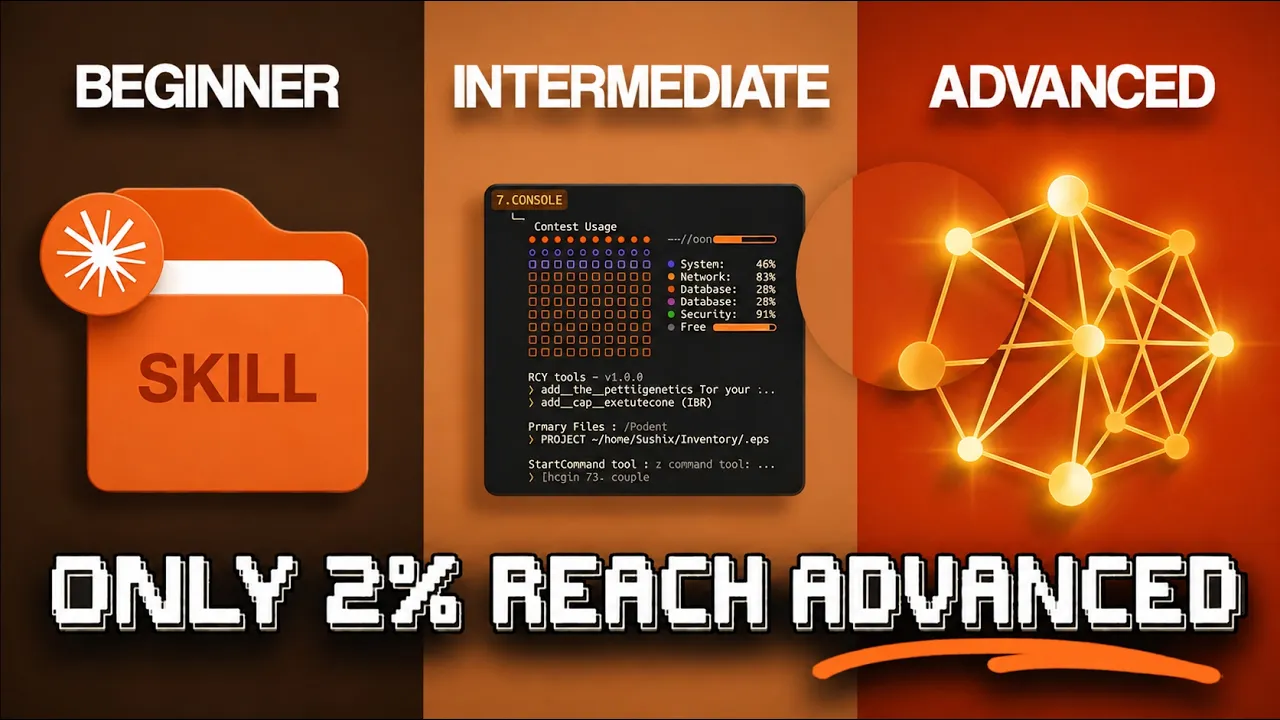
So when you can combine these tools, you get everything you need from building and training models to automating workflows to deploying full scale AI agents. These are the building blocks behind most modern AI systems today. Now, one of the most important steps is picking the right project, especially if you are just getting started with AI agents. Let's break this down into three levels. At the beginner level, you should focus on simple use cases like chatbots or email automation. These projects help you understand the basics. How AI responds, how workflows are built, and how different tools connect with each other.
It's all about building a strong foundation. Once you're comfortable, you move on to the intermediate level. Here you start working on more complex systems like multi-tool agents or contact scheduling automatically. This is where you learn how to integrate different APIs and make your AI agent handle multiple task efficiently. Finally, at the advanced level, you will build fully autonomous systems like business boards or even ML integrated agents. These agents can make decision, optimize process and operate with minimal human intervention. This is where AI agents start delivering real business value. The key here is progression. Don't jump straight to advanced projects.
Start with simple projects. Build the confidence and gradually move up because your journey with AI agents is not about complexity. It's about consistency and growth. Now let's take a look at a practical example. an email and calendar automation agent. This is a perfect example of how AI agents can act as a productivity powerhouse in day-to-day life. So what does it actually do? This agent automates task like email sorting, meetings, scheduling and overall calendar management things that usually take up lot of our time every day. Now let's understand how to build it. It start with the Gmail API which allows the agent to access and read incoming emails.
Then we use NA10 to create the workflow basically defining what should happen with a new email. Next come GPT4 which acts as a brain of system. It understand the email content identify priorities and decides what actions needs to be taken. Finally the agent can send smart replies automatically or even schedule meetings by interacting with your own calendar. And what about the result? You save around 12 to 15 hours every week just by automating repetitive communication tasks. And this is just one such example. Imagine applying similar automation across multiple areas. The productivity gains can be huge.
Now let's take a look at another powerful use case. An automated content creation and scheduling agent. This is especially useful for social media managers, creators, and businesses trying to stay consistent online. So what does this agent do? It generates content ideas and automatically post them across six or more platforms without needing manual efforts every day. Now let's break this down how it works. It start with input topics. These could be trends, keywords or specific themes you want to focus on. Then we use OpenAI to generate highquality content. This includes captions, posts, ideas and even variations tailored for different platforms.
Next is NA10 which is used commonly for automation workflow. It connects everything together from the content generation to scheduling and publishing it. Finally, the agent handles auto posting and counting. Finally, the agent handles auto posting ensuring content goes live at the right time on the right platforms. And what about the result? You can automate up to seven post per day consistently without even burnout. This is not only saves time but also ensures a strong and active online presence. So instead of spending hours creating and posting content manually, you can focus on strategy and growth while the agent handles the execution part.
Now let's look at a very practical and impactful use case. An AI agent for expense tracking and budgeting. Think of this as your personal finance guru, always monitoring your spending and helping you make smarter financial decisions. So what does this agent do? It automatically tracks your expenses, categorizes your spending and even provides recommendation on where you can save money. Now let's understand how it works. It starts with bank API which securely fetches your transaction data things like where you spent, how much and when. Then NA10 is used to automate the workflow organizing and routing this data for processing.
Next GPT4 comes in as a intelligence layer. It analyzes your spending patterns and identifies unnecessary expenses and also generates useful insights. Finally, the agent provides budget insights and alerts. For example, warning you when you're overspending or suggesting ways to cut those cost. And what about the result? On an average, user can save around $450 per month just by becoming more aware and making smarter decision. So instead of manually tracking every expense, this AI agent acts like a smart financial, helping you manage your money more efficiently and effortlessly. Now let's look at another powerful application which is a research and summarization co-pilot.
You can think of it as a knowledge ninja can go through massive amounts of information and give you exactly what you need in a fraction of a time. So what does this agent do? It searches across multiple sources, gather relevant information, and creates clear, concise research summaries. Now, let's break it down how it works. It starts with web scraping where the agent collects data from different websites, articles, and also sources. Then comes the analysis stage where content is filtered and only most of the relevant information is selected. Next, we use open AI for summarization. This is where the agent converts large volumes of content into short, easy to understand summaries.
Finally, the agent delivers a structured report which can be used for decision making, presentations or even further research. And what is the impact? A task that normally takes 12 hours can now be completed in just 20 minutes. So instead of spending hours of reading and compiling information, you can rely on this AI agent to do heavy lifting, allowing you to focus on insights and action. Now let's take a look at a very powerful and relatable use cases. An AI resume and cover letter writer. This can truly be a job seeker secret weapon. So what does this agent do?
It optimizes your resume based on job description and generate personalized cover letters tailored to each application. Now let's understand how it works. It starts by passing the job description identifying key skills, requirements and keywords that recruiters are looking for. Then GBD4 is used for tailoring and ATS optimization. This step ensures your réumé is aligned with the job role and optimized for applicant tracking systems which many companies use to filter candidates. Finally, the agent generates a customized cover letter, not a generic one, but something specific to the role and company. And the impact is that the candidate can see over 300% increase in interview calls simply because their applications are more relevant and better optimized.
So instead of sending the same réumé everywhere, this AI agent helps you stand out making each application smarter, more targeted, and more effective. Now let's take a look at high impact businesses use cases and automated product listing and price tracker. This acts as an e-commerce super agent, helping business stay competitive in real time. So what does this agent do? It automatically syncs product listings and adjust prices across platforms like Amazon, Shopify, and even eBay, all without manual intervention. Now, let's break down how it works. First, the AI agent connects to the platform APIs, allowing it to access product listings and pricing data across different marketplaces.
Next, it monitors competitor prices continuously. This is a crucial in e-commerce where even a small price difference can impact sales. Then using NAN the entire workflow is automated ensuring that update happens instantly and consistently. Finally, the agent applies dynamic pricing strategies adjusting your product prices based on completion, demand or even predefined rules. And the result is businesses can see up to 45% increase in revenue simply by staying competitive and responsive in the market. So instead of manually tracking competitors and updating prices, this AI agent ensures your business is always optimized in real. Now let's explore a very exciting and unique use case.
A board for game strategy and competing. This can be thought of as a gaming genius. an AI agent that helps player make smarter decisions in real time. So what does this agent do? It analyzes the current game situation and suggest optimal strategies while the game is being played. Now let's break it down on how it works. First, the AI agent connects the game API which provides realtime data about the game environment such as a player, positions, scores or even a game in events. Then comes computer vision where the AI agent can visually interpret what's happening in the screen.
This is especially useful for games where not all data is directly accessing through APIs. Next, GBD4 performs strategy analysis. It processes all the information, evaluates possible moves, and predicts the best course of action. Finally, the agent provides overlay suggestions, meaning it gives realtime guidance directly on the screen, helping the player make better decision instantly. And the result is the players can achieve up to 78% win rate simply by leveraging smarter datadriven strategies. So instead of relying on your instinct, this AI agent acts like a realtime coach guiding you towards better performance and consistent wins. Now let's look at another powerful business use case which is a multilingual help desk AI agent.
This acts as a productivity powerhouse especially for companies that serve customers across different countries and languages. So what does this AI agent do? It handles customer support tickets in over 85 languages while maintaining a high resolution rate around 89%. Now let's break it down on how it works. It start with a customer message. This could come from a chat, email or any platform. Then the system performs automatic language detection instantly identifying the language of message without any manual input. Next is GBD4 which generates a response. It understand the customer's query, process the intent and provides a clear, accurate and humanlike reply.
Finally, this response is integrated into ticketing systems ensuring proper tracking, follow-ups and resolution management. The bigger advantage here is speed and scalability. The agent can respond in under 30 seconds which significantly improves the customer experience while reducing operational costs. So instead of relying entirely on large multilingual teams, businesses can use AI agent to deliver fast, consistent and global customer support. Now let's take a look at a very practical and lifestyle focused use case. A fitness and meal planning virtual coach. This acts like a personal health assistant helping others stay consistent with their fitness and nutritional goals.
So what does this agent do? It creates personalized workout routines and meals based on individuals fitness goals, preferences, and lifestyle. Now let's understand how it works. It starts with user input. This could include goals like weight loss, muscle gain, dietary preferences, or even time availability. Then GPT generates a customized plan. It designs workouts and meal suggestions tailored specifically to users needs. Next, the data is stored in databases so the system can track progress update plans and maintain consistency over the time. Finally, the agent sends daily updates through SMS or an app keeping the user engaged, motivated or on track.
And what's the result for this? Users can see significant improvements. for example, a reduction for up to 15 pounds in just 90 days. So instead of following generic plans, this AI agent provides a specialized adaptive and consistent approach to health. And now let's take a look at a powerful real world application, a smart device controller agent. This is a productivity powerhouse for smart homes designed to make everyday life more convenient and efficient. So what does this agent do? It can control over 50 smartarth home devices using voice commands and automating routines. It can control over 50 smartarth home devices using voice commands routines.
Everything from lights and fans to security systems and appliances. Now let's break it down on how it works. It starts with voice input where the user gives a command like turning on lights or even adjusting temperature. This is processed through Alexa or Google's API which convert voice into actionable commands. Next, en handles the workflow automation deciding what action needs to be triggered. Then if T rules come into play, connecting different devices and defining automatic logic like turning off the lights when you leave home. Finally, the commands are executed through smart device protocols allowing seamless communication with all the connected devices and the result is up to 40% of the energy savings along with increased convenience and smarter living.
So instead of manually controlling each device, this AI agent creates an intelligent ecosystem where your home responds to you automatically. Okay, so you just saw all the 10 AI agent project areas, but here's the thing. Most people watch this and think, "Oh, that's cool." and move on. So, for you to move on, here's one of them. The one I think you should actually build first, it's called the home automation masterio. And here's why. It's a very useful automation technique, which we can do it in a single day. It's not too hard to build and honestly it feels like a magic when it works.
Here's the problem with smart homes today. You've got lights over here, AC over there, a lock, a TV, speaker. They're all smart, but they are all idiots. They don't talk to each other. So, you're opening Philips Hugh app, then the Google Home app, and then the smart lock app. Five different apps just to say I am leaving for work. The home automation masterio fixes that. It becomes the brain that connects everything. You send it one message on WhatsApp like I am leaving and boom, it figures out what actually means. locks all doors, turn off lights, sets AC to echo mode, and closes the curtains all at once.
No more app switching. So try this automation and let me know in the comment section below if you're able to crack it. This is the project I recommend you to start with. Build it this weekend. It takes maybe 3 to 4 hours and at the end you will have something that actually improves your life daily. And that was it for the top 10 of the AI agent projects. And if this is the type of content you would like to watch, then hit that subscribe button and the bell icon to get notified whenever we post. Thank you and keep learning with Simply Learn.
More from Simplilearn

![AWS Solution Architect Full Course 2026 [FREE] | AWS Solution Architect Tutorial 2026 | Simplilearn thumbnail](https://rewiz.app/images?url=https://i.ytimg.com/vi/J9R_huR5lDc/maxresdefault.jpg)










Get daily recaps from
Simplilearn
AI-powered summaries delivered to your inbox. Save hours every week while staying fully informed.