I Make $250K/Month From 13 Businesses (After Losing Everything to AI)

Chapters10
Jackie explains how he built a diversified portfolio of online businesses generating around $250K/month, countering the common advice to focus on a single venture. The interview covers his multiple income streams, AI challenges, and the strategic role of a unifying platform.
Diversify widely across 13 online businesses and YouTube, and you can hit $250K/month even after AI and Google updates.
Summary
Pat Walls sits down with Jackie Chow to unpack how a portfolio of more than a dozen online ventures now drives around $250,000 per month. Jackie details three big revenue pillars (Indexy at about $85K/mo, Local Rank near $50K/mo, and Advisе at roughly $300K over the last year), plus Tracking.ai and seven to eight smaller sources that round out the income. He explains the brutal impact of Google's helpful content update and AI-overviews on content sites, and how having an agency in the background helped him survive the disruption. A core pivot was leveraging a single platform—YouTube—as an insurance policy, with 80% of Local Rank’s $20K/mo launch revenue coming from YouTube despite modest view counts. The interview also teases Jackie’s playbook for starting and growing a YouTube presence: niche focus, daily uploads for six months, solving real audience problems, strong hooks, trend/SEO optimization, a simple funnel, and making YouTube part of the routine. He emphasizes that diversification, not single-project focus, is essential in 2026. The episode also points viewers to a free business idea template to generate 21 actionable ideas, and it highlights Starter Story Build as a way to prototype ideas quickly. Jackie’s takeaway is transparent and actionable: build multi-channel revenue streams so downturns in one area don’t sink the whole business.
Key Takeaways
- Indexy contributes about $85K/month, with roughly $500K revenue in the last 12 months (Stripe data only).
- Local Rank reaches about $50K/month since its March launch, with ~${454K} revenue in the last 12 months.
- Tracking.ai adds another $25–$30K/month, plus 7–8 smaller sources that range from $170 to $5K/month.
- AI and Google updates obliterated revenue from some content sites due to zero-click recipes and data scraping by Google.
- YouTube served as an insurance policy, delivering the majority of revenue for a major launch even with modest video views.
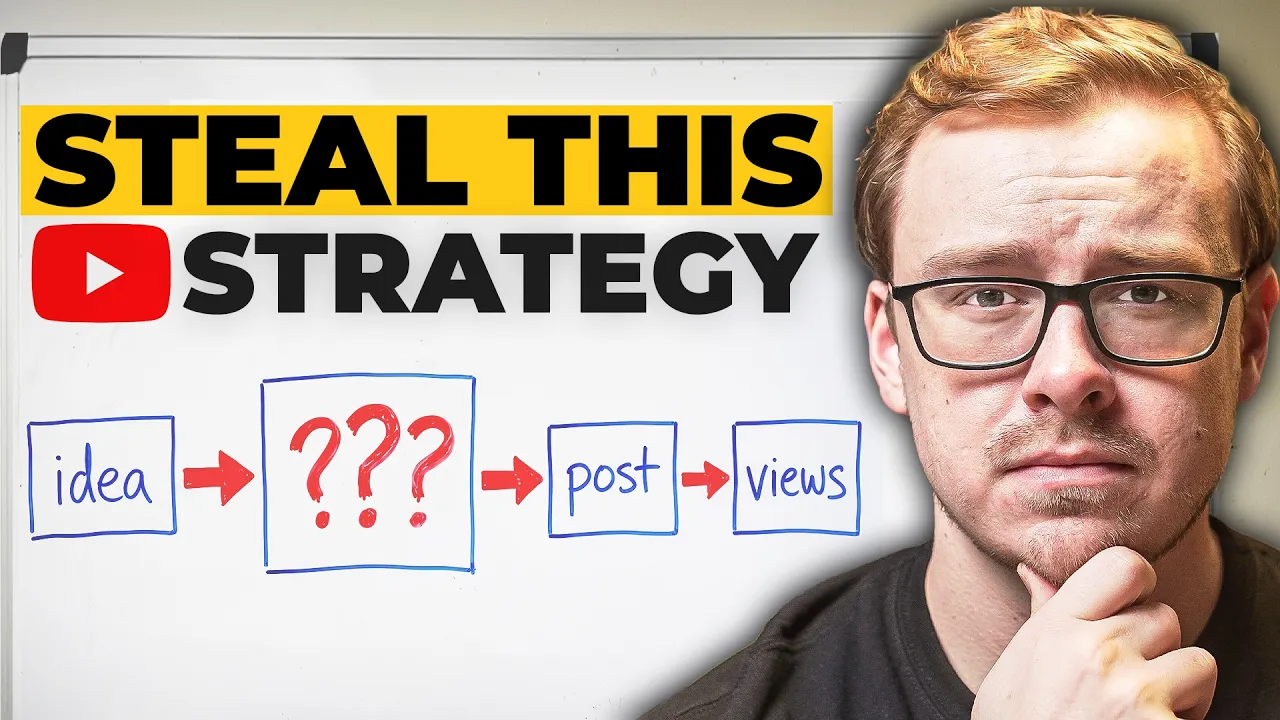
- The playbook for starting on YouTube includes: owning a tight niche, daily uploads for 6 months, solving audience problems, strong 5-second hooks, trend/SEO optimization, and a simple email funnel.
- Diversification is framed as essential in 2026 to survive AI-driven market changes.
Who Is This For?
Entrepreneurs and online-creator builders who want practical, revenue-backed strategies for multi-project portfolios and YouTube-driven growth, especially after AI and Google-era disruptions.
Notable Quotes
"“Google's algo updates kind of wiped out the content.”"
—Jackie explains how AI-overviews and updates affected his content sites.
"“Diversification is the only way you'll survive the AI age.”"
—He emphasizes the core strategy for enduring rapid AI changes.
"“YouTube was my insurance policy.”"
—YouTube provided resilience when other channels faltered.
"“Don't listen to the people who are screaming at you telling you to focus on that one project.”"
— Jackie argues for revenue diversification over single-focus thinking.
"“80% of our local rank 20K MR launch came from YouTube.”"
—Shows the power of YouTube as a distribution channel for launches.
Questions This Video Answers
- How did Jackie Chow build a portfolio of 13 online businesses that generate ~$250K per month after AI disruptions?
- What is Local Rank and Indexy, and how do they contribute to monthly revenue?
- Why is YouTube considered an insurance policy for online businesses, and how should founders leverage it?
- What steps comprise Jackie’s YouTube playbook for new creators in niche markets?
- How can a free business idea template help me identify real, paying problems to solve?
Starter StoryPat WallsJackie ChowIndexyLocal RankTracking.aiSEO agencyB2B SaaSAI disruptionYouTube strategy
Full Transcript
I just run a portfolio of small internet businesses doing around 250k per month. Meet Jackie. He's built dozens of projects online that have made him millions. An SEO agency, couple B2B SAS products, even an ecom brand. He's tried every business model under the sun. He's really seen it all. Everyone tells you to focus on one thing. I'm living proof that that's terrible advice. I recently caught up with Jackie to talk about all of his apps and businesses he's running right now, what's working and what's not working, including an algorithm change that nearly obliterated all of his revenue.
Google's helpful content update plus AI overviews completely destroyed my business. Well, since then, he's come roaring back with a portfolio of 10 plus online businesses making $250,000 a month. All thanks to one platform, which we're going to be getting into today. Yeah, it was my insurance policy. In this episode, we'll dive into his 13 income streams and how much each business makes, how AI can kill businesses overnight and what you can do about it, and the distribution channel that helped him bounce back to $250,000 a month. All right, this one you can't miss. I'm Pat Walls and this is Starter Story.
Jackie, welcome to the channel. I'm a big fan. Tell me about who you are, what you built, and what's your story. Hey guys, my name is Jackie Chow. I just run a portfolio of small internet businesses doing around 250K per month, an SEO agency, couple B2B SAS products, and the only reason why I'm on Star today is because I made daily YouTube videos that almost nobody ever watched and diversified my income. All right, I'm excited to talk about all the business you built, all the income streams you have. But before we do, let's break it down.
What are all the different apps and software and businesses that you've built that make $250,000 a month? All right, so Indexy coming in at $85,000 per month and in the last 12 months 500K. This is only Stripe. We also take direct bank transfers and PayPal and local rank since we only started last March does 454K. So roughly 50K per month and we have advise last 12 months 300K. We have trackings.ai that does anywhere from 25 to 30k per month. And yeah, I have pretty much 7 to eight other small revenue sources that ranges from anywhere from 170 to 5K per month.
All right, cool. Thank you for sharing. How do you get to this place? How do you become the guy that has over 10 projects that he's building online? How do you get here? Yeah, so I originally started in 2015, started an SEO agency and yeah, I've been running it for 10 plus years now. Along the way, I actually built a portfolio of content sites that did extremely well. Then, unfortunately, in late 2023, Google's algo updates kind of wiped out the content. So, I decided to take everything I knew from local SEO and we built local rank.
In short, we came out the door blazing and was able to hit 20K per month right out the gate. So, let's talk about this thing that happened with AI. I mean, I I talked to a lot of founders. I hear about this happening everywhere behind the scenes. What happened? How bad is it? Oh, it it it was def it was brutal. We had these content sites. For example, I'm really into food. So, I had like a foodie blog. People will Google, click my link, and I get paid on via display ads or affiliate commissions. However, with AI overviews, it's zero click now.
People can get their recipes within just the AI overviews. So, they don't need to click to your site. Google simply scrapes your data and then presents it as the result. You were essentially competing with Google at that point. And I think what really saved me was having that agency in the background. So in 2026, I'm living proof that diversification is the only way you'll survive the AI age, especially with the daily emergence of new LLMs. It's unbelievable what's happening right now. I love that Jackie ships a ton of projects, but here's the thing. Jackie didn't spin up 13 random products.
Every single one solves a very specific problem, and he proves that finding the right idea can change everything. That's why we put together this free business idea template, which walks you through the seven proven methods to spot real problems that people will actually pay you to solve. If you go through this worksheet, by the end, you will have 21 ideas that you can go build right now. If you're ready to find your winning idea, just head to the first link in the description to grab the business idea template for free. All right, let's get back to the episode.
I want to talk about one platform that seems to somewhat have stood the test of time. When the AI, whatever you want to call it, thing was crashing down, there was one thing that didn't crash. What was that for you? YouTube. It was my insurance policy. Luckily, I've been already posting on YouTube for 2 to 3 years at that point. Yeah, that audience saved me. People go on my channel, they'll notice that a lot of creators, they'll probably opt for a faster paced video, whereas I just do a stream of consciousness. And I guess that resonates with viewers a bit more, especially at a low viewership count.
The easiest example is my local rank launch. 80% of our local rank 20K MR launch came from YouTube. It only did 1.8K 8K views. Whereas the launch tweet on X.com did something around 30k views, which is 15 times the impressions, but only 20% of the revenue came from that. It's um pretty ridiculous, actually. It's amazing. Thanks for sharing that. You make these videos that don't get that many views, yet they convert a great amount of customers. What's your like overall highlevel YouTube strategy? My YouTube strategy is just showing up every single day. You have a lot to learn when you show up every single day for 2 and 1/2 years.
you know a lot about your audience, the nuances of a certain industry. And my first ever video initially in the first 24 hours, there was only 30 views, but that was enough for me to keep going. And now the daily uploads probably get anywhere from 1 to 2k views. It's not amazing, but it's a very, very valuable audience. What I want to talk about more is how to get started on YouTube. How would you start over if you had to kind of redo what you did, carve out a niche, create videos that truly convert customers?
What would be your playbook? My playbook would be pretty simple. Number one, start off in a niche that you can completely own. Personally, it's local SEO or AI SEO at this moment. You could be marketing for lawyers or SEO for plumbers. Narrower is better. People will see you as like a thought leader. And step two, commit to daily uploads for certain amount of time, 6 months. Do one long form, one short form a day. Doing daily videos kind of forces you to lower your standards and kind of just ship out a product. You'll learn way more in 30 daily bad videos than, you know, two perfect ones.
If you build it into your routine, it's not even work anymore. You'll feel weird when you're not doing it. Step three, provide solutions to problems your audience already have. This really works well because these are problems you probably already have and if you talk about it on YouTube, most of the time other people would have that same problem. So, for example, if you have a video called how do I rank on chatbt and it's just simply you exploring how to rank on chatbt, that video will do extremely well cuz you can talk through your thought process.
It doesn't even have to answer the question. And once you do solve that issue, the call to action is a simple link to your product and that product was local rank for me. Step four, make sure you have hooks within the first 5 seconds. I used to do like a creatine scoop right in smack in the beginning of the video and people would just hop off right away. So I always do like a hook in the beginning. Now it's not just going to be like, "Hey guys, scoop of creatine." It should be here's how I ranked in Chad GBT in 24 hours.
You have 5 seconds to hook them in. Don't waste it. Step five, optimize for trends and search. Especially right now with the emergence of AI and all these new LMS that are coming out because if you're first to talk about, for example, Seance 2.0, O, you'll be able to rank, especially if you're just starting out. And step six, build out a simple funnel. So, with every video, I have a link to my newsletter. And typically, I it's just my show notes and a bunch of documents that are helpful for the audience to follow along. Then, they give me their email, and then I'm free to pitch them at any time.
I don't ask for a sale early on in the video. I kind of just provide as much value as possible. They sign up for the lead magnet and then put them in my funnel. Maybe if they like me, they'll use my services later on. And step seven, have YouTube be part of your routine. I've been doing daily videos now for 2 and 1/2 years. It's uncomfortable when I don't do it. So that's pretty much my playbook for starting out. Carve out your niche. Do daily videos. All right, cool. Thank you for sharing. Let's go to the last question we ask all founders who come on to Starter Story.
If you could stand on young Jackie's shoulders before the SEO doom or even before you got started, what would be your advice for anyone watching this just looking to build stuff online like you? Yeah, I'd say don't listen to the people who are screaming at you telling you to focus on that one project. I think revenue diversification, especially in 2026, is the only reason why I'm on Starter Story today. That's awesome. Thank you, Jackie, for coming on. Love your story. Love your content. I'll keep watching your YouTube videos and thanks for coming on and sharing everything so transparently inspiring stuff.
Thank you. Thanks, guys. Okay, Gus, producer of Starter Story, what did you think of Jackie Cow? My takeaway is I love learning like that YouTube strategy. We've talked to a few founders already who are doing this and it just makes me feel like, man, should I be creating like videos online about whatever topic? You know, obviously there's more strategy behind that than just like making videos, but that's the first thing that stands out to me is like, I should get on this train, you know, before it takes off. That's kind of my initial reaction. Yeah.
Yeah. Go online, create videos. They don't need to get a lot of views and you can be dominant in your little space. For him, it was, you know, specifically a niche part of SEO. You got to be able to just put your face out there and be willing to put out crappy videos every day. If you can get over that fear of doing that and putting yourself out there and you'll have a captive audience of 500, a,000, 2,000 people that watch your stuff every single day. That's doesn't sound like a lot when you see Mr.
Beast getting 100 million views, but it's enough to build a business that is doing $250,000 a month, which is just wild. Yeah. It just goes to show like you don't need to put all your eggs in one basket kind of thing. I I'm sure if someone's watching this, they might say like, well, you know, you're you're not focused or whatever, but there's enough success stories out there, people who've done something like this where it's like build multiple things and kind of see what lands. And I'm sure there's a bunch of other projects he didn't mention that weren't successful.
And so, you know, finding all these I think comes with a lot of work, but I think there's something there too about like doing a lot of things. They're all focused, right? So, he's not just building random things, but it's not just one like one project. So, I think that's cool, too. actually and I would argue that he is working on one thing. He just has different ways of serving that customer and that's always that they know we talk to with people that have portfolios of software. Now AI can create all this stuff easily. So the argument that you need it's too hard to do technically is over.
For anyone watching this who wants to build stuff quickly with AI just like Jackie or lots of other people that have lots of different businesses should definitely check out Starter Story Build. I'll put a link in the description. We'll help you come up with your idea, build it in a couple days, and ship it in the hands of real users. Maybe you can make some YouTube videos as well. All right, guys. Thank you guys for watching this. I'll see you in the next one. Peace.
More from Starter Story


Get daily recaps from
Starter Story
AI-powered summaries delivered to your inbox. Save hours every week while staying fully informed.