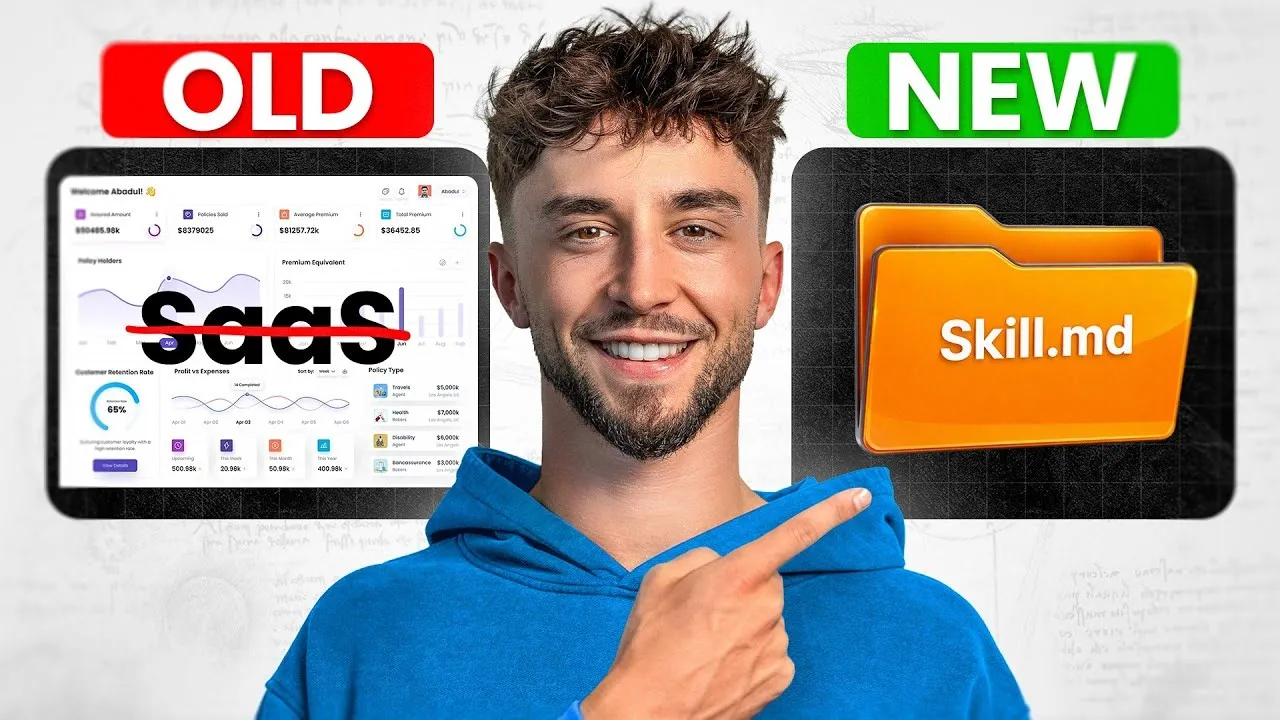
I Spent 24 Hours With A SaaS Millionaire

Chapters14
Pat follows Jeremy to uncover how a SaaS millionaire built his empire, hinting that the secret is a paradigm-shifting approach to building software and an exploration of whether the strategy still works in 2026.
SaaS founder Jeremy reveals the tentpole strategy that built Taskmagic into a multi-million-dollar, one-owner business and how he monetized with a clever ecosystem before selling it for seven figures.
Summary
Pat Walls spends 24 hours with Jeremy in the Hollywood Hills to uncover the real story behind Taskmagic, a SaaS that grew to 60,000 users and 8,000 paying customers before a seven-figure sale. Jeremy explains how he moved beyond a single-product mindset by stacking related “temple” products around a core tool, using Mail Lead as a targeted starter product to drive SEO and paid users to Taskmagic. We see concrete milestones: from a no-code MVP in 2019, seven figures in 2020, to 3 million in annual revenue within three years, and an Inc. 5000 mention for Taskmagic. The conversation also dives into the emotional roller coaster of selling Starter Story and the realities of funding, debt, and family priorities during the exit. As AI and automation reshape SaaS, Jeremy argues the future is ecosystems where smaller, highly specific tools funnel into a core product, creating natural upgrade paths and cross-sell opportunities. The episode ends with blunt advice about sharing failures and a challenge to readers: build an ecosystem, or at least start with a targeted temple product and scale from there. Plus, a free HubSpot-backed database of 190 proven micro-SaaS ideas is teased for viewers who want actionable starting points.
Key Takeaways
- Taskmagic scaled to 60,000 users and 8,000 paying customers, with some months exceeding $400,000 in revenue.
- The tentpole strategy centers a core product (Taskmagic) and stacks smaller, highly specific products (Mail Lead, LeadQuest.ai) to drive traffic and upgrades.
- Mail Lead generated almost seven figures by offering a simple, SEO-friendly outbound tool that funnels users into Taskmagic.
- LeadQuest.ai and the integration with Taskmagic created a natural upgrade path, letting users automate leads through the ecosystem.
- Jeremy emphasizes an ecosystem approach rather than a single product model, leveraging cross-sell and seamless integrations to grow revenue.
- The sale process involved significant personal risk and debt, underscoring the emotional and financial realities of exits in SaaS.
- The video foreshadows a future where AI-enabled tooling accelerates “no code” software building and cross-product strategies.
Who Is This For?
Founders and aspiring SaaS builders who want a practical path beyond one-product launches. If you’re exploring micro-SaaS ideas, ecosystem strategies, or exit planning, this episode offers concrete milestones and a real-world ramp to seven figures.
Notable Quotes
""The temple strategy is essentially making small cheap products that serve this core because they will essentially rank on their own and make more money.""
—Jeremy explains the core concept of the tentpole/temple strategy.
""We marketed our product by building other side products that would funnel paid users to that one temple product.""
—Describes how Taskmagic was promoted through related tools.
""One of the major unlocks... people didn't want to pay subscription pricing constantly. The way to bank roll itself at the beginning was a lifetime deal and then usage-based pricing.""
—Key monetization insight that sustained early growth.
""I walked away with millions in my bank account. Now my existence becomes what is my new daily routine.""
—Reflects the emotional impact of selling the business.
""If you want to build SAS, maybe follow this new tentpole strategy... you might, too.""
—Pat and Jeremy close with a practical takeaway about the strategy.
Questions This Video Answers
- how does the tentpole strategy work in SaaS ecosystems?
- what are micro-SaaS ideas that lead to a larger core product?
- how do you price SaaS with lifetime deals and usage-based pricing?
- what are realistic timelines for growing a SaaS to 3 million ARR and selling it?
- what is LeadQuest.ai and how does it integrate with Taskmagic?
SaaSTaskmagicMail LeadLeadQuest.aitentpole strategyecosystem marketingno-codeHubSpot micro-SaaS ideasInc. 5000SaaS exit
Full Transcript
This is Jeremy and he might be one of the most successful solarreneurs of all time. But before we get into that, we got to go back. It all started with a DM. Hey Pat, I just sold my SAS for millions and I wanted to share the secret with you. I gave him a quick call and when he told me about this strategy, I just couldn't believe it. Is this actually real? Did he just get lucky? And will this secret strategy still work in 2026? Only way to find out? Well, I decided to travel to the hills of Los Angeles, knock on his door, and have him show me everything.
Because this wasn't just a strategy. It was a change in how software will be built forever. Come join me as I spend 24 hours with a SAS millionaire. I'm Pat Walls and this is Starter Story. We're at Jeremy's house in the Hollywood Hills right now. He claims to have built a SAS business that made millions of dollars and then sold it for even more millions. His secret apparently is this thing called the tentpole strategy. I mean with AI vibe coding tools, everyone's talking about how SAS is dead. He told me he has a couple things to share about that which I'm excited to go over.
Is SAS dead? Guess we'll find out. Hello. Is this Jeremy's house? Oh, let's go. Whoa. He must have sold his SAS for millions if he's got this G Wagon here. This is a Mercedes AMG. Look at this thing, man. This is sick. This is not a video about nice cars. Let's go talk about SAS. Let's go. Guess this is the place. Hey. Hey. Good to see you, man. Welcome. Nice place, man. Oh, thank you so much. This is how a Sass millionaire lives. Look at this. This is the original from Disneyland. Wow. This here is commissioned art.
I don't know what that means. It was made for the house. Wow. And then this was specifically for this and that was flown in from Italy. Can you believe how douchebaggy that is to say here? Thanks for having me. Hey, no problem. Thanks for coming. I got the SAS millionaire here. We're about to learn all about his business. You sold your business. I did. I did. What was the business that you built? The business was Taskmagic. As a solo founder, I kept finding myself like dabbling like no code tools and one of those biggest no code tools was Zapier.
And I noticed that like a lot of Zapier users struggled to just automate things cuz it was very limited by APIs. So we built a tool that allowed them to click the button or automate the messy browser human behavior in like a web browser. And we eventually scaled Taskmagic to over 60,000 users and about 8,000 paying customers. And some months we would do north of 400 grand. Wow. And gotten it to about 3 million annually. Wow. to making the Inc. 500 list last year with a single employee. A single employee, just you and one employee, me and my CTO.
So last year after making the Inc. 500 list, we were like, "Okay, this could be a peak that we could maybe like explore a sale. We got one that was good that was in the mid upper seven figures um in millions enough to get that very cheap plaque with the badge. But this was like lifechanging for me and the one employee and I just thought it was the time to do it especially before I turned 38 years old. We had chatted before and you let me know about this amazing strategy. We're going to talk about that a little bit later but just give me a little tease on that one.
Yeah. So that's the temppole strategy. Most people will build one product and then market it. We marketed our product by building other side products that would funnel paid users to that one temple product. Yeah. Give us a tour. Give us a tour. So, this is the Product Hunt Golden Golden Kitty Award. And this is our one of one I've been assured by Gaz, the founder of acquired.com, where we sold Taskmagic. This is the magazine that we were in, the inc 5000 magazine. This one, Taskmagic, was awarded by AppSumo. Tell me how this all started. Did you have a software background?
How did you get to this point where you had a $3 million per year SAS with one founder, one employee? So, I started non-technical just like hacking away at the original product which was V1. That was like a no code app builder that ran slow as [ __ ] And then because I was able to monetize that like early in 2019, I was able to hire my first employee. We kind of rebuilt the thing and we launched that in 2020. we got that to seven figures in revenue and then 2021 we kind of took like a step back because we we were thinking what is the bigger opportunity here and the sentiment with like customers was how do we automate those things?
We thought okay let's listen to this automation thing maybe we can get on the forefront there and we kind of started with just like a few hundred grand in like 2021 of that revenue and then made it to about 3 million in three years. Wow. Okay. Well, congratulations on the sale. We're going to be talking about this tent pole strategy. Oh, let's do it. Hey guys, Pat from the future here. I'm just finishing up the edit on this video right now. But before I do, I got to show you something. You're about to learn about Jeremy's secret tentpole strategy, but reminder that it's still all starts with one idea.
So, in typical starter story fashion, why not build your first idea inspired by already successful businesses? Well, we worked with HubSpot to put together a free database of over 190 proven micro SASS ideas. These are all real businesses and they include real revenue numbers, real traffic, pricing models, cost to start, everything you'd want to know. So, if you want to skip the guesswork and find an idea that might actually work, then click the description right down there below and you can grab it for free. All right, let's get back to the episode. So, this was the [ __ ] you purchase.
My wife let me make Yeah. I've never been inside of a G Wagon. Mr. Get in the driver's seat. My new G Wagon. Yeah. Good afternoon. Look at this, dude. This is what you get when you build SAS products. All right, let's talk about the tent pole strategy. This is strategy. You know, typical SAS is like you build one product, you have a subscription, people sign up, they turn off, but you did it differently. Correct. Can you explain the tent pole strategy to me? Yep. And I'll even make a tent. So, look at that. It's a tent pole almost.
So, and then Task Magic. So, Task Magic, our browserbased automation software, was the main temple, the core business. And instead of what normal people do, they will just market this business. And the way they do that is like something with like some free product like a information tool. And with today's no code tools now you can sell functionality not information. And that's exactly what we did. So task magic being the temple. I love that dude. [ __ ] like a tent. Oh nice. The temple strategy is essentially making small cheap products that serve this core because they will essentially rank on their own and make more money.
Got it? So step one, we would build for the customer's next problem. So Taskmagic's original customers, they were business owners, agencies, freelancers, people who need sales. Step two, building something very simple. So we were like, okay, well, let's build like a very simple outbound tool. And we called that mail lead. Damn it, I love this. Which is a simple email outbound platform for taskmic. And we wanted to build something really really simple because SEO what helps it is specificity. So the more specific you can get like cold outreach email for some sector or whatever like for automation that's going to rank as high as it can faster than something general just like task magic automation.
So we not only sold this to our existing customers but we were able to attract more customers because essentially mail lead got its own SEO lift. This brought in alone almost seven figures of revenue. And is this like a white labeled version of this or is this it's its own product? This was its own product. Got it. Step three is making sure that it hits a natural upgrade path. So this goes okay I want to send cold emails. I got to get more customers. But okay, now I want to connect Mail Lead to these other apps I use.
Got it. So boom, you click the automation button and it's task magic. Got it. Built right in seamlessly. Nice. You hit some kind of limit there. You're now paying for task magic. Right. So people will come in and buy this product, they find this product, and even know about Taskmagic. And then you'd have these upsell opportunities for them to use Taskmagic, which was that a subscription task magic. So, one of the major unlocks that we found with Taskmagic really early on was people didn't want to pay subscription pricing constantly. And the way to like really have this bank roll itself at the beginning was like lifetime deal and then usage based pricing.
The last step in this entire temple strategy is stack an ecosystem. So, what do the people of mail lead need? Oh, leads to email to. So, we built leadqu quest nice.ai AI that helped them search for leads to email to. So then when you want to start bringing the emails that come up in leadqu quest.ai and again you click the automation tab on the left, it goes to taskmic, right? Not only do you want to click the automation tab and you're like take this email and automatically mail it to Gmail. These people would like to go, oh, but I got to mass email all these leads that I have.
Boom. Then they buy mail lead. Right. Right. So that's how mail lead became almost seven figures. Taskmic then brought in more money from the people from mail lead and the people from and now this looks like John Madden go here go. I think that's super cool cuz as we talked about earlier like SAS you think oh I just built one thing. I convince everyone to use this one thing and it only does one thing. But that's like the old way of doing software right when you needed all these developers. You're able to create all these mini products almost that can cross-ell back and forth to each other.
Yeah. What do you think is the future of SAS? Like if you were to start over today and start from scratch, would this be your strategy or what would you change? If I were to start over today, this is what I would do. So, taking Lead Quest as an example, now how can I make Leadquest the temple product? And when you start stacking them, they help each other. The big thing to like walk away with is these aren't like separate side hustles. They're serving the same ecosystem. Okay, Jeremy, let's talk about the sale of the business.
It looks great on paper. You know, you sold this business for seven figures. You have this awesome house. You're living in your dream home in LA. But what I want to hear is the real story about the sales process. I just sold Starter Story, our company. Congratulations. Thank you. And it was a crazy process of ups and downs and roller coasters. So, I'd love to hear your perspective. Obviously, you're on the other side now and it's been amazing, but what was that process like for you? Walk me through the emotions and the process. It was all amazing and great at the end, but you're kind of like still shocked or coming out of like the sales coma I would always I think about it as.
But the way mine happened with I want to sell. Who would you sell to? No idea. But I want to exit a company before I turn 38. And you have a daughter. You have a young kid. And the mortgage on our house is like $9,000. So I was like, it's probably a good time to sell. So I talked to a couple brokers. They introduced me to people. We put it on the acquire.com marketplace. Then over a hundred people were messaging me about it. Then we had bought out investors for what I thought we could. That depleted the bank account both personally and for the business and we had next to no money and I put 50 grand on my MX Platinum card.
I went 200 grand more in personal debt through this to pay my bills. So people who want to judge on like a, oh, you sold it fast, you maybe the 6 month, 7 month time frame that it took, it was me, my back against the wall. And I was just like, dude, I just need to get out of this because I'm not going to walk into that room to my wife and be like, hey, you know this house we moved into and now put money into gun [ __ ] lose it. No, no, no, no, no. And that took me to such a dark place.
The only thing that brought me some freaking calm, man, or like clarity was walking into my daughter's room and just like being with her and then it sold and I walked away with like millions in my bank account. Now my existence becomes what is my new daily routine. I want to shout out Jeremy because he is the real deal. He is an actually a true SAS millionaire. So, I want to congratulate something and um you can reveal this to the camera if you'd like. Yeah, I would like What is it? 100K club. Yeah. So, technically he shouldn't get this shirt until this video gets 100,000 views, but I think it will.
If it doesn't, [ __ ] off. And I wanted to ask you as the last question that we asked to all founders who come on to Starter Story for anyone who's watching this that it wants to build SAS, maybe follow this new tent bolt strategy that you talked about earlier, which I think is awesome. What would be like one piece of advice you could leave the audience with? Oh yeah. Okay. When I went through the sale of the process, and I kind of had like some lows. I realized that like everyone is just toxically positive online. Everyone's crushing it.
Everyone's grateful to just be here and be it. And like meanwhile, there will be a stretch where they go through what I go through and they won't share that. and something will be a surprise that they gave up or the business went out of style or out of business. So, focus on the problems, you know, have your bad day, have your bad video, share it. Well, thank you, Jeremy, for coming on to Starter Story, dude. Thanks for coming by. We'll have to have you by again. Yeah, thanks for having me over. I got to spend a day with a SAS millionaire.
Follow this advice, especially the tentpole strategy, and you might, too. I swear to God, you will make seven. Can I say that? Did I say I swear if you do what I do, you'll you'll get there. It might be product five, but cumulatively you'll hit that seven figure millionaire. All right, we just finished up filming with Jeremy. I got my water. Not sponsored, but Jeremy has an awesome business. He's the real deal. Not only did he build a SAS that did upwards of $3 million a year, but he sold the business for millions in cash, which is a super outlier thing.
Most people never end up building a successful business, let alone selling it. So, I learned a lot from him. I think my biggest learning here is AI is going to change SAS. But I really love his strategy. He treats products as almost like content. You can create little products overnight. These are all different products that can help your customers. So, if you're watching this, now it's your turn. What kind of ecosystem of SAS are you going to build? If you're building in SAS, put it in the comments down below. I also put a very special download down there to help you find your business idea.
Let me know if you enjoyed this video, us going in person and spending time with really successful people in SAS and other industries. Thank you guys for watching. We'll see you in the next one. Peace.
More from Starter Story



Get daily recaps from
Starter Story
AI-powered summaries delivered to your inbox. Save hours every week while staying fully informed.