How to Get Your First Agency Client to Say Yes (Without Feeling Salesy)

Chapters10
The speaker explains that conversations feel salesy when you lead with your service and emphasizes starting with the client problem to prompt interest.
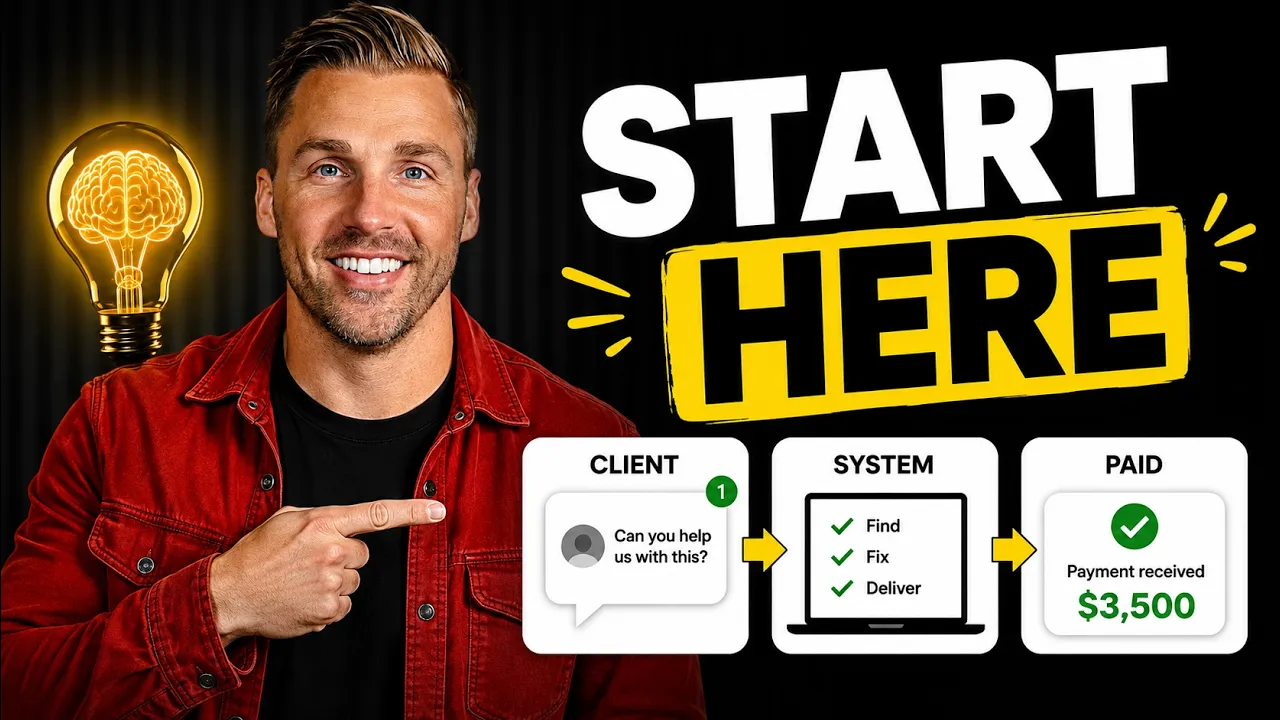
Adam Erhart shares a three-step system to get first agency clients to say yes by diagnosing real problems first, not pitching services.
Summary
Adam Erhart explains why most outreach sounds salesy and how he built three seven-figure agencies as a solo operator. The key shift is to start with the client's problem, not your service, and let the client ask for the price. He walks through a three-step system: 1) find the problem by researching the business and its Google presence, 2) name the problem in a specific, non-pitchy way, and 3) make the smallest possible ask with a clear next step. Erhart demonstrates a hands-on example using Google Maps to show how reviews, profiles, and responsiveness signal real needs, then shows how High Level automates audits and can generate a ready-to-send report. He emphasizes that the outreach should be highly targeted and evidence-based, not a generic sales message. The video also covers a ready-to-implement automation for collecting reviews after a job and how to scale by presenting a second, add-on service only after the client asks what more you can do. Finally, Erhart offers his agency OS and templated scripts as a jumpstart for viewers who sign up for a trial, plus a free master class for deeper guidance on niching, pricing, and scaling. The bottom line: by identifying a concrete problem in minutes and delivering a precise solution, you shift the dynamic from selling to helping, which naturally drives confidence and closes.
Key Takeaways
- Use a problem-first approach: research a business and identify a concrete issue (e.g., poor Google reviews or inactive responses) before mentioning your service.
- Leverage real data with a client-specific audit report generated via High Level to show evidence of the problem and opportunities.
- Craft outreach messages that name the business, note observed issues, and offer a no-strings breakdown with no upfront pitch.
- Keep the initial ask minimal: after the client expresses interest, deliver the findings and only propose fixes (e.g., "I can fix this for you."), not a full sales pitch.
- Automate post-sale workflows: set up review-request automations in High Level so new reviews come in, boosting credibility and creating natural opportunities for upsells.
- Scale with add-on services after the client starts seeing results (e.g., introduce an AI receptionist for missed calls at $247/month).
- Bundle everything into a repeatable system (agency OS) so you can run multiple campaigns as a one-person agency.
Who Is This For?
Essential viewing for first-time agency founders and solo consultants who want to land their first paying clients without being “salesy.” It’s especially valuable for marketers looking to automate prospecting, auditing, and post-sale follow-ups using High Level.
Notable Quotes
""The problem wasn’t the words, it was the order. I was talking about my service before they even knew they had a problem.""
—Illustrates why leading with the service makes outreach feel pushy and ineffective.
""Hey, name. I was searching for business type in city and came across your business. You've got some solid reviews. I noticed a few things on your Google listing that might be costing you calls, though.""
—Shows the exact, non-pitchy outreach script that topples generic messages.
""I can fix this for you. The system runs automatically after every job. You don't have to do anything once it's set up. It's 197 a month...""
—Demonstrates the minimal-ask and concrete offer after the client shows interest.
""The only time this feels salesy is when you're trying to convince someone they have a problem.""
—Summarizes the core philosophy of the method.
Questions This Video Answers
- How do you land your first agency client without a hard pitch?
- What is High Level and how can it automate local-service prospecting?
- What should a problem-first outreach message look like for local businesses?
- How can I use Google Maps to identify service gaps for potential clients?
- What automation workflows help agencies scale with one-person teams?
Adam ErhartAgency salesHigh Level automationGoogle Maps prospectingLocal service marketingAudit reportsClient onboardingAI receptionistUpsell strategiesAgency OS
Full Transcript
When I signed my first agency client, I almost lost the deal by talking too much. I was so busy explaining the tools, the process, how everything worked that about halfway through, I could see their eyes starting to glaze over. They were being polite, I was trying too hard, and the call wasn't going well. I've built three different seven-figure agencies, worked with over 1500 small businesses, run thousands of campaigns, and today I do it all as a oneperson agency with zero employees. And I've been on both sides of this. the person fumbling through a sales pitch hoping that they don't get rejected and the business owner on the other side thinking just tell me how you can help me and what it costs.
So, in this video, I'm going to show you the exact system I use now. Three steps so you're not trying to sell them, but they're trying to buy from you. But first, why these conversations feel so awkward? Most people who say that they're afraid of sounding salesy have never actually reached out to a single client, which means the fear isn't coming from experience. It's coming entirely from imagination. And imagination always goes straight to the worst possible version. You stumbling through a pitch, them saying no, and then you replaying it in your head for the next few days.
I've had thousands and thousands of sales conversations over the past 10 years. And the worst ones weren't the quick no thanks, not interested. They were the calls where I could tell that they were just waiting for me to stop talking so they could hang up. For a long time, I thought the problem was my script. So, I kept rewriting it, making it shorter, then friendlier, then different openers. But it didn't help because the problem wasn't the words, it was the order. I was talking about my service before they even knew they had a problem. And when you do that, you're trying to convince someone that they need something they haven't even thought about yet.
That's what makes it feel salesy, and no script fixes that. The key here is that you don't lead with your service. You start with the problem, and you only talk about the solution once they see it. When you flip that order, it stops feeling like a sales pitch. So, here's the system, starting with step one, find the problem. The goal is simple. Get them to ask, "How much is it?" Because people only ask that when they already want the thing. If they don't want it, they don't ask about the price. They just say no. This is why step one is to always find the problem before you even ever reach out.
Most people don't do this at all. They find a business, they send a message, and they hope that something sticks. But that kind of message is always generic and therefore completely ignorable because they didn't look at anything first. Let me show you something. Let's pull up Google Maps. And we could search for any local service business in any city. plumbers, dentists, roofers, HVAC, doesn't matter. Let's use pest control and Charleston, South Carolina. But any business where customers are searching online to find someone to hire, well, that's going to work here. We'll click on more businesses, then head to page two.
And immediately you can see the problem. One business has 2.3,000 views, and the one right next to it has five. And if we keep scrolling, we can see another five. There's a 39, there's a 29. Customers see that difference instantly. And the business with five reviews is losing jobs every single day without knowing why. We can click into a few listings as well to see if they're responding to reviews. Fun fact, most businesses don't. And by most businesses, I say like 90% plus. And every unanswered review looks like nobody's home. For a customer choosing between two different options, that silence is often enough to make them choose someone else.
Some of these businesses don't even have a website linked to their Google listing. So even if someone does find them, there's nowhere to go. So, that's three problems found in like 30 seconds. And the business owner has no idea that any of this is happening. They're busy, at least in this case, killing bugs and catching snakes and controlling pests. They're not sitting there checking their Google listings. Now, you could do this manually, of course, like I just did for every business, but my preference is to automate this process using software. Now, personally, I use something called High Level, which runs all of my agencies.
And inside High Level, there's a prospecting tool built exactly for this. So, we'll log in. We'll go to the left sidebar, find the prospecting section. We'll click it, see the search bar at the top, and again, we'll use pest control in Charleston, South Carolina. But now, instead of clicking through each listing and manually taking notes, the software has already analyzed everything, the review count, the Google profile status, website, and it scores each business based on how many problems it finds. So, instead of guessing who needs help, I can sort by who very obviously needs help.
It even gives me something called a conversion rate prediction based on how many issues they have. The higher the number, the more likely that business needs help and is likely to become a client. I can also click this add button here beside any prospect and the software is going to automatically generate an entire marketing audit report that I can then send to any potential clients to highlight the issues or areas of opportunity as I like to call them that I could help fix for them. This way, you're not reaching out with some generic one-sizefits-all sales pitch.
you're showing up with specific evidence of a specific problem that you already found. Now, if you don't have HighLE yet, I've put a link down in the descriptions below. Just know that Google Maps can get you most of the same information. You're just going to take notes manually instead of generating a PDF. Okay, moving on to step two. Name the problem. Lead with what you found, not what you sell. This is where most people mess it up. Even when they've done the research, they find the problems, then they send something like this. Hi, I help businesses like yours get more leads.
Would you like to hop on a quick call? pitch has nothing to do with anything they just found. That message gets ignored 99 times out of 100, not because people don't need help. It gets ignored because it could have been sent by anyone to anyone and the business owner, they can tell. The messages that do get a response, on the other hand, makes that business owner stop and think, "Wait, this person actually looked at my business?" So, write this down. You're going to want to use it word for word. Hey, name. I was searching for business type in city and came across your business.
You've got some solid reviews. I noticed a few things on your Google listing that might be costing you calls, though. I put together a quick breakdown if you'd like to see it. No charge, no strings attached. Just thought it might help. Let me know if it's okay to send it over. Now, I want you to notice what's missing from this message. There's no mention of your service, no pricing, no asking them for a meeting. In fact, you're not really asking for anything yet, and you're proving that you paid attention. Side note here, but how and where you choose to send this message matters less than how specific the message actually is.
a specific message sent via a call or email or DM or stopping by in person. That works. Just make sure that you follow this script. Okay. Step three, make the smallest possible ask. When they respond and say, "Yeah, I'd love to see that." You show them what you found. You can send them the report. You can walk them through it. You can record a quick 2 to 3 minute video, which tends to work better than just sending text. But here's the important part. There are usually a few different issues. Low reviews, no responses, no website.
But you don't try to fix everything. You pick one, saying something like, "The biggest issue here is your reviews. That's the one I'd fix first." Now, at this point, you're still not pitching. You're just pointing out what matters most. And this is where most people over complicate it. You don't need them to book a sales call. You don't need a long sales pitch. You can just keep it simple and just say this. I can fix this for you. The system runs automatically after every job. You don't have to do anything once it's set up. It's 197 a month and most businesses start seeing new reviews come in within the first couple of weeks.
If you want, I could set this up for you. Just reply here and I'll get you started. Now, here's the part that most people are actually scared of. What happens after they say yes? Because the sales pitch fear isn't always about the conversation. Sometimes it's about what happens after it. So, let me show you the automation that you're going to set up. It's really simple and it's something I built inside High Level that I use across all my clients and I'll make sure that I show you how to get access to it for free. Inside Highle, we click on automation, then review system, then we'll use the simple review system automation here that I've got built out.
The trigger is at the top, which is what kicks off this automation. This happens automatically when a job is marked as done. There's a 1-hour delay, and then this SMS gets sent, which basically just says, "Thanks for choosing us. Could you please leave us a review?" Another delay, and then a follow-up email gets sent as well, saying pretty much the same thing. And that's it. Every time that a business marks a job as complete, a review request fires automatically. customer gets a text, uh they get an email, just one tap and they're on Google leaving a review.
You set this up once per client and it takes maybe 15 to 20 minutes the first time. Now, if you're looking at that and thinking, "I've never built anything like that." That's totally fine. Every workflow and template and script and automation I use to run my agency is pre-built inside my agency OS, which you can just copy and paste over to your account when you sign up for a trial using the link in the descriptions below this video. Now, here's what happens once this is working. Once a client is getting reviews automatically and their rating is climbing, something changes.
They're not wondering if you can actually help them anymore, they start asking, "What else can you fix?" That question, "So, what else can you do?" Well, that's where this really starts to scale because now you're not pitching a second service. You're answering a question that they just asked. And my advice here is to respond with this. Well, how are you handling missed calls? You see, 62% of businesses miss incoming calls. Your client who's now getting 15 new reviews a month is also losing calls every week to competitors who just happen to pick up the phone first.
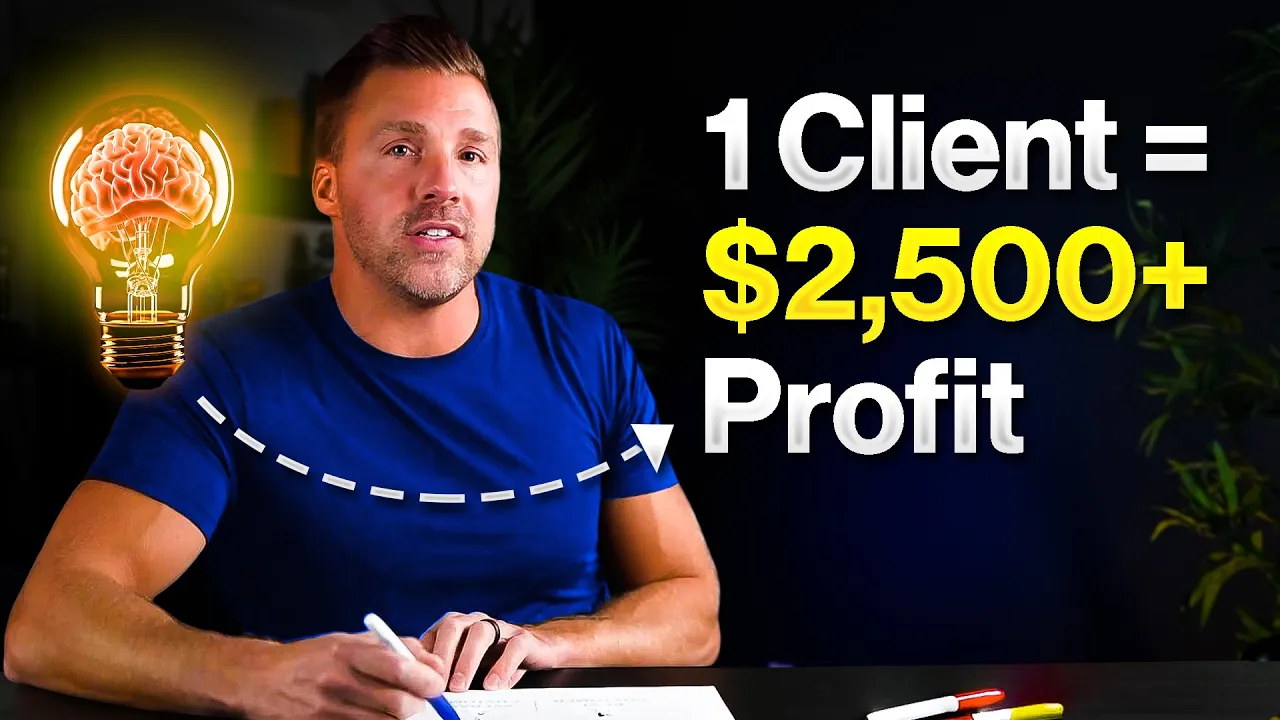
So that's when you introduce the AI receptionist. Another $247 a month for you. Same kind of setup. Have it done and installed in one afternoon. One client $444 a month. Two services both running automatically. And your client isn't even thinking about cancelling because both services are producing results that they can see. 10 clients at that stacked rate and you're at over four grand a month. And that's still just the beginning. Here's the truth. The only time this feels salesy is when you're trying to convince someone they have a problem. That's not what we're doing here.
We're finding people who already have a problem and we're showing up with an answer. You're not creating demand. You found their problem in like 30 seconds on Google Maps before they even knew that you existed. Showing up with that is not a sales pitch. So, here's the real question. Are you someone who's actually going to send five of these this week or someone who's still going to be thinking about it a month from now? If you're the one who's actually going to do this, you need something to run it on. Everything I just showed you, the prospecting, the audits, the automations, it all runs on one platform, high level.
I've used this software to build three different campaigns, and today I'm able to do it all as a oneperson agency with zero employees. When you start your free trial through the link below, I'll drop my entire agency OS into your account on day one. All the pre-built automations and outreach scripts and review campaign, all ready to go. You don't start with a blank screen. You start with the complete system. And if you want to see the complete picture, how to pick your niche and what to charge and how to scale this into a real agency, I broke the whole thing down in a free master class that I've got linked up right here.
So feel free to tap or click that now. I'll see you in there just a
More from Adam Erhart


Get daily recaps from
Adam Erhart
AI-powered summaries delivered to your inbox. Save hours every week while staying fully informed.