I've Made Thousands of Cold Calls. Here's Why I Stopped Ands What I Do Instead

Chapters17
The speaker explains why cold calling can be effective yet dislikes it, and promises to share a three-step approach that replaces cold calling with higher-quality, more welcome client outreach.
Adam Erhart shares a repeatable, higher-impact system to replace cold calling with targeted audits, personalized outreach, and automated follow-ups.
Summary
Adam Erhart recounts his transition from thousands of cold calls to a more effective, human-centered outreach system. He argues the core problem with cold calling is not nerves or scripts, but interrupting strangers with no context. By doing homework ahead of time and delivering a tailored audit, Erhart shifts the dynamic from pitch to problem-solving. He demonstrates how to quickly identify local business issues using Google Maps and HighLevel’s prospecting tools, then presents a no-strings breakdown to prove value. The three-step framework emphasizes: 1) finding a real problem before reaching out, 2) lead with the discovered issue and a concrete audit, and 3) follow up like a thoughtful human with incremental value. He details a four-message sequence that evolves from the initial audit to a timely, specific follow-up, designed to avoid the infamous “sales pitch” vibe. Erhart also shows how to price and stack services (reviews automation, AI receptionist, revenue website) to hit roughly $743 per client and approach six figures with ten clients. The video ends with a call to action to start a free trial of HighLevel and access a pre-built “agency OS” plus a free master class on scaling your agency. The overarching message is clear: relevant, evidence-backed outreach beats volume, and preparation changes the energy of every conversation.
Key Takeaways
- Use targeted audits before outreach. Tools like HighLevel’s prospecting and ready-made audit PDFs let you show, not tell, the problem a business faces.
- Lead with specific findings, not a generic offer. A message like “I noticed a few things on your Google listing that might be costing you calls” outperforms generic pitches.
- Follow a four-step, value-first follow-up sequence. Four concise messages, each adding something concrete, dramatically improves response rates.
- Pricing and stacking matter. Start with one solved problem (e.g., reviews automation for $197/mo), then add an AI receptionist ($247), and a revenue-generating website ($299) to reach ~$743/mo per client.
- This approach declines cold-calling in favor of relevance. You win by delivering value first and asking for a small, specific next step, not a broad pitch.
- Automation should support human touch, not replace it. Pre-built sequences in HighLevel let you automate outreach while maintaining a personal, problem-focused conversation.
- With ten clients, the model aims toward six figures annually because the services deliver visible weekly results, reducing churn and increasing upsell opportunities.
Who Is This For?
Essential viewing for digital marketers and agency owners who want to ditch cold calling in favor of research-driven outreach, personalized audits, and scalable automation that actually converts. Great for newcomers and seasoned pros looking to systematize client acquisition.
Notable Quotes
"I've made thousands of cold calls. I know what it feels like to dial a number, hear someone pick up, and immediately feel their energy shift the moment they realize you're trying to sell them something."
—Opening about the pain of cold calls and setting up the shift to a better approach.
"The fix isn't a better script. The fix is showing up already knowing something specific about them, a specific problem, a specific opportunity."
—Central thesis: prepare with real insights before outreach.
"You've got some solid reviews. I noticed a few things on your Google listing that might be costing you calls, though."
—Sample outreach language that demonstrates the audit-driven approach.
"If you decide that you still want to make cold calls after this, the channel or the media that you use matters a lot less than the specificity of the message."
—Emphasizes message quality over channel choice.
"That cold call conversation I described at the start... happens because you showed up asking for something before you gave them anything."
—Illustrates the core pivot from interruption to value-first outreach.
Questions This Video Answers
- How can I replace cold calling with an audit-led outreach approach?
- What exactly should I include in a pre-call audit PDF for local businesses?
- What is HighLevel and how can it automate my client outreach sequence?
- How do I price and stack digital marketing services for consistent monthly revenue?
- What is the four-message follow-up sequence I can use for local businesses?
Adam ErhartCold calling alternativesHighLevelGoogle Maps prospectingAudit-based outreachAutomation sequencesReview automationAI receptionistLead generationAgency growth
Full Transcript
I've made thousands of cold calls. I know what it feels like to dial a number, hear someone pick up, and immediately feel their energy shift the moment they realize you're trying to sell them something. That little pause, the polite but distant, who is this? And then the slow death of the next 90 seconds while you try to salvage a conversation that was over the moment they picked up the phone. I got good at it. I made it work. And then I stopped it completely. Not because it doesn't work. It does. I stopped because I found something that works better, feels better, and gets a higher response rate from people who actually want to talk to me.
I've built three seven-figure agencies, worked with over 1500 small businesses, run thousands of campaigns, and today I do it all as a oneperson agency with zero employees. In this video, I'm going to show you exactly what I do instead of cold calling to get clients. Three steps, and by the time you finish watching, you'll understand why cold calling feels so bad in the first place, and why this approach feels completely different. But first, the real problem with cold calling, because it's not what most people think. You see, most people think that cold calling feels bad because they're nervous or they're scared of rejection or they think that they need a better script.
That's not it. Cold calling feels bad because you're interrupting a stranger who has no idea who you are, no reason to trust you, and no context for why you're calling. You're asking for their time before you've given them anything, and they can feel that the moment they pick up. It doesn't matter how confident you sound. The problem isn't your delivery. The problem is that you showed up with nothing except for a pitch and a prayer. The fix isn't a better script. The fix is showing up already knowing something specific about them, a specific problem, a specific opportunity.
Because when you know something specific about the person you're reaching out to, something real, something that you found before you ever said a word, well, the entire energy of that conversation shifts. You're not a stranger with a sales pitch anymore. Now you're someone who knows their situation and is showing up with some ideas and some strategies to help make their life better. So, let me show you the system now. Starting with step one, find the problem before you reach out. Right now, if you're doing what most cold callers do, you're guessing. And guessing sounds like this.
Hey, do you need more leads? And business owners have heard that question so many times, doesn't even register anymore. But when you know the specific problem that they're going through before you reach out, the conversation is completely different. And let me show you just how fast you can find the most important problems that most businesses need fixed. Right now, let me pull up Google Maps and we'll search for any local service business in any city. Could be dentists or plumbers or HVAC, roofers, any business where customers search online to find someone to hire. Let's use alarm systems for our niche and Boulder, Colorado for our city.
We'll click the more places button down here to give us a full list. And just like that, you can see that you could see a wide range of results when it comes to reviews alone. There's a business with 148 reviews, 4 35 13. Then there's this one here with 414 reviews and a 4.9 star rating. Customers see that difference instantly and they call the one with 414 reviews every single time. Next, let's click into a few listings. Are they responding to their reviews? Cuz most aren't. And every ignored review looks like nobody's home. For someone choosing between two different options, that silence is often enough to make them choose someone else.
Also, is there a website linked up? A lot of businesses shockingly don't even have one connected to their Google listing. So even if someone does find them, there's nowhere to go. All right, so a few problems found in like 30 seconds. And the business owner has no idea that any of this is happening. They're busy pulling teeth or fixing pipes or whatever they're doing. They're not sitting there auditing their Google listing. Now, let me show you how you can speed this up instead of having to click through one listing at a time. Inside High Level, which is the software I use to run my entire agency.
I'll talk more about that later. There's a prospecting tool built exactly for this. So on the left sidebar, we'll click prospecting. Then we can start a new one and type in your business type and the city that you want to search for. And now instead of clicking through every listing manually, it's already analyzed everything. It's looked at their review count, their website status, their Google profile completeness, and it scores each business based on how many problems it finds, and how likely they are to convert into a client. So now, instead of guessing who needs help, I can sort by who very obviously needs help.
And when I click the add button here, it automatically generates a full audit PDF report that I can send to the business in order to provide value in advance and show them how I can help. With this, you're not going in cold with a pitch. You're going in with a specific audit of a specific business that you prepared for before you said anything. Now, if you don't have Highle yet, Google Maps gets you most of the same information. You just take some notes instead of generating a PDF. Okay. Step two, lead with what you found.
This is where most people ruin it. They do the research. They find the problem. And then they throw it all away by sending something that sounds like everybody else. Something like, "Hi, I'm a digital marketer and I help businesses like yours get more leads. Would you like to hop on a call?" That message gets ignored 99 times out of 100 for one very simple reason, and that is that message could have been sent by anyone to anyone. And the business owner knows it. I tested this message side by side with the message that I'm going to give you now.
Same type of businesses, same offer. One message gets completely ignored every single time. But the one I'm about to show you has a singledigit response rate, double digit on a good day. You're going to want to say this pretty much word for word. So, write this down. Hey, name. I was searching for business type in city and came across your business. You've got some solid reviews. I noticed a few things on your Google listing that might be costing you calls, though. I put together a quick breakdown if you'd like to see it. No charge, no strings attached.
Just thought it might help. Is it okay to send it over? Go over that again carefully. There's no pitch, no mention of your service, no meeting request. You're not asking for anything yet. You're just proving that you paid attention before you reached out. And that flips the entire dynamic. Instead of who is this and what do they want? They think, "What did this person find?" And you can send this message anywhere. You can email it or send it via DM or text. You can even use it as your opener on a call instead of a pitch.
If you decide that you still want to make cold calls after this, the channel or the media that you use matters a lot less than the specificity of the message and the fact that you did some research ahead of time. Okay. Step three, follow up like a human. Most people either send one message and then completely disappear, or they send 20 messages and turn into the exact person that business owners have been trying to avoid since the beginning of time. The sweet spot is obviously somewhere in the middle. I like three to four messages spaced a few days apart.
Each one short and adding something specific, not just just checking in, but actually adding something. So, let me show you the sequence I use. Message one is the initial outreach that we already covered. the specific observation, the quick breakdown, no sales pitch. This one goes out, a tag gets added to the prospect automatically, and then the automation kicks in. Message two goes out the next day if there's no reply. And this is where most people go wrong. They just bump the original message. Instead, you want to add something small and specific. So, try sending this.
Hey, name forgot to mention. One of the fastest things I've seen work for business type is an automated review request that goes out after every job. I talk about that in the breakdown. want me to send it over? That message doesn't feel like a follow-up. It feels like you remembered something important, something useful, and that's a completely different energy. Message three goes out a few days later if there's still no reply. And this one does something a little bit different. It acknowledges the fact that this is all kind of awkward, and it acknowledges it directly.
So, try this. Hey, name. I know sales people are the worst. So, I get it if you'd like me to stop. That said, I'd hate for you to miss out on what I found just because I didn't send one more message. Still happy to send it over if you want. That message works because it names the thing that everybody's thinking. They're not annoyed at you specifically. They're tired of pitches in general. Acknowledging that puts you on their side. Message four is the last one. You want to send this a couple days after that. And it goes like this.
Hey name, before I close your file, I just wanted to check one last time. If you're not interested, no worries at all. I won't reach out again. But if the timing's just been off, I'm still happy to send over what I found. Before I close your file does something very specific. It creates a natural deadline without pressure. And in my experience, a surprising number of replies come on this message because people finally have a reason to respond rather than just keep ignoring it. After that, move on. If four messages don't get a response, this isn't the right person right now.
This entire sequence is already pre-built inside of my agency OS. All four messages, the timing, the automations, it's ready to go. You can just copy it into your account and you're done. And you get instant access to all of that and a whole lot more when you start a free trial using the link below. And if you're not using Highle yet, a simple spreadsheet with a send date next to each prospect works fine. The tool just makes it automatic, but the principle works either way. So when someone replies, and they will, here's what you do next.
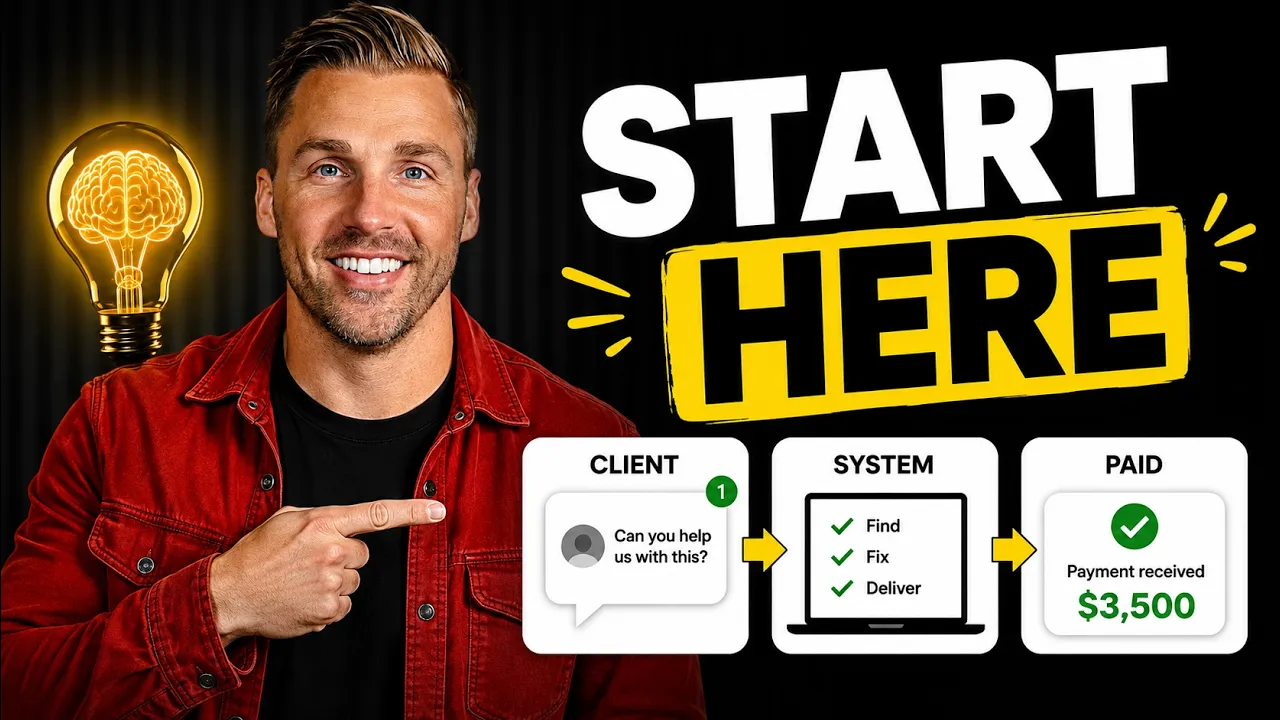
Because this is the part where most people freeze. They get a reply. Yeah, send it over. Then suddenly they don't know what to do next. So here's what you do. You send them the audit. Just walk them through what you just found. Then you do one thing. You pick one problem and you offer to fix it. Not every problem they have, just one. If their reviews are the issue, which they usually are, then you offer the review automation for $197 a month. Set it up in about 15 minutes and it runs automatically after every completed job.
If they're missing phone calls, which you can test by calling them either during business hours or after hours or on the weekend, well, then you can offer the AI receptionist for $247 a month. This AI agent, which you can install right inside High Level, answers calls after hours. It qualifies the lead. it books the appointment and does all this automatically. The point here though is that you want to solve just one problem with one solution for one price. This avoids something called the paradox of choice where you give them way too many different options and they get overwhelmed and they pick none of them.
It also helps to keep things clean and clear and easy to understand for both you and them. Here's what I want you to sit with. That cold call conversation I described at the start, the one where you can feel them waiting for you to stop talking, that happens because you showed up asking for something before you gave them anything. This is the opposite. You found their problems. You prepared something specific. You offered to share for free. And by the time they ask how much it costs, you've already done more for them than most agencies do after they get paid.
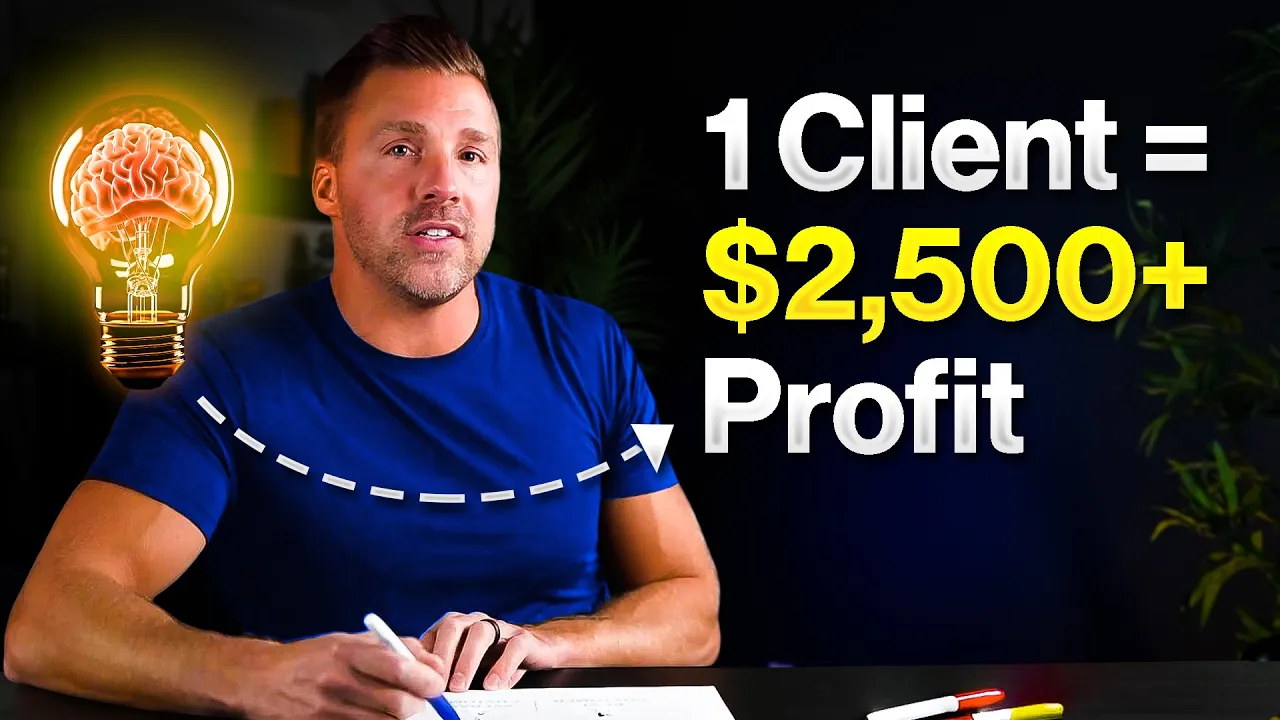
That is a completely different relationship that's built right from the very first message. Plus, once one service is running and they can see it working and their reviews are climbing, their calls are getting answered. Well, they ask what else you can fix, and that's when you start stacking other services on top of it. Start with reviews for 197, then add the AI receptionist for $247. Add a revenue website later for $299 a month that automatically captures and converts leads. And now you're up to, do some quick mental math, $743 per client. and your clients aren't cancelling because these services are producing results that they can see every week.
At 10 clients with these stacked services, you're almost at six figures a year. Here's the truth. Cold calling works by volume. You make enough calls that eventually someone says yes despite the interruption. This strategy, on the other hand, works by relevance. You find people who already have the problem. You show up with evidence that you know what's wrong and how to fix it. And then you make the smallest possible request. Every day you wait, someone else is finding those same businesses on Google Maps. Maybe they send the message, maybe they don't, but the ones who do are going to have clients that could have been yours.
Everything I just showed you, the prospecting, the audits, the automations, a whole lot more. It all runs on one platform, high level. When you start your free trial through the link below, I'll drop my entire agency OS into your account on day one. Pre-built automations, outreach scripts, review campaigns, all ready to go. You don't start with a blank screen. You start with my complete system. And if you want to see the complete picture, how to pick your niche, what to charge, and how to scale this into a real agency, I broke the whole thing down in a free master class that I've got linked up right here.
So tap or click that now. See you in there just a
More from Adam Erhart


Related Videos
![Social Media Marketing Full Course 2026 [FREE] | Social Media Marketing Tutorial | Simplilearn thumbnail](https://rewiz.app/images?url=https://i.ytimg.com/vi/kq-O8jKPMro/maxresdefault.jpg)
Social Media Marketing Full Course 2026 [FREE] | Social Media Marketing Tutorial | Simplilearn
 Simplilearn
 05:05:50
![Social Media Marketing Full Course 2026 [FREE] | Social Media Marketing Tutorial | Simplilearn thumbnail](https://rewiz.app/images?url=https://i.ytimg.com/vi/yqOwuu9BRpc/maxresdefault.jpg)
Social Media Marketing Full Course 2026 [FREE] | Social Media Marketing Tutorial | Simplilearn
Simplilearn 05:05:59

![Social Media Marketing Full Course 2026 [FREE] | Social Media Marketing Tutorial | Simplilearn thumbnail](https://rewiz.app/images?url=https://i.ytimg.com/vi/rhFtaU192MU/maxresdefault.jpg)
Social Media Marketing Full Course 2026 [FREE] | Social Media Marketing Tutorial | Simplilearn
Simplilearn 05:05:50
Social Media Marketing Full Course 2026 | Social Media Marketing Tutorial | SMM Course | Simplilearn
Simplilearn 05:04:51

Get daily recaps from
Adam Erhart
AI-powered summaries delivered to your inbox. Save hours every week while staying fully informed.