
AI News & Strategy Daily | Nate B Jones
Feeling overwhelmed by AI hype? I'm here to help. I'm Nate B. Jones. 20-year product leader, AI strategist, and your guide through the noise. Most AI content is hype or generic advice. I cut through both with frameworks and workflows you can use immediately. Whether you're an executive making AI decisions, a builder implementing solutions, or just figuring out what AI means for you, you'll get practical playbooks tested in real organizations. What you'll find here: • Weekly AI strategy breakdowns (no buzzwords) • Coding & prompting workflows and automation guides • Future-of-work insights for decision-makers • Frameworks from real AI implementations New videos every day Deeper analysis + exclusive playbooks and ready-to-use tools → https://natesnewsletter.substack.com/ Ready to move past AI hype? Subscribe and let's build something real.


5 Levers That Separate Winning AI Investments from Disasters
The video argues that investing in AI should be driven by the actual workflows that generate value, not by chasing AI itself. It emphasizes clearly defining the work, choosing among five levers (build, buy, automate, hire, wait), and using an investment matrix to prioritize investments that unlock leverage, while warning against vague vendor promises and the trap of AI for AI’s sake. It also stresses careful talent planning, data readiness, and keeping the focus on measurable workflow outcomes over headline AI capabilities.
Anthropic's Mythos Just Beat OpenAI's GPT-5.5 At Real Hacking
The video surveys five big AI-related stories from the past week, showing how agentic AI is moving from novelty to real workflows inside companies. It covers Notion’s developer platform for agents, Anthropic’s and Claude’s evolving usage limits and business models, Mythos as a security-focused model, and AWS Workspaces enabling desktop-style AI agents, all while highlighting the implications for governance, revenue, and enterprise security.
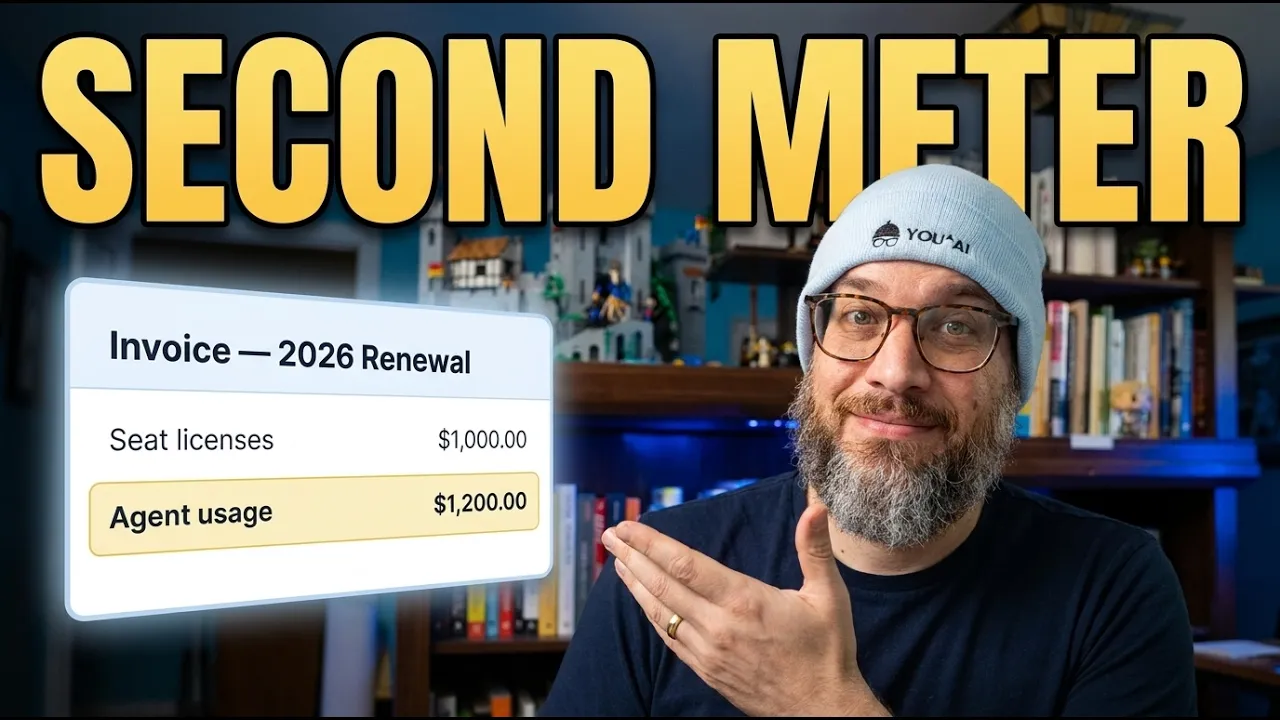
Salesforce Booked $800M in AI Revenue Last Quarter. That Money Came From You.
The talk surveys how major vendors (Salesforce, Microsoft, ServiceNow) are moving from traditional per-seat pricing to agentic, credit-based meters tied to actual workflow actions, creating new cost and governance challenges for enterprises. It outlines three example models, warns about rent-seeking pricing, and offers a practical checklist of questions to ask during procurements and renewals to keep costs, contracts, and developer experience under control.
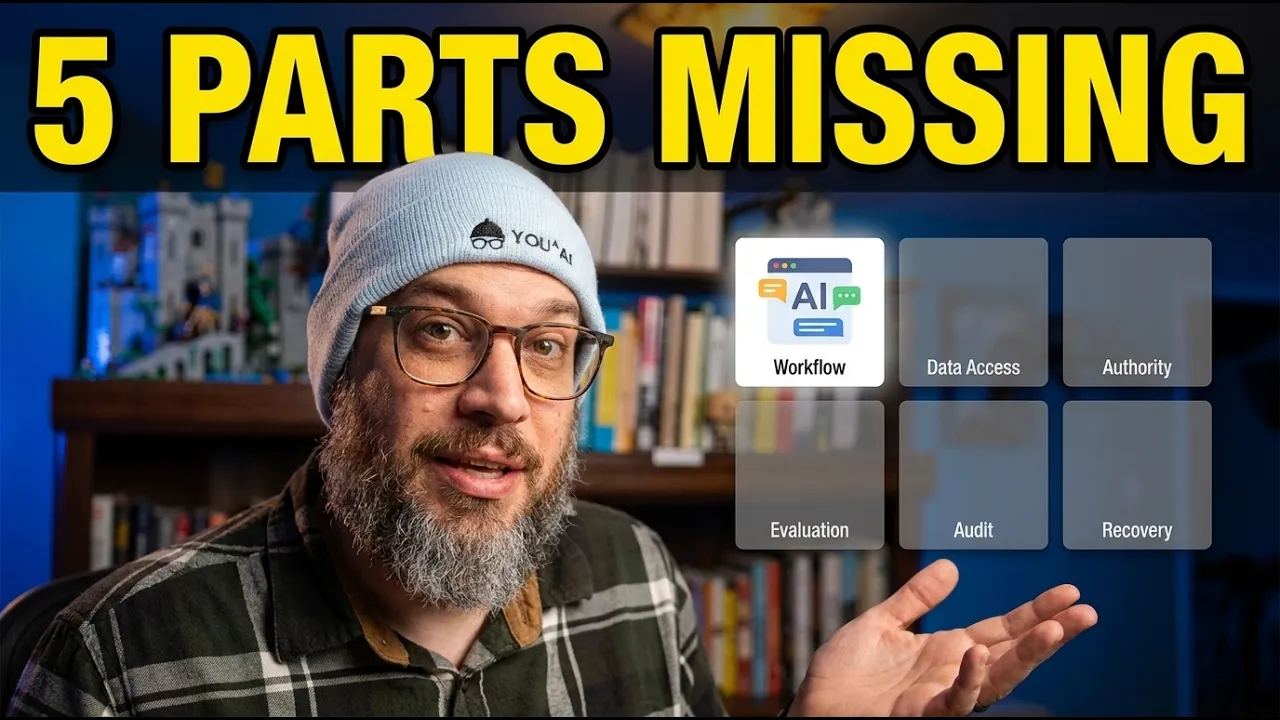
Anthropic Just Raised $1.5B. The Pitch Wasn't About Claude.
The discussion traces a coming shift in enterprise AI: private equity-backed services are converging with hyperscaler labs to push for full, private‑labeled agentic workflows rather than standalone models. Four pressure axes—capital/ownership, vendor leverage, systems of record, and deployment scale—are compressing the market toward a concentrated implementation layer where real value lies in the integration, data governance, and bespoke orchestration that enable scalable, enterprise‑grade agent workflows.
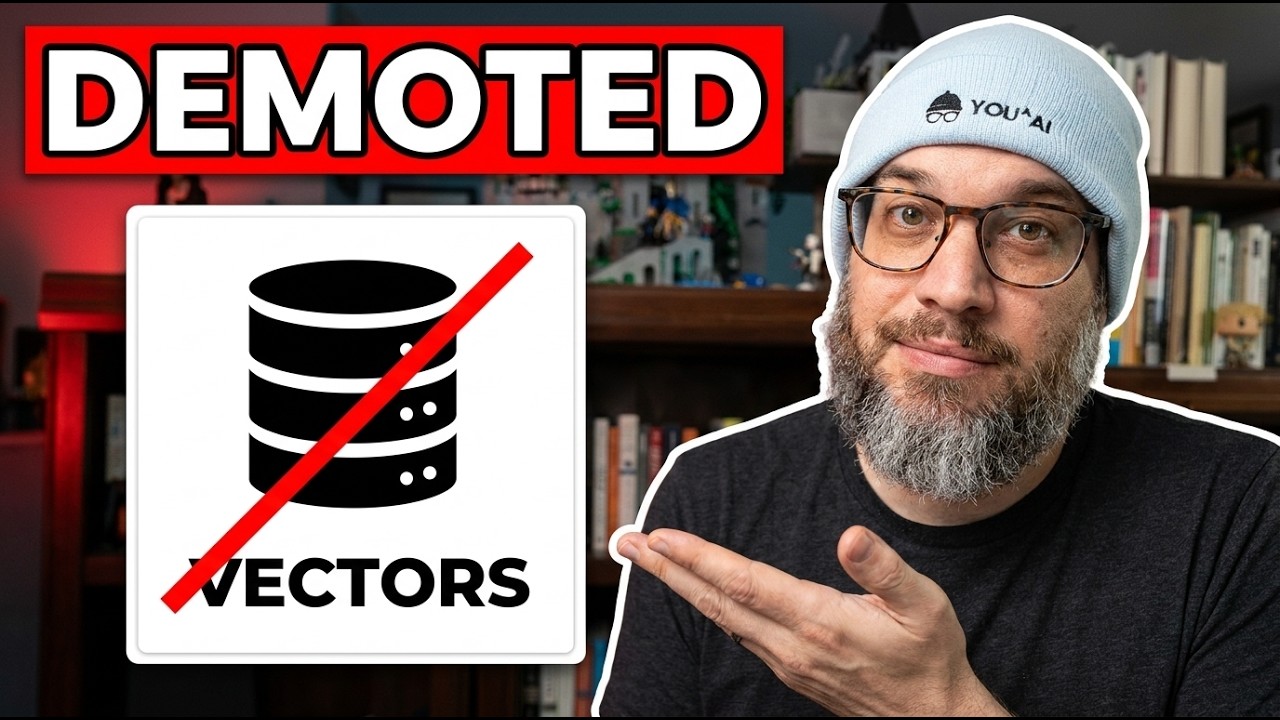
SAP Just Spent $1B+ on the Agentic RAG Problem Most Teams Missed
The video argues that traditional retrieval (rag) and simple vector search are insufficient for real-world agents, highlighting a growing memory problem as agents must reason over diverse data shapes. It surveys approaches from Pine Cone, SAP, Google, and SAP’s Dreamio/Prior Labs, emphasizing that the “bundle” of data (contract, data shape, provenance, permissions) must be designed first, and that different data shapes (documents, tables, graphs, workflows) require corresponding retrieval primitives. The takeaway is to design agent memory and retrieval around the work the agent must do, not just the most fashionable database, and to specify a concrete retrieval contract and bundle before selecting a storage technology, while being mindful of failure modes and context-management challenges.

ChatGPT Has 900M Weekly Users. Almost None Can Buy In It.
The talk maps the birth of agentic commerce, where software acts on behalf of people and businesses to buy, pay, and govern transactions, and explains six competing camps that dispute who controls the flow, authorization, and liability. It contrasts ACP, UCP, AP2, and stable-coin rails (Stripe, Google, Visa/Mastercard, AWS, PayPal, Coinbase) as they vie to own different layers—from merchant checkout and credentialing to settlement and governance—while arguing that merchants must decide which layer to participate in and how to preserve brand, trust, and customer experience. The takeaway is that the future of online commerce will hinge on clear ownership of responsibility, interoperable protocols versus platform control, and robust governance across multiple layers to protect both buyers and merchants.
Lindy, JP Morgan, And OpenAI All Built The Same Layer. Most Teams Haven't.
The talk surveys common failure modes in real LLM agent systems and argues for a robust, architectural pattern that separates an acting agent from a separate judge/validation layer. It highlights Lindy’s approach with a dedicated judge to guard intent, outlines a four-way decision framework for actions (read-only vs. write vs. external impact, with escalation), and emphasizes careful memory governance, explicit authorization, and scalable human-in-the-loop to prevent costly errors. The message is that prompts alone won’t police behavior; you need a scalable, multi-layered judge system tailored to the data and risk of each action class, especially in enterprise settings.

I Watched $5.5 Billion Move In One Week. Your AI Budget Is Wrong.
The Lily incident reveals that the real risk isn’t just the AI model security, but cross-workflow complexity, permissions, and organizational design that let an agent write to production. The speaker argues for binding agent permissions, auditable trails, and governance that includes technical voices early in procurement and build, plus a six-question checklist for evaluating vendors and internal platforms to prevent recurrence.
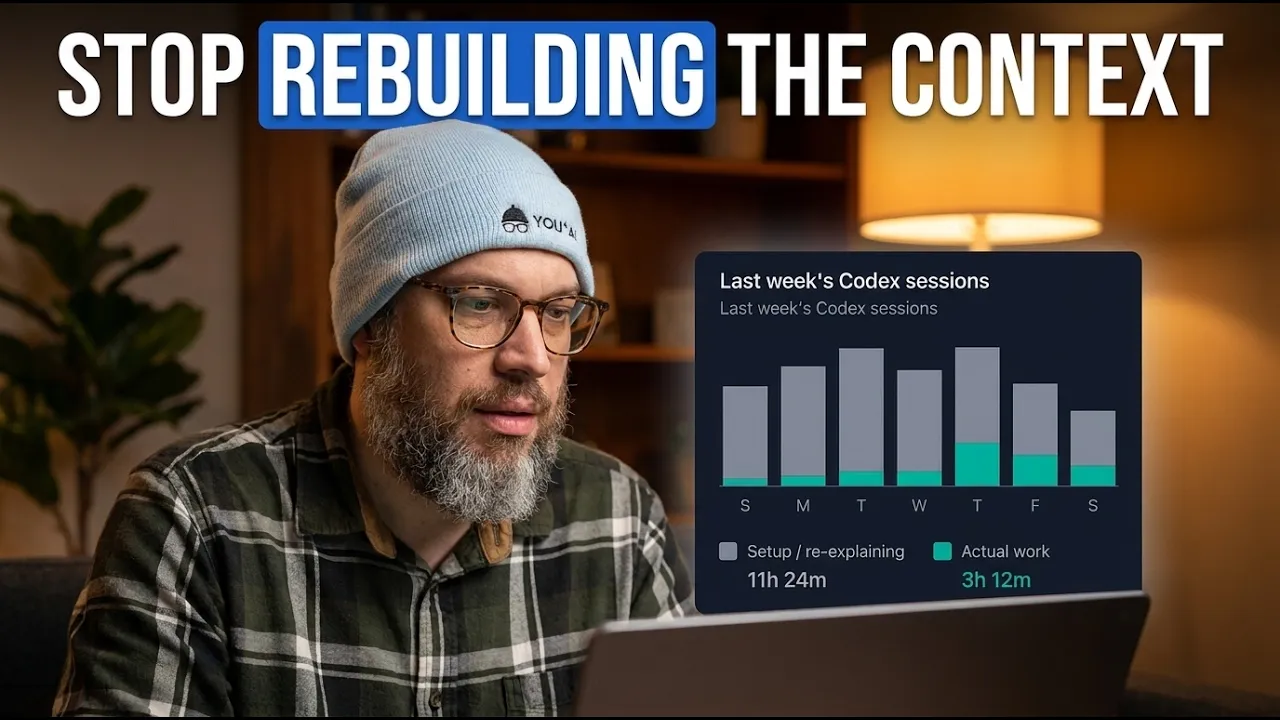
Everyone Is Prompting Better. Almost Nobody Is Packaging Work.
The video lays out a practical mental model for building agentic AI: start with prompts for one-off tasks, evolve to reusable skills, wrap workflows in plugins, and connect to live data via MCPs and connectors. It argues that real work sits in scalable scaffolding (hooks, scripts, checks) rather than in prompts alone, stresses deterministic design and review loops, and encourages non-technical teams to adopt reusable plugins and clear boundaries to unlock powerful, repeatable AI workflows.

When Code Meaning Breaks: The Gap That's Destroying Security
The video argues that AI, exemplified by Mozilla’s Mythos, is reshaping how we think about code, security, and responsibility. It suggests that trust is shifting from human-written code to machine-assisted review and that the future of software will rely on agentic pipelines, clear specifications, and elevated human judgment at the meaning layer to manage meaning, intent, and risk.
I Tested OpenClaw Against Model Churn. Here's What Survived.
In April 2026, OpenClaw matures from a demo into a real runtime that can orchestrate complex, multi-step workflows with swappable LLM brains and persistent memory. The talk explains three evolving layers—a more capable OpenClaw core, a contested model layer, and a durable memory/workflow layer—that together enable resilient, multi-model automation across channels, while addressing strategic choices about provider dependence, memory ownership, and cross-provider compatibility.


Get daily AI recaps from
AI News & Strategy Daily | Nate B Jones in your inbox
Get AI-powered summaries delivered to your inbox. Save hours every week while staying fully informed.