How to Get Rid of Candida in 24 Hours (And Keep It Gone)

Chapters6
An overview of the claim that common candida treatments fail and a promise to reveal a corrective approach that addresses candida quickly and effectively.
Dr. Berg claims a 24-hour Candida protocol can disrupt the biofilm, starve the yeast, and rebalance gut flora with targeted supplements, diet, and lifestyle tweaks.
Summary
Dr. Eric Berg lays out his view that most Candida treatments fail because Candida builds a protective biofilm in the gut, requiring a different approach to actually reach and eradicate it. He emphasizes Saccharomyces boulardii as a key starter to dismantle the biofilm, along with NAC and oregano oil to break the fortress. Berg walks through the Candida life cycle, explaining how phase 3 filaments can penetrate the intestinal wall and why an alkaline gut environment and stress, antibiotics, and sugar-rich diets can worsen colonization. He presents a 24-hour protocol focused on starving Candida with a ketogenic, low-sugar plan and intermittent fasting, followed by reinforcing the gut with probiotics (lactobacillus and bifido), fermented foods, coconut oil with caprylic acid, and diluted apple cider vinegar. Berg also recommends vitamin D (20-30k IU daily if needed), vitamin K2, magnesium, zinc, sun exposure, sleep, and stress reduction, plus garlic, onion, and clove as natural antifungals. He closes by hinting at a related video on culturing yogurt to boost oxytocin and lower stress, linking to a practical, DIY health move.
Key Takeaways
- Saccharomyces boulardii can help dismantle the Candida biofilm, making antifungals more effective.
- Candida can shift from yeast to filament forms (phase 3) that drill into the intestinal wall, especially when the environment is alkaline.
- A ketogenic diet with intermittent fasting is recommended to starve Candida of its sugar and starch energy sources.
- Oregano oil, NAC, and caprylic acid from coconut oil are highlighted as direct antifungal tools.
- Probiotics with lactobacillus and bifido species, plus fermented foods, help rebuild a hostile environment for Candida.
- Vitamin D3 (20-30k IU/day if needed) with K2 and magnesium supports immune function and antifungal efforts.
- Lifestyle factors—antibiotic use, high sugar intake, stress, and estrogen-related changes—can create conditions favorable to Candida overgrowth.
Who Is This For?
Essential viewing for anyone struggling with recurrent Candida symptoms or health professionals curious about alternative gut-health strategies. It offers a concrete 24-hour protocol and lifestyle adjustments that claim to prevent relapse.
Notable Quotes
""The research shows that once the candida has built this protective shield inside your gut, it's called a biofilm... it takes 1,000 times the normal dose of an antifungal to penetrate this protective biofilm""
—Berg introduces the biofilm concept and why standard antifungals fail.
""Saccharomyces boulardii start taking that but also NAC okay... it can start breaking up the biofilms""
—Early step of the 24-hour protocol focusing on biofilm disruption.
""The candida thrives in environments that are very alkaline""
—Explains the environmental trigger for candida growth.
""Starve it. Stop feeding it sugar and starch. You're going to have to go on a ketogenic diet""
—Core dietary step of the protocol.
""Oregano oil... it kills all these microbes without any side effects""
—Claims broad antifungal/antimicrobial efficacy of oregano oil.
Questions This Video Answers
- What is the role of Candida biofilms in treatment resistance and how can they be disrupted?
- Can Saccharomyces boulardii really help kill Candida biofilms and how should it be taken?
- Is a ketogenic diet plus intermittent fasting an effective 24-hour protocol for Candida control?
- What natural antifungals (like oregano oil) are recommended for Candida, and are there risks?
- How do probiotics and fermented foods support Candida treatment and gut healing?
CandidaCandida biofilmSaccharomyces boulardiiNACOregano oilKetogenic dietIntermittent fastingProbioticsLactobacillusBifidobacterium","Vitamin D3
Full Transcript
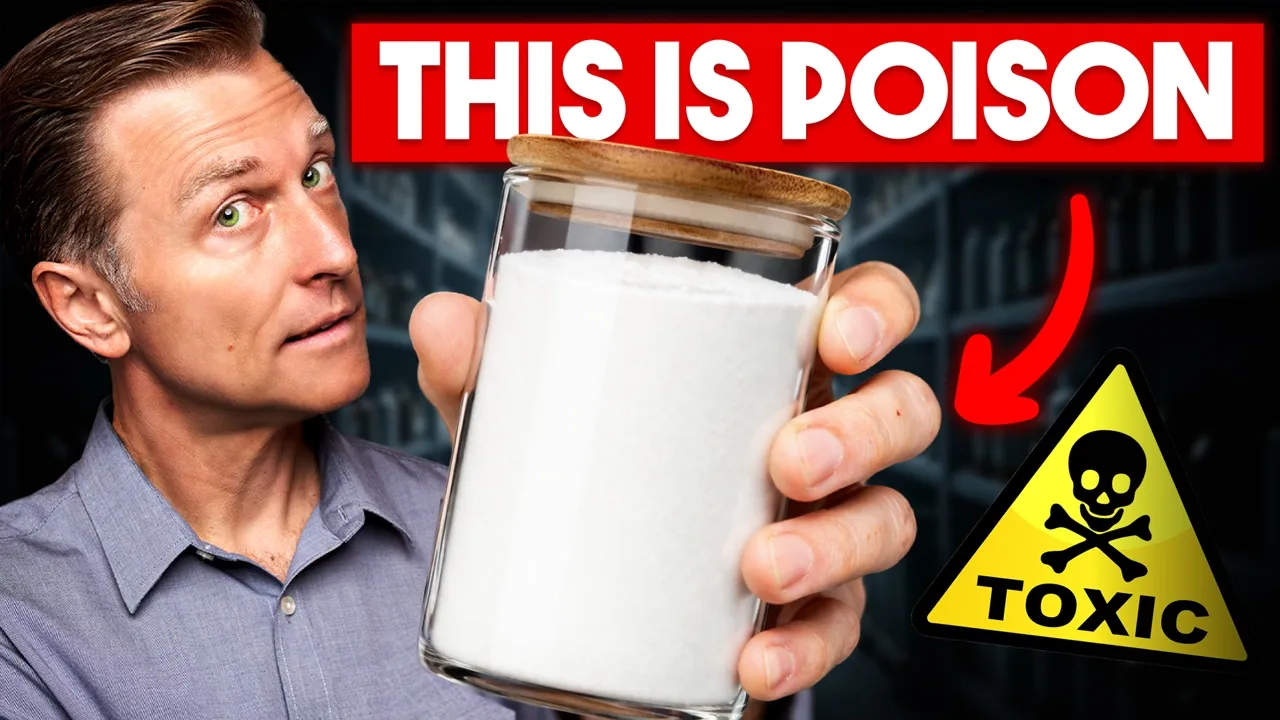
How to rid candida in 24 hours and make sure it doesn't come back. The candida treatment that most people are prescribed is designed to fail. And I can prove it with just one little piece of information. The research shows that once the candida has built this protective shield inside your gut, it's called a bofilm. It literally takes 1,000 times the normal dose of an antifungal to penetrate this protective bofilm to get to the candida. But once I show you how it works, you'll be able to crack it open and get to this candida very A to B.
But before I break this whole thing down, I want to tell you the single most powerful thing you can do right now to start to dismantle this bofoam is called sacroyces bulardi. And they found that it produces these very powerful enzymes that can literally go into this protective barrier bofilm and start to dismantle it. All right, the first thing about candida, people think it's just like a yeast. It's not. It's actually something much more pathogenic. The interesting thing about candida is it can morph into different shapes and different things. So you have phase one where it's just like a round yeast.
It's pretty harmless. It lives in your body. It doesn't bother you. It's part of the normal microbiome. Everyone has it. It's no big deal. But this can then turn into the second version, which is like a chain. And then from this chain, it goes into the phase three, which is a filament. And filaments are like roots with barb wire. This morphed phase 3 candida can literally drill into your intestinal wall. So the question is what triggers going from this phase to this phase? Well, in this phase you have large numbers of these guys and you also don't have very many defenses against this.
Okay? So it has to be the right environment. And just so you know, candida thrives in environments that are very alkaline. Okay? Just make mental note of that. We'll come back to it. So the candida is very opportunistic. It waits for the right time to come out and beat you down. And at this stage, they're building this bofilm protective shield. So they're under the radar. They can't be detected by your immune system and they cannot be easily killed by these antifungals. So this tends to be the story for a lot of people that this candida keeps coming back and might go away.
It might go into remission. It keeps coming out month after month depending on certain environments. Some women get it every month because of the estrogen spike, okay? Because estrogen tends to create a different environment or when they take birth control pills. I almost didn't want to talk about it because it's pretty extreme, but it's not as common as what I'm talking about here. But in 2025, it infected 7,000 people. So, I mean, I wouldn't call that rare, but you should know about it because it is a antimicrobial threat stated by the CDC. Some of these strains resist every single antifungal drug in existence.
Okay? Now, the bad thing about this is the mortality rate is between 30 and 60%. People die from this, but it's mainly a hospital superbug. One of the absolute worst places to be when you're sick is in the hospital. So, let's talk about the environment that makes your body very susceptible to pulling in this candida. Number one, the big one, antibiotics. Unfortunately, I have had so many antibiotics in my life, like several times a year growing up as a child from sore throats and all sorts of infections. Antibiotics kill bacteria. It's the bacteria that keeps the fungus and candida in check.
So when you kill the bacteria, you become susceptible to developing a yeast infection, aka a candida infection. You remember when I said that candida lives in an alkaline environment? Well, the byproduct of when certain microbes eat fibers and other things, they produce acids like butyric acid and acetic acid and lactic acid. Those acids create an environment where this candida cannot grow that well. But if you kill them with antibiotics, your pH starts becoming more alkaline. Unfortunately, 80% of all the antibiotics in the US go to livestock. So even if you don't take them, you might be getting them indirectly.
Number two, sugar. Candida eat sugar. Now, you can also get this sugar from consuming refined starches as well, aka junk food, because pretty much all junk food has starch and sugar in it. But sugar specifically is the food that candida lives on. And the byproduct of this sugar is ammonia. Now, I don't know if you've ever experienced this, but some people their breath smells like ammonia. The ammonia is a survival thing because ammonia is super alkaline. So the more ammonia that it can release into your body, it can live longer because now it just changed the environment.
And the worst thing a person like that could do is keep eating sugar. Number three is stress. If a person is going through a lot of stress, that alone will activate cortisol and suppress the immune system allowing the micro to survive better. And also as a side note, candida has a tendency to downgrade your vitamin D receptors. So, if your vitamin D receptors are downgraded, you're going to have to take more. Probably 20 to 30,000 IUs to allow it to work because fighting candida involves a strong immune system. And without vitamin D, it can't work.
The next one is ant acids. Again, if you reduce your stomach acid and you make it more alkaline, you're going to allow the candida to thrive. ant acids, birth control pills, estrogen from pregnancy, all create an environment that makes you more susceptible to candida. So, a lot of people ask me, "What supplements do I recommend?" Now, of course, I'm not biased of my own high-quality supplement line, but if you go to Amazon and type Dr. Berg supplements, you'll find more information. Now, let's talk about the 24-hour protocol. Okay, we have step one right here. Starve it.
Okay, stop feeding it sugar and starch. You're going to have to go on a ketogenic diet. That includes eliminating alcohol, grains, things that turn into sugar quickly. Get rid of it because then you're literally going to starve off the candy that has nothing to live on. And on top of that, I would do intermittent fasting as well because again, you're starving off the resources. Our bodies can very easily thrive on fat, okay? when we don't eat we can tap into our fat supply but they can't so it's our advantage all right number two we need to crack the fortress I've already mentioned the sacromyasis bulardi start taking that but also NAC okay it's also good to start breaking up the bofilms now here's another potent one oregano oil okay what oregano oil does is it actually kills the candida directly okay it's an natural Not just antibiotic, it's an antifungal, it's an anti- yeast, antiviral.
It kills all these microbes without any side effects. Step number three, you want to flood reinforcements. Get a good probiotic that has something called lactobacillus and bifido bacterium. Now, both of these will really help to change the environment to make sure that this candida cannot survive. So, a good probiotic that has this that survives the stomach. You want to get something that is hydrochloric acid resistant so it can get down into the small and large intestine is going to be very important. This is the rebuilding part right here. The other thing I'm going to recommend is fermented foods with each meal like sauerkraut, kimchi, or even like kefir.
All of these are very acid. A tablespoon of coconut oil has caprillic acid in it that can actually directly help kill candida. So coconut oil stops the growth of candida directly. And then they also recommended some apple cider vinegar in a glass of water. Sip it with a straw, but don't take it straight. Okay? You want to dilute it like one tablespoon or two tablespoons in a glass of water two or three times a day. That's going to start to acidify the body and improve the pH of the environment. Now, there's a lot of other things you can do, too, like add garlic and onion and clove.
Those are all really important to start to make this thing go bye-bye. And like I said before, vitamin D is important. Now, if you can get out in the sun, that would be best because then you're going to get the vitamin D. But if you can't, then take at least 20 to 30,000 IUs of vitamin D3 every single day. And of course, with that, make sure K2 and magnesium to allow it to work better. It wouldn't hurt to take some zinc, but sometimes when you get a vitamin D product, it actually comes with a zinc, so you don't have to worry about that.
And I already mentioned the stress. So, go for a long walk each day. Try to get at least 8 hours of sleep. And those actions are literally the best things you can do to make sure that candida goes away and it doesn't come back. Since we're talking about microbes, if you have not seen my video, an eldery, it's a cultured yogurt that you can make that can take your health to the next level. It'll increase oxytocin, which will decrease your stress, and that's also not a bad thing to take with this because the pH of that is extremely acid.
It's way more acid than regular yogurt. It's super healthy on so many different levels. And to learn how to make it, I put it in this video right here. Check it out.
More from Dr. Eric Berg DC






Get daily recaps from
Dr. Eric Berg DC
AI-powered summaries delivered to your inbox. Save hours every week while staying fully informed.