Patrick Stox Exposes the Biggest SEO Myths in 2026

Chapters28
Patrick Stox discusses his background in web development and SEO, highlighting his experience across in-house, agency, and enterprise roles, and noting his long tenure at HRES.
Patrick Stox debunksSEO myths for 2026, stresses practical alignment with business goals, and champions intelligent AI-assisted content—while calling out outdated tech tactics.
Summary
Patrick Stox sits down with Edward Sturm to dissect the biggest SEO myths of 2026. Patrick dismisses long-held beliefs like subdomains vs. subfolders, insisting SEO success comes from smart branding, solid internal linking, and user-focused content rather than chasing old “one-size-fits-all” rules. He argues redirects pass value (301s and 302s included) and notes that geo signals intersect with SEO as part of broader marketing and branding. The conversation pivots to practical tactics for small businesses, emphasizing real-world community engagement and content that actually converts, rather than chasing every new tech trend. Patrick introduces his concept of compact keywords—many pages that sell rather than a handful of question-answer articles—and shares how it fits with AI, while warning against over-automation. Throughout, he vividly recounts experiences from IBM to HREFS, emphasizing that success hinges on relevance, smart internal linking, and a culture of testing rather than sweeping, unfocused changes. The talk also touches on programmatic SEO, content pruning, and the evolving role of publishers in AI-driven search ecosystems. The takeaway is clear: focus on quality, internal structure, and real business outcomes, then layer in AI to scale thoughtfully.
Key Takeaways
- Redirects pass value and should be used strategically to reclaim evergreen signals rather than avoided as a waste of SEO juice.
- Internal linking on large sites often underutilized; strong internal links can outperform external links for ranking, especially on high-authority domains.
- Domain-level metrics matter less than page-level signals; a strong homepage can amplify weaker pages, but quality in-page content and linking drives performance.
- Compact Keywords describe dozens of pages that convert, not just a few long-form pieces; leverage AI to support sales-oriented pages that align with buyer intent.
- Programmatic SEO and AI content can work when not treated as a blunt instrument; integrate with human-guided editing and data sources to avoid quality decay.
Who Is This For?
SEO professionals, digital marketers, and content strategists—especially those working in startups or mid-market brands who want practical, testable tactics and a clearer view on AI’s role in scalable SEO.
Notable Quotes
""I don't think [subdomains versus subfolders] matters.""
—Patrick Downgrades the long-standing debate, reframing it as a non-core concern in many cases.
""Redirects pass value... 301s pass value, 302s also they'll like go basically backwards generally.""
—Emphasizes that redirects preserve or transfer value, countering a persistent myth.
""Compact Keywords is a 13-hour deep course on getting sales with SEO.""
—Patrick introduces his methodology for sales-focused SEO content.
""Is it indexed? If there's a massive issue or a big opportunity, then just go work on content and links.""
—Outlines when technical fixes matter most and when to pivot to content strategy.
""Content should be 80-85% AI, but that extra 15-20% is what will really make the difference.""
—Shares a pragmatic view on human-AI collaboration for high-quality content.
Questions This Video Answers
- how do redirects affect SEO in 2026
- is subdomain SEO different from subfolder SEO in practice
- what is compact keywords and how can it boost SEO sales
- how should small businesses build internal links for better SEO
- can AI-generated content scale SEO without penalties
SEO myths 2026Patrick Stoxsubdomains vs subfolders301 vs 302 redirectsgeo SEOcompact keywordsAI in SEOprogrammatic SEOinternal linkingHREFS tools
Full Transcript
Patrick Stalks, you are one of the most legendary figures in SEO now. I'm like I'm so hyped to have you on the show. Well, thank you. I don't think I'm that well known, but I appreciate that. Well, I I know you very well. Um, and actually, but for Yeah, I guess for people who don't know, could you start by sharing your background all the way? Uh, I was a webdev. I worked inhouse at a small company. I was a solo contractor for a while for a few companies. Uh I worked agency side, some of the biggest corporations in the world like IBM and now about six and a half years at HRES.
Yeah. Yeah. You've been at HRES for a minute and um and you're always sharing just really cool findings. And actually David Quaid, who's a favorite of this podcast, he connected us. He's like, "You're going to love talking to Patrick." Uh so yeah. Well, okay. actually. Um, so I was looking I was looking through your posts uh before this and I think a fun question to start with is what is an unpopular opinion you have in SEO? How many do you want? Uh, subdomains versus subfolders. I don't think it matters. Oh, um, that's very unpopular. I have people all the time uh telling me I'm wrong, but I'm not.
Um, I don't think that geo is just SEO. I think it actually should be the other way that probably SEO is part of geo and overall brand and marketing in general. Um, the redirects pass value. I don't know. A lot of people still believe they don't. Ton tons of things. What's your take on 301 redirects? I mean, they they just they consolidate. they pass I think um full value if not close to full value 302s also they'll like go basically backwards generally they'll keep the original page indexed but if you start seeing the other page index then the value is going there but either way it's like passing value either forward or backward yeah I actually uh I feel the same way a lot of people are like I don't want a 301 I'm like oh it's fine but so so your take on geo versus SEO this is one of the first things that David said I should ask you about I mean we can we can go it works kind of on consensus in a lot of cases where it's what the internet is talking about you it's what they're saying about your company your brand and you know if you're like a a small service plumber dentist lawyer whatever you can probably control that a decent amount if you're a massive corporation if you're like Verizon Wireless or something there's only so much in SEO team which is typically underfunded, underresourced at these companies can even do there.
Uh so you might be able to like slightly have an influence but really your entire marketing department, everything you're doing, every touch point, your messaging, your fixing your product, making your service better, like all that matters for Gio. So how about for the small businesses out there? What are things that they should be doing to get surfaced more in large language models? Just be a real business. Be be participating. Have the content you need. This is the services I offer. I've been in business this long. Uh but then just actually like do things, you know, go be a real business in the community.
Uh grow your business. Uh go participate in events, do some charity work, like all your standard stuff. And this is honestly for me, this is how I saw SEO for the longest time, which was like SEO is SEO should inform all parts of marketing. Your the keywords you care about should inform all parts of marketing. And so if you're out there doing everything that you described, that's the type of in from what I'm seeing, that's the type of stuff that is going to help you get surfaced better with the language that you care about. Yeah.
You know, good SEOs typically like never stayed in their lane anyway. They were working with product. They sent stuff over uh you know, fix the things company problems is never really like just an SEO issue. the bigger problems are are broader. They're they're marketing, branding, and like we kind of always worked with a bunch of other teams anyway for this kind of stuff. Even like ingesting the content. Well, guess what? We're still working with devs. I'm a tech SEO. Been working with devs for a very long time. Um, so nothing nothing too drastic has changed.
I don't think this method of marketing is so effective, I had to make sure it wasn't against Google's rules before I kept doing it. It's a form of SEO I call compact keywords. Whereas most SEO focuses on putting up articles to answer questions, how, what, when, compact keywords focuses on putting up dozens of pages that sell to searchers who are actually looking to buy. These pages rank on Google and convert so much better than normal that when I discovered this years ago, I couldn't believe this was allowed. It's less work, too. The average compact keywords page is only 415 words.
Compact Keywords is a 13-hour deep course on getting sales with SEO. A customer recently said, "Each lesson is dense with information. You're giving years worth of experience boiled down into 15 to 30 minute lessons with no filler or fluff. I feel like I'm gaining a new superpower. Compact Keywords is about setting up an SEO funnel that brings you sales for years and years and years. It works with AI. It's less work than traditional SEO and it makes way more money. You can get it now at compactkeywords.com. Back to the podcast. You actually I found an interesting um interesting podcast with you and you said that technical SEO is most important until it isn't.
And so, uh, this is actually something that I talk about a lot on this podcast and I want to ask, where is the line where people should stop obsessing over technical and just focus on content and links? Mostly, are you indexed? Like that's that's pretty much the line. Then there are a few things where um, you know, technical SEO maybe is the biggest problem or the biggest opportunity. If you have a bunch of old pages and you didn't redirect them, you know, you could go spend years building the amount of links that already just sitting there that an afternoon of redirects could reclaim.
Um, you know, I've worked on some crazy like HF lang issues, people being sent to wrong versions, them not being able to check out or like messages to switch versions and stuff like companies bleeding millions of dollars a day. Those are important. Those those need to be fixed. But otherwise, yeah, it's mostly um is it indexed if there's a massive issue or some big opportunity uh and then just go work on content and links. What was this issue where companies are losing millions of dollars a day because of Href laying issues? Yeah, basically the wrong country was shown in the SERs uh for a marketplace.
They went to the website. there was not an easy way for people to switch or any warning that like you might be on the wrong version and the company did not let them check out because obviously they detected the country as being wrong and so they were losing a lot of money. That was a pretty easy thing to fix. Uh is um again we put like the warnings, hey, we detected you're in the UK, but like you know you're on the US version, do you want to switch to the UK version? And so at least I got into the right thing temporarily, but because they the way that this happened was they launched like 10 and some versions.
and it was it took probably it was honestly years before everything was fixed, but I would say a good 6 to 8 months before things were recrolled and like the proper versions showing in search results. But yeah, we did some things to like minimize it in the in the meantime, but still took a long time. Not not difficult to fix, but a long time for it all to be recrolled and actually showing properly. It takes so long for it to be recrolled. Google was very slow at rec crawling. Plus, she just made like a hundred versions of every page that like have no links and no real value for them to be crawling that much.
Okay. So I was I was like did they not have like a lot of authority or they had so many pages? Yeah, the website had tons of authority. The pages and section of it did not really. Ah okay. Yeah. Do you think uh a lot of do you think web masters are good at channeling their authority properly? Actually David told me just to ask you in general like what what are your thoughts on just like the term authority? Uh, well, I'm gonna answer the first one. The answer is no. Like, people are really bad about internal linking.
They'll spend a ton of time on like link building and stuff. And I'm like, well, if you have a pretty authoritative website, like you're probably better off building internal links and mostly even in a lot of cases, you can ignore those external links if you're a big enough brand. Um, I mean, obviously they're going to be doing like PR and blah blah blah anyway, but for SEO, like there's no real need at mo at larger companies to be focusing on link building, but things like redirects, reclaim links that were already there, internal linking, super important.
Um, as far as authority, do you have a like more specific question on that? David literally said just ask him what does he think of authority? And because honestly like I think um I think people I think SEOs depending on who you ask they will have different opinions on authority as in like okay SEOs who are building links they focus too much on just like domain rating numbers. Um whereas like you need to actually look at okay do they have pages indexed? Do they is there organic traffic going up or down like or Yeah. Or like I don't even some some people are like I don't even look at authority at all.
I just look at organic traffic. Yeah. I mean you can mostly I mean if if you're in the ballpark you can sort of ignore any like domain numbers and stuff even if you're smaller. Like I I believe you can compete by just building a better page, better content mostly. at a certain point like everyone's content's basically the same and then it's like well now they got to look at other signals and what's going to be the one of the main signals links um you know page rank is still I think a big part of Google's systems I typically would say like look at our UR score not necessarily DR but like you know Google will tell you that you know they don't have domain level scoring for links that's true I I I believe them anyway.
Uh, but it's kind of a a product that happens. Like if you have a bunch of pages with decent page rank and they link to a bunch of other pages, that effect that happens is kind of what becomes DR. And it kind of gives you an idea of how strong a site is overall. But a strong site could do terrible internal linking, not really be that competitive, but if they like lock it in, if they put a link to a page on the homepage, guess what? You're not beating them. Like they're they're going to win that.
Um, so it's still it still matters. I I think a lot of people just look at it kind of wrong. The the domain scores are like easy, more accessible, but um those those page level scores are are what I consider more important. That's that was really interesting. So So you said basically the domain domain rating doesn't doesn't actually matter. and sort of does because it's it will tell you in general like this page has a bunch of or this site has a bunch of strong pages. It's kind of an effect like if you have a bunch of high PR page rank pages and they link to each other that effect kind of creates this domain level metric.
Mhm. Okay. And uh and then you you also said so so how should let me let me uh let me actually uh say that in an easier way. So, if I just think like I'm going to create a page on my site on average, how strong is that going to be? That's kind of what that is determining is, you know, on average my pages are kind of this this strength and that's kind of like where I can assume that any new pages will kind of be. So you're saying domain domain rating domain authority is more so it should should be a rep a representation of can I put up a page have it link to like I don't know one or two one or two uh clicks away from the page that has the most authority for for most websites that's the homepage and then how well is this new page going to do.
I don't know that just homepage, but like yeah, in general, like if it's internally linked, well, it's probably on on a strong website on a high DR website, then it's probably going to be a pretty strong page and they will be able to get away with more uh like worse content and experience versus yeah, you know, if you don't have that like high DR website, you're going to have to be better. like your content is going to have to be dowed in your experience great because you have to basically like make up some signals somewhere whether that's you know better content better links.
So if that other site has higher uh like link authority you just have to do more something new something different something better to actually be able to compete with them. Yeah. Right. Um, and I said I said homepage just because uh for a lot of basic sites, especially sites that aren't making linkable assets, but like if you're putting out research reports or something, then you're going to have like viral assets and things like that. Yeah. Yeah. Yeah. Totally depends on type of I mean definitely like small businesses and stuff 90% of the links are going to be on their homepage.
Oh, actually what? So, so if you're consulting a small site going up a behem going up against a behemoth, uh what what are some things that you advise them to do? Well, if they're depends on if they're in the ballpark. Like if they're not, the first thing I'm going to say is like let's be realistic here. Like we're just not going to be able to compete. And I've had to tell that even with some of the largest sites in the world. Uh, back when I was at IBM, I remember this this conversation. They're like, "How do we rank for mobile?" And I was like, "You mean like just mobile?" And they're like, "Yeah." And I'm like, "Go buy AT&T or something?" Like, "We we got no chance at that." Um, but in general, like, yeah, if if they maybe can compete or not quite, maybe uh target some longer tail terms instead, uh, just go about a little bit different.
like the bigger sites, you know, bigger SEO teams, they're still like resource constrained. So, they might go, you know, top off ofunnel, what is whatever dominate that. So, but then at a certain point, they're going to look at like the, you know, 50, 100, 20 search volume terms and they're going to be like, it's not worth our time to create an asset for that, a page for that, to even target it. So, that leaves a lot of opportunity for smaller companies to go after stuff like that. I think a lot of small companies completely underestimate just how much opportunity there is in the SERs.
Well, like I I love I'm one of these like SEOs who I'm like I don't want to automate keyword research. I get so hyped doing keyword research and being like what? Like nobody's targeting this keyword. No one's targeting this one. This one has so much purchase intent behind it. No one's targeting. What's going on? Like even if they are, they might have like phoned it in. And it might just be, you know, couple hundredword page, crappy content, even longer page, uh, just maybe just didn't really do a ton of work. And yeah, you can absolutely beat them on stuff like that.
Do you think um, oh man, I I had so many other questions, but I but now that we're talking about like what good content is, is word count, how important is word count for content for for like for Yeah. for ranking in content? Uh very important. Okay. Yeah, I agree. Um a lot of SEOs are like, "Oh, we need we need to have like a long page." And it's I think it's like a it's a misconception in SEO. Yeah. Uh in fact, I I wouldn't be surprised if like too long a page isn't a negative signal at this point.
I I've just always said like say what you need to say in the amount of words it takes you to say it. Like no more, no less. Don't be like fluffy. Don't, you know, no run on sentences. Keep it short, simple, straight to the point. Like if you ever read any of the blogs on hrefs, like it's basically point point. Like it's it's, you know, two, three sentences in a paragraph, always flowing, organized. Um, works pretty well. Hrefs is so good with the blog. Like I'm always sharing different blog posts from Hrefs on this podcast.
I like I don't know if if you have like a if if Hrefs has like content guidelines that make the blog post so good. I like if or if you just hire like just the best writers. I would say I'm a terrible writer. Uh but I've I've worked with some great editors here. Uh Joshua Hardwick for a while now. Ryan Law. Um Ryan's great. Yeah. Amazing editors. We do have like some general style guides, but like in general, we also want people to have their own freedom, their own voice, their own their own style, uh, somewhat.
Um, but yeah, the, you know, the editors are there to like rein it back in, make sure everything's organized. How about this? Like, what if we talked about this? Uh, and just clean up any, you know, run on sentences. That's me. No, that's my problem. Uh, well, less so now. Again, after years of working with them, I know what exactly what they're going to say, and that helped me be a better writer. Did you um you said so you you were at IBM. Did you see uh I don't know if you saw Lars Lafrren's post about how much IBM is killing it with SEO.
Like they're ranking on page one for just AI. Yep. That's crazy. That was uh yeah there was um when I was there there were a few like search capture pages we started ranking uh cloud computing blockchain uh I think AI came later um but yeah it's uh that program was like a handful of folks with no buy in no resources and just like can we actually like rank for you know some non-branded stuff for the first time ever. Uh, so you might have heard of Brian Casey. If not, like have him on your show. Yeah.
Uh, he he was a big part of that. Um, driving it from the the cloud side. I was the like headquarters SEO on that project actually. Um, I shared uh Yeah, because I I I shared um how well they were doing and then Brian put up a post and I'm like, Brian, I just shared this. like I saw and and uh so for IBM's SEO strategy, was it like um let's actually do just SEO and target keywords or there were other things that I saw the content do doing pretty well like just answering the question right away above the fold.
Yep. Um I mean that's a typical writing thing. Again, we use that at HFS to the bluff bottom line up front. Like get right to the point. Even when we're doing data studies, like you'll see like a key takeaways, here's five, six things right at the start. Go in, dive, read the data if you want, but otherwise like your main points are right there. Uh but yeah, it was basically like let's actually like rank and get some awareness and drive people through the funnel. Pretty pretty basic simple strategy. very difficult to get buy in for that at a massive corporation.
I think uh I had like two fail projects. Brian had one. Finally came together and like got some stuff off the ground and um uh yeah, it took off. It was the the I think we called it the learn hub became like the topic hub. Yeah, that's right. I was at so I was at uh Densu at I prospect in Densu for a while and uh like these big companies are so slow to move with SEO and as someone who wants to do SEO it it drives you crazy. Yeah. And it wasn't like we didn't have an SEO team or resources.
It was more like getting even hosting and pages like they they pretty much charged for like every page that we built on the website uh in the CMS and like there were there were a bunch of blockers and a bunch of like sort of nonsense rules that we had to overcome. I mean the this is corporate like there's always some weird rules. It costs money to put in redirects. cost money to like set up a page even though it's a literally a record in a database. Um, and yeah, it's, you know, a lot of politics and stuff to finally like move that along, getting funding, everything.
Yeah. Yeah. A lot of polit every all that stuff. We were talking about internal linking before and how a lot of websites don't internal link properly. How should websites internal link? Just wherever it makes sense. You know, that's going way back to an earlier thing. Uh the subdomain subfolder, like most of the time, the reason the like subfolder subdirectory works is that they move it to a section of the site that's internally linked. A lot of times on the subdomain, like they're not internally linked. It's not actually treated as part of the website. if you they a lot of people could save themselves a lot of time by just basically incorporating that in their menu and like cross-linking referencing things back and forth and then like once you're treating as part of the site guess what Google's going to treat it as part of the site um but yeah nothing like super complicated there's always opportunities you know even even on HFS I ran a study where like we already did internal linking really well I think uh and it's just part of our process we even go back and add them and I was like, well, what if we just added like a related post plugin?
Will that actually do anything? Like, we're already kind of the gold standard of internal linking. And the answer was, yeah. Like, we saw we saw a clear uplift just from adding related posts. But for e-commerce, like crossell, upsell, like tons of opportunities everywhere. Um, my main rule is just like don't overdo it. Like I don't want to see a bunch of like blue or purple links everywhere. Uh, I don't know that we have official guidelines for that. It's just like, you know, if it looks bad, don't do it. Why do you think um Yeah, if it look that's Well, that's the thing about about SEO is that a lot of SEOs just don't understand what looks bad.
Whereas like to us, it's so obvious to them. It's like they're putting in a they're putting in a hyperlink every five words or something and it's we look at that to us as clear what it's that's why it's like it's very hard sometimes you've got a situation like that like there are other ways to do it cleaner for design like just go below that paragraph and like put five related resources or whatever those links you were going to put up there just put them below it's cleaner like trying to trying to read and like the whole paragraph graph is links like that's never great.
Um, you could do it more visual even add little icons, add little like four block sections or whatever. Tons of ways that you can do it without crazy amounts of investment or extra time. Why do you think they're Why do you think people believe that a subdomain is treated different from a subfolder? Why is that like u such a prevalent prevalent belief in SEO? some old studies that like looked at some things wrong. Um, I won't call anyone out, but yeah, it's it's been a thing for a long time now where people have believed that and getting people to change what they believe is uh is difficult.
Same with like the redirects where they, you know, at one point I think they actually did lose like 15% of the value on a hop, but for a long time SEOs believed they didn't pass value at all even. And I'm like, that's crazy. Come on. Like what? Yeah, that's that's crazy. I've I've done 301 redirects where it's you just see the the page that that you redirected to ranking for the spot of the previous page just the next day. And uh well, not just 301, but like 302s. 302s is the one where most people believe like it doesn't pass value.
And there's a very prominent SEO tool company blog and guide uh that still says this to this day and like it drives me crazy and like fix that, change it. What um what are some other myths that drive you really crazy my head? I don't know. Like things that you things that you're seeing on on X or LinkedIn and you're like why is this like I saw I llms.ext text for Uh yeah. Does nothing. Does nothing. Not not an official standard. Won't be an official state. It's funny. Most people don't even realize there's there's an official competing standard that like people from like Google and Microsoft and Open AI and all are all like working on this.
And it's like, well, which is going to get used? a standard that I can't even tell you who's wrote that that has somehow been popularized um or the official, you know, one that will be a web standard probably. How about changing everything? This is something else that you see a lot of people preaching which is like have a markdown only version of your site. I'm iffy on that. Um well markdown only definitely not. Sorry, not only have Oh, sorry. have like an e an extra markdown. Have a markdown version. Not only have an a markdown version I mean I'm not fully there there are like some iffy things there like I don't if you if it's only a different URL or something like no like no more like I mean even we had mobile versions this has always been stupid like let's let's have five copies of this and then have to clean it up and I'm tired of all that.
I'm tired of AMP and M dot and all that like just one version. Um now if you've got you know one for bots, one for users potentially some cloaking issues. I don't think that you know a markdown version is specifically bad. It's actually probably better for uh you know agents going out there and grabbing the stuff. But for crawling shouldn't really matter. Like probably does for now but shouldn't in the future. like the bots themselves just need to actually be better at crawling. They need to process JavaScript. Uh a lot of the the AI bots are still like newer and like they're still figuring things out.
But it's it's everyone that crawls the web at any scale like figures this out. Like we HS for a long time like didn't have caching and blah blah blah. Well, guess what? We added caching. We added an asset cache. Uh so now like it's very easy for us to store stuff and render it and um be much better on the web, be less abusive to websites uh while also getting the info that we need. And of course like we have all the detectors like do we actually need to render here and like we don't. So we'll like try it once and that'll tell us like okay content changed something changed maybe we do need to render that or like how much changed how much was added.
um they'll get much better at that. But like having a separate version just for for them uh specifically to pick up the content is stupid. They just they need to be do the onus is on should be on them and not you know your mom and pop shop. Uh they're never going to do this stuff. They're not going to be able to afford the SEOs to do this stuff. So the crawlers are the ones that need to figure most of that out. They need to figure it out. But will having will having a markdown version even help?
Cuz it is such a such a hot topic right now. Well, again, like maybe if your stuff is hidden behind JavaScript um where the bots currently can't render it. Yes. Also, for resource usage, token token usage, I would say like it's pretty useful to have a markdown version. uh simply bec like if I if I'm going to be querying my own doc files or whatever all the time like the HS API or something if we added a markdown version which I think we actually do um then that's going to reduce my token use is going to reduce my cost.
Anyone trying to like build something off our stuff is going to reduce their cost. So in that in that way it is a good thing. What do you think? Then again, you can always do the I don't know if you saw the like caveman hack or whatever. Someone made like claw just respond like a caveman and cut down on their co their token usage. Still communicated what needed to be communicated just like less words. How much how much did it cut down? Uh I don't know. But in general, like if you're loading a lot, if you've got very textheavy content, like could could be a pretty significant amount.
depends on how much it you're doing, how much you're calling it, how much it needs it. Uh, but if you're trying to like ingest an entire uh like documentation thing for an API, I don't know, could save a few bucks each time. What are what are some uh features from Hrefs that not a lot of people know about that you're just like super hyped by? Uh, tons. Uh, I wish our content helper was used more. AI content helper. There's an awesome feature in there where we basically highlight the different chunks for different topics. And then that can be not like people are thinking like it's this section or whatever.
The way that this actually works in our search engine and in every other search engine is a chunk could be part of a page up here, part of a page here, part of a page down here. Like it's whatever is relevant to that topic. So, we're like highlighting that and color coding it and everything. Uh, patches inside audit like automated fixes, automate your redirects, canonicals, uh, meta robots, all kinds of stuff like, oh no, like I accidentally no index this page. Well, I can change it to index so I can actually get it fixed by a developer.
Um, agent A, not a lot of people have access to that yet. uh go down in the footer on HFS, you can sign up for the weight list. Uh game changer. I am still told I'm not allowed to say too much about that, but it is that is the future of SEO tools. Agent A is the future of SEO tools. but you're not allowed to say more. Nope. Oh my gosh. Now, now I'm like dying to know. Um yeah, Hrefs has the thing about the team at Hrefs is like I just feel that you guys love SEO so much going deep also getting getting results but just everything about SEO and I I think it's it's a lot of real practitioners and we all have uh an impact on the tool.
I think probably 80% of my work is actually on product side now. Um, and we have a lot of folks who contribute. Tim, even our our CMO, Glenn Alop, now he's been killing it. His ideas are brilliant. Go figure. He he's brilliant. Um, even even like when we were specking out the not just the content helper, but like there's a whole like content inventory, content suggestions, blah blah blah. Like Ryan Law was a big part of that. It's like people who have done the work, worked in many different types of companies, done all this stuff and yeah, we're influencing the build of the product in a massive way.
You said um something about about volume. So you said uh this was from an interview last year. You said the volume for one specific term is not necessarily indicative of the market opportunities. So what are the type of things that uh marketers and SEOs should be looking at when deciding what keywords to go after? So we actually built something to help with that. We we have this concept of traffic potential. Um because yeah, pages rank for dozens, hundreds, thousands of terms. They all can have their own individual volumes. So like looking you know targeting one term per page or whatever is very old school.
Uh I would either look at traffic potential which is literally how much traffic one of the pages the top page or whatever is getting or you can look at uh the cluster volume. So we if you go to like the traffic share by um or the sorry the like how do we put that? it's keywords and then you can segment it by like engram clustering or we have the parent topic clustering and either one will give you like all the terms under there and like a group volume for those. So either either way like kind of different ways of looking at it like here's the total search volume of this whole group or here's the traffic potential of the page.
Uh I tend to use the the cluster volumes because bigger number easier to sell. This is this kind of a a a change of pace question. So you've been in this industry for such a long time and you've seen you've seen the SERs change so much. Do you see a future for independent publishers relying on SEO? I mean I hope so. But the reality is like in all these new systems even everyone is getting licensing deals uh and not with everyone like it'll be you know this newsorg with chat GPT this one with perplexity whatever uh and you know they rely so much on getting more traffic and these systems tend to want to take their traffic away uh so honestly I I wish I could say yes I think the the HRF's pitch of the revenue venue share model with Yep.
Um, you know, that was that was our idea like let's share revenue with content creators. We're surfacing your results or your content, you get money. That might be the only path forward for something like that. Otherwise, all these sites are probably going to go walled garden. Like they're just going to, you know, come to my website, but like I'm not going to let it be found in in, you know, AI search or anything. And AdSense pays so poorly. Ads are Yeah. and affiliates are just um I'm I've been Go on. I was gonna say Cloudflare had a thing too where like crawl the content they get paid.
I don't know that that's really taken off. I don't you'd have to ask someone at Cloudflare. Yeah. But yeah, there there are few potential like revenue share type models that maybe can make it work, but it's those are never going to be I think as lucrative as uh ads on the page, more visitors to the page. Um so maybe they give some like that or partial and then others they just do full ward access the whole thing, more ads or like pay for subscriptions. I mean, I'm even seeing that like in some of the more uh famous like affiliates and stuff where they're just they're just cutting people off, cutting search off and just bringing it in.
Um trying to think of the one they they did a bunch of I I just like blanked on their name. They did a bunch of uh like electronic reviews like projectors and blah blah blah and like they just basically shut down visibility. I've been I've been saying just for the longest time on the show that if you are a publisher, it's like it is easier than ever to make some like little sass that you can that you can grow with SEO and then and monetize and then just iterate based on what users are actually doing and what people in your space care about.
Like, and it's it's crazy because if you're a publisher, you can already rank. Like, you have topical authority. You you can rank and you can rank for high intent terms that are going to bring you users. And I it I don't know why more publishers aren't doing that because the publishers don't necessarily have the cash. I I actually see that more the other way where like the SAS are buying the publishers like with HubSpot, Simrush did this. Uh god, dozens of companies are basically becoming that publisher plat or that publisher platform where then they can like push their messaging and push their product.
Yeah, it's it it's but it's it's so I mean it's it's still very cheap to to just make something with like replet too. And I I actually um so there's this post that I really like by Peter Levelvels. I don't know if you know who Peter Levelvels is on X. He's like this this like indie hacker guy, like well-known indie hacker guy, and he has a website called photoai.com. And he's like, "Photoai.com, based on the current traffic that it has, it would make $156 a month from AdSense, but instead, because it's a SAS, it's making $110,000 a month." And it's like, it's just it, man.
And you're and you're right, the the SASes are are buying the publishers, which is such a which is such a smart move. Um, I want to I want to ask you about growth. So, if you had to grow a brand new site from zero, what are the first three moves that the legend Patrick Stocks would make? Uh I mean first would be just uh content for the website like what am I what am I focusing on? Uh that would probably be a significant chunk of the first few months for it. Um then just depends on the type of the site.
I would say like if I'm, you know, uh, if I'm like a local company, I'm probably going to go out and be like, okay, what are the niche specific dentist links, accounting links, whatever is relevant to me. What are links in my market? Like I live in Raleigh and I did this whole thing where I pulled I I literally pulled like a hundred different service industries, chiropractors, massuses, blah blah blah. combined everything uh to then look at the overlap of links and basically I found like all the local universities where I potentially could get links, local podcasts, um neighborhood groups, website like neighbor sites focused on like businesses in different neighborhoods.
there was a bunch of like travel tourism stuff and like even some interesting patterns uh like in this market it was people involved in weddings tended to link to each other and that was like you know DJs and wedding caterers and event planners and all that stuff. I guess they just for whatever reason I don't know if they got together intentionally or this is just a thing that happened and doing like a write up of the wedding. Um but there were there were some interesting patterns like that. It's crazy how when you niche down for links, it's so easy.
And I I and so many SEOs still have like so much trouble building links. And I think I think the way honestly the way to to approach it is like a PR person. It's like, okay, how how are we going to get press? How are we going to get people to care? Okay, let's go into our niche local. It's like local publications will report on something that to us might seem like small and boring, like a restaurant opening. you know, like uh yeah, it's it's and and then also um uh partnering with businesses, relevant businesses where you send traffic to them and they send traffic to you.
Yep. I mean, that's been a thing for a long time. Uh suppliers, integrations, business groups. Um, not sure how much value is necessarily there, but any anything helps. So, like if you're in that like local niche space or whatever, you're not having to compete against massive website. I mean, I I think I I looked at this for a while back and even lawyers like the average number of referring domains they had was across the country for top sites was like 120. And I'm like, that's not that many. Honestly, um I back when I did local SEO, like it was basically, you know, couple couple days of link building or whatever would be what most of the businesses really needed to be in that top three to five at least.
And then if you niche down to local, like they shoot up like nothing else. Um and yeah, I don't I don't even know after that. Again, depends on the type of the site, but internal linking maybe uh for the content that I created. Um but yeah, content links basically. How do you approach a content plan? Like are are you looking you're looking for keywords that are untapped that aren't being targeted or you're be you're like looking at competitive keywords and and saying this isn't being targeted properly or the content here sucks. We could do something better.
Yeah. A number of different ways. Like if I'm starting from scratch, uh again I will pull content from a bunch of competing sites or like a bunch of sites in my niche, aggregate that I normally uh create like a pivot table uh sum of like organic traffic or traffic value and basically I get an ordered list of like the most valuable content in my niche. Like that's where I would start create, you know, the valuable content or some mix at the top, some mix at the bottom. Like maybe I can compete better here because I'm newer.
Um, and then it's uh, you know, after a while like reassess. So I can look and say like this is where I'm ranking. This is where competitors are. What's the gap there? What are the gap in the individual keywords? Might tell me where like my content is weaker than theirs. Like they might be ranking for this group of keywords and it means they like covered that topic better. So I just go and can improve that. um any new upand cominging stuff like we're always monitoring for that obviously for you know our space all the like AI geo AEO blah blah blah type terms bunch of bunch of stuff there new like every month now it seems like are you what what aspects of SEO are you automating everything in check out agent A oh my gosh I mean it's called agent Okay.
So, yeah, I should I should figure what what aspects of SEO are you like you shouldn't automate? Yeah. What what aspects of SEO shouldn't be automated until someone is super sophisticated and really experienced? I mean, that's probably everything cuz like so much can go wrong like uh even even you know security issues, access controls, leaked API keys. There's a lot that can go wrong if you don't know what you're doing. Uh, but even even those stuff like, you know, everyone's like, I'm just going to go and automate these 3,000 pages of content and put them out there and it's going to work for a month or two, probably 3 months, and then it's going to tank.
Uh, I'm not the biggest fan of full automation uh, for content. I mean, for certain things, sure, like if if I just need um, you know, a city page or something, if I need a glossery, it's a definition. Come on. a co a paragraph or two for a definition. Absolutely automate that. Um don't don't spend time with that. Uh but if I'm like really trying to compete like I don't want human written content and I don't want AI content like I in my mind the two together can create something better and faster. And that's what people should be doing now.
This is probably I mean if you think like back to even even you know the content shops just rewriting content you they don't really have the expertise uh at least a good 80 85% of any article is just going to be repeated information of what's out there. if they were really good, they would have gone and interviewed the expert or um you know, literally talked to them on the phone, send them an email, send them five questions, whatever, and gotten that response back and incorporated that, you know, have have them read over, make sure you didn't say anything stupid.
Have them add their own stories, add their own insights, their their their own knowledge into this. And that is what people should be doing. Most articles probably should be 80 85% AI right now, but that extra, you know, 15 20% is is what is going to really make the difference in the future. You said you said most articles should be 80 to 85% AI. Yeah, it's it's general common knowledge. You're not you're you're rewriting the knowledge that's already out there in a different way. AI is really good for that. um the the time instead should be you know if you are the expert like for HF's blog it's easy like we can write about SEO we are the experts uh but if I wasn't like if I got to chase down someone in higher manufacturing or something I'm going to you know figure out some way to get their data there maybe they have an internal help system help documentation that could be ingested uh someone on the floor some engineer Maybe I can send them Slack messages, emails with five questions, uh an automated phone call, uh if I'm not doing it myself, but could be automated.
Um in any way that you can get info back from them in some way and like find five relevant people now, like like you got five tire manufacturing engineers that specialize in different things, the rubber compound, the rims. cuz I don't I don't know enough about tires, but like get info from all of them and incorporate that in your content. Like that is that is the better use of your time than you know writing the same thing everyone else already wrote for 80 85% of your content. How much what what percentage of a of like a single href's article on average is AI written?
Uh it depends on the article. Um but even even when I was doing like data studies, I think there was there was one point last year where like we were trying this out and I think I wrote like 30 data studies up in like a month and a half, two months or something. That's more than I usually write in like three years. Guess how much was AI? A good chunk of that. Like all but probably 10%. Cuz I'm like all right, like we already did the data. here's, you know, the graphs, everything, and it's like, you know, give me insights on this, write this intro, blah, blah, blah.
And then it was more like, you know, making it more my style, making sure the data was correct, that it interpreted correctly, uh, and that kind of thing. What what what AI are you using to write, and then how do you make sure that it is in your style? Uh I use claw now mostly. Um again this has like shifted over the time. Uh as far as my style like you can feed it literally like we have our our content guidelines. Uh I can feed it examples of my writing of specifically the same type. So if I feed it like three other data studies or whatever, it kind of already knows like what I write like and the output is nearly indistinguishable I would say.
Like I I doubt many people even realize like that wasn't most I mean it's still me but not not really like at that point. Are you using are you using like a project or how are you how are you doing it within cloud? Again, something that's changed over time. Um, a lot of time it's just an individual chat that I'm just like feeding like five different things to and then just start from there. Cool. What are your thoughts? So, now that we're on the topic of of AI and AI content, what are your thoughts both on programmatic SEO and on scaling content with AI?
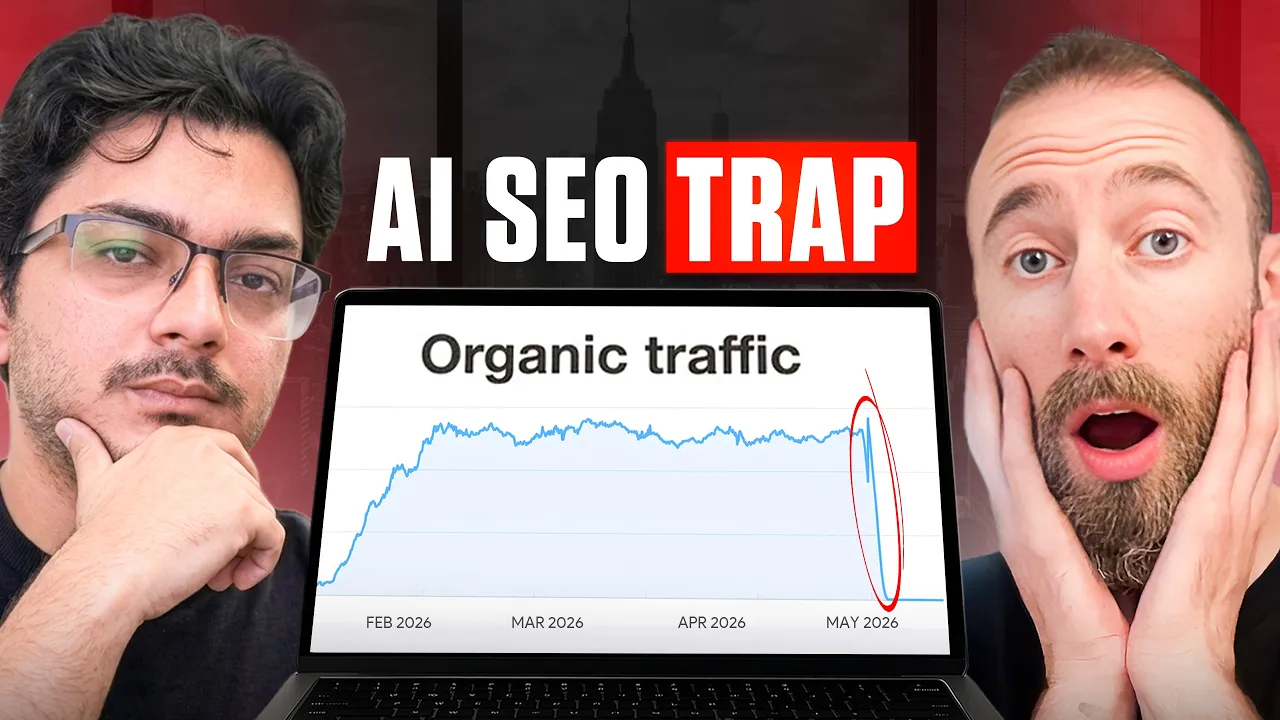
not like like when when do either of these things the the volume the scale when does it become a problem? Um if you're bringing down the rest of your website I would say is when it becomes a problem if it is just that. So I see this a lot. There's like a chart and you'll see you know someone's going along like this. spike up and then they come down to like here. But like the baseline was here. That's still like a one project in my mind. Like you just got an extra million traffic a month.
Great. But if you start bringing down pages you care about, your product pages, service pages, maybe even some of your blog content. If because of your like site quality signals, all that is going down, you get a penalty. It all goes to zero. Um that is when it is problematic. But I am a huge fan of programmatic. I handle most of the programmatic stuff on Hrefs that a lot of people don't even realize is programmatic. Uh which is great. And you know, there's some really wild programmatic projects in the works uh right now that yeah, it's uh we're going to do it.
Um I'm not a big fan of just like let AI do everything and just be done with it. A lot of our stuff incorporates our data. a lot of uh free tools like our our AI writing tools was a full programmatic project and I by that I mean it was like a chat GBT wrapper and we even generated like a how to use the tool section and like use cases for the tool the entire thing we read over them made sure it all made sense made sure it wasn't like hallucinating anything but um that was that was a fully programmatic project uh other things like we are just kind of constantly working on improving we had this like top websites project and still working on that adding features like I treat these like I do the product.
It's not just put it out there and be done with it. It's um you know all right cool let's show like HF's data in this way. Uh but like we can use AI to write a description of the website or whatever. Great. Um and then like what features can we add? What's going to be useful to people? What kind of layout? like how can we break this down in a way that's that's good for people that they're actually going to want to use these pages, not just like, you know, it's not just we're writing this con blog content and we want people to come and read our nonsense, um I don't think that's going to work that well.
But if if there are ways that you can legitimately add value and prove it over time, then yeah, absolutely. And we we as a company tend to you know the I think the motto is like first do it then do it right then do it better. So we will put stuff out there that is not really polished is not the best and is potentially risky at times. U one of them we had to move off domain. In fact the the websites one yeah uh so we created this other website hrstop.com and so a lot of the programmatic stuff that is more risky will kind of live over there now.
uh instead of on the main domain because I do think like that project probably did like hurt us, you know, our a lot of our the core updates and stuff, our tools got hit, blog content traffic going down and I think that was a big part of that. And then when you moved it to a different domain that fixed the issues and you rebounded in this latest core update, yeah, we had an uplift of like I I'd have to look. I think it was like 7 800,000 traffic a month. So will you would you after after this experience would you put u programmatic SEO content or scaled AI SEO content on your money site or would you always from this point on create a new domain for it depends on the quality level of it.
Again we have other programmatic projects on hrefs and I don't see an issue with them. that one in general. Uh yeah, that one that one was problematic and some of the others that I am viewing as more risky will not go on the main domain. What where do so many web masters and marketers go wrong with programmatic SEO and scaled AI content? Just not making it better. like doing the bare minimum. Like I I can feed something to to Claude and for you know depending on which model like if I use like Haiku or something I could probably build 50 60,000 pages of content for like 10 to$13.
Had to do some quick math there. And even if I was using something like Opus like that might be 450 500 bucks in just the content alone. And I could easily put those 50 60,000 pages out there. Do I expect them to perform? Maybe temporarily, but like in general that we've we've monitored so many sites that are doing this, you know, we have like the AI content detector and everything and like pretty much every site that does this, it go it works for a few months and then it doesn't if it even makes it that long.
So if you're just doing that bare minimum, it's not going to work. if you maybe improve that and like you've got uh you know company internal wikis, documentation, service stuff, sales transcripts, uh your own blog content, blah blah blah. If you could feed all that into it, um you might end up with a pro with something that would last. Uh because then you've already got like a a good base of knowledge uh that is more, you know, grounded with you and not just general knowledge. Your company, your processes, your uh your issues, your your you know, everything that your company is already doing that potentially could make it on its own.
like I don't know that Google would knock a lot of that. But then if you've got someone to actually go in and you know let me um let me like reorganize this, let me update this, let me add my own insights and that's that's where it would it would definitely work. But I would say like if you can get to that step two at least, like you can always iterate and go back and like as you got time, go through, you know, an article or two a day or whatever. But if you're putting out like 60,000, go through more than that cuz or put out less cuz it's not going to work that well.
Uh again, if you're just putting out a lot of crap. Do you ever see uh sites basically scaling, not even scaling content, but scaling rankings too fast and then it comes and it crashes and and burns because this is just it's maybe it's it's something like it's unnatural for the site's backlink profile or something potentially. Um I don't know that they would really look at that. like I think they might um but I don't know that it's the velocity or anything that is the problem. Uh I think it's the quality in a lot of cases will trigger the the flags for them.
I mean, like I've I've launched programmatic stuff directories and blah blah blah before and I'm like, "Yeah, just put it like if I had to choose a put out like five a day or whatever or put out, you know, 2,000 at once." I'm going to put out the 2,000 at once. Um cuz it's going to take a while for like signals to build up. Like if they're already out there, maybe people start linking to them, that kind of thing. So, I kind of want them out there as soon as possible. But then you know if if I am questioning they're not good enough uh then I would be accelerating my improvements on them I would say because it it is potentially more risky but like I don't know like if you're just doing like five a day does it really matter?
They're going to catch you in like four months when you have half the content or whatever instead of when you put it all out there and they catch you in three months. You put you'll put out 2,000 pieces of content in a in a day with like Well, are we talking an established site with a lot of a lot of authority or like a newer site? Do it either way. Uh-huh. And and and then So, how would you I guess as long as it's interlin properly, you put out 2,000 and then and then um Yeah.
Okay. I'm just thinking about like what your link building strategy would look like for something like that. I probably wouldn't be doing anything. I'd be working on improving that content for months, if not years. And um again, the link building would probably be to other things, not not that content. I would hope that content just picks up some links themselves. Uhhuh. And so basically what you're saying is like really the mistake is like so a lot of AI generated content that is scaled is just bad and and searchers will come to this page. Yeah. I'm think I'm thinking about I'm thinking because what does a lot of like standard boilerplate AI generated content look like?
It comes off as 50 FAQs. Yeah. And it 50 FAQs is it's s has a ton of fluff. It's not giving the answer right away. It doesn't look credible. That's a that's a that's a cool take because because I've had other I've had other SEOs come on the show and they're like, "Oh, if you're scaling rankings too fast, it could be if you're if you're kind of like stretching your authority too much, it can snap." And and you're and and you're saying it's actually not even about the authority. It's just I mean like you always have more leverage when you have more authority, but it's it's just about the engagement signals.
pogo sticking seat potentially or just again yeah content quality in general well so then okay so what is what does content quality mean to you that's a really good question to me in general yeah well because I think a lot of SEOs have different answers and that's the thing a lot of SEOs like they say Google's like just make good content but for a lot of SEOs they're like what does that mean yeah I mean, yeah, readability, the structure, format, like you talked, get to the point. Don't be overly wordy. Um, cover the topics well.
Like, whatever the main topics you identify for a piece are, like cover them pretty well. Uh, if it requires too much though, like that probably should be another piece of content. Like, you don't want, you know, six blog posts in one or whatever. Um, it's really subjective. Uh, and yeah, it's from the search side, they probably are looking, you know, pogo's ticking. Is this useful? Are people finding it? Do they go to this? Do they go back to it? Or do they go to one of your competitor sites instead? Cuz like your thing is size 10 font.
I can't read it. It's, you know, heading, two paragraphs, heading, two paragraphs, and it's that 50 times. Like, I saw a lot of that, and it was working pretty well for the AI stuff early on. uh less so now. Um but yeah, that kind of stuff is like is nonsense. The listicles kind of got hit. Uh anything that is and and it's not like it's it's bad listicles that got hit. It's not that listicles themselves are bad. Listicles are great format for content, but like they could be doing much more. They could, you know, do something traditional marketing.
Just do a SWAT analysis. Strengths, weaknesses, opportunities, threats. Give me something more than what the AI spits out. It's what the AI spit out listicles that all got hit in my opinion. Yeah. Yeah. Yeah. Actually, um I had a friend Harpet Singh on the show and we did it. We did an episode on Shopify's uh self-promotional listicles and I think they put out like thousands of them and they they all had crazy AI giveaways. It really looked like a chachi PT answer. Yeah. And if they're not, you know, pictures of the products or pictures of user interfaces, if it's SAS, if they're not actually like going in testing the things, um, your content's crap.
Like all that stuff, affiliates already got nailed on that like few years back. Uh, I don't know why businesses thought they would, you know, survive that when when people whose sites were potentially even better than the content the businesses were putting out. Like it was just a matter of time before they got nailed. You ever see sites that are doing almost everything right, like good content, solid links, but they still don't grow. And when you see if you do see stuff like that, what's usually missing in those cases? well, if they're doing everything right, I don't know.
Uh they could it could just be that they hit like their their their cap basically. Like we we kind of had this on the HF's um blog where we kind of covered all the SEO topics that were important and like the stuff we could cover were low was lower volume, didn't really matter as much. And we had this big discussion of do we double down uh do we just like go back re-update all our articles and we we did some of that or do we go wider do we start talking more on like social media paid other digital marketing things and we did some of that too and we also like triple down I think on data studies and unique content and uh even even you know people's opinions on things like the thought leadership type content.
Uh but for you know SEO like we kind of hit where we couldn't really grow more with SEO uh with content around SEO there. Um again there were some gaps and we did go back and rewrite a lot internal linking second set of eyes on on stuff. Uh but that was only part of it. But yeah, I think if we didn't go a little like broader, um, even our blog probably wouldn't have, uh, wouldn't have grown any. I think it's really cool how much you've spoken on this episode about content pruning and and and refreshing.
Pruning and refreshing. Yeah. Uh, well, I'm build as a technical SEO, but like you know what what makes a difference for most businesses is your content. and I'm always heavily involved in any of that. Um, the things that you said that you just did for HS content, is there any any of those things that worked really well and then other things that didn't actually move the needle? Uh, I mean, we had a lot of tests and stuff. Um, like we were like, can we write and get, you know, featured snippets, AI overviews? Uh, some was successful, some was not.
Um, I think Samo ended up doing a video off one of the tests because I was like, let's rewrite 30 blogs or whatever and try to get the AI overview. And I think we got like 14 or 15 of them. Um, and it was just being more specific, getting right to the point, you know, uh, not nothing crazy. And in fact, another test we ran, we literally had AI write on and write it to see like, can this get it? And the answer was yeah. So he did like this 24-hour challenge or whatever to rank and like think like he ended up getting it like 3 days later or something where he did get the A overview, but um that was cool.
Uh yeah, we've we've done a lot of stuff that didn't necessarily work. Uh there were some internal linking tests that we thought would work and didn't really uh seem to do much. Um like what uh it was more what was that? I'm blanking on what we were what we were trying on that one. But we've done like three or four tests just with like internal linking. Uh there's always tests with like redirects. Like we had some potential cannibalization I would say between like our glossery and our blog pages. So I think some of them we redirected, some we didn't just to kind of see like uh is that going to help or hurt cuz now it was it was a case of a lot of in some of the cases like we would have two positions like we might be um you know third on the blog and eighth with the glossery or something.
And it was like, well, if we redirect this, we might lose that eighth position, but can we go from like third to second potentially if we redirect this glossery page over? Um, and again, some of that worked, some of that didn't. Uh, so some, yeah, some we lost out on, some some did gain. Uh, and I think there's never really a right answer other than just test it in situations like that. Yeah. Not not enough SEOs test. And also SEOs that do test they a lot of them they will do you have like a method for testing actually for for like you you keep like a a record of like what's being tested and the date and the results.
Is there like a way that you do it? Yeah, it's usually in a project management system and then we have like notes and stuff for um you know our timelines and stuff and some of the tools. Are there any any recent experiments or just experiments that come to mind that like completely shocked you? Not really. No, sorry. I don't have a good answer. Actually, um something that I thought was really cool was this was a test that Mark Williams Cook did. Um I don't did you see his like his schema duck test? He he had like duckad t-shirts and he made up all of this schema and and he the answers were only in in the madeup schema.
So it wasn't like real it wasn't like real schema and I think it was chat GPT he would ask questions where the answers were were in the schema and chat GPT basically treated the schema as normal text and it didn't matter that this wasn't like these weren't valid schema types and I thought like well that might be why it got treated as normal text because they weren't valid. Yeah, but but it was it wasn't visible on the page. Yeah, it doesn't necessarily have to be visible on the page. Um like when crawling bots, if we get a blank page, like we're still storing the content, we're still processing the content.
Uh even though yeah, there might be some CSS or something that's hiding it. Even if we render the page, we don't care. Like the way that we store it is still going to have the content of the page that we that we saw whether users could see it or not. Yeah. But what I guess I guess I'll give a a more concrete question which will be schema is one of the most hotly contested. It's for a long time one of the most hotly contested uh topics in SEO. I saw you post um schema matters if it's actually going to get you a SER feature.
So again, as someone who has been part of even building a search system with the app, um it's not really like the way we would use it is not necessarily to understand or to be queryable and blah blah blah. like that text is going to get processed the schema not so much for that. The schema is stored in a way that like it's so we can use it and even if you don't have it like if you don't put you know your pricing or whatever but we see pricing in the same location on every single page like we can kind of figure that out.
Um but in general like I doubt any of them are really you know using it beyond this is something that it's not like a help me understand the page thing. It's like okay like this is an in a way but like this is like an e-commerce page this is their pricing. This is their um you know the number in stock blah blah blah and all that's more used for SER features. Uh, but for for retrieval, for ranking, I just I can't really see them using it. Yeah. Yeah. Yeah. I've I've done entire episodes on on on this.
Um, how about how about for LLMs? This is something that you see like a lot of geo people saying, "Oh my gosh, schema is so important for getting cited in large language models." Yeah. No, no, I don't I don't think it matters. Why why is it such a This is another one of those things like why do you think this is such a pervasive myth in SEO? they want it to be different somehow. They want something to sell. I don't know. Yeah. Want something to sell. They don't understand how the systems work. So they it sounds complicated.
It's technical and again they can sell it to people as even if it doesn't actually do anything. It's it's something they can show that they they worked on. Check the box. There's there's a lot of that. I mean even with traditional technical SEO auditing like if we at one point were we're talking on uh you know the the whole system in HF site audits like customizable like you can change priority blah blah blah add remove issues and I had like my own set of issues and basically I got rid of like 80% of this stuff and we ran it by some agencies and then they're like but then how do we sell to our clients like more red is better and I'm like But like there's always this debate of like should we actually help people like prioritize things to work on that matter or show more issues so that people can sell more things and um yeah that's the reason it's customizable now.
You can make your own version of uh all the different things and set your own priorities so that like you can flag what you want or you can flag more things. Yeah. A lot of SEOs are obsessed with things that don't that aren't that aren't going to get results. That's something that like that's one of the reasons that I have this show cuz I would see that all the time and it would just like I like to get results. For me, that's really that's really fun. I said actually um I I was asked there was like a 22-year-old who listens to the show and he's like, "Oh, I'm so confused about this and guest some guests say this and other guests say this and like I'm just confused where to where to And I said like your north star for SEO is focus on relevance.
Making your content relevant to like a a target to your target language. Uh authority reduce pogo sticking and uh avoid clearly spammy tactics. And it's like if you just focus on those four things like that's going to take you 80 to 90% of the way there. I mean just just doing things will get you above most companies. It's that uh that default to action like makes a big difference because yeah a lot of people will spend days weeks analyzing paralyzed like oh I don't know what to do. Do something and then go do something else and then go do something else and you'll generally have better results.
I mean some of the stuff may be like may do nothing. Some of it may be very minor. Some of it may be very beneficial. Um, but the more of it you do, like the more it's generally going to help. Okay, I have two more questions. Um, what is one change or improvement like in terms of moving the needle? What's one change or improvement that you've seen that creates outsiz results? Just like a small input that leads to a big SEO gain, redirects, reclaiming those links. so many sites uh whether you're a local business a big company local businesses for a while like we were going through different URL structures and and people got you know website redesigned every two years and like they never companies are really bad about doing redirects any any type of migration it's usually the number one thing that goes wrong uh big companies they acquire companies all the time they're really bad about like actually doing redirects when they change stuff.
There's always so much value there. And um usually like in an afternoon you can reclaim like what would have taken months, years for some link builders to actually build. When do you redirect versus when do you 404? Let it let it 404. I'm going to give the great SEO answer. It depends. Uh so with larger companies like a lot of times uh infrastructure teams they don't want but like so many redirects matters less now than it used to but a lot of times it's like business value to uh you know someone's going to be putting this in a system that takes time effort approvals sometimes at what point is that worth it so a lot of times it will be some combination of number of like referring domains number of traffic so if I got a page and like 300 people are hitting it every month and it's 404, I probably want to redirect that.
If I got a page that no one's hit in like six months, uh, I I don't care. Maybe, but then I go to look at links and let's say no one's hit that in six months, but it's got 200 referring domains, well, I probably want to redirect that. If it's got like one referring domain, no one's hit it in six months, I don't care. Probably not going to do it. Uh so those are like my quick metrics is usually like look at traffic and look at um look at like links or referring domains to the page and just determine is it even worth doing?
Uh also look do you have something relevant? Did you just like switch your business model you know from shoes to to uh data centers? Yeah. Uh then maybe I don't want to redirect a bunch of the shoe pages. Yeah. That's that's it. If if it's like uh you said you have a page and you're getting like 300 uh requests a month, but it's it's 404ing. It's like, okay, if you don't do you have content that you could 301 redirect to? If not, then create content for it. Yeah, it's that's a possibility. How about how about um 301 redirecting all 404s to the homepage?
Is good strategy or terrible strategy? Usually a terrible strategy. Uh most of the time they probably won't count anyway. Uh they'll more than likely be soft or fours, but yeah, I see people go to, you know, a category page, uh a homepage. Um wouldn't be my first choice. If if you can do one to one, like match it to relevant content, that is ideal. uh in a pinch maybe just to reclaim the traffic or something. I won't say like I would rule it out, but it it wouldn't be my first choice. Last question is, if you could delete one SEO tactic from the industry, so people stop wasting time on it.
We've talked about so many of these already, but if you were to pick a a single one, what would you pick? Text. it's crazy. It's really like I think people like talking about it because it makes them seem like they have fresh knowledge or there's some they're like a contrarian or something. But yeah, it was pushed by a wave of the new SEO tools or geo tools and even even one of the traditional tools was like pushing it and I'm like what are y'all doing? Like this is just wasting people's time, wasting people's effort. Now they're creating an entire other like markdown pages, blah blah blah, and like, oh, I I'm with you.
I don't like wasting people's time, and that has always felt like a time waster, you know? I I know the I know the um the traditional tool that you're talking about. Uh it cuz when when it was when it started to like when people started talking about it, what I did is I just went and I I looked at some of the top SEO companies and top content marketing companies. Um, I looked at hres for example and I and I went to go see like, okay, are is anyone is any of the people who are doing SEO and content best are they using LLM.txt TXT and nobody was.
Nobody was and it to me it was and then and then over the coming weeks still nobody was over the coming months still nobody was and it was Yeah. Yeah. Again there probably will be something like it that comes but it won't be there were so many issues with LLM decks. I think I wrote an entire rant of you know here's 15 reasons this will never be a thing. Um, and I maintain that is true. I mean, there were there are other things similar that came out over the years. Humans.ext. How many people have a humans text file?
Crazy. No, basically no one. Google, I think, maybe a few other sites. Uh, but like yeah, it's it's not going to be I don't think like that's that's not a standard that wins. Um, it's and if I could be wrong like if other companies if these AI search companies are like, "Yep, we're using that. We're going to pull data from there." I will be the first to say like, "Okay, I'm wrong now." Like, "Let's go add it to the tools. We add it to checks. We'll help people create all this." Um, but I don't think I'm wrong on that.
How about the strategy of like people saying uh they'll they put it this in their like uh footer or something. LLM's click here. this is like or or this is the page for LLMs and they're like LLMs this is what you need to pay attention to. I think the one that actually like worked was the the summary of the page and then they're like stored this page or whatever. But yeah, that's obviously not a long-term thing um that you should be doing because all this stuff these systems are new. It took Google a long time to like figure out all the links and content and stuff hacks and penalize or ignore it all.
And uh so same with these systems. Some stuff that maybe works now like probably will hurt you in the future. Yeah, Patrick Socks. This was a lot of fun. I'm so thrilled to have gotten to talk to you for the last 90 minutes. You are you brought so much value to the industry over the years. Um, and uh, yeah, I'm just uh, I' I've shared a lot of stuff that that you've worked on at Hrefs, and uh, I'll continue to do that. Um, and we share a lot of the same the same thoughts on SEO as well.
Uh, so yeah, thank you again for coming on. Thanks for having me. This was a great conversation. Um, for people who aren't following you already, uh, where should they check you out? at Twitter, LinkedIn, or X or whatever. Uh, Patrick Stocks. Cool. Thank you again, Patrick. Um, this is episode 1,022 of the Edward Show. 1,022 days in a row doing this crazy podcast. If you watch us on YouTube, thank you so much for watching. If you listened on Spotify or Apple Podcasts, thank you so much for listening. And I will talk to you again tomorrow.
Bino.
More from Edward Sturm


![SEO Full Course 2026 [FREE] | SEO Tutorial For Beginners | Search Engine Optimisation | Simplilearn thumbnail](https://rewiz.app/images?url=https://i.ytimg.com/vi/jmLPfO2AHKw/maxresdefault.jpg)





Get daily recaps from
Edward Sturm
AI-powered summaries delivered to your inbox. Save hours every week while staying fully informed.