ChatGPT Sends 21% of Its Traffic to Google. Here's Why That Matters.

Chapters6
Highlights from the Semrush study: over a billion clickstream lines tracked, with 21 percent of ChatGPT clicks going to Google and a 206 percent YoY rise in referral traffic.
A massive Semrush study shows ChatGPT sends 21% of its clicks to Google and fuels a 206% referral traffic surge.
Summary
Exposure Ninja’s Dojo hosts a lively chat with Dale Davies and CEO Charlie Marchant dissecting Semrush’s billion-line, 17-month data study on ChatGPT’s referral traffic. Charlie highlights two headline takeaways: 21% of ChatGPT clicks redirect to Google, and referral traffic from ChatGPT has grown by 206% year over year. They stress that ChatGPT already influences the funnel and that agencies should optimize for both ChatGPT and Google, since users often bounce between platforms. The discussion delves into top-of-funnel dynamics, noting that AI platforms are increasingly shaping how buyers research before converting on a brand’s site. They emphasize practical strategies: build clear product/category pages, tailor content to specific personas, and ensure third-party content and PR help establish authority in AI prompts. The hosts also compare AI platforms (ChatGPT, Claude, Gemini) and explain why enterprise buyers may favor different tools, depending on market and internal governance. Attendance of live prompts versus training-data reliance is examined, with about 35% of prompts triggering live search, while longer prompts often pull from model training data. Finally, the episode offers actionable steps for marketing leaders to audit current strategies and align content, PR, and SEO toward AI-enabled search channels in 2026 and beyond.
Key Takeaways
- 21% of ChatGPT clicks go to Google, indicating significant cross-channel referral behavior.
- ChatGPT referral traffic surged 206% YoY, validating ChatGPT’s role in the marketing funnel.
- Around 30% of all ChatGPT referral traffic goes to 10 domains, led by Google, YouTube, GitHub, and Amazon.
- Only about 35% of ChatGPT queries use live search; many rely on training data, affecting timing of results.
- Prompts are longer and more context-rich in ChatGPT, requiring different content strategies than traditional keyword SEO.
- For top-of-funnel impact, optimize content and PR for AI platforms as well as traditional search engines.
- If you target multiple markets or products, define clear category/pages and personas to improve AI-driven discovery.
Who Is This For?
Marketing leaders, SEOs, and content strategists who need to adapt to AI-driven search channels and optimize for ChatGPT, Google, and other AI platforms in 2026.
Notable Quotes
""21% of ChatGPT's clicks are going to Google, which is the first of many new statistics that have come out of a recent Semrush report.""
—Sets up the core finding from Semrush and frames the discussion.
""The 206% year-on-year increase in referral traffic to websites from ChatGPT... is one of the biggest objections I hear to actually creating a search strategy to optimize for ChatGPT.""
—Charles highlights the data as a counterpoint to skepticism.
""We need to optimize for all of the channels where we know that our customers are having touchpoints, and especially the length of conversations that people are having in ChatGPT.""
—Advocates a multi-channel, conversation-focused optimization strategy.
""Shorter search queries in ChatGPT are more likely to trigger a live search than longer queries... the gap between that is narrowing.""
—Notes nuance in when live search is used within ChatGPT prompts.
""Traffic to ChatGPT has been plateauing a little bit... but I don't think this is the end of the road for ChatGPT at all.""
—Offers a forward-looking view on ChatGPT's trajectory despite near-term plateaus.
Questions This Video Answers
- How should I adjust my SEO strategy when ChatGPT referrals keep increasing?
- What does a 206% increase in ChatGPT referral traffic mean for conversion rates?
- Which domains Linked to ChatGPT referrals should I monitor or target for partnership?
- What content should I build to rank in AI platforms like ChatGPT, Gemini, and Claude?
- Is it worth optimizing for zero-click searches and AI overviews in 2026?
Semrush reportChatGPT referral trafficAI search optimizationZero-click searchPrompt engineeringGPT-4/Gemini/Claude comparisonTop-of-funnel marketingContent strategyPR and backlinks in AI eraEnterprise AI adoption
Full Transcript
[music] Hello and welcome to the Dojo, a search marketing podcast by Exposure Ninja. My name is Dale Davies. I'm the head of marketing at Exposure Ninja and I'm joined by our fabulous CEO, Charlie Marchant. How are you doing, Charlie? I'm doing great. How are you doing, Dale? Pretty good. It's starting to warm up a bit. I'm wearing only two layers today instead of the usual five being here in chilly Edinburgh. I'm still awaiting the Exposure Ninja vest that we talked about last week. Okay. Yeah, and caps. And yeah, and sunnies as well. Oh, yeah. Of course, ninja-shaped.
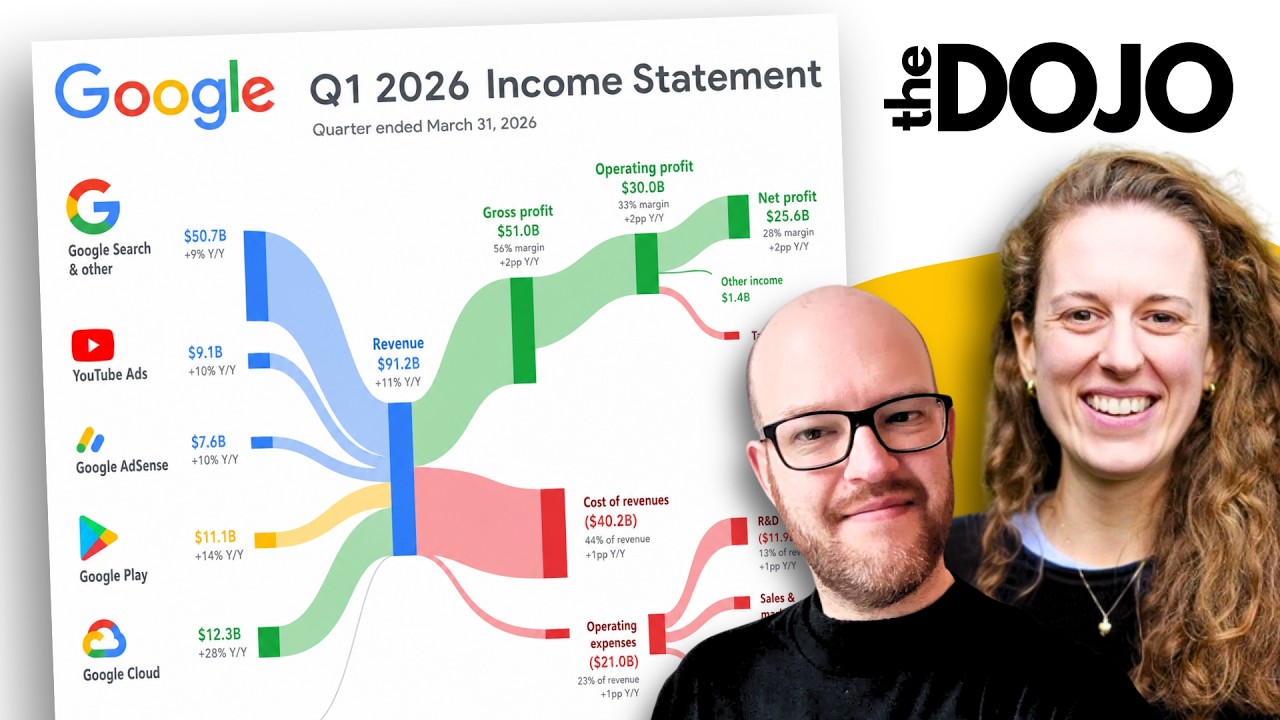
How are you doing? Yeah, really good. I Well, I'm in the south, so I'm only wearing one layer. It's so warm, which is, you know, summer's basically here. [laughter] Well, this week as you can see from our background, if you are watching us rather than listening, that 21% of ChatGPT's clicks are going to Google, which is the first of many new statistics that have come out of a recent Semrush report. Charlie, you've read the report. Obviously, this is one of the biggest stats that have come out of it. But what are your like key findings and takeaways and thoughts from having read it?
Firstly, this Semrush report is so fantastic. I think it's the data that we've needed for a long time about what ChatGPT's referral traffic actually looks like. So, it's a big study. It was over a billion lines of clickstream data tracked across 17 months, so right up until 2026. And the findings, not only the 21% of ChatGPT clicks going to Google, which in itself is a big thing. The other finding, which I think is huge, is the 206% year-on-year increase in referral traffic to websites from ChatGPT, which in my opinion, lots of people have been talking about, "Oh my god, well, ChatGPT doesn't actually send traffic anywhere.
Is it just a waste of time marketing for ChatGPT?" It's one of the biggest objections I hear to actually creating a search strategy to optimize for ChatGPT. And finally, we have some data on a large scale that shows, "Oh my goodness, yes, ChatGPT is referring out traffic. It's a huge, clear part of the funnel. It's something we already know from our client reports. We work with clients across 60 different industries, and all of our clients have referral traffic and conversions that come from ChatGPT. So, we've known this anyway, but I love to see a study of a billion lines of data because that's that's even bigger, that's even more concrete.
And I think one of this the really interesting findings you've pulled out there is around how many of those clicks actually go to Google. Over 20% is is huge that ChatGPT's actually referring people back into Google search when it needs to do so. I think the one of the things we often talked about is how this AI kind of works as a like a pre-awareness level or it's just kind of absorbing the top of the funnel as we've pointed out several times before. And that we expect and having talked to people about like how they use AI, that people are completing that the funnel, the commercial side in Goo- in Google.
Do you see this as a direction of travel that we should see this increase, or do you think there'll come a point where ChatGPT will try and keep those clicks within the platform instead? I think we're going to see a bit of both. So, for now, ChatGPT's strategy is very much commercial, mass market. And they're going to be thinking, right, they need to be useful, they need to actually be referring traffic to different websites for people and businesses ultimately to see it as a useful platform that is worth optimizing for and ultimately worth spending money on.
So, I think one of the issues they originally had with the ads that they were running in ChatGPT was that there wasn't enough ROI. The businesses weren't seeing enough ROI from that beta testing. So, ChatGPT needs to find other ways to make sure it's actually being useful in the search journey in order for it to make more money over the long term, especially if it's going after mass market, average consumer, average searcher to be using it as well. So, I think we're definitely going to see that. What I think we're going to see short term though is similar to the trend we see already, that ChatGPT search isn't replacing Google search.
That searchers who use Google move between the platforms. And we see this quite a lot when people are researching top level, they start in ChatGPT because they can ask something huge. They can write a paragraph in there. I think 60 words is the average that I've seen from piece of data. They feel like they can give a lot more context to ChatGPT. Amazing. Whereas, when you're searching Google, you're usually writing three or four keywords, maybe a couple more, but not anything that long. So, we've still got users moving between these two platforms. And it kind of makes sense, right?
Because Google's the platform we trust. So, when we're actually ready to make a purchase decision or navigate to a website to compare two different providers, we're going to go to Google, put it in, and get there most of the time. But I think this this data that's showing this increase in ChatGPT becoming much more meaningful as a traffic referrer is only a positive thing for businesses. If your referral traffic comes straight from ChatGPT, and it means the searcher is able to cut out a manual step they were taking Google, reduces the number of clicks ultimately for someone to get to your website in the end.
So, great outcome in that sense. So, we still need to prioritize like trying to appear in ChatGPT regardless of where the click finally ends up. Yeah, for me, ChatGPT is a new search channel, right? It's not that new. We've had it for a couple of years, but compared to Google, it's new. The point is that people are searching within ChatGPT is now part of the search journey to finally find the business or the product that they actually want in the end. So, we need to optimize for all of the channels where we know that our customers are having touchpoints, and especially the length of conversations that people are having in ChatGPT.
We know already from data in our AI search report that we ran that more than 80% of people making half of their purchase decisions in their AI conversations that they're having. They're already making the decision in their head about the purchase they're going to make when they're having those conversations with ChatGPT and other AI chatbot platforms. So, even if they actually then go to Google and check out, ChatGPT has been a huge influencer in the actual decision-making process. One thing I have in mind seeing the statistics is that if 20% of this traffic roughly is going to Google, we're also facing a problem of zero-click search and, you know, a decrease in traffic from Google.
Mhm. Would I need to Do I Should I still have the confidence to do work that gets me featured in Google if there isn't going to be a click at the end of it? Yeah, I mean, this is My answer to this question is actually an hour long because I ran a webinar with Semrush yesterday on surviving the zero-click search. So, if that's something you're really thinking about and you want the full detail, I would definitely find that webinar from from last night. Do we still optimize for Google? Absolutely. Being in AI overviews is incredibly important.
This study is showing us, right, that 21% of those ChatGPT clicks still go to Google. So, eventually that searcher is still highly likely to end up with a touchpoint on Google somehow. Even if you don't get the click, we're really thinking about a mindset shift where we're not chasing the clicks, we're trying to make sure that we are top of mind, so that when someone is making a purchase decision that is relevant to the business that we run, the products we sell, the services that we sell, we are the business that they go to ultimately.
And I think one of the things that many people have struggled to come to terms with is this top-of-funnel searching, which used to happen a lot more on our own websites. It used to be reading blogs, reading our informational content, has now moved into AI tools. And I'm including Google's AI overview in that as well as ChatGPT, Gemini, Claude, Perplexity, pick your favorite of those tools. They are now owning much more of that top-of-funnel conversation and research part without people needing to click through to a website and read 10 different blogs to find the information that they actually want to get to eventually.
We need to kind of shift our mindset back to, "Okay, when someone starts their search journey, where are we showing up?" And that's going to be in AI platforms rather than only thinking about people navigating through our informational content and the number of clicks that we're going to get to our website. Talking of clicks, if I can ask to just click a little further into this idea of not really Maybe the good times are over in terms of how much traffic we can expect from Google anymore. Do you feel like the it's over? We just need to change our perspective in the way that we measure success.
I don't think it's completely over in the sense we still get traffic from Google and we get referral traffic from ChatGPT as we've just been speaking about as well. So, traffic does come. What I think is over is the way of thinking about if we get if we produce way more content and we get way more sessions than if we keep our conversion rate at roughly 2% or whatever's average for your sector, we're going to get way more leads or we're going to get way more sales. But actually, we're going to see a lot of that top of funnel traffic not coming to the website.
So, organic traffic a lot of people going to be seeing even though impressions are up, clicks are actually down. When we're thinking about how we get those conversions, we're not mapping back in exactly the same way we used to map back where we're thinking about getting loads and loads of organic traffic. Like increase your organic traffic if you can over time is great. But as long as your organic conversions are performing well, that is the most important metric and so much more important to be focusing on than getting too caught up on just the metric of how much organic traffic you're getting.
And just to take us back to the data that's been put together by SEMrush. 80% of the traffic is obviously not going to Google, it's going to elsewhere. So, is that to a lot of the we're talking it's going to a thousands of websites or tens of thousands of websites? Should I be trying to focus on getting my website featured wherever those domains are? Yeah, so what the data seems to be saying is that 30% of all ChatGPT referral traffic goes to 10 domains. And there's a fantastic list. It's really worth checking out the actual SEMrush blog on this because it's very visual and it's lovely to read.
The vast majority of that top 10 is Google, but then we're also seeing YouTube, GitHub, Amazon, Facebook, LinkedIn, uh the National Institute of Health obviously because people must be asking quite a lot of health questions to ChatGPT. Why go to the doctor when you can ask ChatGPT for its very legitimate medical advice, I'm sure. Um I jest, but a lot of that referring traffic is going to those really big domains, right? We know this. Fine. There's still got 70% of traffic that is going to be split over a significant number of different websites. And for many businesses, that's also going to include their website if they're thinking about optimizing for the search journeys they care about in ChatGPT.
And referring the referral destinations, it's going to be huge. It's going to be a huge number that actually comes into the rest of that 70% and absolutely you want your business to be featured there. If I'm looking for the best CRM software for a small to medium-sized enterprise, I want to actually be comparing different providers inside ChatGPT, right? I want to be looking at HubSpot, I want to be looking at Salesforce, I want to be looking at all of the alternatives. And if you are one of those businesses, you absolutely want your business to be in that list and you absolutely want to be getting that relevant referral traffic to your website.
But I suppose everybody is using ChatGPT or any of these AI platforms is writing that request in a different way. Like which is the best CRM for whatever. They're actually going more specific and saying that I I have a small pharmaceutical company or I sell lubricants and oils, you know, uh something like that. So, how do you optimize for that when there's so much variety? I mean, this is perfect, right? This is why ChatGPT's traffic is often considered to be much higher intent because people can be more specific. And if you as a business are really clear on your customer personas, who buys from you, who you're targeting, who your most profitable customers are, then if you are optimizing your website content and your third-party PR strategy, so the content that you publish on other websites, the news that's out there about you, the reviews that you have, all of that type of thing, you are much much more likely to show up for those specific types of customers who have those specific types of search queries because you're well targeted and less generic, which is great because then you're going to get in front of the customers who are much much more likely to want to buy from you specifically.
I think the struggle that we'll see is businesses who are very generic in their positioning and who do have a very broad customer base because when people are everyone of course is their search is is very personalized. They write in different language to one another. Even customers of a similar ilk might do that. What you want to be doing is showing up in those topical areas, right? Not getting too hyper-focused on exactly what each individual might type into ChatGPT, but just thinking about, okay, I want, you know, pharmaceutical companies in general even if someone writes that slightly different from two different pharmaceutical companies, for example.
But if you've got your customer personas nailed and you've got your business positioning nailed, you're going to win. So, it seems like I need to spend a bit more time reviewing my positioning and and everything. It's super clear. I suppose it gets more complicated if you are like a brand that sells multiple products. Like if you are uh I'm trying to think like a retailer. You sell maybe six or seven different product lines, well, categories and then there are like hundreds of product lines within that. Like how do you optimize for that when you do have such a broad base of things to sell?
Yeah, absolutely. And locations as well for businesses who are selling into multiple different markets, too. And this is about how you set your whole website up, right? About making sure that you have really if you're e-commerce really really defined product categories, really good category overview pages, really really clear actual product pages about all of the different items that you sell. Because ultimately, what you ideally want is ChatGPT bringing straight to the right product pages. And if you're a service-based business or informational-based business, that's going to be really clear strong landing pages for each target demographic in each target type of market so that ChatGPT and other AI chatbots as well, including AI overviews, actually understand what the business does as a whole because AI can understand if you're a global player.
They can understand if you're in lots of different markets. They can understand if you have a product stack relevant to multiple different sectors. But they won't know that if you don't have content on your site that clearly indicates what those markets are or what those sectors are or what those products actually are and who they're for. So, a lot of this is about how you optimize your own content. And it's also similar to how we would have thought about backlink building in SEO. It's also deciding which are your priorities that you're doing your PR around because they're really really important to the business to show up in ChatGPT searches.
I suppose there are a lot more data points in this that are really important for us to know about as well that are impacting how we go about appearing in in AI platforms and how we do SEO with things that are underlying underlying it and the foundations of it. What are the kind of stats in from the report of maybe surprised you or you think are really noteworthy? Other things I think worth knowing are that for a lot of prompts, ChatGPT still doesn't use live search. And that's because a lot of people are also on fast mode rather than thinking mode in their ChatGPT account.
And so, it's actually only around 35% of queries uh which means that most of the ChatGPT responses really are still relying on the the training data, the model knowledge rather than live web retrieval. That means that as that training data gets updated, it does take a bit more time if you've been optimizing for ChatGPT to show in those types of of answers. So, I think that's really important for us to know. We also know that prompt behavior is changing. People are asking more prompts per session that they have with ChatGPT. This is great news though for us because it means people are moving further and further down the funnel.
They're having more and more detailed conversations. So, it's it's going up quite a lot. People are actually really engaging with going back and forth with ChatGPT. And I guess the other the other thing to know is that most prompts in ChatGPT don't look like Google's prompts exactly. And this is because ChatGPT prompts are longer and it's not just people writing in keywords. Like we've learned in Google, we just write in the keyword that we want to get to to find the website that we are kind of aiming for. But in ChatGPT because we're doing so much more research and it's conversational, it's specific, we can give context.
The users have learned, searchers have learned we can write way more in our ChatGPT prompts. Which presumably means it's absorbing more of the funnel, which is the point you made before. And if users, customers, future buyers are changing the way that they prompt and have these conversations, are you therefore having to change the way you go about creating the content or choosing which content to create? Yeah, and I mean, I think I think people are generally aware that the content that we're creating for ChatGPT is different in the sense we're really really thinking about the types of prompts we want to show up for, not just the keywords we want to show up for on Google.
So, creating a really good topic cluster architecture around the topical areas we really want to own, the types of prompts that we want to show up in, and understanding our buyers, understanding the kinds of things that they're likely to write, the kinds of language that they use, and reflecting that back, as well as thinking about the query funnel, which is another topic altogether, but essentially thinking about all of the breakdown of what AI might be looking for underneath that original search to answer the question really, really well, so that our content is providing the right context to these AI platforms.
Okay. Well, content creation has always been a really interesting area, and I kind of enjoyed the fact that it's developing. You have to be be a bit more specific cuz it just pretty creates a lovely challenge. Although, I suppose if you're not really in the trenches, another challenge. If you're in the leadership position, you're like, "Don't create more work for me." Is there any like a any other statistic in here that really like stands out to you or something that's really worth knowing? I think that was pretty much everything that I think really, really worth knowing.
Um the only other thing is that that kind of strange, actually, the shorter search queries in ChatGPT are more likely to trigger a live search than longer queries, which mostly rely on training data. I initially would have thought the opposite, and it looks like the gap between that is is narrowing. Um but, pretty interesting that longer prompts tend to get training data, perhaps because ChatGPT's then asking them follow-on questions to try and make their their prompts more specific as they go. I've only scanned the the graphs. I didn't really retain a lot of it cuz I had to very rapidly have to just have a look at it, but was there something in there about the traffic to ChatGPT itself is kind of flatlining a little bit?
Yeah, traffic to ChatGPT has been plateauing a little bit. Um which is something we've seen over the past couple of months, the past Q1, really. And I think there's a couple of different reasons for that. I think the new models of Gemini are much more competitive, and people have enjoyed using Gemini more than previously. And I think Claude's position in the market, as well. Who Claude have very, very much gone after the enterprise, the workplace users, the developers, especially with the launch of Claude Co-work, as well. So, I think a lot of people who are using AI at work, for work tasks, we're seeing that actually some of the other tools are growing a little bit more, whereas ChatGPT is still very much going mass [clears throat] market, consumer-focused.
[snorts] Do you foresee them kind of getting out of that plateau and and getting growth again? Or do you feel that maybe this is like not the end I don't want to like doom and gloom and say like this is the end of the road, but do you think that they've reached their peak? I don't think this is the end of the road for ChatGPT at all, to be honest. They're still huge, and I think it's going to take a lot to move people to other platforms. Do I think it's going to be easy? Absolutely not.
Like, they've definitely got their work cut out for them. But, I there's quite a lot of ground that Claude or Gemini or any of the other AI chatbots would actually have to regain to get up to ChatGPT's market share when it comes to the AI chatbots. I mean, personally, I think Google, of course, who owns Gemini, have the biggest chance of trying to do that because they are in the power position here. And it's kind of interesting that ChatGPT has really been a bit of an underdog by taking the biggest share of the AI chatbot market as it is.
Um I think it's all to play for, I guess. You and I have obviously been doing like your search marketing for quite a long time, and we've done work for all kinds of different industries, from like the glamorous stuff to the quite dry, but, you know, high-value enterprise kind of work. And sometimes we have to strategize to get our clients featuring in Google searches, but also in Bing searches, because the businesses they're trying to target are kind of mandated to only be allowed to use Bing within the workplace. Do you foresee a point where enterprise companies or mid-to-large-size companies are kind of having to use Claude as their go-to rather than other systems, and therefore we have to have a strategy for Claude for those kind of B2B businesses versus a strategy for ChatGPT for mostly you know, consumers?
I think this depends so much on the business and who the customer is, and the reason I say that is because the level of red tape in enterprise businesses, as anyone who works in them knows, is is fairly significant. So, if they're on Microsoft Suite, for example, they tend to only be allowed to use Microsoft Suite, and therefore Copilot is their AI tool of work. Change making change like that in an enterprise organization to move over to use Claude, I think will be slow for lots of those types of organizations. And so, I do think we'll still see Copilot in very specific B2B examples for many types of procurement that still happen.
I do think though there will be some faster movers in those FTSE 250 type businesses where there is a little bit less corporate red tape, and we do see tools like Claude becoming much more integrated with the work they deliver. And I think it will vary. I think this will be particularly depending on sector as well. How how in use it comes. For the businesses who actually are selling to other businesses and thinking about targeting these types of customers, though, the strategy they're going to have, I think, very, very strongly depends on which specific platforms their customers use.
And rather than guessing that, the best way to understand that is actually to look at the Google Analytics data you have. You can split it out, so you can see which of the AI platforms is actually driving referral traffic and referral conversions, as well. And it might be different. Some platforms it might be, you know, that ChatGPT traffic actually converts more, but there's more overall traffic coming from Claude, just as an example. But, it gives you a much, much better idea of the platforms you want to be targeting in your search strategy, rather than just guessing and hoping for the best.
If I already have a strategy in place for ChatGPT, is it going to apply equally as well? Do the two overlap for Claude and for Copilot and all the others? There's definite overlap, but there's also nuances between the platforms. I would say the majority of work that you do for ChatGPT is going to benefit other AI platforms, but there's definitely very, very stark nuances in where these AI platforms prefer to source information, what websites they trust and feel are authoritative. And a very strong search strategy would be taking that into account, thinking about those third-party sources that are trusted, and building a strategy around making sure you're visible in the right ones if you want to perform really strongly across specific AI chatbot platforms.
If you were in a marketing leadership position outside of an agency, you're in a marketing Yeah. Um what would be your kind of uh next step from this point, having learned from what what you have from this Semrush data? Ooh, next step from this point, I think, would be double-checking the search strategy that we have now, what we're doing, what our plan actually is across the team of SEO, content, PR, all of that area of the business, brand, as well, to be honest. To decide, have we got this covered? Are we looking at the right platforms?
And have we built out a search strategy that is ready, basically, for 2026? I would now, looking at the amount of referral traffic we're seeing from ChatGPT, if that's a priority platform for us, I would be pushing more and more to think about ChatGPT, as well as Google, in the search strategy that we've got designed and that we're implementing this year. Superb. Well, if you are watching or listening to this later, or you want to just get the information, come back to it, I'll make sure that the study is linked in the podcast show notes, as well as in the description of wherever you find your podcast.
And uh we'll see you all for another Dojo next week. Thanks for joining us, and see you then. Bye. Bye.
More from Exposure Ninja


Related Videos

RAG vs Fine Tuning vs Prompt Engineering: Use Cases And Key Differences Explained | Simplilearn
 Simplilearn
 00:25:32
How LLMs Work? | How Large Language Models Work | What Are LLMs? | LLMs Explained | Simplilearn
Simplilearn 00:09:59
OpenAI Codex Full Course 2026 | Learn OpenAI Codex From Scratch | OpenAI Codex Course | Simplilearn
Simplilearn 01:01:00
Future of AI Jobs 2030 | AI Job Roles, Skills, Salaries, And Career Opportunities | Simplilearn
Simplilearn 00:20:24

Get daily recaps from
Exposure Ninja
AI-powered summaries delivered to your inbox. Save hours every week while staying fully informed.