Rubber Duck Thursdays: Building Agents with Copilot

Chapters9
Host greets viewers from around the world, asks about their projects, and sets up that the focus will be on building AI agents and related tooling.
A candid, hands-on drift through building AI agents with Copilot, LangChain, and guardrails—plus a live workshop on Claude-powered agents and practical security tips.
Summary
GitHub’s Marlene hosts Rubber Duck Thursdays with a deep-dive into building AI agents using Copilot and the broader tooling ecosystem. She showcases practical setup steps in VS Code, shares how she experiments with LangChain to construct agents, and explains the role of content-safety middleware as a guardrail for prompts. The stream touches on real-world production concerns, like security contexts, guardrails, and when to rely on model-provider safety versus custom middleware. A significant portion covers a recent Claude-focused workshop at the Code with Claude event, including how Microsoft’s agent framework teams up with Anthropic’s Claude models and Azure deployment. Marlene emphasizes niching agent use-cases (e.g., pest-control compliance, AI OCR apps) to boost usefulness, and she previews an ongoing workshop repository with a path to plug Claude into Foundry. The chatty session also includes live audience questions about context handling, MCP servers (cupcake ordering as an example), and the trade-offs of using frameworks versus building from scratch. Even with a bumpy stream day, she underlines the importance of guardrails, context management, and the speed gains from using pre-built frameworks to accelerate shipping real agents to users.
Key Takeaways
- Guardrails matter: content-safety middleware can filter prompts before they reach the LLM, helping prevent unsafe or undesired outputs.
- Clayton-like guardrails: use Azure-based deployments for built-in safety features, or plug in your own middleware for enterprise needs.
- Workflow clarity: frameworks (e.g., LangChain, Foundry) speed up agent development by providing pre-built tooling, MCP-like contexts, and tool integrations.
- Claude workshop payoff: the Claude models (via Azure) enable practical agent demonstrations with Microsoft’s agent framework integration.
- Context management is crucial: avoid context overload by summarizing or pruning context, a common bottleneck in MCP-tool workflows.
- Concrete use-cases shine: niche applications (AI OCR, pest-control compliance, landing-page reservations) prove agents’ value when tailored to specific domains.
- Production mindset: moving from playful experiments to shipped agents requires a security-conscious approach and guardrails from the start.
Who Is This For?
This is essential viewing for developers building AI agents who want practical guidance on guardrails, LangChain or Foundry-based workflows, and real-world deployment with Claude or Copilot. It’s especially valuable for teams shipping agents to production and exploring enterprise-grade security patterns.
Notable Quotes
""Building AI agents with Copilot is a massive leap for speed""
—Highlighting the productivity boost from Copilot when building agents.
""Middleware. So, when you are building with an LLM, typically if you send an LLM a prompt... it sometimes will actually refuse to do that because it already has built-in guard rails""
—Explains how content-safety middleware sits between prompts and the LLM.
""The Claude team had a workshop with Claude... we were teaching people how to build agents""
—References the real-world Claude workshop discussed during the stream.
""Guardrails, I don't know how many of you have actually tried to build out an agent and added in guardrails""
—Emphasizes the practical importance of guardrails in agent design.
""Try out co-pilot, try out the workshop""
—Calls to action encouraging viewers to experiment with Copilot and the workshop.
Questions This Video Answers
- How do I add content-safety middleware to an AI agent in LangChain?
- What are best practices for deploying Claude models on Azure for production agents?
- What is MCP in the context of AI agents and how does it affect context handling?
- When should I prefer a framework like Foundry or LangChain over building an agent from scratch?
- How can I use guardrails to prevent unsafe prompts in production AI agents?
Full Transcript
Okay. H I'm wondering let's see if it will show me. Hi everyone. Wow, I am late to starting the stream today. And um I hope you can see me when this gets started. Um Oh, I am just going to How is everyone doing this morning? Uh it is it is right now it is 11:30 where I am in London. Where is everyone watching from? Uh we have some people who hi Ankita who is a AI and ML student. Nice to see you here. Hi. Uh yes, today we are going to be talking about building AI agents.
Um this is actually a topic I like to talk about quite a lot. So, um, yes, this is what we're going to be chatting about today. I'm going to try to see if I can put myself on the stage with the But where's everyone calling? Where's everyone watching the stream from? Um, great. I can see that you are watching. I can see some people saying they can see me. Hi, I'm Marlene. If you were here last time, hi Enrique. We have some people from someone from Australia. We have Sergio. Nice to see you from Italy.
Good to see you on the on the stream this morning. Uh we have someone from India, Samir. Hello. Hello. Uh and I am I always like to kind of start with a little bit of some time just to chat and say hi. Uh we have someone from Nairobi but I can't see you but we do have someone uh saying hello a couple of people from India. We have uh someone from Nigeria watching on YouTube and that's why I I love to see how many people are from everywhere. Hey Eric from the Netherlands. I love the Netherlands.
Uh I'm in London. Here's an from Turkey. It is 1:30 in Turkey. It is 11:38 right now in London where I am. And yeah, I am I always feel like I'm just getting used to still like doing the streaming and I always feel like I'm always a little bit late because I never know, you know, what time it's supposed to be. We have someone called Gus from Chicago. Hey, Gus. Uh, and we have Dimmitri from Greece. Someone from Germany. Hello. Hello. We have James from the UK. Okay. Good to see everyone. What is everyone working on this week?
Like what is what are you building? Are we building anything um super interesting this week? Uh let me know what you're building. I'm going to try and change the view so that it's like you can see a I still am like figuring out this. So, um what's everyone building this week? I'm going to share my screen so that you can see some of the things that are on my screen. Let's start by opening up my Let's start with opening up my VS Code. So you can see this is if you were here last time that I did the stream, you'll know that like I love VS Code.
I'm like a big VS Code girl and it's just my favorite ever like thing to code in right now. So uh there we go. We got some VS Code on the screen. But I would like to know Ah, wait. Did I add it to the stage? I didn't add it to the stage. Now it's on the stage. Perfect. Uh yeah, what's everyone doing? Um, someone from Colombia. Hi, good to see you from Colombia. Hi, Alfredo from Angola. Nice to see you. I see Enrique is building an AI OCR app. That is very cool. Uh, James is building a marketing engine.
And that's the thing is that I feel like I feel like things like a marketing engine or things that are like you know where you can do stuff and you can automate things with AI marketing is like one of the prime examples of that. I would say I see Zara is building an EHR platform. What's an EHR platform Zara? Like I don't I'm not sure. Is it like an E like HR like human resources but like an E version of that? I feel like that would be cool if it is. Moan is building he is working on AI agents building with Python.
I'm a Pythonista. You can see Can you see the Pi TV thing in the back? That came from like a Pi a Python event that I went to and it's like a pi it's like a play on Pi TV just cuz I'm a Pythonista. I love Python. So, whatever you're building in Python, I'm sure it's amazing. James is also saying he is creating a compliance application for pest control. Wow, that is very cool. The more niche I This is my belief with the AI agents. I think the more niche your agent is going to be, the better it is going to be.
So, like if you can build something like for pest control, that makes a lot of sense. Sergio is saying he's building out a landing page with reservations for Alido Beach. Wow, that's very cool. Like a reservation page for a hotel is what I'm assuming. That's nice. I need a vacation in Italy. That's what I need to be honest. I'm tired. I need a vacation on the beach in Italy. So, let me know when that works out. Okay. VC is building a PC system. That's super cool. Like are you building it from scratch? What what what does what are you building?
That would be cool to know. And then Dmitri is building an app with Django. I love Django. Django is like one of my favorite frameworks. It just depends on like what you are working on, but uh yeah, I absolutely love Django. So very cool. Liter Gabriel says, "Building AI agents with Copilot is a massive leap for speed, but what's the recommended way to enforce a zero trust security context? I ordered SAS apps for a living and keep AI agents generating the exact same vulnerabilities like silently mounting authenticated upload routes or actually had to compile a security prompt book to constrain my own AI tools.
Curious to see how these new co-pilot agents handle security hard rails guardrails under the hood. Oh, this is a good question. This is a good question. So, you know, I 100% agree with what Gabriel is saying here in terms of like one of the biggest issues is, you know, is that we are seeing with AI is is uh security things like compliance as well. And I would say a big thing with this is guardrails. I don't know how many of you have, you know, you you know Gabriel has mentioned this, but I don't know how many of you have actually like tried to build out an agent and added in guardrails.
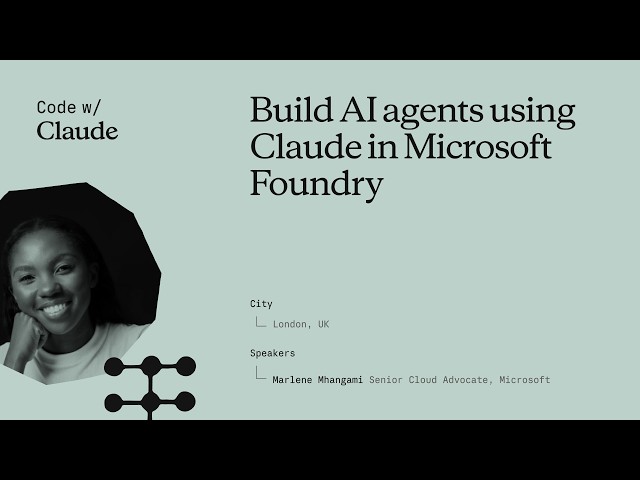
I actually have an agent. Let me see if I can just switch over to another um I'm going to switch over to another tab here where I'll show you an agent that I built. I'm not going to show like the whole thing. Uh and I don't know if it's going to load. But how many of you also have found that security is a big concern for you? Because this is something that we are hearing all the time. Like yesterday I was at and I want to talk a little bit about this as well today but yes yeah yesterday I was at or the day before it was the day before I was at uh the Claude with code with Claude the Claude team had a conference and we actually did a workshop with them showing people how to build um AI agents and I'm just gonna while I'm talking just switch over to A um let's do maybe this one or this one maybe here.
Um but last time when we did Okay, let me do that and then I'll switch over just now. But um we did this workshop and it's on the screen here and it's what you can see on the screen where we were building out an AI agent with the Claude models and we just went through this workshop with everyone. I'll I'll share it a bit later where the link is. I'm not actually not sure but I think you can download the link on GitHub to the repo. But basically we were doing a workshop with the Claude team and let me remove the comment for now so that you can see what's on my screen.
Um but the Claude team had a an event where they it was code with Claude. So you we were teaching we did a workshop at the event where we were teaching people how to like build agents with uh Claude. And one thing we were finding or like Microsoft has or and GitHub has a partnership with Anthropic. So we a lot of people use the claude models in GitHub, a lot of people use them in um you know Microsoft Foundry and so on. But I think what we're finding is that more people are moving away from just building AI agents that you know I think we kind of are coming out of this phase where we're just building agents for fun and just having fun experimenting with them which has been great but now we actually want to ship those agents into production and have them be used by real people.
And a lot of people have been asking, you know, how what are the best ways to keep the users safe so that our agents don't just do anything that they want? Uh how do we make sure that our agents are not going to be doing things that we do not want them to be doing? And so part of this is like how understanding how you build agents with agents. So the workshop I let me see if I can get the link to the workshop that we did yesterday on the GitHub and I can share it with you.
And this is going to be just like a link to a GitHub repository to this workshop. I'm just going to it's in a I should have had the link already but um it's pretty cool. I will show you as well something else which is uh yeah let me send this link over uh this is the link to the workshop that my coworker Hank created it and I'm going to paste it as a comment for you to actually try it out yourself and you can take a look at this. This is like the anthropic workshop that we just gave this past week and we kind of walked through how you would build an AI agent from scratch using Microsoft uh agent framework.
So another thing that I'll show you is another like custom agent that I have been building. Let me switch over to a different screen. Let's stop this screen and let's present another one. Um or I'm actually just going to share my entire screen for the moment. And I'm sorry you're going to see a lot of things for the moment. But then oh we are going to have um I want to show you this other project that I've been working on. So here in this project I have just been building a simple agent and one of the things that I have been adding to this agent is these content safety like it's called middleware.
So, when you are building with an LLM, typically if you send an LLM, and I'm going to just move it so that we don't have the bad words on the screen, but if you send an LLM a prompt, if you're using models that are hosted on a service like Azure, for example, your LLM is not going to immediately like detect is go like already going to have some inbuilt safety to it. So you can send the LLM something like tell it to do something bad or say something wrong and it sometimes will actually refuse to do that because it already has built-in guard rails.
And even if you're using Copilot for example in VS Code, there's only a certain amount of things you can have that Copilot do because it already has some guardrails built in. But if you're building your own AI agent, so for example, we have I was building an agent with uh Langchain, but you can use Microsoft framework. And basically, you're going to create the LLM. So you're going to connect to a deployment. So in this case, my deployment is GBT 5 Mini that I've connected to the model. And then I'm going to put something here, which is this middleware.
And what it will do is it will put a filter around the LLM. So I define the middleware. I define like what specific things I want to filter for. And then I also define how severe how strict I want to be with that middleware. And what's going to happen is that the agent is going to then detect okay this is in the code and I don't want to answer in this way or or something like that and it's not going to work. So I will give you an example. Let's go to let's let's run a command to talk to a simpler agent.
So if we run this file here let's say python sherpa local. This is like a very simple no foundry um agent. And then when we Oh, am I in the right file? I'm not in the right file. I should be in the agents file. Um and I have I'm like this is an agent I built with lang chain. So this is why um let's clear it's a cd um and if we do that and if we run the agent oh you'll see I this is the thing wow I need to activate the environment as well so that it's the correct environment I don't want that environment activated I a different one.
I think I want the ENV one. Um, but while I do that, actually, before I activate it, I'll come back. I'll come back and activate the the correct environment. But let me check to see what everyone is saying based off of like how have you been handling? Let's stop sharing. Let's switch over again to my screen. Uh, I'm not on a double screen, so I can't really see super well with the different but let's let's chat a little bit and see what everyone is saying. I see people saying um, okay, I want help from people.
Um, okay. Yes. Yeah, for sure. So, I did copy. I see several people saying where they're where they're Hi, everyone. People from Germany. Someone from New York, which is nice to see. Oh, someone said you don't see my screen. Someone said you you couldn't see my screen. Oh, no. Um, maybe you Okay. Okay. Well, let's chat. I will say Gabriel, I hope you saw some of what was on my screen. If you didn't, then oh no, the thing is I don't have it my second monitor up. But anyway, Gabriel is saying, "Thank you for addressing my question on the screen.
Security context is definitely the biggest challenge right now for devs in the chat asking how to concra your agent and prevent vulnerable code. I compiled the exact security prompts I used here. Thank you for sharing the prompts in different languages as well. So, you can take a look at different prompts that David was Gabriel was using to be able to help with that. Um, yeah. So, one of the things I mentioned before and I don't think for some reason it wasn't showing on uh I think someone said that it might not have been showing on the screen but one of the ways saga are saying are you relying mostly on the mo model providers inbuilt safety or are you adding your own middleware and policy layer on top I would say if you're building agents it's a good idea to use the models built so if you're building for enterprise I would suggest building agents on a platform like Azure because that comes with that built-in content safety and like those guardrails, but if not, you can also plug in your own middleware.
And I was going to show that. Did you see your screen? Oh, I'm sorry. Oh, it says you couldn't see me coding. Oh, this is Michael, my Hi, Michael, my coworker. Okay. Oh, no. Okay, I need to present. I need to show my screen. Give me one second to figure out what is happening on my screen. Um, okay. I do see let's go back to this question. And that's the question that I want to answer. So I am going to switch out uh so that I am activating the right uh environment and it's not wh and so you are not seeing the wrong environment when that's activated as well.
So, let me do this. Oh, and then um Oh, sure. Give me one second to do that. And then I will go ahead and I'm going to uh Okay, hang on a second. Okay. Um, I am just going to Okay, I'm gonna share my screen so that I can show you what I am doing and then we'll just have to install some things on the fly because we will see. Let me know if you can see my screen when I share it. I think I what I want to do is share my VS Code. uh screen.
So, let's see if that will come up here. It's not showing. Where is the VS Code tab? Okay, let's see. I think because I Okay, you can see my screen now. Great. That worked. I think so. Now that we have my screen working, I am going to CD into the agents folder. And then I'm going to CD into this folder here. Uh, and then CD into this one. So, this past week I have been building out different agents and trying out how to run different agents. So I don't think this is the correct uh virtual environment is what I'm saying.
But let's give it a try. So if we go ahead and we run this command, it should tell us that and I'm going to turn off my uh thing there. Let's say pip install.n and python.n is the package. But there's a lot of things in here that it should be installing. Let's ask Copilot. Is this this is the wrong uh virtual environment? Which one is the correct one? Because it should already have the dependencies that I want installed. But I want to show you this middleware. Okay. Cool. So yeah, right now we are not in the correct virtual environment which is why the other one wasn't working.
So if we do that and then let's activate the environment the correct one and then we are going to do this and then let's just install the requirements that are here. Going to install the Python environments from scratch. Oh, there should be a UV command. What's the UV to install? because I already have some things to install here. But what I wanted to show you on this screen is I have already installed this, but this was a while since I opened this project and so I can't remember which virtual environment it was. Okay. Yeah. Yeah, we can actually just UV sync and that should work.
Maybe if I remove Yeah. UV sync should work. Then give me the command to run this agent or this file. Um so here what I wanted to show you was that I am building out a lang chain agent. So here what we do we start off by importing several things. So there's a lot of different code here. We're going to import this create agent um module from langchain and then we're also going to import chat openai which is going to allow us to define the model and with that we're also going to import something called middleware and what middleware does I'll show you in just a second but the first thing we're going to do is we're going to define our agent so we're going to give our agent an endpoint which is like an Azure endpoint that you can get from the platform and then we're going to define which model we want the agent to use.
So in this case I'm using GPT5 mini um just for this example because we were talking about guardrails and then I'm going to define some content safety guardrails. So you can import this middleware that is a function. It's a it's a special feature that we added recently in langchain but you can also get it outside whether you're using Microsoft agent framework. And then what you do is you define which categories you want to filter for. So you don't want your agent to go ahead and you know allow things like all of these negative words. And then you're also going to set the threshold for how strict you want your agent to be when it's filtering for these terms.
So for our example here, we're going to call let's go ahead and start the agent. And the problem is I haven't opened this specific one in a while. So I completely forgot we were using new here and we haven't installed prompty. Okay, what we'll do is we can uh there is a pre-existing I don't know why it was maybe we need to or let's just try and run the normal agent without um anything any middleware in it and see if that's working because I think it might have Oh, okay. So let's run this agent and say no foundry dot py and then oh is this not the right wording foundry agent.
Um so let's start maybe with the simple agent and testing it out. Oh my gosh I don't know why everything is breaking. Uh here. Wow. What has happened with this code? It's been a while since I've run this code. So, let's get Copilot to help us debug. I am trying to run this agent. Help me run it. So, let's copy the command. The error that it's getting. So I was saying that yesterday I also went to a an event which That's Hi everyone. Oh no. When I Oh no. Ah. Oh wow. Oh no. It's saying that you couldn't hear me.
yeah. Wow. Everyone, I'm so sorry. Like, you couldn't hear my voice. The audio went out for some reason. When did the audio went go out? It's like the audio went out six minutes ago. And uh Okay. Oh no. Wow. Okay. Oh wow. Sorry everyone. Now you can't hear me. Okay. I'm seeing the comments. okay. I'm so sorry. Yeah. Oh no. It's It's not a good streaming day for me today. I am not sure why. But first the screen was someone said the screen was the wrong screen and then after that someone else was saying that the um audio was out and I did the problem is I don't have my external monitor so I couldn't see what everyone was saying and now I can see and Oh no I'm so sorry.
10 minutes ago. Okay. Oh no. Yeah. Yeah. Thanks, Michael, for letting me know. This is just a tough day for the stream for me. I slept yesterday late yesterday. So, it was it's been a long week for me and this has resulted in a terrible stream today. wow. Were you able to see my screen? Were you able to see that? The problem is I was even showing code and I was walking through the code of what I was doing and I'm scared now to even like switch over to show you the code because now I'm like now I'm a little bit nervous that it's not going to pop up on the screen.
But I was talking about how Oh no. Someone said, "We never saw any coding screen." Oh, no. You only saw the back of the uh Can you hear? Can you still hear me? Someone is saying you still can't hear me. Oh, okay. Wow. It is been an interesting day on the stream today. I was trying to show how you can build AI agents and how you can use content safety for moderation and uh for some reason my screen wasn't sharing well for the past 10 minutes and that you didn't see any code on the screen as well uh for some reason.
So, I'm really sorry about that. I'm not really sure why. Uh yeah, you should have seen the the code on the screen. Um and so I'm sad that it did not come on the screen. Um I'm a little bit nervous about now adding it on. Maybe let me try and see if I can share uh No, let's remove this uh and walk through instead. But you know when you just have one of those days where it's just I went to a conference yesterday and I was speaking at this conference. I was speaking at the co code with Claude conference and maybe let's let's stay on this screen here and this is the workshop I was giving at the conference.
Um, and I have a fork of this as well on my own GitHub, but it's a repository. We can actually follow the manual here of the different steps to take to use Foundry with Claude. Um, and I'm a little bit nervous now about the screen because I'm like, okay, you could you now can see it. Um but yeah I feel like I have the problem is that I have been so we did this workshop yesterday where we were teaching people how to build with Microsoft agent framework and with claude the claude models and it was a very long day and I woke up and now now I'm trying to do the screen the stream and it's not the stream is not things are not showing on the stream.
Um, so I apologize for the very bad uh streaming today. I feel like it w it hasn't been great. Um, but I hope you can now see the screen in front of me. There is there should be a GitHub repository that you can see now. It's okay. Okay. It's really bad. And I'm so sorry everyone for the terrible stream. I need some water. Someone is saying someone's saying take a five minute pause and get some water and restart. It's too late to restart because we're now 45 minutes into the stream. So, uh, it's too late to restart, but I will say that we can talk a little bit about this.
So, this is the this is the link I shared earlier. So, if you do want to try the workshop out, um, you can try it out here. This is where we were kind of showing people how to build an agent, how to plug in different tools with uh, Foundry and the Clone models. So, I'm not sure if you heard this, but then but Microsoft has created a partnership with the Claude team um and Microsoft created a partnership with Anthropic and so the claude models are actually available on Azure. So, you can use the clude models with co-pilot, you can use the code models on Azure like to build out your agents and to plug them in.
And we have this workshop which is like a full walkthrough of the workshop and um it will walk you through how to actually deploy a model in foundry. So you'll have this portal that you can use and then you can choose which model to use. So here we show how to use uh we use sonnet 4.6 which is a bit of an older model but this is the one that we showed in the workshop. And basically the point of the model the the the goal of it was to show people how to use Microsoft agent framework and this was the piece of code that we uh you start with to actually get started.
So if you you if you go to that link that I shared on the screen then um it will take you to this GitHub repo and you can look at the at the code there on how to get plugged in with the cloud models and create an agent with Microsoft agent framework and then you test it out. So one of the cool things was we had at the end you could order a cupcake. So, we would have you use an MCP server that had tools that you could then use those tools to then send your name up to be able to order a specific flavor of a cupcake.
And um yeah, and I think it's a very cool workshop. If you'd like to try it out, I can definitely recommend giving it a try. Um, I was trying to also talk about content safety and how it's important to when you are building out your agents, you can use stuff like middleware to be able to filter out things like you know malicious prompts and things like that. You can filter them out. Um, and I just for some reason that whole section with the code didn't show up, but it's okay. Do we have specific questions on the screen stream?
I'm about to call it a day. Uh, and and probably end the stream a bit early, but like do we have any questions specifically about building agents? Earlier we talked about um so here for example in this workshop we showed how to connect to a cupcake MCP server. So we had this MCP server we defined and then with the MCP server it would give the person the context that they would need to be able to order a cupcake. So they could get prompts to come in. Um, and you would say you would greet your agent.
It would respond and then um, you get a a a response from the the cupcake store to be able to order your agent, your your cupcake from the agent. Um, and this was the code that we used to define the MCP tool and to pass through the MCP URL. Um, but yeah, if you have any questions about MTP or if you have any questions about generally building agents, I'm happy to answer those questions. Alex is saying, why use this framework instead of building from scratch? I think building from scratch is okay, but like I don't think it's really necessary.
Like I also don't know what n what building from scratch would mean. So um it really depends on what you mean by building from scratch. So a lot of people I would say sometimes in the past have preferred to just directly use the provider. Um so maybe if you're building with anthropic models just using the anthropic SDK and then writing code from scratch for with that. I think it's one way of going through things, but I don't think it's necessary when you already say for example, you want to add in the MCP tools instead of building an MCP client and server from from scratch.
I think it's easier just to plug in pre-built code. So, I think frameworks are there just to speed you up. So you can build stuff from scratch, but I would say that I I think using a framework is helpful because you can just plug things in. Um, someone is saying, "Do MCPS crash when you need them most, when you most need them?" No. Streamyard and screen sharing crashes when I need it most. That's what's crashing. My brain is crashing when I need it most to be able to stream today. But I don't find that I don't find I don't find MCP servers to be unreliable.
Um I find them to be pretty reliable. I think what and this is one of the reasons why let me zoom in a little bit so you can see as well what it looks like. But I would say like I think that it is I I personally think you can do a lot of context um what's this called? Uh context engineering to be able to make sure that your stream that your MCP context is being handled appropriately. So the only places that I would say with MCP that I see people having a hard time is when people are using MCP and MCP maybe the tools have too much context.
So you're having way too much context that you're send sending through to the LLM and um and that can sometimes cause your agent to be slower or or things like that. And but I don't think it's MCP itself. A lot of that can be handled as long as you know how to use the framework you're building with so that you can do things. You can add things like middleware to be able to summarize your context. All agents have this. So even when you're using VS Code and you're using Copilot, GitHub Copilot, it will automatically compact context after a certain amount of time.
And this is just because agents or LLMs perform better when they don't have context overload. And so you want to compact regardless. And so MCP it really depends on what you're doing, but I don't think it will uh it really makes that uh different. Um I see someone saying that GitHub mobile the mobile GitHub lacks important functionalities and needs to be improved. Oh, how many of you have tried GitHub mobile? I have not um I have not really tried it as much. I need to. I know we have the remote option. So now you can run agents uh remotely, but I haven't tried the remote one.
I've heard that it's I don't know. Someone's saying they think it could be better. I'm not really sure. Um someone is saying where is the context coming from via MCP for the agent? So the context will be coming from the MCP server. So say for example in my example we have our team the Microsoft team built this MCP server which is a cupcake server. So we built it's basically a Python script and you'll put in pre you know pre-esigned prompts pre-built prompts or you'll put in a tool that returns a specific amount like certain information and the person that created the server is the one that decides what information is going to come from the server to your agent.
So um it really depends what you are going to be uh who designed your MCP server. That's where you'll get the context from. Um, let's see. Someone said, "Can you ramble on middleware a bit?" I'm curious. Do you know that I rambled for so long on middleware? It's so bad. I rambled for so long on middleware, but I was I was not on the my mic was not working and my code was not showing. But basically when I was talking about middleware, I was talking about how with middleware you you add this it's like a function that you add to your agent and every single time your LLM receives a uh a query or every time your LLM is run that middleware that function is going to run.
And so with content safety middleware what's going to happen is your agent is going to detect that you sent in a prompt. And so for example with content it's going to take in that prompt it's going to filter any bad things that are in that prompt and then if it does if it violates any of the uh requirements from the content safety filter that information or that query is not even going to reach the LLM. It's going to be stopped at the filter point at the middleware before it reaches the LLM. So I think that's a really nice uh option and uh I think it's a really good thing.
Okay. Uh someone is saying I'm talking about LinkedIn app. Oh, okay. Sorry. Okay. I thought you were me meaning the GitHub mobile app is bad. The LinkedIn app. I have no idea. Al Alex is saying good morning everyone. Good morning Alex. You're joining us right at the end when we've had a tough stream. It's been a tough day, Alex, but thank you for joining this stream. do we have any last minute questions? Any last minute thoughts uh to end the day? Uh basically uh so someone is saying with with uh with middleware it's like a pre- sandbox sandbox almost like a almost like that except that it's not a s except that it's not a sandbox.
So it doesn't you know create a container or anything like that that would be like that. It's more like a filter. That's how I would think about it. It's like a filter that you would you would say yeah I I had to survive this session. I didn't last time that was I was on the stream I was literally saying that developers need to be careful and like sleep and things like that and I'm like I didn't sleep well yesterday and that's why I feel like the stream did not go great because I need to do better with sleep.
Um but we are almost done for the day. I'm happy that I got to chat to everyone. I'm sorry the stream was a bit disorganized today. I will try to do better for the next one. Um I heard Karen saying I have joined here thinking we're going to discuss technical things about agents. We did and my camera was off for my uh screen didn't share as I expected. But uh if you would like to go through oh if you would like to go through everything I can definitely recommend um taking a look at this link that I've shared on the screen that has a walkth through uh repository where you can walk through how to set up an agent with Claude.
So I would I would you have to have a special type of account to also like you have to access claude models right now from the marketplace in Azure but I can definitely recommend walking through this workshop uh and then we'll take you through how to build out an agent from um using this. Okay. Um, generally speaking, um, someone's saying, "With rubber duck bringing in a second model from a different AI family to review the agents, how should we think about when to manually trigger critique versus trusting the automatic checkpoints? And are there cases where you'd actually want to skip it?" Yeah, I do think that with the rubber ducking, I typically just you trust the automatic rubber ducking.
Um, this is with copilot CLI that Segar is talking about. We have this automatic review where the model just gets an immediate review when there's enough code changes that require a second review. It will bring in another model family to review. And I think that's a great question. Usually, it just works with the automatic one. I typically trust the CLI to recognize when it should bring in a second model family. So, I usually don't automatically trigger it myself, but you can you can tell it to to do that or even use the fleet option and it will do that automatically.
I think it's ideal to use rubber ducking when you're making a big change. So, for the larger changes, I can recommend that. For the smaller ones, I really wouldn't I wouldn't recommend them as much. Okay, everyone. I think this is actually all the time that I'm going to spend on the stream today. I'm so sorry that it was a bit all over the place, but it was great to chat to you. And if you have any questions, please leave them in the chat. I will try to come afterwards to answer. Next week will be better.
Um, I will have slept more and I yeah, I will talk to you next week. But I hope we have a great day. Try out co-pilot, try out the workshop and I will see you next time. Bye everyone.
More from GitHub





Get daily recaps from
GitHub
AI-powered summaries delivered to your inbox. Save hours every week while staying fully informed.