They said it was Glass...

Chapters10
Introduces the Find N6 folding phone, notes its slim profile, crease design, 80W charger, and included accessories.
The Oppo Find N6 nails a minimal crease with a smarter hinge and thicker glass, but real-world durability and market availability steal the show.
Summary
JerryRigEverything’s look at the Oppo Find N6 highlights a thinner profile despite a large inner screen, and praises OPPO’s Zero Field Titanium hinge and 3D-printed resin layer for crease flatness. Zack from JerryRigEverything notes the 6.6 inch outer display and an impressive 8.1 inch inner display, all packed into a smaller footprint than the Galaxy S26 Ultra in a case. The Find N6 uses a thicker auto-smoothing flex glass at the center, which OPPO claims reduces crease visibility, though the center screen still scratches at level two. The exterior front glass is removable with a glass-under-plastic arrangement, while the outer shell relies on plastic and aluminum with a titanium spine for strength. The camera setup packs a 200 MP main sensor with OIS, a 50 MP ultrawide, and a 50 MP periscope telephoto, with a color calibration sensor on the back. Inside, the device houses dual batteries (3,225 mAh and 2,775 mAh) and dual speakers, all while maintaining a remarkably slim build. Zack touches on IP ratings and dust resistance, reveals the blue 3D-printed hinge enhancement, and walks through the post-mortem of a teardown where the back panel isn’t glass, despite other folding phones using glass back panels. He closes with a candid note on market availability, suggesting this Find N6 won’t be hitting the USA or Europe soon, and plugs KiwiCo for a sponsored moment before signing off.
Key Takeaways
- OPPO’s Find N6 uses a 50% thicker auto-smoothing flex glass center layer to flatten the crease and improve feel during folding.
- The center screen’s glass still scratches at a level two, with deeper grooves requiring fingernail effort, proving physics can’t be bypassed.
- Zero Field Titanium hinge plus a blue 3D-printed resin layer reduces hinge height variations by about 0.05 mm, increasing crease flatness by roughly 75%.
- Two batteries totaling 6,000 mAh (3,225 mAh + 2,775 mAh) are packed into an exceptionally thin chassis with dual speakers and an 80 W USB-C 3.1 port.
- The phone features a 200 MP main camera with OIS, a 50 MP ultrawide with no OIS, and a 50 MP periscope telephoto, alongside on-device color calibration.
- OPPO’s back panel is plastic, not glass, and the device still supports wireless charging, with an IP dust/water rating discussed as IP56/58/59 variants.
Who Is This For?
Essential viewing for smartphone teardown enthusiasts and folding-phone fans who want a realistic sense of crease technology, durability, and what OPPO’s Find N6 brings to the table before market availability becomes a barrier.
Notable Quotes
"The biggest problem I see so far though is hold on I need a visual aid for this one."
—Illustrates the presenter’s need for visual context during complex teardown notes.
"Titanium is about twice as strong as aluminum, but we'll have to put that to the test here in a second."
—The speaker immediately emphasizes material strength as a selling point.
"This is really a million-fold bump in hinge flatness thanks to the blue 3D-printed resin."
—Highlights the hinge engineering breakthrough.
"The glass is really here. You can tell the glass is glass by the way it cracks and breaks."
—Clarifies the nature of the center screen’s material assertion.
Questions This Video Answers
- How does Oppo's Find N6 hinge design reduce crease visibility compared to other folding phones?
- Is the Oppo Find N6’s center glass truly more durable or does it still scratch like other UTG-style layers?
- What is the real-world durability of the Find N6 when bent repeatedly, according to teardowns?
- Why isn’t the Oppo Find N6 widely available in the USA or Europe despite its hardware?
- How does the Find N6 compare to Samsung Fold/Flip in terms of camera capabilities and charging speeds?
Oppo Find N6Folding phonesZero Field Titanium hingeAuto-smoothing flex glassCrease managementInternal hinge designIP dust/water ratings800W charging (80W charging)Cameras: 200MP main, 50MP telephoto, 50MP ultrawideKiwico sponsorship (context)
Full Transcript
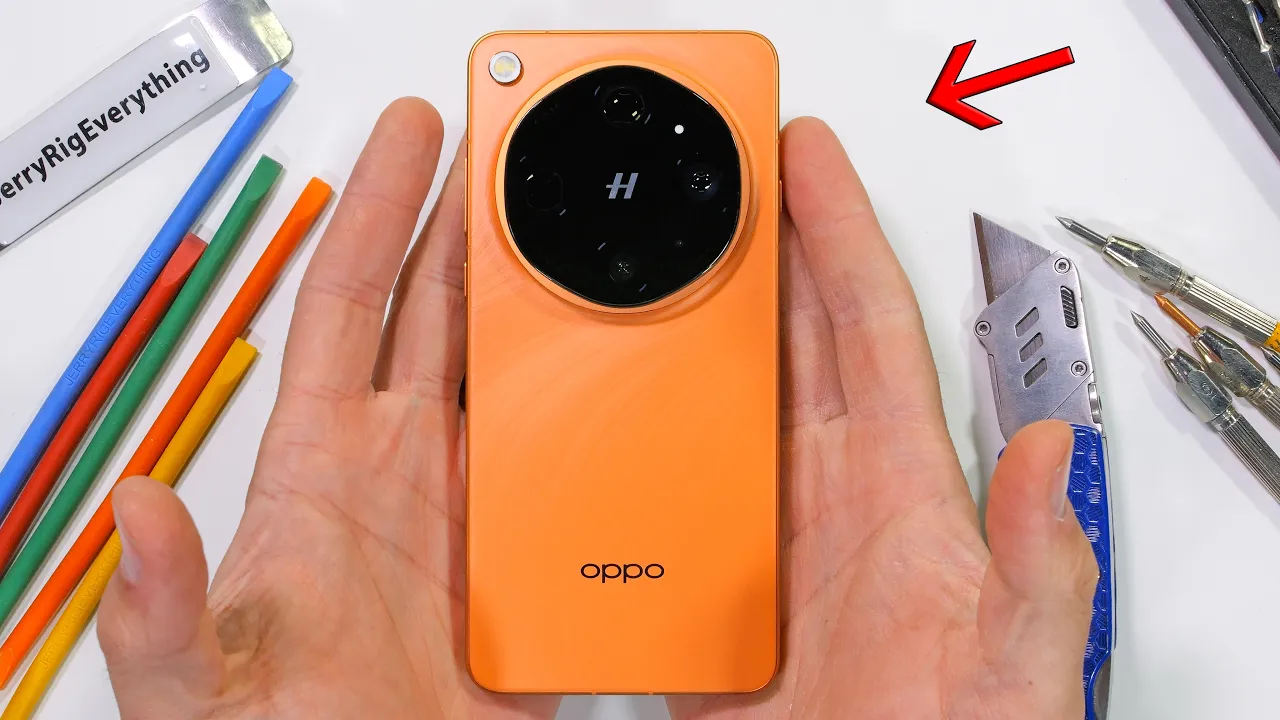
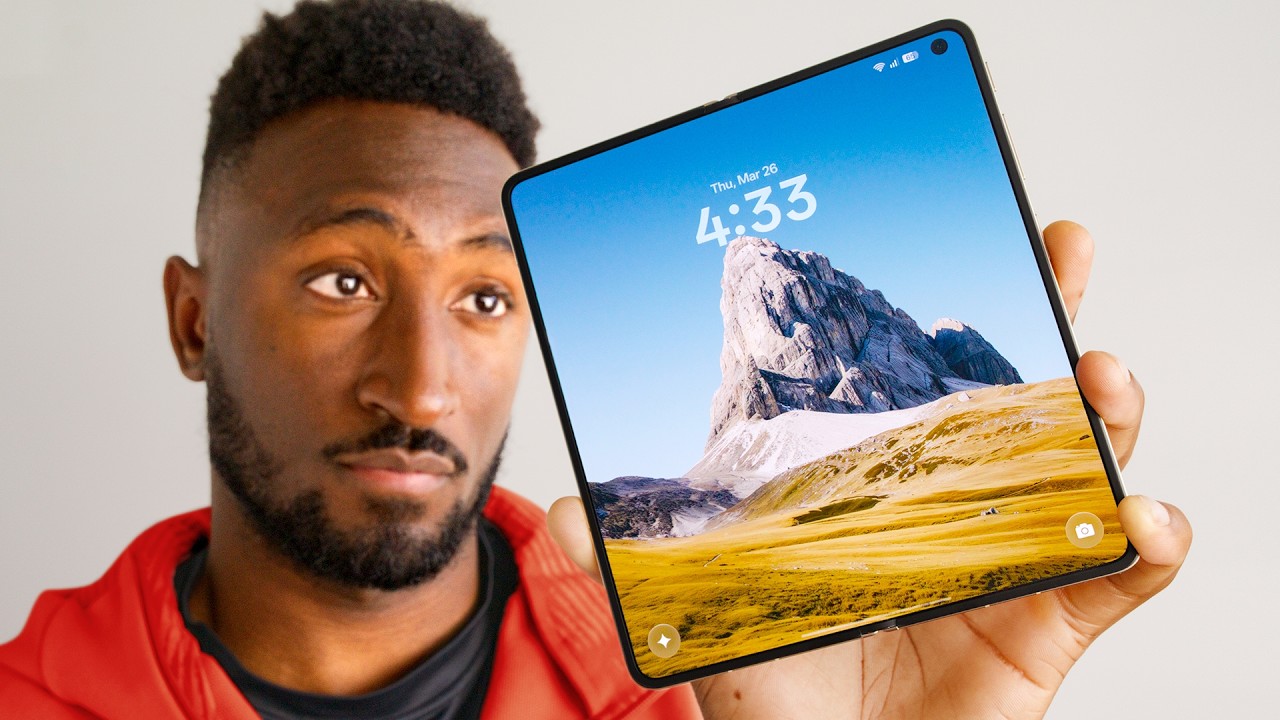
I've been told that this new folding phone is the peak, the pinnacle, the perfect point of perfection of possibly all the prolifically plentiful physically permutating pocket PCs. It's called the find N6, and the center crease is basically non-existent. We're going to explore the insides to find out how and why OPPO was able to accomplish this feat. The charger in the box is capable of charging at 80 W. And we have a SIM card tool that's just as excited about this phone as we are. And in the last carton, we have a case for the folding Find N6, which is very nice of OPPO to include.
Protection is always a good thing. The phone is quite a bit thinner than I was expecting. Even with its regular size screen on the front and large 8.1 in screen in the center, it still sits in a smaller footprint than the Galaxy S26 Ultra in a case. Very impressive. Oppo did a few things to minimize the crease in the fine N6. One of which is to add a thicker auto smoothing flex glass to the center screen. And you might be curious to know if the auto smoothing flex glass means that the center screen will finally stop scratching at a level two.
And no, it does not. The auto smoothing flex glass still scratches at a level two with deeper grooves at a level fingernail. You can change the verbiage and the marketing terminology, but you can't change the physics. and physics dictates that all flexible screens are to be soft. Flipping our way around to the front 6.6 in nano crystal glass screen. This also has a plastic covering, but at least this one is removable and there is real glass underneath which scratches at a level six with deeper grooves at a level seven. This means the exterior front-facing 20 megapixel camera is protected by glass and it sits right below the super thin earpiece slit.
The interior front-facing selfie camera is also 20 megapixels, but this one has plastic over the top. Nothing is wrong with plastic on a phone, of course, just something to be aware of. And at least when it's folded, the inner soft screen is protected from the elements. The sides of the Oppo Find N6 are made from aluminum along with the power button, volume rocker, and special AI button. Up at the top, we have our loudspeaker as well as double microphones. The spine of the Find N6 is made from grade 5 titanium. And if you crank up the volume, you can audibly hear the difference between the two metals.
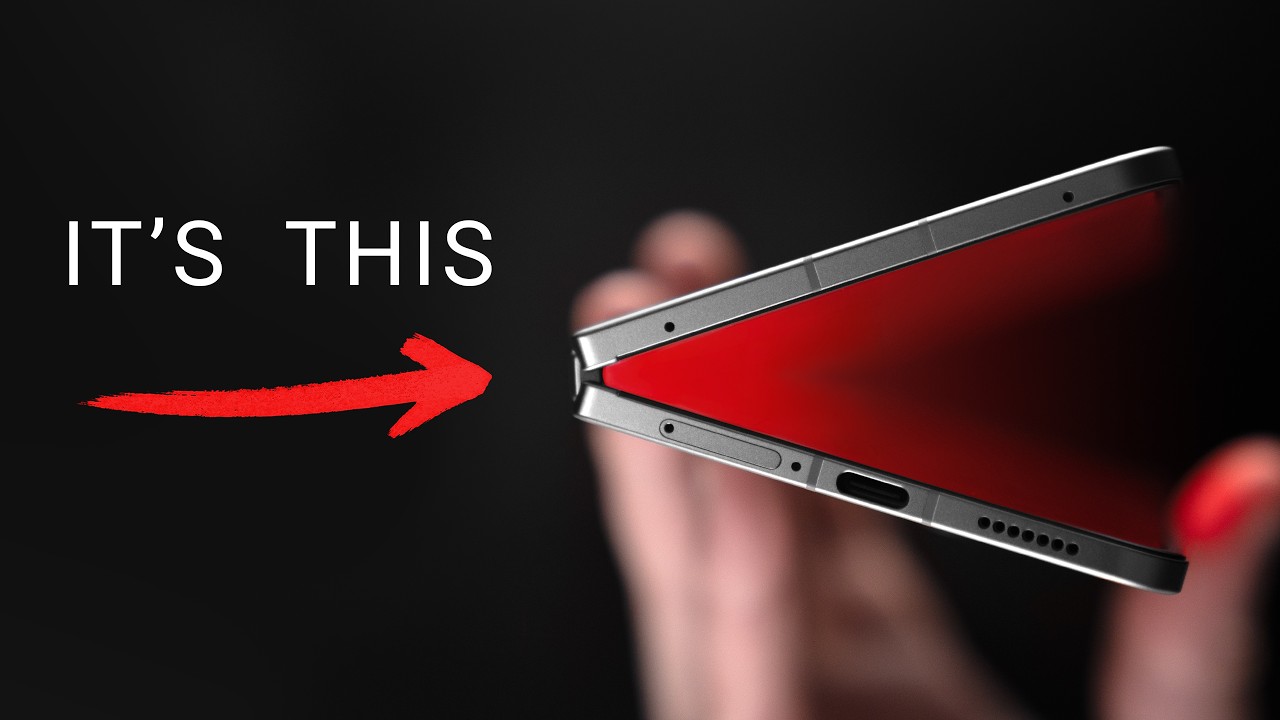
Titanium is about twice as strong as aluminum, but we'll have to put that to the test here in a second. At the bottom, we have our lower stereo loudspeaker, the 80watt USBC 3.1 port, and our SIM card tray, which does have a red rubber ring for its IP56, IP58, and IP59 water and dust resistance ratings. Making our way to the back panel, OPPO is calling this color blossom orange. And where we would normally see glass, like on the Samsung Fold or Flip, OPPO is using plastic, which is fine with me. Plastic can get thinner than glass and it lasts longer than glass and still allows for wireless charging, so I'm happy about it.
Moving up to our Frisbee size camera plateau, we have an impressive assortment of cameras with a 50 megapixel periscope telephoto on the top left, 50 megapixel ultrawide on the top right, and 200 megapixel main camera on the bottom left. The color calibration sensor thingy is on the bottom right. And the biggest problem I see so far though is hold on I need a visual aid for this one. This gives us the perfect opportunity to talk about Kiwiico. KiwiCo is a longtime sponsor of the channel that gives the gift of discovery, learning, and experiences that last a lifetime.
Ever since I was a little kid, I enjoyed taking everything apart and sometimes putting it back together again. And hands down, the monthly Kiwiico Eureka crate would have been my favorite thing. Luckily for me though, Kiwi Co's monthly drops are still good for kids as ages 2 to 100, which means I'm not quite out of the loop just yet. My wife and I get these monthly crates for our own kids, and they love them. There are nine different lines to choose from, but you don't have to take my word for it. Kiwi Co has delivered over 50 million crates worldwide.
And coincidentally, we now have the whole world right here in our hands. You can get 50% off of your first monthly crate at kiwico.com/jerryrig. Link is down in the description. All this to say is that the biggest problem with the Find N6 is that you won't be finding the Find N6 for sale here in the USA. But you also can't find it anywhere in Europe either, though, just everywhere else. Kiwico Rocks, the link is down in the description. Speaking of Earth, we discovered earlier that the Find 6 has an IP5 dust resistance rating, which means that minor dust ingress can happen inside of the device, but not enough to cause malfunctions, which seems to be the case here.
Yeah, there is some disconcerning crunching going on, but nothing is permanently jammed, and the internal gears of the flexible hinge still have full range of motion. But this is all stuff we've seen before. The real innovation from OPPO here is on the inside where they used laser scanning and 3D printing to level out the internal crease of the flexible screen, which does last for 12 seconds before turning black and not recovering. Finally, the moment of truth. If you remember, the Samsung Galaxy Fold has never snapped during one of my tests. The Samsung Trifold did, of course, but that thing was just crazy.
When we take this Oppo Find N6 and bend from the closed folded position, we actually get a surprisingly large amount of flex. Even without opening the phone, there's enough flex in the back plastic panel that it lifts off, but there's no catastrophic damage or kinks or bins, which is good. The Find N6 survives so far. Once we open it up though and bend it backwards, we can see that the soft screen starts to wrinkle from the excess pressure, but nothing. Everything still appears to be intact. Bending again, you can see a substantial amount of backward stress that the Find N6 is finding itself in, but again, it survives.
Titanium is some real Blackmagic material, and OPPO has done a fantastic job of making an incredibly durable folding phone. Massive thumbs up for that. But since we can't see the insides from the outsides, it's time to remove the exterior. Just like with Samsung's folding phone, we can start by taking off the watertight plastic border around the edge of the flexible screen. And this is where I make my first mistake. See, the border is very important. And I accidentally poked the edge of the screen with the tip of my JerryRrig knife, which immediately caused the whole edge of the flexible screen to kick the bucket.
Even just the tip is dangerous. Luckily though, while gravely wounded, the Find N6 is still alive enough for us to continue the operation. I'll get the rest of the plastic bezel removed and start lifting up one side of the screen, being very careful to pry up on the metal support plate underneath the screen. The flexible screen can only be bent in one direction at a time. Bending from multiple directions is an easy way to crack the glass. And yes, I did say glass. Let me explain. Just like Samsung has their ultra thin glass or UTG, OPPO has something they call autosmoothing flex glass.
It's just not what's on the top layer. The isopropyl alcohol helps dissolve the adhesive under the screen, making removal easier. The screen ribbon cable connector is up near the top on the leftish side. And look at that, the screen is removed. Nailed it. First try. If I take my JerryRig razor knife and slipped it underneath the top plastic layer, but above the glass layer, this is what happens. Venom slowly creeps into the pixels where they permanently painfully pass on to pixel paradise. However, this is also where we can start to find the glass layer. Oppo says their auto smoothing glass layer is 50% thicker than Samsung's, which is one of the reasons why the crease is so much less noticeable.
And the glass is really here. You can tell the glass is glass by the way it cracks and breaks. It can handle a surprising amount of stress, though, and a really impressive bin radius before failing. Oppo has this thing rated for a million regular folding motions, which is probably true if you leave your screen attached to the phone. The only way to truly unplug the screen is from the inside. So, if the center screen needs replacing, you will have to open up the back panel as well to plug in the new one. Let's take a closer look at the Zero Field Titanium Flexion hinge.
Obviously on the screen itself, OPPO has metal sheets on the backside to help it feel more flat, but here at the hinge, they had to innovate even further. I'll remove the strip over the hinge gears, and we can immediately see a blue photopolymer 3D printed later. The 3D printing is what increases the hinge flatness by 75%. And reduces surface height variations to just 005 mm. This is about the width of a human hair. Not that I would know. The blue resin has even been cured into some of the screw holes to help flatten out every single surface.
It looks like with the way the hinge is manufactured, it has a high point in the middle, and the blue resin is used to raise up the sides of the hinge to the height of the midpoint, which would indeed help the crease be more flat. Very creative. Making our way to the Blossom Orange back panel, I'll warm it up a bit to soften the watertight adhesive holding it to the foam body. And for some reason, everyone else on the internet thinks this back panel is glass, but it is most definitely not. You can tell it's not glass by the way it is all ripping apart and stuff.
There is a lot of adhesive holding the plastic panel to the frame and even more adhesive holding the front screen to the body as well. Folding phones are not very easy phones to fix. And this fold has definitely folded its last fold. As we complete our post-mortem, I'll remove copious amounts of screws and dribble some more isopropyl alcohol under the battery to soften the aggressive adhesive. With a battery this thin, I especially don't want to bend it since the internals of the battery are coils of positive and negative terminals. So, any bend or puncture on the outside will instantly cause a short, which could be catastrophic.
We've had it happen before. So, alcohol is a nice solution in this situation. The larger of the two batteries is 3,225 mAh. And the upper stereo speaker, even with how thin it is, still has balls inside. It's rather amazing everything OPPO has managed to cram in here while still maintaining thinness and structural integrity. I'll remove a bunch more screws on the left side, and this will get us access to the oddly shaped coils on the 50 Wireless charger. For reference, the iPhone 17 only wirelessly charges at 25 watts. The lower loudspeaker is a little thicker than the upper loudspeaker, but still has plenty of balls inside.
The 80W USBC 3.1 charging port does have a red rubber ring, and it's also using the aluminum frame of the phone as the housing. This helps reduce the overall thickness of the device. The smaller of the two batteries comes out next. I'll inject some isopropyl alcohol below the battery again to help soften the adhesive. Again, this guy is 2775 mAh for a total of 6,000. Silicon carbon batteries are wild. Finally, we get the motherboard and its cameras. The 50 megapixel ultrawide camera does not have OIS. The 50 megapixel 3x telephoto does have internal optical image stabilization.
And the 200 megapixel main camera also does have OIS. One thing I'm excited about on Oppo's even newer flagship, the X9, is that the main camera has copied Apple's sensor chip technology. So, let me know down in the comments if we should tear open Oppo's X9 as well. And there you have it, the Oppo Find N6 in all of its glory. May she rest in peace, sis. Grab your Kiwi Co crate with a link in the description. And thanks a ton for watching. I'll see you
More from JerryRigEverything


Get daily recaps from
JerryRigEverything
AI-powered summaries delivered to your inbox. Save hours every week while staying fully informed.