We have a little secret...

Chapters7
Review of how the six year old redwood garden beds have held up and why redwood was chosen over treated pine.
JerryRigEverything dives into six-year garden upgrades, a new LiDAR robot mower, and accessible raised beds built with redwood for a thriving, low-maintenance yard.
Summary
JerryRigEverything takes us on a tour of his six-year-old raised garden beds and the upgrades that keep them accessible from a wheelchair. Zach built the beds so Camry and Jerry can reach every inch, and they reflect a philosophy of choosing durability and non-toxic materials—redwood over pine—to last decades. The video also puts the spotlight on MOA’s Lidex Ultra 3000 all-wheel-drive robot mower, which uses LiDAR and dual 1080p cameras to map the yard and avoid obstacles while delivering impressively quiet operation. Jerry demonstrates practical carpentry details, like mending plates, 4x4 redwood posts, and deck screws, to ensure the garden stays rigid as it fills with dirt. The plant layout remains flexible, with onions planted first and future plans including vertical tomato setups and pumpkins climbing an arch. He notes the yard’s size at about 11,000 square feet of mowing area and mentions that the mower can handle 80% grades and 6 cm obstacles. Throughout, there’s a recurring theme of balancing accessibility, aesthetics, and tool-driven efficiency, with a touch of humor and his signature hands-on approach. By the end, the garden feels like a living project that keeps evolving—and the robot mower crosses from toy status to a useful partner in yard care. Jerry also hints at future harvests beyond carrots and pumpkins, keeping viewers curious about what November’s update will reveal. A lighthearted aside shows the ongoing banter with Camry and a nod to potential upgrades like pavers that finally made the space both practical and beautiful.
Key Takeaways
- Redwood beds last much longer than pine—about three times as long—with redwood expected to hold up for roughly 30 years versus five for pine.
- The MOA Lidex Ultra 3000 LiDAR robot mower operates at around 60 dB, is capable of 80% grade traversal, handles 6 cm obstacles, and provides automated mapping with 1080p color cameras and LAR sensors.
- A mending plate and 4x4 redwood posts are essential to prevent warping and maintain structural integrity as dirt fills the raised beds, which can weigh about 9,000 lb when full.
- The mower’s boundary setup relies on a LAR module plus two front 1080p cameras to identify and avoid 300 different objects in a real yard.
- Accessibility features are prioritized by design, allowing Jerry to reach all sides of the beds and plan vertical tomato setups for easier harvesting.
- The project timeline shows a quick comparison: the garden box build took about a day, while the mower installation and setup took roughly four hours, with a full recharge taking about an hour.
Who Is This For?
Essential viewing for gardeners with accessibility needs, DIY woodworkers, and tech-curious homeowners who want to combine durable garden infrastructure with autonomous yardcare solutions.
Notable Quotes
""The MOO Lidex Ultra 3000 is the number one selling LiDAR robot lawnmower globally.""
—Jerry touts the mower’s market position as he introduces the product.
""It’s quiet enough to run at night without disturbing my neighbors, while a regular mower is about 100 dB, a whole 16 times louder.""
—Highlights the user experience difference in sound levels between the robot mower and traditional mowers.
""The spinning razor blades underneath can cut grass down to 1.2 in or up to 3.9 in.""
—Gives concrete specs on cutting height to illustrate control over mowing results.
""The fresh cut wood does smell fantastic. Almost as good as the freshly cut grass.""
—Adds a personal, sensory touch to the garden-building moment.
""With all four sides of our accessible garden box complete, we can get them set into place and screwed into the center post.""
—Describes the assembly phase that ensures durability before filling with dirt.
Questions This Video Answers
- How does a LiDAR robot lawnmower like the MOA Lidex Ultra 3000 map and navigate a multi-zone yard?
- What materials make robotic garden beds most durable for wheelchair-accessible gardeners?
- What are practical tips for building accessible raised garden beds that last 30 years?
- Can you install vertical tomato supports similar to JerryRigEverything's idea for easier harvesting?
- How loud are traditional mowers compared to robot mowers and what are the real-world benefits?
JerryRigEverythingMOA Lidex Ultra 3000LAR moduleLiDAR mowerredwood raised bedsaccessible gardeninggarden bed constructionautonomous lawn careDIY fencing and bracingvertical gardening
Full Transcript
It's been six years since we installed our raised garden beds, and it's time to see how they've held up. Zach built these so that I can reach every inch of them from my wheelchair, and we've had some crazy years. It has four long fingers that we used to plant pumpkins, corn, and onions, which is what we have started growing right now. We planted our onions first because they're the only thing that can survive this early in the year. And I told Camry I would build her one more box if she let me have a robot lawnmower to take care of the rest of the yard.
Some pretty good negotiating on my part. There's a new robotic lawnmower that can 3D scan your whole yard for obstacles with lidar. And I've got to try it out for myself. The right side of the screen is where the backyard and bunker is, while the left side is where we are working on the garden. My fruit trees are in the bottom left corner, and you can see each tree mapped out individually. It's called the Lidex Ultra 3000 all-wheel drive from my channel sponsor MOA. And so far, it looks pretty impressive. Before you get started, I want to point out the difference in the color of wood.
So, they're both redwood, but this is newer and this is obviously six years older, but it does hold up better than pine. This should last 30 years, and pine is only five. I had my doubts when we originally built them 6 years ago, but they've held up surprisingly well. Now, let's see if you can finish the next garden bed before the lawn mower finishes our yard. A challenge. Aside from the garden, Camry and I have about a/4 acres worth of grass to mow. 11,000 square ft to be precise. And the Moa Lightax Ultra 3000 is the number one selling LiDAR robot lawnmower globally.
So, I'm pretty excited about it. The first thing I noticed as we pulled it out of the box are the omni wheels in the front. Instead of the front wheels steering the lawn mower around like a car or a go-kart, the front wheels are made of wheels so that it can pivot in place with less moving parts. And instead of having one large blade underneath like an old school manual mower, this guy has 12 spinning razor blades. And you know me, I think everything needs a good razor blade. The first thing I did after turning it on was stick a camera in the ground and then remote control the mower over top of the hole to see the spinning razor blades in action.
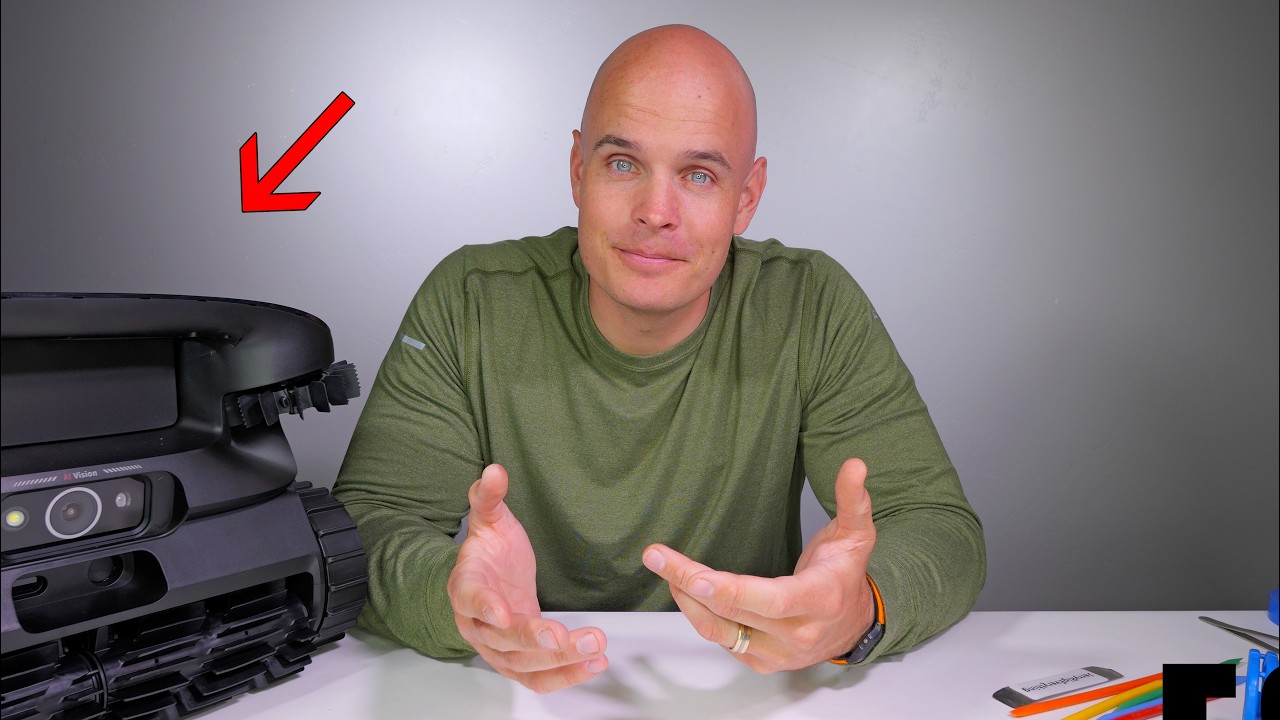
Thumbs up for that. It's also way more quiet than a regular mower. The MOA mower is about 60 dB, barely above ambient. It's quiet enough to run at night without disturbing my neighbors, while a regular mower is about 100 dB, a whole 16 times louder. If you look back at the top of the robot, that's where the LAR module is located. Once I established the outer boundaries of my yard, that LAR combined with dual 1080p color cameras on the front, can identify and avoid 300 different objects, like the playset or the entry to my underground bunker.
You know, normal things that normal people have in their normal backyard. Speaking of backyards, let's check back in on the accessible garden. And you might be like, "Hey, Jerry, why are you using redwood over Douglas fur or treated wood?" And I'm so glad you asked. For one, redwood looks pretty awesome, but it does cost about three times as much as Douglas fur or treated wood, but it also lasts three times as long without needing any treatment. Treated wood, you know, the wood with those textured holes in it, also has extra chemicals and stuff, which I would prefer not to have near the food we're going to be eating.
But it is all personal preference, though. Nailed it. I think any kind of wood would work for a garden bed. Just stay away from railroad ties. The piece of metal I'm using to join two boards together is called a mending plate, and this will help keep the wood from warping or flexing over the next decades when it's filled up with dirt. The little teeth are vicious, but it's a pretty important step since the wood does want to warp and separate over time. Then, we can use the 4x4 redwood posts as the main structural piece that the longboards are going to be screwed into.
Outdoor deck screws work great, but lag screws probably have a bit more holding power. And yes, the freshly cut wood does smell fantastic. Almost as good as the freshly cut grass. So, my yard has three patches of grass. We have the backyard, the front yard, and a sideyard. And I connected the three zones in the app so that there's a bridge. The robot follows the same bridge every time it starts mowing. The mower can scale 80% grades and climb over obstacles that are 6 cm high. And the spinning razor blades underneath can cut grass down to 1.2 in or up to 3.9 in.
I usually keep my lawn right in the middle at about 2.5 or 7 cm. Quick little walk around. These are the wheels on the front wheels as well as the two 1080p cameras in the front and the LAR sensor up top. If it does start raining, we don't have to worry about it today. This is the rain detection sensor on the back. So, if a drip of water gets caught between these two little pins, it'll just return to home. Inside of this flap is our display as well as the emergency stop button. Playing a little game of why did the mower cross the driveway.
One of my favorite things over here in the sideyard is the fruit salad tree that we planted 5 years ago. This thing looks amazing in the spring when it's all flowering because every single branch is a different type of fruit. Five different kinds. Now that the mower has arrived, it doesn't need us anymore. Let's get back to the garden. I just like love the feeling I have when I'm out in the garden. Like when I'm working and I see things grow and I'm nurturing things or I'm collecting the harvest. Like I just just am happy in my garden.
I don't know how else to explain that. And I personally would have added the pavers a whole lot sooner. We the first couple years we didn't have pavers and it's been a game changer. Yeah, I love pavers. Pavers are so nice and they're not that hard to install either. Just some sand and then you lay down the bricks. Okay. Something I might want to try this year to make it a little more accessible is plant my tomatoes similar to how I plant my little pumpkin plants in like a vertical format. So, they'll grow up on a a wire um or fencing like this so that I can collect the tomatoes easier than having it in a bushel where it's kind of hard for me to see.
The arch looked really cool with all the pumpkins growing over it last year. Yeah. With all four sides of our accessible garden box complete, we can get them set into place and screwed into the center post. There we go. Old flower beds, new vegetable garden. And then we have a 2x6 right there in the middle which is screwed in on either side to help pull the sides in as we add dirt. Cuz the dirt we do add is super heavy and we don't want the walls to bow out as we add it. I think over time it kind of settles and packs so it doesn't like continuously put pressure on the outside of the wood.
But for the initial load, I want to keep it supported. While it's empty is the best time to get it level since once it's filled up with dirt, it'll weigh about 9,000 lb, which I do have to fill it up all by myself since there are no robots around to help me with this task. But since I don't need to mow anymore, I do have the extra time. I got a lot of this top soil for free from a local construction site. And then we mixed in some nice compost and fertilizer with just the upper half of the planter box where the plants are going to be.
It did take me about a whole day to build and fill this planter box. While the MOO Lidex Ultra 3000 only took about 4 hours to mow my yard. It did stop to charge once before picking right up where it left off. And it took about an hour to charge all the way up. It is watertight enough to store outside all summer long. IPX6. I'm pretty impressed with it. I do still have to manually trim around the trees and playset and stuff, but I think the Moa mower finally crosses that line where robotic lawnmowers are stepping out of the fun toy category into the useful tool category.
They can even patrol your yard and take pictures of intruders like a security guard dog. All right, Gamry, what do you think of your new garden? I love it. And it's still very accessible. I can reach halfway on this side and go around the other side and reach the other side. Like, I can just reach everything. So that's really exciting. And so you have all of this space. What are you going to plant in this bed? I'm gonna plan plant popcorn in here. So like corn that we can then turn into popcorn. And then I'm going to do carrots over here, tomatoes, and then pumpkins in the last one.
Every finger of the garden has a purpose. And I think that we might be harvesting more than just carrots and pumpkins this year. You were going to have to wait till November to see that video, though. Hope you enjoyed the garden box tutorial. And if you need a robot mower for your yard, I will leave a link in the description. And thanks a ton for watching. We'll see you around. How far down are you going to dig, bud? A big hole until I can like fall down to space, but I might not because that'll take days.
Happier.
More from JerryRigEverything

Get daily recaps from
JerryRigEverything
AI-powered summaries delivered to your inbox. Save hours every week while staying fully informed.