This Should Be Illegal...

Chapters10
Discusses deceptive pricing practices like misleading “compare at” and “up to” discounts used by retailers, highlights Best Buy as a case, and introduces consumer actions and sponsors.
Linus Tech Tips exposes deceptive pricing tactics like “compare at” and “up to” discounts, and urges smarter price-tracking and consumer advocacy for real transparency.
Summary
Linus Tech Tips frontloads a sharp critique of how retailers use deceptive pricing labels such as “compare at” and “up to” to inflate perceived savings. Linus questions Best Buy’s recent shifts in how it defines reference prices and demonstrates how those prices can be drawn from any product, even future or marketplace items, to exaggerate discounts. He broadens the scope by comparing practices across Walmart and Amazon, highlighting regulatory angles from the FTC and Canada’s competition bureau. The video then pivots to practical tools, praising PC Part Picker for price history but lamenting the industry pushback against price-tracking sites, and examining alternatives like Idealo in the EU. Linus also touches on the business dynamics behind price-tracking services such as Price Zombie, CamelCamelCamel, Honey, and Google Shopping, noting their limitations. The discussion blends consumer advocacy with concrete steps: support stricter rules, engage with organizations like classaction.org, and redirect spend to retailers that don’t game the system (including LTT’s own store and sponsor Delete Me). The sponsor segment underscores data-broker concerns and promotes Delete Me’s service with a 20% discount code. Throughout, Linus emphasizes transparency, citing real-world examples (MSRPs, 90-day medians, and reference prices) to illustrate how deceptive pricing can affect buying decisions.
Key Takeaways
- Best Buy’s reference pricing can draw from almost any price, including other products and future offers, which can mislead consumers about true discounts.
- FTC guidance on reference pricing exists, and Best Buy has faced lawsuits over deceptive pricing, though cases have been mixed in outcome and timing.
- Walmart uses a 90-day median price for discounts, but marketplace seller variability can soften the perceived savings for shoppers.
- PC Part Picker provides price history tracking across retailers and helps validate whether a deal is real by comparing current prices to historical data.
- Price-tracking services like CamelCamelCamel and Price Zombie show how third-party data can be constrained by platform rules and business pressure (Amazon’s affiliate policies, etc.).
- Alt price-tracking options exist outside the US (Idealo in the EU) but not without limitations; Honey’s drop list and Google Shopping offer partial visibility.
- Consumer action matters: support stricter regulations, engage with advocacy groups, and direct spending toward retailers that don’t engage in deceptive pricing.
Who Is This For?
Essential viewing for shoppers who want to understand pricing tricks and want tools to verify deals, plus anyone researching consumer rights or regulatory policy around online pricing.
Notable Quotes
"This monitor, for instance, is listed for $260 off compared to Best Buy's comparable value. Compared to what, though?"
—Demonstrates how 'compare at' can be misleading without clear reference values.
"Best Buy's new policy is that it can reference the price of any product at any time, even in the future, sold by anyone, anywhere, and use that to calculate how much money I'm saving."
—Critical line about the breadth of reference pricing and potential manipulation.
"False reference pricing or deceptive pricing is regulated by the FTC."
—Cites regulatory framework underlying the critique.
"PC Part Picker is an incredibly useful tool because they track pricing across multiple retailers over time which helps shoppers determine what an item is actually worth"
—Highlighting a practical solution for price verification.
"If you know of one we missed, hey, leave a comment below and help to spread the word."
—Engages viewers to participate and share additional resources.
Questions This Video Answers
- How does 'compare at' pricing mislead consumers across major retailers?
- Can the FTC regulate reference pricing effectively, and what are recent legal actions against Best Buy?
- Which price-tracking tools provide reliable price history across retailers in 2026?
- What are the differences between US and EU pricing regulations like Idealo’s approach?
- How can I advocate for stronger consumer protections against deceptive pricing?
deceptive-pricingreference-pricingcompare-atup-to pricingFTC regulationsBest Buy pricingWalmart pricing strategyAmazon price historyPC Part Pickerprice-tracking tools
Full Transcript
It says 5'1. He should fit in our server rack. No, it's starting at 5'1. And here it's listed as up to 7 ft. Hold on. I found the same guy on Amazon and it says compare at 6'2. What does that mean? He's an organic match. We just want him in the survey. What are you talking? No. This type of deceptive marketing has existed for as long as I've been 4'1. But more recently, it's become an even bigger problem. For example, just last year, Best Buy.com decided to change how they present promotional prices. Instead of calculating discounts compared to their typical everyday price, or you know, MSRP, they now use a compare at reference price.
That is, from what we can tell, at best optimistic and at worst an outright lie. And the worst part is Best Buy seems to know this given that they haven't brought this practice to other regions where they have stricter regulations on this behavior. So, let's talk about how retailers are trying to avoid pricing transparency, how this plague is spreading, and what we can do as consumers to push back against it. Starting at this segue to our sponsor, Delete Me. It's the hands-free subscription service that is going to help you get your personal information out of the hands of sketchy data brokers.
get 20% off of their consumer plans with our link below. Global shipping costs are out of control, but we've got a way to FIGHT BACK. THAT'S RIGHT, SHIPTORM has returned. From April 24th to May 7th, you can get free shipping sitewide on ltdstore.com of orders over $150 in the US and Canada, or $225 worldwide. No special code required. Just load up your cart and you're good to go. And if you want an even lower threshold for free shipping, you can sign up for our supporter plus tier at flowplane.com for an even better offer. We'll have that linked down below.
This problem runs much deeper than just one retailer, and we're going to get into that later, but I want to start with Best Buy's recent changes. This monitor, for instance, is listed for $260 off compared to Best Buy's comparable value. Compared to what, though? At a glance, this seems to suggest that it is compared to their normal retail price. But why don't we dig into the uh fine print here? Oh, and dig into the fine print here, shall we? Our comparable value prices are based on the price at which the product or a comparable item.
Wait, the reference price can be for another product entirely. Who decides what's comparable? Oh, wait. Okay, hold on. There's more. It can also be a price that was or in the future will be offered for sale by Best Buy marketplace sellers, manufacturers, suppliers, or other retailers online or in store. Let me get this straight. Best Buy's new policy is that it can reference the price of any product at any time, even in the future, sold by anyone, anywhere, and use that to calculate how much money I'm saving. And they think that that's a useful reference.
No, of course they don't. Why would they make this change? The simple answer is to capitalize on the FOMO of shoppers who might not obsessively track prices and might not realize that the discounts they're being offered are kind of BS. If you want me to illustrate why this matters and why it needs to be stopped, I've got a perfect example for you. ltstore.com sometimes discounts our legendary ratcheting multi-bit screwdriver. $10 off though doesn't sound like that big of a deal. But hold on a second. What if I compare at some other multi-bit screwdriver from, say, Vera Tools?
No, no, not the price on their site. How about this one from a random seller? Now, look at the LTD screwdriver. What a deal. But wait, there's more. I think that that Red Bull edition could double in price in the future. Well, now you're saving $940 on your purchase from lttstore.com, which sounds ridiculous because it is. But if we don't do something, that's the direction we could be headed. And look, I fully recognize that the slippery slope argument may be a fallacy. But Best Buy is obviously out there icing the hill right now. So, isn't any of this against the law?
Well, I'm not a lawyer and this isn't legal advice, but the short version is it seems like it is. And it seems like Best Buy knows it. You might have noticed that I keep using the words reference price. And that's because reference pricing is a common phrase used in legal documents for what the American FTC calls retail price comparisons. And false reference pricing or deceptive pricing is a practice that is regulated by the FTC. How do I know that Best Buy knows this? because they've been sued over it as recently as just last year. That suit claimed that Best Buy enticed shoppers with discounted prices that would either not change after the sale period were not lower than the regular price 90 days before the sale or even were higher than another recently advertised price.
Now, that case was voluntarily dismissed by the plaintiffs, but that doesn't mean that Best Buy is in the right. It is possible that they were right, but it's also possible that the plaintiffs were dissuaded by the cost of litigation, or it's possible that Best Buy settled out of court. I don't really consider the matter resolved one way or the other, and neither should you. It is worth noting, by the way, that outside of the US, Best Buy Canada doesn't use this language. And that appears to be because Canada's competition bureau requires retailers to pass a certain volume or time test in order to count something as an ordinary selling price.
Although, it is worth noting that even then, recent lawsuits have cropped up accusing Best Buy Canada of misrepresenting regular prices and savings. Now, I've picked on Best Buy a lot so far, but I promise to touch on the others, and now it's time to do just that because this is a widespread issue. Walmart's reference pricing appears to be based on the median price within 90 days offered by Walmart or its marketplace sellers. That's a little better. But that bit at the end, knowing how marketplace sellers tend to price items, that clearly gives Walmart a lot of leeway for representing their uh discounts.
Then of course there's Amazon. They do use a suggested retail price, which can be provided by the manufacturer, supplier, or seller if the reference price is labeled list price. But if it's the typical price, like on Walmart, that's just the 90-day median price that customers have paid with no real auditing or transparency from our side to actually verify it. Now, I could continue to give examples, but I think at this point it'd be better to lay out what we feel needs to be done, starting with compare at reference prices simply being banned or required to be the manufacturer's advertised MSRP.
This move is unlikely to make anything cheaper. see GPUs that regularly retail for well above Nvidia's supposed MSRPs. But at least this would give consumers the transparency to understand what is a deal and what just plain is not a deal. With that out of the way, compare at though is just one of the three horsemen of the deceptive marketing apocalypse. Up to can be just as bad. Whether it's sales where the deeply discounted items are all garbage or product specifications that would be better represented as your mileage may vary. UPTO has turned into this catchall butt covering clause that just absolves manufacturers and retailers of any responsibility for products or offers that don't live up to their promises.
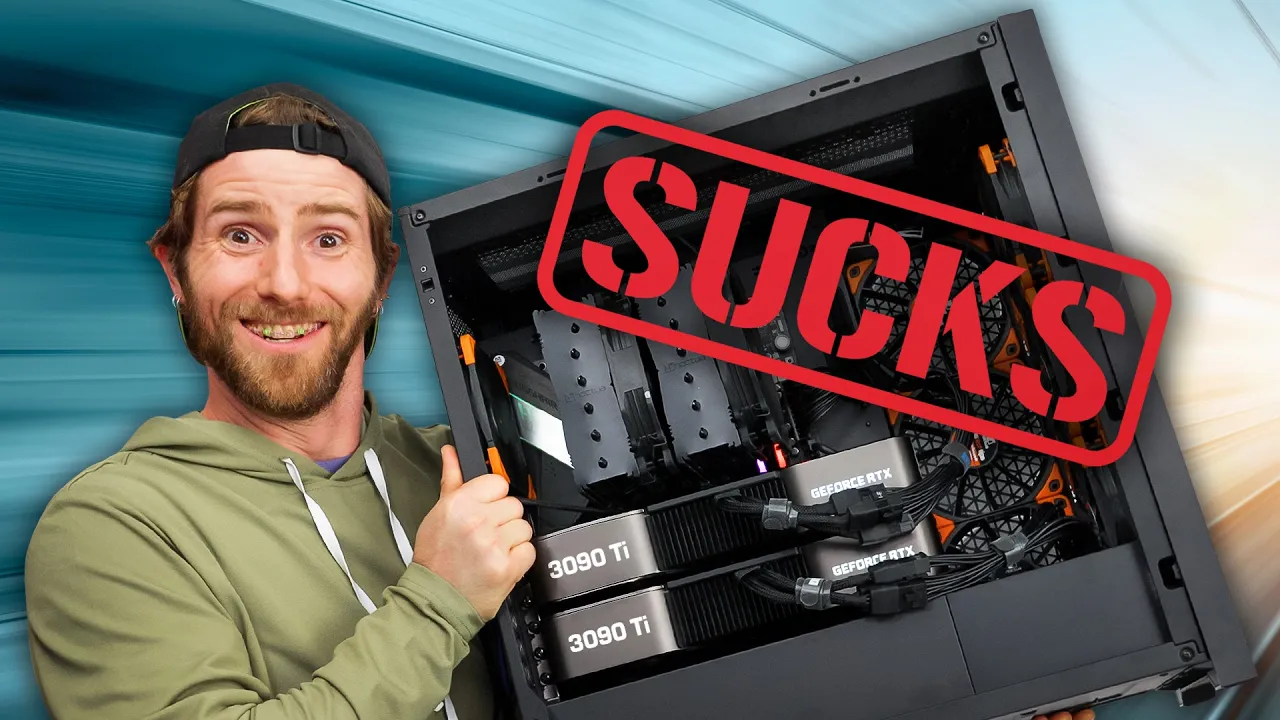
And the funny thing about it is that guidelines around this one totally do exist as well. They just need to be adopted by regulatory bodies and then enforced. The Better Business Bureau, for instance, prohibits up to sale claims where at least 10% of the items in the sale don't meet the advertised discount threshold. That sounds pretty sensible to me. As for the last one, starting at I'm not going to get into too much detail since we've got a whole video dedicated to dunking on companies for advertising an awful configuration you shouldn't buy that gets you in the door than upselling you something usable often for a lot more money.
So, with the three out there, what can we do about them? Well, it's tough because there are cases where these terms do make sense. Apple's Mac Mini would be a great example of a product that is an awesome value, even at its starting at configuration. Let's pick on ourselves again. Our own TrueSpec USBC cables are starting at $21.99. But like Apple, I'm not going to apologize for that product being a great value, especially when the one that's 40 times faster costs just $5 more than that starting at price. And so with everyone setting their own line in the sand, I don't know how you would police something like that.
So let's come back to compare at because here there's something that we can or at least should be able to do to fight back. PC part picker is an incredibly useful tool because they track pricing across multiple retailers over time which helps shoppers determine what an item is actually worth and how a current price compares to uh historical pricing. But we've noticed a pattern of behavior, especially here in North America, where retailers are actively fighting against similar services. Similar websites that have tried to do what PC Particker did, but more broadly, have crumbled under the pressure, like Price Zombie, a tool that tracked price history across multiple online retailers and then collected affiliate money from the traffic that their links generated.
That actually sounds like a business model that would be beneficial for everyone, right? Well, Amazon didn't think so. And allegedly they barred Price Zombie from their affiliate program for violating its rules that prohibit showing Amazon prices that are more than 24 hours old. Given that Amazon affiliate was 90% of Price Zombies revenue, it was a death blow. Then there's Camel Camel Camel, whose CEO has said outright that they live or die by Amazon and that they also prohibit showing Amazon prices next to pricing from a competitor, which is why they decided to only display Amazon data despite originally also tracking Best Buy and Newegg on separate websites.
How does Amazon wield so much power here? In the EU, for instance, Idealo is a huge website that somehow manages to display and compare prices, even historical prices, across a ton of retailers, including Amazon. What are our alternatives? Well, there is one, but I'm not recommending it. It's Honey. Those blood suckers with their PayPal money have somehow managed to build and keep live a tool called drop list that seems to do a pretty decent job of scraping prices and tracking price history. It's not as good at showing price history across retailers all in one place like Idealo is or price zombie was and it seems to glitch out a bit with certain retailers, but it is there.
It is insane to me that this is the only tool we could find that could do this job outside of tech. And it wasn't just us. It seems like you just need to have major financial muscle in order to get away with this. On that note, the next closest thing has probably got to be Google shopping, but even that doesn't prominently display the best deal. And while its price tracking does exist, it also doesn't seem to show you Amazon in any of its results in the US. Finally, there's Capital One Shopping, which does a good job of showing multiple retailers with the best price up top, but doesn't track price history.
Now, there are a lot of other services that claim to do this job, but we usually found that they simply didn't give us the best price. With that said, if you know of one we missed, hey, leave a comment below and help to spread the word. With all that said, what can you do to stop retailers from using deceptive practices like false reference pricing and going after tools that help you make more informed purchasing decisions? Unfortunately, the only answer is the one that's going to be work. You've got to get involved. Follow websites like classaction.org and participate wherever you can.
You can also advocate for stricter regulations and better enforcement by touching base with consumer advocacy groups or by writing your government representative. I know that's not a convenient or especially fulfilling solution, but it's what you can do. Another thing you can do is steer your hard-earned money toward businesses that don't participate in these practices, like for example, ltstore.com and our sponsor, delete me. Do you remember the seagulls from Finding Nemo that were always saying, "Mine, mine, mine." Fun fact, they were based on data brokers online squabbbling for the ability to sell your personal information, which is something the brokers are legally allowed to do, by the way.
Well, with Delete Me, you can actually remove that information from hundreds of data broker and people's search sites with minimal effort. Delete Me has been in the game for well over a decade to the point where they use in-house tech to remove your data. That means no outsourcing to potentially compromise third parties. They also verify your information is on a site before making a request to remove it. So no time is wasted and your info isn't accidentally exposed to these sites. Delete Me has been trusted by professionals in many fields from judges to medical professionals and journalists.
And now you can get 20% off DeleteMe consumer plans when you go to joindeleteme.com/lttT20 and use promo code LTT20 at checkout or use the QR code on screen. If you guys enjoyed this video, why not check out the one that we did on starting at. It's a little more tech focused, but I think it does a good job of outlining why it can be so problematic.
More from Linus Tech Tips


Get daily recaps from
Linus Tech Tips
AI-powered summaries delivered to your inbox. Save hours every week while staying fully informed.