Nothing Phone 4A/Pro Review: I Have a Theory

Chapters9
Introduces the Nothing 4A and 4A Pro and notes there is no Nothing Phone 4, with prices and release regions announced.
Marques Brownlee breaks down the Nothing Phone 4A and 4A Pro, arguing Nothing’s strategy leans mid-range with premium touches rather than chasing flagship specs.
Summary
Marques Brownlee reviews the Nothing Phone 4A and 4A Pro, highlighting their attractive design and value. The 4A starts at €349 in Europe, while the 4A Pro arrives at $499 in the US, with the Pro offering a few hardware upgrades over the base model. He praises Nothing OS 4.1 on Android 16 for its smoothness, customization options, and the Playground widget store, including quirky creations like arcade mini-games and countdown widgets. The back glyph matrix and the unibody aluminum frame on the Pro give it a premium feel, though real-world benefits over the 4A are modest. Brownlee notes storage upgrade to UFS 3.1, improved camera hardware that remains “perfectly average,” and a camera array that can’t shoot 4K from the ultrawide. He also discusses the company’s stance against flagship launches this year, explaining how supplier dynamics and RAM costs shape Nothing’s mid-range focus. Overall, the 4A is the better value, while the 4A Pro nudges toward premium aesthetics without delivering a flagship-level experience. He ends by affirming Nothing’s strategy and offering a practical take for potential buyers.
Key Takeaways
- Nothing Phone 4A starts at €349 in Europe, offering Snapdragon 7S Gen 4, triple cameras, higher refresh-rate OLED display, and a 5,000+ mAh battery for strong value at this price.
- The Nothing Phone 4A Pro begins at $499 in the US and adds a unibody aluminum frame, a higher-end glyph matrix back display, and a Snapdragon 7 Gen 4, creating a more premium feel.
- Both phones use LTPS displays with 30–120 Hz (the Pro can show up to 144 Hz in settings, but real-world use remains around 120 Hz).
- Cameras on both models are solid but not standout; main differences are padding and sensor size, with no 4K video from ultrawide cameras on either model.
- The 140x “ultra zoom” on the 4A Pro is essentially digital zoom; image quality doesn’t meaningfully improve at extreme magnifications.
- Nothing’s strategy prioritizes mid-range phones over flagship releases this year, citing supplier costs and RAM price pressures as reasons to avoid a true high-end flagship.
- Playground is Nothing’s community-driven widget store, enabling live customization like an arcade mini-game widget or a countdown timers widget.
Who Is This For?
Ideal for budget-conscious Android fans who want premium design cues and a refined software experience, and for Nothing enthusiasts who value the company’s unique glyph back display and playful widgets without needing flagship-level hardware.
Notable Quotes
"We're just not going to do a flagship this year."
—Carl Pei’s framing of Nothing’s flagship strategy, explaining why there’s no true flagship release this cycle.
"The 4a Pro is less of a pro version of the phone and more of a slightly upbadged upfeatured version of the same thing for 150 bucks more for the US market."
—Brownlee’s summary of the Pro’s positioning and value compared to the base model.
"You can see them all here. and you'll see the 4a Pro is a slightly higherend version of the 4a on paper, but it also has a few unique design features of its own."
—Opening overview of the two devices and their on-paper differences.
Questions This Video Answers
- How does the Nothing Phone 4A compare to the Nothing Phone 4 Pro in real-world use?
- What makes the Nothing glyph matrix back display unique and is it practical?
- Is Nothing OS 4.1 on Android 16 worth it versus stock Android on other budget phones?
- Why did Nothing skip a flagship release this year and how does that affect value for buyers?
- What are the limitations of the 4A Pro's 140x ultrazoom and is it useful?
Nothing Phone 4ANothing Phone 4A ProNothing OS 4.1Android 16glyph matrixPlaygroundLTPS displaySnapdragon 7S Gen 4Snapdragon 7 Gen 4UFS 3.1 storage
Full Transcript
All right. So, this is the new Nothing Phone 4A and 4A Pro. Two of the most compelling new budget phones available right now. So, this 4A is €349 getting released in Europe and a few other markets. And then this 4A Pro is starting at $499 US. And notice there is no nothing phone 4, just 4A and 4a pro. We'll get to that in a minute. But these are good phones. I happen to think they're the two best looking Nothing phones of all time. The 4a, this blue one, is definitely the most competitively priced. It's running the Snapdragon 7S Gen 4 and has triple cameras, a higher fresh rate OLED display, a 5,000 plus millah battery, and I'll put all the specs up actually here for both phones.
So, we can just get that out the way. You can see them all here. and you'll see the 4a Pro is a slightly higherend version of the 4a on paper, but it also has a few unique design features of its own. So, in a world where the pretty underwhelming Pixel 10a just came out for 499 bucks and the iPhone 17 just came out for 100 bucks more than that, this is a perfect slot for nothing to just jump right in and just be the alternative. And this blue one is so nice. It's got the matte blue sides all the way around.
The semi-transparent back with the classic nothing dotted text and all these textures and shapes seen through the plastic back. It's nice and has the triple cameras up here. So when you see the iPhone 17e with one single camera and the Pixel 10a with dual cameras, this starts looking even better. And then the Nothing software experience has been gradually improving over time. So this is nothing OS 4.1 on top of Android 16. And I really liked how well they've always done with the smoothness and responsiveness. So, phones without super high-end chips still feel really nice to use.
They've also majorly updated the storage to UFS 3.1, so apps will open faster, and the animations throughout the OS continue to get refined. So, I say the snappy factor is super high. But there's also just straight up more home screen customization features now, too. There's more control over like how the folders appear on your home screen. And this is also my first time using the playground, which is the communitydriven store on the web where people can make even more insane custom widgets that you can add to your home screen, like this one, which is literally just an arcade game in a little 1 in x 1in box.
Or this one, which just counts down how much time is left in the day, the week, the month, and the year. And oh my god, we're already so far into 2026. Anyway, yeah, uh I I like the Nothing software clearly. Uh it's got good character. I feel like sometimes I'll use a Nothing phone for a while and then I'll move to another phone and I'll find myself missing some of the Nothing home screen features specifically cuz no other phone has quite the same set of stuff. And then the lights on the back, of course. How can we forget the lights on the back of the Nothing Phone?
For this year's phone, it's just a straight up bar of them. So, seven LED dots lined up on the right hand side with the bottom one being red. So, it can do things like uh being a volume indicator for music when you're playing stuff and flip the phone over, or it can be a progress bar indicator for an upcoming Uber or Google calendar notification, or a glyph timer as it counts down. And also, yes, the red dot blinks as a video recording indicator, which hey, maybe more phones should have, you know, the rest of the hardware though, it's not super premium, but it's just fine for this price.
It's fine. like the 128 gigs of starting storage. It's a little crazy on the $600 Pixel 10, but here makes sense. It's fine. Uh it's a good mix of like plastic and some recycled materials. It's Gorilla Glass 7i on the front and uh it's IP64 rated. It's fine. But if you want a little bit more or if you live in the US where you can't get this phone, uh then there's this one which is the Nothing for A Pro. And just as soon as you hold it, you can feel that it's just a little nicer.
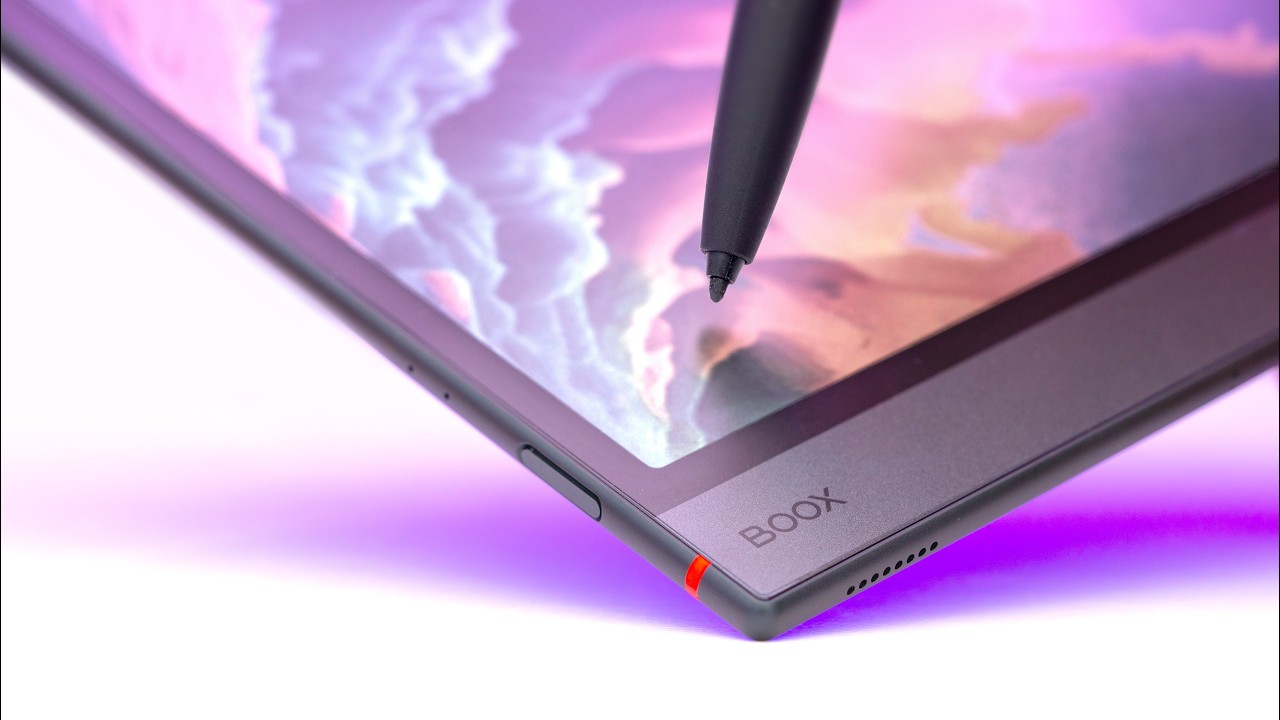
Like it's doing this thing where it's emulating a lot of the highest end big ultra flagships, but without actually being one. Like this body is now unibody aluminum. It is also extremely fingerprinty and kind of annoyingly hard to clean for some reason. But you're holding cold metal every single time, which is awesome. And then the cameras and this new glyph matrix up at the top are in this like clear cutout, which I really like. Still triple cameras, but bigger sensors and with more of an ultraon looking plateau and it keeps the red dot which is fire.
I love that. So then the bezels around the display are a little thinner. So in a slightly smaller footprint, you actually get a slightly larger screen. The chipset inside is a Snapdragon 7 Gen 4 instead of the 7S Gen 4. And then the glyph interface on the back can tell you even more because it's this whole pixel dotstyle display. It's basically a scaled up lower resolution but brighter version of what the Nothing Phone 3 had a whole array that's fully customizable unless you put entire images basically on the back of the phone here. So like if I miss a Slack notification, I have the phone face down, I have this specific icon show up on the Matrix and then I know I missed Slack.
Or if I miss a message from Bay, then you get this heart to show up. And there's this whole set of pre-made icons that you can use for any sort of notifications or contacts. And you can even kind of make your own by using a custom image. But I also kind of wish I could actually just draw something specific on the matrix myself. Maybe that's a feature for a software update. Carl, also the countdown animation for a timer is super intricate, but it's too bad I'll never use it because it doesn't integrate with the built-in clock app on the phone.
Either way, I like it. I I like that it encourages you to basically just keep your phone face down most of the time and then you can choose if you see the notification you want to engage with to then pick it up and use your phone, but most of the time you can leave it face down. I think that's nice. Some of the other stuff is kind of gimmicky, but I appreciate that bit of functionality. Now, neither of these Nothing phones has a ton of AI features, which is music to some people's ears these days, but you know, the S26 Ultra we just saw has like a ton of photo editing stuff and playground stuff.
Not so much here. They do put all their AI stuff in this intelligence toolkit is what they're calling it. Cool. But that's where you can see that it is pretty minimal. There's an AI wallpaper generator and there's some custom chat GPT widgets. And then there's the essential space that they've had for a few years now, which is still accessible by this shortcut button on the side of the phone. So, I have this theory about nothing as a company that is basically they they just don't want to make a high-end competitive flagship phone right now because they can't.
They actually it's it's kind of impossible for them at this moment to make a competitive super high-end flagship phone. Like, the last time we saw them really try a high-end phone was the Nothing Phone 3 last year for $800, and that did not go well. It was a decently interesting phone, but not very competitive for the price. And fans did not love that price tag. So then a few weeks ago, there's this video on the Nothing YouTube channel where Carl CEO just basically says like, "We're just not going to do a flagship this year." They straight up said, "We're not going to make a new flagship phone every single year just for the sake of it." Just because every other company has a new flagship every year doesn't mean we have to.
And the framing of it, of course, is very clever and thoughtful. you know, they want every upgrade to feel more meaningful, so they'll wait longer between flagships till they have something to share. Totally valid. But also, they are a relatively small company in the smartphone space. So, the order sizes that they're placing from suppliers is smaller than the Samsungs and Apples and Xiaomi's of the world. So, that means they pay more for the same parts. And that combined with the skyrocketing RAM prices that we all have to deal with now just means it's harder to compete.
Like the bigger companies, they're not immune to higher RAM prices, but a lot of them have placed larger orders or or had longer lead times so that they're they're kind of locked in for old prices a little bit longer and can save off the price increase maybe one more year. So, nothing is clearly not going to do a full-on flagship phone with a Snapdragon 8 Elite Gen 5 and 16 gigs of RAM and a 7,000 mAh silicon carbon battery. That stuff is all super expensive and harder to get. And they also happen to know that that's not really the reason why people are buying nothing phones.
So, they're just going to avoid that super crazy flagship stuff altogether. But they also know that their most savvy fans are intelligent enough that if they made a new flagship but didn't put the flagship chip in it, they'd probably get called out. So instead, they're making a mid-range phone and an upper mid-range phone. So that's the 4A and the 4A Pro. So there is no nothing phone 4 with a Snapdragon 8 Elite Gen 5. Now, the thing is the 4a Pro does a lot of stuff that emulates the big flagship, like I said, without going all the way to being one.
Like, the Snapdragon 7 Gen 4 isn't the highest end chip, but it's definitely a really good one. And when combined with their refined animations and the quicker storage, I think honestly without playing a high-end game or running a benchmark, most people would be hardressed to tell the difference. It's shaped like a flagship. It has the camera plateau of a flagship, but then there's also some things that look kind of flagship on the spec sheet, at least more than the 4A, but that I actually don't feel like really make that much of a difference. Like the peak brightness number, for example, on the 4A Pro is 5,000 nits compared to 4500 on the 4A, which is again a nice number, but I don't really see much of a difference holding them side by side.
Uh the 4A Pro is IP65 rated instead of IP64, which theoretically means it can survive more water pressure than the 4a, but you know, they can both get splashed fine. Uh the Nothing Phone 4a also doesn't have wireless charging. The 4a Pro, like the iPhone 17 Pro, gets all this nice new metal unibody construction, which feels great in the hand, but unlike the iPhone, they didn't add a cutout in the back, so it also doesn't have wireless charging. Both the 4a and 4a pro have LTPS displays. So meaning they are variable refresh rate from 30 Hz up to their max of 120, but you'll notice on the spec sheet it says the max of the 4a pro is actually 144, which it even says in the settings.
And it definitely sounds like more of a flagship number, but when you turn on the frame rate indicator, you'll see that it basically never actually hits 144 hertz. You can even force peak refresh rate, it stays at 120. It's kind of the same situation as those other Asus phones from a few years ago where it's just a couple supported games where it'll bump up to 144. Otherwise, you might as well never notice. And then while the triple cameras here of the 4a Pro are meant to be an upgrade from the triple cameras of the 4a, uh, honestly, none of them are really that standoutish.
It's nice to have triple cameras, don't get me wrong. Like I said, the 17e Pixel 10a aren't doing that. But I don't think anybody should be buying these phones expecting anything other than perfectly average cameras. Photos I'm getting are serviceable, but often a little HDR sometimes and often a little bit noisier than I was expecting. The focal lengths are essentially the same across both phones. It's an 8 megap ultrawide, then a 50 megapixel main and a 3.5x telephoto. Also, neither of these phones can shoot 4K video from their ultrawides because 4K is 12 megapixels and these ultrawides are both 8 megapixel sensors.
The only extra functionality I could find in the Pro phone over the regular 4a was instead of tapping out at 70x zoom, the Pro has the world's first 140x ultra zoom. Wow. But I mean, why stop there? You might as well be a nice even 150 or 200. But what's stopping you? It's just digital crop. Just go to a th00and at that point. It clearly doesn't make a huge difference. This 4a pro is less of a pro version of the phone and more of a slightly upbadged upfeatured version of the same thing for 150 bucks more for the US market.
Still a fine phone, but the 4a is where it's at. Thanks for watching. Catch you guys in the next one. Peace.
More from Marques Brownlee



Get daily recaps from
Marques Brownlee
AI-powered summaries delivered to your inbox. Save hours every week while staying fully informed.