Epic Animal Wars | Animal Fight Night S2 & S6 MEGA Episode | Nat Geo Animals

Chapters3
The chapter showcases a range of extreme tropical battles—from tiger on tiger duels and rival male contests to the cuckoo-like ferocity of marsupials and cephalopods, highlighting each species’ weaponry and tactics for securing territory, mates, and food.
Epic Animal Wars showcases wildly violent tropics clashes—from tigers and rhinos to octopuses, penguins, and kangaroos—each animal fighting for territory, mates, or survival on a brutal stage.
Summary
Nat Geo Animals’ Epic Animal Wars blends S2 and S6 mega footage into a nonstop battlefield across the tropics. The host narrates how animals clash tooth and claw for food, territory, and bloodlines, from tiger-on-tiger duels in Indian jungles to rhino standoffs and penguin love fights. We see tigers using retractable claws, 4-inch sabers, and 10-foot leaps, while young rhinos brace for charge by smaller challengers. The episode also pivots to the wilder side of invertebrates, like octopuses resorting to ink screens and venomous beaks, and to tree-top duels among Jackson’s chameleons. Narration by Nat Geo details eye-stabbing ambushes, jaw-crunching bites, and the physics of force—think 90 mph tiger strikes, 30-foot leaps, and hippo-sized jaw power. The program intercuts dramatic “matchups” with fascinating biology, such as gorilla guts processing 10% of body weight daily, or wolverines evolving carnassials to rip through frozen meat. With a clockwork rhythm of battles across continents, the film honors both the artistry of animal defense and the grim reality of predation and competition in the wild.
Key Takeaways
- Tiger-on-tiger clashes can hinge on stamina and age: younger rivals exploit combat endurance to overturn home advantage.
- Claws, fangs, and jaw mechanics are highly specialized—tigers use 4-inch sabers to sever tendons, while rhino horns rely on keratin and sheer mass to goring effect.
- Octopuses use ink, camouflage, jet propulsion, and venomous beaks as a suite of defenses during intraspecific or interspecific confrontations.
- Tree-top duels among Jackson’s chameleons hinge on eye mobility, multi-horn weapons, and climber-as-weapon strategy, with the High Roller's neck muscles delivering decisive head-powers.
- Penguin battles over mates can escalate to eye gouges and brutal beak fights, with blubber and feathered armor offering protection.
- Social predators like lions, hyenas, and wild dogs show pack dynamics: numbers, coordinated tactics, and territorial defense crown the winner.
- Small but fierce contenders—rats, stalk-eyed flies, and fence lizards—demonstrate that even tiny bodies can execute high-stakes combat strategies.
Who Is This For?
Essential viewing for wildlife enthusiasts and Nature fans who crave hardcore fight choreography, biomechanical detail, and real-world examples of animal dominance, mating competition, and territorial defense.
Notable Quotes
"The tropics home to millions of species of animals who clash in savage battles of survival."
—Intro line establishing the central theme and stakes of Animal Fight Night.
"A tiger can deal an estimated 1,000 pound blow."
—Highlighting the sheer power of tiger strikes and their impact in duels.
"A single swipe can take the face off a human."
—Illustrating the lethal reach and danger of tiger claws.
"Ink is made in the ink gland before it's released into the ink sac."
—Describing the octopus’ defensive ink weapon in inter- and intraspecies combat.
"He can retract his claws into a protective glove of skin helping to silence their steps."
—Explaining tiger claw mechanics that aid stealthy ambushes.
Questions This Video Answers
- How do tiger claws function in combat and hunting compared to other big cats?
- Which animals use ink as a weapon in fights, and how effective is it?
- What makes kangaroos such formidable fighters in their mobs?
- How do octopuses defend themselves when attacked by predators or rivals?
- Why are gorilla social structures important in preventing or escalating fights over mates?
NatGeoAnimalsAnimalFightNightTigerRhinoOctopusPenguinChameleonKangarooMonitorLizardBurmesePython`,`Gorilla`,`Lions`,`Hyenas`,`Wolverine`,`Fossa`,`Mustang
Full Transcript
Narrator: The tropics home to millions of species of animals who clash in savage battles of survival. But what happens when the tropics' most ruthless turn on each other? Animals fight tooth and claw against their own kind to win food territory and rights to the bloodline. In the wild jungles great oceans and savannas of the tropics there are no rules. This is Animal Fight Night. An Indian jungle... home to the deadly tiger. One of the world's biggest cats... at 450 pounds he strikes with ten-times the force of a heavyweight boxer. He can leap over 30 feet...
and when it comes to protecting their turf tiger-on-tiger clashes bring savage battles. On an African game reserve... this amarous male has one thing on his mind. But adult tigers are solitary... living in areas up to 60 square miles. His hunt for love has earned him the anger of a ferocious female. A tiger can deal an estimated 1,000 pound blow. Powerful muscles in their front legs and broad shoulders deliver a force stronger than it takes to hit a baseball at 90 miles per hour. The tigress fights back fiercely. But she could be a future mate so the lover holds back ...
allowing the tigress to land a painful claw-swipe to the paw. The male cuts his losses and limps away. But the battle isn't over yet. The raging skirmish draws another amarous male into this tigers living room. A clash is inevitable. The "Lover" and the "Young Bruiser" will now "Duke it out" over the perfect patch and partner. They're matched pound-for-pound... which means risking way more than a scratched paw. If he wants to win the girl... he'll have to risk his life. Tigers specialize in ambush and their paws are specially designed to help. They can retract their claws into a protective glove of skin helping to silence their steps.
When the tiger wants to attack the tendons that attach the claws to the bone extend unleashing 4-inch-long sabers. A single swipe can take the face off a human. A 10-foot leap. On his back the Bruiser looks vulnerable. But in this position all his claws are aimed at the Lover. The Lover can't get in close enough. He jabs with his 4-inch claws and deals a bloody blow. But the tigers are tiring. Heavy bones and dense muscle mass they're built for short bursts of aggression. The old Bruiser is bloodied and looks beat. The Lover thinks he's nailed it but the Bruiser's still standing.
He's got the advantage of youth on his side. What the bruiser lacks in experience... he makes for with combat stamina; overcoming home advantage. A sucker punch turns the fight on its head. He goes straight for the jugular. His 3-inch canines are the longest of any cat. Gaps between the canines and back teeth allow him to sink his teeth deep into prey. Nerve endings in his teeth are so sensitive that he can feel exactly where to bite to sever the spinal cord. Delivering up to 1000 pounds of pressure per square inch. Unlike a human jaw tiger jaws can only move up and down not side to side.
So no amount of twisting by the prey slackens the grip. Male tigers can kill one another. but this time the bruiser just teaches an old cat a lesson. "The Lover" is bloodied... but still alive. "The Bruiser" takes his territory... and his pick of the females. For his rudeness... the older tiger accepts his heavy punishment. Big cats aren't the only super-sized fighters prowling the tropical backcountry. The same weight as 25 grown men the rhino is the second-largest land-dwelling mammal on earth and it has a secret weapon its sense of smell. Its odor-detection system is bigger than the rest of its brain put together.
A rhino can detect the age and sex of another rhino from up to a mile away. And when they don't like what they smell... it's fight time. The old bull is picking up the scent of a young male. This Challenger wants to boot him out and take over his turf. The old bull weighs up the risks. The young Challenger is smaller than him but makes up for it with youthful agility. Without territory the old bull may never mate again. He hurtles at 30 miles per hour toward his enemy the same force as a pick-up truck.
The young Challenger braces for impact dropping his head to protect his neck from a skewering. The old bull's armed with a 2-foot-long horn. Weighing 6 pounds it's made of the protein keratin. And because it contains no nerves it can't feel pain only inflict it. Mounted on his 800-pound head the force behind a single uppercut can be fatal. A crafty hook and he has him where he wants him. One thrust could gore the young Challenger's underbelly where the skin is half as thick as on his armored back. But instead he tosses him more than a foot off the ground with neck muscles so strong he can sling the weight of a family car into the air.
A second leg-lock drives the message home. Take on this old timer at your peril. But the old bull lets him off the hook. This time. He's taught the young Challenger a golden rule of engagement: Pick on someone your own size. Next up a surprising contender in Animal Fight Night. This penguin might look cute and cuddly but when it comes to fighting over females there's nothing cute about a bloody beak to the face. Narrator: This neotropical South American peninsula is the go-to vacation destination for the Magellanic penguin. This devoted husband has spent all day gathering food for his wife.
Every September 200,000 penguins flock here to fix up their nests and breed. Life here is good... but this husband has come home to find his wife with another penguin. He flips out. His strategy is simple batter the Home wrecker until he flees. Most birds have hollow bones in their wings to make them lighter for flight. But penguins don't fly their flippers contain solid bone. They use them like baseball bats to club each other delivering up to 8 blows a second. Thick blubber helps protect vital organs from the pummeling. Stalemate. The love rivals call to the female to let her decide the victor.
She chooses the Home wrecker. The husband stands to lose the mother of his children. He follows them home. This fight isn't over yet. With the Home wrecker hiding in the burrow the only way to get to him is with a beak attack. Penguins usually use their beaks to gouge their burrows now they are gouging out eyes. The husband escalates the fight. He stands to lose more than his partner an injured penguin is a prime target for hungry birds of prey. He makes one last plea to the female but she's got no time for losers. Defeated and humiliated he's left out in the cold.
He'll lick his wounds and move on. In a colony of nearly a quarter of a million there are plenty more fish in the sea. Being a fish in the sea comes with its own set of problems. In shallow waters this shark is used to taking his pick when it comes to lunch... but an octopus shows who's boss. 6-foot-long arms and over 2,000 suckers lock the shark down slowly strangling it to death. But when octopuses fight each other arms don't cut it. They fight dirty and face being eaten by their own kind. The balmy waters of Myanmar.
Home to this armed assassin who's hot in pursuit of another octopus he caught red-handed snooping in his food stash. As the assassin closes in the snooper takes off breaking out some of the animal kingdom's smartest secret weapons. A squirt of ink creates a smokescreen. He flees the scene. When an octopus needs to move fast it uses its own inbuilt jet engine. A siphon in the mantle sucks water in and spits it out at 27 miles per hour the same swimming speed as a barracuda propelling it headfirst through the water like a bullet. But the Assassin still has him in his sights.
The snooper tries a different trick camouflage. But hiding doesn't cut it. The Assassin prepares to strike with the most deadly weapon of all a venomous bite from a hidden beak. Narrator: This angry octopus won't give up. If the snooper doesn't step up or get away he could become lunch. There's one part of these invertebrates that isn't soft and slippery. Each octopus has a mouth at the center of its body. It's like a parrot's beak and every bit as sharp. Inside the beak is a tongue with a strip of teeth. Glands release paralyzing venom. The Assassin closes in.
The snooper fights back. Assassin turns cannibal. The snooper becomes sushi. High above the oceans in the mountainous rain forests of Kenya a Jackson's chameleon makes light work of lunch. This high roller has food a canopy condo and all the girls he can get his claws on. His neighbor is green with envy. He wants the Roller's patch and the girls. It's time for a tree-top joust. In the tall rainforest trees the stakes are high. The loser is for the long drop. These are their not-so-secret weapons. Three bone horns with a keratin coating evolved solely for the purpose of dueling.
The challenger sets his sights on the high roller. He can rotate each eye 180 degrees in different directions without moving his head. So one eye always remains trained on the enemy. The High Roller's hiss is a warning to stand down but the challenger needs to risk it all to improve his breeding rights. Game on. The aim of the game is to topple your opponent from the branch. The winner keeps the territory. The first tactic lance each other with their custom-built weapons. Natural selection has given the High Roller longer horns. A breakage is intensely painful and leaves the owner unarmed.
He tries to pierce the four layers of skin on his opponent's head. These guys have a head for heights. It's like wrestling on an iron girder on top of a 20-story high rise. Their pincer-like feet act as clamps. A leg grab forces the challenger off the branch. Their tails are as long as their bodies and act as safety harnesses. The High Roller channels all the power in his neck muscles into a powerful head flick. Game over. The fall is physical and hierarchical. If he wants to breed he'll have to duel with someone else. Because here the High Roller is still top of the tree.
Australia is the place our next contender calls home. Meet the kangaroo. Animal Fight Night's very own Mixed Martial Artists who go head-to-head for total ultimate fighting. Narrator: 25 feet in a single leap. Break-neck speeds of over 35 miles per hour. As fast as a wolf. Solid muscle makes up 80% of its body mass making the male kangaroo built for fighting. It's easy to see why a group of kangaroos is called a mob and when they clash they become nature's ultimate kickboxing champions. This Mobster has been in charge for two years twice as long as usual.
He's still armed and dangerous. Within the mob... ranks are strict. The only way to the top is to fight your way up. Now this deputy is tired of playing second fiddle but he has to be sure he can win. The Mobster has exclusive rights to the females. With those kinds of privileges at stake fights often get ugly and deadly. The Mobster must crush this rebellion. The deputy takes some shots but comes back. They interlock claws to hold each other off. That was just the start it's time to pull out the big guns. A kangaroo's spine runs all the way to the end of its tail.
Over 3-feet long it has up to 25 vertebrae supported by ligaments. Their tails can support their entire bodyweight. Balancing on their tails their legs go into trigger mode. Their large muscles contract and release a massive burst of energy delivering a mega-kick. Their kicks are so loud they can be heard nearly 500-feet away. The force pushed through double claws on their fused second and third toes could disembowel so kangaroos have evolved extra-thick skin on their stomachs. The kicking's not cutting it. The Mobster tries something new the neck grab. Claws nearly 2-inches long are sharp enough to puncture eyes so they throw their heads back for protection exposing their necks to being ripped open.
A powerful floor slam and the deputy knows he's fighting a losing battle. He waves the white flag with a grunt. Satisfied... the Mobster leaves him to wallow in his defeat and returns to his mob to remind them who's boss. 1700 miles northwest in the steamy mangrove swamps of Indonesia lurks the world's second-largest lizard: the water monitor. Armed with 54-serrated teeth there's no creature this extreme carnivore won't eat. It's even been known to dig up and devour human corpses. Monitors are solitary creatures who really don't get along. But breeding time brings them to the same watering hole and such close quarters means war.
This male monitor is "Top Dog." He gets the best of everything... the most food and his choice of females. This challenger is willing to risk injury and even death for a slice of the action. Monitors fight prey on four legs. Monitor on monitor upright is preferred. It's a full-on sumo grapple. Their legs are so strong they can outrun an Olympic sprinter. Now they harness that power trying to slam each other into the riverbed. Strong clawed feet mean they can hang from a tree by a single toe. Round one to Top Dog. But it's not over yet.
Their tails are one-and-a-half-times the length of their bodies and packed full of muscle. The challenger uses his as a third leg anchoring him to the river bed. But it's not enough. Smack down! Round three and the challenger knows he's lost. The Top Dog retains his title for another day. Narrator: You don't need all the moves to win in Sometimes a single strike is enough to take the title. In the Vietnamese jungle this four-year-old Burmese python is out for lunch and he's just spotted his favorite bite: a nice juicy rat. The hungry diner constricts his 16-foot-long body around it.
Pythons can go months without eating but when they do they really pig out. They can eat their own bodyweight in one sitting. That's like a grown man eating a 200-pound cheeseburger. Once he's gulped down his fast food he'll slope off to a sunny spot and spend several days digesting it. But not so fast. A Rat Thief's forked tongue sniffs him out. The tongue's two prongs pick up scent from different directions giving him stereo smell... and he wants a piece of the pie. An opportunist it's easier to steal than catch something himself. The Diner quickly stashes away his rat.
If the Thief wants the rat he'll have to think big. He goes for the Diner. With 350 bones in his spine ten times that of a human he loops his body around the Diner. He contracts his muscles to tighten the coil and squeezes so tight his victim can't breathe. Each time the victim breathes out the python tightens the coil. Death by suffocation. The python can feel its victim's heartbeat stop. Once it does he relaxes the coil. A full-grown Burmese could easily strangle an adult human to death. The Rat Thief has committed a crime now he must dispose of the evidence.
He can dislocate his own jaw and get his mouth around something five-times bigger than his own head. His backward-facing teeth act as ratchets driving his victim further down into his belly. As the Rat Thief swallows the Diner he begins to redesign his own body to aid digestion. Over the next few days his metabolism will increase sevenfold. His heart and intestine will expand by up to 150%... leaving not a shred of evidence. The tropical mountain forests of western India... stomping ground of the Travancore tortoise. It may not be fast but it's nothing less than furious. This Trooper has been having an off-duty snooze to keep cool.
But something's got him hot and bothered. There's been a break-in and someone's making himself right at home. He might only be 13-inches long but this invader wants to wage war. He plans to run the Trooper out of town annex his land and take all his women. The Trooper needs to mobilize fast or he'll be homeless and loveless. He storms over... but is met with a series of sharp nips. Too many bites will damage the Trooper's only mode of transportation leaving him unable to find food. He takes cover under his hard hat rallies himself and hits back with his biggest weapon yet.
These are nature's miniature battering rams. And given they live around 30 years they get a lot of practice. It might look like these warriors are in slow-mo but they are operating at maximum tortoise speed. The Trooper reels his front legs back to inject as much force as possible into his body-blows. He tries to flip the Invader. If he can capsize him he could be stuck on his back and starve to death. But the Invader is no stranger to some heavy shelling. He bites back even harder. The Trooper beats a hasty retreat. He'll have to set up camp somewhere else.
There's more than one pint-sized prize fighter in the tropics. The rain forests of Thailand playground of the quirkiest contender in the Animal Fight Night fray. The stalk-eyed fly. This little fella is newly hatched. But before he ventures out into the world there's one last thing he needs to do. He sucks in air to form bubbles. The bubbles travel up through his head inflating his eye stalks. The whole process takes only fifteen minutes. Transformation complete. He's no longer just a fly he's super-fly and it's time for a fly fight. Narrator: Stalk-eyed flies are a social bunch.
The males and females hang out together every night and all the chicks go weak in the knees for a guy with a substantial stalk. It's a sign of virility. The New Kid's been blessed by nature. His stalk is so long it's the same length as his body. He heads out to test-drive his new stalk but someone's eyeballing him. The stalk-eyed fly has an excellent field of vision. Their eyes are like balls on stalks and covered in around 2,500 tiny lenses. So they can see behind their heads and their vision at the front overlaps by up to 70% perfect for spotting a peripheral threat.
This aggressive fly is also well-endowed. There's only room for one big stalk in this town. The New Kid lifts his front legs to demonstrate the size of his stalk. He measures up. He's won the right to challenge the Big Shot. They go stalk-to-stalk trying to butt each other off the branch. If the New Kid can oust the Big Shot he'll have rights to all females who pass by. Butting stalks isn't working. The New Kid changes up. He starts throwing punches. Each of their six feet has two pads that release a type of glue anchoring their back legs to the branch so they can rear up and spar.
These fights can last over a minute a fair stretch in a fly's eight-week lifetime. It all comes down to stamina. This New Kid has youth on his side. The Big Shot can't keep up. He runs off his pride dented and his chances with the ladies ruined. The New Kid rubs his hands together with glee. A mobile city of one-and-a-half-million wildebeest. They live bumper to bumper. The only other mammals to live this densely are humans. On the move these wanderers of the African wilderness get along fine but when they stop to breed friends become foe. Able to run at 40 miles per hour and with lethally sharp horns.
When these bulls go head-to-head in a bid to extend their bloodline only the toughest referees can break up the fight. This mature male is guarding a patch of land filled with his female mates. He marks his territory with scent glands. But he's got competition a cocky Young Bachelor bull without a bachelor pad. He wants to kick the older male out of town and inherit his females. The Young Bachelor strikes. They fight on their knees. Each beast has horns that curve up 90 degrees. Deadly hooks nearly 3-feet long an uppercut to the jugular would cause fatal blood loss.
Known as twist fighting they bow and turn their heads to protect their necks from a stabbing. The Young Bachelor beats the old bull in size he uses his powerful neck muscles to lob him into the air. The youngster tries a new tactic a half-nelson. His horn is in a precarious position one jab could pierce the old bull's underbelly. It's too close to the vital organs the youngster's shown how far he's prepared to go. The risks are too great. The old bull makes a run for it leaving his harem behind. The triumphant young bachelor has earned his right to the top spot.
All over the world, species clash in nature's savage battle of survival. On the open plains, in mountain forests and city streets, all are locked in deadly conflict. Animals fight tooth and claw to win food, territory From the Mediterranean shores to the Canadian wilderness, there are no rules. In the battle of the sexes, males can be stronger. But when it comes to the bloodline, females hold the power. (roaring) (whooping) (chest beating) In the high forests of Rwanda, mountain gorillas walk a fine line between peace... and war! With plenty of food, fights usually erupt over females. And this local troop has a battle brewing.
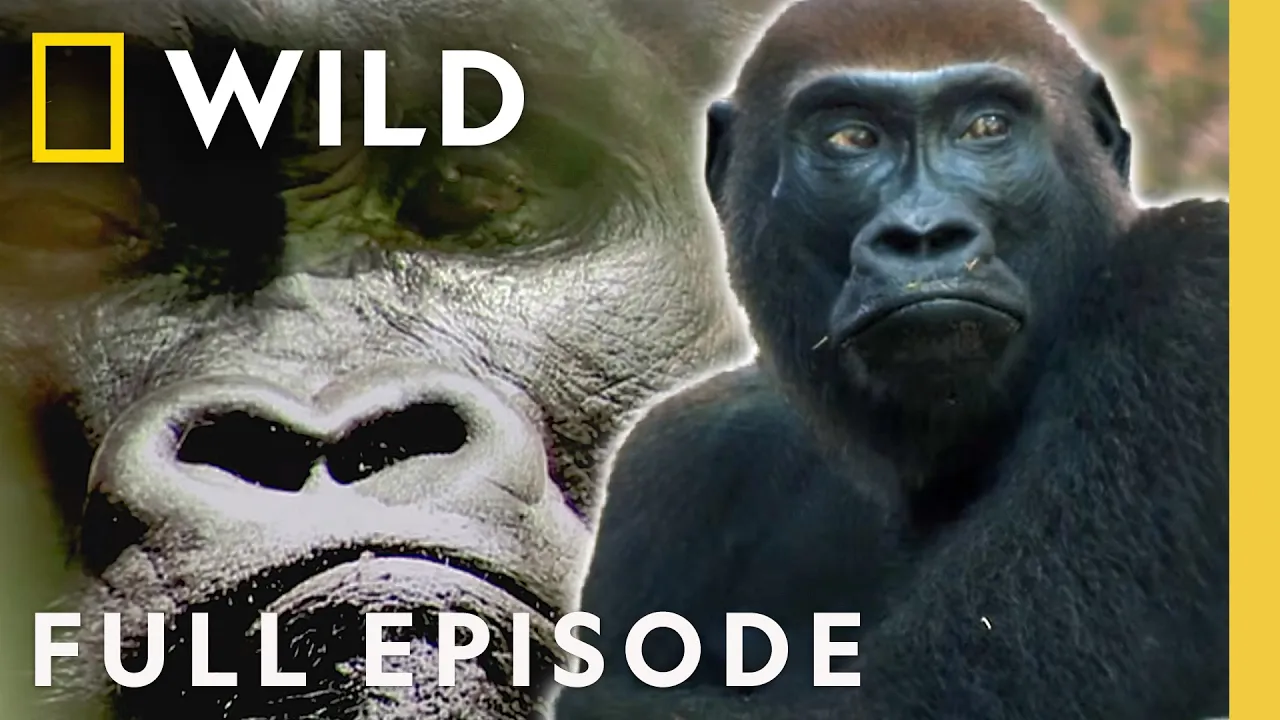
Males from a neighboring band are after their females. But the dominant male, the silverback, gives a warning. (grunting) The group flees and a dangerous battle is avoided. (shrieking) Gorillas choose their fights carefully. Because when these powerhouses duke it out... ...the damage can be devastating. (music) Gorillas eat roots... fruits... and tree bark. But their colossal power and bulk is thanks to an incredible super-powered gut. Gorillas can consume over 10% of their body weight in vegetation a day. Their enlarged colons are far more efficient than ours at processing plant fiber to produce power-building energy. While we can't digest plant cellulose at all, a gorilla's colon contains a bacteria that breaks it down, converting it into energy.
With so much raw power, diplomacy is critical. But another battle over mating threatens to erupt. Females sometimes transfer between groups, a behavior that guards against interbreeding. An outsider mother and her three-year-old arrive from another troop. A male's harem is limited to three adult females. So to the ladies, this newcomer is a threat. A dominant female takes the lead. Urinating is an involuntary fight-or-flight response-- a clear sign that the dominant female is serious. The newcomer can't back down. She must earn her place. Behind the females, a male's pig grunts mean he's angry. A firm hand splits the pair.
But the silverback strong-arms him. He wants the females to settle this themselves. The newcomer asserts herself. The long-timer retreats... ...but has the last word. The newcomer may not win over her rival, but earns approval from the silverback and secures safety for her and her child, at the cost of just a few bruised egos. When males clash over territory, the outcome is rarely amicable. A pair of waterbuck wages war. (grunts) This landowner caught a young buck gate-crashing his territory. Time for a hard lesson in waterbuck etiquette. Waterbuck love water. They emit an oily, smelly secretion that waterproofs their shaggy coat.
When threatened, they head where few predators will follow. An effective tactic, unless they're up against another waterbuck. (bellows) Brutally battered, the buck is on death row. But the landowner stops. Danger is in the air. To a lion, the sound and smell of fighting waterbuck are like a dinner bell. Expert hunters, lions work in small teams to separate a beast from the herd. (braying) Today's prey is a sitting duck. The 12-strong pride surrounds him. Fishing waterbuck from ponds doesn't seem to be in the lions' hunting handbook. The waterbuck sees a gap. (roar) A lioness strikes. On dry land, she'll haul her prey to ground.
But here, she clings on. The lioness moves in for the kill. (bellowing) But the youngster refuses to give in. He plunges the lion's face beneath the water. Unable to breath, she releases her grip. But the waterbuck makes a fatal mistake. Water is his turf; land is theirs. When a pack of hungry lions invite you to dinner, it's an offer you can't refuse. (growl) While many animals fight for the chance to mate, cuttlefish save some of their fiercest battles for afterwards. Living just 18 months, cuttlefish have only one mating season. So it's time for some fast love.
Romeo finds his Juliet. Sophisticated cells let him change his skin to display vibrant zebra stripes. It's how cuttlefish declare their love. The mating begins, face to face. A male takes sperm with his enlarged fourth arm, and inserts it into the female. Soon she'll lay her eggs. And shortly after, the pair will die. Until then, Romeo will guard her, because a fertile female can quickly gather attention. A handoff tells an intruder that Juliet is taken. This rival could replace Romeo's sperm with his own. Romeo isn't going to let anyone trash his bloodline. He's got a deadly move that could save the day.
A rival makes a move on Romeo's Juliet. Cuttlefish have just one short season to extend their bloodline. Romeo makes his skin dark and squirts an inky cloud. Ink is made in the ink gland before it's released into the ink sac. a muscular contraction forces it through the funnel. Containing the dark pigment melanin, the ink acts as a smokescreen. The cuttlefish can also mix the ink with mucus to create pseudomorphs: smaller cuttlefish-sized clouds which act as a perfect predator decoy. The rival's zebra stripes make his intentions loud and clear. But Romeo won't give up on his Juliet.
His next defense is jet-propelled. He sucks water through apertures at the side of his head into his mantle cavity. He then contracts the muscles quickly, to force the water through the funnel. This pushes him rapidly in the opposite direction. Moving the funnel lets him quickly change his course, so he can outmaneuver enemies. In the panic, the rival grabs Juliet. Cuttlefish arms are lined with suckers, which they use to secure their prey and drag them towards their pointed beaks. This love story is now a horror movie. Juliet breaks free. Patience tested, Romeo explodes! He corkscrews his rival with a triple barrel roll!
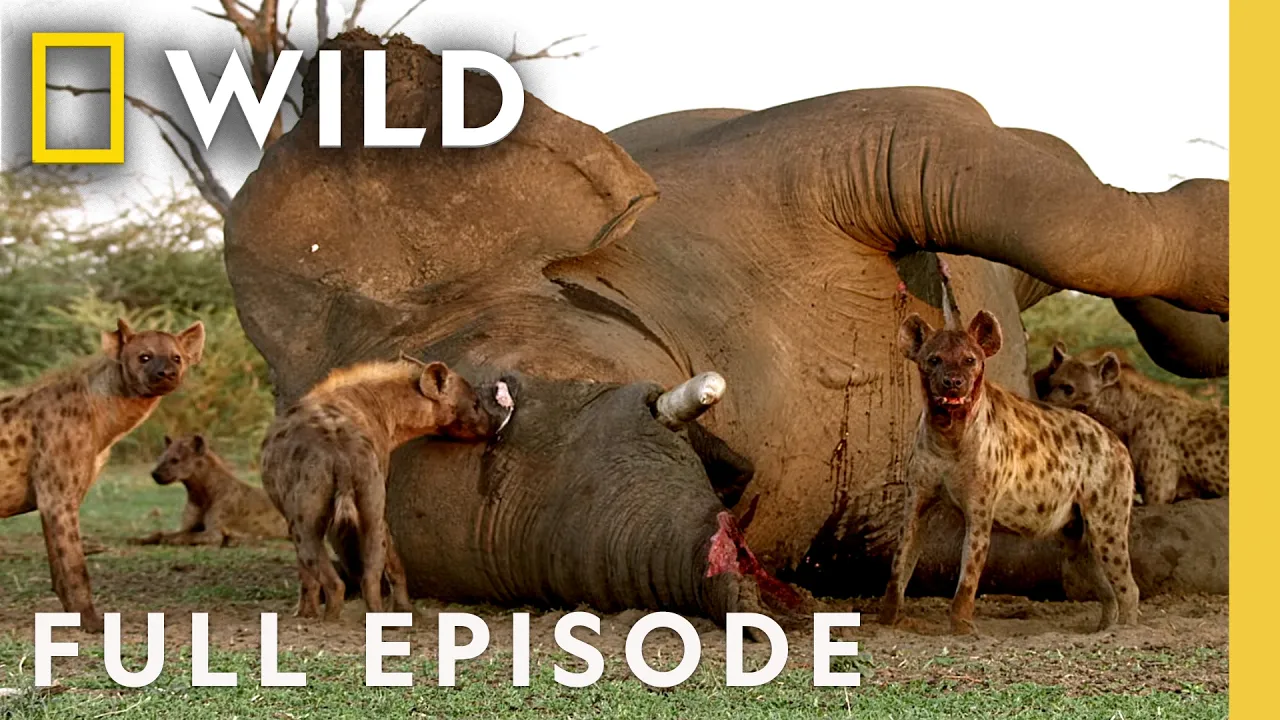
Dazed and defeated, the rival's hunt for a mate continues elsewhere. Reunited, Romeo and Juliet's struggle is far from over. Laying eggs is their next challenge, and their final one. When a beast loses the final battle, his flesh becomes a feast worth fighting for. (growling) A dead hippo is way past its expiration date. Notorious scavengers, hyenas are not fussy eaters. They live in large packs and eat anything... and everything. Skin, hair, teeth. Their bone-crunching jaws even let them feast on nourishing marrow. A rotting hippo creates a big stink. A hungry warrior locks on to the scent.
Called by some the most fearless animal in the world, honey badgers are 10-inch-tall powerhouses. They pack long, sharp claws, and a savage bite. These stocky beasts prey on anything... even killer snakes. But when food is scarce, he'll turn scavenger. The honey badger spots the clan. No amount of hippo is worth taking on a pack of hyenas. But it's too late. (yipping) He's been spotted, and the hyenas think he looks tasty! Outnumbered seven to one, the honey badger's only chance is to fight dirty! A rotting hippo carcass attracts a pack of hyenas. But they'd sooner feast on fresh honey badger.
(yipping, growling) He can't outrun them, but he can fight nasty! Leg cocked, he unleashes his secret weapon. A stomach-churning liquid sprayed from his anal glands. Then, he pulls the dirtiest move in the book. He bites a hyena's genitals! Once bitten, twice shy. No meal is worth the crown jewels. The honey badger makes a break with the pack on his heels. Things don't look good. But grit pays off! For the honey badger, 3 tons of hippo wasn't worth the fight. But for hyenas, nothing's past its use-by date. When food is scarce, the scavengers will do anything to survive.
A clan stumbles on a pair of lionesses enjoying fresh buffalo. Much tastier than rotting hippo. Hyenas and lions are both apex predators and mortal enemies. (growling, shrieking) They hunt the same prey, scavenge the same remains... ...and slaughter each other's young. A fresh kill will see these rivals compete for calories. The hyenas may outnumber the lions five to two... ...but caution is key. Other members of the 80-strong clan have come across a lone lioness. And this time, the numbers favor them. If they banish her, there'll be less competition for nearby prey. And if they kill her, she could be dinner.
Mobbing with loud cries is a risky scare tactic. The clan has numbers, but the lioness is stronger. (whooping, yipping) The clan gains confidence. Hyenas fight with razor-sharp teeth... but so does she. One bite to a hyena's neck can kill. But the clan target her haunches. Their carnassials shear straight through flesh. Staring 12 kinds of death in the face, flight wins out over fight. As the frustrated hyenas give up, the lioness strikes gold: a leopard's treetop stash. Even a discarded head yields life-giving protein. And she should know-- this famed predator scavenges more than the lowly hyena.
Some Native Americans believe that seeing the elusive wolverine is a sign of good fortune. But not if you're a rival wolverine. They'll stop at nothing to protect their turf. A wolverine's jagged teeth can slice off their rival's scalps. Wolverines don't hibernate in the winter. They tough it out. Finding food... (cawing) ...by fair means or foul. The scavenger hits the jackpot. His highly developed sense of smell picks out flesh, buried deep in the snow. But a moose carcass out in the open is 1,800 pounds of easy booty. Except there's a thief about... a rival wolverine! A moose is more than enough meat for two.
But the Latin name for wolverine is glutton, and neither of these guys wants to share! When wolverines wage war, they go in armed to the teeth! Over generations, wolverines were born with a genetic anomaly-- fewer teeth. This allowed their descendants to develop larger carnassials, which were more efficient at hacking through frozen meat. Wolverines' upper molar teeth are rotated 90 degrees. Hour glass in shape, with well-developed shearing blades, they can crush bones. (snarling) The thief unleashes a scratch attack. Unlike the X-Man, wolverines can't retract their lethal claws. The thief sinks those flesh-shredding teeth into the scavenger's head.
One false move, and the scavenger loses more than his dinner; he could be scalped! Battling over a moose carcass, a wolverine thief locks his teeth on the owner's scalp! But the scavenger twists himself free. The thief counters with another twist. This violent motion can be used to dismember an opponent. The scavenger quits while he still can, with his scalp in one piece. The thief chows down. Food tastes better when you've worked up an appetite! The only thing that bites harder than Yellowstone's winter is the grizzly! Time's running out for this bear. He needs to pile on the pounds for his five-month hibernation by foraging...
or hunting. Grizzlies are one of the largest land-based carnivores. But fighting over a fish is high on effort, low on calories! Our bear finds a bison carcass: pounds of chow, without the fight. To mark his claim, he leaves his bear-stink on a nearby tree. Back scratching is a grizzly's 'keep out' sign. A strong scent lets neighboring bears know to steer clear. But this bear wasn't the first one to find the carcass. He was. And he's not happy that someone is eating his bison. The owner attacks. He launches 600 pounds of teeth, claws and muscle at the thief.
The grizzly is one of the most powerful large carnivores. His distinctive shoulder hump is a mass of muscle that helps power his strong front legs when digging for food. In combat, this gives him the fighting strength of up to 5 grown men. Battling grizzlies can kill. The thief gains the higher ground. But the owner fights for what's rightfully his. He uses the bank to power the thief into the freezing waters. The thief rears up in defiance. But the owner takes the victory! He turns his back to let the thief know who's the boss. The thief's free lunch proved too good to be true.
With winter settling in, he should be saving energy, not wasting it. Nothing is as fierce as a mother fighting for her young. (squawk) India's Satpura Hills. Away from her herd's protection, a female gaur nurses a newborn calf. But the pair is not alone. Wild dogs are nearby, and they're hungry! Gaur are wild cattle Goliaths. Bigger than their bison and buffalo cousins. During the mating season, male gaur lock horns with ferocious power. Nearby, Indian wild dogs, or dhole, get their strength through numbers. These ruthless assassins run in packs and use killer tactics. Against a mother 40 times heavier than them, the wild dogs turn to guerrilla warfare.
(gaur cries) Having carried him for 9 months, there's no way mom's going to let her precious child become dog food! (calf crying) Indian wild dogs prey on the weak. They single out a newborn gaur. The calf dives for his mother's protection. But her eyes are on the bandits. (cries) The pack coordinates its attack with whistles and clucks. As soon as the mother fends off one bandit, others swoop from the opposite direction. Dholes stagger their assault to allow rest between attacks. (crying) And disembowel their prey while they're still alive. Mom's strength and size are useless against the swarming tormentors.
They're just too quick for her advances. The calf goes into shock. He's breathing, but only just. (barking) Adding further insult, the bandits torment the distraught mother. The assault rages for over 15 minutes, and the calf's cries stop. Feeding their hunger, many overpowers might. The mother spent just two short days with her calf. She'll have others, but today she returns to the herd alone. In the battle for survival, surprise... can be the greatest weapon. Fiercely territorial, capercaillie roosters are the original Angry Birds. When the red mist drops, they attack anything and anyone. The main predators to worry these kamikaze cockerels are red foxes and raptors.
This rooster is king of all he surveys. Fantail feathers declare his fertility, along with his harem of hens. But someone wants his crown. (clicking) The king makes his displeasure known. But his enemy wants a mate, and he's prepared to fight. Neck feathers puff up to intimidate. (screech) But kings don't scare easy. Capercaillies pack a deadly peck. Battles can decapitate. (screeching) Blows from their powerful wings echo around the forest. The warriors know that one slip could be fatal. They mustn't lose focus. But neither sees the next attack coming. Golden eagles dive at 200 miles per hour, and strike with ruthless efficiency.
These airborne assassins know no bounds, readily sinking their powerful talons into beasts twice their size. (bleating) (clucking) A capercaillie makes for an easy meal. The king's enemy has been dealt with, but he doesn't walk away! He confuses the golden eagle for a rival! The predator just wants to enjoy his meal. Fat chance! Oblivious to the eagle's power, the king tests his patience. A capercaillie will do anything to defend its terrain. The king pays the ultimate price. Two roosters is more than one eagle can eat. The king is left to the flies. (siren) The urban jungle.
Stalking our sewers... and subways... (squeaking) ...the brown rat survives on what others leave behind. But the hunt for food can take you into the wrong neighborhood. Squaring up to a predator 30 times your weight would send most running. But packing a host of combat skills, rats fight like ninjas! They box, wrestle, and pack a powerful bite! Rats' jaw muscles give them a strong bite for their body size. One pair of muscles even loops through the eye sockets, forcing the eyes to bulge as they gnaw. Their four incisors are made of soft dentin and hard enamel.
The dentin wears faster than the enamel, creating a razor-sharp edge. Rats' teeth never stop growing, so unless he frequently gnaws, they'll spiral round, eventually filling his mouth. A decisive hold takes the victory. An even fight, fairly fought. But rat versus cat? The odds are in the feline's favor. Like their big cat cousins, the kitty cat packs serious combat smarts. Fast and agile, they can leap 5 times their own height. They have sharp, retractable claws, perfect for pinning down prey. And to complete the kill, 30 flesh-shredding teeth built for eating meat. The warriors square off. Tackling just one of these killers is unthinkable, and this puss has backup!
domestic cats are ruthless killers, so the odds look long for this rat. (cat screeching) A flying leap, claws outstretched, sends Lucky running for cover. And ratty's not stopping at the leader. He takes on the whole gang! (cats screeching) Cats stalk prey with stealth. But rats' eyes are at the side of their head for incredible peripheral vision. Lucky backs the rat into a corner. This must be game over. Not for this little squeaker! Outmaneuvered and outclassed, Lucky throws in the towel. His next meal will come out of a can. The rat will fight for his. In the American Southwest, water is life.
(rattling) But finding it is murder. The thermometer here can top 125. And this roadrunner is thirsty. He can get most of his water from the meat of prey. His stubby wings make flying clumsy. But he can run down his victims at almost 20 miles per hour. This fleet-footed hunter spies another speed demon. A rattlesnake. A dead snake is a water-filled feast. But a live one is as quick as a whip. (hissing) The legendary rattle, made from interlocking segments of keratin, is used to warn off potential predators. And if the warning doesn't work, America's most dangerous snake can strike at over 14 feet per second.
But it's what's in the fangs that causes the damage. As his jaws widen, hinged fangs extend forward from the roof of his mouth, before being plunged deep into his prey. The venom gland above the upper jaw compresses and pushes the deadly liquid along the venom duct, through hollow channels in the fangs. The contents of the venom depends on the snake's location. Some use neurotoxins to paralyze their prey. Others use hemotoxins to starve animals' blood cells of oxygen. While some have a lethal cocktail of both! The roadrunner's no bird-brain. They'll rarely tackle a rattler over two feet long.
But there's a youngster nearby; less water, but seemingly less risk. But even a young rattler's venom could kill a roadrunner. So the bird dances with a mini murderer. (hooting) Like a matador with his cape, the roadrunner uses his wings to divert the rattler's strike. With up to 15,000 muscles, the snake strikes faster than a human can blink. But it's not enough to bag a roadrunner. Sensing defeat, the rattler retreats. The bird seizes his chance by seizing the snake! Grabbing behind the head prevents the rattler unleashing its deadly venom. Known to the locals as the snake bird, the roadrunner's assault doesn't just kill; crushing bones makes the water-filled snake easier to swallow, venom gland and all!
species clash... On the open plains... in the oceans... and under desert skies... (grumbling) to win food, territory, From the uplands of America, to the wilds of Africa, Hippos spend three quarters of their lives in water. They can even sleep underwater. A unique reflex brings them up to breathe without waking up. So, if a hippo's getting out of his bath, it's going to be for something deadly serious. It's the dry season. Hippos from different pods cram into one evaporating stretch of river. Pods can live side by side, as long as no one upsets the hierarchy. But one gatecrasher...
...has his sights on the other pod's females. And for their boss, that's grounds for a fight. He forces the 3-ton upstart back into the crowd. But one giant surge turns the tables. The boss makes for the shore. But he's not retreating. This fight is now at DEFCON 1. The gatecrasher keeps coming. The boss makes the most of new terrain. More traction means more pushing power. In hippo law, the biggest jaw wins. And the boss's gape has the edge. The gatecrasher drops his head in defeat. He's learned the hard way-- get the boss out of his bath, and you face 3 tons of trouble.
Young lions learn to hunt on the job. But if they don't keep up with the kill crew, they can be killed. Mpumalanga, South Africa. The Marthly pride tackles its toughest prey: a cape buffalo. The experienced matriarch holds down the back end. Two-year-old little bro takes the sharp end. But it goes horribly wrong. Lions are not natural born killers. Lionesses teach youngsters to hunt by just 15 months old. They become expert killers by two and a half. But over three quarters of them won't even reach this age. A quarter of the buffalo's horn skewers the rookie's armpit...
around a foot deep. One big swing of the head could prove fatal. The horn spears through tough lion hide and penetrates the bicep-- an injury that could lead to fatal infection. Worse still, his own body weight, 240 pounds, pulls him down onto the horn. If it severs an artery, he will bleed to death. But it can take hours for a lion team to kill a buffalo. And first, they must haul down almost 2,000 pounds of adrenaline-fueled beast. The horn digs closer towards the artery. But the rookie sticks to his job. And sinks 2.5-inch canines into the buffalo's neck.
The buffalo thrashes desperately... ...and lets the youngster off the hook. He's in pain, but his work is done. The buffalo's exhausted. And now the matriarch can finish him off. The rookie's wounded, but it's not fatal, and his weight helped drag down the buffalo. So, it wasn't plan A, but the team secures over 1,800 pounds of beef to feed the pride. Predators are designed by their environment. Venture into their domain, and it's get out fast, or fast become lunch. Each year tiger sharks migrate to the North Pacific. They come for one reason. Albatross fledglings. Adult albatross are 70-mile-an-hour flying machines.
But they don't start out like this. On a Hawaiian beach, 6-month-old fledglings prepare to fly the nest. Launching into the wind gives them lift. But it doesn't always work. And waiting at the end of their runway is one of the ocean's most capable killers. She's a 13-foot killing machine. Rows of serrated teeth effortlessly saw through hard turtle shell-- a favorite snack. So tiny fledglings are easy pickings. Tiger sharks have a blind spot right in front of their nose. But they have an ingenious solution. Tiger sharks have electroreceptors on their heads called ampullae of Lorenzini. Skin pores filled with a jelly-like substance imbedded in the skin connect to receptor cells.
They can detect weak electrical signals created by nearby animals as they move... allowing this albatross-seeking missile to zero in on its prey. Albatross lay just one egg a year, so this little guy is precious. But learning to fly with a 7-foot wingspan is a big ask. A tiger shark senses a splash and moves in on her target. The tiny chick can't see her. But never underestimate an underdog. This albatross chick's stranded... in tiger shark territory. It needs stronger winds to get airborne. It should be game over. But the shark's own bow wave pushes her prey to safety!
The chick wants to fly, but can't quite make it. (squawking) But this chick's no easy target. He's gonna fight back. (whistling) He unleashes his only weapon. A shark's eye is a rare weak spot. But she has a killer defense. As she opens her jaw to bite, a specialized muscle slides a third eyelid across the eye. Known as a nictitating membrane, it forms an effective protective shield, but renders the shark temporarily blind as it attacks. (whistles) And that split second is time enough to escape. (chirping) This albatross is off the menu... for now. But for the shark, there's plenty more birds in the sea.
(grunt) In the wild, there's no fast track to success. Climb the ladder, and it's a rumble on every rung. Bighorn rams may be sheep, but they can fight for 24 hours straight. They stage brutal playoffs for mating rights, where only the winner secures their bloodline. The losers-- they just spill blood. It's rutting season in Canada's Rocky Mountains. In these parts, over a hundred rams compete. It's tough enough if you're part of the gang, but this Casanova is a stranger. He wants to take on the dominant male. But first, he must beat his lieutenants... all three of them.
(grumbles) Even against three, Casanova holds his ground. Double-layered skulls protect their brains from being crushed. A lieutenant gears up for a ferocious assault. And delivers a 40-mile-an-hour strike. Inches from blinding Casanova's right eye. Their reinforced skulls are built to withstand front impact, but a hard-enough side smash can kill them. Bloodied, Casanova fights back. Unable to match his stamina, the lieutenants give up. Casanova's exhausted. But one ram still stands in his way. And he is the toughest of them all. Bighorn rams can endure more than five clashes an hour. And after conquering three subordinates, this outsider now faces His seasoned opponent takes the high ground.
This builds more battering momentum, and greater impact force. It's like being hit by a baseball bat at 80 miles an hour. Casanova faces an uphill battle, but goes full power. The force cracks his opponent's horn. But as a weapon, it's no less deadly. After a brutal two-tiered tournament, one last blow from the big guy... is too much for Casanova. He doesn't win the right to mate, but incredibly, wins a place in the gang. When the prey is deadly, even the fastest predators need a backup plan. All-you-can-eat buffets don't come much bigger than the annual wildebeest migration, as over a million of them trek almost 2,000 miles.
There's more protein on the move here than anywhere else on land. Just one wildebeest kill is a half-a-million calorie feast for this male cheetah. But it's risky, because cheetahs are fragile. They're lightweight for speed. A cheetah's oversized heart and lungs race oxygen around its body, so it can accelerate from zero to 60 miles an hour in under three seconds. But cheetahs are short-distance runners. So this cat targets the runt, the quickest kill. But those 30-inch horns can still pierce his gut. One cheetah has long odds against prey this size. But he's not alone. Little brother joins the attack.
The ambush trap is set. But the odds change again. 600 pounds of wildebeest can crush a light-boned cat. It splits the gang, but they round again on the first target. The ambush strategy works. Even the runt yields around 500 pounds of protein-rich meat-- enough to keep two cheetahs alive until the next hunt. They call this the animal kingdom. But the kings don't always rule the roost. In the jungles of Madagascar lurks a mysterious creature... that can kill with its farts alone... and turn people into zombies with its poisonous lick before disemboweling them. Or so says local legend.
The creature is the fossa. And the reality is just as strange. It has retractable claws like a cat, a monkey-like tail as long as its body, and hind legs that can rotate 180 degrees around the ankles, to climb down trees headfirst. Fossas are rare, but no one told the females. She's extremely hard to please, and she'll fight any males she doesn't like. She only mates once a year, and often in the same carefully chosen tree. A hot-blooded male is desperate to mate. He's got one shot. And if he doesn't cut it, she'll attack with unbelievable violence.
(hiss) Madagascar's fossa females only mate with the most competitive males, so this suitor better have the right stuff. He's bold. But she's still not impressed. Females use weaker branches to lure rejects into dangerous territory. But retractable claws swing him away from trouble. He gets the message. Quitters are not her type. At least those swiveling ankles give him a fast getaway. But there's another suitor on the scene. And it seems he's got the right moves. No animal can truly be tamed. But even the wildest beasts... ...have their rules. High noon in Mustang Alley. An outlaw wants the sheriff's mare, and he'll shoot to kill.
(neighing) Over 70,000 mustangs maraud across America's Wild West. Settlers brought them here 500 years ago. But now they run feral in small bands. When a mare gives birth to a foal, she'll be ready to mate again almost immediately. And this outsider is desperate to start his own bloodline. (whinnies) But every band has a dominant male who keeps the law. And he sees the outlaw muscle in. The outsider draws first. They rear in a show of aggression. (neighs) But these are mere pistols. The most devastating weapon is at the back. When a horse gallops, its forelegs work more like props, while the more powerful muscles of the hind legs provide most of the propulsion.
And they can kick as hard as they can run. But with a foal in the firing line, the sheriff can't draw the big guns yet. The foal is ushered to safety. The sheriff aims with both barrels. It's a misfire. But 1,200 pounds of mustang sends the outlaw reeling. A darker horse, the sheriff's deputy, comes guns a-blazin'. But the outlaw turns on him. Subordinate males will defend their superiors. And come hell or high water... this deputy has the sheriff's back. The outlaw returns alone to his own band, outgunned and outmuscled. Good things come in small packages.
But so... do bad things. The Sonoran Desert, Arizona. Where temperatures can soar to almost 120 degrees. By day it's an empty wasteland, but when the sun goes down... (howl) ...it has a killer nightlife. A grasshopper mouse is out late, hungry for a midnight snack. At less than a pound, he's a lightweight in a neighborhood of deadly heavyweights. This is the giant desert hairy scorpion-- an armed assassin. His sting injects toxic venom that destroys his victim's nervous system... ...and paralyzes them. Once bathed in enzymes, the prey is pulverized into a scorpion smoothie. (owl hoots) The assassin spies a tasty treat...
Grasshopper mouse. But this little fellow is one surprisingly tough hombre. A giant desert hairy scorpion spies a mousey meal. But the mouse won't take it. The scorpion unleashes a toxic jab... dead between the ears. It should spell lights out. Inside the bulb of the tail are two venom glands filled with a cocktail of neurotoxins. By contracting muscles inside the tail, the scorpion squeezes the venom through a hole in the stinger, which targets the nervous system. It would paralyze any normal prey. But this mouse has a secret defense: thick fur and skin that the stinger can't penetrate.
So mighty mouse is still in the game. In this town, the grasshopper mouse is the predator. Razor-sharp teeth make quick work of the scorpion's exoskeleton. The grasshopper mouse is merciless. And if they can't find prey, they'll even eat each other. Even in the quietest corners of the natural world, where survival depends on togetherness, carnal instincts can turn peace... into war. Welcome to hell. Hell Valley on the Japanese island of Honshu. In winter, temperatures plummet to minus 4 degrees Fahrenheit, while volcanic waters surge up through the frozen ground to form warm pools. For snow monkeys, it's heaven.
Japanese macaques beat the cold by soaking in nature's own hot tubs. Under the watchful eye of this dominant male, the Zen master, peace and harmony reign. But long after the snow thaws, when mating season begins, heaven turns to hell again. Rogue males arrive, This wild-eyed stranger has only one thing on his mind: a nursing mom. While a mother's nursing, she won't mate. So the outsider turns on the infant. But mom will defend it with her life. The little one escapes. Mom's older daughter tries to help, but can only watch her fall. The big male sinks in his dagger-like canines.
He pins her. There's no escape. When a snow monkey mom is held down by a heavier male, there's little she can do. But the Zen master troop leader sees all, and as the intruder tries to flee, he turns kung fu monkey! The master's bigger, and so are his daggers. The intruder must choose between ferocious fangs and the river rapids. No contest! The intruder quits the valley. The Zen master returns peace to the mountain. And hell turns back to heaven. For nature's hunters, the shift in seasons can be a deadly game-changer. The river otter is an expert predator in the underwater world.
But when lakes and rivers freeze over, otters must leave the water to hunt prey. In the open, they're vulnerable to their predators. Eye lenses adapted for underwater hunting make them short-sighted on land, so it's harder to spot enemies... like the coyote. Cunning opportunists, these killers like to target rodents and beavers. they form bigger packs to catch larger prey. They rely on highly developed hearing and smell. And this coyote has picked up a trail. (howls) A mom and daughter. Otters make dens underground, but this pair is out on the hunt. Coyotes can run at up to 40 miles an hour.
The front runner homes in on the youngster. Mom races in to distract the hunters. And it works. She can't match their speed, but she can outmaneuver them. An otter's skeleton is designed for agility. It has an elongated torso with six articulated sections... ...and no clavicle bones at the shoulders. The otter can undulate its body to propel itself fast through the water. Those skills work on land, too. When the youngster flees, Mom's on her own. (growling, hissing) But she's smarter than they think. They try to surround her... ...and sink bite after bite. But she saves her best trick for last...
Disappearing. She leaves a bloody trail. But that's all the coyotes get from the wily otter. For some species... ...the wildest battles aren't always in the wild. The tranquil suburbs of Southern California offer prime real estate... for a western fence lizard. Meet the lord of the manor. This crack in a wall is his home and shelter, so he'll protect it to the death. A stranger strays onto his manor. His battle-scarred tail spells trouble. He's a serial offender. He's lost part of his tail in a previous battle. Every vertebra running through the tail has a special fracture point.
If an enemy grabs the tail, the lizard constricts muscles that will detach the tail at any of these weak points, so it can escape further harm. The tail will eventually grow back, but only as an inflexible piece of cartilage. Despite the intruder's inferior tail, he's still bent on a break-in. There are two ways this can go. To deter enemies and avoid a costly fight, fence lizards start with a display: a set of push-ups. The intruder won't back down. With everything to lose, the lord of the manor goes nuclear. A lizard's tail is vital for balance.
So the intruder's less flexible tail disadvantages him. The intruder makes for the mansion door, and targets his opponent's tail. But the homeowner's healthy tail strikes back. The homeowner won't quit his manor, and bites another chunk off the intruder's tail. This house is not for sale, and the homeless intruder pays the price for trespassing.
More from Nat Geo Animals

Get daily recaps from
Nat Geo Animals
AI-powered summaries delivered to your inbox. Save hours every week while staying fully informed.