Nature's Savage Battles of Survival | Animal Fight Night MEGA Episode | Nat Geo Animals

Chapters2
A broad look at deadly confrontations across biomes, highlighting fierce battles between elephants, buffaloes, lions, hyenas, pythons, and other predators, and how strategy, size, and terrain influence who wins and who survives.
Nature’s fiercest showdowns collide across land, water, and air as Nat Geo Animals showcases epic battles for mates, food, and survival.
Summary
Nat Geo Animals’ mega episode gathers a global lineup of bruisers and tacticians in a breathtaking montage of predator clashes, stubborn defenders, and lone fighters. The narrator highlights musth-fueled bull elephants clashing for breeding rights in Kenya, where tusks and trunk strategy meet raw power. Lions and hyenas trade bites over a buffalo carcass, while a leopard and a rock python duel for territory and cub safety in the bush. The program also follows box-fighter kangaroos, battle-tested hyena packs, and even an ambitious Egyptian-like ant empire in miniature—an all-out panorama of tactics and counter-tactics. Alongside these megafauna showdowns, Nat Geo Animals threads in cleverness: from tree frogs using slime and pad traction to climb, to a honey badger and monitor lizard brawl over underground nests, and a woodpecker defending a nest against a puffy snake with a boosted skull. The episode uses rapid-fire cuts and immersive narration to illustrate how strength, strategy, and environment shape who survives to pass on their bloodline. Expect awe, danger, and a few viral moments, all underscored by the relentless pursuit of life’s most precious resource: successors.
Key Takeaways
- Musth drives elephants to extreme aggression, with chemical changes boosting testosterone up to 50 times normal and signaling intense rivalries for breeding rights.
- Hyena and lion prides can overwhelm single prey or rivals through coordinated group tactics, often turning the tide in fights over carcasses and mating opportunities.
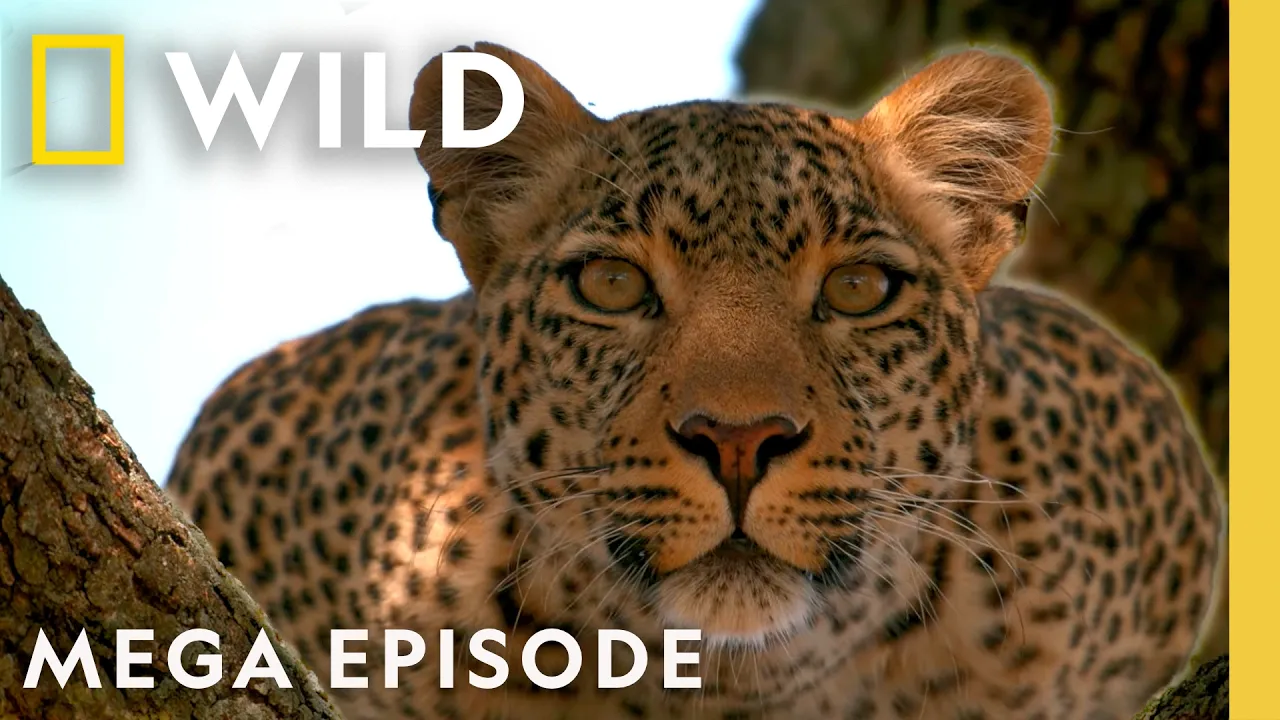
- Leopards leverage stealth, ambush tactics, and climbing ability to exploit open habitats and outmaneuver larger prey like lechwe antelope, including dramatic escapes and reversals.
- Tree frogs rely on specialized toe pads and slime dynamics to climb smooth surfaces and win top-nest positions, beating out much larger predators in some cases.
- Ant colonies execute laser-focused defense and attack strategies, using pheromone-tracking antennae and powerful mandibles to crush invading scouts, sometimes to the death.
- Crocodile-infested rivers transform chase scenes into brutal tug-of-war, turning predators into prey and vice versa in a single breathless moment.
- Honey badgers demonstrate tenacity and powerful jaws, capable of overpowering formidable burrow-raiders like monitor lizards in close-quarters combat.
Who Is This For?
Nature lovers and wildlife enthusiasts who crave dramatic, accurate depictions of animal behavior and want concrete examples of survival strategies and intra-species competition.
Notable Quotes
"This is Animal Fight Night."
—Opening line that sets the program's framing as a showcase of fierce confrontations.
"Testosterone levels soar 50 times higher than normal."
—Describes the physiological trigger of musth that escalates bull elephant conflicts.
"Pound for pound, a hyena's bite is more powerful than a lion's."
—Noting the surprising bite strength in hyena-versus-lion encounters.
"Snakes can strike in less than 70 milliseconds."
—Fast strike capability is highlighted during the leopard vs python standoff.
"Ant muscles are unbelievably powerful for their tiny size."
—Explains why carpenter ants can overwhelm much larger intruders.
Questions This Video Answers
- How does musth affect elephant aggression and mating strategies in the wild?
- What tactics do hyenas use to dominate carcass disputes against lions?
- Can leopards successfully hunt lechwe in open wetlands, and how do they overcome herd defense?
- Why do tree frogs climb to the top and how do their toe pads work on smooth surfaces?
- What makes ant colony warfare so deadly despite the ants' small size?
Nature's Savage BattlesAnimal Fight NightElephant musthLion vs hyena feeding frenzyLeopard hunting lechweRock python vs leopard clashKangaroo boxingBanded mongoose packsTree frog climbing mechanicsNubian ibex territorial battle in Arabia','Woodpecker nest defense','Honey badger vs monitor lizard conflict','Ant colony warfare','Wolves vs bears scavenging conflict
Full Transcript
All over the world, species clash in nature's savage battle of survival. [growl] In the outback... the rain forest... and the desert... all are locked in deadly conflict. [squeaking] Animals fight tooth and claw to win food, territory, and rights to the bloodline. From muscle-bound titans, to lethal lightweights, there are no rules. This is Animal Fight Night. [grumbles] A bull elephant is one of nature's unstoppable forces... unless you're another bull elephant. ♪ ♪ Bull elephants can be gentle giants, but they have a Jekyll and Hyde personality. In southern Kenya, a large 35-year-old bull is laying claim to a group of females.
[trumpeting] They're his ticket to preserving his bloodline. And he's fired up to fight for them... because of a chemical change called musth. Testosterone levels soar 50 times higher than normal. No anger management is going to work. But today a rival has his eyes on the females. A huge 33-year-old, he's a monster when in musth, and he shows telltale signs. Unique, modified sweat glands on his temples swell up and produce a thick, pungent liquid. And he's leaking urine. He's bad company. The older bull's dust-busting says 'Bring it on.' Their battle can last days, and the stress could kill them.
The titans crash at over 20 miles an hour. [bellows] Their tusks are deadly spears of ivory. A well-placed thrust could break through to the throat and kill. But tusks can shatter on impact. They contain pulp and nerves. If a tusk breaks off completely, the exposed tissue could lead to a fatal infection. The older bull snaps down. Splinters of ivory shoot into the sky, but his tusk is still in one piece. He takes stock and feels for damage, then stabs the floor. You're next, buddy. But the younger tusker brings his 300-pound trunk into play... ...as a barrier between flesh and ivory.
It's smart thinking. Then he switches from brain to brawn. [bellowing] The older bull has to dig deep to put on the brakes. Unlike most four-legged animals, an elephant accelerates and brakes with all his limbs, like a four-wheel drive vehicle. Huge gluteus and bicep muscles in his rear force his back legs against the earth. His feet are over 15 inches across with a four-foot circumference. Ridges and grooves in the sole provide grip, helping him sit tight against a six-ton elephant tsunami. [trumpets] The oldster feels the pressure. He finds cover to win time. But the assault's relentless.
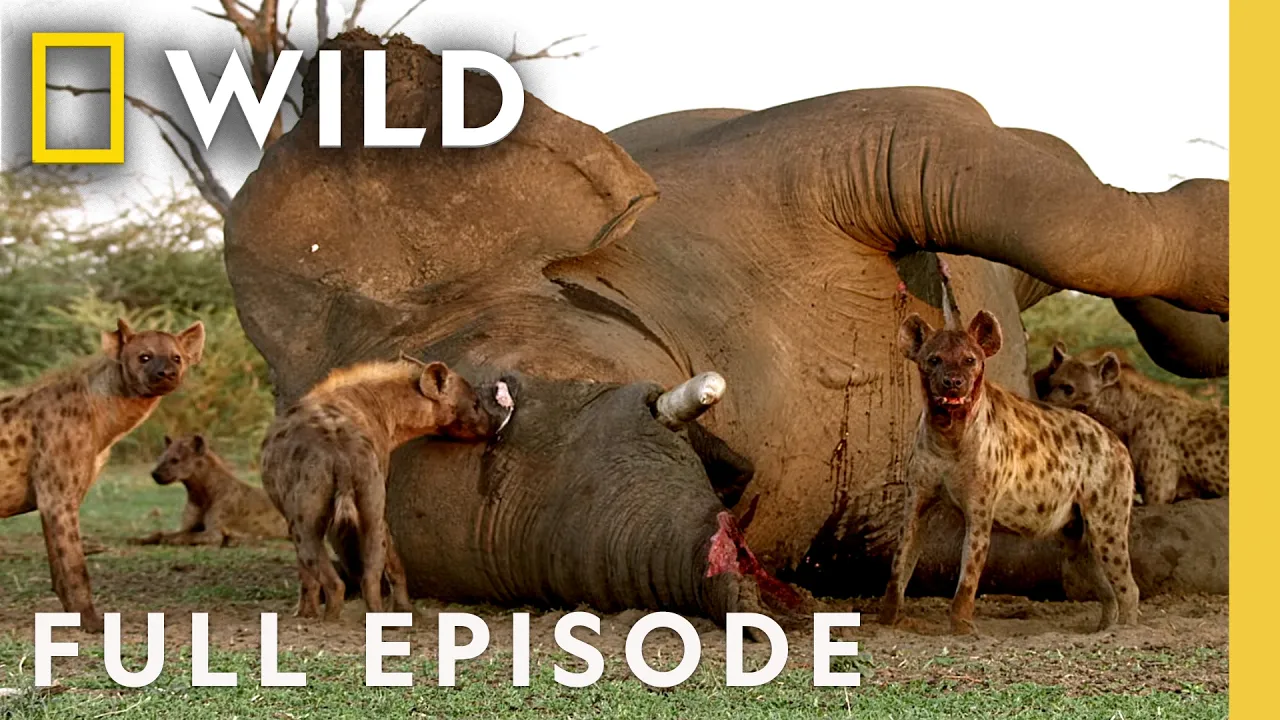
He runs for his life. If he's caught, it could be death by ivory. But he lives to fight another day. The younger aggressor wins the battle, and the chance to extend his bloodline. But his more experienced rival could be back the next time the red mist of musth rises. In the wild, big may be best, but sometimes size can be outweighed by sheer savagery. For two of the savanna's fearsome predators, this buffalo could be dinner on legs. Lions list buffalo high on their menu, and so do hyenas. These predators don't do sharing. If they clash in a food fight, it can be a gruesome grudge match.
Three young lion sisters are working the savanna. They're from the same pride and hunt as a team. But they're inexperienced, and they don't respect their ferocious neighbors. A huge clan of spotted hyenas. The resident clan can muster up to 80 members, led by a powerful matriarch. And they're deadly. Up to 95% of what they eat, they kill. Today the matriarch leads them to easy meat--a buffalo carcass. The lion sisters know the cry of a hyena with food... [yipping] ...and home in. They assume this buffalo is theirs. The hyenas back off. Smaller built than a lioness, they're no match one-on-one.
But they may lose their bounty. Each sister can eat over 50 pounds of meat in a day. For once, the hyenas are not laughing. The matriarch's straight tail shows she's ready to attack. [growling, yipping] Her bite lights the fuse. A lioness lashes out, and sets of 34 razor-sharp teeth bite back. The clan works together. She's off. But the sisters don't help. They're eating for themselves. The returning matriarch targets the middle sister, who gets the message. Pound for pound, a hyena's bite is more powerful than a lion's. [growls] One lioness may hold off three or four hyenas.
But the clan overwhelms her. [yelping] Hyenas run as fast as lions and have more stamina. A bone-crushing bite to the rear limb attempts to trip her. If she stumbles, she's finished. But the lions do have one advantage... They climb. For two of the sisters, it's a lifeline. The third doesn't even stop to look back. They have the perfect view to see hyenas have the last laugh. [yips] When there's no way of running, vicious confrontations can be fatal. This python is the silent assassin of the undergrowth. He's a rock python, the largest snake on the African continent, reaching 25 feet in length.
Up to 15,000 muscles creep him forward. And yet he slithers at just one mile per hour, but has a lightning strike. He ambushes prey off their guard or asleep. His coils constrict and kill. Six rows of needle-sharp teeth fasten down to consume a 125-pound antelope. He girth expands as he swallows it whole, like a runway model gaining a six-foot waistline. If the adults are too big to handle, he simply takes their young. He's even been known to eat a leopard, so, python is not normally on that big cat's hit list. But nobody told this leopard.
The snake sneaked into her territory, and she'll risk her life to keep him out. Two deadly predators are locked in an unlikely conflict. Leopards don't normally go for large rock pythons. She locks on and fires. The python fires back. Snakes can strike in less than 70 milliseconds. But the leopard won't back down. The assassin retreats, but maxing out at one mile per hour, it's a slow getaway. The leopard strikes at his tail. It curls tightly. He's hurt! He heads for cover... ...but the cat drags him back. The assassin must stand and fight for his life.
[roars] He targets the head and hits home. The leopard needs to keep out of range. [hissing] If the snake's bite holds, she's in trouble. His coils will come into play. Now it's clear why she's taking risks--she has a cub. A python might balk at tackling a large adult leopard, but a sleeping cub could be a fur-lined snack. The mom slashes again, smacking down on the snake's skull. [hisses] The injured python launches an all-out attack. Needle-sharp teeth latch on, but he's too weak to follow through. He's in death throes. The cub gets a rare chance to eat python.
It's been a valuable lesson that could save his life. Snake strikes are lightning fast. [neighs] But a blow backed by power can be devastating. In the Namib Desert of southwest Africa, strangers walk the desolate wastes. They're here because of war. [neighing] Their ancestors found freedom around 100 years ago, abandoned in the chaos of World War I. And they've had to toughen up fast. There is little shade or water, and temperatures can soar above 100 degrees. Any sign of weakness is a gift for the desert's hyenas. Only the toughest survive. Their commander in chief is a lean, mean fighting machine.
Around 900 pounds of muscle and bone supported on four hardened hooves kept sharp by the desert sands. His large incisors crunch through tough desert vegetation. He demands sole breeding rights over the females. But the herd's bachelors are ready to mutiny. A new smell is in the air. A mare coming into estrus says it's time. [whinnies] [snorts] A lighter-coated rebel leader chooses a waterhole for the showdown. He stakes his claim on the fertile female. The commander needs to keep control, but the rebel strikes out. It's war! The commander shows who's boss. But he turns his back on the rebel leader and gets his footwork wrong.
The rebel's half-ton shoulder barge wins a knockdown. He follows up with savage bites. But it's nothing compared to what happens next. A herd's commander is under fire from a rebel stallion. It's a vicious fight for mating rights. He's knocked flat. If he stays down, he's hyena fodder. But the commander twists out of trouble, and kicks out a direct hit with the power of a pick hammer. The rebel's back legs crumble. But he's not finished. The commander dodges and ducks, then goes for his signature move. He bares three-inch-long incisors, then targets the neck around the carotid artery.
He grips and tears at his opponent. This commander makes his mark. The rebel surrenders with a shake of the head. Mutiny is suppressed. The commander secures sole rights to the mares. The rebel's time may come, but not today. Herd animals seek safety in numbers. Those that get left behind are in deadly danger. Elephant herds are family units. Mothers and aunts take care of the young, and act as their bodyguards. Because elephant calves are a mouthwatering prospect for any passing lion pride. This young elephant wants to cut the apron strings to be a junior explorer. He sees how older elephants behave and seeks a taste of independence.
He wanders far from the safety of his herd, and into the path of a hunting party of 14 lions. [snarling, trumpets] He looks like one ton of easy meat there for the taking. The pride's strategy is simple: teamwork to bring down the elephant. A lead lioness sinks her teeth into his rump. A lion's cheekbone forms a massive ridge. It anchors a powerful masseter muscle... which applies crushing power when the mouth is almost closed. But elephant hide is tough, and up to an inch and a half deep in adults. Even with close to 400 pounds of bite force, she can't penetrate the skin.
Another lioness piles on to double up the attack. Under 600 pounds of big cat, he starts to buckle. A third lioness attacks the rear legs. Piercing a tendon would stop him in his tracks. [squeal] But the junior explorer fights back. All their teamwork can't bring him down. [growling] He hits reverse and takes the fight to the river. Elephants are fine swimmers. He still has a big cat on board. Her teeth can't penetrate the upper spine, but her rear claws attack the rump. A lion's rear limbs are longer and more powerful than its front limbs. Each rear paw has four claws.
They are flatter and more blade-like than the five-hooked front claws. Powered by massive bicep and extensor muscles, they provide traction and rake at flesh. The explorer spins, and his attacker jumps ship. This feisty elephant acts like a herd leader and charges, but he's weakening. If he falls now, it'll be all over. A young elephant explorer faces a deadly assault. The odds are against him 14 to 1, but he turns defense into offense. Elephants can bend their rear limbs, like a human leg, to deliver a one-ton back kick. His heavy blow breaks the lions' team spirit.
When he backs off, only one lion follows, and without backup, he has no stomach for a fight. This elephant's a natural-born winner with a tale to tell when he gets back to his herd. Predator packs can be terrifying, but even greater danger can come from solitary killers. African leopards use their environment to the full. They may attack unseen from above, or use their camouflaged coat for cover to take down animals twice their size. At around three feet high and over 200 pounds, this adult red lechwe antelope would be an ideal target for an African leopard.
But his habitat presents a challenge for the big cat. In the open wetlands there's little ambush cover. And if the chase is on, lechwe have greasy, water-repellent fur to help them outstrip predators. But this handsome buck has to leave the waters to establish a territory and attract a doe, because female lechwe mate and give birth on dry land. And on dry land, he's vulnerable. This leopard is a seasoned hunter. He knows it pays to be patient. He'll stalk some prey up to two miles and lay in ambush, waiting to strike. And today he wants to lunch on lechwe.
The handsome buck is battling a rival for territory. Locking two-foot-long horns, he shows him who's boss. But an unseen spectator is enjoying the show. The hunter can attack at over 30 miles per hour. The leopard's muzzle is a center of super senses. He has multidirectional control of his whiskers. In an attack, he points them forwards. As feelers they send signals to the brain to help locate the best strike point for a bite. It's thought that pressure-sensitive canine receptors lead to nerve endings in the gum, helping him position his jaw. The shocked buck breaks off the rut.
His opponent chases... until he spots the deadly passenger. The handsome buck should be done for, but he's a born fighter. He's down, but not out. Thrashing hooves break him free from the leopard's grip. But the hunter isn't finished. Leopards have powerful tree-climbing muscles and fast reactions. All mammal muscles are packed with individual fibers, but compared to human muscle, leopard muscles have faster twitch fibers and three times the power. He is able to leap and recover a firm grip on the fleeing lechwe. He hangs from the lechwe's neck, and acts like a dead weight. The exhaustive effort grounds the big cat.
The buck has the chance to escape, but then the unbelievable happens. His front leg catches behind his horns! He has just moments before the leopard recovers. He twists... and finally breaks free. This leopard picked the wrong lechwe. Lechwes' legs help them spring to freedom, but legs can be lethal weapons. Australia's boxing kangaroos are famed fighters, and they have a closely related cousin... the wallaroo. And their bouts can be brutal. Female wallaroos are impressed by dominant males, and they partner up for life. Showing that he's top dog makes a male wallaroo hot stuff. This guy thinks he's the one, but he needs to take down a rival title contender.
The fighters square-up in the bushes. Then, the top dog fires out a two-footed slammer. He anchors his tail for purchase and power to send the contender crashing. They leap onto the tiled terrace of a country hotel. It's blow for blow. The top dog takes a direct hit. A wallaroo's tail has over 20 caudal vertebrae, which he uses to provide support and balance. Powerful quadricep muscles in their thighs can launch them 12 feet in the air, or deliver a devastating blow. Each rear paw boasts four sharp claws. They could slice open a human belly. Male wallaroos have thickened skin to protect the abdomen.
But the tiles are slippery. The contender adapts to the fight surface and battles his opponent. The top dog rounds on his rival. He's looking to switch it up to raking open claws to the neck. Male wallaroo arms are stockier than females'. They're built for fighting. The top dog's next shot could be the deadly decider. Two wallaroos lock in brutal battle for alpha status. Winning the title wins a mate for life. The top dog's ready to finish it, but the contender draws him back to the slippery tiles... to spin his unsteady opponent... and let rip with a raking one-two...
...and a decisive follow-up. The sure-footed winner barks out victory. [barking] The new top dog's bloodline is protected. One-on-one fights can be desperate, but when two tribes go to war, it's carnage. The banded mongoose is famous as a fearless snake fighter, and he thinks nothing of taking on threats over twice his size. [squeals] But when mongoose packs get together, it's gang warfare. [squawk] A mongoose pack in East Africa lays claim to a prime piece of property. It's rich in mongoose chow-- insects, grubs and small mammals. A great place for bringing up baby. There are dangers, but like ancient Spartans, mongoose pups are raised like warriors learning to see off any threat, under the watchful eye of the adults.
And just like the ancient Spartans, banded mongooses are heavily armed with 36 teeth and curved front claws sharpened by digging. This gang is battle ready, because this territory is under dispute. Spies from a rival pack rise up on two feet to plan their attack. A Spartan sentry sounds the alarm--battle stations! The parents herd their young back behind lines. Mongoose invaders can turn cannibal and eat any pups they discover. Both sides line up in tight ranks. The invaders charge from the right. Shoulder to shoulder, both sides flash teeth... ...like thrusting blades. If a warrior falls behind, he's in trouble.
Mobbed by a ring of teeth, there's only one way out. Jump for it! And he could land on his feet. Off to the side, the battle brings out animal passions. Females sleep with the enemy. Widening the gene pool leads to healthier pups. The Spartans' line holds and advances. They pick off stragglers in paw-to-paw combat. The invaders' line breaks. For some warriors, victory comes at a price. Injured limbs could signal the gathering of the crows. But their Spartan pups are safe. In some animal fights, the deadliest threat doesn't come from your opponent. In the African forest, sunset can signal the start of the frog chorus.
It's how some tree frogs preserve the bloodline. Females finds the males' song sexy, so males climb high to get the best acoustics. [frogs chirping] Tree frogs power up to leap up. They charge a tendon in their leg for 100 milliseconds, and release the energy like a catapult. They fly 50 times their own body length. That's close to a 400-foot human long jump. A covering of slime helps them breathe, and makes them a slippery prospect for predators. This leaf-folding tree frog is ambitious. He's leaving the chorus behind to get to the top as a soloist. But this forest is also home to the huntsman spider.
With legs outstretched, he's five times the size of the tree frog. And a tree frog would make a tasty meal. This singing tree frog's on a mission... to climb the tallest leaf to get heard. But a fall could prove fatal. [chirping] Reaching the top's only half the battle. There's a rival in residence. Time for a slime-off. The climber kicks-- karate style! His charged leg... sends his opponent flying. The battered resident recovers, and blocks with his forelimb. Then fires back. His bloodline's at stake. He tries a headlock to pry the climber from his perch. Despite a face full of frog paw, the climber lets rip.
A smash hit! The resident's life hangs on a leaf edge. If he loses his grip, he could land in the lap of a huntsman spider. Tree frogs' pads are covered in microscopic hexagonal cells. When he applies pressure, the slime around the pads drains into channels between the cells. They work like the tread on car tires, and give traction on contact with a smooth surface. And they help the resident hold on. But it was too close for comfort. The resident beats it. The climber hit all the right notes. And a female likes his sound. But in some fights, gaining high ground can be the difference between life and death.
In the Arabian Peninsula, a Nubian ibex claims a mountain kingdom and access to all its females. But he's only one fight away from losing his crown. A rival ibex picks up the scent of the females, and heads for where the action is. With ridged, four-foot, scimitar horns and over 130 pounds of mountain muscle, he's every inch a match for the monarch. And he's smart. He takes up position high above the king. Charging from above puts speed and weight on his side. A massive blow sends the king reeling. The impact point is on the bottom third of the horn.
The keratin sheath around the horn is more elastic than bone, which helps displace the impact energy. And near the base, sutures in the skull act as a crumple zone under sudden stress. The king's head is like a shock absorber for sudden impacts. The challenger rises seven feet and fires again. If the king's knocked off his feet, he could plunge to his death. He needs a breathing space. He pins his rival down. His horns' prominent ridges help lock his opponent's in place. But he still takes a battering. An opportunist third buck sees his chance, and hammers the king's crown jewels.
It should end his reign. But the sudden smell of nearby humans alarms all three, and they scatter. No regime change today. Next time, the king will take to the heights, and watch out for sneak attacks. NARRATOR: All over the world, millions of species clash in nature's savage battle of survival. On land, in the water, and in the air, From the Namibian desert to the Amazon rain forest, A lioness and a female Cape buffalo are engaged in full-on war. The lone lioness has her sights set on the buffalo's three-month-old calf. But at five feet tall and weighing 1000 pounds, this buffalo mother is an unstoppable force.
Every time the lioness gets near to the helpless calf, the mother steps in and shuts down the attack. The lioness must be careful. An injured hunter is as good as dead. She can't get too close to the buffalo's 20-inch horns. She has to decide whether pursuing the kill is worth the risk. This hunt could end in dinner or disaster. Just before the lioness can make a choice, the bulldozing buffalo makes it for her. The calf looks safe, but it's not over. Lions are highly intelligent, and they're also masters of deception. They can vanish behind tall grass in a split second.
It's how they stalk prey. As the buffalo mom chases the lioness off, she loses sight of her. The lioness vanishes. The calf is now alone and exposed. Suddenly, the predator emerges from her hiding place and attacks. It looks like game over for the calf, but the buffalo mother returns in the nick of time. She slams into the lion... ...and fights off repeated attacks. But just when it looks like the cat has given up, the situation gets drastically worse for the buffalo. The action has attracted the attention of not one, but two more pride lionesses. The desperate mother fights on but is fooled into a second trap.
[grunting] One of the lionesses lures her into a chase, and then a second corners her. She's caught between two full-grown killer cats and knows that just yards away, the third already has her calf. Family is a lion's major strength. Today, it's the buffalo's weakness. It's all over for the baby and her courageous mother. Animals that live in groups have a natural advantage. They can rely on each other for food, warmth, and protection, but in some species, a pack can become a prison. Hyenas are one of the most numerous and aggressive large predators in Africa. And once they spot a potential target, almost nothing can stand in their way.
Their hearts are massive; on average, 20 percent bigger than a man's, meaning they have the endurance to chase prey over huge distances. And when meat is on the menu, table manners go out the window. [laughing] A feeding frenzy ensues. But these chaotic scenes disguise a hierarchy. At the head of any hyena family is a hard-nosed leader, and unusually for the animal kingdom, it's nearly always a female. They grow to be bigger and stronger than males. More than two and a half feet tall and 130 pounds, they must keep the clan safe. On the African plains, danger is never far away.
Lions are the hyenas' sworn enemy. They steal their meat and sometimes even kill clan mates. The only way hyenas can survive is with a strong leader. But over the years, this queen has turned into a tyrant. Two lower-ranking females kill an impala. Yet the queen hijacks the carcass, leaving them hungry. She bullies the weakest clan members, including mothers raising cubs. The queen is out of control, and the clan is at snapping point. Surviving here is perilous enough without threat from within. The tyrant must go. She's set upon. In a one-on-one fight, the hyena queen would easily overpower any of her followers.
However, she's up against not just one, but all of them. They surround her, just like they would surround larger prey during a hunt. Each hyena has a bite force of more than 1000 pounds, enough to crack a giraffe's thigh bone, and they attack as one. The hyenas could easily kill her and are known cannibals, but they stop short. It's already over for this tyrant. She's defeated. Her hind leg is ruined. The hyenas choose the clan over their leader, leaving her defenseless... ...and surrounded by enemies. Living in a pack does not guarantee that an animal is safe, but for animals that work alone, every single second of the day is fraught with perils.
When a hungry cheetah locks on to a Thomson's gazelle, all the prey animal can do is run for its life. And when there's no other escape option, sometimes they're forced to make a desperate move. A river offers safety from the deadly hunter, but it can be out of the frying pan and into the fire. African rivers are infested with Nile crocodiles. The prey is consumed. The crocs look to have bagged another antelope escaping from a cheetah. But in fact, it's an animal fight like no other. This time, it's the cheetah that's under attack. It chased the antelope all the way into the deadly water.
The prey is already being torn apart, and the big cat is next. A crocodile has him by the tail, and he's fighting for his life. NARRATOR: A cheetah struggles to escape the jaws of death. A crocodile has it by the tail and is trying to drag it into the murky water. Only seconds ago, the king of speed was living the life of a big-game hunter, but he chased an antelope all the way into croc-infested water. Now he's under attack. The antelope doesn't stand a chance, but the big cat is putting up more of a fight.
He aims a bite at the crocodile's head, but he's way out of his depth. The cat makes a break for it. It can't let the crocodile get a good grip. Once those giant jaws close, it's almost impossible to pry them open. The cheetah makes it to the bank. It's a grotesque tug of war, and for the cheetah, failure means death. Exhausted from his hunt and savaged by the crocodile, the cheetah stops struggling. But the croc momentarily opens its jaws to get a better grip. It's all the cheetah needs to break free. He scrambles up the bank to safety, but it could have ended in disaster.
No animal can go without food, but often it's the simple search for the fuel of life that can bring a creature right up to the jaws of death. Namibia is a hotbed of predators, so for many egg-bearing mothers-to-be, the safest place to lay is in underground burrows, tucked away from hungry mouths. But there's an armed robber here that can find even the most carefully hidden nests-- the monitor lizard. 6 feet long, 25 pounds, and armed with deadly sharp claws, this monitor is a safecracker. And today, he's struck gold. The monitor dives in. Bingo! A reptile's egg is a high-calorie snack.
When it's gone, he moves on to find the next burrow, but unfortunately for the safecracker, there's a bounty hunter on patrol. It's a honey badger, and he's in the mood for cracking skulls. The armed robber hisses a warning. His claws are as fit for fighting as they are for raiding burrows. But the bounty hunter isn't intimidated. He's armed and ready to use deadly force. The honey badger's skull is massive, and it features a wide, short muzzle. It has four upper and lower cheek teeth on each side and thick, sharp canines at the front, designed for clamping down on enemies rather than shearing flesh.
The jaw muscles of the badger are so overdeveloped that when it bites onto something, to force open. The honey badger is built to bite. They keep side-on to each other and avoid leaving their heads open to attack. If the honey badger can use his jaws or the monitor can use his claws, it would be game over. The safe breaker snaps at the badger. He crawls back into the burrow. It's the monitor's chance to make a clean getaway. is tenacious. He grabs the monitor's tail and drags him back to the scene of the crime. In the narrow hole, the monitor has nowhere to run, and the honey badger overpowers him, locking his jaws onto the doomed lizard's face.
The honey badger bounty hunter has caught the culprit... ...and gives the armed robber the heaviest sentence there is. In the wild, the struggle to find food is a never-ending task, but sometimes, the most dangerous challenge of all is to guarantee the bloodline. Black rhino females are incredibly protective mothers. They give birth to a single calf at a time, and they will stay together for up to four years, but she will be ready to mate during that time. Rhinos have an incredible sense of smell, and a passing male picks up the female's scent. Trouble is, this rhino mom is not in the mood.
All her attention is on her offspring. But he isn't getting the message. He's not the smartest beast on the plains. For such large animals, black rhinos have surprisingly small brains, weighing only 15 to 20 ounces, half that of an adult human. But that doesn't mean he should be underestimated. At 3000 pounds, he's 16 times heavier than the average man. If he wanted to, he could seriously injure the female and kill the calf. The mother's refusal is only frustrating the big male. He's willing to use force. NARRATOR: A male black rhino wants to mate with a female, but she's only interested in protecting her calf.
Even though she weighs as much as a powerboat, he drives her backwards through the dirt... ...kicking up huge clouds of dust. Now engulfed in the haze, her calf is in extreme danger. Rhino eyesight is poor. In clear conditions, they can only see up to 100 feet away. In the thick dust, the male could easily trample the calf. The mother spins around to run away, but the big male won't stop. In his frenzy, he uses his deadly tipped two-foot-long horn and lifts her back end clear off the ground. She may have inch-thick hide, but he could still puncture her side.
If she's injured, her baby's life could be at risk. The cloud begins to clear. And the baby is unharmed. The big bull realizes that even though he can push this mother around, she's no pushover. His only choice is to find a more willing mating partner. Rhinos rely on muscle power far more than brainpower to get what they want, but it's often the most intelligent animal species that are the most violent. Southern Ethiopia-- this is a harsh land, where food and water can be scarce. But one particular primate species flourishes here-- Hamadryas baboons. These highly intelligent creatures live in huge social groups of up to 750.
They spend the long, cold nights nesting together in cliffs, safe from their deadly enemies-- hyenas and leopards. There's no one leader. Instead, smaller harems within the group are watched over by dominant males. This one rules with an iron fist. He's a battle-scarred warlord, four-and-a-half feet long from nose to tail, powerfully built and armed with razor-sharp teeth. When morning comes, he leads his followers down to the plains to find food. He keeps a close watch, punishing any troublemakers in his group. [screaming] But when they finally make it to the feeding grounds, he faces a much bigger problem.
A rival troop from further along the cliff. The warlord has fought their leader before. As well as being tough survivors, baboons have good memories. They remember past battles. And they learn from experience. The two armies clash. Enemy males go on the attack. But the rival leader has another aim-- to steal a female. The one he wants resists, so the raider bites her with his brutal inch-and-a-half canines. Injuries like this can be life-threatening. The female escapes with her life, but the violence for her is not done. Despite her loyalty, the warlord attacks her again as a stark message to his harem.
'Betray me, and there will be consequences.' If he is to maintain control and keep his bloodline strong, he can never show weakness. The sheer diversity of the animal kingdom leads to bizarre clashes in the never-ending battle But every now and then, two animals so unusual come together that it proves fact can be stranger than fiction. Woodpeckers peck for two main reasons-- to find insects living in tiny cracks in the bark and to excavate nesting holes in the trunk. This head-banging bird seems to be putting the last few touches to his home, but this nest is under attack.
It's a yellow-bellied puffing snake, and this brightly colored serpent is after the nest's precious residents--chicks. The woodpecker's offspring are in extreme danger. Compared to the diminutive bird, the snake is a monster, up to 9 feet long. It puffs its neck out in a stark warning. It's not venomous but could suffocate the bird by catching and coiling itself around it. [squawking] It lunges time and time again at the anxious father. [squawks] But the woodpecker is not giving up. He's going to do what he does best. Very few animals could dish out this sort of cranial punishment, but these incredible birds are built to last.
Inside the head is a flexible bone called the hyoid, which passes up from its nostrils, around the back of its skull, before connecting to the tongue. When pecking, the longer upper half of the beak absorbs most of the impact, diverting shockwaves along the hyoid into the surrounding muscles and tongue. This keeps the brain protected from impact deceleration more than 1000 times stronger than gravity. The woodpecker is relentless, and it won't take him long to shred the serpent's flesh. NARRATOR: A yellow-bellied puffing snake attacks a woodpecker's nest, but the head-banging woodpecker is on the offensive, using his shock-absorbing skull to deliver multiple stabs to the snake's side.
The serpent strikes back and comes away with a mouthful of feathers. But the determined father still won't leave the chicks. His bravery is putting his own life on the line. The snake grabs him by the throat. He must escape or die. The woodpecker forces its way free. But the serpent has won. And with the woodpecker father defeated, it goes back to the nest to devour the unguarded chicks. Some creatures try to live their lives under the radar, unseen and unheard, but when the survival of an animal's offspring are at stake, it can turn a cunning creature into a ferocious fighter.
The English countryside is harboring a calculating killer-- a red fox. This male is on the prowl for meat. As a distant relative to wolves, he has an excellent sense of smell and can hear a watch ticking from 40 yards away. He's identified a potential meal, a male and female raising a pair of pups. On rare occasions, foxes can be cannibals. If he gets near, he could kill and eat them and then try to mate with the female. But the father fox is ready to defend them. [shrieking] A fox will give off warnings in the run-up to a fight.
DEFCON 3, the father fox stands tall and arches his back to make himself big and intimidating, but the killer isn't scared easily. DEFCON 2, Dad hunkers down and barks aggressively. [barks] Unlike other canids, foxes do not have the facial muscles to bare their teeth, so he opens his jaw fully to flash his inch-long canines. But it's no use. The attacker has a thirst for blood. DEFCON 1, fearing for his cubs, Dad attacks. The rivals line up shoulder to shoulder and drive against each other in a test of strength. The cubs watch on anxiously. If their father can't win the fight, their lives are at risk.
The males are equals in power, so they resort to teeth. Lunging at each other's throats, they shake their heads violently to tear skin and rip flesh. The vixen is about 20 percent smaller than the males. Even so, she stays close to the fight. Spurred on by her presence, the father fox finds a burst of speed and power and drives the killer away from the cubs, delivering wounding bites to his back legs. The killer is beaten... ...and limps away. The fox family can return to the safety of the den. In the wild, fighting is often a last resort.
The risks of injury or death are just too great. But there are some species that, when threatened, will only ever attack. Carpenter ant colonies are like empires. They have a particular goal-- to expand. But with each new batch of soldiers born, the resource demands of the empire increases. They need more food and more territory, but they must also be ready to defend their own. A team of rival carpenter ant scouts has entered an empire's territory. Their intrusion will not be tolerated. And when ants engage in battle, it's to the death. The empire strikes back. These ants may be less than half an inch long, but they are unbelievably strong.
Ant muscles are exceptionally powerful in proportion to their tiny size. A bigger ant would change things. Muscle strength increases, but to a smaller degree than overall weight. The ant's muscles would begin to struggle. Make it human size, and the ant would be instantly crushed under the burden of its own massive body. Being small means it can carry itself and objects many times its own weight, including enemies. The rival scouts are heavily outnumbered by the empire soldiers, but in the swarm, it becomes increasingly difficult to distinguish friend from foe. If even one enemy soldier is not quickly destroyed, they could signal for their entire army of thousands.
NARRATOR: A team of rival If the home soldiers cannot identify and destroy them, the colony is at risk of a total enemy invasion. Luckily for the empire, ants have a hidden super sense. Their probing antennae are covered in hair-like protrusions called sensilla. They pick up the enemy's pheromones, biological scents, and pass them down a nerve fiber to the brain. Ants have up to five times more odor receptors than most other insects, so they're able to pick up the tiniest changes in smell, and each enemy army has their own scent, meaning a rival soldier stands out in even the densest crowd.
The raiders are identified and locked down. More and more empire soldiers appear... ...swarming them. Strangely, some of the ants display a stinging action, even though they have no stinger. New research suggests that ants are descended from wasps, so at one point, would have been similarly armed. The action could be instinctive. Finally, the empire starts a cleanup operation. Using immensely powerful pincers like a firefighter's cutters, they slowly tear the invading scouts apart. The true resilience of the raiding ants is gruesomely demonstrated. Even those that are cut in two continue to struggle, until the very last drop of their energy is gone.
The empire is triumphant, but only until the next attack. Many insect groups use a vast number of soldiers to overpower and overwhelm their enemies. But in species where each family member is as important as the next, a subtle strategy can be as effective as all-out war. The darkest corners of Northern Europe have been the inspiration behind countless fairy tales. [howling] And it's for good reason. Fearsome beasts roam here. The Eurasian wolf is an expert hunter. At 120 pounds and standing two-and-a-half feet high, they are streamlined killing machines. And by working as a pack, they can hunt and overwhelm prey.
They need plenty of meat. A single wolf can consume up to 20 pounds in one sitting. But sometimes food can be scarce. To survive, they must scavenge. Easier said than done. Often it means stealing from another predator, and the wolves are not the biggest beasts in these woods. The only predators who have any meat are a family of Eurasian brown bears. The adult male is massive. 700 pounds, with claws that can grow up to 4 inches long, he's powerful enough to crush a wolf under his bulk. They're picking over the last remnants of a kill, but to a hungry wolf, even a shredded carcass is a banquet.
Trying to steal it would be a huge gamble, but the leader of the pack knows that without food, his family is doomed. NARRATOR: A scavenging pack of Eurasian wolves are playing with fire. They've found a family of bears who have meat, and the wolf leader is willing to risk his life and his pack to steal it. The wolves test the male bear. Perhaps he'll abandon his share of the meat. No such luck. He's not intimidated. The wolves know if they get too close, they're as good as dead. Brown bears are immensely strong and have jaws that could crush a bowling ball.
The only way to steal his food is with numbers-- three wolves against the two adult bears. One of the wolves makes a darting run at the carcass... ...but is knocked away. In a straight-line dash, bears can nearly match them for speed, but in close quarters, the agile wolves just have the edge. They all join in, trying to draw the bears away from the food. The big male comes within biting distance of a thief and only just misses. But in his eagerness to see them off, he leaves his food unguarded for a split second. It's the gap the wolves are looking for.
They steal one meal and then the second. The scavenging wolf strategy has beaten the bears. All around the world, animals have adapted to compete for survival in their own environments, but there are some species out there so tough that they're ready and willing to pick a fight anywhere. The American mink has a soft coat. Their reputation for naked aggression is second to none. Once they have a target in their sights, they can be relentless killers. And they're all-terrain assassins, equally dangerous on land and in the water, as this unsuspecting herring gull is about to find out.
Mink can swim for up to 100 feet fully submerged, and a sneak torpedo attack gets him onto the gull's back. Up here, he's safe from the bird's vicious two-and-a-half-inch beak, and the mink delivers a bite, aiming to damage vital nerves. The bird gets a chance but the bite has disabled him. He can't get airborne. The torpedo won't give in, so the seagull goes on the offensive. He opens his beak wide to clamp it around his opponent, but the expert diver hangs on. The gull is at risk of drowning. He changes tactic and uses his beak as a dagger.
But the torpedo keeps coming. The bird's stabs can't find their target. His energy reserves are near zero. The merciless torpedo circles, looking to finish the fight. But the desperate seagull finishes it first. A direct hit to the mink's eye! It disarms the killer torpedo and sends him back to dry land. The bird wins, but now flightless, he's less seagull and more sitting duck for the next mink attack.
More from Nat Geo Animals

Get daily recaps from
Nat Geo Animals
AI-powered summaries delivered to your inbox. Save hours every week while staying fully informed.