Queens of the Animal Kingdom | MEGA Episode | Nat Geo Animals

Chapters6
The African savannah herd centers on matriarchs like Taji guiding newborns such as Binti and granddaughter Kike, highlighting how experience and care sustain the family.
Nat Geo Animals profiles formidable female leaders—from matriarchs guiding elephant herds to apex shark queens—showing how sex, size, and personality shape survival on land and sea.
Summary
Nat Geo Animals’ MEGA episode stitches together three sweeping chapters about female dominance in the animal kingdom. First, we follow Taji and her granddaughter Binti as African elephants navigate a changing savanna, relying on matriarchal wisdom, intergenerational learning, and ritual protection when predators loom. The film highlights how memory, communication, and adaptable leadership help a family survive droughts, human encroachment, and deadly hyena incursions. Next, the focus shifts to a global inquiry into female sharks—great whites, bull sharks, and tiger sharks—where researchers like Alison, Thomas, and Eric test whether females display distinct personalities, larger sizes, and different strategies that might influence human-shark conflicts. The scientists deploy acoustic tagging, behavioral ethograms, and DNA sampling to link personality to genetics, exploring the thorny question: could problem individuals be identified and managed rather than culled? Interwoven climactic moments show pregnant and dominant females asserting influence—from a towering white shark before a tagging attempt to a “queen” tiger shark overpowering rivals at Seal Island. Throughout, the narration ties these portraits to broader themes: the power of matriarchs, the costs of rapid environmental change, and the hopeful possibility of coexistence when we respect female leadership in both land and sea worlds.
Key Takeaways
- Elephant matriarchs like Taji orchestrate herd movement, crossing rivers and navigating droughts using learned routes and senior wisdom.
- Binti’s survival hinges on grandmotherly protection, mother–calf milk dynamics, and late-stage social learning within a multi-generational clan.
- Climate-driven drought and human land-use expansion are reshaping elephant pathways, forcing adaptive shifts that can threaten old matriarchal knowledge.
- Shark personality research uses ethograms and DNA to explore whether females are inherently larger or more dominant, with implications for human–shark interactions.
- Tagging and non-invasive DNA collection offer pathways to identify potential “problem individuals” without broad culling, aiming for targeted conservation.
- Observations suggest female great whites and tiger sharks can be bigger, bolder, and more influential in feeding hierarchies, shaping attack risk profiles.
- Coexistence may be achievable when researchers acknowledge female leadership and account for temperament, experience, and genetics in management strategies.
Who Is This For?
Essential viewing for wildlife enthusiasts and conservationists curious about matriarchal social structures, shark behavior, and why female leadership matters in adapting to a rapidly changing world.
Notable Quotes
"In the wild, the elephants rely on Taji’s ancient wisdom, passed down from matriarchs before her."
—Introduces the central role of matriarchal knowledge in elephant herds.
"Dominant, female bulls and female tiger sharks show behavior that might explain why some sharks attack—and whether ‘problem individuals’ exist."
—Summarizes the research angle on shark personalities and attacks.
"Size rules. There is a direct correlation between size and dominance among great whites, with large females often asserting control."
—Alison’s conclusion on female dominance in white sharks.
"Sharks may have personalities, and understanding genetics could reveal why some individuals become ‘problem’ sharks rather than the species as a whole."
—Outlines the genetics–behavior link and conservation implications.
Questions This Video Answers
- Do elephant matriarchs control herd movement and protect calves during droughts?
- Are female sharks bigger or more aggressive than males, and does that affect human-shark encounters?
- How can scientists determine if sharks have personalities, and what methods prove a genetic link to behavior?
- What conservation strategies could reduce human–shark conflicts without culling entire populations?
African elephantsElephant matriarchsShark behaviorGreat white sharkBull sharkTiger sharkShark personalityDNA samplingEthogramHuman–shark conflict
Full Transcript
[Narrator] The wildest places on our planet have always been home to powerful leaders. But now a new hero is rising. [growling] ♪ Guess who is the mother ♪ [Narrator] Fierce... Smart... Resilient... And... female. ♪ Where's she from ♪ ♪ Where does she go? ♪ [Narrator] We don't call her Mother Nature for nothing. ♪ Do you know, can you know so ♪ [Narrator] All hail... the Queens. [theme music plays] The African savannah is home to the ultimate animal sisterhood. When a new baby is born, her survival depends on the strength of her family. [trumpeting] ♪ Queen queen queens ♪ [Narrator] African elephants.
Herds are made up of related adult females and their young. Front and center is the matriarch... Taji. At 45, she's the oldest... chosen to lead... for her experience, judgment, and charisma. Today... [whining] there's a new member of the sisterhood. Overnight, Taji's daughter, Kike, had her first calf. This is Binti. Only a few hours old, and already on her feet. She'll be especially vulnerable in her first year. [rumbling] Taji welcomes her granddaughter to the family. Grandmothers watch out for babies born to first-time moms. Everyone's excited to meet the calf. Touch is an elephant's love language... But 20 relatives fussing...
is pretty overwhelming. [crying] In the commotion, Binti's been separated from Kike, and she needs mom's first rich milk to build up strength. Kike should keep Binti by her side, but first-time elephant mothers don't always have the best instincts. Binti's vision is still blurry. She's found a nipple... but there's no milk for her here... it's her grandma. Taji is quick to correct Binti's mistake. She knows if Binti can't find her mother, she won't last long. [snorting] Taji's tough... but she's not cruel. She helps her granddaughter up... [♪ sentimental music] and gives her a push, in the right direction.
[baby trumpeting] Binti finally finds her mother... and has her first feed. The next few months will be tough. Taji needs to lead the family.. but she'll also have to watch over Binti, while Kike learns how to look after her. Binti could grow up to be her family's future matriarch, but for now, they just need to keep her alive. After dark, the savanna is a whole new world for Binti to explore. She's just starting to get a feel for her incredible senses. Smell helps her stick close to her mother in the darkness. Her tactile trunk can feel the tiniest nicks in a tree branch.
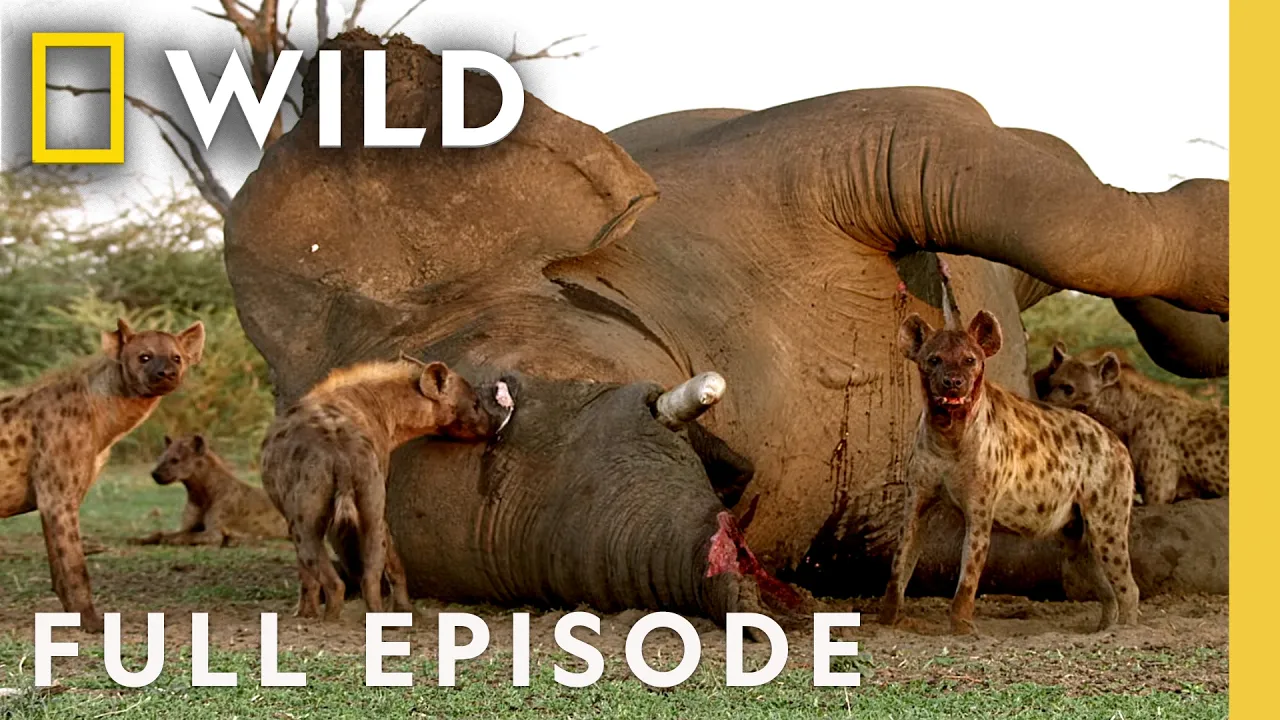
[owl hooting] And with those ears, Binti's hearing is outstanding. Taji keeps the family moving... such big animals need to eat around the clock. But there are dangers in the dark. Taji keeps the herd together. [yawning] The lions won't waste their energy on this great grey mass. But there are others... who can see an opportunity. Binti smells something unfamiliar on the wind. The adults recognize it immediately. One hyena is no threat... but it's never just one hyena. [laughing] This clan has a lot of new mouths to feed. A newborn like Binti is the perfect target. Taji pulls back...
[rumbling, roaring] Calling the herd to create a protective wall around her granddaughter. [roaring] With hyenas approaching on all sides, the elephants... panic. [laughing, trumpeting] Kike and Binti have been separated... and surrounded. Across the pan, Taji fights alongside the rest of the family... unaware of the danger Kike and Binti are in. Binti instinctively feels safest beneath her mother... But her safe place keeps moving. [trumpeting, rumbling] Kike fends off hyenas from all sides. She cries out for help. And Taji... comes running. [roaring, laughing] Taji calls to head for the forest, while she sees off hyenas at the rear.
Binti struggles to keep up with the rest of the herd... As Taji urges them forward, she's lost sight of her granddaughter... the hyenas have something on the ground. [squealing] Binti's squeal sends her grandmother out fighting. Taji and Kike unite to rescue their baby. [♪ intense music] [wings flapping] Binti's exhausted... but alive. She's understandably wary of new faces... But baboons are helpful neighbors. Palm nuts make a delicious breakfast for the weary warriors. And Kike's being much more attentive... after last night, she's keeping her daughter close. Now they can rest. Binti's so tired she falls asleep standing...
Taji's not napping, she's listening. Elephants sense the low-frequency calls of other elephants from up to six miles away. Taji can't tell who it is, or what they're saying from so far away, but something's up, and she wants to go to them. Elephants are democratic, so she needs to get the family on board. Binti listens as her grandmother makes her case to the elder females. They rumble back and forth... discussing... negotiating. Binti hasn't learned any of this language yet. Though the outcome is clear enough... they go. The family trusts in Taji... she draws on ancient wisdom, passed down from matriarchs before her.
Binti will inherit all this knowledge one day... for now, she just needs to keep up. [♪ rhythmic clapping] Taji can now recognize the calls coming from beyond the river. She finds the safest crossing. Bringing up the rear, it's Kike's job to show her daughter how to cross the river. Binti goes to catch up with Taji... but Kike holds her back. The river is swollen after the rains. If she is caught by the current, she could drown... or worse. Binti's cousin hangs back to help... Together, they flank Binti. The water's deep, and fast. Even Kike struggles against the current...
Only her foot, stops Binti being washed away. [splashing] From this side of the river, the other family's calls are loud and clear. Not just one... tens of families are marching across the plains to be together. A mass gathering that only happens a few times a year. Binti's own sisterhood is part of a much bigger clan... Extended family, and old friends. Some haven't seen each other for years. These gatherings are a rare opportunity to catch up. [squawking] This is a special time... the savanna is lush after the rains. For now, it's 'all you can eat'... and they can enjoy each other's company.
The younger elephants let loos. Even Binti's in the spirit. Until... something unfamiliar. The boys are joining the party. Bull elephants sure know how to make an entrance! Over 45 times Binti's size... they're the largest animals she's ever seen! Some want to throw their weight around. Others pay their respects, to their mothers. This bull is one of Taji's first calves. He now towers over his mom, though he's not too big for a cuddle. Like all males, he left the family as a teenager to live a mostly solitary life. Binti will spend her life surrounded by family.
These gatherings build connections between sisterhood. She starts to reach out. The friendships she makes now will last a lifetime... ♪ Hey Queen ♪ ♪ You are not alone ♪ ♪ You can have whatever you dream ♪ [Narrator] Bonds vital to her survival... ♪ Listen to your own inner voice ♪ [Narrator] Because the savanna is fickle... [Narrator] And the good times won't last. [dust blowing] Months have passed... a dry season now follows the rains. Binti is six months old. She's stronger and growing in confidence, but 'The Dry' has its own hard lessons... At this time of year, the family sticks close to dependable water.
Taji covers herself in mud. Her wrinkles are a gift... they retain up to ten times more water than smooth skin... helping her stay cool. It's all in the application... Binti needs to work on her technique. Sunscreen on, it's time to eat. Binti settles into the steady rhythm of the season. The family drinks, and then they walk to find what food they can. Lush grass is a distant memory... you take what you get, and you don't grumble. ♪ That's not easy nah ♪ ♪ Easy no ♪ ♪ Easy net ♪ ♪ Easy ni ♪ ♪ Aaahh ♪ [Narrator] Then you walk again, back to water.
Each adult needs to drink around 50 gallons a day. It's no time to play. ♪ No that's not easy nah ♪ [Narrator] These treks are tough on Binti... A lesson in resilience. Binti's still dependent on milk, and Kike can only provide it if she's drinking. [Narrator] So they keep on moving. Taji has been navigating the dry months for decades... She has a mental map of ancient elephant pathways, that will lead the family to what they need. With every step, Binti's learning it too. At the next waterhole... only mud. Climate change is making the dry seasons more extreme.
Taji remembers water here... but relying on memory only works when the world stays the same. The family looks to Taji. She chooses... a new route. Taji knows a natural spring close by. [rumbling, trumpeting] [mooing] [rooster crows] Now a village surrounds the spring. In the dry months, water is needed by everyone. It's so tempting. Binti has never seen people before... she senses Taji's caution. Taji knows humans, but she wasn't expecting to find them here. Her mental map is out of date. She calls the family away. This is an important lesson for Binti. As she grows up, navigating people will become ever more common.
Elephants rely on old wisdom, but their home is changing fas. Africa's human population has more than tripled in Taji's lifetime. Every year, more savanna is turned to farmland.... cutting through ancient elephant pathways. The world's largest land animal is running out of space. [lowing] [snorting, lowing] [♪ singers vocalizing] The family walks on into the night... It's cooler, easier to travel. After almost two days without a drink, finally Taji gets them to a waterhole. It's a magnet... for everyone. Taji's now on edge. Lions aren't a threat when her family is well-fed and strong, but it's a different story now...
They are tired and weak... And the lions can see it. Taji watches closely, weighing up the risk. But Kike's protective instincts are in full force. She wants the lions away from her daughter. But they're not going anywhere. The family is still thirsty... but it's just too dangerous. Taji calls them away. She's not gotten Binti this fa, only to lose her now. The rains should have come... this is a drought, the worst in 40 years. The elephants huddle in the only shade they can find. Without water, Kike's milk is drying up. A drought in a calf's first year is often a death sentence.
There's no water here, but the family has come across something they recogniz. Only one animal has a skull this big. Elephants seem to know the remains of their own... this was an adult female... likely a matriarch that Taji knew. She leads the family... they encircle the bones. They fall silent, as each elephant takes their turn to touch them. They don't shield Binti from the ritual. [blowing] Droughts that used to occur once a decade, now happen every few years. The youngest and the oldest elephants are especially vulnerable. The loss of a matriarch; her knowledge, experience, and leadership...
is devastating. The family can't afford to lose Taji... especially Binti. They must move on. Taji makes time for a final goodbye... to her old friend. The matriarch delves into her memory. There's a river... But right on the outer reaches of their range... it will be a long journey and a risk. Taji must trust that this path, carved into the savanna by all the elephants that have gone before, will save them. ♪ Feet, don't fail me now ♪ I got to stand my ground ♪ ♪ And though I'm down for trying I am better in denial ♪ ♪ So I hush, don't make a sound ♪ ♪ I got to stand my ground ♪ ♪ And though I was down for trying ♪ [Narrator] Taji finally smells water.
[Narrator] And something she doesn't recognize. [honking] Taji's never seen anything like this before. A new highway stands between her and the river. Road building has exploded in Africa. Taji has no experience to call on... this is one change in her world too many... she freezes. The other adults cannot resist the scent of water, they take their chances on the road. [honking, trumpeting] Binti is curious... but her mother calls her back. Kike stays by Taji's side. Perhaps things will be quieter, after dark... [traffic noises] No such luck. The hours pass, and still, Taji is not moving.
In the face of such dramatic change, she's paralyzed. Kike, Binti, and her cousin are waiting for Taji to take the lead, but they're desperately thirst. The river is so close, and the rest of the family will have reached it by now. With Taji unable to lead, the younger elephants must show their matriarch the way. [♪ confident music] Binti boldly steps forward. Following her mother into a changing world. Finding herself all alone... Taji now follows in her granddaughter's footsteps. [♪ triumphant music] The taste of water is pure joy. ♪ Just imagine we woke up in paradise ♪ ♪ Don't need magic ♪ ♪ Let my force just carry us home ♪ [Narrator] Taji made the right choice to guide them here...
and with the help of her daughter and granddaughter, the whole family made it safel. ♪ Don't let go, don't give it up ♪ ♪ I, I will be your light ♪ [Narrator] Elephants have always walked in the footsteps of their ancestors... ♪ When you're low I'll lead you home, Chariot ♪ [Narrator] But Binti's growing up in a very different world. [Narrator] In just 50 years, Savanna elephant numbers have fallen by 60%. ♪ Take you back to where you're from, Chariot ♪ [Narrator] They will need strong, compassionate, adaptable leaders if they are to survive. [music plays through credits] NARRATOR: In the animal kingdom males are often presumed to be the most dominant.
But are the biggest, baddest and fiercest sharks in the ocean female? ERIC: So perfect! ALLISON: Woah! A beautiful big female great white shark came right under the boat here and surprised us. NARRATOR: Tap into cutting-edge research around the globe. THOMAS: Oh wow. ERIC: It's a female. NARRATOR: And uncover what it takes to rule the waves. There are many differences between male and female sharks. One fascinating factor is their behavior. But could differences in both sex and behavior explain why some sharks attack? NEWS REPORTER: Now to the high alert at America's beaches. Lifeguards have spotted a shark near swimmers about 5 feet from shore.
NARRATOR: In Mossel Bay, South Africa, Alison Towner is investigating the shark thought responsible for more human fatalities than any other, the Great White. ALISON: If there's ever a species of shark that you need to be extra cautious around, of course, it's a great white shark. NARRATOR: Alison sets out to locate and tag a large female white shark here to reveal its movements and discover if females are more voracious than males. The largest male white sharks grow over 13 feet in length, but what about females? ALISON: While both sexes can actually get really large, females have to be a lot bigger in order to reproduce, to see a mature female great white shark is an absolute spectacle.
These animals get up to over 21 feet. I mean, they're weighing in at around two tons. NARRATOR: Some of the biggest documented white sharks are pregnant females. ALISON: They've got physiological demands on their body when they're pregnant. NARRATOR: These enormous sharks must provide nutrients to sustain as many as 17 live young in-utero, each measuring up to 5 feet long. ALISON: This could mean that they're more hungry and that they're seeking out food, by the coastal zones. NARRATOR: Through 'Active tracking' with an acoustic transmitter, Alison can gain valuable insight into the movements of these mysterious females in real time.
But first she must tag one. ALISON: Mossel Bay is a really important spot for white sharks. And that's primarily because it's effectively an aggregation site for their prey. We've got a seal colony with around 4000 cape fur seals. Look at that! Predation over there, it's a shark taking a seal! The most amount of seals found in a white shark stomach was six full cape fur seals, not pups, adults. So we think it literally went around the island chomping seal after seal after seal. We didn't realize they were capable of eating that much all in one sitting.
NARRATOR: Could bouts of intense feeding like this relate to females bulking up before pupping? BOAT CREW: Mossel Bay port control, Mossel Bay port control. ALISON: We just arrived at Seal Island, we're going to get some chum slick into the water so that we can get a white shark to the boat, then we can get a tag in. NARRATOR: These sharks may have the best sense of smell of any shark species. ALISON: Female great white sharks, what I like to call the big girls, often the other white sharks around the boat will just scatter. And the big girls kind of take over the show.
NARRATOR: These supreme predators rely on the art of ambush. In the moments before an attack, great white sharks can swim in bursts of over 20 feet per second. It isn't long before the first shark appears. ALISON: Woah! NARRATOR: It's a large female. BOAT CREW: Here it comes, deep. ALISON: Yaeh, Yeah, Yeah. NARRATOR: She could be exactly what Alison is looking for. ALISON: Back to the boat here. Having another fret at my bait. NARRATOR: Alison must wait for the ideal moment to deploy the tracking device. She's here, she's here. Woah! Absolutely unbelievable! We have a shark that literally launched itself out the water three times in a row to the point that we can't tag this animal.
NARRATOR: The shark will not stay in one place long enough to deploy. ALISON: Back again ok, here we go! Oh! NARRATOR: Tagging a shark this unpredictable is too dangerous for both Alison and the shark. ALISON: It is far too difficult. But that's science for you, you know, it is full of surprises. And white sharks all have their own personalities. NARRATOR: Personality in animals is a pioneering area of research and a team of scientists are on a mission to understand the mind of the shark. Rising abruptly from the depths of the Indian Ocean, 600 miles from the nearest landmass this is the lonely coral atoll of Fuvahmulah.
The fishermen here have swept fish blood and guts into the water for generations. Inadvertently, they are calling a formidable predator up from the deep. Dr Thomas Vignaud is a shark behavior expert, specializing in the personality of Bull Sharks. Now he is preparing to meet another equally feared species the Tiger Shark. THOMAS: There is nowhere else in the world where you can get this close to Tigers so easily very shallow water, very close to the shore, just a few meters away. NARRATOR: Thomas hopes to use these unique conditions to assess the personalities of the local sharks.
THOMAS: Males will usually have a bit more energy and move around faster. They are also more skinny, and a little bit more, cautious, but females are usually very confident and bold, they gets a lot closer So I know for a fact that there are shark personalities, but it's really hard to translate that knowledge into science. You have to translate it into measurements over years and years. This is the really hard part. Hey, hey, shark! I've never seen one so close to the surface. NARRATOR: Thomas' hypothesis is that every shark has its own, very specific personality.
If his theory is correct, it could be a sign of intelligence, which might evolve our perception of sharks. THOMAS: I think there is a big storm coming in it's pretty wavy. I hope the visibility is okay. Otherwise it's going to be really hard to see the sharks well, it might get a little bit dangerous. NARRATOR: If female personalities are different from males, could this research then shed light on the profile of a shark that attacks? George Burgess is a shark attack expert studying human-shark conflict. GEORGE: The three species of sharks that are most dangerous to humans are white sharks, bull sharks, and Tiger sharks.
The big three, probably represent about 80 percent of fatal attacks, recorded in the international shark attack file. If you wanted to develop a profile of a killer shark you'd start with size. Size, of course, is the most important thing. The shark has to be big enough to cause real damage. And generally speaking, females tend to grow to a larger size than do males. NARRATOR: With their physical superiority, could large female sharks be more dominant and possibly more aggressive than males? Thomas intends to find out. He follows the reef towards the edge. From here the ocean floor drops away to a depth of over 16,000 feet.
NARRATOR: It's from this abyss that the sharks come. The Tiger sharks begin to arrive, but are they males or females? Which can grow up to 18 feet long. NARRATOR: Known to have one of the broadest diets of any shark species, the tiger has a reputation as a scavenger that will eat almost anything. NARRATOR: Claspers the male reproductive organs differentiate the sexes. NARRATOR: The males scatter. A much larger shark has arrived. NARRATOR: A 14 foot long female is on the scene. NARRATOR: She swallows the entire tuna head in one effortless bite. This female is at the front of the dinner line.
Thomas already sees similarities between his work with Bull sharks and the tiger sharks here. But what about identifying different personalities of both male and female sharks. THOMAS: I've been very privileged to spend over 1000 hours with bull sharks in Fiji and it's been a great opportunity for me to learn more about their behavior or their personalities. You can really assess which one is dominant and which ones are a little bit less likely to go into a fight. NARRATOR: Dominant, female Bull Sharks seem to behave in a similar way to Tiger sharks. THOMAS: This is ninja.
It's one of my favorite Bull shark. Really impressive female, extremely smart. So agile, very skillful Those big female really have a presence, something very special about them. They were by far the most dominant. NARRATOR: Like the large female Tiger, it appears females of both species can show dominance over males. Now he'll evaluate the personalities of these Tiger sharks and form a database. Using a numerical scale, he'll score the Tiger Sharks' behavior, rating their confidence from safe to potentially dangerous to humans. THOMAS: I use it to write down the different behavior I see in different situations, for example, if a shark is coming to eat a fish head, it's one situation.
If a shark is coming towards me, a human being, it's a different situation. NARRATOR: Using an ethogram Thomas reviews the personalities of the sharks, giving them a score from 1 to 10. 1 being very shy. 10, extremely bold. THOMAS: If I take the average of all the situation that gives me an idea of how bold or how shy the shark is overall. Then I can compare this shark to the others. NARRATOR: From the outset, the females are scoring higher than the males. THOMAS: when you spend 1000s of hours with the same sharks in the water, you really get to know them so well that you can really predict what they're gonna do a few seconds before.
you really develop a special, special relationship with them. It's amazing. NARRATOR: Rating behavior over extended periods of time identifies the average behavior of each shark. This can demonstrate unique, individual personalities. And if sharks do have different personalities, could this be a product of their experience, their environment, or could it be their genetics? ERIC: Hey Thomas! THOMAS: Eric! Nice to see you. NARRATOR: Thomas is joined by Professor Eric Clua and his assistant, Clementine Seguigne. Eric is a Marine Biologist specializing in shark behavioral ecology and human-shark conflict. ERIC: I'm focusing on better understanding shark behavior. NARRATOR: Eric's compelling theory could explain attacks on people.
ERIC: If you accept the hypothesis that sharks have personalities, it means that every shark will be different one from each other. Most sharks will never dare attacking a human but you may have some very few, scarce, dysfunctional animals that will do it and we call them 'problem individuals'. CLEMENTINE: Problem individuals are sharks, which display a very particular type of behavior. Some shark can attack humans more than others, particularly if these animals are really curious and inquisitive. ERIC: 99.9 percent of the population will never attack a human. But then you will have one that will do it, and repeatedly.
NEWS REPORTER: Tonight, danger in the surf. Lifeguards on shark patrol. NARRATOR: Like Thomas, Eric's "problem individual" theory relies on demonstrating that sharks do indeed have individual personalities, meaning some might be shy, while others are bold. And that this individual behavior is consistent throughout the shark's life. ERIC: I have also to prove that the personality trait is transmitted from one generation to another one that the young shark which is bold will have either a mother or the father that is also bold. NARRATOR: Eric must establish the lineage of these sharks through genetic analysis using DNA sampling.
If successful, he may be able to identify potential problem individuals in a population. ERIC: We are trying to use less intrusive tools to get DNA from the shark. So usually we were shooting the shark, with a biopsy probe, but we're going to try getting DNA through the saliva of the shark. NARRATOR: Eric hopes that a shark will bite the tuna head leaving behind a tooth mark which may be swabbed for traces of the shark's DNA. ERIC: I'm hoping that the shark will have to struggle to bite and cut the head and hopefully it will leave its DNA NARRATOR: The team head out of Fuvahmulah harbor to search for the sharks, and they don't have far to go.
ERIC: Woah! Shark! Shark! Wow. Wow. That is a big one. NARRATOR: Thomas coordinates top-side, while Eric and Clementine prepare to get up close and personal. ERIC: Ready to meet Tiger Sharks? -Yeah. -Okay, let's go! THOMAS: Hey, Eric, can you hear me? How's it going down there? THOMAS: How is the activity down there? NARRATOR: Just as things are getting busy below. The team on deck throw in the tuna head. NARRATOR: Even underwater traces of genetic material from the shark's mouth will remain on the rope, providing invaluable DNA for the scientists. ERIC: That piece, that piece is okay.
That was very good. Amazing. CLEMENTINE: Some of the sharks are really well marked on the dorsal fin so we can recognize them quite well. ERIC: Very impressive, very exciting to see these large animals coming from nowhere. NARRATOR: The females are taking over the show. ERIC: A big female came, she was bolder actually than the others, she came, she took it. And then she left a nice piece of saliva on the rope. Very good. It worked. CLEMENTINE: We have photo of all of these sharks, we have the behavior of all of these sharks, and so we will be able to link pictures and behavior with DNA.
And that's really interesting, because if some sharks are sharing the same behavior, and the same DNA, we will know that they will be related. And that's a new discovery for us. ERIC: We can better understand this link, this potential link between behavior and genetics. NARRATOR: To identify a relationship between genetics and personality, Eric and Clementine must use every chance they have, to collect more samples. Back at base, Thomas reviews the day's activity to further develop his understanding of the Tiger shark's personalities. THOMAS: Two sharks are going for the food this one is just swimming off he's giving up giving up straightaway.
ERIC: Yeah. THOMAS: The shark is just pushing the rock even biting to move the rocks away to get access to the food it's impressive behavior. ERIC: It's amazing. THOMAS: Ah I love this shark she's so gentle you know only a few hours with her and you can already feel her personality. Look at all those sharks they really great group dynamics you can see the smaller ones that are a little bit more away but the big ones are dominating the central space. ERIC: Well actually, I will feel very safe too you know if I was a four meter long shark.
THOMAS: True! Me too. This is such a cool place. So many sharks in just one dive so many displays of different personalities. I mean, this is great. NARRATOR: In Mossel Bay, Alison is still waiting for an opportunity to tag a female White Shark. BOAT CREW: Keep on going? ALISON: Yeah. NARRATOR: The team set out to try a new area away from Seal Island. Sharks are known to patrol the reef here, closer to shore. ALISON: Alright Justin. Neutral. NARRATOR: With fewer seals around, it's possible that the sharks are less frenzied, making them easier to tag. ALISON: Oh, shark!
NARRATOR: Alison must act fast, choosing her moment. ALISON: We've got a beautiful big female great white shark that's just arrived. She came right under the boat here and surprised us. I'm just gonna try and stick the transmitter right next to her fin. BOAT CREW: You can pull it back. It's actually lining up the stars, you need her to come past perfectly at the right time, with the dorsal out of the water. Okay, okay here we go, here we go. Yes it's in! Woo! NARRATOR: Alison attaches the tag to the shark's dorsal fin; a huge success for the expedition.
ALISON: Even though it looks a little bit invasive, deploying these tags, they heal very quickly. NARRATOR: Flesh wounds are common in sharks, especially in females whose skin grows up to twice as thick as the males, protecting them from bites inflicted during mating. ALISON: So active tracking it's almost like you're in the mind of the shark. You actually get such a feel for what the shark is doing naturally. You're in their world. NARRATOR: Now the team must track the shark's signal to try to find out where and possibly what she is hunting. ALISON: It's a very weak signal.
I just thought maybe I was getting a ping from down here. And it would have made sense that she b-lined in shore. We spent so much time trying to get that tag on that shark. And we just couldn't get to her soon enough to get a track. NARRATOR: With no time to waste, the team set out on a mission to find the tagged female shark. With an abundance of prey across the bay, this shark could be anywhere. GEORGE: The white shark, which generally prefers cooler waters tends to go after sea mammals. Considering they have to come to the surface to breathe.
If you're a predator, the perfect time to get one of those animals is when the head sticking out of the water. Investigative bites have been demonstrated in the white shark in particular. A quick try to grab something at the water surface to determine what it is, whether it's edible or not. It's acting like the right kind of thing, it's the right size, and I'm hungry. NARRATOR: Both mistaken identity and investigative bites could account for a proportion of attacks every year, but Eric has another theory. ERIC: There was the case of a Tiger Shark in Papua New Guinea that perpetrated up to 12 attacks on humans.
ERIC: Without knowing the gender of the animal, people called that animal, big boy. In lots of cases, after an attack, the gender of the shark is not known, but I have the strong feeling that in most cases, females are responsible for these attacks. Given the size of this shark instead of calling him big boy, they should have called her big girl. GEORGE: In the year 2021, the International shark attack file reported 73 incidents of unprovoked shark attack worldwide, resulting in a very high number of deaths. But we have essentially no information at all on the sex of attacking sharks on humans.
But an attack by a larger animal which would more likely be a female is likely to cause greater damage or greater harm. NARRATOR: Could these monstrous females be more confident due to their superior size, making them more likely to attack? The team hopes to collect the genetic material of such a shark. A bold, 14 foot long female takes the bait. ERIC: It is very important for us not only to get samples of DNA, but also to know who they belong to, and to make the link between the personality and the genetics of the sharks. NARRATOR: Eric sees a tooth fall from the large female's mouth.
It holds the DNA the team is looking for. ERIC: When you're surrounded by so many sharks, it's very difficult when you're underwater, to make sure you can see 360 around you, actually it's impossible. NARRATOR: It is critical for Eric and Clementine to work together watching each other's backs as they look out for the tooth. ERIC: You should not allow a shark to come into the group because then you're in trouble. These animals they have an amazing pressure in their jaw, it's about half a tons per square centimeters. You can imagine, these teeth, the damage they can do!
I prefer that not to happen to me. NARRATOR: Eric is determined to find the Tiger Shark tooth. Wow, we've got them. Big females. And very bold, you know. one of the shark had to struggle to get the head and I saw one tooth falling out and I was able to retrieve that tooth is from the first large female that came in to grab the tuna head. NARRATOR: This tooth will be sent to the lab for analysis. Could she be related to the shark that bit through the rope? With Thomas' ongoing ethogram studies and Eric and Clementines' genetic approach combined, the team in Fuvahmulah are gaining unique insight into the sharks here.
This multidisciplinary study could potentially hold the secret to identifying what it takes to be a problem individual. Whether problem shark or not, when it comes to finding the Queen of the waves, Alison's theory is simple: size rules. She firmly believes there is a direct correlation between size and dominance. ALISON: One thing I've observed with great white sharks, if a large female comes on the scene, and there are other smaller white sharks around her, they move out the way. And it's almost like she's aware of her own presence and power as well. So certainly the females assert their dominance, and it's absolutely spectacular to see.
NARRATOR: These super-sized females are the largest predatory fish in the ocean. Could they be defending a nursery to protect their young? ALISON: Would a mother shark be more aggressive? Not that we know of, there's absolutely no mother nurturing when it comes to delivering pups as white sharks. When they drop their pups, off the pups go, fully self-sufficient. Nobody has ever seen or documented great white sharks giving birth or mating anywhere on the planet, it's like the Holy Grail. NARRATOR: But what about pregnant sharks? Could they be more aggressive? Thomas is keen to track one down to assess its personality and find out.
NARRATOR: Suddenly the sharks swim away. Has something scared them off? A 14 foot long Tiger Shark emerges from the deep, one of the largest of the expedition so far. NARRATOR: And she's pregnant. NARRATOR: Female Tigers can carry more than 30 pups. This encounter is short lived and before Thomas has a chance to assess her personality, she melts into the shadows. Although bold, it seems this mother-to-be is not so voracious after all. GEORGE: It's pretty well understood that pregnant females when they're in the areas where they're birthing are not feeding. We've seen time and time again, where female sharks, that are pregnant and get ready to give birth, ignore humans completely I'm unaware of any attack that has ever occurred with a pregnant shark.
ALISON: One scientific theory is that possibly they have hormones in the late term of their pregnancy that inhibit them feeding, to prevent them from preying on their own young. Could it be that a large female white shark that's just given birth and is now seeking prey maybe sort of less selective on what she's eating? Difficult to support, but certainly something to consider? Look, if you told me I wasn't eating for the last term of my pregnancy, and I gave birth, I would be seriously angry at the end of that, and I'd certainly be looking for a meal.
continues the search for the tagged shark. ALISON: She's very far away, but I think I'm starting to get some pings. ALISON: Here she is. We've got a signal and a good one. So now we're going to quickly change hydrophones. And we're going to see if we can get a directional track on her so that we can get positions and follow her around. We know she's within 500 meters of the boat somewhere. NARRATOR: Alison moves quickly to get a bearing on the shark, before she loses signal again. ALISON: Yep, she's over here. About 1 o'clock. But if we don't go we're going to lose her.
BOAT CREW: Let's go. There. NARRATOR: The team are just over half a mile from the shore. ALISON: Who knew she'd be down here all that way from where we saw her. One thing I love about female sharks is that they're just so unpredictable. One is not exactly really like the other so they constantly keep you on your toes. BOAT CREW: Ok, she's just over there now. ALISON: Okay. Let's go neutral. BOAT CREW: 22, 'yes' 07, 5, 11. ALISON: It's like the ultimate game of hide and seek with a great white isn't it? continues the hunt.
Even with a tag, finding a single shark in the ocean is far from easy. So when it comes to attacks, finding the perpetrator is extremely difficult. GEORGE: Most sharks that are biting humans are gone after they bite. NEWS REPORTER: Danger in the surf. GEORGE: We have virtually no confidence in the identification of a shark or its size for most victims. I'm aware of three different times where an individual shark could be documented or hypothesized as attacking more than once within a short period of time. That's out of 1000s that we've documented. NARRATOR: But Eric is on the trail of one shark which he believes is a repeat offender.
ERIC: In December 2020, there was a fatal attack in San Martin. And one month later, there was a second attack, which was almost fatal. These two attacks happen only 85 kilometers from each other. NARRATOR: This is in an area where there have been no fatal attacks in recent history. But are these two incidents linked? ERIC: We were able to prove that, it was a tiger shark. And now we have ongoing genetic analysis that should allow us to prove that actually, it is the same individual. NARRATOR: The techniques Eric is employing in the Caribbean could one day expose soon-to-be problem sharks.
ERIC: The central question is why a shark will bite a human being? But actually it's not the right question. The right question will be. Why that shark bit a human being? What make that shark different from the other sharks? To understand that, we have to take the different components of shark behavior. Dominance will of course be directly linked to the size of the shark, but personality will also play a critical role, for that dominance. We want to identify the dominant animals that dare participate directly to the feeding frenzy. Stay safe okay. the dominance hierarchy in this group of sharks, the team must collect the DNA of the boldest individual at the top of the pecking order.
This yellowfin tuna weighs 200 pounds and is a substantial prize to claim. BOAT CREW: Sending down the tuna. NARRATOR: The shark that comes in to take this tuna could well rule the waves here. The team don't have to wait long before they have a contender. ERIC: Ah! We got it. We got our queen. It took time, but we made it. Wow, that was amazing. At the beginning there was something like 10 sharks. Among them, there was two large females. Then suddenly, one very impressive enormous female came. Wow, I think at least 16 I would say even 17 feet you know.
Yesterday, it was a princess. That is the real queen. That is the Big Mama. NARRATOR: The team have found a dominant shark, but with no genetic material collected this time, there is still a lot to learn about her. CLEMENTINE: All the sharks they move away, they let the Queen come to the bait. She definitely rules the sharks. NARRATOR: She is enormous, she is confident, she is female. But do these factors make similar sharks more likely to become problem individuals? ERIC: They needs to be bold. But that's not even enough. To feed on a human. You also need positive reinforcement through your own experience.
NARRATOR: A bolder shark could be more likely to experiment with larger, riskier prey items. If unharmed and rewarded with a meal, it is conditioned through this experience, to keep trying larger prey. NARRATOR: But if the animal does not have a positive experience and is hurt or frightened, it may think twice before trying again. Thomas believes that using this principle could mitigate against problem sharks. THOMAS: When I work with bull sharks I have this special sound I used to scare them to do negative reinforcement, teach them this is not something I want you to do. KKRRRFFF!
I was using variant of the Doppler Effect. KKKRRRFFFFF!! So you feel like something is going after you really fast even though I'm not moving. THOMAS: It work with bull shark but it doesn't seem to work with tigers. I've tried many occasions in Fuvahmulah, and because Tiger sharks evolved to be more vision and smell, maybe they don't react to sound as much? NARRATOR: Whether or not conditioning sharks works as a deterrent, perhaps shark personality should be given more consideration when it comes to human-shark conflict? ERIC: I don't like the mistaken identity concept. Because it means that all the sharks around the world could make a mistake, all sharks potentially represent a danger.
On the contrary, 99.9 percent of sharks will never represent a real danger for people. Only 0.01 may And these are the problem individuals. NARRATOR: If sharks do have individual, heritable personalities, might this change our approach to shark attacks? ERIC: Still the main strategy to manage human fatalities is to cull sharks blindly, without any selectivity, if we manage to prove that the hypothesis of the problem individual is true, it means we don't have a problem with sharks. We have just a problem with very few individuals. THOMAS: Sharks are sentient beings, and they deserve respect as much as any other animals.
ALISON: They absolutely have their own personalities, and I think that is such a fascinating trait. THOMAS: It shows they also have thoughts and maybe emotions. ALISON: Do sharks have feelings? I imagine they do feel pain. But if they got the emotional complexity that we human beings tie to feelings, that's a whole different level of science. But you never know. Can you believe it, it's her! Look at this. She is a good kilometer and a half away from where we tagged her. So close to shore, you can actually see a bunch of people on the beach.
And this animal is just doing what it does naturally is patrolling the reef here If they knew what we were tracking right behind the surf here. It just goes to show coexistence is ultimately possible, in fact it happens more than we know it. NARRATOR: Eric & Clementine must wait for the results of their ongoing genetic analyses, which they hope will prove that personality is inherited, and support their problem individual theory. CLEMENTINE: My dream is to understand better the behavior of sharks to improve the relationships between humans and these animals. Sharks are not the man-eater that we think they are.
As a new generation of marine biologists, it's up to us to protect sharks for generations to come. THOMAS: Because of the millions of years of evolution, females have grown so much stronger, so much more resistant than males. ERIC: In the world of sharks, the rulers are the Queen and not the king. THOMAS: Their skin is thicker than the males. They grow larger than the males. They live longer than the males and outnumber the males. The females are 100 percent. Dominant. ERIC: Here in Fuvahmulah, we definitely met a shark queen I hope that she and her fellow Queens will continue to rule our oceans for the many years to come.
THOMAS: Long live the Queen. ♪ ♪ NARRATOR: The male lion. (growling) In his prime, he can span 11 feet in length, weigh up to 550 pounds... (roar) and pack a roar that can be heard up to five miles away. He is the undisputed king of beasts. But there's another power behind the throne. Weighing in at 300 pounds... (growling and snarling) the lioness combines both speed and power. (growl) She's faster... more agile... and more deadly. And on the savanna, the lioness is queen. Southern Africa. Over 750,000 square miles of temperate grassland. Home to hot summers and arid winters...
and thousands upon thousands of lions. (thunder) During the rainy season, grass on the savanna grows tall and thick... providing food for herds of migrating animals... (lowing) and creating the perfect cover for ambush hunters. (snorting) During this time of plenty, a lioness can stalk her prey entirely unseen. A wildebeest and her baby pause in the open grassland. They seem to sense something is wrong. The grass obscures their view of the predator stalking nearby... until it is too late. The wildebeest struggles against the inevitable. Although she outweighs the lioness, she cannot defend herself against the big cat's weapons.
One-inch-long claws dig into her flesh like grappling hooks. And four canine teeth penetrate two inches into her skull, anchoring together predator and prey. Usually, the lioness kills by knocking down her prey and clamping on its throat. But this time, she opts for a more personal technique. Hanging on to the wildebeest, she covers its mouth with hers. Huge nostrils allow her to breathe, while her victim suffocates, staring into the eyes of its killer. Death is all in a day's work for the lioness. She has a family to feed. And today that family eats well. Even some of the cubs get a taste.
(low growling) With meals like these, the youngest lions get a good start in life. It will take 18 months before they can hunt for themselves. The pride will look out for them until then. Lions are the only big cats that live in prides. Females in a pride share a family bond. Mothers, sisters, and daughters may live together for their entire lives. The pride's males come from outside, exiled by their family upon reaching adulthood. The males defend territory... (snarling) And father all the pride's cubs. But they rarely hunt for themselves. Their giant mane makes them obvious to prey.
So the job of finding dinner belongs to the pride's females. (crying) (zebra braying) An experienced hunter chooses her prey carefully. Timing is everything. A lioness can only run at her top speed for about 300 feet. So she has to make it count. (braying) Once she gets a chokehold, her family joins the kill. (groaning) Every hunt tests their ability to work together. A full-grown lioness needs 12 pounds of meat a day. And she can eat four times that much. The pride must kill often to keep their bellies full. At daybreak, a young mother-to-be looks for breakfast.
Unlike lions, cheetahs do most of their hunting alone. She is the world's fastest mammal, but her pregnancy is slowing her down. She uses stealth to inch closer to her prey... before she puts her speed to use. She misses her target. (panting) She'll have to settle for easier prey. That doesn't work out either. Soon she'll get desperate. Then, an opportunity. A wildebeest calf has lost its mother. Without her protection, it won't last long. Despite her hunger, the cheetah takes the time to hide her kill before she eats, hoping the lions won't find it. The cheetah is not the only predator sharing this land with the lions.
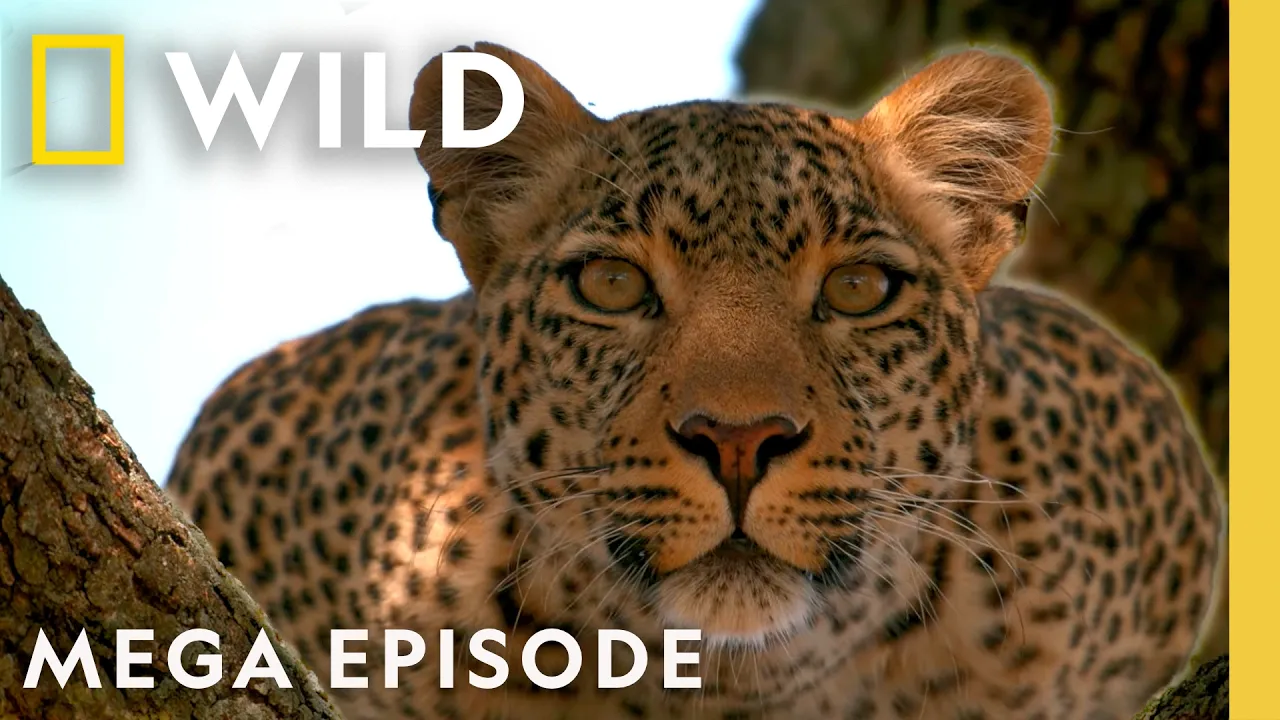
As day turns to night, another predator emerges from the cover of darkness. The leopard. This stealth predator lives most of his life alone. Stalking his prey with large, padded paws... and slow, cautious movements... he is virtually invisible to prey... before he strikes. He may be an efficient killing machine. (yelp) However, making the kill is just half the battle. He's also got to keep it. (chattering) The hyenas celebrate their win. But they've forgotten that even at night, this land belongs to the lioness. (snarl) NARRATOR: Just as the hyenas settle in to enjoy their stolen meal, the lioness emerges from the darkness and makes a claim of her own.
(shrieking) But the hyenas don't give up that easily. (yipping) The leopard leaves the two of them to fight it out. He senses something else tempting on the horizon. A female leopard offers to quench a different appetite. She is in heat and ready to mate. Leopards may generally prefer a solitary existence. But when the time comes to breed, they will stay together for up to six days. They'll mate, wander, and mate again... ...copulating every 15 minutes. Their wandering takes them near an impala herd. For once, the leopards are not interested in hunting. Their mating cries frighten the antelope.
They can hear their ancient enemy, but nothing is chasing them. The herd scatters, confused. Some run so close to the mating leopards that they trigger the predatory instinct. Unable to resist, the lovers latch on to the same prey. Sharing dinner does not come easily to these loners. After one last show of strength, the male leopard allows the female to enjoy a portion of the kill... sort of. Only time will tell if the rest of their collaboration will be as fruitful. Elsewhere on the savanna, another family is off to a successful start. This cheetah mother has given birth to a litter of healthy cubs.
Too small to crawl, they are entirely dependent on their mother. She'll keep them hidden in her lair for up to eight weeks. Here, they have some protection from the savage nature of the savanna. Not all babies have the luxury of a comfortable lair. This topi calf has to be on its feet minutes after its born. The topi mother hides all remains of the birth as quickly as she can. Newborn calves are particularly vulnerable to predators... predators like a mother cheetah. She needs the energy this meal provides. Raising baby cheetahs to adulthood comes with many challenges.
NARRATOR: Lions are capable of reaching speeds of up to 35 miles an hour, and can take down prey as large as a giraffe. They are the savanna's top predator. However, there are times even lions may be subject to attack. This pregnant lioness searches for a safe and secure den to give birth. Her newborn cubs will be born blind and defenseless. They'll be vulnerable to other predators who may see a chance to kill future competition. Fortunately, this lioness belongs to a pride whose territory contains many secure denning spots. She'll keep her newborn cubs hidden for six to eight weeks, protecting them from the threats outside.
Secure denning spots aren't the only advantage to living in a pride. Once the cubs are old enough to leave the den, they'll join the other pride cubs and their mothers in a group called a creche. For cubs, the creche provides plenty of playmates. For mothers, the creche provides protection for the pride's young. The cubs feed from any of the pride's mothers. And the mothers defend any of the cubs against attack. (wildebeest lowing) (hyenas yipping) And there's another advantage. Mothers can leave their cubs behind when they need to make a kill... ...ensuring the best hunters can continue to bring home the bacon.
Hunting is a female lion's specialty. Her fur coat blends in with her surroundings, giving her an edge when stalking prey... before she unleashes her power to take down the kill. (calf cries) (mewing) Not all lions have the good fortune to live in the comfort and security of a pride. At the edges of a pride's territory may live many individual lions who have not been so lucky. Most are young males. When male cubs reach sexual maturity, they must leave the pride of their birth. Their fathers begin to see them as competition and refuse to tolerate their presence.
(hyenas chattering) These exiles hope to take over a pride and father offspring of their own. To do so, they often kill lion cubs. If lionesses already have cubs, they're unable to mate. Killing existing cubs brings the females back into heat. Roaming males may kill a quarter of all lion cubs. To protect themselves against outside threats, lionesses instinctively respond viciously to any invading lion... including other lion cubs. While their mother was hunting, these two little cubs wandered off and accidentally crossed into another pride's territory. Often, trespassing cubs are killed on sight. But these lionesses hesitate. something familiar.
(roaring) Nearby, the mother calls for her lost cubs. When food is scarce, surplus female lions may be forced out of a pride. They become nomads. The bonds between mothers and exiled daughters disappear over time. But they aren't all gone yet. There's definitely something familiar about these cubs. Meanwhile, the lost cubs' mother picks up their scent and follows the trail into terrible danger. The pride may have spared the cubs, but the mother's presence will not be tolerated. The cubs are led away, lucky to have escaped their ordeal alive. Their good fortune continues. Their mother brings them to a fresh kill.
As cubs grow, their curiosity and adventurous spirit grows with them. In the shade of a tree, a leopard takes a break from the sun. Her two cubs explore excitedly. She has less energy. Feeding two rambunctious cubs means she must kill more often. For now, she's happy to leave them to play with her leftovers, while she gets a bit of a break. up to 50 inches of rain drench the African savanna. For this cheetah mom, the rain helped her sneak up on her prey. But while her hunt was successful, another challenge lies ahead. A passing herd of wildebeests have drawn the attention of lions.
Normally, the cheetah would simply disappear in the face of a more powerful enemy. But today the stakes are too high. Her cubs are hidden nearby. If the lions find the cubs, they'll kill them. They have no tolerance for competitors. The cheetah mother desperately tries to distract the lions. Risking death, she buys precious time for her little ones to escape. But she can't save them all. She has no time to mourn the loss. She races to save the two she has left. Until they get away from the lion pride, they are all in danger. The forest offers a place for a cheetah mother to rest and keep a watchful eye over her two living cubs.
Their playful interactions seem oblivious to the dangers around them. At four months old, they are old enough to eat meat. As one of them attempts to nurse, mom makes it clear-- the time for milk is over. From now on, they'll survive on an all-meat diet, which means she'll need to provide twice as much. As dawn rises, she attempts to do just that. She caught an impala, and there's plenty to share. (bark) She starts calling her cubs for breakfast. But they are nowhere to be seen. (barking) Nothing like waiting until the last minute. They may be hungry, but there's another powerful instinct at work.
One goes straight for the throat, preparing for the day he's the one doing the killing. But as tempting as it is to practice, the cheetahs must eat quickly. Vultures have already started circling. They'll tip off bigger predators. And they can't risk a face-off with another killer. (chirping) As the dry season begins, predators must change their hunting strategies. No longer do herds gather in the plains. Now they gather at the water. In the early dawn, three female lions approach a local watering hole. Two grown adults and one young one-- a novice. Hunting strategies must be taught to each member of a pride.
Today the novice will learn a new skill. The ambush. (call) Executing the perfect ambush requires perfecting one skill-- patience. Two hours go by. (low growl) Then three. And then a sound. Thirsty zebra. They stop to assess the risk before going further. If there is any sign of danger, they will flee. Every hunter must keep completely still. Finally, thirst beats fear. The lions must hold just a few more minutes to spring the trap. (drinking) But then... (fluttering) (growling and barking) the novice jumps the gun... ...and blows the whole thing. But this wasn't a waste of time.
It's training for the youngster, and therefore the entire pride. As prey grows scarce, they need to learn new skills. And next time, they might make the kill. The lions aren't the only ones learning new skills. Two leopard cubs eagerly climb on a leftover carcass. Their noise attracts some unwanted attention. And there's not much time to escape. While mom desperately tries to hide the carcass, the cubs make a run for it. NARRATOR: The leopard must make her next moves carefully. The lioness has caught the scent of the kill in the air. But she's not quite sure where it is yet...
giving the leopards just seconds to melt into the forest. Their camouflage keeps them invisible. They escape silently while the lioness can only wonder when she'll find her next meal. Another lioness faces down a different kind of threat. Exiled from her mother's pride, the lone mother represents a tempting target for these nomadic males. They are eager to mate. And if they can kill her cubs, they may get their way. She knows the threat, even if her cubs don't seem to understand yet. The mother launches a ferocious defense. She's outnumbered. While one distracts her, the other slips past.
She's managed to convince them she's not interested. But it comes at a cost. For cubs without the protection of a pride, death is common. Her last remaining cub may not live to see adulthood. Life in a pride comes with its own costs. (mewing and low growling) The bigger the pride, the bigger the appetite. And as the migrating herds leave the savanna, the pride must face off... against more dangerous prey. (bellowing) Only the most powerful prides can hunt the mighty and dangerous buffalo. It weighs up to 1,500 pounds, providing enough meat to feed every member of the pride...
if they can survive the attempt. (grunting) These fierce animals kill more lions than any other prey species. A loner offers the best chance of success. But even a loner is no sure thing. The lionesses work together to exhaust their prey. But the final blow requires the power of one of the big males. (snarling and grunting) The bull takes several minutes to throttle. And for now, the pride may feast. Tomorrow they will start again. And the queens will once again prove that this land is theirs to rule.
More from Nat Geo Animals

Get daily recaps from
Nat Geo Animals
AI-powered summaries delivered to your inbox. Save hours every week while staying fully informed.