Easter and Passover Special | Lost Treasures of the Bible MEGA Episode | National Geographic

Chapters3
Archaeologists uncover new evidence from Nineveh, including the Nergal Gate and newly discovered underground chamber, as well as skeletal remains that illuminate the city’s final days and the brutal mayhem of its fall. The program weighs biblical narratives against archaeological findings, exploring reliefs, deportations, and the collapse of the Assyrian empire.
A sweeping NatGeo mega-episode that threads Nineveh, Noah’s Flood, Mesopotamian cities, and the Exodus through new archaeology, drone surveys, and hands-on experiments.
Summary
National Geographic’s Easter and Passover Special dives into how archaeology reshapes our view of biblical stories. The team uncovers new layers in Nineveh’s Nergal Gate, including a fresh underground chamber and fragile human remains that hint at the city’s final days in 612 BCE. Across Mesopotamia, researchers analyze reliefs, cuneiform tablets, and ancient canal networks to explore whether floods, droughts, and imperial policies inspired stories like the Epic of Gilgamesh and the Book of Genesis. Jaafar Jotheri’s drone surveys and Mark Altaweel’s sediment cores reveal a wetter, then drier climate around Uruk, explaining how climate shifts may have seeded flood myths and early urban resilience. In Egypt, Pi-Ramesses becomes a focal point for examining the Exodus narrative, with Ramesses II’s inscriptions, chariot remnants, and wall paintings offering a material context for the Israelites’ possible experiences. The program emphasizes nuance: texts shape interpretation, archaeology refines history, and stories endure because they illuminate human responses to catastrophe and oppression. Creator-led segments feature hands-on reconstruction efforts—bitumen waterproofing tests, reed-boat experiments, and plaster conservation—bridging ancient tech with modern science. Throughout, experts weigh what happened at a city level, how empires rose and fell, and whether biblical accounts reflect collective memory, moral lessons, or historical events. The result is a thought-provoking mosaic that invites viewers to rethink familiar tales with fresh evidence and vivid demonstrations.
Key Takeaways
- Drone surveys show Nineveh’s walls stretched more than seven-and-a-half miles, with gates that reveal its enormous scale in its golden age.
- The Nergal Gate chamber, buried for millennia, yielded inscribed mud bricks and a probable guardroom, shedding light on Nineveh’s defensive architecture.
- Two prehistoric bones found beneath burnt debris suggest teenagers died violently during the siege, offering a rare human glimpse into the city’s end.
- Tel Hadid’s olive-oil industry and deportation tablets illustrate a deliberate imperial policy that reshaped populations across the empire for strategic control (7th century BCE). ,
Who Is This For?
Essential viewing for students and researchers of biblical history, archaeology, and ancient Near Eastern studies who want concrete artifacts and experimental methods that illuminate how legends may be rooted in real events.
Notable Quotes
"The new chamber is a treasure trove of discoveries."
—Intro to the Nergal Gate excavation and its significance for understanding Nineveh’s final days.
"These reliefs show the Assyrians as warlike, even heroic."
—Michael Danti discussing reliefs at Mashki Gate and the competing narrative to biblical portrayals.
"The Sumerian ark is round. All these cuneiform clues finally reveal the full design of this mighty ship."
—Alessandro Ghidoni connects cuneiform tablets to a test of the so-called Sumerian ark.
"I think the actual memory is a parable of forgiveness that survives to this day."
—Dr. Danti on how the Book of Jonah’s mercy fits with archaeological evidence.
"Water means life, quite simply."
—Campbell Price explains the Nile’s central role and protective amulets in Egyptian belief.
Questions This Video Answers
- Did Nineveh really fall to a Babylonian–Medes coalition in 612 BCE, and what does archaeology reveal about the collapse?
- What’s the strongest archaeological evidence for the Exodus story in Egypt and how reliable is Ramesses II as the possible Pharaoh of the Exodus?
- What does the Epic of Gilgamesh teach us about flood myths in Mesopotamia and how does it relate to the biblical Noah story?
- Could Pi-Ramesses have housed enslaved Israelites, and what evidence supports or refutes this theory?
National GeographicNinevehNoah's FloodEpic of GilgameshMesopotamiaUrukPi-RamessesExodusRamesses IIclimate archaeology
Full Transcript
[narrator] In Iraq, a pioneering team of archeologists unearths new evidence of the final days of one of the Bible's infamous "cities of sin," Nineveh. This is definitely a sign of a huge fire. [narrator] As they dig beneath the charred remains of a monumental gateway, they make a horrifying discovery. [Jan Heiler] Along with traces of fire, we found two sets of human remains buried under the collapsed building. [narrator] The merciless destruction of Nineveh was foreshadowed in the Bible. Could these be the remains of its people who fell victim to the prophecy? [Ulrike Bürger] They must have been killed during the conquest of Nineveh...
and it was lying there until we discovered it 2,300 years later. The stories in the Bible are famous across the world. They tell of great battles between good and evil, earth-shaking catastrophes, and heroic characters. Now, new archeological discoveries buried in the Middle East for thousands of years are shedding light on the real events that may have given rise to these legends. The Bible's Book of Jonah tells of the notorious city of Nineveh, home to a people so sinful that God sent them a prophet, bringing a message of doom: Nineveh would be destroyed as a result of its wicked ways.
This season... [Heiler] Can you clean this surface here? ...international teams are on a mission to uncover the truth about the real city of Nineveh. Our cameras have been given special access to archeological digs within recent conflict zones. They use pioneering technology... [Bürger] If you zoom in on the skull... ...to unlock the secrets of this infamous city and what ultimately caused its downfall. ♪♪ In the heart of the city of Mosul in Northern Iraq, German-Iraqi teams hunt for what remains of Nineveh. With few trees for shade, temperatures in the area can reach 120 degrees Fahrenheit, so Stefan Maul and Jan Heiler start digging at dawn.
[♪ tense music playing] Nineveh is one of the oldest cities on Earth, founded more than 7,000 years ago. In Biblical times, it was home to a people called the Assyrians. Today, its ruins lie scattered beneath the streets of Mosul, Iraq's second-largest city. Coordinates first. -[Bürger] Adjust the level. -[Heiler] 242. [narrator] Jan and Stefan are digging in a region that has seen huge destruction in recent years. [Heiler] This area where we're standing in right now are the leftovers of the destruction of the reconstruction of the Nergal Gate, which was destroyed by the Islamic State during their occupation of Mosul.
The Nergal Gate was the grandest entrance to the city of Nineveh. Its colossal towers were reconstructed following excavations in the mid-20th century. The team has been working through the rubble of this modern structure. [Heiler] What was unexpected for us, and quite a surprise, was that we had originally believed that the whole of the gate had been excavated in the 1960s, but when we were starting to remove the debris, we realized that this was actually not so, so this was a big surprise in itself. [narrator] The team has found incredible original reliefs carved 2,700 years ago.
And what's more... [Heiler] That's nine meters, 63... [narrator] ...this year, an entirely new chamber within the Nergal Gate buried underground. Jan works carefully with dig co-supervisor Ulrike Bürger to record its dimensions. Eleven meters, 87 centimeters. Eleven and 87. [narrator] At 32 feet long and 19 feet wide, this enormous chamber hints at the true scale of this legendary city. The Bible describes Nineveh as a massive metropolis with a river flowing through its heart. A vast, imposing palace is the seat of a fearsome king who rules over more than 100,000 citizens renowned for their wickedness. Protected by a mighty wall, the holy text says Nineveh is so big, it can take a person three days to walk from one side to the other.
So, what was the size of this historic city? [Professor Stefan Maul] Okay. [drone] Take off. -Waypoint updated. -[Professor Maul] Perfect. Perfect. Now, you-- Perhaps you go a little bit in that direction. Mm-hm. [Professor Maul] Follow a little bit the city wall, you go, come back. Go out of the city, and come into the gate once again. carry out a drone survey to visualize the true extent of the fortified city. [Heiler] The drone allows us to take a bird's eye view of the fortifications and the layout of the city in a way that is just not possible from the ground.
[narrator] Jan's survey reveals the remnants of the ancient city walls that stretch for seven and a half miles. In their prime, some of these walls were almost 150 feet wide. [Professor Maul] We are now on top of the most important city gate of Nineveh. The city wall is very long and has more than 15 gates. The survey confirms that Nineveh was indeed enormous, covering more than 1,800 acres, more than twice the size of New York's Central Park. [Heiler] In the Bible, it says that there lived 120,000 people in Nineveh. We are not quite sure if that is true, but we know that Nineveh was definitely one of the largest cities in its time.
These ruins reveal the city in its golden age, almost 3,000 years ago, as the capital of the mighty Assyrian Empire, filled with palaces, lush public gardens, and even libraries. At that time, most people lived in small villages. For many, a mega-city of 120,000 people would have been an almost unimaginable sight. But according to the Old Testament, Nineveh was also a truly wicked place. In the Bible, the Assyrians and Nineveh are often mentioned. There are several very important sources for the Assyrian history, one is the Book of Jonah. The Old Testament tells how God orders the Israelite Jonah to deliver a terrible prophecy to Nineveh.
The city will be destroyed in 40 days. Jonah disobeys God's command and flees by ship, so God sends a mighty storm to stop him. To placate the Lord, the sailors cast Jonah overboard and an enormous whale appears, which swallows him whole. Jonah prays for three days and three nights until God orders the whale to release him, so he can deliver his message to the city of sinners. What lies behind the Bible's depiction of such a terrible ancient city? Half a mile along the perimeter wall is another of Nineveh's secure entrances, the Mashki Gate. American archaeologist Michael Danti has been excavating in this region for over 30 years.
He's on a mission to find out more about the Assyrians of Nineveh and how they saw themselves. Here, underneath the ruins of this second mighty fortification, he investigates a remarkable discovery. [Dr. Michael Danti] The experience of finding these reliefs was quite possibly the greatest moment in my archeological career. These huge gypsum slabs clad the walls of what may have been a guardroom. [Dr. Danti] When we revealed this slab, my brother, actually, was one of the first people to notice it. And at first, I didn't believe him. [chuckles] And then as we began to dig down below the floors...
and we revealed this slab, we realized that we had seven slabs with well-preserved relief carving. These reliefs were carved for the Assyrian King Sennacherib in the 7th century BCE. He made Nineveh his home, transforming it into the greatest city of the Assyrian Empire and the ancient world. And as we dug down through the floors, we began to realize we could see the feet of these captives that were being marched off into captivity. [narrator] The reliefs depict the Assyrians as mighty conquerors. Muscular soldiers trek through new lands, and archers attack cities. These reliefs show the Assyrians the way that they wanted to be depicted.
As a powerful military machine that went on regular campaigns against foreign peoples, who are either rebelling against their rule, or had not been incorporated into the empire. Far from showing wickedness, these proudly displayed carvings show the Assyrians as warlike, even heroic. It is clear that the stories in the Bible offer a different perspective. They are authored by a people called the ancient Israelites, who may have suffered at the hands of the Assyrians. How much did their experience reflect the reality of Nineveh and its empire? To investigate the extent to which the Israelite people really did suffer under the Assyrians, Ido Koch has come to Megiddo...
500 miles west of Nineveh in modern-day Israel. [Professor Ido Koch] I was born here. This is my childhood landscape. And this is where I live. And this place is also meaningful for billions of people around the world. Megiddo was probably one of the most important centers of the Kingdom of Israel. [narrator] Ancient texts say that in 732 BCE, the Assyrians successfully conquered much of the Kingdom of Israel. [Professor Koch] The Assyrian Empire mobilized a huge army, and the locals had almost no ability to resist. [narrator] Megiddo was one of the Israelite cities that fell to the invading Assyrian war machine.
The image of the Assyrians besieging, conquering cities is well justified. Unlike sites, such as Lachish, where the destruction, the siege of the Assyrians is evident across the site, in Megiddo, there is no sign of a conquest nor destruction. Why is there no evidence of an Assyrian attack here in Megiddo? [Professor Koch] The largest buildings that were ever built in Megiddo are these two palaces that were built by the Assyrians, according to Assyrian blueprints. Here, the Governor and his officials dominated the city, monitoring the inhabitants. For the Assyrians, Megiddo was of huge tactical importance. The roads connecting Syria, the Northern Levant to the North, all the way to Egypt in the south, were the major reasons why the Assyrians rebuilt and settled in Megiddo.
If there is no reason to destroy a town, did not destroy it, but modified it to fill the needs of the empire. [narrator] They captured this important city intact, and preserved its assets. Despite the image we have of the destructive Assyrian empire, they had a very smart colonial policy. Whenever they encountered a kingdom with an advantage, they immediately incorporated it into the empire. For example, in the case of the Kingdom of Israel, it was famous for its chariots. Soon after the conquest of Israel, we hear, in Assyrian sources, about Israelite chariots. The Assyrians embraced advantageous new technology from regions they conquered.
The city of Megiddo appears to have surrendered to Assyrian rule without a fight. How did the Assyrians manage such a feat? In the Mashki Gate in Mosul... Michael Danti examines digital archives to investigate an elaborate object discovered near Nineveh. [Dr. Danti] I'm looking at embossed bronze bands. And the Assyrians are showing, in these designs, acts of unspeakable violence. [narrator] These bronze panels reinforced a pair of 22-foot high wooden doors, the entrance to a nearby temple. The images recount the capture of an enemy city by the Assyrian army. [Dr. Danti] There are scenes of Assyrian soldiers decapitating people, cities in flame, and foreigners being dismembered by these soldiers.
According to Biblical and historical texts, laid brutal siege to cities that resisted their power, systematically destroying their fortifications and infrastructure. They displayed the severed heads of defeated enemies on city walls to instill fear in those they conquered. Collective punishment was a common tactic. Entire villages were exterminated or enslaved in retaliation for the rebellion of a few. The Assyrians carved these acts of brutality into monumental reliefs, celebrating their own ruthlessness. We wonder, sometimes, did the Assyrians commit such atrocities? I think, unfortunately, the answer is yes. If a city did resist, this was what was going to happen to you.
In places like Megiddo, the violent reputation of the Assyrians may have been powerful enough to cause the town to surrender at the mere sight of their approaching forces. [Dr. Danti] The Assyrians really earned a reputation as a highly violent and oppressive empire, and surrounding kingdoms were extremely wary of the Assyrians. [narrator] With such a fearsome reputation, why did the Assyrians feel the need to fortify Nineveh so strongly? [narrator] At the Nergal Gate dig in Iraq, Jan and the team explore the newly exposed gateway ruins. They're the first to set eyes on this structure for thousands of years.
It's amazing. Professor Maul is gonna be very happy about it. [narrator] The survival of these original structures beneath ground level is an archaeologist's dream come true. It offers an unprecedented and unexpected opportunity to explore the city's secrets, assumed to be lost in the midst of time. They want to investigate when the gate was built and why. The new chamber is a treasure trove of discoveries. [Heiler] What is very interesting about this is the preservation's very rare. We have many, many, many inscribed bricks, and they all bear the same inscription, and it says, "The palace is Sennacherib.
The King of the World. The King of the Land of Assur." These mud bricks are inscribed with the earliest form of writing, known as cuneiform. Each one would have been inscribed by hand using a reed stylus. We know that this building was built by Sennacherib, the Assyrian King, because he talks about this in his inscriptions. He tells how he, uh, built the whole of the city wall and all of its gates. He expanded the city significantly. And in particular, this building here, the Nergal Gate. Now that they are nearing the ancient ground level, the team can piece together the original appearance of this megastructure.
Built from tons of mud bricks plastered with clay, the Nergal Gate towered 80 feet tall. Guarding its entrances and hallways were huge statues of divine winged bulls. The newly discovered chamber the team has excavated lies deep inside and was possibly a room for the city guards to scrutinize anyone who wished to enter. The Nergal Gate was a monumental checkpoint, one of 15 colossal gates protecting the city. This feat of engineering would have made an imposing entrance to the city. Jan and Stefan's excavations show the Nergal Gate was built as part of King Sennacherib's huge expansion of the city.
[Heiler] During this time when Sennacherib built this new city of Nineveh, the Assyrian Empire was very prosperous. This immense fortified gateway is evidence that Nineveh needed to defend itself, despite being the capital of one of the most powerful and feared empires in the world. They had created enemies across the region, among them Jonah's people, the Israelites. The Assyrians had suppressed almost all the people from Syria, from Palestine, from Turkey, Babylonians. Released from the whale, Jonah obeys God's orders and goes to Nineveh to deliver a warning. He walks the city, telling citizens they will be destroyed in 40 days as punishment for their wicked ways.
The King of Nineveh, fearing God's prophecy, takes off his clothes and dresses in sackcloth to show his humility. His citizens follow suit, even dressing up the animals in sackcloth too. And they pray for forgiveness. Seeing that their penance was real, the Lord showed them mercy. It's a dramatic story, but could there be a grain of historical truth in it? Did the Assyrians really abandon their warlike ways, as they did in the Book of Jonah? Back at the Mashki Gate, Michael Danti thinks a clue could lie in an ancient Assyrian text, found just 20 feet from where he's sitting.
[Dr. Danti] This tablet has cuneiform script. This particular tablet gives us a list of year names and important events. What you see is the king going on military campaign and conquering foreign people. [narrator] The Assyrian kings kept meticulous records of their military achievements from the 9th century BCE, but Michael has noticed the entries suddenly change. After the period of 763 BC, we see over and over that the Assyrian King stays home. He's not on these important military campaigns conquering new territory. The Assyrians had earned a reputation as a highly oppressive and aggressive empire. When we see something like this year list, where the Assyrians are not going on military campaign, it really defies expectations.
This sudden change coincides with the time period of the Bible's Book of Jonah, in which the prophet visited the city on a mission to end its wickedness. The Book of Jonah takes place probably sometime in the first half of the 8th century. We know the kings of Assyria are not going out on military campaigns. Were the Assyrians weak during this time? Or were they just not interested, for some reason, in going on military campaigns? [narrator] One theory is that the events described in the story of Jonah might reflect a period of turmoil that started with the death of a powerful Assyrian king in 824 BCE.
Infighting between provincial rulers followed... diverting resources away from conquests for almost a century. Perhaps it looked as though the Assyrians had repented, but the realities of it are, for me, that it was a period of civil war. [narrator] If this period did inspire the story of Jonah, the Assyrian kings' repentance didn't last for long. After a brief hiatus, they resumed their campaigns under a new king, expanding the empire even further than before. They were highly successful, but were the Assyrians any more brutal than their rivals? [narrator] In Israel, Ido Koch is traveling 50 miles south of Megiddo to the town of Tel Hadid.
He wants to find out what life was like under Assyrian rule. Hadid was destroyed by the Assyrians during the late eighth century BCE, but shortly after the destruction of Hadid, it was rebuilt. [narrator] Ido has been Project Director here for six years, and this year, his team is focused on surveying the strange features dotted across the ancient town. So, what is the diameter of the central hole? [Ammit Etya] So, the diameter of the central hole -is around 20 centimeters. -Mm-hm. Um, and the larger one is around 45 centimeters. Okay, and so the next step will be to...
clean around. And then we can take a 3D model. These holes are evidence of an ancient olive oil processing facility. Ido and his team collect data to estimate the scale of this specialized industry here. This is one of the major olive oil extraction installations in Tel Hadid. Olive oil was one of the most important agricultural product of the region. [narrator] This olive press is an ingenious piece of ancient engineering, unique to this region. They placed sacks full of olives into the rock-cut basins and used weighted beams to squeeze out the oil, a highly efficient method.
There were over 25 oil presses at Tel Hadid, an operation on an industrial scale. Our measurements, including basins and the depth, the size of the niche, the length of the beam, allow us to estimate that the village of Hadid has produced over 5,000 liters of olive oil per year. This is far beyond the consumption of the inhabitants of the village. [narrator] The oil was a valuable commodity which would have been used across the empire. This flourishing industry of olive oil production in Hadid during the time of the Assyrian rule means that the Assyrians were not only about conquest and destruction.
They invested in the local economy, economy that would have provide Ido scours ancient texts to find out how the Assyrians ran this lucrative industry after their takeover. These are two clay tablets found during the excavations of the houses of the inhabitants of Hadid during the 7th century. They are inscribed in cuneiform in the Assyrian dialect of Akkadian, the language of the empire during this time, and they document economic transactions between the inhabitants of the place. More importantly, the names of the people involved in the deals are mentioned, and they are mostly Akkadian, Aramaic, and only one might be an Israelite name.
The names in the documents are from other regions conquered by the Assyrians and assimilated Ido believes these names expose a cruel Assyrian tactic. The Assyrians had a colonial policy of forced migration. The residents of captured cities were deported to distant lands, marching hundreds of miles, taking only the possessions they could carry. They were sent where their skills were of most use to the empire, like the olive oil factory in Tel Hadid. Now imagine that, the Assyrians deported people from the other side of the empire, forced them to march for thousands of kilometers, and they found themselves here, in the middle of nowhere.
They had different climate, different landscape, different language to understand. And this is exactly what the Assyrians wanted to achieve, that the deportees will feel uprooted, will feel foreigners in their new homes, and by that, they'll be able to control them even better. [narrator] Ido thinks many occupants of Tel Hadid suffered a similar fate to make way for the new arrivals. [Professor Koch] The Israelites that survived the war were deported and were sent to different parts of the empire. Most of them found their ways to the Assyrian heartland, but few of them were sent even further to the Iranian Plateau to supply the needs of the Assyrian army that was based there facing the enemies of Assyria to the east.
[narrator] This callous policy of deportation was vital for controlling Assyria's vast empire. The deportation conducted by the Assyrians in every place broke down any resistance. Indeed, in almost all territories that were conquered and that their populations were deported, there was no resistance. With such a foolproof method of quelling rebellion, how did mighty Assyria fall? Back in the Assyrian's capital city of Nineveh, the dig team makes a startling new discovery. It could reveal a turning point for this ancient superpower. Excavation is always exciting because you find traces of an ancient culture, and you find evidence for things which you had not known before.
When we started the season, we started more or less at the top level of the stone slabs. And then, when we started, relatively quickly, we reached a layer that had a lot of evidence of destruction. We had all of this charcoal... You can still see it here. [Heiler] Yes. You can also still see the burn damage on the stones themselves. So, we have a lot of evidence of destruction in this area. And definitely in this gate one sees traces of the very last days of this city, which had completely destroyed and burnt down. Archeologists have found a similar blackened layer in multiple sites across Nineveh.
It suggests that the entire city was destroyed in one catastrophic event. And when the team digs underneath it, it makes a chilling discovery... bone. [narrator] The newly discovered bones at Nineveh lie in the southern corner of the Nergal Gate. They are incredibly fragile, so the archeologists must work carefully. They use photogrammetry to record the exact position of the bones. The first thing that showed up was this left mandible. [narrator] Ulrike slowly scrapes away the Earth to reveal two skeletons. When we tried to uncover them, we, uh, realized that these were humans. The discovery is both horrifying and intriguing.
It could shed light on a poorly understood chapter in Nineveh's long history, its almost total destruction in 612 BCE. during the conquest of Nineveh, but we think that the fire started after the bodies were already lying on the ground. It is exciting because we somehow witnessed the last days of Nineveh. This gives us detailed information about the end of this city. Who were these people? And how did they die? This layer could hold more secrets to how the city of Nineveh fell. In Israel's Tel Aviv University, Ido Koch analyzes objects found in the town of Tel Hadid.
These finds could shed light on how the Assyrians treated those who they defeated and deported to distant lands. [Professor Koch] While we don't know their names, while we don't exactly know how their life was, this gives us some information. So, by that, we get a bit closer to their story that otherwise will be unknown in the, the historical records. [narrator] There is one item in particular which Ido wants to examine more closely... a tiny stamp seal. Yuval, Israa, Seji... come and have a look. This is the seal found in area A5, at the same place as the ceramics.
This is probably one of the most unique finds we have from Hadid. It is a stamp seal made of mother of pearl. The incised scene on the base of the stamp seal is representation of the moon God of Harran. [narrator] The mother of pearl this seal is made from can only have come from the Persian Gulf or the Red Sea, which leads to a startling conclusion. [Professor Koch] What we have here might have been the belonging of one of the deportees. This might have been what they held in hand during this long walk from Babylonia all the way to Hadid.
So, this is indeed a precious item we have. [narrator] This precious amulet carried from afar was found in a rubbish pit, alongside cooking pots and jugs. Why were these personal objects discarded? We do not know how this garbage was created because you do not throw away complete vessels, so something broke them apart, everything was shoved into the repository pit, and then, we found it 2,700 years later. [narrator] There are no records to explain why the inhabitants of Tel Hadid suddenly discarded all of their belongings... but it hints at the speed of the Assyrian Empire's collapse.
What became of the deported people here after the empire fell remains a mystery. There is no information what happened to them at the end. Did they leave? Did they stay? Did they join other communities? We have no indications of the destiny of these people, but they were left alone with no empire to protect them anymore. Rather than succumbing to the wrath of God, as the Book of Jonah suggests, the archeological evidence both in Tel Hadid and across the empire points to a different conclusion. The empire was brought down by a coalition of Assyria's enemies, seeking revenge for years of oppression.
Could the grisly discoveries at the Nergal Gate help piece together Nineveh's final days? [Heiler] Along with the traces of the big fire, uh, we uncovered two sets of human remains... that were not intentional burials. [narrator] In the dig house at the Nergal Gate, Ulrike Bürger uses 3D scans to examine the two skeletons. She wants to find out who these people were and how they died. You can see that it's lying, like, directly on this burnt mud floor. Yes. So, must have died before the chamber collapsed. And then all the burnt debris fell on top and covered it until we excavated it.
The two people appear to have suffered violent deaths shortly before the Gate was burned to the ground. The next step is to establish their identity. A pair of earrings found on one of the skeletons provides a clue. If you zoom in on the skull... -...you can see where we found the earrings that came with the individual. It must have been on the left ear. -[Heiler] Mm-hm. -And the second one was found... down here in the neck or shoulder area, it must have fallen from the right ear. These were the only two objects that came with this individual.
The lack of armor or weapons suggests these people were not soldiers. From their bones, Ulrike can tell they suffered head injuries and broken limbs. [Bürger] I think the individual was pretty young because the teeth were quite well preserved, they were not too much destroyed. -[Heiler] Mm-hm. Mm-hm. -Very little holes, abrasions. And then, also if you go to the pelvis... Yeah. [narrator] Ulrike puts all the clues together to reconstruct a shocking story. I think that this is, um, a citizen of Nineveh who tried to maybe hide in the Gate during the siege or tried to escape while the fighting was going on, but this person didn't make it and was killed.
[Heiler] We think the individual was killed before the destruction of the building. Yeah. It must have gone hand in hand. This wasn't a battle. These were teenagers fleeing a besieged city. They were left unburied and the Gate was burnt to the ground shortly after they died. We think that the soldiers had left their guard posts to fight because, um, there was no evidence of soldiers. They must have left to fight against the enemy either in front of the Gate or maybe already inside of the Gate. When you discover the skeleton of someone who died in violence, it makes you think about the fate of this person.
It lets you think about, like, all the victims of the, the wars and the, the conflicts that are going on, even now at our days. It seems the inhabitants of the city of Nineveh suffered the same fate as so many under their rule. These discoveries show it wasn't just the Assyrians who used ruthless tactics in warfare. Their enemies matched their brutality. Who was responsible for finally bringing Nineveh down? In 612 BC, the city of Nineveh was besieged by a coalition of the Babylonians, and the Medes, and other people who had been suppressed by Assyria for centuries.
In the Book of Jonah, God shows Nineveh mercy, but ultimately, its historical enemies did not. The kingdoms brutalized the Medes, Babylonians, and Scythians, formed an alliance and attacked the city. They breached Nineveh's defenses and went on a revenge-fueled rampage. The attackers were ruthless, slaughtering civilians in their path... including the fleeing teenagers whose remains the team has found. After three months of fierce fighting, the mighty city of Nineveh, the powerhouse of the Assyrian Empire, was no more. A coalition of the city's enemies successfully ended Nineveh's reign. They did with the city that what the Assyrians did for centuries.
They entered into the city, they destroyed the city, they burnt it down. They killed the population of the city of Nineveh, and the rest was driven out of the city and deported to other countries, as the Assyrian had done with all the other people surrounding them. [narrator] The villains of the Old Testament had finally got their comeuppance. [Dr. Danti] The Bible has quite a bit to say about the destruction of Nineveh and the downfall of the Assyrian Empire. Since the Assyrians had been so oppressive, it was seen as divine justice when their empire came to an end.
And it was a very thorough end. Its cities were largely abandoned and its countryside laid waste. For many people of faith, the stories are literal, historical truth. Others believe the stories draw on real events to deliver a moral lesson. The Book of Jonah is essentially a parable, a story to teach forgiveness of those who repent. [Dr. Danti] Books of the Bible that deal with the Assyrians were probably written several centuries after the events of 612 BC, and there's a bit of a mixing of traditions where we can see the writers are bringing in information about Babylon that is from a later time period.
But there is a core of truth to it as well, a historical reality. What archeology brings to it is the ability to refine that understanding from the texts. [narrator] This season's pioneering excavations at Nineveh have unearthed previously unimagined secrets. The miraculous survival of rooms and reliefs after waves of destruction, has shed light on Nineveh's Assyrian warlords and their fortified capital city. The remains of Israelite towns give glimpses of the fates of conquered peoples, and the chance discovery of two skeletons reveals the human cost of the uprising that toppled one of the most powerful empires the world had ever seen.
The Bible provides a valuable perspective of this empire from the viewpoint of those it oppressed. The Assyrians' wicked reputation in the Book of Jonah draws on historical realities and folk memories to create a parable of forgiveness that survives to this day. [narrator] Deep in the remote desert of Southern Iraq, a team of archaeologists hunts for traces of an ancient catastrophe. [narrator] Their cutting-edge aerial investigation reveals an enormous canal network, spreading almost 80 square miles. One of the earliest ever discovered. Clues in this landscape could reveal the truth behind one of the Bible's greatest mysteries... Noah and the Great Flood.
[♪ intense theme playing] are famous across the world. Now, new archaeological discoveries buried in the Middle East are shedding fascinating light on real events Today, multi-national teams of archaeologists are tracing the origins of the famous story of Noah's Great Flood, an epic inundation which wiped the Earth clean. These texts suggest that there was a flood thousands of years before the Bible story. [narrator] The Bible says that the flood happened in an ancient land called Shinar, today, Southern Iraq. Why did the Bible place this story here? What evidence is there that this catastrophic event really happened?
One hundred and fifty miles south of Iraq's capital, Baghdad, lies the remote ancient site of Uruk. Known as Erech in the Old Testament, the Bible claims it was one of the first cities founded after the flood. Geo-archaeologist Jaafar Jotheri has spent over a decade exploring this ancient metropolis and others in the region. [narrator] Jaafar grew up on a farm nearby and feels a close link with Iraq's ancient peoples. The city of Uruk was founded more than 5,000 years ago in around 3,500 BCE. Jaafar wants to find out if an all-consuming flood could really have happened here before Uruk became a city, as the Bible says.
His first mission is to explore what Uruk looked like at this time. It's hard to get a sense of these crumbling ruins from the ground. They have disappeared beneath the desert sands after thousands of years of erosion. So, Jaafar turns to aerial archeology for answers. He sends up a drone-mounted high-definition camera. The drone can pick out the shape of many buildings scattered across the landscape. At the city's heart lies the remains of one of its most impressive structures... an enormous man-made mound, a ziggurat. Ziggurats are similar to huge, stepped pyramids. Some towered over 100 feet high.
The oldest predate those in Egypt by several centuries. Egypt's pyramids are giant tombs for the dead, but these ziggurats were monuments topped with temples dedicated to the gods. Uruk belonged to a people called the Sumerians, one of the world's first urbanized civilizations. The Sumerians built large cities with a social hierarchy and an organized administration at a time when most people lived in small agricultural settlements. This led them to create some of humanity's greatest inventions in writing, law, and science. The full drone survey reveals the scale of Uruk. [narrator] In its heyday, around 5,000 years ago, Uruk was the largest city on Earth with a population of at least 40,000.
It must've needed a huge supply of food and, crucially, water. But today, Uruk's ruins are dry and lifeless, so where did the city get its water? The mighty river Euphrates is the longest in Western Asia. It runs north to south through Iraq, along with the river Tigris. Together, they were so important, the whole region was named after them: Mesopotamia, "the land between two rivers." Today, the Euphrates runs 12 miles to the west of Uruk, but Jaafar believes that over thousands of years, it changed course. In ancient times, it ran right by the city. In its prime, Uruk was an enormous metropolis.
By 2,900 BCE, it stretched over two square miles. Holy priests worshipped at the city's main temple on top of the ziggurat, the center of religious life. Surrounding the city, a network of canals brought fresh water from the river Euphrates, irrigating vast areas of farmland to feed the citizens. This ancient megacity relied on water. Was there some catastrophe here, linked to the river, that sheds light on the biblical story? Jaafar hunts for signs that the river Euphrates could be responsible for an immense flood, thousands of years ago. ♪ Ancient writing expert Lara Bampfield investigates long-lost texts which tell of world-changing floods in the region's distant past.
Mesopotamia, as a whole, is definitely a source of inspiration for a lot of biblical stories: the Garden of Eden, Abraham, the Tower of Babel. They all stem from Mesopotamia. [narrator] The Biblical story of the Great Flood centers on a man called Noah, who it says was 600 years old when the rains came. The Bible's Book of Genesis tells how God warns Noah that a flood will soon cleanse the earth of all the wicked people. Noah builds a gigantic ark, and fills it with pairs of every animal on Earth. Hunkered in the ark, Noah and his family endure the deluge for 40 days and 40 nights.
Finally, the waters recede, and Noah's ark comes to rest on a mountaintop, ready to create new life on Earth. Biblical historians believe that Noah's story is set around the mid-third millennium BCE, but Genesis is not the only ancient text to record a flood story. There are actually earlier stories that also talk about a man, and a boat, and a great flood. Lara uses her expertise to decode an ancient clay tablet found in Mesopotamia. The language is written in cuneiform, the world's earliest known form of writing. It dates to the 7th century BCE, a few hundred years before the Old Testament is believed to have been written.
This tablet is a portion of the "Epic of Gilgamesh." It is a story about a king who is from Uruk, who goes on a great journey to try and find immortality. [narrator] The legendary Sumerian, King Gilgamesh, is believed to have ruled the city of Uruk in around 2,700 BCE. In the epic, Gilgamesh meets an immortal man called Utnapishtim, who tells him of a great flood which occurred in his youth. It's a surprisingly similar story to the Bible. [Lara Bampfield] "All the windstorms and gales "rose together. And the flood swept over." [narrator] In this version of the flood story, the gods also decide the whole human race must be wiped from the earth.
[indistinct shouting] Utnapishtim is the chosen man who has a similar visitation from a god, warning him of the flood and telling him to build a boat. [thundering] A fierce storm rages. The air is thick with rain, and the south wind drives violent waves across the land. Finally, the storm abates. The boat runs aground on a mountain top and humanity is reborn. The name of the central character is different, and the flood lasts for six days instead of 40, but this tale has much in common with the Bible story. The tablet which details the flood in the "Epic of Gilgamesh" is thought to derive from a version of the story at least a thousand years earlier.
And it's not the only Mesopotamian text of this time to detail a cataclysmic flood. There's actually a corpus of many different myths talking about a great flood. [narrator] At least two other known stories exist from the early second millennium BCE. This suggests that flooding was a big preoccupation for early Mesopotamians. Our biggest question is, therefore, are they all describing the same flood event? In Oman, 1,000 miles to the southeast of Uruk, is the village of Qantab. Here, maritime archaeologist Alessandro Ghidoni runs a unique specialist research boatyard. He uses tools and techniques from thousands of years ago to investigate how ancient civilizations built their vessels.
Alessandro wants to understand how the ancient Sumerians built their boats and whether they could've built one to survive a flood of Biblical proportions. He investigates an amazing find, a cuneiform tablet dating to around 1,700 BCE. [narrator] This text is an ancient construction manual, the first of its kind ever found. And what's more, it's for a gigantic boat an acre in size. It seems to be a blueprint for the Sumerian ark described in stories like the "Epic of Gilgamesh." [narrator] The tablet describes how the ark had a hull made of twisted fiber ropes attached to a wooden frame.
Alessandro wants to put this ancient design to the test to find out if it's a seaworthy craft, or a purely mythical invention. The ark outlined on the tablet is enormous, so he plans to make a sample section of it 1,800 times smaller. This will help him study the materials and techniques described. [narrator] Alessandro and his colleague Ayaz Al-Zadjali set out to gather wild reeds, a likely candidate for the twisted fiber ropes, to put this 3,700-year-old blueprint to the test. At Uruk, in Southern Iraq... Jaafar is trying to find out what archaeological evidence there is for the Sumerian and Biblical flood stories.
In the 1920s and '30s, archaeologists excavated many ancient Sumerian cities. At several of the sites, including Uruk, they found a thick layer of red clay. This distinctive clay is ancient mud caused by river flooding. [narrator] This supposed proof of the Biblical flood made headlines But Jaafar believes there's more to the story. He turns to evidence from a nearby quarry, where thousands of years worth of sediment layers are on show. [narrator] This distinctive red clay layer is evidence that the Euphrates flooded this area almost 7,000 years ago. But the quarry also shows something else intriguing. This discovery is turning the 1930's theory on its head.
The origins of the Biblical and Sumerian flood stories could lie not in a single catastrophic flood, but in many. how bad these floods were and how ancient people coped with them. But here at Uruk, remains left by later civilizations make exact dating challenging, and the continuous movement of the river Euphrates has covered the land in sediment, so evidence on the ground is hard to untangle. He heads over two hours' drive south to an even more remote site that has remained unoccupied for over 2,500 years. examines cuneiform texts for any more records of great floods. if the "Epic of Gilgamesh" flood story was based on a real event.
She investigates one of Mesopotamia's most famous ancient artifacts. This is a replica of a clay prism that was made in around 1,800 BCE. Each of the prism's four sides is covered with tiny cuneiform writing. [Bampfield] This prism is really important. It tells us a succession of kings that ruled Southern Mesopotamia and also the cities. Rather than recording a story, this text was written as a historical account. While some of the reigns are unfeasibly long, many of the kings it mentions can be verified from other archaeological sources. Lara spots a familiar name. [Bampfield] Up here, we can see Uruk, but further down, we can see one of the kings of Uruk, Gilgamesh.
[narrator] This is an exciting piece to the puzzle. It suggests that the legendary king was a real person. Could the Great Flood, which appears in the "Epic of Gilgamesh," have happened too? Lara searches the cuneiform for any mention of a flood event. "Ejer a-ma-ru ba-ur3-ra-ta. Kish-ki nam-lugal-la." And that means, "After the flood had swept over the land, Kish became the seat of kingship." [narrator] This is an incredible piece of evidence. The Sumerian king's list records the Great Flood as historical fact. This echoes the Bible's claim that it took place before the foundation of cities like Uruk.
The people who created this document in 1,800 BCE describe a great flood in their ancient past, a civilization-defining event. How did this catastrophe unfold? Back in Qantab on the coast of Oman... Alessandro and Ayaz have found a good supply of reeds for their test ark. But working in this area is not for the faint-hearted. Thin reeds like this may not seem like the obvious choice for boat-building, but they have some unique structural properties. The team takes the reeds back to the boatyard to begin construction of their sample section of the Sumerian vessel. The ancient instruction manual that they are following describes how the ark builders made the reeds into rope-like bundles, twisted and lashed together with date palm fiber.
Alessandro wants to test if such bundles could create an effective waterproof hull. He uses archaeological evidence of ancient Mesopotamian reed boats, together with his knowledge of modern versions, to prepare the reeds. The pair's next task is to attach these bundles to a wooden frame, like the Ark tablet describes. They have constructed a section of the hull from locally-grown cedar wood, also available in the ancient Middle East. bind the bundles tightly to each other and to the frame to prevent water seeping through the gaps. But as they work, Alessandro spots a problem. [narrator] It's likely the ancient boat-builders faced this same problem.
Alessandro and Ayaz draw on their own experience to figure out how the Sumerians might've plugged the holes. Within just a few hours, the sample structure starts to take shape. This speed of assembly would've been an advantage for an ark builder working under the pressure of an impending flood. The experiment reveals that reeds can form a hull that's both strong and hole-free. But could an ancient ark built this way survive for 40 days and 40 nights on the ocean waves? Jaafar arrives at the remote ancient Sumerian city of Eridu. It lies 40 miles south of Uruk and appears in another version of the Sumerian flood story, the Eridu Genesis.
One of the oldest-known cities in Mesopotamia... Eridu has been unoccupied since the 5th century BCE. At its heart, lies a mound made of bricks, another ziggurat. Jaafar wants to explore this untouched landscape to find out how the ancient floods unfolded First, he scours the desert for traces of ancient water. Jaafar launches the drone to get a clearer view of the river. Immediately, hidden features in this ancient landscape become visible to his expert eye. [narrator] And close by, Jaafar spots another clue, this time, straight lines. They can only be man-made. [narrator] These canals are known as herringbone for their branching shape.
The Sumerians pioneered this clever channel system to divert water to farmers' fields when the river was high. Jaafar and his team have been documenting Eridu's canals for the past five years. They use satellite imagery to identify potential man-made waterways, and check this against evidence on the ground. Now, they can finally combine their thousands of GPS coordinates and ground measurements to build a picture of Eridu's canal network. The result is breathtaking. It reveals a maze of ancient canals connecting Eridu's farmland with the river Euphrates. It covers almost [narrator] Some of these canals date from the fifth millennium BCE, making this the oldest-known preserved irrigation network It is evidence that people here harnessed the power of the Euphrates river much earlier than previously believed to develop some of the world's first agriculture.
Next, Jaafar surveys the landscape for evidence of flooding. He spots distinctive markings near the riverbed. [narrator] Crevasse splays occur when river water breaks through weak points in the riverbank. In other parts of the world, rivers flow through valleys, but in Southern Mesopotamia, they move across the top of the flat land, bound by small banks of sediment. The number and size of the splays here suggests water often burst through the riverbanks, spreading for miles across the floodplain. To a Sumerian, this may have looked like a massive ocean. [narrator] Jaafar thinks that the origins of the flood stories could stem from the devastation caused to farmers' fields when the riverbanks broke, often in the spring when the river swelled.
These devastating, if relatively localized, floods are one explanation for the origins of the flood myth. But why do both the Bible and Sumerian tablets tell of a single great deluge? Was one flood greater than all the others? At University College London, Mark Altaweel, a colleague of Jaafar's, prepares to analyze some important sediment samples. [Professor Mark Altaweel] We got some samples from Uruk. [Dr. Anke Marsh] Well, it's really good stuff. -Wow. This is the best. -Fried earth. Yeah, fried earth. [narrator] Mark's team took these core samples from just outside Uruk. They come from layers deep in the ground, corresponding to around 4,000 BCE, just before the city was founded.
The Biblical and Sumerian stories both say the flood occurred before Uruk became a city. Mark and his colleague Anke Marsh hope the samples might reveal if this was a period of continuous flooding or a series of smaller isolated events. [Professor Altaweel] The question is, of course, is, is Southern Mesopotamia a kind of environment where a flood story could develop? A place where, where you can see extensive flooding, you can see why people would have to flee, perhaps, away from this kind of place. They want to isolate tiny plant fossils called phytoliths, which could allow them what type of plants existed around Uruk in 4,000 BCE.
[Dr. Marsh] Phytolith translates as "plant rock." And it is actually that. It is silica that has been taken up from the soils by the plants. It's hardened within their cells. And when the plant dies, the plant rocks are deposited into the sediment and then preserved over time. Anke uses a centrifuge to spin the samples at 800 revolutions per minute. This separates out the phytoliths from the rest of the sediment. She then records the proportions of each type of plant cell visible in the sample. [Dr. Marsh] Mark, do you wanna come here? I'll show you something.
What do you got? [Dr. Marsh] This is a really interesting slide. There are a lot of sponge spicules. These are parts of sponges that live in ponds or lakes. And if you look here, we have a diatom. Oh, right. This diatom is a micro-algae, which lives in marshes. Looks quite convincing. We're in this freshwater environment in the early phases of Uruk basically. Yeah. Pretty excited about this one. Yeah, definitely. It's good results. [narrator] The sample shows that around 4,000 BCE, just before Uruk's foundation, people weren't only dealing with occasional floods. They were surrounded by marshy wetland, proof that the whole environment was much wetter than today.
There's a lot more standing water in this area, which is something that you wouldn't really associate with when you think about Iraq. Mark and Anke want to know how this wet period affected the founders of the first cities and their descendants who would go on to compose the flood stories. Alessandro and Ayaz prepare to put ancient Sumerian waterproofing techniques to the test. The instructions on the clay tablet describe a natural sealant, known as bitumen. [narrator] Mesopotamia is one of the world's richest regions for oil and bitumen. The ancient Sumerians realized its potential and used it as a water-repellent layer for buildings and roads.
would've collected bitumen from seeps on the surface and melted these lumps down over a fire to a pliable liquid. Alessandro has studied the chemical composition of ancient bitumen and knows that other ingredients were often added to improve its natural properties. Fish oil to make the bitumen flexible when dry, sand for strength, and plant material to bind it all together. Once the bitumen has cooled, the team can apply the black liquid to the outer surface of the boat. They add a final coat of sand to protect the bitumen from the sun. [Dr. Alessandro Ghidoni] Yes, that's nice.
After working for hours in the searing heat, they finally test the sample to see if it's waterproof. The bitumen has held true and waterproofed the reeds. [narrator] Could this technology have been scaled up to waterproof a huge ark described in the 3,700-year-old text? Alessandro follows the instructions laid out to sketch out a design for the Sumerian ark. One line of cuneiform reveals something surprising. It reads, "Draw out the boat that you will make on a circular plan." This is no traditional boat design. The Sumerian ark is round. All these cuneiform clues finally reveal the full design of this mighty ship.
The Sumerian ark described in the tablet is monstrous. A vast round vessel... with a massive wooden skeleton... bound tightly with reed bundles... and sealed with hot bitumen. Alessandro's tests show it would be tough and watertight. With walls two stories high, and a deck half the size of a soccer field, this ark was designed not to sail, but to survive. Floating like a gigantic basket in the floodwaters, it was intended to preserve life within its buoyant walls. [narrator] An ark of such epic proportions would take hundreds of people to build, a monumental undertaking for the ancient Sumerians.
that the boat described on the Ark tablet was ever actually built? Mark is on a mission to discover the impact of the wet and marshy climate on the early people of Uruk. Their experience could help to explain the origin of the Biblical and Sumerian flood stories. He turns to an unusual source of information, stalagmites from a cave in Northern Iraq. Stalagmites are basically rocks that grow from cave drips. So, imagine a cave is dripping water, uh, and it grows this rock over time. And it sort of forms these nice, kind of, conical shapes, which we can then sample to study the paleoclimate, specifically ancient rainfall.
[narrator] He can use these rare time capsules to build a detailed picture of the ancient climate in Northern Iraq, nearer the source of the Euphrates river. This is a stalagmite that we had sampled. It's about three meters in height. So, it had grown for about 10,000 years. And it also has annual layers, like a tree ring. [narrator] Mark studies of each annual layer. He looks for those with the highest magnesium levels, a marker of high rainfall. You see this nice spike? This is, literally, the wettest century in Iraq's history for the last 10,000 years. And it exactly occurs around 3,500 BC.
3,500 BCE is around the time when Uruk becomes a city. Mark believes this is more than a coincidence that Uruk is founded during the rainfall deluge. The two events are closely linked, and mark a turning point in human history. The immense rainfall in Northern Iraq swelled the Euphrates river and turned areas of Southern Mesopotamia into lush and fertile wetlands. Settlements like Uruk now had a surplus of agricultural goods, which allowed them to trade. The Sumerians exported these products to remote lands in one of the world's first large-scale trading networks, and they imported stone, metal, and wood.
This allowed them to grow their cities. The need to administer the goods coming into the city opened up new job opportunities for people and writing flourished. Rather than forcing them to flee, this influx of water gave the Sumerians a reason to stay exactly where they were and prosper. But the Bible refers to the flood as a catastrophe from which humanity recovered, so what was this traumatic event? [narrator] In Oman, Alessandro wants to know if the giant Sumerian vessel described on the Ark tablet was ever actually built. He knows from past experiments that bitumen can behave differently when it's submerged in water.
This might not matter to a small river craft, which could easily come to shore for repair, but a colossal ark with greater pressures across the hull, floating far from land, would be in huge trouble. In a 40-day flood, this version of the ark would surely sink. If the massive ark described on the tablet is not viable, why do these detailed instructions exist? [narrator] This leads Alessandro to one conclusion. [narrator] The fact that ancient math students may have been using the Sumerian Ark for their studies suggests this story captivated people then just as much as today.
What were the roots of this legend? In London, Mark delves deeper into the Iraqi stalagmite data. He's interested in the climate when the Sumerian flood stories were first written down in the third millennium BCE. What we're seeing here is this big spike around 3,500 BC. Also, we see a kind of-- a somewhat sharp decline, actually, later around 3,200 into 3,000, uh, BC, which is probably telling us it's getting drier. This is an exciting discovery. It shows that the wet period in which civilization began to flourish was short-lived. Mark wants to know how these urban-dwellers met the challenge of a drying world.
To find out, he turns from the ground samples to the air, to decipher satellite imagery, another valuable source of information on Iraq's past environment. CORONA satellite systems were basically spy satellites from the 1960s and '70s that were used by the United States to look at regions related to the Cold War. This satellite imagery is a unique resource. It shows Iraq when it was much less developed than it is today. And studying it reveals ancient secrets lying just beneath the sand. [Professor Altaweel] You can actually make out nicely these canals. So, you have the city of Uruk here, the ancient site, uh, and then these canals that would've gone into and out of the town itself.
By dating structures found alongside the canals, Mark has discovered that there was an intensification of canal-building after 3,000 BCE, when the climate had become drier. Ancient texts record that many of the region's major canals were funded by the Sumerian kings. Think of it as people who have vested interest in power. If you're interested in maintaining that power, what do you do? Well, you have to invest again into your cities. You have to develop ways in which you can sustain those cities and-and irrigation water channels are gonna be critical to this. The kings built large canals that drew water from the Euphrates to irrigate the city's now dry gardens and fields.
They developed more and more complex ways to manage the precious water. Dams waterproofed with bitumen regulated the flow from rivers into canals... while systems of weirs, distributors, and reservoirs controlled and captured water, sending it to where it was most needed. While the land around them dried up, the kings kept the cities going and growing. Their awe-inspiring ability to control nature and provide food for their people gave the kings power and status. Mark believes that the catastrophe which prompted the first flood stories could actually have been this drier time. This is a time of great change.
It's not just the environment that was changing, but also, people were changing. The burgeoning Sumerian cities had to learn to cope with two opposite extremes in climate. Occasional floods were still an issue, but now, there were also regular droughts. This fragility was ingrained in the minds of the Mesopotamians because they saw the nature being quite fragile and quite volatile. And life, in a way, was, was like that as well. They-- Their fortunes can change overnight. The Sumerian flood stories could perhaps have been a metaphor for the vulnerability of early civilization. Why has this particular myth survived over thousands of years, retold from the Bible by hundreds of generations across the world?
Lara thinks the key could lie in how cuneiform writing itself developed. This is a very old tablet, dated about 3,000 BCE. Each image or sign represents an object. So, we can see very clearly a representation of barley. And that is exactly what it means, barley. Over just a few centuries, the characters in this early cuneiform script changed. They move from just showing a particular object to try and express more of a sound or a syllable. [narrator] This was a huge transformation. Now, symbols could be put together to make longer words to express more abstract, complex thoughts.
A change Lara believes was driven by the Sumerians' growing interest in their own origins. They were almost obsessed with trying to find out what came before them and how they came to being. [narrator] This sophisticated cuneiform writing, the Sumerians' greatest invention, spread across Mesopotamia in the centuries that followed. Each civilization embellished the flood story and made it their own. And when Jewish writers compiled the Bible's Old Testament in the first millennium BCE, after years of living in this region, they included the flood story as they sought to understand their own place in the universe. The teams' new discoveries of repeated inundations, and dramatic climate changes shed new light that inspired The Mesopotamians' volatile relationship with the river Euphrates is a story so powerful it endures with us to this day as the story of Noah, the Ark, and the Great Flood.
[narrator] In the east of Egypt's Nile Delta, investigators unearth treasures hidden for more than 3,000 years. [narrator] They're uncovering the remains of a mega city that some believe matches a city in the Bible's Book of Exodus. [Alexandra Winkels] We have to secure it first, then we can take it out. It might be a high official, maybe even palatial building. Abandoned in ancient times, its true location was lost for millennia. [Winkels] I think we are really lucky here to have this preserved. [narrator] These newly discovered wall paintings bring the forgotten city to life, and could help decode the origins of the Bible's epic story of Exodus.
We have probably excavated half a percent. There's still a lot to be explored. and iconic heroes. that may have given rise to these legends. In the story of Exodus, the prophet Moses leads his people, the Israelites, out of captivity in Egypt. They flee across the sea chased by the pharaoh's army and into the safety of the promised land. It's a story of triumph over hardship and adversity that people all over the world can relate to. [narrator] This season, international teams of archeologists dig through centuries of earth and piece together millennia-old mysteries. Could discoveries in Egypt help unearth the truth about the world of the Exodus?
In the south of Egypt, on the banks of the River Nile, is Luxor... the capital of Egypt during its golden age-- the New Kingdom. Here, archaeologist Jay Silverstein is on a mission to ground truth the biblical legends. He wants to explore if there's any archeological evidence for an event like the Exodus in Egyptian history. [Dr. Jay Silverstein] When you're able to correlate the material evidence, the facts, the artifacts that you find to the events described in these ancient texts, to me, that's very satisfying. [narrator] The Old Testament's story of Exodus begins nearly 4,000 years ago.
It tells how a people called the Israelites travel to Egypt and live here for over 400 years. One pharaoh feels threatened by their growing numbers, and forces them into slavery. He orders them to build the great cities of Pithom and Ramesses, which will serve as store sites. If the Israelites don't work hard enough, -the pharaoh has them beaten. -[whip cracking] Recent archeological evidence has cast serious doubt on the idea that Egyptian pharaohs enslaved people to build their pyramids. But did later ancient Egyptians ever use foreigners as enslaved labor? Jay travels across the Nile to search for clues.
Built into the sandstone rock cliffs, the Valley of The Nobles was once a burial site for the elite in Egyptian society. Jay investigates the tomb of a powerful official called Rekhmire, the second in command to one of Egypt's great pharaohs. He was the CEO of the Egyptian corporation. These walls capture that whole range of activities. [narrator] His tomb records one of his greatest achievements, the construction of a temple to the god Amun. So here, we have an inscription that says, "The captives that His Majesty the Pharaoh has brought back to work in the construction of the temple of Amun." And so, quite literally, saying that these are prisoners who have been brought back in servitude.
[narrator] The enslaved figures represent people from neighboring countries. [Dr. Silverstein] And you can see that there are different types of representations here, whereas the Egyptians have the long kilt, looking at their haircuts, and their stance, and the fact that they're in positions of authority, as opposed to the laborers, who have shorter garments, different types. Their skin colors vary a little bit. [narrator] Archeologists think some of the figures in this painting depict captives from as far as Syria and Canaan. Canaan appears throughout the biblical texts as a location to the east of Egypt, the original home of the people that became the Israelites, and the land where they hope to return.
Canaan represents one of these spots that has its own really important geography, 'cause it's a crossroads between Asia and Egypt. And so, we see a lot of geopolitical activity happening in this area, a lot of migrations of people moving back and forth. These paintings are evidence that foreigners, possibly from Canaan, could have been enslaved by the Egyptians. Was a group called the Israelites among them? And if so, where and when did they live? A clue to another part of the story could lie 350 miles north in Egypt's Nile Delta, at Pi-Ramesses. In one of the most groundbreaking missions in recent years, a team of German archeologists, led by Henning Franzmeier, investigates this mysterious ancient site.
Abandoned in ancient times, Pi-Ramesses' true location was lost for millennia... until archeologists confirmed its location in the 1960s. [Dr. Henning Franzmeier] Amongst the big and important ancient Egyptian sites, Pi-Ramesses is probably the least explored. [narrator] Pi-Ramesses was once the capital of ancient Egypt. Some believe it is the location of one of the cities named in the Exodus legend. So, what archeological is there for these biblical cities? Today, Henning is on a mission to unearth the real city buried beneath the soil here. Directing a mission like the Pi-Ramesses mission is actually fulfilling a kind of childhood dream.
Wherever we work here, we might find something completely new. [tools scraping] So, you were speaking about -this area right? -[worker] Yes. [Dr. Franzmeier] That we have to have a look there. [narrator] Henning scours the site for any evidence of ancient structures beneath the ground. [Dr. Franzmeier] I think, at least here, one can see them, one can actually see it -all the way down. -Yeah. And then, also here. The team's excavation reveals faint outlines of foot-long mudbricks. They are really hardly visible. This is why we are working with very experienced workmen. They can spot these mudbricks better than I could ever do.
The earliest Egyptian pyramids, constructed more than 1,000 years before the believed date of Exodus, were built of stone. The walls of Pi-Ramesses are made of mudbrick. Though quicker and easier to build with, this construction method causes problems for archeologists trying to understand the past. The humid, waterlogged conditions of the Nile Delta have destroyed much of the mudbrick evidence here. [Dr. Franzmeier] This kind of line between the bricks that we have here, I think is really relevant. [narrator] The team pieces together the pattern of bricks to reveal a series of walls nearly 7 feet wide. [Dr.
Franzmeier] This clearly shows that we are not talking about some normal habitation. [narrator] The team carefully measures the dimensions and uses the latest technology, like results from magnetic scans, a technique that was applied across the site. The damp conditions have led to the widespread disintegration of buildings and organic artifacts. So, gleaning every possible clue from what does remain is vital. Bringing all their information together reveals the outline of a remarkable structure. The archeologists believe they've unearthed a long-lost royal palace that covers more than 240,000 square feet. A wide road flanked with statues leads to this grand building.
Hundreds of similar scans reveal the palace is part of a large city... once considered the greatest in Egypt. Spanning over six square miles and flanked by waterways from the River Nile, it includes storerooms, bustling marketplaces, and sacred temples. This magnificent royal city was one of the largest in Egypt, home to over 300,000 people. We know now, thanks to the magnetic measurements, the site was huge. But we have probably excavated half a percent. So, there's still a lot [narrator] The mudbrick walls discovered here are clear evidence of a vast and important city, and there's a potential connection to the two in the Exodus story.
We can quite clearly tell that there's a lot of storerooms. We have these longitudinal rooms, and lot of them in a row, and this is typically storeroom architecture in ancient Egypt. [narrator] The resemblance between this metropolis and the city of Ramesses in the Bible are intriguing. Could this be one of the two store cities the Israelites were forced to build in the Story of Exodus? As the team at Pi-Ramesses continue excavations around the palace walls, it's not long before they find evidence of more than just the city layout. [Dr. Franzmeier] This soil has a very distinct color here and it's totally different from the normal clay that we have.
Just a few inches down, the team hits the jackpot. They unearth belongings of the people that lived here. [♪ dramatic music playing] [narrator] Henning and the team peel away the plaster of the ancient palace floor in Pi-Ramesses. It's not been disturbed for more than 3,000 years. The organic matter and objects could help to reveal exactly who lived here. Were there Israelites from Canaan enslaved within these city walls? It's garbage. It's ancient garbage, so exactly what we archeologists like. And already, just having taken away these few centimeters, we have quite a lot of pottery, and I guess by the end of the day, from this small area, we'll have three or four full baskets of pottery.
[narrator] This layer contains the rubbish discarded by the ancient inhabitants of Pi-Ramesses. It gives archeologists a unique insight into the lives of these people. In the pit, Henning finds an object that doesn't appear to be Egyptian. This is a sherd of a so-called Canaanite jar. Canaanite jars were the standard container of the late Bronze Age. They were made all over the Eastern Mediterranean. [narrator] The name Canaanite means "from Canaan," the land where the Bible says the Israelites came from. was the gateway to Egypt for neighboring civilizations who visited for trade. They would have brought in resin, or wine, or oil, and would have taken goods such as glass, for instance, out of Egypt.
[narrator] These Canaanite jars may have arrived at Pi-Ramesses as cargo. On its own, the sherd doesn't prove that people from Canaan lived in the city. Henning heads to the team's dig house to sift through more evidence from the site. Thousands of fragments of pottery line the shelves. They include beautiful vases originating in Greece and Cyprus. Henning analyzes an intriguing piece from the stores... a sculpted figurine. It's a head made of clay, and it represents most likely a non-Egyptian God. [narrator] This figurine has a cap and large ears, mirroring images of a god called Baal. Baal was a Canaanite deity.
This is strong evidence were trading and living in Pi-Ramesses. [Dr. Franzmeier] Not only Egyptians lived in Pi-Ramesses but also foreigners coming from all around the Mediterranean, maybe. [narrator] This object along with others found previously, hints at a bustling city made up of many different cultures. I think in this period, there's no other Egyptian city where you have so much of this foreign pottery. [narrator] If people from Canaan were treated badly and enslaved in Egypt, what might have tempted them to come to the country? In Manchester, bioarcheologist Iwona Kozieradzka-Ogunmakin is an expert on the movement and health of ancient people.
She investigates a relief from a temple complex in Egypt, carved more than 1,000 years before the construction of Pi-Ramesses. It shows what appear to be Bedouin tribespeople from the desert regions, not Egyptians. [Dr. Kozieradzka-Ogunmakin] It's a very unique scene showing individuals with incredibly emaciated bodies. I think particularly striking is this gesture here, someone who's resting and is just really exhausted. We can very clearly see those grooves which were made to accentuate the bone structure of those people's faces. This is not something that we would normally see in reliefs or paintings in ancient Egypt. Why would a pharaoh want to immortalize these people on his temple?
It is believed that it was maybe commissioned by the pharaoh to sort of demonstrate his generosity, maybe in welcoming those people, into the Nile Valley, and potentially supporting them. [narrator] It's evidence that foreign people sought sanctuary in Egypt in the 24th century BCE. It is not surprising that people would be seeking refuge along the Nile. It was, and still is, the most important river running across the country. Water means life, quite simply. Land irrigated by the Nile provided an abundance of food. Archeologists have discovered vast brick silos across Egypt. Some carried up to more than 3,500 cubic feet of grain.
Joseph comes to Egypt and becomes an advisor to a great Egyptian pharaoh. He encourages his family to move here because Egypt has stores of food. Reliefs like this suggest the idea of people escaping from Canaan to Egypt draws on real events. Periods of famine and suffering did happen. Canaanites may have taken refuge in Egypt and been enslaved. The Bible tells of a champion who appears to save Exodus describes how a pharaoh grows so afraid of them, that he orders all male Israelite babies to be killed at birth. [water lapping] One desperate mother floats her infant son down the Nile in a basket.
[baby crying] The pharaoh's daughter finds him and names him Moses. After growing up as her son, he ends up killing an Egyptian who was beating an Israelite. The pharaoh orders Moses killed for his crime... forcing him to flee Egypt and live in exile. So, what evidence is there at the ancient city of Pi-Ramesses for the living conditions of ordinary people? [narrator] At the Pi-Ramesses site in the Nile Delta, Henning and the team continue to excavate the rubbish pit to look for clues that help to understand what it was like to live here. Unlike many places in Egypt where the sand preserves evidence, here, water from the surrounding fields destroys archaeology.
Very little is left, and organic remains such as bone are rare. The team tirelessly hunts for microscopic remains that could provide clues. Everything has rotten away, basically, so we need really these things, these small fragments to also really reconstruct history. Pieces of animal bones can reveal the diets of the population. But analysis of even fragmentary human remains could reveal markers of disease and malnutrition. The finds could shed light on one of the most famous chapters of the Exodus legend. When Moses returns to free his people, the pharaoh refuses to release the Israelites... prompting God to punish the ancient Egyptians with a series of deadly plagues.
At first, the waters of the Nile turn to blood, killing all fish and making it impossible to drink in all of Egypt for a whole week. When the pharaoh refuses to back down, swarms of locusts block out the sun, devouring all the plants and every last bit of food the Egyptians have. When a pestilence kills all the Egyptians' livestock, sparing the animals of the Israelites, the pharaoh will still not let them go. It's only when God kills every firstborn son in Egypt, including the pharaoh's own child, that the king agrees to set the Israelites free.
Historians think these stories might not refer to a series of specific events, but rather what the world of the New Kingdom was like. So, what other archeological evidence is there of the threats that the ancient Egyptians faced? In Manchester, Iwona and museum curator Campbell Price search the stores for clues. [Dr. Campbell Price] These two, I think these are exactly the kind of thing you would find at Pi-Ramesses. [narrator] These miniature limestone blocks were carried by ancient Egyptians to call upon the gods in prayer. This is the name of the god... -Mm-hmm. -...at the top, the signs.
And then, "who hears." -And then, "prayers." So, "the god who hears prayers," literally. You pick it up if you've got a problem. -[Price laughs] -A hotline to the god. [Dr. Price] A hotline, like a smartphone. [narrator] These objects offered forms of protection and could be kept close by. The Egyptians also wore glazed ceramic amulets around their necks. It's a fantastic illustration of a human desire to be safe. This is the goddess Sekhmet. Her name means "she who is powerful." And the idea was that Sekhmet was a protector of human beings against famine, plague, and pestilence.
You would gain the protection of the goddess for yourself and for your family. [narrator] There's no archeological evidence of the fantastical 10 plagues from the Exodus story. Campbell thinks they reflect the experience of people living in Egypt and across the ancient world. So, when you hear stories like the 10 plagues, these are ways of discussing big issues in the ancient world. Not knowing what tomorrow will bring made the Egyptians want to be prepared, to have insurance policies. [narrator] Evidence of disease has been found throughout ancient Egyptian history. The story of the 10 plagues may be a remnant of folk memories from periods of disease and unrest.
Back at the Pi-Ramesses excavation... the team continues to excavate. Although the Exodus story names the City of Ramesses, biblical chronology suggests events took place before any of the 11 pharaohs named Ramesses came to power. What's more, the biblical account doesn't actually name the pharaoh who ruled at the time of Moses. Archeologists here hope their research will give greater certainty about who built the palatial residence they've uncovered. Conservator Alexandra Winkels finds something extraordinary in the palace. [Winkels] I think we are really lucky here [narrator] She's discovered that these fragments of wall plaster are painted. Maybe we should make it wet from the back -a little bit, right?
-[Winkels] Yes, yes. It may provide clues to when this huge ancient metropolis was built, and by whom. In the southeastern corner of the Pi-Ramesses palace, Alexandra carefully brushes away soil from the rare plaster wall painting. [Dr. Franzmeier] How is it going with the plaster? -[Winkels] Yeah. -[indistinct chatter] [narrator] It's still stuck to the exposed wall of the more than 3,000-year-old palace. [chatter continues] What might this wall painting reveal about the founder of this city? Okay, I will call Ahmed. The painted wall has cracked into hundreds of tiny fragments. They are scattered in the disintegrated remains of a mudbrick wall.
Alexandra hopes to use her expert knowledge of plaster conservation techniques to reveal an intact section of the fragile painted wall. Now then, we take away first this part here, that just this remains, then you can remove... -...the remains -...of the wall plaster. -You'll also apply the Japanese paper on this area to keep the fragments in place, because if we don't, everything will crumble. Alexandra uses a special paper covered in adhesive to strengthen the fragments and keep them in position... [liquid sloshing] ...whilst the rest of the team applies fabric soaked in plaster behind the relief to make it strong enough for them to remove.
and then we have to remove the surrounding clay and then we can-- we can take it out and work on the fragments in more detail. [narrator] Alexandra and her team of conservators take the plaster pieces to the dig house to clean them for closer inspection. [brush lightly sweeping] The traces of magnificent colors are hard to see and could have been easily missed in the dust of the excavation site. Alexandra and her team carefully wash away the earth, a job for only the most expert conservators. They are the first people to set eyes on these painted decorations in more than 3,000 years.
The fragments we are working on right now, they are the-- the top plaster layer. [lightly scraping] [narrator] This type of plaster is a rare find. It's made from lime. You have the mudbrick masonry, then a clay plaster layer, and the top layer was decorated with a very thin lime plaster. And this lime plaster is, for-- for Egypt, a very special material, because it hasn't been used in so many places. [narrator] Artists painted these decorations on top of the freshly applied lime plaster while it was still wet. It's a technique perfected in ancient Greece which enhances the paint pigments.
The use of lime plaster is another sign that it might be a high official, and maybe even palatial building. [narrator] Few people other than a pharaoh could afford to employ such skilled foreign workers to decorate the magnificent palace. The dig house contains clues to who this ruler might be. Henning analyzes small pieces of carved stone fragments. This little tiny object is one of the most important objects that we have found in the past years. [narrator] This small plaque is in the form of a cartouche. It is carved with a royal name. Items like these were buried in the foundations during construction to preserve the name of the king that had them built.
[Dr. Franzmeier] This is a pretty small fragment of stone but we can see here traces of the so-called cartouche. And we have here a couple of hieroglyphic signs that give us the name "Massassu." And this, in this period, can only be Ramesses II. This Ramesses II carving is strong evidence that he is the pharaoh that built this palace and the city of Pi-Ramesses. Some believe that because of the name of this city, Ramesses II is one of the pharaohs in the Bible's Exodus story. Ramesses' skills as a general and self-publicist cemented his reputation as a great warrior-king among the Egyptian people.
He erected more monuments than any other Egyptian pharaoh. He even passed off other temples as his own by putting his name on them. He left such a legacy that even today, he's remembered as one of the greatest pharaohs of Egypt. Could the fame of his name explain why he became attached to this legend, even though he lived long after the Bible suggests Exodus took place? across the Nile from Luxor, Jay heads to the mortuary temple of Ramesses son, Pharaoh Merneptah. Inside is the replica of a 10-feet-tall relief, or stele. Jay thinks it could be key to helping piece together the historical setting of the Exodus story.
[Dr. Silverstein] If there were a smoking gun for the biblical tale of the Exodus, this would be it. This is our historical reference, the written record of the pharaoh referring to the people of Israel. [narrator] This is the earliest written reference to the Kingdom of Israel ever found. The inscription says that the seed of the Israelites is no more, that it's been laid to waste. Jay suspects the stele could describe Merneptah's defeat of their homeland. Some think that this inscription confirms that Ramesses was the pharaoh of Exodus... the persecutor who are first recorded as living in Canaan during the rule of his son.
But Jay believes this conclusion is far from certain. [Dr. Silverstein] We have to be careful when we read something like this about implying too much of it as the exact correlation to the biblical text. There was this interaction going on between the Israelites and the Egyptians, and that conflict may have lasted for hundreds of years. [narrator] One possibility is that the biblical story of Exodus is not an account of a single event. It's a collective memory of historic figures and places. Ramesses the Great is the sort of famous figure that the scribes may have had in mind when first writing down the biblical tale.
His image as this great pharaoh sort of epitomizes the type of opponent that you expect Moses to be facing off with when we talk about the great pharaoh. [narrator] If the legend of Ramesses the Great did influence the Exodus story, what other light could his city shed on the biblical tale? Back in the north, Henning travels from Pi-Ramesses to the secure storerooms at Tanis. They contain many of the larger and valuable finds from Pi-Ramesses. He searches for clues to Ramesses' reign. This is our storeroom. This is the storeroom where all the most important and best finds of the mission from the past more than 40 years are being held.
Hidden among the large stele and limestone blocks are smaller unique artifacts that Henning wants to study. These objects are very difficult to identify what they are. In fact, they are the only remaining pieces of chariots, chariots that were also produced in the same workshops as the arrowheads or the shields. Chariots played a key role in Egyptian warfare during Ramesses' reign. The Egyptians bound leather straps around these limestone yokes to attach each horse to the chariot. One soldier commanded the horse while another was armed with a bow and arrow. The team also found strange stones at Pi-Ramesses with a hole pierced through their upper half.
Henning believes they were used to tether horses. Archeologists found several of these stones in one specific area in Pi-Ramesses... [horses whinnying] ...evidence that there was once a huge stable complex in this city. 180,000 square feet with space for nearly 500 horses... it is the biggest ancient Egyptian stable ever found. And the chariot pieces are evidence this may well be the headquarters of the royal chariot fleet. Pi-Ramesses was not just the residence of the king. It was one of the most important military bases for the Egyptian empire. Chariots were very lightweight and very, very fast and efficient.
[narrator] Ramesses II commanded a lethal chariot army that helped him to conquer many of the surrounding nations. Even as far north as Canaan. A pharaoh leading his chariots into battle was a recognizable scene in ancient Egypt, one that also appears at a critical moment After the plagues, allows the Israelites to leave, then changes his mind and orders his chariot army after them. [wind whooshing] With the Red Sea blocking the Israelites' path... God orders Moses to raise his staff. [waves crashing] Miraculously, the Red Sea parts... so Moses and his people flee to freedom. As the sea crashes back down, it sweeps away the pursuing Egyptian army.
This scene is one of the most famous and fantastical in the biblical story of Exodus. In the south, Jay Silverstein journeys across the Nile to Luxor... and the monumental Temple of Karnak. He wants to investigate this dramatic scene From a religious perspective, what the story does, is it demonstrates how strong God can be. God can directly intervene with the laws of nature, the laws of physics. [narrator] Could there be historical truth in elements of this legendary event? We see chariots occurring in the pursuit of the Israelites. That resonates as something very historically accurate. So, what did happen?
[narrator] Jay thinks one of these walls within Luxor's Karnak Temple could provide clues to the legendary location of the Bible's parting of the waters tale. Here we are, looking at the-- the reliefs of Seti the First, the predecessor to Ramesses the Great. As we get over here, we get to something that's kind of key when we think about the exodus. What you see is a sea or a river surrounded by reeds. Although today many associate the Israelite escape with the Red Sea, the actual Hebrew account uses the words Yam Suph... which literally translates to Sea of Reeds.
The translation became the Red Sea, and that became fixed in our mind as we know the geography, and that's obviously the largest body of water that we can think of between Egypt in the Sinai and Canaan. If we go back to that Hebrew text, and think of the Sea of Reeds, that changes our perception of what's going on. [narrator] Jay thinks it's possible that the Israelites crossed a waterlogged area to escape a pursuing Egyptian army. There are shallow lakes throughout the northern part of the Nile Delta. I would take my people to a shallow, swampy area where I know chariots are useless, because they're gonna get bogged down.
The reliefs and statues in the heart of the Temple of Karnak document the history of the Egyptian Kingdom. It was built over a period of 1,500 years with 30 successive pharaohs adding to it. [Dr. Silverstein] Geopolitics in the ancient world were fluid. Even in a period of 100 years, you might see the boundaries of Egypt dramatically change from one extreme to another extreme. The pharaohs and battles remembered within these walls may have influenced the writers of the biblical story. Tradition says that Moses himself recorded the events of Exodus after receiving the Ten Commandments on Mount Sinai and escaping Egypt.
But many historians believe Exodus was written down hundreds of years later in the 9th Century BCE. At this time, Egypt was still a potentially dangerous neighbor for the Israelites. There's a lot of evidence for the Exodus, as long as you're not trying to make it some sort…
Transcript truncated. Watch the full video for the complete content.
More from National Geographic

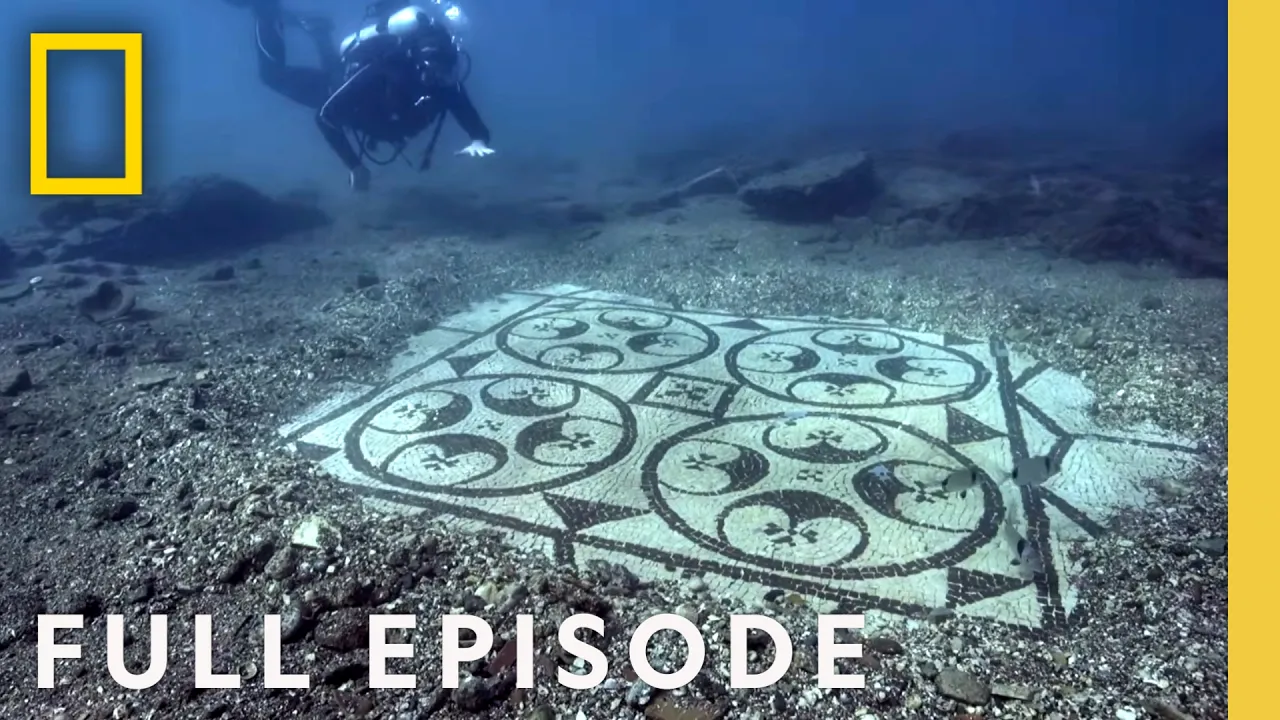



Get daily recaps from
National Geographic
AI-powered summaries delivered to your inbox. Save hours every week while staying fully informed.