Examining the Queens of Ancient Egypt | Lost Treasures of Egypt MEGA Episode | National Geographic

Chapters7
An overview of Cleopatra's enduring fame and the ongoing searches across Egypt for her tomb and legacy.
A sweeping National Geographic mega-episode that decodes Cleopatra, Nefertiti, Hatshepsut and more through daring digs, clever clues, and stunning tomb discoveries.
Summary
National Geographic’s Lost Treasures of Egypt delivers an immersive adventure across Egypt to illuminate Cleopatra’s ascent and the era’s enduring mysteries. Kathleen Martinez pursues Cleopatra’s tomb at Taposiris Magna while Colleen Darnell probes Hathor’s influence at Dendera, revealing how Cleopatra used religion and propaganda to legitimize power. Basem Gehad and Basem’s team unearth elite tombs in Philadelphia, exposing the blend of Greek and Egyptian cultures under the Ptolemaic regime. Patryk Chudzik investigates Hatshepsut’s Hathor shrine and the hidden shaft, linking mummies, cartonnage, and the goddess’s maternal image to political authority. The program also follows Amarna’s dramatic questions about Nefertiti, Akhenaten, and the possible royal fate tucked within Tutankhamun’s tomb, suggesting a reshuffling of power that could rewrite royal lineages. Across quarries at Gebel el-Silsila, the Darnells document talatat blocks used for Amarna’s rapid construction, while excavations at Karnak, Silsila, and Aswan reveal the broader social roles of women and the empire’s religious transformations. The narrative threads connect ancient artistry, ritual offerings, and architectural prowess to show how queens used symbolism, marriage alliances, and monumental building programs to secure their reigns. Viewers see a civilization where myth, politics, and daily life collide, and where each newly exposed artifact—whether a tiny amulet or a giant obelisk—reframes what we think we know about Cleopatra, Nefertiti, and Hatshepsut.
Key Takeaways
- Cleopatra leveraged Hathor’s mother-goddess imagery and the temple program at Dendera to legitimize her rule and anchor Caesarian as heir, a move Colleen Darnell highlights across reliefs and cartouches.
Who Is This For?
Essential viewing for Egyptology enthusiasts and documentary fans who want a UNESCO-level dive into Cleopatra, Nefertiti, and Hatshepsut, with hands-on excavation realism and expert interpretation.
Notable Quotes
"Cleopatra was ruthless. But then again, she had to be to maintain her power on the throne."
—Colleen summarizes Cleopatra’s pragmatic political acumen and willingness to take hard actions.
"Cleopatra minted coins with her likeness instead of her brothers, and she signed official documents as Egypt's sole ruler."
—Evidence of Cleopatra asserting solo rule and shaping imagery.
"What I'm looking for is to find out in the network of the tunnels, if there's any branch going to the temple."
—Kathleen Martinez explains tunnel-focused logic in the Cleopatra search.
"She projected Hathor’s identity as divine mother figure to legitimize her rule and her own son as future heir to the throne."
—Colleen Darnell on Cleopatra’s sacred strategy at Dendera.
"This is the largest relief, the largest we know of her, on the wall of the temple of Hathor."
—Colleen notes Cleopatra’s monumental self-representation.
Questions This Video Answers
- What do the reliefs at Dendera reveal about Cleopatra's power strategy?
- Did Nefertiti ever rule as pharaoh, and where might her tomb be?
- How did Hatshepsut use inscriptions and temple architecture to legitimize her reign?
- What is talatat and why was it central to Akhenaten and Nefertiti's building program?
- Could Tutankhamun's tomb have connections to Nefertiti?
CleopatraNefertitiHatshepsutAmarnaTaposiris MagnaDenderaHathorPtolemaic EgyptTalatatObelisks
Full Transcript
NARRATOR: Deep in the Egyptian desert, a team of workers dig down through the sands... BASEM: We will keep our fingers crossed. Then we will see. NARRATOR: In the hunt for Queen Cleopatra's Egypt, they've found an ancient grave. BASEM: They are the most critical part of the job. NARRATOR: One of the dead is about to give up their secrets. BASEM: It's amazing. Unbelievable. NARRATOR: From the tombs and temples of ancient Egypt. One pharaoh has become not just a name, but a character that has captivated the world, in history books and Hollywood. Cleopatra. She ruled Egypt for 21 tumultuous years.
The last of her murderous and incestuous dynasty of Greek pharaohs, the Ptolemies. A woman in a man's world, in a land and culture, never truly her own. She overcame it all to achieve greatness. Today, archaeologists across Egypt are searching through the remnants of her reign. To uncover her path to power. COLLEEN: She had to make incredibly difficult decisions. NARRATOR: And how she became one of the most famous pharaohs of all. In Taposiris Magna, next to a colossal temple from Cleopatra's era, archaeologist Kathleen Martinez is hunting for Cleopatra's tomb and she's fallen under the legendary queen's spell.
KATHLEEN: When I study Cleopatra's life properly, I discover she was the most charming lady in history. I came to Egypt and I decided to search for her tomb. I came here to Taposiris Magna, and then the moment I entered this location, this ancient temple, I knew it was here. And then it changes everything for me. NARRATOR: 17 years ago, Kathleen was a qualified lawyer in the Dominican Republic, but gave it up to search for lost treasures in the land of the pharaohs. KATHLEEN: I had to change my career because it's incredible to be an archaeologist.
When you discover something, you can change history. You can rewrite history. NARRATOR: Taposiris Magna is a temple to the king and queen of the gods, Osiris and Isis. Last season, Kathleen and her team followed survey data to explore part of a tunnel running beneath the site. The tunnel has been painstakingly cut through the bedrock and even decorated, so must have had an important purpose. KATHLEEN: We can see clearly there are some traces of painting. NARRATOR: Kathleen hopes it could lead to Cleopatra's tomb. KATHLEEN: Cleopatra's tomb has never been found. But every season I getting closer and closer to make this discovery.
I feel the tunnels are the clue. NARRATOR: This season, her team returns to the tunnel to resume the hunt for Cleopatra's final resting place. KATHLEEN: What I'm looking for is to find out in the network of the tunnels, if there's any branch going to the temple. NARRATOR: Kathleen gets the report back from Mohamed Boghdadi, her chief of workers. KATHLEEN: Is the tunnel dry? MOHAMED: Yes. KATHLEEN: No water. Okay. (overlapping chatter) And the electricity? MOHAMED: Yeah. KATHLEEN: Okay, so it's ready for me to go down. Okay, perfect. NARRATOR: Everything is in place for Kathleen to investigate the tunnel herself.
Her biggest fear is the perilous 30 foot drop down the vertical shaft. KATHLEEN: I'm always very concerned about the rope because if we fall there, that's it. ♪ ♪ NARRATOR: In Dendera, 500 miles to the south, American Egyptologist and vintage fashion fan, Colleen Darnell, has come to the temple complex, one of the best preserved ancient sites in Egypt. She's here to find out how Cleopatra rose to power. COLLEEN: It's hard to overestimate the majesty of this place and to see buildings from all different periods. This really is like a history book of Egypt told through beautiful stone temples.
NARRATOR: One structure dominates the site. A vast stone temple 140 feet wide, with an entrance hall boasting 24 gargantuan columns. COLLEEN: This temple has ancient roots, but it was modified and added to throughout the millennium. NARRATOR: Dendera is a holy site that dates back to Egypt's Old Kingdom more than 2,000 years before Cleopatra. is literally covered with inscriptions. Virtually every surface is decorated with hieroglyphic texts, scenes of deities and kings, and above all, the goddess Hathor. NARRATOR: The temple complex sits on the west bank of the Nile. In antiquity, it spread over 48,000 square yards, enclosed by a mud brick wall.
At its heart, Egypt's largest temple to Hathor, the popular goddess of birth and motherhood. To the south, a smaller temple to the goddess Isis and to the west, a sacred lake and more shrines built under Greek and Roman rule. For over two millennia, thousands of worshippers would gather in this holy site each year to celebrate a festival in honor of Hathor. The temple is covered with inscriptions of pharaohs from down the centuries. Colleen ventures inside to look for evidence of Cleopatra. COLLEEN: This is the cartouche of Ptolemy the 12th. We have a wonderful portrait of him here.
And this writes his name Pto-le-my, so Ptolemy, "living forever and beloved of the god Ptah and the goddess Isis." NARRATOR: Ptolemy Auletes was the 12th in a dynasty of pharaohs in which all men bore the name Ptolemy, and he was father to Cleopatra. COLLEEN: Ptolemy the 12th is on the walls in the crypt because he's the one that started this temple that Cleopatra would then add on to. NARRATOR: This grand temple to Hathor was built in large part by Cleopatra when she was pharaoh. COLLEEN: I think this is amongst the most beautiful Ptolemaic reliefs I've seen.
It's really incredible. NARRATOR: Women seldom ruled as pharaohs in ancient Egypt, but when Ptolemy the 12th succumbed to ill health, he made an unusual decision. COLLEEN: At the very end of his life, Ptolemy appoints Cleopatra as co-regent probably because he knew how difficult things were going to become for her. NARRATOR: When Ptolemy the 12th died, the 18 year old Cleopatra was meant to share the throne with her ten year old brother, Ptolemy the 13th. But Cleopatra had different plans. She minted coins with her likeness instead of her brothers, and she signed official documents as Egypt's sole ruler.
The young Ptolemy's advisers plotted against her. And eventually seized power in the capital, Alexandria. Cleopatra was stripped of her crown. COLLEEN: Conflict breaks out between the supporters of Ptolemy the 13th and those of Cleopatra, and Cleopatra is forced to flee. NARRATOR: The young queen headed east to hide out in the Roman province of Syria. Cleopatra was now in exile and an enemy of the state. Colleen wants to explore how she retook the throne. In the ancient city of Philadelphia. Egyptian archaeologist Basem Gehad and his team are excavating a vast necropolis used during the time of Cleopatra.
Basem has spent more than a decade digging in his native country, but his fascination with the age of Cleopatra goes back much further. BASEM: When I was a child, there was a lot of books and stories about Tutankhamun and different tombs with these treasures. NARRATOR: Basem was more interested in the end of ancient Egypt. Now, as a director of a Ptolemaic era site, he gets to try and answer all the questions he pondered as a boy. BASEM: I was lucky because nowadays I'm working on Philadelphia and it gives me all the, the things that I was dreaming.
It makes my dream come true. (speaking in native language) NARRATOR: Basem and his team are searching for the lost tombs of Queen Cleopatra's subjects. BASEM: So from the pottery that we have found with these graves, we can date these graves to the late Ptolemaic period, which might be corresponding to the reign of Cleopatra. NARRATOR: He believes their graves could be key to understanding her power in Egypt. BASEM: We are trying to understand their life from digging in their afterlife. NARRATOR: His skilled workers dig in several locations to maximize their chances. And it's not long before one team uncovers the rectangular outline of a mud brick grave.
The bricks form a stepped roof, concealing any grave goods below. Removing the first bricks is a delicate job. It can easily cause a collapse. Before they risk going any further, Basem uses a miniature camera to take a first look. NARRATOR: It looks like the top of a coffin. BASEM: It's an amazing discovery. NARRATOR: At Deir El-Bahari, in southern Egypt, is the mortuary temple of Hatshepsut, a female pharaoh who was able to take the throne as regent for her three year old stepson. She lived 1400 years before Cleopatra, and yet she built a monumental structure honoring the very same deity Cleopatra honored at Dendera, the goddess Hathor.
When pharaoh Hatshepsut built her mortuary temple, she added a shrine on the southern side. In the entrance, 32 columns carved from sandstone, featuring Hathor, goddess of maternity and symbolic mother of all pharaohs. At the back of the shrine, a statue of Hathor in the form of a cow protecting Hatshepsut. Something about this divine maternal figure appealed to both Hatshepsut and Cleopatra. Polish archaeologist Patryk Chudzik has been exploring Hatshepsut's Temple for 12 years. He believes the shrine to Hathor could have influenced Cleopatra. NARRATOR: Patryk has been given privileged permission to excavate inside the sacred Hathor shrine.
He's searching for areas where the stone flooring doesn't match the rest of the shrine. NARRATOR: The strange slabs, could conceal a hidden chamber. NARRATOR: Patryk brings in his chief worker, Ahmed Ibrahim, to help him lift the slab. NARRATOR: There is no bedrock, just sand. This hole goes further down. NARRATOR: As Ahmed delves deeper, the sand throws up an unexpected find. NARRATOR: Cartonnage is a material used in death masks. It's a promising find for Patryk. NARRATOR: Patryk must bring the rest of his team in and start a full scale excavation. Colleen is investigating how Cleopatra returned to power after her younger brother had forced her into exile.
Cleopatra completed a lavish temple here when she was pharaoh and dedicated it to Hathor, making it a key place to look for clues. COLLEEN: It's incredible to turn the corner and see this beautiful carving of a man and a woman offering to the gods. NARRATOR: Images of figures making offerings like this were used by ancient Egyptians to depict royalty. COLLEEN: This is a monumental relief of Cleopatra and a male figure. Now, if we look at the cartouche, it actually tells us this is Cleopatra's child, none other than Caesarian, the son of Cleopatra and Julius Caesar.
NARRATOR: The cartouche, an oval shape containing the royal name, reveals Cleopatra's relationship with Rome's great general. In 47 BCE, Julius Caesar arrived in Alexandria. Cleopatra stole into the city to meet him. The two began an affair, and she eventually bore his child. Caesar waged war on Cleopatra's rival, her brother Ptolemy the 13th, and eventually got the upper hand. A defeated Ptolemy pulled his army back to his fleet on the Nile. But in the chaos he drowned. Cleopatra reinstated herself as pharaoh, this time with the next male heir in line, Ptolemy the 14th as co-regent. The relief makes it clear that Cleopatra had returned to power.
But there was one more thing holding her back. Sharing the throne left her and her infant son Caesarion vulnerable. Colleen investigates the hieroglyphs for clues to how she seized total control. COLLEEN: Here we have Queen Cleopatra, her son Caesarian. The second cartouche then, the Horus, represents the Falcon God of kingship. She is proclaiming for the world to see that this is her co-regent. And this begs the question, where is her brother? NARRATOR: Ptolemy the 14th, had ruled Egypt for just three years as co-regent with his elder sister, Cleopatra, when Julius Caesar was assassinated in Rome.
It was a devastating loss for Cleopatra. But she acted fast to consolidate her grip on power. According to rumor, she poisoned her younger brother. Then installed her three year old son, Caesarion, as co-regent in his place. At last, she sat unrivaled on the Egyptian throne. COLLEEN: Cleopatra was ruthless. But then again, she had to be to maintain her power on the throne. She had to make some difficult decisions and often violent ones. NARRATOR: The inscription here heralds her triumph and proclaims her regal authority for all to see. COLLEEN: Even though Caesarian is technically king, we all know that Cleopatra is the power behind the throne.
She is attaining her right to be king of Egypt through him. NARRATOR: Cleopatra had purged her palace of threats. The only danger now was from the people she ruled. At the ancient city of Philadelphia, Basem is investigating a grave. Inside, is what looks like an intact burial. BASEM: From the hole, we could see exceptional large painted wooden coffin. NARRATOR: Basem is searching for the lost tombs of Queen Cleopatra's subjects. BASEM: The unstable period of Queen Cleopatra drove us to think about the question of how a young lady was struggling to keep the throne with her people who are living in Egypt and also to get involved with the Roman leaders.
It is a big mystery, and one of the keys to solve it is to search for the people who were living during her reign. NARRATOR: His team needs to dismantle the mud-brick enclosure without damaging what could lie beneath. BASEM: It's the most critical part of the job, to remove the mud bricks carefully and safely from on top of the coffin. Otherwise, you can destroy it. So it takes time and it needs a lot of patience. We keep our fingers crossed, then we will see. NARRATOR: Hours of painstaking work by Basem and his team, slowly reveals a 2000 year old coffin.
BASEM: This kind of coffin and also the information behind it, is the things that we were looking for since the beginning of the season. NARRATOR: It is almost perfectly preserved, with a gabled roof lid made from fine timber and decorated with a painted black and white pattern. BASEM: Finding such a large coffin from imported wood and painted. It's a strong indication of the status of the owner of this coffin. He should be one of the elites. NARRATOR: The beautiful coffin is evidence the wealthy Greek elite were not confined to Cleopatra's capital, Alexandria. They lived across Egypt helping Cleopatra and all the Ptolemaic pharaohs maintain their power.
Now the pressure's on to extract this wonderful find in one piece. BASEM: It is really tight and very well made and built in a way that it makes things very difficult to maneuver even around the mud-bricks. We have to take it block by block, and it's really fragile. NARRATOR: Once the coffin is completely exposed... NARRATOR: The team prepares to lift it. NARRATOR: In Taposiris Magna, Kathleen is set to continue her search for Cleopatra's tomb. She makes final checks with the ladder crew as she prepares to climb down the shaft to the tunnel below. KATHLEEN: They walk in the edge, but for me, it's scary.
I can fall and that's it. NARRATOR: The shaft is 30 feet deep. KATHLEEN: Piece of cake. Oh my gosh. It's really very exciting to be down here again. It's not flooded, which is really important. NARRATOR: Kathleen has to check the conditions before excavation can begin in earnest. The tunnel runs in two directions, south towards the temple and north, towards the sea, where Kathleen heads first. KATHLEEN: I'm very concerned about the condition of the ceiling in this section of the tunnel. You can see has been damaged seriously by the water effect. Even the plaster is about to collapse and it's really dangerous for us.
heads back south. She's searching for a concealed branch of the tunnel heading under the temple, and any clue that could lead to what may be Cleopatra's tomb. But the further along she goes, the worse the conditions get. KATHLEEN: You can feel the air. It's so heavy, you cannot stay. It's not that easy to breathe down here. It's hurting all my body, my muscles. It's only two men can start here. And I have to change them every hour. NARRATOR: The air quality is so poor that each worker can only stay down here for a limited time.
Kathleen needs to explore further. But there's a problem. The tunnels are blocked by a mountain of debris. KATHLEEN: I'm going to go further a little bit, but then I will bring the workers and they will start cleaning this part of the tunnel. NARRATOR: The workers begin digging and Kathleen heads to the surface for some much needed fresh air. KATHLEEN: This is really hard. NARRATOR: But before she reaches the ladder, she's called back. They've found something. KATHLEEN: Look at this. Oh, full of surprises. Wow, it's beautiful. NARRATOR: It's an ancient piece of pottery that could be a clue to the tomb's location.
But right now, Kathleen is running out of time. She'll soon start to suffer the ill effects of the poor air. KATHLEEN: We'll have to take it to the surface because we need to look at it outside. But we have to go. (groans) Colleen is searching the temple structure for clues to Cleopatra's rise to power. She had finally taken full control of the country, but she still needed to win support from her native Egyptian subjects. COLLEEN: Egypt was in a very difficult state. There had been famine. There had been all kinds of conflict. So Cleopatra is facing an uphill battle.
And as a woman, it's going to be even harder for her to rule successfully. NARRATOR: The continued expansion of the ancient Dendera temple site was part of her plan. COLLEEN: By funding a temple for Hathor at Dendera, by tapping into the beliefs of the Egyptian people outside of Alexandria, Cleopatra was consolidating her power. NARRATOR: It made sense for Cleopatra to pour royal money into a popular cause. But she had greater ambitions than just funding the temple. Colleen examines the carvings for clues. COLLEEN: In this scene, a king is making an offering to the goddess Hathor.
In between the king and Hathor is the child god Ihy. Ihy is the son of Hathor. And what's remarkable about this, this is the theological power that Cleopatra is channelling for her reign. She is the goddess and her son is the god. NARRATOR: Cleopatra was using Egyptian religion in a way no male pharaoh could. She was not just claiming Hathor's approval, she was assuming Hathor's identity as a divine mother figure. Hathor was the goddess associated with maternity, mother to the child god, Ihy, and other major gods. She sometimes took the form of a cow, nursing the young pharaohs or their heirs, and legitimizing their rule.
Every year at Dendera, regular Egyptians worshipped and celebrated Hathor with feasts and dancing. It was a great use of propaganda for the ruling pharaoh. Cleopatra embraced Hathors's identity as divine mother figure to legitimize her rule and her own son as future heir to the throne. COLLEEN: On this wall and all throughout Dendera temple, we see a goddess who is a mother as well as her divine son. This is what Cleopatra is tapping into. This is why she chooses to elevate Caesarian to be co-ruler. That makes her the goddess and Caesarian the divine child. NARRATOR: Cleopatra took her vulnerability as a female ruler and used it to her advantage, portraying herself as Hathor, the supremely popular mother goddess.
She projected this message for all to see. The exterior of the temple became her billboard, advertising her divine makeover. COLLEEN: Cleopatra made the savvy decision to put the largest relief, the largest we know of her, on the wall of the temple of Hathor. And by showing herself in monumental scale, she too, could be worshipped as a goddess. By very publicly supporting the traditional cults of Egypt, Cleopatra is attempting to reinforce her power as queen, not just as a Greek ruling from Alexandria, but as an Egyptian goddess. NARRATOR: It was a PR masterstroke. Cleopatra made efforts to connect with the Egyptian people in a way that few of her ancestors ever did.
Egypt's last great pharaoh had proved herself to be one of its shrewdest. In the necropolis Basem and his team prepare to lift the delicate wooden coffin out of the ground. (applause) NARRATOR: The coffin will be analyzed for its contents later. Right now, Basem and his team need to get as much out of the ground as possible in the time they've got. And as they continue their dig, they make an unsettling discovery. BASEM: This is a child because of the size of the coffin. NARRATOR: Basem examines his team's latest find. BASEM: We have here, uh, pottery coffin in the shape of the tube.
And it has a small burial of a small child. And we are trying to maneuver around the pottery coffin in order to safely lift it up from the grave. investigating the graves of Cleopatra's subjects to find out more about how she secured her rule over Egypt. NARRATOR: A simple pottery coffin was common amongst lower class burials, especially for children and infants. This child's remains are little more than dust, but beside the body, there's a rare find. A small cloth bag made brittle with time. One miniature carving has already fallen out. BASEM: This kind of amulet.
I think this was one of the Egyptian deities, which is Bes. NARRATOR: Bes was a popular god in Cleopatra's Egypt, seen as a protector of small children and pregnant women. This seems to mark the burial as an Egyptian one. Inside the crumbling textile bag, there are other trinkets... Earrings, seashells and a carved hand of the Egyptian god, Osiris, that also gives protection. Alongside these, there's an amulet that Basem can identify as Greek. BASEM: This is the shape of the Ptolemaic altar. And for me, this is pure Greek influence. It dates to the late Ptolemaic period, which is the Cleopatra reign.
NARRATOR: Here in the grave of a small child, there are Egyptian and Greek religious artifacts side by side. The Egyptian god Bes, was there to provide protection and the Greek amulet was to reunite mother and child in the afterlife. BASEM: Such a things was a gift from a mother to a child. NARRATOR: Together, they are evidence of a blending of Greek and Egyptian religious culture. BASEM: Such wonderful things during the Ptolemaic period is really, really rare. It's an amazing discovery. We are lucky. This was a lucky day today. NARRATOR: At the beginning of the Ptolemaic era, there was a clear divide between the early Greek rulers and their Egyptian subjects.
But Cleopatra embodied both Greek and Egyptian culture and Basem's discoveries in Philadelphia, show that her subjects were following her example. Instead of two distinct cultures, there was integration and harmony. A hallmark of a successful reign and a successful ruler. At Deir El-Bahari, in Hatshepsut's Temple, Patryk's hunch that the floor beneath the Hathor shrine conceals a hidden shaft, has paid off. NARRATOR: Patryk has spent three weeks excavating it. A dig that started with the clue of a small scrap of cartonnage, ends 13 feet below ground, where the team finds a chamber. NARRATOR: They are the legs and feet of a mummy, more than 1,000 years old.
It's confirmation of the shaft's purpose. has to work slowly, bringing up these historical treasures. NARRATOR: One of the last things to come up is the most striking find of all. NARRATOR: The team has safely brought the find to the surface. Now Patryk can examine it properly. NARRATOR: The intact mummy completes a treasure trove of objects beneath Hathor's shrine. NARRATOR: As the team excavates further, more and more mummies emerge. NARRATOR: If the mummies can be dated, they will show how long this tomb was in use. NARRATOR: Patryk searches for clues that will help pinpoint when the mummies were buried.
NARRATOR: It's an incredible discovery. 200 years after Cleopatra died and 1,700 years after Hatshepsut built her temple, people still came here to bury their dead close to the goddess Hathor. NARRATOR: These mummies show that the goddess Hathor remained popular for thousands of years and long after Cleopatra's death. This enduring appeal and popularity helps explain why Hatshepsut and Cleopatra's strategy of portraying themselves as the mother goddess, gave them power during their reigns. In Taposiris Magna... KATHLEEN: Oh, I'm so tired. NARRATOR: A breathless Kathleen, emerges from the temple's tunnels, boosted in her search for Cleopatra's tomb by the unexpected pottery find, down below.
KATHLEEN: It's so difficult to be down there. But those tunnels are the most important features here. I'm sure of that. NARRATOR: Kathleen examines the pottery fragment in the daylight to try and identify what it is and when it's from. KATHLEEN: It looks like the neck of a pottery wine jar, beer jar. And this is where the handles should be. And this is the rim. NARRATOR: This style of wine jar dates to the late Roman period, some three centuries after Cleopatra died. In the minds of the ancient Egyptians, wine was associated with the blood of Osiris, and wine was often used during temple rituals.
KATHLEEN: To find it inside the tunnel means that maybe they use the tunnels also to transport the wine jars to the port, to the sea. NARRATOR: It's a crucial find. If the tunnel was used to take wine jars north to the sea for shipping, then the south end could connect to the temple itself. And it could lead Kathleen closer to any subterranean tombs beneath the temple. Egyptian royal graves were always well hidden. But Cleopatra had a very compelling reason to conceal her tomb. KATHLEEN: Because she knew it was the end of Egypt, and she was the last chapter of Egypt, and she knew that she would be at the mercy of the conquerors.
NARRATOR: The later Roman Emperor Augustus, had Egypt in his sights, and he was no friend of Cleopatra. Her armies were overwhelmed. Fearing public humiliation, she committed suicide. Her final strategy to protect her legacy was to make sure her tomb stayed hidden forever. KATHLEEN: For Cleopatra, she was more afraid of anonymity than death. So she, she tried to do something to become a myth. She died. And she disappeared. NARRATOR: All across Egypt, archaeological investigations are revealing Cleopatra's path to power. She outmaneuvered her brothers to claim the throne for her own. She ruled a kingdom that was truly a blend of peoples and cultures, cleverly using a link to goddess Hathor, to secure her power and become a god in the eyes of her subjects.
In death, Cleopatra still evades an army of archaeologists. KATHLEEN: What is remaining about Cleopatra? It's her personality, her charm, and her name. NARRATOR: Leaving behind only myth and a name, that has lasted for millennia. NARRATOR: Egypt, the richest source of archaeological treasures on the planet. MAN: Oh, wow! Look at that. NARRATOR: Hidden beneath this desert landscape lie the secrets of this ancient civilization. (speaking native language). ALEJANDRO: I have never seen something like this. NARRATOR: Now, for a full season of excavations, our cameras have been given unprecedented access to follow teams on the front line of archaeology.
MYRIAM: This is the most critical moment. (shouting). NARRATOR: Revealing buried treasures. SALIMA: Oh! AHMED: We were lucky today. NOZOMU: Wow! Lots of mummies. KATHLEEN: The smell is horrible! NARRATOR: And making discoveries that could rewrite ancient history. JOHN: We've never had the proof until now. COLLEEN: This is where it all started. ALEJANDRO: My goodness, I never expected this. (applause). NARRATOR: This time Anna goes in search of one of Egypt's most enigmatic queens, Nefertiti. ANNA: If she wasn't buried here, where was she buried? NARRATOR: Mohamed searches for the lost wife of a noble. MOHAMED: If we are lucky we will have her.
NARRATOR: An ancient cemetery reveals a startling find. FATHI: No. NARRATOR: And John and Maria uncover the secrets of Nefertiti's great Empire. MARIA: Wow, this is beautiful. (theme music plays). NARRATOR: Egypt, land of the mighty pharaohs, buried in monumental tombs with dazzling treasures. But among these great Kings and Queens, some are missing, including one of the most iconic of all: Nefertiti. How did one of the most powerful women in the ancient world vanish from history? In the heart of Egypt lies the ancient site of Amarna. Here, archaeologist Dr. Anna Stevens has spent nearly two decades unearthing the secrets of a ruined city and its captivating Queen.
ANNA: We've left the riverside city of ancient Amarna behind, and we're traveling through the low desert, heading out to the cliffs that border ancient Amarna. NARRATOR: Anna heads for the royal tomb of Nefertiti's husband, pharaoh Akhenaten. The king's burial chamber is badly damaged by flooding, but it is another chamber that Anna has come to investigate. ANNA: It's so prominent that you'd have to think it belongs to a suitably prominent member of the Amarna royal family. NARRATOR: She searches for any sign of Nefertiti's whereabouts. The walls of a royal tomb should be covered in elaborate carvings, but here are only rough chisel marks on bare rock.
ANNA: It's completely unfinished; it's not suitable for the burial of a queen. NARRATOR: The tomb is half-built and abandoned. ANNA: It hasn't taken a royal burial. If she wasn't buried here, the question is, of course, where was she buried? NARRATOR: These ruins were once a vast city from which Nefertiti and Akhenaten ruled over their great empire. Nestling on the East bank of the Nile, Nefertiti's capital city covered over 3000 acres and was home to up to 50,000 people. What is now barren landscape was once one of the greatest cities in the ancient world, and from these palaces and temples, the royal couple ruled over all of Egypt.
She doesn't appear to be buried here. But does this place hold clues to the fate of the missing Queen? Nefertiti is famous today because of this iconic bust of her. She has one of the most well-known faces in all of ancient Egypt. ANNA: This is about the spot that the bust was actually found. We're in the house and the workshop of a sculptor who was probably called Thutmose. This is where the Nefertiti bust was originally created. It's one version of Nefertiti's official portrait. She may herself have signed off on this image. But really we have no idea what she'd look like in real life.
NARRATOR: Nefertiti's early life is also still a mystery. Her father was probably Ay, vizier to Pharaoh Amenhotep III, so she would have been brought up in a Royal palace. By the age of just 15, she married Amenhotep's second son, the new pharaoh Akhenaten, and bore him six daughters. As his queen, Nefertiti became the most powerful woman in all of Egypt. Yet Nefertiti's ultimate fate remains a mystery that occupies archaeologists all over Egypt. 200 miles south along the Nile, at Luxor, lies the necropolis of Asasif, a vast cemetery where Egypt's rich and powerful were buried around the time of Nefertiti.
Site director Fathi Yaseen and his team are about to excavate a hidden burial shaft. NARRATOR: Fathi runs one of the busiest archaeological digs in Egypt, with up to 100 workers shifting sand every day. Sayed Mohamed is one of his most experienced archaeologists. NARRATOR: This ancient cemetery is full of artifacts. NARRATOR: Most of the finds are from the same era as Nefertiti. NARRATOR: Ancient objects of ceramic and stone are common here. But this seems to be made of wood. NARRATOR: A wooden face looks up from the sand. The mystery object could be a wooden mask or statue.
They must try to free it from the ground. FATHI: Wow! NARRATOR: The rope seems to wrap around it. NARRATOR: Coffin finds are rare, particularly ones dating back to the time of Nefertiti. But whatever it is in the ground, it is quite large. NARRATOR: This is no ordinary burial. Only one in 20 people could afford a coffin in ancient Egypt. NARRATOR: The rope, made from twisted palm leaves, is tied around the feet. (clapping). NARRATOR: For Sayed, the ropes can mean only one thing. NARRATOR: If the coffin does have a mummy in it, it could date back to Nefertiti's time.
100 miles south, at Gebel El Silsila... JOHN: Everybody here? NARRATOR: It's 7:00am. Husband and wife team Maria Nilsen and John Ward set course for the ancient sandstone pits that pharaohs quarried for their great monuments, statues, temples and palaces. MARIA: Good morning, John! JOHN: Good morning. It's early in the morning, I haven't had enough coffee yet. NARRATOR: Akhenaten and Nefertiti opened several quarries here. JOHN: Gebel El Silsila's golden sandstone was revered and required by all the pharaohs. NARRATOR: John and Maria hope to discover important clues about what Akhenaten and Nefertiti were building at the time. The size of the gallery shows the scale of excavation.
JOHN: People don't realize the sheer magnitude. This one pillar alone is monumentally huge and this supports the roof above me. NARRATOR: Before they can investigate the clues here, they must clear the thick layer of sand. JOHN: Jenna. MARIA: It's always a good start when our workers describe it as heaven! (laughing). JOHN: So, clean, clean, clean, clean, clean, clean, clean clean, clean, down on the floor. Clean, clean, clean, clean, clean, onto the floor. MARIA: It's gonna be dirty. NARRATOR: As they clear the floor, John makes a surprising discovery. JOHN: Hey! Guess what I got? MARIA: You've got to be kidding me!
JOHN: You ready for this? MARIA: Yeah. NARRATOR: Beneath the sand on the quarry floor, John thinks he's found a clue to how ancient Egyptians quarried stone here. JOHN: What would they have used to get such straight lines? MARIA: You haven't? JOHN: Both hands. A plumb bob. Amazing! MARIA: That's our first. That's... JOHN: Our first plumb bob. You just think, that's been laying there since Akhenaten closed the quarry! NARRATOR: This plumb bob is a worker's tool dropped over 3,000 years ago. JOHN: That would have had the cord on, and they would have been able to get the straight line.
This is our first one at Silsila, and it is beautiful! NARRATOR: Nearby, Maria wants to analyze an inscription she's found carved on the rock. Her keen eye has spotted faint traces of ancient ink. MARIA: You've got lines of text here and here. NARRATOR: She thinks she can decode the markings to link the quarry directly back to Akhenaten, but here he uses a different name. MARIA: It is the time of Amenhotep IV, before he turned into Akhenaten. NARRATOR: Amenhotep the fourth was his original name. But it is more than just a change of name. Early in his reign, he created a new identity, transforming himself He also imposed a change of religion upon Egypt.
For more than a millennium, the Ancient Egyptians worshipped a pantheon of gods and goddesses. Their ruler was Amun-Ra, whom Egypt's ruling priests revered as the King of the Gods. Pharaoh Amenhotep outlawed worship of Amun-Ra and closed down his temples. Across Egypt, he erased the old gods and replaced them with a single deity: the Sun God, Aten. The only human figures left, bathing in the Sun God's rays, were Amenhotep, now transformed into Akhenaten and his queen, Nefertiti. On the faded inscription in the quarry, Maria spots another detail. the Sun disc here. NARRATOR: The Sun, the god of the new religion, alongside Akhenaten's earlier name.
MARIA: Clearly an early sign of the Aten worship. We can't find anything similar to this anywhere else in Egypt. It's the earliest one that we have. We haven't published it yet, it's on its way. NARRATOR: This discovery dates the quarry to the early reign of Akhenaten and Nefertiti, but it doesn't solve the mystery of why they were quarrying so much stone. What were they making? 400 miles north at Saqqara, husband and wife archaeologists Mohamed Megahed and Hana Vymazalova are back for another season of excavation. Last year, they made an astonishing rare discovery: a tomb dating back over 4,000 years, in pristine condition.
MOHAMED: The day we enter the tomb, it was unforgettable day for all of us. NARRATOR: It belongs to a man called Khuwy, a high official of Pharaoh Djedkhare who lived 1,000 years before Nefertiti. Khuwy may even be a member of the royal family. It's a spectacular find, but there's a mystery. MOHAMED: Usually, ancient Egyptians were buried with their wives in their tombs. In our case, we have only Khuwy. NARRATOR: Khuwy's wife should be buried with her husband, but she isn't. She is missing, just like Nefertiti, and Mohamed wants to find her. MOHAMED: It means we will be looking for perhaps similar tomb, maybe much bigger tomb, the same quality of reliefs for his wife.
NARRATOR: Her tomb should be as magnificent as Khuwy's itself. MOHAMED: Why people love Egypt and love ancient Egypt? Because it's full of secrets and magic. For example, Queen Nefertiti, her tomb was never found. NARRATOR: Family members from this time are generally buried close together, so Khuwy's wife must be nearby. MOHAMED: We still need to go a little bit deeper in the west side to make sure that there is no other entrance for a corridor, or we have to look around for another shaft in the mastaba. NARRATOR: A mastaba is a massive flat-topped structure that ancient Egyptians built over tombs.
Digging deeper, Mohamed finds a possible clue to another entrance: the pure white rock finish of the mastaba changes to a different kind of rock. MOHAMED: This is the white, nice, limestone and in the bottom it's completely local limestone, exactly like the entrance of Khuwy. NARRATOR: Local limestone surrounds the entrance to Khuwy's tomb. The same stone here could mark another entrance to his wife's burial chamber. MOHAMED: So the plan for today is to clear it all, go deeper, reach the floor. We hope to find something, and you never know what the sands of Egypt might hide.
NARRATOR: Could the team be on the brink of another major discovery? NARRATOR: Mohamed found Khuwy's tomb last year. It dates to a time called the Old Kingdom, 1,000 years before Nefertiti. The tomb of Khuwy's missing wife could be every bit as spectacular as her husband's. MOHAMED: This is one of the most important and interesting tomb in Old Kingdom. NARRATOR: The scenes help Khuwy on his journey to the afterlife. An offering wall gives instructions for 95 different offering rituals, jars of beer, bread, meat. MOHAMED: There is no mention for the wife because everything underground here is for Khuwy.
NARRATOR: She is not with him on the walls, but she is family. Her tomb shouldn't be far away. Outside, Mohamed's own wife, Hana, is also helping in the search for Khuwy's wife. HANA: We hope that we might find Khuwy's wife. At the moment we are in the area which is directly opposite to the entrance to the tomb. NARRATOR: They must dig carefully, as the sand is full of ancient fragments. Each one could be a vital clue. These are not just bones, it looks like a complete skeleton. Has Hana discovered Khuwy's wife? At Gebel El-Silsila John and Maria are on a mission to find the purpose of the quarry.
The stone could reveal important clues about Akhenaten and Nefertiti's building projects, and the ambition of their reign. MARIA: Wow! This is beautiful. Look at the block work. You can see perfect talatat blocks. NARRATOR: As workers clear the area, they reveal evidence of a building innovation that Akhenaten and Nefertiti pioneered. MARIA: Here we got a small block, they divided it into two and at the end of that you'll have two perfect talatat blocks. JOHN: They're ready to come through here aren't they? MARIA: Yeah, exactly. NARRATOR: These small blocks, called talatat, could be quarried quicker and built with faster.
JOHN: This is from the period of Akhenaten where everything's changed. We've gone from massive one ton block down to the small, minuscule talatat, which is famous for Akhenaten. It only weighed 60 kilograms. You could carry it on your shoulder. NARRATOR: John and Maria have solved the mystery of what Akhenaten and Nefertiti quarried here. It was talatat, key to an ambitious plan and an important clue that they began a huge construction program, including the building of their new capital, Amarna. Using the newly-invented talatat blocks, the city rose from the desert in record time. Akhenaten built a lavish palace for himself and Nefertiti in the center and two vast temples.
Thousands gathered here to worship the sun god Aten as the sun moved east to west. Spread around the outside were hundreds of stone tables for lavish offerings to their God. This monumental complex gave Akhenaten and Nefertiti total control over religion in Egypt. But the city's most famous resident, Queen Nefertiti, is missing. Could the city itself hold clues to her fate? At Amarna, Anna heads beyond the city limits to investigate a cemetery for Amana's elite. Tombs, richly decorated with pictures of the king and queen, might still reveal vital evidence. The royal couple seem to be in a land of paradise.
They ride their chariots. They hand out gifts to their adoring crowds, and make lavish offerings to the Sun god, the Aten. ANNA: What's really lovely here is that you can see that one of the Aten rays extends to Akhenaten, the symbol of life, the Ankh. So the Aten is providing the king with life. NARRATOR: So, did the couple live out their lives in this utopia? The idyllic scenes also bear marks of violence. ANNA: The faces of the king and queen seem to have been deliberately hacked out. It's actually being done to obliterate their image. NARRATOR: Nefertiti and Akhenaten's great religious revolution has been destroyed.
NARRATOR: Anna finds more evidence that Akhenaten and Nefertiti's revolution ends with a backlash against them. ANNA: There were deliberate attempts to forget Akhenaten's reign. He was essentially erased from Egyptian history. NARRATOR: Nefertiti's fate during this time of trouble is a mystery. ruled for 17 years. But when the pharaoh died, the unpopular religion that he imposed on Egypt crumbled. People of Egypt returned to the old traditional gods that Akhenaten had banned. The enemies of the Aten religion set out to destroy every memory of the king and queen. Their revenge on Akhenaten was to attempt to rub him out of history.
But what happened to Nefertiti? ANNA: This is still part of the tomb. It's completely unfinished, presumably because the city was abandoned. The king had died. Everyone had to uproot, leave the city. Akhenaten's vision ultimately failed. NARRATOR: In the heat of this crisis, where was the queen? ANNA: One of the big questions is, "What happened to Nefertiti?" If she was still living after Akhenaten's death, she can't have stayed on at Amarna very much longer. Where did she go? What happened to Nefertiti? NARRATOR: In Luxor, Egyptologist Chris Naunton is also on the trail of the missing queen.
He has come to the ancient city of Thebes, where Nefertiti was born, to the tomb of a priest. CHRIS: This is normally closed to the public so he's having to take the seal off and then we'll be able to go inside. NARRATOR: In the tomb, he wants to find clues to what might have happened to Nefertiti following Akhenaten's death. In his final years, did the king replace her with a new queen? Or did she remain his great royal wife, but flee into hiding after he died? Was Nefertiti assassinated following Akhenaten's death, or did she continue as queen?
The tomb belongs to a priest called Pa-iri, who lived in the time of Nefertiti. CHRIS: This is Pa-iri himself, with his wife standing behind him. It's really lovely, this. NARRATOR: But something else catches Chris's eye: ancient graffiti. CHRIS: It's highly significant. It begins with a year date, year three, and then "The king of upper and lower Egypt," and that king is named as Ankhkheperure Neferneferuaten. NARRATOR: So, just who was this ruler? CHRIS: And this king is little-known, shadowy figure. I think Ankhkheperure Neferneferuaten is none other than Nefertiti. NARRATOR: This would be a sensational turnaround. Could Nefertiti have survived the death of Akhenaten, actually to succeed him herself as Pharaoh Nefertiti?
It's a theory but, if Chris is correct, the search for Nefertiti is no longer the search for a queen. It's the search for a pharaoh. At Saqqara, husband and wife archaeologists, Mohamed and Hana, are searching for the missing wife of Khuwy. She should be buried with her husband in his magnificent tomb, but she isn't. They believe that she must be nearby, and Hana has found human remains. HANA: The skeleton is very nicely preserved even though many of the bones are fragmented. NARRATOR: The teeth show that this is a mature adult. HANA: You can see the upper part of the teeth is quite worn down.
The skeleton itself shows that the health of this individual was not very good. NARRATOR: Could this ancient skeleton be the missing wife of Khuwy? HANA: The pit is hewn in a little bit dark sand, and it was filled with very pure yellow sand, which was added there into the pit together with the burial. NARRATOR: For Hana, all the signs are of a poor burial. HANA: We are learning a lot about the people of the past: the way they lived, how they suffered. It's a little bit like looking into a very old album of your family.
NARRATOR: It is not Khuwy's wife, but families are normally buried close together. She should be buried nearby. Just yards away, Mohamed continues the search for another tomb entrance. MOHAMED: We have to continue digging down into the floor and keep looking for our lady, Khuwy's wife and, if we're lucky, we will have her. NARRATOR: In Luxor, at Asasif, Fathi and Sayed have found a wooden coffin in the cemetery of the rich and powerful from the era of Nefertiti. They are anxious to free it from the grip of the sand. SAYED: It's good. NARRATOR: Sayed digs a little deeper to see underneath it.
NARRATOR: A complete ancient coffin is a major find. NARRATOR: But they have a lot of work before they can get it out. SAYED: Hey doctor, I think we found another something very important. FATHI: Yeah? Wow! NARRATOR: There seems to be something buried with the coffin. NARRATOR: Sayed thinks the vase may have contained offerings for the afterlife. But something else catches Fathi's attention. NARRATOR: This appears to be bread, untouched for 3,500 years. NARRATOR: The objects around the ancient coffin appear to be offerings, carefully placed as supplies for the deceased. NARRATOR: It offers rare, hard evidence of the lives and beliefs of Ancient Egyptians, about death and the afterlife.
SAYED: Complete. FATHI: Wow. NARRATOR: The pot also comes out. If they can date it, they can date the burial, and begin to piece together who might be in the coffin. NARRATOR: The 18th dynasty was when Egypt was at its very peak, with the line of powerful pharaohs that included Akhenaten and Nefertiti themselves. After two hours of careful work, they finally clear away all the debris. NARRATOR: But the fragile ancient wood could disintegrate now it is exposed to the elements. Fathi doesn't want to risk leaving it out any longer, so he must move it quickly. In Saqqara, outside the magnificent tomb of Khuwy that Mohamed found last year, the team searches for a missing person, Khuwy's wife.
Her tomb should be equally spectacular. Following clues in the limestone, they have shifted several tons of sand searching for Now there are huge limestone blocks in the way. Mohamed thinks that these came from the mastaba, the stone structure above the tomb. Again, it is pure white. MOHAMED: White limestone are very precious, because in ancient Egypt the quarry belonged to the king. The king himself had to give permission to any individual, any official, to cut stones from there. NARRATOR: It's a vital clue. Only the pharaoh's innermost circle would be allowed to use such a precious rock.
With the limestone blocks out of the way, they soon reach the bedrock and can go no further. MOHAMED: We had no clue for the other entrance of the wife. This can tell us she might be buried in a different mastaba, separate mastaba, near to him. NARRATOR: Khuwy's wife isn't here, but Mohamed is undeterred. He believes that she must be nearby. MOHAMED: All the white limestone he used in his tomb, he was mummified, the colors he used in the underground's architecture of his tomb. NARRATOR: The evidence implies that Khuwy is royal. MOHAMED: Perhaps, also his wife was a member If she's not buried with him in the tomb, it means she decided to made a tomb for herself.
This can tell us so much about her status. NARRATOR: Khuwy's wife must be important enough to build her own mastaba tomb, which should be as glorious as Khuwy's. The hunt for Khuwy's wife just got bigger. MOHAMED: We only found 30 or 40% of ancient Egyptian monuments, and this might be true because the sand of Egypt still hides so many secrets. NARRATOR: Mohamed's search for the missing wife continues. In Luxor, at Asasif. urgently needs to move the newly-discovered coffin to a safe store room. But it is a dangerous moment for the priceless artifact, as the ancient wood could disintegrate under the strain.
It's a big responsibility for Fathi. NARRATOR: The fragile coffin is on the move, but the last part of the journey is the most precarious. It's a steep and narrow descent. NARRATOR: The coffin is still in one piece. NARRATOR: With the coffin now safely in the field lab, specialist conservator Ahmed Gad must inspect the wood for any weakness. NARRATOR: The coffin appears to be in good enough condition to be opened, but there's another problem for Fathi. NARRATOR: The 3,500-year-old ropes must come off, but the ancient fibers are stiff. If the alcohol solution doesn't soften them, they may have to cut them.
AHMED: Wow! FATHI: Very good. NARRATOR: The knot undone, they begin the slow task of removing plaster that sticks the fragile lid to the coffin. Fathi gets his first glimpse inside. NARRATOR: He can see the mummy inside, but he can only watch on anxiously. NARRATOR: The wedges slowly push the lid up. The 3,500-year-old wood could disintegrate at any moment. NARRATOR: Masks protect against any ancient diseases. FATHI: OK. NARRATOR: For the first time, they lay eyes on what's clearly a human form wrapped in plain linen that was woven 30 centuries ago. NARRATOR: The team prepares the mummy for the next stage of research, where x-rays will reveal more of its secrets: its age, gender, cause of death.
This rare find is full of clues and vital evidence that will help Fathi and other archaeologists understand how people were buried during the time of Nefertiti. In Luxor. The idea that Nefertiti became pharaoh is now widely accepted, but it radically alters the hunt for the missing queen. Chris thinks that it can only lead to one conclusion. He has come to the famous Valley of the Kings to investigate. CHRIS: If Nefertiti did become pharaoh, and if she also made the move back here to Thebes from Amarna, then there's only really one place here where we could expect her to have been buried, and that's right in this place, in the Valley of the Kings.
NARRATOR: If she lies here in the Valley of the Kings, could other tombs hold clues to help Chris find her? CHRIS: The tomb just goes on and on. NARRATOR: Passages and chambers extend over 600 feet, deep into the rock. CHRIS: The tombs in the Valley of the Kings are all different, but they're monumental, very large grand spaces, with long corridors, multiple chambers leading off them. If Nefertiti had a tomb in the Valley of the Kings, you've got to think that it would have been like this one. NARRATOR: If this tomb is a guide to how Nefertiti's tomb might be, how could it have escaped detection for all this time?
Where could Nefertiti be hiding? In search of answers, Chris heads for the most famous tomb in the Valley of the Kings: King Tutankhamun's. He was the first pharaoh known to be buried here after Nefertiti's reign. CHRIS: This tomb is a real oddity. When you think about how famous Tutankhamun is, the tomb itself just somehow doesn't fit. It's really small by comparison with the other tombs in the Valley of the Kings. There's something just not quite right here. NARRATOR: There are many things about Tutankhamun's tomb that don't add up. The entrance to the tomb turns right, when for a male pharaoh it should be a turn to the left.
Tutankhamun's nested coffins have double cobras and vulture headdresses, normally only associated with female coffins. And the most famous icon in Egyptian archaeology, the magnificent golden death mask of Tutankhamun, reveals earring holes. And, while Tut's name is engraved on the shoulder, hidden beneath it are faint traces of the cartouche of Ankhkheperure Neferneferuaten or Nefertiti. Could Tutankhamun have been buried with Nefertiti's death mask in a small side chamber of a hidden bigger tomb meant for her? Chris continues to investigate. CHRIS: There's another side chamber called the treasury. Some of the items in here, although they apparently depict the king, had very feminine features.
It's possible that, actually, some of Tutankhamun's objects and maybe even this tomb were originally prepared for someone else, maybe even Nefertiti. NARRATOR: But why would Tutankhamun be in Nefertiti's tomb? When Akhenaten died, his cult of the sun God Aten was overthrown and the old Gods, led by Amun, were restored. Nefertiti may have ruled then as the Pharaoh, until Akhenaten's son, nine-year-old Tutankhaten, ascended the throne and changed his name to honor Amun, becoming Tutankhamun. CHRIS: We know that Tutankhamun died at a very young age, he was perhaps 18 years old, and so perhaps he died unexpectedly and, if so, then perhaps his tomb was prepared in a hurry.
NARRATOR: It's possible that Tutankhamun's officials used a tomb prepared for his stepmother, Nefertiti. CHRIS: That might help us to explain why, perhaps, a relatively small tomb was so crammed full of such a hotch-potch of items. Everything had to be done far more quickly that the authorities were expecting. NARRATOR: And it could finally explain where Nefertiti herself is buried. CHRIS: Is it possible that she's even still here somewhere? NARRATOR: The tomb of Tutankhamun is the greatest archaeological discovery of all time, Its greatest prize its treasure. But could there be a greater lost treasure hidden beside it?
The search for one of Egypt's most famous queens could be about to end here in the Valley of the Kings. SALIMA: Oh, that's a fabulous one! NARRATOR: Beneath this desert landscape... lie the secrets of this JOHN: Wow, you can see why the pharaohs chose this place. season of excavations our cameras have unprecedented access to follow teams on the frontline of archaeology... ASHRAF: I'm driving so fast because I'm so excited! KATHLEEN: It's an entrance, we can see an entrance. buried secrets... ANTONIO: I have just been told that they have found something. DON: Oh my god. This time, new secrets about one of Egypt's greatest rulers...
WORKERS: Hey-ah-ho! NARRATOR: The pharaoh queen, Hatshepsut. Doctor Szafranski discovers buried treasure at her magnificent temple... NARRATOR: The Darnells uncover how she formed a mysterious double identity to seize power... COLLEEN: 'For my beloved daughter', not son. Maria unearth a rare and intriguing statue. JOHN: Hold, hold, hold, hold, hold, hold, hold. Do you realize what you've just pulled out of the sand? NARRATOR: Luxor, Egypt... a landscape strewn with ancient ruins and magnificent temples built for the great pharaohs of Egypt. Cut into the surrounding mountains lies the finest temple of them all. Its owner was a revolutionary, a rare female pharaoh, called Hatshepsut.
Now archaeologists are searching for clues to reveal more about this enigmatic pharaoh queen. Leading the hunt is Polish archaeologist Dr. Zbigniew Szafranski. NARRATOR: The landscape is dominated by Hatshepsut's immense temple, constructed to commemorate her reign as a pharaoh. Ancient builders carved the site directly into the towering rocky cliffs. They built it in three separate levels, each one a terrace connected by ramps over 100 feet long. At the top, 26 statues of the god of the underworld, Osiris, stand as guardians. This masterpiece of ancient architecture is the key to the secrets of the pharaoh queen Hatshepsut.
DR SZAFRANSKI: It is an exceptional building. The temple is unique in the history of Egyptian architecture and in the history of the world architecture. NARRATOR: Dr. Szafranski and his team have been excavating and restoring Hatshepsut's temple for the past 19 seasons. DR SZAFRANSKI: Hi, hi, hi! NARRATOR: They are on a mission to piece back together the temple ruins. 120 years ago, legendary British Egyptologist Howard Carter was part of the team that excavated this site. Much of the temple was buried and badly damaged, and little was known about its owner. Today, Dr. Szafranski continues working to restore and rebuild the temple, to reveal the secrets of the NARRATOR: Hatshepsut was only the second woman to ever become a pharaoh, and the first for nearly 300 years.
The fearless queen oversaw military campaigns to Egypt's southern borders, and claimed to have visited the battlefield herself. She built a fleet of ships to sail the Red Sea and re-established an international trade network, bringing back exotic goods and riches. Under Hatshepsut, Egypt prospered and she built giant monuments across the country to show that she was in control. Hatshepsut's temple was just one of around ten megastructures she built during her 22 year reign. Across the Nile she erected vast swathes of a giant temple complex called Karnak, and a 98 foot obelisk, the largest standing in Egypt today.
But the extraordinary life of this radical woman still poses many mysteries. Now, archaeologists are on the hunt for new clues. 80 miles south of her temple in Gebel, El-Silsila, lies one of Hatshepsut's quarries. Here, on the banks of the Nile... JOHN: What do you want, mate? NARRATOR: John Ward and Maria Nilsson from Lund University are getting ready to excavate at the quarry. JOHN: These lovely eggs. MARIA: Do you want some bread? NARRATOR: They want to investigate how Hatshepsut used the quarry during her reign. In dig season, they live on this boat with their baby son Jonathan, daughter Freya, and dog Carter.
MARIA: What are you going to do today, Freya? MARIA: Yeah? JOHN: When you're a little bit older you can come over and help Daddy, yeah? MARIA: Archaeology and Egypt itself has been with me since I was a kid. I knew from the beginning. That I'm here now is no surprise to family and friends back home. The very day that I gave birth to Jonathan we were going through what we actually needed on site. JOHN: We never stop, it never stops for us. MARIA: No. JOHN: Even on Christmas Day. Guys, come on! We're ready? spent the last ten seasons investigating this site, used by Hatshepsut.
JOHN: Hatshepsut was responsible for removing hundreds of thousands of tons of sandstone from this quarry alone, let alone the other quarries across the whole landscape. NARRATOR: With evidence of over 10,000 years of human activity across 15 square miles, it's one of the largest archaeological sites in Egypt. Here, the couple is excavating an abandoned statue. They want to know if it belonged to Hatshepsut. MARIA: Good morning Sphinx-y. NARRATOR: An unfinished, ram-headed sphinx. JOHN: It's a unique find. MARIA: It is. NARRATOR: The sphinx is a mythical beast modeled on a lion, but with the head of a human.
Others were carved with the head of a ram, and are known as criosphinxes. They act as guardians, protecting the entrances to pyramids, temples, and sacred sites. It's thought that Hatshepsut started the greatest display of sphinxes known to ancient Egypt, an avenue of sphinxes, enhanced over the centuries, stretching nearly two miles between the great temples of Luxor and Karnak. MARIA: It's absolutely amazing, it's one of those dreams to, to work with this kind of monumental statue. JOHN: Let's go there. NARRATOR: John and Maria need to dig out the buried sphinx to confirm where this statue was meant to go.
They set to work to see what lies beneath the sand. JOHN: Guys! NARRATOR: 120 miles from Luxor, in Aswan, lies Qubbet el-Hawa. This site is a densely occupied necropolis of around 100 ancient tombs. Some have never been opened and hold secrets to how the necropolis was being used during Hatshepsut's time. MARTINA: It's amazing. NARRATOR: Archaeologist Martina Bardonová is part of a Spanish team preparing to open up one of the unexplored tombs. MARTINA: When I was about 15 I read about archaeology in Egypt, then I completely fall in love. NARRATOR: Martina wants to excavate inside a new, unopened tomb, but before she can get to it she needs to clear a pathway through the sand outside.
MARTINA: Everything is covered. I'm thinking about which was to take off the sand. The basic problem here. NARRATOR: Strong desert winds have blown sand in front of the tomb entrance. NARRATOR: But after just an hour clearing a path, the team makes a discovery that could put a halt to everything. MARTINA: Aah! NARRATOR: A member of Martina's team has found parts of a body hidden in the sand. NARRATOR: These human remains appear to be ancient. MARTINA: It's, basically it's so fragile when, when you touch it or when you, when even the sand around moves it's just falling apart.
We can put wet toilet paper because otherwise the bones crack. WOMAN: Yeah. NARRATOR: Martina needs to find out why this body is outside the tomb, and find any clues that will help her to put a date on the burial. As she clears away the sand, the bones reveal something even more unusual. MARTINA: It looks like a child, it might be a child. NARRATOR: In the quarry at Gebel el-Silsila, John and Maria are excavating what could be one of Hatshepsut's sphinxes. JOHN: Come and get your apples and pears now, come and get them! This is my field box, it's a little bit heavy, but this is the prototype.
A new version will come next season I hope, which will be lighter. At the moment we've just got a nice stony layer on top which goes for the first two to three centimeters, then beneath that if I stick my little magical tool inside and then withdraw it, it's full of that, which to the untrained eye is just black powder, actually that's iron filings from the chisels of the quarrymen of these quarries. The sand still today contains a memory of all that work that took place here thousands of years ago. NARRATOR: The sand even holds clues about what the workers had for lunch.
JOHN: Fish bones. Someone could've had a nice meal down by the belly of the sphinx. NARRATOR: As work continues, the team unearths something remarkable from under the sphinx. hold, hold, hold, hold! No, no, no, no, no! Stand there, stand there. Hahahahaha! Do you realize what he's just pulled out? A small sphinx! Oh wow! That is absolutely beautiful. A small criosphinx. There's the two haunches, there's the head, there's the head, there's the body, here's the body. What a discovery, I mean it's fantastic, it really is. KHALED: Wow. JOHN: Isn't she beautiful? NARRATOR: Large sphinx statues are seen throughout Egypt, but a miniature on this scale is one of a kind...
JOHN: Meet the child. NARRATOR: And must be recorded by the dig inspector, Khaled Shawky. Khaled is supervising the dig to report any finds back to the Egyptian government. KHALED: This is amazing. This is very wonderful. JOHN: Personally, I think it's a model. Was it the son or the child, possibly, or the apprentice, copying the master, the master's making the real thing. KHALED: This is a copy, yes, I think so. JOHN: And he's making a copy. You've got the horn here. KHALED: I see that, yes. JOHN: For that, but this side is broken off. KHALED: Yeah.
JOHN: He's gone in there and he's gone whack! KHALED: I see that. JOHN: And the whole, boom! And that's probably why it was discarded. NARRATOR: John thinks the miniature was carved out for practice. JOHN: Fantastic. KHALED: Brilliant, well done. astonishing find. JOHN: Find me another one, guys. NARRATOR: At Hatshepsut's temple, Dr. Szafranski is investigating the paintings she left on the walls. The imagery holds clues to Hatshepsut's life, and reveals a family power struggle with her nephew, who was also her stepson, Thutmose the Third. DR SZAFRANSKI: Here we see Hatshepsut and behind her we have a figure of Thutmose III.
We have two kings. NARRATOR: Images etched into these walls reveal the story of Hatshepsut's extraordinary rise to power. She was the first-born of a royal family, but tradition dictated that only men could become the pharaoh. So power was granted to her infant stepson. But after seven years of acting as his aid, Hatshepsut made an unprecedented move for power; she overtook her stepson, and proclaimed that she was now the king of Egypt. DR SZAFRANSKI: We see on the walls of this temple there are two kings, but Hatshepsut is always number one. NARRATOR: Hatshepsut's power play was revolutionary.
Now, Dr. Szafranski is searching for new evidence to piece together her mysterious life. In the ruins next to Hatshepsut's temple, the team has discovered a ring of ancient mud bricks. DR SZAFRANSKI: We're on the top of something, now we'll go deeper and see what is inside. NARRATOR: They think artifacts could be buried here, but after a day of digging, progress comes to a halt. A one-ton block of sandstone is precariously balanced on top of the mud bricks. If the block falls, it could destroy any treasures buried beneath. NARRATOR: Dr. Szafranski's team has no heavy-lifting equipment on site, so they have to improvise.
NARRATOR: If they can't move the block they won't be able to find out what's hidden beneath. NARRATOR: 50 miles from Hatshepsut's temple, in El Kab, Yale University professor John Darnell and his wife, Egyptologist Dr. Colleen Darnell, are beginning their season. They're using digital technology to record ancient rock inscriptions to figure out how hieroglyphic writing began. DARNELL: I want to be absolutely certain that we have beak as it should be, and that we have this here crest as it should be. COLLEEN: Hm-mm. NARRATOR: The pair has spent over 20 years exploring the deserts and temples of Egypt, to interpret these ancient carvings.
During dig season, they analyze their findings for publication here at their home. COLLEEN: This is about as spectacular of an expedition house, a dig house, as you can have anywhere in the world. The view of the Nile, the mud brick architecture, it's really a dream come true. These are about 90 years old, linen, it's pretty remarkable that it survived so it's fun to play archaeology with clothing as well. I have a 1920s jodhpur and suit set, and a fun pair of 19-teens knickers. NARRATOR: Today, the couple is heading across the Nile, to investigate a mysterious set of inscriptions.
DARNELL: There's just no duplicate for looking at the inscriptions themselves on the actual monuments within these great architectural settings. NARRATOR: Their destination is Karnak Temple. Its beautiful chapels and decorated courtyards cover a massive site. Here many great pharaohs, including Hatshepsut, left their mark. But there's a mystery: despite being female, Hatshepsut is often depicted as a man. COLLEEN: So here we see Hatshepsut and Thutmose III and they're wearing identical crowns, broad collars, starched kilts, so if you were to approach this wall without being able to read the hieroglyphs you wouldn't be able to tell who is who.
NARRATOR: Throughout the site, Hatshepsut continually represents herself with male features. COLLEEN: She's wearing a male kilt, and even the pharaonic beard. NARRATOR: But hidden in the hieroglyphic text, Colleen finds evidence of her real gender. COLLEEN: Here we have the female indication of her gender within the text. 'For my beloved DARNELL: They know that this is a woman in the role for which most of the iconography and most of the terms are masculine. So the Egyptians are aware of this and, and they work with it. NARRATOR: Evidence on a temple wall reveals Hatshepsut wasn't hiding her femininity, she was proving she was a pharaoh.
A fake beard was a way to show a connection with the god Osiris. Even male pharaohs wore an artificial beard. But other items she wore were also reserved for men, like the famous headdress, the nemes, and the kilt. But she transformed herself with these symbols of power to strengthen her image across the kingdom. Hatshepsut dressed not as a man, but as a pharaoh. Hatshepsut blurred her gender to be considered equal, but how equal was society for women in ancient Egypt? Near Hatshepsut's temple, in a tomb site called Dra' Abu el-Naga... SUZANNE: Take one side out of the corridor with the human remains on the edge.
Suzanne Onstine, and her team from the University of Memphis, are investigating the roles of women in ancient Egyptian society. SUZANNE: One of the things that I really focused on in my career was what were women doing, what were women's lives like. Every time I come to work here I feel really excited because there's no better feeling or job satisfaction really. NARRATOR: It's Suzanne's tenth season excavating this tomb, but it's still packed with the body parts of men, women, and mummified children. Torn apart by ancient looters, the team must piece the human remains back together. SUZANNE: This is skull fragments.
Not everybody feels comfortable working with the dead, but this is my job in terms of bringing light to ancient Egypt and bringing light to individuals. WOMAN: No that one's spines. It's a pelvis. SUZANNE: Right now we're organizing the human remains, we have hundreds, thousands and thousands of bones, and so keeping track of them is a bit complicated. I think, Jesus, penises or packets? JESUS: This is... SUZANNE: Probably penis. JESUS: Hmm. SUZANNE: Yeah? JESUS: This is probably penis, this is probably packet. SUZANNE: Packet, okay. Too big to be penis. JESUS: Yeah. SUZANNE: There's a lot of shrinkage in the afterlife.
We found several of these mummified pieces, some of them are packets of the, the organs that were placed back inside, occasionally one is a penis that has been detached from a body. Even King Tut lost his penis, it actually had just sort of fallen down into the sarcophagus nearby, but somebody noticed it was gone one day and there was a big situation looking for King Tut's penis. NARRATOR: Handling these intimate body parts is not for the fainthearted, but combing through the pieces, Suzanne makes a dramatic discovery. SUZANNE: She was probably about 20 years old and I'm inclined to think nearly 100% that she died as a result of childbirth.
NARRATOR: At the necropolis in Aswan, Martina is unearthing the remains of a buried child outside the tomb entrance. MARTINA: You can see quite well he's very tiny and very fragile. If I compare it with my four years old niece, so she's like that, that big. It's emotional because you know it's, it's a child. NARRATOR: Child mortality was high in ancient Egypt, but it's rare to find them buried and preserved at this necropolis. MARTINA: Whenever you find some it's, it's something. NARRATOR: The team must move the bones of the child to get access to the tomb.
But as they clear the area, they find something else staring up from beneath the sand. Oh my god. NARRATOR: Martina's team has just uncovered an ancient face mask made of cartonnage. NARRATOR: The mask covers the head of an adult mummy buried outside the tomb, but the team must strengthen it with resin before they can attempt to move it. This precious cartonnage mask was meant to help ensure a successful afterlife. NARRATOR: The cartonnage should help the team reveal who these bodies are, and when they date from. But strong winds are on the way, and the team must work fast.
NARRATOR: 120 miles north... SUZANNE: And just hold it for a minute. NARRATOR: American archaeologist Suzanne Onstine is piecing together the remains of women and children. SUZANNE: This child right here is really very touching. His face is still preserved. NARRATOR: She's their roles in society, around the time of Hatshepsut. She's found dramatic evidence of one individual's life, and death. SUZANNE: The vagina is the hole here, still very distended, so we know that within 24 hours of giving birth and passing a child that she died, because otherwise the vagina would've shrank back to its original anatomical position.
So to find real evidence for something that is sort of commonly spoken about, that childbirth is a really dangerous time for women in antiquity, really kind of unique in a very dramatic fashion. NARRATOR: The mortal dangers of childbirth are clear, but Suzanne believes women still held positions of power. SUZANNE: Just looking at the, the paintings we have evidence for them participating in all levels of society. The scenes throughout really emphasize their sort of equal stature. NARRATOR: But the female pharaoh Hatshepsut wanted to be more than just equal. In the ancient quarry at Silsila, while John continues to dig out the sphinx, Maria is investigating the site for evidence of Hatshepsut's mass building campaign.
Inside a temple at the quarry, the carved relief scenes on the walls have been changed. MARIA: The reliefs that we see on the walls now are not the original scenes. If we start to look closer, in fact what we can see here are the tell-tale signs underneath of an original scene that is no longer here. We can see a ship transporting an obelisk. NARRATOR: The ghost images hidden in the wall reveal how Hatshepsut may have been shipping obelisks from Silsila. Hatshepsut was famous for her supersized 320 ton obelisk cut from granite further south, but lifting it upright would stretch the limits of ancient engineering.
Builders dragged the obelisk up a ramp, and then carefully dug away the earth beneath, until the base hit the foundations in the rock. Finally, an army of builders used ropes to pull this monumental obelisk upright. MARIA: It's putting it all together, I, it's, it's, making a full circle. We have the beautiful golden sandstone, we've got the, the workers actually during the time of Hatshepsut. I personally love working with queens and female pharaohs so for me it's wonderful. NARRATOR: Hatshepsut obelisks from Silsila, but what was driving her to build these colossal monuments? At the Karnak Temple, John and Colleen Darnell think the answer lies on Hatshepsut's giant obelisk itself.
COLLEEN: It's majesty of this noble God... DARNELL: Who has made for her father... COLLEEN: She addresses future generations and literally tells us that people who shall come generation after generation will know why she did this. She's doing this for deep purposes of religious devotion. But on the flipside when you look up at the obelisk some of the largest hieroglyphs are the name of Hatshepsut herself, so this is a giant statement of propaganda, I mean there's, there's no missing the fact that this is a projection on a monumental scale of pharaonic power. NARRATOR: Hatshepsut built these monuments to immortalize her name, not as a woman, but as one of the greatest Beside Hatshepsut's temple, Dr.
Szafranski and the team need to move a one-ton sandstone block so they can excavate underneath. NATALIE: Mabruk! Mabruk, I think we're almost there. NARRATOR: With the block finally moved, they can begin to dig through the sand layers. NARRATOR: Underneath the temple ruins, the team has unearthed ancient fragments of pottery. MARIUSZ: I think we have the first complete pot. NATALIE: Look at that. MARIUSZ: Yeah, the whole pot. NATALIE: Wonderful huh? Isn't that nice? MARIUSZ: We are very excited and happy because nobody maybe except ancient Egyptian were seeing this before. NARRATOR: These small clues could help Dr.
Szafranski unravel the mysterious events after Hatshepsut's death. When she died around the age of 50, her stepson, King Thutmose the Third, finally regained his power. And higher up the cliff, Dr. Szafranski sees evidence of his temple. DR SZAFRANSKI: It was not possible to build a bigger temple than the temple of Hatshepsut, but it was higher. NARRATOR: Hatshepsut's immense temple took up the prime spot in the mountain of the Valley of the Kings. So Thutmose the Third built his temple right next to it, but in an elevated position. Ancient builders constructed huge columns on top of a raised platform.
Dr. Szafranski's team has figured out what this temple would've looked like and discovered its upper terrace was 11 feet higher than Hatshepsut's, a political powerplay by Thutmose to finally overshadow his stepmother. DR SZAFRANSKI: It was better visible, point number one in the Valley. He wanted this effect. NARRATOR: Thutmose had tried to upstage Hatshepsut, but in a twist of fate, ancient earthquakes and landslides have left his temple badly damaged. It may never look as it once did, but Dr. Szafranski and his team are working to restore what remains. DR SZAFRANSKI: Today we have restored temple of Hatshepsut but after let's say five, ten years we'll have restored temple of Thutmose III as well.
It's only a matter of time. NARRATOR: In Aswan, Martina and the team are finishing their excavations outside the tomb. MARTINA: Tired? WORKER: No, no, no. No, no, not tired. NARRATOR: They've managed to move the bones and delicate cartonnage into the onsite lab. From studying the decorative style, Martina believes these burials dated to a few hundred years before the time of Hatshepsut, in a period called the Middle Kingdom. MARTINA: We know that it's a Middle Kingdom date, the cartonnage was really well done, it was high quality work, and we know that they were let's say higher status persons.
NARRATOR: Martina thinks the child and adult burials are a family connection to whoever owned the tomb, but her team must continue to unearth the secrets of who or what is hidden inside. MARTINA: It's going to be amazing to see finally how it looks like. NARRATOR: After a grueling few days, the team heads back to the dig house. NARRATOR: In the quarry at Silsila... JOHN: Ahmed! AHMED: Yes? NARRATOR: John Ward is still excavating what could be the remains of one of JOHN: What I've got is basically a dressed piece of sandstone, and I can feel a nice right angle corner here.
What I'm hoping actually that is, is the top part of the head here, which is missing. One, two, three. Hold, hold, hold, hold. WORKERS: Hold, hold. Hold! Up! JOHN: And turn him over. Turn him over. Shuay, shuay, shuay. The head of the sphinx. So now we have a complete sphinx as far as I'm concerned. Both Maria and I do not consider this a job, this is life, Silsila is our life, these guys are our family, and it's mankind's history. All started here. NARRATOR: After a long, hot dig, John can finally show Maria the enormity of what they've unearthed.
MARIA: Oh wow. NARRATOR: The abandoned sphinx statue is nearly ten feet high. This is just silly. Why on earth is it still here? NARRATOR: It's the largest they've seen at the quarry. MARIA: As far as I know there's no records whatsoever of any unfinished sphinx that is intact like this. NARRATOR: It's in such good condition, it's a mystery why this giant statue It's possible a small fracture in the stone could have stopped the work. But John and Maria still want to find out where this sphinx was destined to go. JOHN: So we need to now look at all the sphinxes, the Sphinx Avenue of Hatshepsut, Karnak's, find out where we have one of this size.
You're looking at over five ton there, if not more. It really is. MARIA: Wow. NARRATOR: At the magnificent Karnak Temple, Hatshepsut began construction of the Avenue of the Sphinxes. Some statues have been moved, damaged, or have even disappeared, but hundreds still remain across the temple site. JOHN: How do you want to tackle this? Ward have come to Karnak to try and find a match for the sphinx they've discovered back at the quarry. JOHN: Our tail goes further along the back paw, then sweeps round. These don't look big enough at the front. NARRATOR: As well as matching the style, the couple is looking for black specks, called "inclusions," within the sandstone itself.
MARIA: If we can find those black inclusions, the little black dots, then we know that it's from, most probably from the same quarry. JOHN: From the same quarry, hmm. MARIA: And from the same period. JOHN: I'm not seeing any. MARIA: These so far do not show any such marks. No, I think we need to explore a little bit further. NARRATOR: There's no sign of a matching sphinx on the avenue outside the temple walls, but hidden inside the temple they find another style. JOHN: They, they are different, Maria, they are different. That haunch... JOHN: Look at the belly cut.
MARIA: I would agree. JOHN: And look, look at the front, see the, the girth of the neck... JOHN: Coming down and that would, the paws... MARIA: And, and you've got the black inclusions. JOHN: Black inclusions. Wow! There we have it! NARRATOR: Although damaged, the couple is certain these sphinxes came from Silsila. JOHN: At Silsila they haven't been finished, they're, they're still in their raw state. They would've been transported to here. suggests John and Maria's sphinx would've made a remarkable journey, carved out at the quarry... shipped 100 miles down the Nile and placed at Karnak Temple.
JOHN: I'm feeling very proud, I feel like a proud father. These are our children, this is from Silsila. Everything, bit by bit by bit, has culminated in this one moment. Bang. The sphinx. NARRATOR: By Hatshepsut's temple, Dr. Szafranski and the team continue their excavation. NATALIE: Look at that treasure, it's filled with content. DR SZAFRANSKI: And the pot looks like New Kingdom. NARRATOR: They have unearthed ancient pottery, and food buried in the ground. These were gifts to the gods, offerings made when the temple was first built. MARIUSZ: It's a very important piece in this puzzle. NARRATOR: Bit by bit, each of these small finds is helping to unearth the secrets of this magnificent site.
Dr. Szafranski has dedicated his life to revealing the legacy of Hatshepsut, the incredible pharaoh queen. a leader, a politician, and a revolutionary the likes of which the world had never seen. Against all odds, Hatshepsut rose to become a pharaoh, and through her magnificent temple, she is remembered once again. Captioned by Cotter Captioning Services.
More from National Geographic

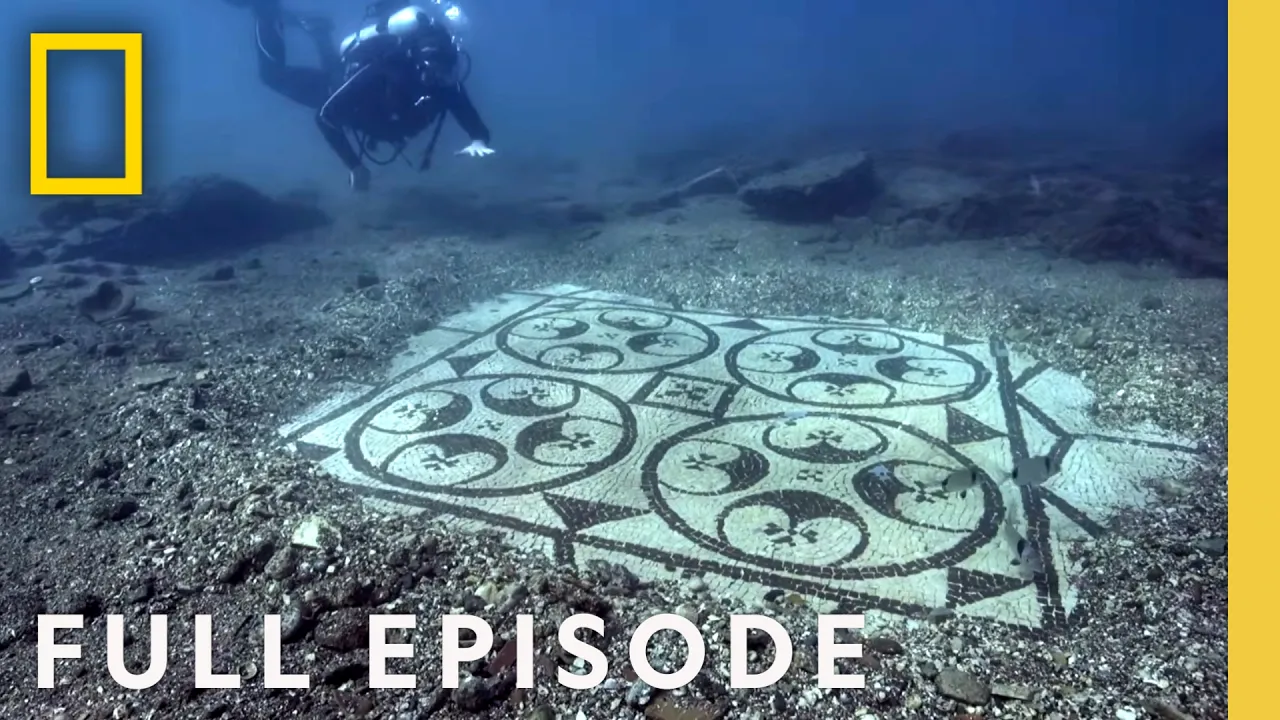

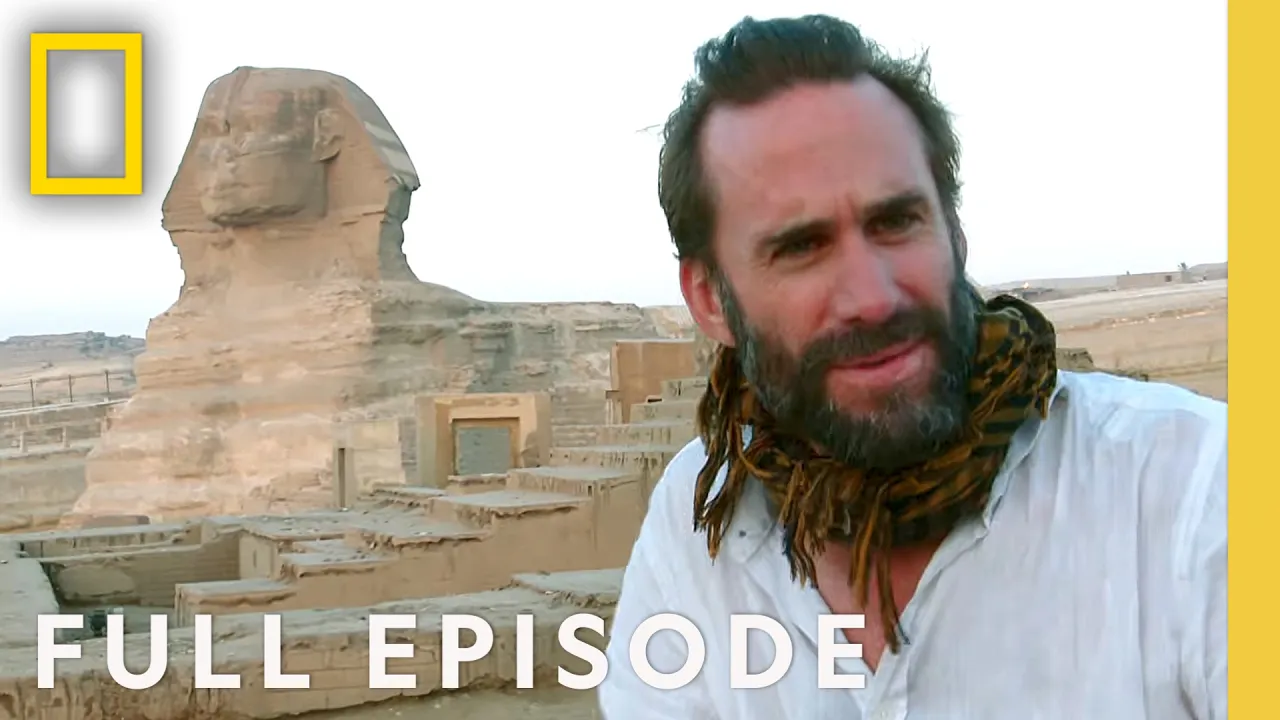
Get daily recaps from
National Geographic
AI-powered summaries delivered to your inbox. Save hours every week while staying fully informed.