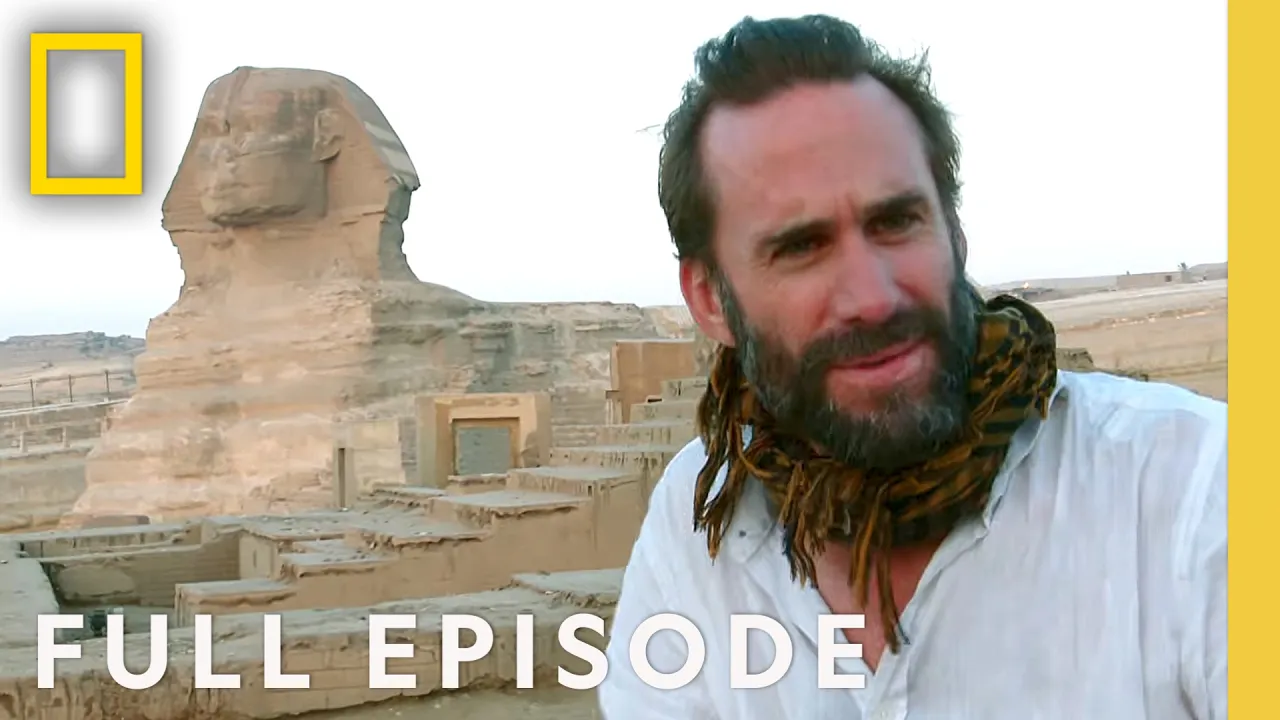
James Marsden's German Dish Up (Full Episode) | No Taste Like Home with Antoni Porowski | Nat Geo

Chapters7
Antoni introduces the journey with six Hollywood stars exploring family histories through cooking and storytelling.
James Marsden uncovers German-Texan roots through family recipes, fieldwork, and a Bavarian castle dinner, linking chicken fried steak to his heritage.
Summary
Antoni Porowski guides James Marsden on a heritage-fueled culinary journey from Texas to Germany. The episode centers on James’s German ancestry, exploring his four-times great-grandfather Hermann Conring’s move to Texas and the meat-based culture that followed, including Texas barbecue and German-influenced dishes. In Texas, James reconnects with his mother Kathleen’s version of chicken fried steak, learning how the dish echoes a broader tale of migration, work, and family memory. In Germany, Antoni arranges encounters with historians, a royal dinner, and a Bavarian chef who brings to life the humble roots of James’s ancestors, from a Bavarian shoemaker in the 1800s to a palace setting that reveals class and etiquette. Across Bavaria and Hanover, James discovers how food served as a bridge between cultures—whether through offal-forward cooking in a mountain restaurant or schnitzel that mirrors his Texas fried steak. The journey culminates with beer gardens and family lore linking James to Ava Scholz, who once served beer at a Palm Garden in Texas—tying the whole story together. By tracing dishes, migrations, and inheritances, James gains a nuanced sense of identity that stretches across continents and centuries.
Key Takeaways
- German roots extend deep into James Marsden’s Texas story, with Hermann Conring’s 1854 migration framing a shared culinary narrative between Germany and Texas.
- Texas chicken fried steak and Bavarian schnitzel become a throughline showing how immigrant foods evolve and travel, connecting childhood memory to ancestral history.
- Texas barbecue’s German influence is highlighted by a shared lineage of meat, smoke, and communal eating, including a discussion with Hoover Alexander on cross-cultural foodways.
- Aristocratic dining etiquette in Germany contrasts with immigrant-driven, resourceful cooking; the show uses dinner as a lens to understand historical power dynamics and mobility.
- Archival discoveries—Conring’s letters and 1848 demagogic activity—shed light on why German ancestors left for America, enriching the personal story with political context.
- The final reveal about Ava Scholz’s beer garden connection in Texas provides a tangible, multi-generational link, reinforcing how family histories can echo across oceans.
- The episode blends fieldwork (cattle drives, ranch visits), home cooking (Mom’s chicken fried steak), and palace-scale dining to illustrate how food preserves memory and identity.
Who Is This For?
Essential viewing for food historians, genealogy enthusiasts, and viewers curious about how immigrant foodways shape modern American cuisine. Fans of Antoni Porowski and National Geographic’s culture-driven storytelling will appreciate the rigorous digging plus delicious demonstrations.
Notable Quotes
"If you'd have told me we were coming to have dinner with a royal German family, I would not have expected that."
—James’s surprise at the German aristocratic dinner frames the tone for the cultural contrast driving the episode.
"This is your family’s castle. I'm assuming. I know nothing, I have no idea."
—Antoni’s reveal underscores the disconnect between modern identity and historical status, a theme driving James’s reflection.
"In those days, the aristocracies put troops on the street, they shot down everyone. That was it. The movement was over."
—Heiko Randermann explains 1848 Germany’s upheaval, linking political history to personal family migration.
"Food is the last thing to go. That's what people hold onto as a symbol of their former life."
—Hoover Alexander articulates how food preserves culture across generations and borders.
"Ava married into the Scholz family and helped run the Palm Garden beer garden."
—Reveals a concrete link between James’s Bavarian ancestors and Texas beer gardens, tying the two worlds together.
Questions This Video Answers
- How did German immigrants influence Texas barbecue and fried steak traditions?
- What exact records link Hermann Conring to James Marsden’s Texas ancestors?
- What is the significance of 1848 in German history and how did it affect emigration?
- How do beer gardens in Bavaria connect to American immigrant communities?
- Who were Ava Scholz and the Palm Garden, and how do they tie James Marsden’s family history together?
James MarsdenAntoni PorowskiGerman Texas migrationHermann ConringTexas barbecuechicken fried steakSchnitzelBeergardenDittlerScholz family
Full Transcript
[Antoni Porowski] I'm Antoni Porowski. -[worker] Hello, friend. -Hello. And as a son of immigrants, -I know that food... -Whoo. ...can tell you more about who you are... Nothing makes me feel more Polish than this. ...and where you've come from... -This is it. -...than you ever imagined. So now, I'm leading six curious Hollywood stars... -Are you excited for this? -Yeah. ...on their very own journeys of a lifetime. I've been waiting for this moment my entire life. I'll be delving into their family histories... [gasps] -Florence? -Yeah! ...and tracking down culinary clues... Oh my gosh, it's so good.
...to unlock the past. It almost feels unreal to think that I descend from a king. [Antoni] And it all begins... -For you, Nonna. -...with just one... -[laughter] ...family recipe. -It's crispy. -Mm! This time, James Marsden, star of Enchanted, Jury Duty, and Westworld, heads to Texas. Your family is part of a very dramatic story. And Germany. [James Marsden] If you'd have told me we were coming to have dinner with a royal German family, I would not have expected that. To get the full flavor... I would never have tied German immigrants to barbecue. ...of his family's history.
I actually only stand on the red. Well, this is getting interesting, -and maybe dark. ♪♪ [birdsong] [knocking] -What's up? -That was a solid door knock. -How are you? -I try. -Good to see you, James. -Thanks for coming. -Come on in. -[door closes] -Welcome to Mom's house. -[Antoni] Thanks! -Hi, Miss Marsden. -Hi. -[James] This is Mom. -So nice to meet you. Nice to meet you too. Thank you so much for having me. Mom, this is Ant. Kathleen, Ant. James and his mother Kathleen have invited me over for a home-cooked meal. I'm already distracted, there's so much going on here.
-Welcome to Meatville. -You can turn that on for me. Yeah, let's see here. Oh, that's the back burner. Chaos and madness. Come on, cook already. [laughter] Okay, so what is it that we're making today? We are making-- well, my mom is making chicken fried steak. [Antoni] It's a Texan classic which is made with tenderized beef that's fried like chicken in a thick coat of buttermilk and flour. I was gonna ask you, like, why this dish? This is one of those dishes that when, once she started cooking it, we had a two-story house, and the smell from the kitchen would start to waft up the stairs.
-We were upstairs playing Nintendo or whatever, and we'd smell it, like, "Oh, Mom's cooking chicken fried steaks." It's taking me back. I'm 12 years old again. The thing we always wanted, and we always wanted it -overdone a little bit. So, there was a little extra crunch. Yeah. A single mom with four kids, getting homemade food on the table wasn't always easy in the Marsden household. [Kathleen] I worked a lot. I had two jobs at once. I was busy, busy, busy. [James] You know, we had a pretty humble upbringing. But when she would cook, it would be a rabid dash -to the kitchen table...
-[Antoni] Yeah. to, like, claim your bits of steak. [Kathleen] Who gets the crustiest one, who gets the biggest piece? But when your mom made that meal, like, that's something that stays with you. Yeah. Yeah. 'Cause there is extra love that goes into that when it's homemade like that. -Wow, look at that. -[Antoni gasps] -Wow! -Beaut. -Nice work, you. -Help yourself. -[Antoni] This one's for you. -[Kathleen] Oh, okay. [James] Look at that perfect golden brown. That's it right there. Dig in. -Yes. -Oh, I get it. I get it. There's something about the shell of fried flour.
You get to have more gravy 'cause it just goes in between all the little crevices. [Antoni] Like the gravy, I want to get to the nitty-gritty of how chicken fried steak made its way into the Marsden family repertoire. Kathleen, who taught you how to make this? I had some guidance from my mother, and she used a different kind of meat. It was not tenderized, so it was a thicker steak. -And it was a little... -[James] Tough? -Chewy. [laughter] [Antoni] Kathleen learned the recipe from her mother, James' Grandma Scholz. This is my mother and my father on their wedding day.
-Aw. -1944. -[Antoni] Wow. -[James] Grandfather Scholz, -your father... ...was half-German? -Half-German. Mom Kathleen even knows the name of one of her father's German ancestors, Adolf Scholz, James' great-great-great-grandfather who was well-known in these parts in the mid-1800s. Adolf Scholz had a beer garden in San Antonio. That's a beer gard-- Are those palms? That's why it was called the Palm Garden. That looks like a Gatsby party or something. [James] What events would happen at the Palm Garden? Beer fests, I guess, Oktoberfests. You know, there's a lot of Germans in Texas. [Antoni] There were, and it does make me wonder whether chicken fried steak would have been on the menu all those years ago.
I'm convinced this dish holds the key to something much bigger. What's the pull for you to do this right now? -What excites you about this? -As you get older, you just get so curious about, like, where did I come from? Where did you come-- Where did we all come from? -How far back do you go? -Mm-hmm. And how did your ancestors live, and what were they eating? Do you have anything that's been sort of passed down? [Antoni] It's sort of like, we do these things, we have these rituals when we're growing up, and all of these family traditions.
You know, your face really did light up when you were talking about, like, you and your siblings, running in when she was making this meal. This is what we grew up eating, but is there any connection between this dish and our great, great, great, great-- whatever? It's just finding what it is, right? So, James has some big questions about what he's inherited from his German ancestors. With that in mind, I've done some digging through the archives to find out more. And what I've discovered brings us here, to the vast open country of central Texas. So, you're probably wondering what the hell we're doing -out in a field on horseback.
-[laughs] You could say that. So, your four-times maternal great-great-great- great-grandfather... -Right. -Hermann Conring and his wife Georgina, they immigrated here from Germany in 1854. -Whoa! -With five kids. -That's back to 1854. -1854. [Antoni] So, James is more German than he ever realized because it wasn't just Kathleen's father who had German ancestors. Her mother Mary did too. And they made their home out here. They came here with their clothing, their language, their customs, some recipes, and like, that was it. And they actually took over 640 acres of land... and basically started populating it with horse and cattle.
Did they know what it was gonna be like? Why Texas? All I can say is, more will be revealed. Okay. All right, way to stay cryptic. [laughing] Just as I thought, James is champing at the bit to learn more. And luckily, I've arranged to meet someone to fill in the gaps. Just the man we were looking for. -Hi, Jim. -Hey, welcome, fellas. Glad to see you. Welcome to my ranch. [Antoni] Jim Kearney's family have been ranchers for over 140 years. Like James, his ancestors are also German. Your family is part of a very dramatic story.
[Antoni] Turns out, a fifth of all families in these parts have German roots. And how many of them ended up in this bit of Texas, is a tale of Colonial ambition. Back in the 1840s, a group of German noblemen led thousands of German immigrants to Hill Country, in the hope of creating their own little principality. But it didn't work out as planned. It was almost a complete utter debacle, 'cause they ran out of money, they didn't know what they were doing, they had no business acumen. [Antoni] But what was a disaster for the nobles turned into an opportunity for the German settlers.
[Jim] Somehow, the immigrants themselves were able to turn things around and make the transition to a new home and country in Texas. The route to their salvation? Lots and lots of cows-- something Jim knows a thing or two about. [Jim] Well, fellas, we need to move these cattle out of here into another pasture. Maybe you can give me a hand on that. Oh, you're serious? Yeah, I think you can do it. Do I know what that entails? No. But am I down? Absolutely. Great, and the best teacher is experience. There you go. And you. -If you survive it.
-[laughing] ♪ Back then, cattle were used mainly for dairy and to plow fields. Look, you can go this way, I'll go this way. -There you go. Race ya. -Look at that. [Antoni] But James' family arrived at a time when the population was growing, which lead to an increased demand for beef. [cows mooing] [James] I'm staying away from the mare. Yep, don't have to tell me twice. I don't feel like I'm the one in charge, at all. No, I know. [Antoni] By the 1860s, there were five million cattle roaming the fertile Texas prairie. -It's so crazy.
-It is wild. [Antoni] Fifty-one of them on a 640-acre ranch owned by James' very own cowboy ancestor, Hermann Conring. I really feel like this is in your blood. I think you're giving me a little too much credit. -No! -But I'll take it. [Antoni] I mean, it's literally in your blood, it's in your genetics, but, like... [Janes] It is and I think that's the coolest thing, is like realizing 150, 200 years ago, that they were out here, my great-great-great- great-great-grandparents. [Antoni] Yeah. Doing essentially what we're doing now. You ever get that feeling like you've been somewhere before?
-100%. There's something about this and everything we're doing here that does feel like, "Ah." It's not-- I don't feel out of sorts, I don't feel out of place. This feels natural. [Antoni] It turns out, James has more cowboy in him than he ever thought. Let's hope he's got an appetite to match, because we're heading into town in search of a world-famous cuisine that should get James to see his German immigrant ancestors in a whole new light. [James] Smells like something's cooking. -Looky here. Real fires. Jim is taking us to lunch at one of the many German meat markets here in central Texas.
Smells really good. I'm salivating again already. [Antoni] Originally set up in Conring's time to butcher and sell beef to a growing population, these places rapidly innovated. [customer] Can we do a quarter-pound of the brisket? Recognizing people's enjoyment of grilled food at outdoor celebrations, German entrepreneurs turned barbecue into an everyday treat by moving the fire pits indoors, and threw popular cuts onto the smoker, like brisket and clod, seasoned to perfection with no more than a simple spice rub inspired by the old country. [Jim] And look at this sausage. That was another skill of the German immigrants.
-Sausage. -They really perfected, and usually just very simple ingredients. Salt and pepper, sometimes maybe a little garlic. -That's all you need. -My mom knows -those ingredients well. Growing up in the South, James is no stranger to food like this. But what's amazing is that his four-times great-grandfather would have known it from its very beginnings. -[James] Texas barbecue. -[Jim] All right. -Courtesy of Antoni and I. -Oh, here we are. This is what they call... You got something for everybody. -[Antoni] Whoo! [Antoni] And the tale doesn't end there. So, I've invited barbecue expert Hoover Alexander to join us for lunch.
You got that crunchy little pieces of fat on the outside. -People call it the candy. You want it to be moist, but you want it to be tender. It's not easy to do. It really isn't. So, the Germans teamed up with others. [Jim] In the meat market, we have two different cultures coming together. German is one thread in that, and so is the African Americans. If it fits in a pit, we try to smoke it. Enslaved African Americans were experts at cooking meat over an open flame and harnessing the flavor of local woods. After the Civil War, many went to work with the Germans.
[Hoover] What the slaves brought to the game was the actual skills of using live fire. So, you know, you've got your pits, be it shallow, be it deep. You've got stakes that you smoke on. All of these things have played a role into what we know as Texas barbecue. -[Jim] Yeah. -[Antoni] "We got the meat. We know what to do with it. Let's join forces." Learning about the Germans and the Black culture coming together, gives me goosebumps -just thinking about it. -[all agreeing] And part of it's the food. -[Hoover] Of course. Like, I would never have tied -[Antoni] Right.
-In any fashion. Food is the last thing to go. That's what people hold onto as a symbol of their-- -of their former life... ...or wherever they came from. That's my takeaway from this, it really is. -Yeah. Agreed. [Antoni] James has discovered a connection to Texas and its food through his ancestor that's stronger than he ever realized. But what's still a mystery is why James' four-times great-grandfather, Hermann Conring, came here in the first place. There's only one way to find out-- to head to the Old Country. I've taken a look at the records and discovered that Conring was born here, in the northwest of Germany in what is now Lower Saxony.
And our first stop is a palace. [James] It's beautiful, stunning. [sighs] [James] Very different than riding a horse out in the field. [Antoni] There's something about Hermann Conring James needs to hear. This is my family's castle. -This is your family's castle. I'm assuming. I know nothing, I have no idea. No, Conring didn't go from being a prince to a cowboy, but he was no farmhand either. So, Hermann had nothing to do with agriculture or anything like that when he was in Germany. He was actually a notary, type of lawyer. -Really? -And he was super educated, came from a really good family, and they were part of the bourgeoisie.
So, they weren't quite the aristocrats or the royals, but definitely on, like, the higher levels. His wife's family were really wealthy landowners with, like, a huge manor. Hermann's older sister's godmother was actually a baroness. -Wow. -In terms of, like... -Sounds very fancy. -Right? [Antoni] So, a world away from his life on a Texas ranch, Hermann Conring was actually a successful lawyer with connections to nobility. And that means he'd be familiar with palaces like this. So, you want to go inside? It just so happens we're in time for dinner. What better way to understand Conring's experience than by trying it firsthand?
[James] If you'd have told me we were coming to Germany to have dinner with a royal German family... -...not have expected that. I feel so underdressed, you were smart to bring a jacket. -Welcome. -Antoni, nice to meet you. -Hi, James, how are you? -Hi, nice to meet you. -Pleasure to meet you. I'm Teddy. So, I hear you have German ancestry? Yes, I do, and I'm-- we're sort of exploring that at the moment. I'm just-- every day is kind of a bit of a puzzle that we're putting together. Your name, again? Forgive me. My name's Donatus, but most people call me Teddy.
-Okay. -There's this weird tradition amongst aristocratic circles that we have cute-sounding nicknames. -Teddy, Sharmy, Boopy, Oopy. -Whatever you prefer. [Antoni] Teddy, AKA Prince Heinrich Donatus of Schaumburg-Lippe, is all smiles, but his family is no joke. With a dynasty stretching back 900 years, his ancestors weren't just upholders of tradition, they were holders of absolute power. And I suspect we'll find out what that means for James' ancestor over dinner. [Antoni laughing] [James] Oh, my lord. I was not anticipating this. -Welcome to the ballroom. -Oh my! My eyes can't process this. This is incredible. [Teddy] You played a prince in a movie at one point, -didn't you?
-I did. Did you have to waltz as well in the movie? -I did, I did. -How's your waltzing? Learned the whole waltz for Enchanted. -Oh, good! -Wait, no, no. -I just screwed that up. -You're already better than me. -Wow, yeah. Hermann Conring, I just learned, is a-- was a notary. Back in the day, there was a pecking order, whatever you want to call it, and I was just thinking, would they have been invited to the party? -I don't know. -Yeah, well, most of the people that came here were sort of what was considered -the higher social classes.
-Sure. But it's not just aristocracy, right? There's also higher bourgeoisie, the academics, the highly educated members of politics, perhaps. Given that your ancestor was highly connected, there's a good chance that he might have been -in this kind of environment. I mean, you've got a half-red carpet. Oh, yes, yes. Oh, excuse me. I actually only stand on the red. [Teddy] So, I'll show you the kitchen. -[James] Hello. -[chef] Hi. -I'm fine, thanks. Hi, Chef. Carry on, don't let me stop you there. Oliver Garasch, private chef to many aristocratic households, is preparing a meal fit for a king.
Well, a prince. Is that a hollandaise? That will be a hollandaise, yeah. Tonight's eight-course menu is typical of what Conring would have been served at a banquet. We do oysters, we do mock turtle soup, we do a lobster course. We have sauce Cumberland for the venison dish, the main course. Don't say something wrong, please, -I am the man with the knife. The sweetness, I already taste what it's gonna be like with the venison, I love it, 10 out of 10. Mm, that's exceptional. -That is so good. It all looks delicious. But English Cumberland sauce? French lobster Thermidor?
I'm not seeing a lot of sausage or sauerkraut. Is there a dish here that is specifically German? So, specifically German, um... -No. -So, they were plucking these cuisines from different cultures. [Antoni] It seems that when it came to dining, German aristocracy thought their own country's food was beneath them. -Thank you, Chef. -Thank you, we can't wait. -This looks delicious. -Bye. Another beautifully ornate room. Um... I don't think I've ever seen this many place settings. Whoa, yeah, that is a lot. [James] I feel like this is where I'm so ill-prepared to know the actual etiquette, what goes first, what goes second, what to touch, what not to touch.
Well, what I learned from Pretty Woman is that you work your way out and you go in. -Oh, oh. -Good evening, gents. Good evening. [Antoni] Tonight, our hosts are Prince Alexander and Princess Mahkameh. Lovely to meet you. They've graciously agreed to give us an insight into the dining etiquette that James' ancestor would have been expected to know... Welcome to our humble abode. [Antoni] ...when invited for dinner at a palace. So, toast goes on the side-- on the side plate here. -Great. -That's what it's for. This knife is also meant for the toast. -[Antoni] Great. -[James] Yeah, okay.
As for the cutlery, the one that comes first is on the outside, and then you sort of work, work your way towards the inside. Thank you, Julia. Use this fork to cut the oysters. -[slurping] -[Antoni chuckles] It's very fresh. -Briny. [Alexander] I say, I drink to our lovely guests today. -Cheers. -[glasses clinking] [all toasting] Lovely to meet you all, thank you for inviting us -into your home. -And you guys are doing well, because you're supposed to look each other in the eyes. It's so many rules to take in. [Antoni] And I guess that was the point.
Every extravagant foreign dish, every piece of etiquette, reminded the likes of Conring that although they were offered a glimpse of power, they would never wield it. [Alexander] In those days, I mean, you know, society was a pyramid. Everybody was locked in their place, more or less, with very, very few exceptions. Oh, yeah, it's the venison. [Antoni] So, even if this food tastes delicious to us now... -[James] I'm astounded by it. It's really tasty, really flavorful. [Antoni] The rule-bound hierarchical society it symbolized may have been tougher for Hermann Conring to swallow. -That was pretty surreal. But incredible.
I mean, it's just... Again, this whole process is processing, you know, kind of taking all that in. It's a lot, absolutely. The food was obviously incredible, and I'm thinking, like, what my ancestors were doing back in the day and what-- where they sat -in that hierarchy. Where they were, the Conrings, it felt like they were in a pretty comfortable place. -And what was going on with that family that... why was everyone moving to Texas? It's a very good question, and I know just the place I'm just gonna ask everyone that passes me, like, "Do you know the Conrings?" "Sorry, do you know Hermann?
-Hermann Conring? -Five kids. There are tried and tested ways to research your family history. But James, he's got his own methods. James Marsden. X-Men, Notebook. [Antoni] I've brought James to Hanover, the state capital of Lower Saxony, because I've found something in the archives that might explain why his family left Germany. So, Hermann Conring, I have a bit of, like, physical information. That's his handwriting. -No way. Wow, they did know how to write in... -Beautifully. -...in beautiful penmanship back then. This is December 15, 1837. "To the royal Hanoverian Ministry, "for nine years, I've been settled in this town "as a lawyer.
I hope that I'm not to be blamed "for my moral conduct of life... "...since I have always made it my business to act "in an orderly and lawful manner in my field of activity. "Therefore, I dare to address "the most humble request to Your Excellencies, "that you will graciously deign to appoint me as notary. Your Excellences most wise and well-born." Boy. Okay, hold on, let me figure out what to make of this. So, he's basically going, "Hey, hire me." -"I'm reaching out to you." I feel like there's ambition and drive. But I'm guessing the tone is that he's being denied this.
Conring's letters show a man who was ambitious, but frustrated. There's clearly something going on here, and I found a clue from 17 years later that sheds light on this. The plot thickens. "Annual report for 1854, Office of Internal Affairs, "immigration to America. "In this year, 22 persons "emigrated to other parts of the world. "Among them were the lawyer Conring with his family "known from the year of 1848, "and in 1853 again, imprisoned for a long time because of demagogic activities." Well, I need to decode that. So, basically he was arrested twice. -My family. -You got the right guy.
-Can you relate to that one? You got the right guy. Wow, okay. This is a lawyer who was imprisoned. Yeah, exactly. Wow, I wonder what... I wonder what that was about. interesting, and maybe dark. Well, let's go talk to someone who's gonna help us out a little. And also, I'm getting a little hungry, so I thought we could maybe go meet him, and he can kind of unpack all this for us. Oh, sorry you're getting hungry. I'm just, like, unfolding my whole history of my family. Let's get you a bagel. [Antoni] My contact, and lunch, is another bike ride away.
"Arrested twice -for demagogic activity." -Uh-huh. [James] I'm not sure what that means. But if it's anything fun, we should do some demagogic stuff while we're here in Hanover. Gaststätte Kaiser is one of the oldest taverns in town. I'm not sure I want to get this information. [Antoni] Just the kind of place where bourgeois intellectuals like Hermann would hang out. And the same is true today. We're meeting journalist Heiko Randermann, in the hope that he can explain what happened to Hermann. -Prost. -[all] Prost. Oh, that's very good. [Antoni] Time to get down to the matter at hand.
-"Demagogic activities." -"Demagogic activity." Oh, right. That sounds dangerous. 'Cause it's a terrifying word. It is a terrifying word, but demagogic activities back then could have been anything. Let's go back 200 years. Germany was not one country. It was dozens of them, maybe 40. Everywhere, the aristocracy was ruling, but then, French Revolution happened, and people in Germany get the idea, a country does not belong to the king, it belongs to its people. -Of course, the ruling class felt threatened. So, many people back then were accused of demagogic activities, meaning they were looking for a liberal society.
They might be in favor of a unified Germany. It could mean you speak your mind. It could mean you're wearing the wrong clothes, singing the wrong songs. -And they were put into prison. -[exhales sharply] [Antoni] So, it's kind of a blanket accusation to ensure that they got to maintain their palaces and their way of life, and the rules. Sure, sure. [Antoni] One surprising way people showed their support for a new democratic Germany was food, taking humble local ingredients like bacon, pickles, and mustard, and turning them into an unlikely call for political change. [sizzling] [speaking German] -Danke schoen.
-Thank you. That's delicious. The sauce that is in this dish reminds me of the brown gravy that my mother -put on the chicken fried steak. -[Antoni] Sure. [James] Remember when we were riding horses back in Texas, I said something along the lines of... [clears throat] ...feeling like you've been here before. This dish, the flavor, the feel, all of this... -kind of does the same thing. It makes me feel like I've been here before having this dish before. A world away from last night's fancy foreign food, this was traditional German fare that people like Conring didn't just eat, but started to celebrate as a symbol of the more equal Germany they wanted.
People were looking for, you know, the German soul, right? Like, what is it that we all can agree on? -[James] What is our identity? -That's right. What is our identity. And I have to say, we all can agree on rinderroulade. [Antoni] But even the rinderroulade was no match for the might of the ruling class. [Heiko] In this document, the year 1848 is mentioned. That was very important in German history, the year of the German revolution. -In '48, the aristocracies put troops on the street, they shot down everyone. -Shot people? -Hundreds of people dead. That was it.
The movement was over. Your ancestor very likely was part of that movement. Wow. It kind of gives your family's history this nice theme of bravery. Yeah, yeah. I was-- yeah, well put. And I feel the same way, that they were leaving oppression. And that, to me, yeah, there's a lot of courage in that. It's not surprising that after getting out of prison, Hermann Conring wanted to say auf wiedersehen to Germany and try his luck in the Land of Opportunity. [James] It's great, it makes you feel proud. His behavior, his imprisonment, to come pushing against the class system and wanting to find a different way of living.
He just wanted a better life for him, -for his family, for his kids. -Yeah, that's-- I mean, that's what I'm-- that's my takeaway. [Antoni] But our journey doesn't end with Conring. I've uncovered another of James' ancestors who lived in the fairytale scenery of southern Germany, but whose life would have been far from magical. Can you believe we started -all the way from Hanover? -By foot. [Antoni] We are hiking up to Germany's highest castle, Falkenstein, where I'm going to give James some new information about his family. Bavaria in southeast Germany is an area as rugged as it is beautiful...
defined by the majesty of the Alps and the pristine valleys below. I was expecting more goats. You were? Well, we're the goats today. [Antoni] Fortunately for James, I've provided him with some classic Bavarian footwear. [clearing throat] Look at us, -just mountain goat-ing it. -Oof. -In these... -What are they called? I think they're called haferlschuh. [James] Whoo! Who needs oxygen? Yep. It's the scale of it, it's... I mean, look how it just goes for miles and miles. -That's insane. -Ooh, nice. -[sighs] -[Antoni] Cold. -We... -[bottles clinking] [Antoni] Other than being the perfect setting for a local beer, this is the best place to see the old stomping ground of James' long forgotten ancestor.
Early 1800s, your mother's paternal side of the family were actually here in Bavaria. There was a man by the name of Johann Dittler. He was a journeyman and he was a shoemaker, and he went into towns and he would repair people's shoes. And shoes that were very popular at the time-- whoo, that's a stretch-- are these haferlschuh -which are like hiking... -Hiking shoes, I swear. -Wait, so these babies? Yeah. So, they look like a fashion statement, but they were actually very useful for people who were hiking in these mountains. Born in 1819, Johann Dittler is James' four-times great-grandfather on his mother's paternal side.
So, he's traveling around Bavaria. Fixing these and making these. -Very rural part of Germany. As opposed to-- a stark contrast to Hanover. Much more humble background. Two completely different Germanys there. I think I prefer this. When I'm in this type of landscape, it does something to me in a very positive way. It's a fascinating thing to explore, like what stays with you, even over the course of, you know, several, several generations. -I do believe that things -are passed down. -Oh yeah. And imprints that are made, you know, two centuries ago, can still surface -in certain ways.
Well, with that in mind, I think walking in his ancestor's footsteps might help reveal some of those imprints James is talking about. Journeying through Bavaria in the first half of the 1800s, Dittler would have encountered an impoverished isolated kingdom compared to the tourist brochure perfection -we see today. -[cowbells ringing] The cattle! [James] And each one of them have a bell. It's almost a little too cliché, guys. Right? [Antoni] The lower classes would have scraped by on a meager diet, so our first stop is restaurant Schlossanger Alp, which specializes in something Dittler would have eaten. "Meet by the back door," Chef Bastian said, I didn't know he meant that literally.
I just thought of Westworld. I was thinking the cold storage unit. -Sorry to interrupt. -No problem. -On this very intimate affair. Can I ask what... what it used to be? -It was a deer, yes. -It was? A male deer, yeah. -A male deer. -Yes. Yes. -My gosh. She's the hunter. -[James] The hunter? -[Antoni] You hunted this? -Yes, I shot it. -Like you shot it with a gun? -Yes, with a gun. -I normally just work here. -At the reception. -She's our reception. -But you work at the reception? -But you're a secret hunter. -Aren't you? Look at that.
-A secret hunter -in my spare time, yeah. This deer looks incredible. But Dittler wouldn't have been eating prime cuts of meat. He would have had the parts Chef Bastian likes best. We use everything-- the heart, tongue, the back, everything. -Ear to hoof. -Yeah, sure. 'Cause in this region, we don't have so much money in the past. I'm excited to see what you make with this. Yeah, sure, let's go inside. And that's why we're here, because Chef Bastian Ebert makes food using offcuts, innards, and organs. This is our kitchen. These are my sous chefs. Hello. [Antoni] The only sort of meat a poor shoemaker like Dittler would have been able to afford.
[Bastian] We have here the heart and the tongue. [Antoni] For me, this all sounds like a culinary wonderland. But I'm not convinced James has inherited his ancestor's taste buds. My usual rule is that I won't-- I don't typically get into eating organs of animals. [Antoni] But Bastian does things to offal which Dittler could have only dreamed of. So, the tradition is basically -using ingredients... ...that were kind of like less favored or desired. -Yeah. Yeah, right. -And kind of, like, highlighting them in a contemporary way, yeah. [Antoni] Today, Bastian is preparing us a specialty, croquette of minced tongue and heart, deep fried...
laid on a bed of crushed bean salad, garnished with freshly picked alpine wildflowers. [Bastian] We add some mayonnaise of rosemary, and then sauce, and green oil of parsley, the taste of the herbs, yeah. Yeah, a bit of that sharpness. I almost don't want to touch it, 'cause it's such-- -it is a piece of art. -You have to, you have to. -I do. [laughing] -It's a work of art. Let's just leave it like this, I just want to look at it. I'll consume the art. So delicate. I think you're really gonna like it. This is a once-in-a-lifetime thing, so, let's just...
You're also on the roots of your family. -That's right, exactly. -So, you have to. -To honor you... -[Antoni] I like that. -To honor you, to honor my family. Mm. I actually love that. -Yeah, that was amazing. -Perfect. -And that sauce is insane. I need to recalibrate my dining rules. You got a little something there. -There. There we go. -Oh, thanks so much. See, we're like a little married couple now. -Oh, look at that, yeah. [Antoni] Obviously, offal as haute cuisine unrecognizable to Dittler. But he would have known the key ingredients. Thinking about the pride and the usage of the offal as Bastian was showing us, 200-plus years ago, it came from a place of necessity, 'cause that's all that these people who were on the impoverished side had to rely on.
I imagine Johann as a shoe cobbler. -Mm-hmm, yeah. -You know, it's like, how simple his life must have been... -...compared to Conring's. -You know? -Mm-hmm, sure. They were rubbing elbows with the high society there. -And, just complete-- stark, stark contrast there, it's really interesting. I'm really excited for tomorrow. Yeah, yeah, me too. I wonder what-- what part of the animal and what animal we'll be eating tomorrow. It's pretty cool to know that my great-great- great-great-grandfather invented the shoe that got us up a mountain yesterday. [Antoni] Tight little edit. So, he was fixing and making them.
-But I think somebody else... -[James] No, he invented them. That's the narrative you want to go with? -He invented them. -You know what, you write -your own history books, yep. -Don't change my mind on this. [Antoni] Whether he invented them or not, with so few records about Dittler, we're trying to learn more about him through the food he would have eaten, maybe even uncovering some links to James' own food memories. Along with offal, Johann Dittler would have relied on two things still very much present Bread and beer. So, I thought it'd be nice to celebrate this journey that we've been on, and go to a beer garden a little later today.
-Twist my arm. -[chuckles] But as local tradition has it, you have to bring something, something that you can kind of like share with everybody. -Um, so... -Food? You have to bring something food to 'em? -Exactly. -To a beer garden? -Yeah, yeah. -Oh. That's tradition. Yeah, 'cause we're gonna have like a proper meal. -Are you a baker? -Okay, great, me neither. -No, but I enjoy baked goods. Like most town folk back then, Dittler wouldn't have an oven of his own. Instead, he'd use a communal one. -Hi, how are you? -I'm Antoni, this is James. -[overlapping greetings] -James.
Hi. [Antoni] And that's a tradition the good residents of Ollarzried don't intend to stop anytime soon. Today, they're baking something Dittler would certainly have eaten, and James will no doubt enjoy. We will make German beer brot-- beer bread. Oh, I'm so happy this exists. -Great, I'm in. Just like in Dittler's time, Teresa and Ulli are using barley beer. [Antoni] And rye flour-- crops that can actually grow this high up in the mountains. [Antoni] But the real secret to this bread lies in the care with which you work it. -Twist too much. -Love it slowly. -Too much power?
-Love it slowly, not quickly. Okay, imagine it's a woman. -I was. Okay. First time. Super. [Antoni] While the bread bakes, I want to show James how to make another regional specialty which I have a hunch is gonna feel pretty familiar to him. If you don't mind cracking these eggs. Give me the hard part. We're making schnitzel, a dish that would have been popular in Dittler's time. It's a cutlet coated in eggs and breadcrumbs, and awfully similar to a dish we made in Texas with James' mom. -With love. Love. With love. [Antoni] I'm just wondering when he's gonna catch on.
-These are nice and thin. [Antoni] Maybe when the meat hits the pan. -So, this one's gonna go in. -[James] Delicate. See, that smell remind... -It's that same smell that we had in the kitchen in Texas. Bringing me back. This is the... the smell of my childhood. -Aw, that's nice. -Going onto the next one here? Yes, sir. Perfect. Beautiful. -There you go. It's just a small leap from schnitzel to chicken fried steak, but for James, it's a powerful link to a treasured family recipe. Look at me, cooking like my ancestors here. [Antoni] And a different version of what your mom made.
It's all coming full circle. I love it. [Antoni] Germans like Dittler took this schnitzel recipe with them to the states, where over time, the meat of choice became all that steak being reared on vast Texas ranches. -Look how golden they are. -Golden brown. See, I liked the little charred bits in there. -I love a good little char. -Just a little... -A little more crunch. It's crazy, this is so similar to what we made in Texas and now here we are in Bavaria making essentially the same thing. -But just... -In like the same territory -that like your ancestor...
-No, I know. It's crazy. -journey-manned on his way. -Should we check on the bread? -Let's investigate it. Hello! That's maybe the freshest bread I've ever had. Mm-hmm. [Antoni] Food prepared, we are ready to hit perhaps Bavaria's greatest gift to the world, and the missing piece in James' family history. [people chattering] A beer garden. -Wow, man. -It's so cool back here. -It's like an old... -These trees. Brewery, drinking hole, and communal eating place. -Keep doing this. -[indistinct chatter] -[Antoni] Whoa. -Oh, wow. -Oh, okay. -[beer pouring] For old and newfound friends. -Let's make some room. -Hey, guys.
[Antoni] Beer gardens are a Bavarian summertime institution... [James] We have enough Schnitzel for everybody. ...dating back to the 1600s. Prost. Prost. Now, I'm supposed to have more power. -What happened to love? What's so funny about that? [Antoni] What's so funny about how I said it? [Antoni] Stephan Albrecht is the master brewer here at Rossle Biergarten. -Oh, wow! -Whoa. -[James] Oh, wow. -[Antoni] Okay. Yeah, yeah, yeah. Let's make some room. [Stephan] Hey, guys, it's great to have you here. You prefer dark or a blonde one? -I'm gonna try both. -[laughter and chatter] [James] My four time grandfather lived in these areas.
I'm imagining he might have even been here. -Eating schnitzel. Propped up against the wall after about too many of these. [Antoni] Along with their butchery skills, baking, and schnitzels... Oh, that's good! [Antoni] ...these leafy beer gardens were one more thing the Germans took with them to the U.S., leaving a lasting impression on their new home. [James] Oh! When we started this journey, the extent of your knowledge traced back to the Scholz family, right? And they had the beer garden Right. [Antoni] We know Scholz's beer garden is long gone. But there's a connection to Dittler that James knows nothing about.
Dittler, the shoemaker, he basically emigrated to Pennsylvania around 1850-ish. And later on, his granddaughter married into the Scholz family. -So, that's the connection. -Johann's granddaughter married into the Scholz-- okay. -Ah, okay. -And she helped run -the beer garden. -You're kidding. -Wow, that just blew my mind. [Antoni] Johann Dittler's granddaughter, Ava, married Adolph Scholz's son William in 1890 and worked in the Palm Garden serving beer. And who knows, maybe even a chicken fried steak to a passing demagogue. That's way further back and way more information than I ever, ever had. And one of the cool things about this trip has been kind of discovering what was coming from all of this 200, 300 years ago, and you know, what became an Americanized version of it.
There are elements that have been passed down that sort of make their way through the generations. -I just find that fascinating. It's just kind of blowing my mind, the whole thing. And I appreciate you taking me on this journey. -Oh my gosh, of course. -It's been really special, yeah. Yay, I'm glad. This was so much fun. Brother. [chuckles] Shall we go back to our friends? -Absolutely. They ate all the schnitzel while we were chatting, there's no more left. [man] First eat, and then talk. [all] Prost. [overlapping chatter] -[James] To all of you. -[Antoni] Prost. Prost.
More from National Geographic



Get daily recaps from
National Geographic
AI-powered summaries delivered to your inbox. Save hours every week while staying fully informed.