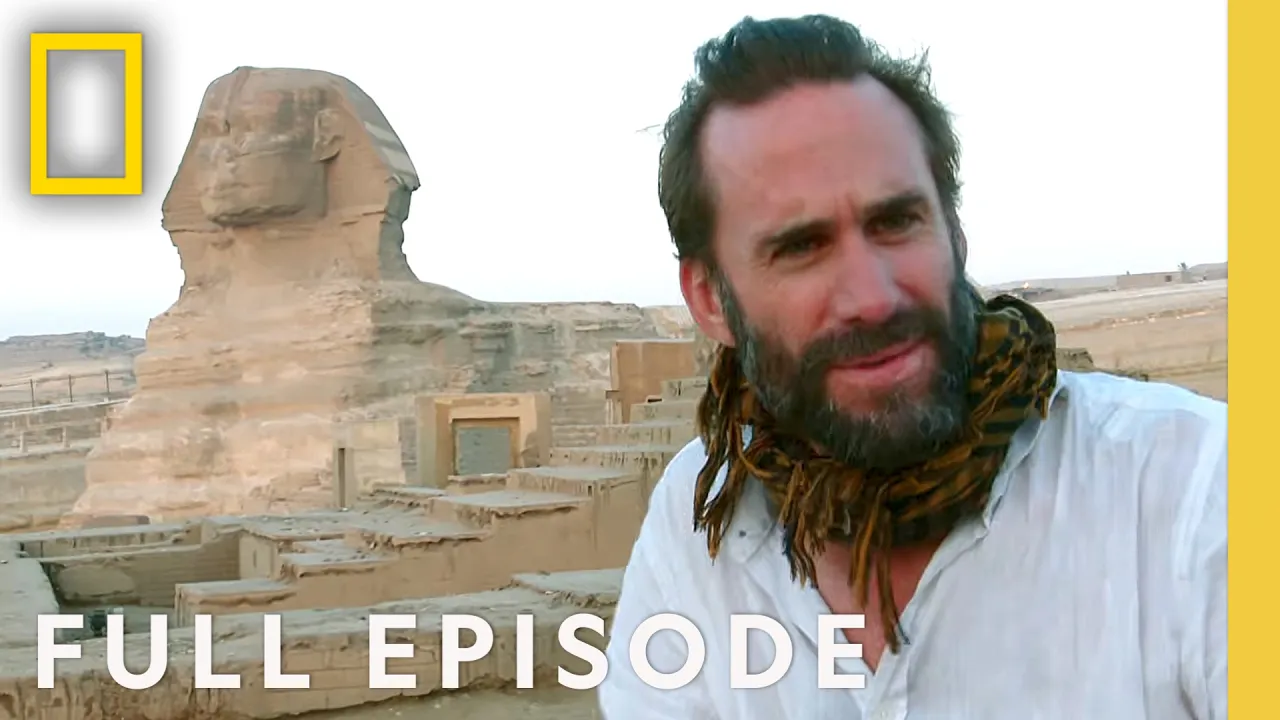
Temujin: The Boy Who Will Be Khan (Full Episode) | Secret History of the Mongols | Nat Geo

Chapters7
Introduces the Mongol empire and Chinggis Khan as a transformative figure who reshaped history.
A vivid trek from Temujin’s brutal childhood to the birth of Chinggis Khan, showing how loyalty, alliance-building, and bold risk transformed a noble exile into an empire-builder.
Summary
Nat Geo’s Temujin: The Boy Who Will Be Khan chronicles the early life of the future Chinggis Khan through the Secret History of the Mongols. The film paints Temujin as a complex figure: noble-born yet stripped of power after his father’s death, learning survival on the steppe under his fiercely protective mother Hö’elün. Viewers meet key players—Yesugei, Börte, Jamuqa, To’orul, and Ong Khan—whose alliances and betrayals shape Temujin’s path. The narrative emphasizes political marriage as a tool for alliance, the peril of rival tribes like the Merkit and Merkits, and Temujin’s first major leadership test when he deploys a 10,000-strong army to rescue Börte. The program draws on scholars like Prof Sneath, Dr May, and Mrs. Tsededamba to contrast popular myths of a “savage barbarian” with a leader whose charisma and strategic patience are crystallized in the Secret History. We see how a sable coat gifted by Börte’s family underwrites Temujin’s rehabilitated prestige with the Kerait ruler To’orul, catalyzing a new phase in his bid to reunite the Mongolian steppe. The episode blends archaeology, translation work, and dramatic reenactment to present a portrait of a boy who becomes a ruler, foreshadowing the empire he will forge. By the end, Temujin’s ambition is clear: the struggle to dominate the steppe is just beginning, even as his immediate triumph over Börte’s kidnapers signals a turning point in Mongol history.
Key Takeaways
- Temujin inherits a fractured polity after Yesugei’s death, forcing Hö’elün to steady the clan with scarce horses and food during a harsh steppe winter.
- Marriage to Börte is a strategic alliance; her dowry sable coat unlocks renewed support from To’orul Khan and access to Kerait resources.
- Temujin earns his first real command—leading a 10,000-strong force after cementing an alliance with Jamuqa and Ong Khan—to recover Börte from the Merkits.
- To’orul’s sponsorship elevates Temujin from exiled prince to a player in court politics, signaling his potential to reunite a larger Mongolian polity.
- The Secret History frames Temujin as both a capable tactician and a deeply ambitious survivor, a mix of loyalty, ruthlessness, and charisma.
- Captured and humiliated at a young age, Temujin learns to read alliances and loyalties, foreshadowing his later methods of coercion and coalition-building.
- Rescuing Börte solidifies Temujin’s image as a decisive leader, capable of turning personal crisis into a national awakening for his people.
Who Is This For?
Essential viewing for students of Mongol history and strategy fans who want a grounded, narrative-driven look at Temujin’s rise before Genghis Khan. It’s especially valuable for viewers curious about how personal relationships and political alliances seeded the Mongol empire.
Notable Quotes
"We know Chinggis Khan was of a royal house, a general who is worshiped something crossed between Napoleon and Jesus."
—Harsh framing of Temujin’s early charisma by Prof Sneath, foreshadowing his unique leadership appeal.
"The shadowy side of Temujin is woven into the fabric of the Secret History, and that's one of the fascinating features of the work."
—Highlights how The Secret History preserves both noble and brutal aspects of his character.
"Börte the bride is captured, but Temüjin and Hö’elün have escaped."
—Key turning point that showcases Temujin’s early leadership and reliance on family networks.
"When Temujin’s mother learns of Bekter’s death, she speaks of unity: always be united and always be peaceful among each other."
—Shows the mother’s influence on Temujin’s early moral framework.
Questions This Video Answers
- How did Temujin's early alliances with Kerait and Ong Khan help him later unite the Mongolian steppe?
- Why is Börte’s dowry sable coat considered a turning point for Temujin’s rise to power?
- What role does The Secret History of the Mongols play in shaping our understanding of Temujin’s personality?
- How did Temujin recover Börte from the Merkit, and why was this victory so significant?
- What were the main political dynamics of the Kerait Khanate during Temujin's ascent?
Secret History of the MongolsChinggis KhanTemujinBörteKerait KhanateJamuqaTo’orul KhanOng KhanMerkitTartars
Full Transcript
NARRATOR: The Mongolian empire, swept across continents, unmatched in power, changing the course of history forever. PROF SNEATH: It was a dynasty that conquered much of Eurasia NARRATOR: At its heart was a man once known as Genghis, but now honored with his true historical name, Chinggis Khan. MRS TSEDEVDAMBA: His name was translated in many different ways in many different countries, but Mongolians call him Chinggis Khan. NARRATOR: He was a warrior, a strategist, a visionary. He united the rival houses on the vast Mongolian steppe into one great and powerful nation. DR MAY: The world changed with his actions.
It could not go back to the way it was before Chinggis Khan. NARRATOR: He crushed every empire that dared stand in his path. DR MAY: He conquered more territory than any other single ruler in history. NARRATOR: Historians once painted him as a savage barbarian, but a new translation of an ancient text unveils the real story of Chinggis Khan's life and legacy. PROF SNEATH: We know Chinggis Khan was of a royal house, a general who is worshiped something crossed between Napoleon and Jesus. NARRATOR: But it was under the rule of his son, Ogodei Khan that the empire expanded further sweeping from the shores of the Pacific to the deserts of Persia.
This is the story of the powerful rulers who built the Mongolian empire. The vast and desolate Mongolian plains are home to nomadic rulers, whose people thrive in these barren lands, moving over distant pastures to sustain their families and herds. These people are skilled horse riders, expert archers and masters of this unique landscape known as the steppes. PROF SNEATH: So, the steppe lands is an enormous belt of grassland that runs all the way from the Manchurian forests right across the Eurasian continent, as far as the Hungarian plains in the West. The steppe lands of what is now Mongolia were divided between different dynasties.
In the central part, there was the Kingdom of the Kerait. To the west, there's another well-established dynasty, the Naiman. And these two kingdoms, they'd been around for generations. And then in the south and the east, was the Jin Dynasty, part of northern China and Manchuria. And in this eastern Mongolian area, there were a lot of different warlords and smaller petty dynasties and smaller petty rulers. So this was a kind of borderland between great powers and for 1000s of years, steppe empires have emerged in this environment. The lifestyle of these aristocrats at the time would have been different from their equivalents in Europe or China, but recognizably elite, they would have lived in these large, mobile structures, almost like small palaces, and that's where the noble class lived.
All around them, their subjects would be in smaller, much more humble dwellings, herding livestock. DR MAY: In nomadic society life was difficult, and as you're traveling across the steppe, you will have to spread out. Nomads do not just simply wander around. They know where they're going. They have seasonal migrations to pastures. In the summer, they might go into the highlands, where it's going to be cooler, or they'll go to different pastures depending on the environment and the conditions. PROF SNEATH: They hunted a lot. That was a leisure activity, but also it could be used to actually produce a large amount of meat.
And the subjects would be delivering all sorts of produce to the nobles, including a lot of milk products. DR MAY: Animals are not only your livelihood; they're also your wealth. PROF SNEATH: And although it looked exotic and different to visitors, it was actually a very sophisticated system of movement, which allowed the rulers of the steppes quite a lot of options. MRS TSEDEVDAMBA: Nomadic families followed one leader at one time. Tribes don't have to be one ethnic group. It can be several families, several ethnic groups, but they would follow one leader. NARRATOR: Generations earlier, the great Mongolian ruler Kabhul Khan briefly united the most powerful nomadic factions under his leadership.
PROF SNEATH: Kabhul Khan ruled the earlier Mongolian kingdom called Khamag Mongol. That means all of the Mongols, a whole bunch of disparate noble families united just as a single category, which was almost certainly in the area of what is now eastern Mongolia. NARRATOR: Years later, his grandson Yesugei, leads one of the noble families thriving on the eastern edge of the Mongolian steppes. MRS TSEDEVDAMBA: Yesugei Ba-atur was a good warrior, led about maybe hundreds of some families. PROF SNEATH: He is described himself as a Khan. That means as a king. NARRATOR: Although Yesugei commands the loyalty of many of his grandfather's subjects, he knows that to continue his legacy and secure his dynasty, he requires an heir.
1162, Yesugei's wife Hö'elün, gives birth to their first child and heir to the kingdom. The boy will be called Temujin, a name taken from a rival leader captured in a recent battle. BULAG: He was stealing the enemy's name for his son. To commemorate this event, this is not unique to Mongolia. Stealing somebody's name for yourself is a widespread sort of practice. That name was indicative of his conquest. He was celebrating his achievement through that. MRS TSEDEVDAMBA: The name means pursuer, somebody who has vision and goal. And when he was born, he was holding a blood clot in his right fist.
BULAG: The clot of blood in his hand when he was born was an indication of brutality killing. MRS TSEDEVDAMBA: Sometimes it would symbolize he was such a strong person and he was God given, and he had different power. NARRATOR: In years to come, this child, Temujin will be known as Chinggis Khan. His extraordinary life is documented in a mysterious text written in the decades after his death. MRS TSEDEVDAMBA: Chinggis Khan is described from the beginning till his end of his life in this book, the Secret History of the Mongols. JOHN: The Secret History of the Mongols is the only document in Mongolian that tells the rise of Chinggis Khan to supreme authority in Mongolia.
The Secret History was lost for a long time. It was lost in Mongolian, but preserved in Chinese. Chinese scholars, Mongolian scholars, and then English scholars have worked extremely hard reconstructing the original middle Mongolian. This translation makes it literate in a way that it had not been before. It makes readable what is actually extremely difficult, a collection of stories that were, common in Mongolia at the time in the mid-13th century. It tells incidents that are crucial to understanding Chinggis background and his psychology. MRS TSEDEVDAMBA: One story is about Chinggis Khan himself and his family, and the other half is how Chinggis built Mongolia as a country.
It's a very poetic book to read. Secret History is now considered not only literature, but also Mongolia's first ever historic documentation of the founding of the country. painted Chinggis Khan as a savage barbarian, ruthless in his quest to conquer the world, but in The Secret History of the Mongols, he is revealed to be an exiled Prince, a sophisticated leader and a military tactician, unveiling how a nomadic boy born on the Mongolian steppes becomes one of the greatest rulers the world has ever known. Temujin is nine years old, and his father sets out with him to find a bride, a wife from a powerful noble house will strengthen their dynasty.
Temüjin's mother was from a prestigious family who had long provided wives for Mongol rulers. They ride towards her homeland in search of the perfect match. Before they reach their destination, they are stopped by a senior Noble who tells them of a premonition he had the night before. MRS TSEDEVDAMBA: The man says, I saw a magic dream last night. The white Falcon came on to me holding sun in the one hand and the moon in the other hand, and that was sitting on me, your son has fire in his eyes. I have a girl, and she had also fire in her eyes.
Maybe it might work. NARRATOR: They accept the leader's offer and go to meet his daughter. This girl will one day stand by Temujin's side as his powerful wife. Her name is Börte. MRS TSEDEVDAMBA: That moment changes Temujin's life totally. PROF SNEATH: His father ends up making this betrothal as a sort of alliance in waiting. JOHN: Marriage was always a political objective and very useful as a way of finding loyalties in this world, which was a feuding world. MRS TSEDEVDAMBA: Börte was one year older than Temujin. JOHN: And the two were betrothed. PROF SNEATH: They know that later, when their children grow up, this will form a powerful marriage alliance between their two houses.
MRS TSEDEVDAMBA: Then Yesugei decided to leave Temujin at Börte place and went back by himself. DR MAY: For Yesugei he was traveling back to his own camp. He stopped at a Tartar camp. The Tartars were enemies of the Mongols, and they recognized him. PROF SNEATH: On the steppe, for those of the aristocratic class, they were always engaged with hosting each other, there was a good deal of civility as well as occasional hostility. DR MAY: There are these customs that exist to help normalize society, even in times of hostile relations to allow societies to function on the steppe and as you're traveling across the steppe, if you came to a camp, hospitality was given.
If you violated the hospitality, then this could lead to other issues. PROF SNEATH: Yesugei Ba-atur didn't realize the depths of the animosity that these particular Tartar noblemen must have held for him. JOHN: The relationship was a combination of feuding and friendship. seemed friendly. And he is poisoned by the Tartars. DR MAY: He began to feel ill. PROF SNEATH: Getting sicker and sicker on the way back home. DR MAY: By the time he reached his own camp, he was extremely sick. MRS TSEDEVDAMBA: He told one of his followers, bring my son, Temujin back, because Tartar just poisoned me and I'm dying.
NARRATOR: Temujin races across the steppe towards his home, but he is too late. His father, Yesugei has succumbed to the Tartars lethal poison. His followers left without the protection of a strong leader, abandoned their kingdom in search of a new ruler. MRS TSEDEVDAMBA: As soon as Temujin's father died, the entire structure of the tribe had to change. Somebody should lead immediately after him, or his tribe was about to dissolve. Temujin was too young. Those days, women didn't lead, so Hö'elün couldn't lead the tribe, so there was nobody who would inherit the leadership of the tribe.
When the followers left, Hö'elün probably saw the hard hard reality that suddenly there is no sheep, no horses, only they were left. NARRATOR: The young Temujin, born a noble prince, is now reduced to poverty. His family must fight for survival on the harsh Mongolian steppe, but rival leaders keep watch. Temujin's very existence is a threat to their power. PROF SNEATH: On the death of his father, Temujin kingdom seems to dissolve. They lost probably 1000s of their subjects, with all of their livestock, hundreds of 1000s of animals, but almost certainly, they would have had some things.
They certainly had horses with just a dozen servants, or something very minimal, but it would have been terribly poor and harsh in comparison to what the family would have been used to. MRS TSEDEVDAMBA: Especially during winter time, it should be very isolated, quite deprived, quite lonely. It's nine months of cold season, you know, and there should be lots of endurance needed to survive in that land. JOHN: They survived, therefore, on their own, it's a few tents, a very small group of people who were really under the authority of Temujin's his mother. PROF SNEATH: This is absolutely characteristic of Temujin's mother.
She was clearly enormously powerful, strong-willed. Temujin's mother did gather berries and fruits and go fishing and go hunting. JOHN: His mother proved extremely strong, managed to hold the family together. PROF SNEATH: The whole family wouldn't have survived without her. NARRATOR: The family struggles for several years in the unforgiving landscape. As Temujin and his brothers grow older and mature, they learn to hunt and catch fish to support their mother. DR DASHDONDOG: Bringing a child in a steppe environment means he learns all these survival instincts, and they were trained from the childhood archery and being good warriors on horseback.
MRS TSEDEVDAMBA: So, when boys started growing up, they started hunting and they started bringing food to the family. So who brings fish? Who brings birds, etc? That's how they probably were ranked. NARRATOR: After years of abandonment and isolation, tensions grow between Temujin and his older, half-brother Bekter. PROF SNEATH: Temujin and his brother Qasar quarrel with the half-brothers, the sons of a secondary wife of their dead father. The two sets of boys quarrel over, apparently a fish. MRS TSEDEVDAMBA: Bekter and Temüjin were probably fighting for power. JOHN: Young Temujin and his brother went to his mother and complained.
MRS TSEDEVDAMBA: But she ignored it. PROF SNEATH: The reaction of Temujin is really striking. They get their bows. Qasar, one of Temjin's brothers, comes up from the front and approaches Bekter who's on the top of a hill. Temujin, meanwhile, is sneaking up from behind, and when he sees him coming, he realizes what they're going to do. MRS TSEDEVDAMBA: And Bekter told them, if you want to kill, just kill me. Don't kill my brother, Belgutei. Leave descendants from my family. JOHN: And that's precisely what happened. He was shot in a most cowardly way, PROF SNEATH: Surrounding this poor half-brother and shooting him in the back as well as the front.
JOHN: And died. BULAG: His elder brother was domineering. He was very powerful, and therefore he was a challenge to his authority, so had to be killed. MRS TSEDEVDAMBA: The fact that Temujin shot from the back shows that he was quite manipulative. That was a tragic and dark family secret, that was the secret of the Secret History, I think. PROF SNEATH: The shadowy side of Temujin is woven into the fabric of the Secret History, and that's one of the fascinating features of the work. It's included lots of incidents that got edited out of some of the other historical materials, all sorts of really rather shameful events, particularly in the early part of his career.
MRS TSEDEVDAMBA: This is written to tell the lessons of the past mistakes and past achievements to the next generations, containing the life lesson, containing the family lesson to the next generation, in order not to be repeated or not to forget. JOHN: To show that this is precisely how you do not behave. If you're trying to create loyalty, you don't kill your own brother. NARRATOR: When Temujin's mother Hö'elün learns of Bekter's death, she is distraught. She confronts Temujin, questioning how he could turn against his own brother. MRS TSEDEVDAMBA: Hö'elün said, always be united and always be peaceful among each other, because there is no one but us in this world.
We don't have any friends except our shadows. When you don't have any friends except our shadows, you should be friends with each other. NARRATOR: Temujin's hunger for power has ended his brother's life. News of the murder reaches a rival nobleman who was once part of his father's kingdom. He believes Temujin growing ambition must be stopped. PROF SNEATH: The nobleman realizes these kids are now growing up. So, when he hears news of the killing, he decides to act. The nobleman arrives with his day guards. Now the day guards were sort of like the personal bodyguard or police force, if you like, of the time the nobleman's guards shout they just want Temujin.
And Temujin flees away. MRS TSEDEVDAMBA: Temujin hid for nine days. PROF SNEATH: Time passes, he's got nothing to eat. He eventually decides, better than starving. I just go out. And that's when they finally arrest him and take him away to punish him. NARRATOR: Temujin is held captive, watched over by his rivals, the Tayichiud. don't kill him. He's still of royal rank. Even a senior nobleman doesn't just kill somebody outright when they're descended from one of the most famous Khans of the region. Instead, he's punished by being forced to wear a Cangue, wooden yoke or collar.
It's really unpleasant. You can't feed yourself. You can't lie down properly when you're wearing this thing. The Tayichiud that is the ruling house who've captured him, took the opportunity to humiliate him. MRS TSEDEVDAMBA: So, when he was arrested, Tayichiud was hoping that from this humiliation he will not come out as leader in future. Everybody saw his humiliation. That's what they're calculating on, you know? So The Ruler was sealing his own leadership by belittling Chinggis that way. PROF SNEATH: And so Temujin was then rotated between the houses of the subjects of the noblemen spending a day in each one, wearing his Kang.
MRS TSEDEVDAMBA: Every family, When he's spending a night, he would observe the family and see who is supporting him. JOHN: Young Temujin would have known very well that the key to survival was security. The only way to build security was to create loyalty and win over the local Family Clans and get them to work together. MRS TSEDEVDAMBA: He found only one supportive family among the all those families that he's been around NARRATOR: It is a man called Sorkan-Shira and his family who take pity on Temüjin. PROF SNEATH: They were sympathetic when he visited. They let him take the Cangue off so he could get a good night's rest.
After a few months, Tayichiud have a big feast. NARRATOR: The Secret History recounts that the Tayichiud hosts a banquet in celebration of the first full moon of the summer, Temujin is taken to the feast by a young captor. And ever alert, he senses an opportunity. PROF SNEATH: When the Tayichiud were feasting, Temujin manages to break away from his captive, knocking him on the head with the Khan, and then he runs off and escapes. NARRATOR: He takes refuge in the Onon River, evading his captors who scour the banks. MRS TSEDEVDAMBA: Night time in Mongolia's freezing, freezing cold that actually shows how desperate he was and how tough he was.
NARRATOR: Among the searchers is Sorkan-Shira, who spots Temujin hiding in the river. PROF SNEATH: So Sorkan-Shira sees him and lets him stay hidden and makes some excuse so that Temujin is not discovered by anyone but him. MRS TSEDEVDAMBA: And then Sorkan-Shira told him, go to your mother, go to your family. Don't come back to Tayichiud. NARRATOR: Instead of fleeing, Temujin slips back into the Tayichiud camp in search of Sorkan-Shira. He knows that to return home safely, he will need help. PROF SNEATH: Sorkan-Shira is not very pleased, because he said, didn't I tell you to just run.
Nevertheless, he takes him in and helps him take off the Cangue and they hide him for several days. NARRATOR: After three days Temujin's captors are still hunting for him, growing desperate, they begin to suspect that he might be hiding among their own ranks. MRS TSEDEVDAMBA: He was almost found when the Tayichiud started looking for him amongst each other. Sorkan-Shira said, no sense to look here. And they left as soon as Tayichiud search group left. Sorkan-Shira told Temujin that we can't hide you anymore. PROF SNEATH: And they give him provisions and a horse so he can return to his family.
NARRATOR: This daring escape by the young Temujin displays the cunning and courageous spirit that will one day help him realize his destiny as a powerful leader on the Mongolian steppe. Temujin has escaped his captors and begins the treacherous journey back to his family, riding for days and nights he is eventually reunited with his mother and his brothers. MRS TSEDEVDAMBA: After Temujin came back to his camp, The Secret History describes it. How big a relief for Hö'elün, the mother, because they were so afraid that Temujin will not return, but they happily reunited. NARRATOR: Years pass, and Temujin works tirelessly to rebuild the kingdom that was lost after his father's death.
Although young, he is persuasive and charismatic. He forms a loyal bond with a boy from another noble family. The boy's name is Jamuqa. PROF SNEATH: So Jamuqa is one of the most important characters in The Secret History, and he was clearly of central importance to Temujin life and the early part of his career. JOHN: they were generally as close as kids are at that age. NARRATOR: Now 16, Temujin must consider his future and the prospect of marriage, the time has come for him to be reunited with Börte. PROF SNEATH: That is the bride he was betrothed to from another influential noble house nearby, and this is a key moment in Temujin's career.
blindly goes to the east of Mongolia to find out whether she's still waiting for him or if she's already married. And Börte was there waiting for Temujin. NARRATOR: They are married, the union provides Temujin with Börte, wisdom and counsel. But it is her dowry that is immediately vital for Temujin's ambition. PROF SNEATH: And her mother gives to Temujin's mother a really fine gift, a beautiful sable coat. JOHN: Now, sables are not big creatures. Are like sort of weasels, and they have a very beautiful, silky black coat. MRS TSEDEVDAMBA: Sable coat is a very valuable item for a nomadic family even today.
PROF SNEATH: Sable fur was associated with very senior status. JOHN: This was going to come in very useful. PROF SNEATH: When Temüjin returns with his new bride and this very princely gift, he and his brothers immediately go to the neighboring kingdom, the Khanate of the Kerait and give this to the ruler To'orul to sort of reforge an alliance that had been endured between Temujin father and the King of the Kerait he probably swears loyalty to him. Now the Kerait is a big, stable and large kingdom in the central part of what's now Mongolia. He must have been one of the most influential, powerful rulers in the area.
To'orul Khan is someone who was an ally of Temujin's father, Yesugei Ba-atur were both Ander, so sort of bond of loyalty that should never be broken, a blood brotherhood. This link is something that Temujin reactivates. MRS TSEDEVDAMBA: To'orul had some political influence. He was leading the largest tribe with the most expensive pasture of that time. So, Temüjin saw that To'orul Khan's resources will be very helpful for him. PROF SNEATH: The ruler of the Kerait, makes this extraordinary promise. He says, in return for this sable coat, I will reunite your scattered kingdom. Temujin, the kind of semi exiled, reduced prince is now being supported by the most powerful local ruler as the new ruler of a large section of the Mongolian steppe.
So, his fortunes were transformed by the gift of the sable cloak. So, it's clear there must have been something about Temujin the secret of history mentions how his contemporaries praised him. Thought he had personality, fire in his eyes. But the old narrative, it was treated as a sort of puzzle as to why a kind of simple barbarian people would create an amazingly successful empire. So, one way to try and explain this apparent contradiction was charisma, he obviously did have a commanding presence. The king himself, To'orul, seems to trust him enormously, supports him. So, all of these qualities, I think were parts of his amazing character, but he is still only one of many contenders for these senior royal positions.
I think at this stage in his career, Temujin really is concerned with re-establishing what he's lost. After all, his father had ruled most of the kingdom that had been established by Temüjin's great grandfather, and Temüjin has been deprived of it and wants to get it back. But perhaps even beyond that, he's on the cusp of something bigger. He enters the courtly politics of the Kerait Khanate this kingdom, and is doing very well at it. It may be that the possibility of something even bigger begins to occur to him, that he realizes he might go further, and, in fact, perhaps even reunite and reestablish this much bigger kingdom.
NARRATOR: Temujin's influence is growing stronger, but as his power increases, so do the dangers. The Mongolian steppe is a land of endless rivalry, and an old enemy is preparing to strike at the heart of Temujin's family. MRS TSEDEVDAMBA: Temujin's happiness with Börte didn't last long. PROF SNEATH: A serving woman is sleeping. She wakes up because she hears the sound of hooves. MRS TSEDEVDAMBA: It was Merkit, the longtime rival of Temujin's father. JOHN: They came to kidnap his wife, Börte. MRS TSEDEVDAMBA: There was so many Merkits and if they fought back, everybody would be killed. JOHN: There was a general scattering of the group.
PROF SNEATH: Hö'elün Temujin mother immediately organizes them. They jump on the available horses. JOHN: Amongst them, Temujin himself, who took a local horse and fled. PROF SNEATH: but there is no horse for Börte, poor Börte is left. JOHN: And you might think this was an act of cowardice, but in fact, he knew that Börte was going to be kidnapped, whereas he himself would have been killed. PROF SNEATH: Börte the bride is captured, but Temüjin and his mother and brothers and so on, they've all escaped. This is a really dramatic moment in the young Temüjin career.
He seemed to be on the cusp of so much, but now he's lost his bride. The problem is, at the moment, he doesn't command very much of anything. So, if he's going to get his bride, Börte back again, he is going to need help. Börte has been kidnapped by the Merkit and Temüjin needs to get her back. MRS TSEDEVDAMBA: Merkit was a really strong and established tribe. Temüjin didn't have soldiers, didn't have army, didn't have anyone to help him bring Bush Börte back. PROF SNEATH: So Temüjin immediately enlists the support of the ruler of the neighboring kingdom, probably now his overlord, To'orul, Ong Khan, the ruler of the Kerait.
MRS TSEDEVDAMBA: To'orul, Ong says, for the sable coat that you gave me last year, I will bring your wife back. PROF SNEATH: So To'orul says that he will raise two divisions. Just how many 1000 people is in each one, we don't know, but nominally it means 10,000 troops. So, he's going to raise 2-10,000 troop units to support Temujin to get his bride back. MRS TSEDEVDAMBA: But it will not be strong enough to beat the Merkit immediately. He said, you should go to Jamuqa and ask for Jamuqa's help. So, if Jamuqa can help you, I can help you.
Jamuqa and Temujin became Andas. That means that they are not just family friends. They are battle friends. PROF SNEATH: And this is very important for the young Temujin. Jamuqa is going to raise another two of these divisions. Turns out one of these will actually be placed under the command of Temujin himself. Temujin is put in charge of a unit of 10,000 troops. NARRATOR: This is an important milestone for the young, soon to be ruler Temujin. He has endured poverty for a decade, and is slowly becoming a fearsome leader and warrior. This is his first true test of leadership.
JOHN: Some months later, the time came to rescue Börte. When meeting up with Jamuqa Temujin came late, Jamuqa told him off a bit of a strip for being late. And the reason he did this is because if you have an army waiting to go into action, they need feeding, and they would have eaten a lot of the pasture. Temujin puts this in the Secret History as a lesson for everybody not to be late. Said, Mongols should not be late. PROF SNEATH: This new army start marching up north towards the Merkit territory to retrieve Börte, because this is a really big force.
There's really nothing that the Merkit can put together that's going to stop them. And they move up. MRS TSEDEVDAMBA: Temüjin Jamuqa and To'orul soldiers attacked Merkit. PROF SNEATH: Overtaking and eliminating the Merkit resistance. MRS TSEDEVDAMBA: They conquer the Merkit. They destroy the Merkit. There are lots of suffering happening for the Merkit families. NARRATOR: Temujin forces sweep through the enemy camp, laying waste to everyone in their path. The Merkits caught off guard attempt to flee, but many are cut down in the chaos. Temujin runs through the ruin camp, calling out for his kidnapped bride. PROF SNEATH: Temujin is running around, calling her name, and eventually he discovers Börte living in somebody else's home.
It seems that Börte has been assigned to a minor nobleman to look after. JOHN: The couple fined each other and fall into each other's arms and becomes, once again, part of Temujin household. NARRATOR: Temujin has emerged victorious, rescued his bride and shown his rivals that despite his youth, he is a force to be reckoned with. However, even though Temujin has reclaimed what was lost after his father's death, a new ambition will now consume him the battle to dominate all of the Mongolian steppe.
More from National Geographic



Get daily recaps from
National Geographic
AI-powered summaries delivered to your inbox. Save hours every week while staying fully informed.