Chrome is the new IE6 ⟡ Does AI need it's own language? ⟡ Antigravity CLI ⌁ Syntax Weekly ⌁

Chapters9
Hosts introduce the livestream, topics, and invite audience input.
Syntax’s live show dives into Google IO shifts, Chrome as the new IE6, AI language experiments, and practical dev tools from Flipper to Mosh.
Summary
Syntax’s second live episode, hosted by Scott Tolinsky with CJ Reynolds and West Boss, surveys three hot topics plus a flood of links from the chat. Wes breaks down Google’s anti-gravity evolution—from a VS Code fork to an agent-powered IDE and Rust CLI—and the branding chaos around Gemini, Claude, and other Google AI ventures. CJ weighs in on Chrome’s dominance and the IE6-like pressure on other browsers, explaining Firefox’s site-specific fixes and the quirks of cross-browser compatibility. The crew digs into AI programming languages like Zero Lang and Vera, debating whether a model-trained language can outpace established languages and what humans should actually read in code. They also spotlight practical tools: Gemini Flash, Fate for React data views, Sentry’s new labs, Mosh as a superior SSH experience, and Keeping You Awake to prevent laptops from sleeping during long sessions. The show stays hands-on with live demos, token-count games, and real-world commentary on standards, UX, and the future of AI-assisted development. Expect a mix of hype, healthy skepticism, and practical tips you can use today. And yes, there’s Amsterdam on June 10 for a live Syntax meetup with big JS Nation / React Summit energy.
Key Takeaways
- Anti-gravity 2.0 marks a shift from a VS Code fork to an agent-powered IDE, with a Rust CLI and an evolving toolchain (Gemini CLI sunset, Gemini Spark on the horizon).
- Firefox and Safari still ship site-specific fixes (shims and CSS workarounds) to support Chrome-leaning sites, illustrating how Chrome’s dominance drives cross-browser compatibility decisions.
- AI languages and agent-focused tooling (Zero Lang, Vera, Fate) are experimenting with how machines write code, how to optimize prompts, and how to reduce token usage in practical workflows.
- Sentry Labs is expanding with AI-focused evals (valves), security guardrails, and integration hooks, enabling safer, observable AI-driven development pipelines.
- Mosh and Keeping You Awake are concrete, tiny reliability upgrades for developers juggling remote sessions, long-running tasks, and transient networks.
Who Is This For?
Essential viewing for frontend and infrastructure developers curious about browser wars, AI-assisted coding, and the latest dev-tools that promise smoother remote work and safer AI pipelines.
Notable Quotes
""Although anti-gravity 2.0 is the future, we won't disrupt your workflows just yet.""
—Discussion of Google’s stance on moving users to a more agent-powered IDE while delaying full workflow disruption.
""Chrome is the new IE6 because they dominate market share and everyone else has to play catch-up.""
—CJ reframes the Chrome dominance as the modern equivalent of IE6’s non-standard API push.
""Firefox does ship shims to fix sites that aren’t standard, so we don’t blame Firefox for everything.""
—West highlights Firefox’s site-specific fixes and the reality of cross-browser compatibility.
""AI languages like Zero Lang and Vera are experiments to see if machines can write better code or better interfaces for agents.""
—Discussion of AI-language experiments and their potential impact on how code is written.
""Keeping You Awake lets you keep your laptop from sleeping during long tasks—tiny but powerful.""
— CJ and Wes share a practical tip for uninterrupted development sessions.
Questions This Video Answers
- How is Google’s anti-gravity evolving into an IDE, and should developers expect parity with traditional IDEs soon?
- What does Firefox’s approach to Chrome-specific fixes tell us about browser standards and web compatibility?
- Are AI programming languages like Vera or Zero Lang likely to replace established languages, or will they stay as niche experiments?
- What are the practical benefits of tools like Fate for React data layers and Sentry Labs for AI governance?
- What should I know about Mosh and Keeping You Awake for reliable remote development workflows?
Google IOAntigravityChrome vs IE6AI programming languagesZero LangVeraFate (React data layer)Sentry LabsFlipper 1Mosh (SSH replacement)
Full Transcript
What's up everybody? This is the second syntax live. We're going to be talking about three awesome things that you should be taking a look at as well as a handful of other links. And if there's anything else you want us to talk about, drop those links in the chat. And if we think it's something we want to be chatting about it, we're going to be chat about it. My name is Scott Tolinsky. What's up? Uh with me today is CJ Reynolds and West Boss. Hello. What's up? Yeah, hell of a week again. Um, it feels like we're saying that every single week has been a hell of a week, but there's a bunch of new announcements as to like new tech that's dropped.
Bunch of new hacks, unfortunately, and uh some pretty pretty neat stuff we're going to dive into. Yes, absolutely. And we have birthday boy CJ Reynolds with us today. Everybody in the chat, give a big old happy birthday to CJ. Thanks, guys. E. Yeah. Yes. Appreciate that. What a guy. What a guy. So, we're going to be bringing up all kinds of stuff. First things first, we're going to be talking about anti-gravity. We're going to be talking about Google and their AI plans and and uh CJ's bringing some some is Chrome the new IE uh which is going to be a fun discussion.
And then I'm going to be talking about AI based programming languages and the arrival of some of these. So guys, uh again, once again, if you have anything you want us to chat about, again, drop it in the comments and we'll take a look through the show. Um let us know what you're thinking, all that good stuff. But do we have anything we want to say before we get rocking on this? Let's just get on into it. Um I'll I'll start first with all the stuff that was dropped with the anti-gravity. Um so Google had their their conference.
They have it every year. It's called Google IO. And it's it's kind of interesting to watch Google IO over the years as to like how it's how it's changed, right? Like I went to the very first Google IO and it was very heavily Android. Um it got pretty heavy into like Chrome, JavaScript, web for a couple years. Uh then it got into like home stuff and of course now it's just AI AI AI all day long, right? Um and they announced some interesting stuff. specifically they are doing not doing away but they've sort of changed what Google anti-gravity is.
So Google anti-gravity was the like VS code fork that they launched I don't know if it feels like it was maybe 6 8 months ago and they basically just had their own implementation of of VS Code right with with AI features built right in. But every no one's doing VS Code forks anymore, right? [laughter] Those are a thing of the past. We've gotten rid of it. You don't need to edit your code anymore. You simply just need to type in the box. So, what they've done is they've turned anti-gravity into a like agent manager UI, which is very similar to um how codeex or open code or or how how any of these like agent typing boxes are going to be, right?
They're they're trying to make their own version of claude of codeex or of whatever is in here. And then they've sort of renamed anti-gravity the IDE into something that is called just just the anti-gravity IDE. And it seems unfortunately it seems like they're they're doing the classic like Google thing of like kind of kicking it to the curb. Um where they rename everything nine times. Everyone's confused about what anything is called. Um but I did dig this up. It says, "Although anti-gravity 2.0 is the future, we won't disrupt your workflows just yet." Can you share your screen?
Am I not sharing my screen? You're not sharing your screen. Well, I was waiting for that that moment. I thought we were always share. Okay. Sorry, guys. Uh, sorry, guys. Here's the fancy new website. That's a pretty sick website that they have here. And this is the announcement blog post here. Um, let's see if we can find the the part where they said that. One sec. Yeah, man. Anti-gravity. It's it's it's wild that anti-gravity feels like it was just announced in terms of and now they're at the 2.0 and it's different. Yeah. So, what they said as part of the announcement is Sorry, I got 6,000 windows here.
What they said as part of the announcement was that although anti-gravity is a right away. [laughter] Uh for now, the anti-gravity IDE, which is their like VS Code fork, um and the agent manager of IDE will remain available. In an upcoming release, we remove the agent manager, which is like the the UI to just type and have all your agents on the side, all your projects in one window window, turning the ID into a purely agentpowered IDE, which I think that's a whole bunch of nothing. But the I think the the lead here is we recommend dual wielding anti-gravity 2.0 with your IDE of choice.
meaning that it sounds like they're probably giving up on um what the anti-gravity like IDE is going to be and they're moving all into just like it's sort of an a single agent application that they can use. Now along with that um they've also released a CLI right so it's not just a desktop application it's also a CLI which is rewritten in Rust um they had released Gemini CLI I don't know 6 8 year ago um and apparently that was a different team and and they've rewrote or they just built their own CLI called the anti-gravity CLI there's no the Gemini CLI seems like it's going to be sunsetted into its own thing.
Then we also have the anti-gravity SDK which is its own like harness. Um so you can integrate it into your own application as well. And then they have the the ID that they have there. So kind of interesting. Along with that they also announced Gemini Flash 3.5 which is a kind of a cheaper very good fast model. And then they say that two things that are coming soon is Gemini 3.5 Pro coming soon, which seems like they're probably training it as we speak. Um, and then Gemini Spark, which seems to be their like Claude Co-work competitor.
So, they're very clearly gunning for just making the same thing that Claude is, right? like you can integrate it with like cloud co-work um you can use it for coding but you can also use it in like 3D modeling apps and Microsoft Excel as well. Yeah, man. And okay, so [laughter] when we were at uh Google or as when we were at GitHub Universe last year, we met the folks from Jewels, which was another Google. Was that an IDE at the time? Cuz now it's an autonomous coding agent. Is an in browser editor? I I mean, I guess you could call that an IDE, but it wasn't a desktop app.
Curious multiple products. Yeah, jewels.google Google is now the autonomous coding agent with its own like pricing plans and stuff. So, uh gosh, Google is like have have they ever like they they've had this criticism for so long when there was like five different messaging apps on Android and they just instead of fixing the one, they just came out with a new one and then and then you got to learn a new one or install it. like they ever going to figure this out because this is so obnoxious that they they are are like have all these competing brands that kind of feel all very confused what's what it's all different teams different products different all like can somebody just and the pricing plans are all over the place as well and they also have like Google AI studio right um which yeah there's a lot of stuff and I unfortunately I think it's just like it's a big company and lots of people think that they know what it what the move forward is.
And like I I do commend them for nixing like the Gemini CLI and being like, you know, it's all anti-gravity all the way forward because if you try to like I don't know, halfbake this stuff or I don't know, support it forever, then it's just never going to be as good. But like they clearly don't have the nice clear forward process that like something like Codeex or Claude has. Can they just decide on one brand though? Like that's the one thing. It's like remember it was called Bard. Yeah. What the hell? I forgot about Bard.
We don't talk about Bard. Nobody remembers Bard. [laughter] And soon no one's going to remember Gemini Spar or whatever the Gemini CLI and then they're going to release another one and we're going to forget about anti-gravity. Anti Yeah, it's like Yeah, I think it's growing pains. I think like we're we're on the path to like it feels like they're trying to solidify. I think what this whole announcement is is like anti-gravity is the new thing. That's going to be our thing. I guess you still technically have jewels, but it does sound like anti-gravity is the thing.
That's what they're going to solidify on, but it's it's growing things. Yeah, anti-gravity is the is the claude. And I'm sure they they're going to have other things that are like popular and like I'm sure Jewels is like popular in like Canadian preschools or, you know, like it's probably in some spot it's actually doing well and it's it's being used so they can't totally kill it off just yet. But all of that aside, the frustration of everything changing, I do hope that this is this is good. Um because like now obviously we have we have Codex, we have Claw, those are two really good options, right?
Hopefully with this like Gemini 3.5 M Pro that comes out hopefully that's a really good coding model as well. And it's that's that's like a real way forward as well. And then we also have um what Grock XAI is is releasing their own thing called Grock Build. Um it's you can use it now if you have like a $300 a month plan and I'm curious if that's going to be good. Cursor just released their a new model as well. So there's lots of lots happening in the space right now. Yeah. Yeah. It feels like uh the folks who, you know, stuck their flag in early, cla whatever, they have this branding that they've stuck with.
Like it feels like that's such an powerful important thing that it's a lesson that Google has had many many years to figure out and it it's like it it's crazy from from Google creating a like a really nextgen version of uh Gmail with inbox and then killing it again. the whole what was the the multi- different chat apps that they made were were uh I don't even remember them at this point. Duo and yeah Duo is now meet or Hangouts also. Yeah, hangout became me. Meet became like yeah f in the chat for inbox though.
That was my favorite email site [laughter] the best. It was the best like the little like it was ahead of its time like before AI was all over the place. was doing summaries of like you have these three packages arriving today and these are your flights today. Oh yeah. Yeah. Uh Cedor on Twitch says does anti-gravity let you use non-Gemini models? Um and I just opened it up and it does look like they have um clawed models available to you. So I guess the answer to that is yes. Um, that seems to be the other thing about these tools is if you're not the best tool like Codeex or Claude, you have and you want people to use it, you either got to be significantly cheaper or you got to let people use other models with the with the harness as well.
I don't know how many people are are going to be using like clawed models in Gemini. Um, but m I don't know, maybe maybe they will. I especially if it gets hooked up to my Google calendar, gets hooked up to my email, like that's going to be the killer. It's like as soon as all of this stuff gets hooked into the like not Microsoft 365, but whatever Google's thing is called right now, workspace for people, whatever. Yeah, that that's going to going to be pretty sick. I would rather just use Hermes or something like that and then like a third party thing to connect everything together.
Yeah, you would. But like like Sally from accounting is not going to run Hermes on their machine. They just want to like type in the box when they have their spreadsheet open and have it actually do something that's decent. Yes. Yes. Sally from accounting. Yes. Yeah. We're live. We're live if you guys didn't know it. Uh shout out there to I can't read the name, but they say finally caught you guys live. I see uh some new names in the chat, too. So, thanks for being here. Um we are going over some news. So, we just talked about anti-gravity that uh Wes brought to us.
Anything else to talk about here, Wes? Uh, I don't know. I'm I'm excited. I'm I'm rooting for Google on this one because I don't know. I I feel like like Google has such good DNA in their developer tooling, you know, like Chrome was such a huge huge boon for the web. Um, and I'm I'm kind of rooting for them to to figure this out. I know that they they have that in the company yet and they have this unfortunate thing which is they are such a big company. Um and they're trying to figure it out and they're they're trying to play catch-up at the same time as trying to build what the next the next best product is going to be.
So hopefully I'm I'm rooting for them. Hopefully they do well. Yeah. Yeah. It is just weird. You'd think that Google would have been in prime territory to just kind of dominate the space and then you know just like with most big companies at various points they can get completely blindsided by upstarts you know that like completely reshape something. So whether this is a a moment where these you know whether it is open AI or or um you know anthropic take take control of those types of things you know is yet to be seen right but uh I I I I I'm with you.
I believe Google can figure it out even if they have had some kind of interesting choices lately and kind of always. Uh let's get into the next one, which is going to be well, we're talking about Chrome being the after all the Google praise we just did. The next uh topic we want to hit is is Chrome being the new uh IE or Internet Explorer. And in first CJ, I think you're going to have to do some explaining on what you mean by uh is Chrome the new IE considering so many young developers don't really know what it means to be the IE.
They they see that saying and they think, "Oh, i.e. bad. Therefore, is Chrome bad? Absolutely. Yeah, I'll get into it. Um, I'll just shout out really quick for us. If you click the message, it shows up on stream. So, we are getting a bunch of feature chats. I don't know if is that happening automatically? I'm doing that. I'm just clicking stuff [laughter] I like. Is that all right, CJ? Yeah, but it has nothing to do with what we're talking about. I was just making sure it was I thought we were just Do we got to put those up when we're talking about them?
I've just I just thought that's a nice thing to type in the chat. I'm put it on top of the video. I love it. I'm just as just [laughter] as just as we love it, Wes. We love what you're doing. You're doing a great job. It's I just thought it was a bug. I thought it was like, why are these messages popping? Oh, no. Yeah. And before I get into it, um just let you know what we're doing. Uh we do this live stream weekly. Last week was our first one. Today we're doing it on Thursday.
Next way we're doing next week we're doing it on Thursday. Um ne the two weeks from now we'll go back to weekly Monday live streams. But thanks everybody for tuning in. We got a ton of people over on YouTube and Twitch and X. Um, and we're each talking about some news that we brought. So, we just talked about anti-gravity. Um, first of all, I'll mention that all of this is brought to you by Sentry. Let's see how quick Randy is with it. There it is. Nice job, Randy. Yeah. So, Randyy's sitting behind the scenes. [laughter] He's a [snorts and clears throat] Randy scene switching for us.
Presented by Sentry. Yeah. So, yeah. So, Centry, world's best air monitoring platform. Uh, everything we do here at Syntax is brought to you by them. Um, I use it in my apps. We use it on the syntax app. Basically, if if you are running apps in production, you want Sentry to to have your back. Um, yeah, I have something from Sentry to share later, CJ, actually. So, we'll talk about that a little bit. That's non ad sp that's not an ad reader or something. Just something cool they've been working on. So, so stay tuned for that.
Also, we're going to be in person and live. So, if you want to come meet us in person, shake our hands, tell us about stuff June 10th in Amsterdam. If you go to syntax.fm/ FM/Meteup. You can RSVP there and uh we can we'll see you in person and we're going to do a live show. Um I I we haven't totally nailed down what we're going to do. We're probably going to do maybe some sort of live spot the syntax error or maybe like a live mad CSS. Um so it'll be fun. Come hang out at that.
It's completely free to attend. You just need to RSVP. But we're doing this in partnering with uh Git Nation. So they host the JS Nation and React Summit conferences. So June 10th is the meetup and that's actually happening during the badge pickup. So if you want to attend the conference that's happening on June 11th and 12th. Um you go to reactsummit.com or jsnation.com. Use code syntax and you can get uh 15% off your tickets to attend the conference. But uh it's a great conf. I've been multiple times. We're all going to be at the comp too.
Uh Scott and I are going to be mcing. Uh Wes is going to be giving a talk at JS Nation. Scott's going to be giving a talk at React Summit. It's going to be a good time. We'd We'd love to see you there in person. Yes. It's going to be a lot of fun. I'm stoked. So fun. Yeah. Sick. Well, CJ, yeah. Do you want to get into your thing after now doing your whole whole spiel there? I do, but I also want just I have to stop looking at the screen because you guys are just keeping putting messages.
Who's Stony Eagle? Oh, but I will say, yeah, shout out to Stony. So Stony has been a longtime viewer of Coding Garden and he's actually been moderating the chat for us here on Sent. Oh, right on. Thank you. Yeah. Yeah. So, some bots popped in. They were trying to spam their stuff and uh I do believe Stony took him down. So, thank you, Stony. Stony. Yeah. [laughter] Okay. And you guys can't hear Randy, but he has perfectly just informed me that I need to show you my screen. And we'll get right into this. So uh this story actually comes from uh Den Odell.
So he published this article called browsers treat big sites differently. And the the main idea here is in the actual source code for Firefox and for Safari there is website specific code that says if you're on this website some bug is fixed or some weird quirk is fixed. And Chrome doesn't have any of this. Um, so this article kind of talks about like like what that means and um why Firefox and Safari have to implement these things. And there's there's like different a different angle you could take this from, right? You could think like oh Firefox and Safari are so far behind they have to like manually add things that because Chrome is so far ahead.
But that's not the actual story here. And I I have some code examples to to show you. Uh but on the point of uh Chrome being the new IDE6, for those of you that were not developers during that era, um essentially Internet Explorer would add new features, implement new APIs that were not standardized. So there were some things that would only work in Internet Explorer, like certain JavaScript APIs, uh certain like active object APIs if you're running on Windows. Um so basically Internet Explorer shipped things that only they supported and every other browser basically had to to play catch-up uh by adding polyfills or eventually implementing things in the same way.
So that's what I mean by saying that Google or Google Chrome is the new IE6 because they have such dominant market share. every other browser basically just has to keep up with what they're doing even if they're not following standards which they're not in a lot of places which which is what I'll show you. Yeah. Um do you guys have any stories of IE6 or anything you want to add about that? Well, I I have things I want to add about this in general because this isn't even the whole story here and even recently the uh the Chrome team has been trying to push through uh their prompt API and Mosilla has been fighting that because they uh don't like several things about it.
There's a whole GitHub issue where they're expressing those opinions. And there was a really interesting comment uh from Blue Sky from Michael Warren says, "I wonder if people are going to get as upset about Google shoving this through the standards process as they got and are still upset about web components supposedly getting shoved through by Googlers. So we all love the idea of web components but it is no doubt that the implementation was not necessarily uh as useful or as awesome as everyone would have liked. It's not it doesn't have as massive uptake in like it it seems like people who are authoring low-level libraries that can be used by everyone certainly use them but like almost nobody just reaches for web components when they're building like a brand new app.
Yes. So, there's a lot here. Um, and and uh there's been times where I've been very very pro Google moving the web forward, but some of these things are major issues and this is the IE problem. This is specifically that. So, it does feel like I'm glad people are speaking up and I'm glad Mozilla is really like being vocal now um in the process here. Yeah, this whole this whole thing is fascinating. Um, so first of all, I use Firefox as my daily driver. And if you're in Firefox and you type about compat, this brings up a page with every single bug that's been filed for all these major websites that has specific code in the Firefox codebase to fix that website inside of Firefox.
Um, and these are all enabled by default, but if for whatever reason you need to disable them, you can go in and disable them. Um, but this is also fascinating because like you think about I see so many people complaining like, "Oh, this site's broken in Firefox." And Firefox gets so much hate for that. And so they basically also have to play catch-up from that end. Like there are certain things that are not their fault. And um, I'll show this later on. They actually fix broken websites. Um, the websites themselves are broken. It has nothing to do about compatibility.
It's just broken and then people blame it on Firefox. So they actually ship user scripts that like fix websites. But the first thing I'll show you um is I think we just lost screen share. Okay. Um linked in that article is this quirks.cpp. So this is from the WebKit source code and WebKit is what's power what powers Safari. So this one's a little bit similar, but it's like a multi,000line file with uh several if statements that each start matching on domain. Um so that's the Safari one, but we're going to focus in on Firefox. And this is the the Firefox source code.
And in this directory are JSON files that correspond to all of those websites that I was showing you. And so for any given website that they need to ship a fix for, it has information about what shim to provide, what code to inject, what CSS to inject, and it links to a bug tracker. Um, so the first one that I want to uh make uh point out is uh this affects meta messenger. if you use like Facebook Messenger and it also affects Google Meet. So both of these apps use this API called create encoded streams and you can see here that this is a non-standard API and should not be used without careful consideration but it is being used on both like two of the biggest websites in the world.
It's being used on Meta Messenger and on Google Meet. And so in Firefox, if you visit these websites, Firefox does not implement this because it's a non-standard API. And if Firefox didn't ship a shim, those websites would break. So these configuration files basically say when someone goes to Meta Messenger, load this JS file in that adds a shim for create encoded streams, and then they reuse that exact same shim on Google Meet. Um, and uh, the shim itself is it's literally something that you as a web developer might do in the early days of like trying to support multiple things.
You might say, "Okay, if this browser doesn't support create encoded streams, then we're going to we're going to polyfill it. We're going to add this extra method here." And that's exactly what Firefox does. So, it's it's funny because in less than in websites that aren't this big, it's their responsibility to make sure that this stuff works cross browser, but basically they don't care. They're like, "We're using this old API." They don't update their code and then Firefox has to literally ship a shim because the actually officially supported standardized API is this RTC RTP script transform.
And so this is the thing that was standardized. It works across all these web browsers and that's what Google Meet and MetaMess should be using, but they're using the old thing. So Firefox has to ship ship this shim. Um, and that's just ship a shim. Ship a shim. shim. They ship a shim. I mean, we all be shipping shims. Yeah, they have a whole directory of like shims that they they they put out. Um, one other example I'll show you is actually a CSS fix. Um, and so this affects uh Google Slides, uh, play.google.com. So, this is the Android store.
This is actually a a theme in a lot of this is like all the Google owned websites. So, like the Play Store, Google.com, Gmail, they're all very much Chrome coded, right? So, there's a lot of things that only ship in Chrome that they uh use that Firefox then has to go ship a shim for because it's not uh supported. I'm saying ship a shim. Um, but uh Android store and then this is this is fascinating. All of these uh PL PLC sites, so like news websites like Android Central, PC Gamer, all of them uh use a specific CSS property.
It's the um I think it's like WebKit scroll. Uh, I think I have it in my notes. Um, maybe it's not in there, but basically they all depend on this vendor prefixed CSS property that doesn't exist in Firefox and they're all still using it. So for each one of these sites, Firefox injects this CSS to fix the scroll bar. So this is a specific selector on Google Slides. it injects that CSS and then on uh the Android store it injects this CSS to fix it and then on all these websites it injects uh this CSS CSS to fix it.
Um so another scenario where uh the developers of these sites basically made it only work in Chrome by using a CSS feature that only only shipped there or hadn't updated their sites. So, and there's also parts of CSS like um like background clip or like WebKit text stroke that are still still not standardized, right? Um but yep, you like uh what is it? Firefox has implemented many of the WebKit prefixes that have not been standardized yet. And part of me is okay with that. Um because sometimes Safari or Chrome will just throw a property in there and people pick it up and go, "Oh man, I need this.
This is awesome." You know, like the um haptic feedback in Safari, they they're not implementing that. But um there there's several other ones. And then like people just start using it and then they start whining at other browsers. Um and for whatever reason it wasn't able to be brought through the standards process, but like we like we just want that, right? Yeah. Yeah. And and and I will uh I agree. Oxen Oxenfree says, "As someone who blames Firefox, I kind of feel bad now. I I I blame I talk uh about Firefox on here all the time in a non-so positive light.
And I have been uh feeling differently uh the past few weeks, hearing a little bit more. And also, you know, I will want to shout out the the team at Firefox does seem to be really working on implementing really desired APIs. They just shipped style queries, which people don't know. It's a media query that or a a container query that you are um instead of using like a width or something like that, you're using the value of a CSS variable, which is basically like an if statement. So, uh, shout out to Firefox cuz that is a hugely, uh, needed and awesome API.
So, um, they are shipping stuff and and I do feel like I I agree with Wes in regards about the standards process sometimes can be a little bit slow and, uh, sometimes uh, you got folks like Apple not wanting to implement things like the MIDI API and and for who knows why, we know why, but uh, sometimes they need a little bit of pushing. Uh, so yeah, the same thing also like like I had a call with some of the folks at Google when we were talking about the like the prompt API and whatnot and uh I was like I don't know that you could go through the standards process and figure out what a standard AI API would look like in the browser.
Like I just don't think we could do that. We don't know what it needs to look like. we really need to like do what we did with like jQuery and a lot of these other libraries is just like stuff it into userland, stuff it into a library and the libraries will figure out what it what it really needs to look like. And in the case of like the prompt API, I don't that's not necessarily always possible because it needs to access some like lower level stuff. It needs to access the actual models that live on the machine and are shared between origins.
Um, and in that case I was like I don't know if it should be pushed through the standards process but like maybe it should just be like deployed in in Chrome stable and people will start using it and say sorry this is Chrome only right now [clears throat] because it's not a standard API but I think we'll figure out what those APIs need to look like a lot quicker than trying to like sit there on pontificate on what needs might actually be. Yeah, it's interesting you you bring that up because one of the fixes Firefox does is there's a lot of sites that still have the rule that says um if this is not Chrome, then show a banner and don't make the website work.
Um so there's a there's a whole series of of JSON files in that the Firefox source code I showed you that just say replace the user agent with Chrome. So, if you visit uh Snapchat or Tik Tok or some of these other sites in Firefox, it literally just replaces the user agent with Chrome because the site works. Like Firefox has supports all of that stuff, but those developers either they don't want to say they support it or they added that if statement a long time ago and never went back and and removed it. Yeah. Or the Perf is like like I think about like Riverside.
um they don't support Firefox or I don't they support Safari but when you open it up in Safari they'll say like hey it's better in Chrome and like I'm sure like the amount of like tiny little bugs I've brought to them I'm sure they get all kinds of weird things of people being like it just doesn't it's not good people will say and it's like well it sometimes comes down to some weird combination of browser hardware. Yeah. Another one I saw was uh United Wifi.com that if you're on a United flight, you go there to like get the free inflight Wi-Fi.
It the only fix that Firefox needed was let's say that just spoof the user agent to say that it's Chrome. Um used to be able to spoof the user agent to Blackberry and get free Wi-Fi on the on those flights. [laughter] Um so that's mostly all I got. I I think it's just fas it puts it paints this in a different light because I think every time someone uses Firefox and something breaks, you want to blame it on Firefox, but they're they're staying up to date with standards and they're doing even extra work to make sure that their browser supports all the things that that Chrome is doing that isn't standard.
Um, and one last thing I'll show is they even go above and beyond. So, this is a list of fixes that have nothing to do with browser compatibility. the sites are just broken and they actually ship user scripts that fix these websites so that they work. Um, which is pretty fascinating. So, they're they're fixing things that's not even their fault. I I guess you have to do that to stay relevant as a browser company. Um, but yeah, shout out Firefox. I use it. People ask me how I get this this cool expanding sidebar. I think some other browsers have implemented it, but Firefox looks so much better, especially the dev tools.
I' I've been like switching back to it lately because it just looks better. The Chrome Dev Tools or I use Edge DevTools, they're they're good, but like the nothing looks as good as Firefox. Yeah. So, this has been your maybe try Firefox moment and uh don't blame everything Firefox. Yeah. Hopefully, uh Mosilla Foundation. Yeah. Check them out. Yeah. I I I uh I also use Helium as my primary browser. Uh just like um Jesse. Iid. Uh you can don't select sub. Sorry. I've been I click on the window to focus it and I accidentally spotlighted [clears throat] sub.
Uh Helium really great browser, but it is Chromebased. So, um if if you're not a fan of that, but uh Helium does a great job of uh privacy without shoving a bunch of like weird crypto stuff down your throat and and just generally the the dev there has been adding a lot of nice UI to it. It really feels like uh to me my ideal kind of browser, but maybe I will have to spend some time with Firefox a little bit more time. Folks, what we're doing today is uh we're live. We're chatting about all different types of projects.
First, Wes hit up anti-gravity. CJ was just talking about uh Chrome and Firefox and how Chrome has been shoving things through web standards and other browsers are having to support those decisions. And uh how's it going? Leave things that you want us to talk about in the chat. We're on Twitch. We're on YouTube. We're on X. We're in all of these places. And CJ, where else are we going to be very soon in just a couple weeks? Amsterdam. Come see us live in person. If you go to syntax.fm/meup, you can RSVP. This will be on June 10th.
And uh we're actually going to be a part of the the pre-party, the place where you pick up your badge for JSNation and ReactSummit. Um so come hang out with us. We're going to do a live show. We'll also have free merch. We'll meet you. We'll chat. Um and then also we'd love to see you at the conference as well. So June 11th is JSNation and June 12th is Reactsummit. If you go to reactsummit.com or jsnation.com, you can use code syntax, get 15% off the price of the ticket. Uh, and we'd love to see you at the conf as well because um I'll be there.
I'll be mcing both days. Scott's gonna MC with me at JS Nation. Wes is going to be giving a talk at JS Nation. Scott's going to be talking at React Summit. It's basically a big syntax fest. We we'd love to see you if you're in the area. Yes, it's going to be so much fun. We always have a blast at those conferences. Uh they are going to uh be a lot of people there, a lot of great speakers as well. And this show is presented by Sentry. So check it out as century.io. Randy quick on the draw with that little Sentry guy popping up.
Uh again, I want to tease something that we're going to be talking about at Sentry just later on. Uh but if nobody has any objections, I would love to go next. Let's get into it. Let's get into it. No one objects. Okay. I am sharing my screen. CJ, I think you got to stop yours. Okay, there we go. All right. Okay, cool. So, I'm going to be talking about AI programming languages. Uh, Versel Triangle Company kind of uh got some some Twitter talking a little bit um this past weekend with the labs release of something called Zero or Zero Lang.
Uh Zero Lang having the uh the the distinguishing nature of being the 10,000th project named Zero. Uh so shout out to We got to stop calling things void and zero. It seems like every single person's using a zero in their name recently. You know, you know, we Googled to say, "Oh, there's there are 800 other projects named zero at this point. We need another one." Um, so yes, here we have zero lang.ai. Zero lang is a a systems language. I believe it's built in C with the express purpose of it being specifically for agents to write small ondemand little scripts that do things uh quickly and easily and fast.
So zero langu, you know, I think there's there's a lot of discussion whether or not when this is even needed. Why not just use something like Rust for quick little scripts or go or or even just like if if AI is writing it something established? There's so many different little uh different ways you could look at this and say, "All right, is this actually uh something that solves any sort of problem?" And so I I've been checking this out a little bit. I I did not run it because it is still very fresh and I I even saw like some of the test cases at the the time it was released weren't even uh running correctly.
So, it's just like this is for as somebody who really loves getting into early stuff. This feels like very early for for me. But um I I I wanted to one talk about specifically the idea that AI could write a new language better than old languages, but also is a language that feels kind of like Rust and JavaScript together the right thing uh for this because I I've been reading a lot and and Armen has a really great blog post about things that agents get in the agents do poorly when writing code. Um whether that is white space and why like agents write Python uh sometimes with issues because it it doesn't do well with large amounts of white space.
So like Armen saying that we need brackets and parentheses and things for agents to write them well. Um and just a handful of various different things that agents need in a language and and so there is a handful of these things popping up. Another one being Vera. Uh Vera I think is maybe a little bit more interesting and definitely a little bit more I want to say science-based. Uh because Zerolen feels like to me we'll talk about Ver in a second. Zerolang feels like to me someone uh and I I'm not this is not a a slight at the creator of this thing but it feels like someone was like oo agent can you make me a programming language?
uh can you make it in, you know, can we have it be a systems language and have it be easy for agents to write? And let me just see uh like because I I did see Mario of Pyame uh had like asked an agent specifically a question like that in the response it gave was very similar to what uh Zero ended up being like. So it it does feel very much like hey AI make me an AI language. No mistakes please. Uh yeah. Yeah. I don't know. I I don't see the the benefit to something like this.
I we'll probably see something like this eventually that like becomes a bit of a standard, but I don't know that that this is it, you know, like I I it's they're already pretty good at writing TypeScript. Yeah, they're kind of I think the idea here is that this is like a systems language. The uh Vera though is a little bit more interesting to me because they're not like this is a language that humans can read and agents can write but Vera is not a language that humans can read super well. There are no like variable declarations in Vera.
So the idea of Vera is more that it is like let's let's have actual like research paper about uh what what could be like a new completely new idea where the zero does kind of feel like it's old ideas just done slightly differently where this feels like a very different approach like I I reading this code like breaks my brain um and this feels more like a research project and like an experiment rather than like, hey, go off and use this for anything real right now. Yeah, I'll chime in. I I think um AI was trained on human written code.
Um and we designed the like humans designed the languages. AI was trained on code that we've written. And so it would seem that AI would be really good at writing that code that it was trained on. Um, I haven't looked into uh Vera, so I'd be curious to see like what their research is or what they think they can maybe do better than what it was trained on. Um, yeah, that's that's the jump for me that doesn't make sense is like if AI was already trained on human written code. And why is it why do we need something different?
Like you almost would need a differently trained a AI in order to get that. Uh, so I don't know. Yeah. Yeah. I I think that's where Vera is interesting here because what they're looking to do is figure out every single thing that agents do poorly when writing code. Uh whether that is like boundaries or naming things like Arman's post said like aliasing barrel files like it's it's really and then giving better error messages that the AI can actually solve. yes uh Kimmy K2.5 writes 100% correct Vera beating its own 86% on Python and 91% on TypeScript.
Now these are their own benchmarks but you can see that they're actually doing some eval work to see like all right is this actually something that isn't just vibes based. Yeah. is something like can we use cheaper models to write these things? That's that's kind of interesting spot actually now that you think about that is well if if you use a model that is not good at necessarily doing these things can you build something that is simpler easier whatever for this thing to understand. Um, that would be a good use case even like speed as well, right?
That's that's a huge use case if you if you could generate and run some sort of code at at the speed of like a like a a a reply that that will be unbelievable when we can do that. You think about like the code mode MCP like imagine that didn't take 12 seconds but it took 200 milliseconds. That that's going to be pretty sick. Yeah, with smaller, cheaper models. I mean, this shows Claude Sonnet 4 wrote Vera better than Typescript according to their own tests. So again, this is their own test. So take it with a grain of salt.
Um, but I I like I find this to be more interesting than I do the uh zero lang. I'll mention a comment from Alan Asa over on YouTube says uh it was trained on a lot of a lot of bad code too. And that's just like AI in general. So every model we interact with was trained on bad code. With a new language, maybe they're aiming at a clean slate for learning best practices and such, but surely that can be done easier with an existing language. I mean, I think the the opportunities open up, right?
If if you maybe train a model from scratch on this new language and maybe only have best practices baked into it. Um, like that that's the other interesting thing I don't know if any AI lab is working on like instead of creating a model trained on absolutely everything including the slop, what about a model that only has like something we label as good code or well that's why every single model gets better. They're they're doing reinforcement training every single time that you uh accept some code in cloud or cursor or whatever and you don't change it or every single time you you you modify it or you you you don't accept it.
All of th those things are data points. They're sent right back to the model and that they're getting reinforcement training. But I also did see that there's there's labs out there that are looking for access to like private code bases as well because they want to be able to train not just on the slop that we're putting up on GitHub. But like like enterprise absolutely like 20 million lines of code like that's the kind of stuff that they want to be able to figure out what's next. The other question I have is like how do they stop it from being trained on its own generated code?
Yeah. You know, like they they've I'm sure they they do train on some things, but I'm I'm curious about like if they just find some code on GitHub and they start training on it. Um is does it get circular? It doesn't seem like it's getting worse. It's it's obviously getting significantly better. So, they must have stuff in place for that thing, maybe. But I think I think we're going to reach a critical mass cuz at a certain point like how are you going to be able to differentiate stuff that was purely AI generated. Um maybe there's like a like a time cut off or Yeah.
But yeah, so like AI generated stuff is not necessarily bad. It's just like is this good code? Um is it has it been accepted? Is it fast? you know, there's so many different metrics that can be used to say this is good code and not just is it AI generated or not because like we had Alex on the podcast and he used like PI auto research to figure out how to make the rendering as fast as possible. Um those data points of I I tested a hundred different things 3,000 times each with the fastest one.
Now let's take these learnings and put them back in. Yeah. Yeah. It's all it's also fascinating and I think like um the idea of what is maintainable or good code changes when you're dealing with agents because a codebase that's maintainable for humans is different than a ma a codebase that's maintainable for agents in my mind uh because the way that agents work uh where they go to do things and I don't know I I I think that there is room for something like this and whether it is verilang or zero or whatever I think we will see something that that ends up being more uh machine writable and understandable.
Like I I'm telling you, there's a lot of really interesting stuff in this project specifically that is not um just that it's a new language for agents like um there there being no variable names removes a class of naming hallucinations that removed at the language level and like it's all built into the language. So I I feel like those types of things are ideas that need to be explored whether or not a model can actually uh write code on a brand new language better than one that's established in its training. Um, another thing I I found interesting is just a host of new projects that are tools specifically for agents.
And this is one that just popped up on my radar um this morning. Tune format. So we have uh [laughter] TOML, we have uh YAML, now we have tune tune compact human readable schema where JSON for LLM prompts specs benchmark TypeScript SK. It's a token oriented object notation. So their whole idea is that okay we have JSON it's really structured it's nice it uses a lot of tokens okay but YAML uses less tokens so why don't we use YAML? Well, what if we just optimized for using as few tokens as possible while making it something that agents could actually write and then you have this much more tur syntax here.
So, this uh object becomes this tune. Um, again, I have not tried this. This just popped on my radar. I have no idea if this works, but it's interesting. This was making the rounds like six months ago and it was a meme and I thought I thought it was just like something somebody came up with as like a not necessarily joke. No, but it's it's actually real and it makes sense because if if you take a look at the token difference between JSON and YAML, it's significant because curly braces and quotes and commas are all individual tokens unlike like a word.
Um a word can be a token, right? Or it can be multiple tokens, but you have a lot of these unnecessary tokens when you're you're feeding it JSON. Um, so tune is like kind of a mix of YAML and like like CSV. Oh, it says that right in the thing. So, how did I miss this? Everybody seems to be saying that I can't believe you missed this. They're still committing on it. They're still committing on it. There's 24,000 stars on it. So, it was revolutionary tech 6 months ago. This goes to show you. This goes to show you I have my ear to the ground on literally everything all the time.
And I what I was out one day or something and I missed this and people talked about it and joked about it for one day and now I I don't even get on tune Scott. You're slipping. I'm sorry guys. I'm sorry. I cannot started with tune. I think [laughter] the falloff started with tune. Yeah. Very fascinating stuff though. The fact that you you brought up uh Wes that even commas and punctuation are tokens. Like I'm I'm doing a video on explaining how AI works right now. And yeah, it's there should be some sort of pre-processing for our prompts.
Like a lot of times the commas don't mean as much semantically. So like we don't need them in our prompts. Um [clears throat] yeah, Mr. Holiday on Twitch is mentioning um can this run automatically when you do regular prompts? I haven't seen anything like that. I've Have you heard of the uh caveman? Yes, I was going to bring up Caveman now. Talk about caveman. [laughter] Explain it. me. Yeah. Well, I can explain it if you want. So, somebody basically just made like a cloud prompt that said teaches their LLM to talk like a caveman like me think and not like I will now research X Y and Z.
Um, and by teaching it to talk like a caveman, which is short tur um words, not even complete sentences, it's able to bring the token count significantly down. I don't think that's as big of a deal. I often get anytime I post like a screenshot of anything, people are like, "You can do X, Y, and Z to make the token count lower." The token count is not getting bloated by the two or three sentences. That was the other thing was I I had a video on using like speech to text for prompting. Um because you can just sort of like word vomit all of your thoughts in this uncoent blob and people say, "Oh, that's too many tokens.
I rather craft my sentences to save on my tokens." You're not you're not blowing the bank on an extra sentence. You're you're not confusing the LLM on two or three extra sentences. Um you're not saving millions of dollars with talking like a caveman because your code at the end of the day, the the the rest of the context that it's sending is a thousand times larger than any actual words that are being typed in. I guess maybe the thinking, the back and forth, that type of stuff, but I don't think it's that significant. Yeah, I I I kind of feel like you you say that, Wes, because you've never used the co-pilot models in any serious capacity, have you?
Because their context window is so itty bitty, man. I was working in like uh like Opus 4.7 was like 128 uh,000 and like I was getting that that compaction happening like every other prompt with some of my systems and I was just like come on you've got to be kidding me. It's compacting again. It's it's uh summarizing again. Um yeah, you need like actual tools to really reduce the amount of tokens that you're using all the time. Like I I had an I was doing a co-pilot thing and it loaded a skill and it took up like 30% of my context window.
I was like, are you kidding me? Like [laughter] Yeah. But like that that context window is is probably not just text. Like you, so if you're saying you had three 30,000 tokens worth of text, that would be that's like an hour's worth of of talking, right? It's it's often is is much more that goes into it is it's files, it's CSS, it's readme, uh all that stuff. So I don't know if that's if that's really saving you a lot of lot of tokens here and there. Yeah, I feel like I don't know how far we're away from this.
I'm an optimist, but I do think the models are going to get cheaper, more local. We'll be less dependent on larger companies, and at that point, we're not going to care about tokens as much because they'll be they'll be pennies. Like right now, like the the main models like Opus 47 and Gemini 3.5 and everything, like they're more expensive, so you care about tokens, but at a certain point, I don't think we're going to have to do this token optimization anymore. Yeah, it depends. like as soon as it gets cheaper, then we start doing more stuff with it, you know, as as the the context allows us to get bigger or as it gets cheaper, you go, "Oh, well, now we can run it on literally like every thought that comes into your head or every single key up um instead of like every 10 seconds." So it yeah I'm curious big bigger context windows means you could load the entire docs of a new AI language for agents and have that just write it perfectly because it has that context right sorry I had a smoothie delivery uh thanks to my lovely wife I tried to get her on stream but uh she was feeling shy [laughter] yeah [snorts] and if you're just tuning in we're just chatting at this point um I think there was a message on on Twitch yeah it seems like uh this it seems Seems like the AI recently sh AI conversation recently shifted hard into token optimization.
Um it did, but you know, we're just we're just talking. yeah. Yeah, we should do um the name of the game. We should do a thing where we eyeball some text and code and we have to guess prices right rules. How many tokens closes without going over? [laughter] Actually, honestly, we should play this really quick. Actually, I'll I'll be the host because there is a um uh I'll share my screen. Um, let me see if I can choose here. Let me get this set up. Impromptu game. This is going to be fun, though. Uh, so what your options are?
We do GPT5. Is that okay? That's fine. All right. That that's not that different from the past models, I don't think. Okay. Uh, I'm going to be bad at this. I'm just going to let y'all know. Okay. Let me I'm going to pull some code from the syntax codebase. Uh yeah, I'm going to set everything up. Just give me one second and I'll then I'll share my screen. Yeah, I'll I'll read the uh the chat while we do this. Yes. Yes. I forgot we're live. We're live, guys. No dead air. Did anyone see the SpaceX IPO that revealed Anthropic is paying SpaceX a billion dollars a month for its data centers?
I saw that. That is crazy. Can you imagine? Like Courtney wants to say hi, Wes. All right. Say hi. No, I said I was feeling shy. Okay, here I am. You got to bend up. [laughter] Whoa, look at that sandwich. Can we get a sandwich tour, please? We got a sandwich here. Turkey sandwich. We got a smoothie. What? What else we got? Uh, crackers. Couple crackers. Music lunch. Yes. Uh, if if you want to hear Courtney talk about parenting from a psychological perspective, she's a doctor of psychology. Check out phases.fm. Quick little plug for her.
Promo. Thank you. You're welcome. Okay. All right. I'll leave now. Okay. Have fun. [snorts] Cool. All right. I'm almost ready. I'll honestly I'll share my screen and then you guys just don't cheat um in between. Okay. We're going to start super simple. Okay. Uh [laughter] I'm going to treat this like a maybe we'll clip this as a game show. Welcome to the token price is right, I [laughter] guess. Um, in this game, Scott and Wes are going to be presented with some code, and they're going to have to tell me how many tokens according to the GPT5 model, do they think this code is?
We're going to start simple. Uh, this is just a very generic spelt component that kind of like wraps props in children. How many tokens do you think this component is? I I'll have you DM me. You can discuss it, but DM me your answer. Oh, I can't even see it. the winner. Okay. Enhance. Enhance. Enhance. Um, sending CJ. I got to open my I can't even Oh man. Yes. Enhance. Okay, now I'm seeing it. How many tokens is this? Are your guesses in the chat? Um, so it's 20 lines of code. There's a comment, script tag, open and close, some CSS, which is always a little bit heavy.
I'm just doing some math here. Okay, I'm going vibes base. I'm vibing this one. I'm just pure vibes. Uh, all right, CJ. I'm gonna I'm messaging you on Slack. Or should I Where should I put it? I sent him on Slack. All right. All right. We've got Scott's guess and we've got Wes's guess and the answer is 88 tokens. Okay, I'm winning. What? Yeah. So Wes guessed 1269 and Scott guessed 169. So Scott Scott wins. Um actually um 1269 wins 88. It's only 88 tokens. Um this website is great. Uh gbt-tokenizer.dev. You can throw any code in here and then pick your model.
Um, and it highlights basically what the tokens are. Um, I'm not sure. I don't think it's doing any sort of um, uh, caching because I think even this later like script token is going to be a separate token from the others. Uh, yeah, I definitely added one too many zeros in my multiplication. [laughter] But like see like that uh that is not a lot of tokens. Yeah. Yeah, the way I did it, Wes, is I just kind of blurred my eyes and I just kind of like looked at shapes. I I I even though I was way off still, I I did just like look at shapes there.
What What kind of shapes are we working with? Yeah. Uh okay, next one. Uh this is the codes um for transcripts on the syntax website. So um I don't think this is actually no, this is just the API endpoints. This isn't the actual like I don't think it is. This is like importing transcripts. Save utterance. Um there's a lot of code. So I'll say um there are 10 lines of imports. There are one two there two big functions. 134 total lines. And I'm going to do a scroll a slow scroll here. Yeah. Let's not hide any of this.
Wes is just clicking away. [laughter] I'm I'm I have a calculator open. I'm I'm I'm dividing. Uh so 100 and how many lines? 134. I feel like calculator is cheating. No way. Oh, this is a lot more than I was expecting. Um you scroll I put in my answer, CJ, before you scrolled to the bottom. [laughter] It's a whole another function. I logged in. All right. And uh let [clears throat] me let me get back over to Slack. Folks, if you're listening, if you're just checking in, we are trying to guess how many tokens are in the code that's on the screen.
Uh CJ is giving us some challenges. Wes and I are sending him messages in the background. You are more than welcome to play around. We can see actually who got closest in the chat as well. So, um, although two answers, Daniel Griffith 420, Anon 10K. Okay, so Scott guessed 4200 and Wes guessed 669. And the answer is, wait. Oh, no. I didn't I didn't have it. Okay, sorry. I don't have the answer. 4200 is very wrong. I I lost I know. I Well, yes, I listen. It looked like I I lost focus when he was scrolling.
Yeah. So,00 tokens. I think I saw 1,200 in the chat. 1,100? Yes. Oh, man. My original one was 2,000. So, I should have just kept it I should have kept my original guess. 1226. Wes was like over on the first one, under in the second one. Scott was under over on both, but much closer on the first one. I think the less the moral of the story, the lesson of the story is we have we can't uh guess this like we need better exposure to like token counts. Everybody's obsessed with token counts, but it's it's very tricky to actually gauge how many tokens it's going to be if you don't have every model's tokenizer is different.
Like the the new Opus what 47 it it's more expensive, but it also like tokenizes differently. So, it's it's even like doubly more expensive in that regard. Yep. And uh a quick u sneak peek. I'm I'm making a video on how AI works. I talk about tokeniz. I write a tokenizer from scratch. Um and uh part of that process is building up the vocabulary when you're looking at your training data. That's how you get what is a token. Um so stay stay tuned on the on the YouTube channel that's coming out soon. Cool. Um I got some stuff uh to show guys.
I brought so many links to this. If we are done with this little bit, I would be happy to show one of them. I want to get your thoughts on this because uh it's it's not something that I know a whole lot about. Um being that I'm not in the React world, but I saw this Fate. It came up from uh Chris Nakazawa who has been doing like a ton of great stuff, but it's Fate. It's a uh production use. Basically, it's a data layer for React where you are creating views and therefore those views kind of bubble up and so that you are doing your views at a component level and you're getting that data anywhere you want on any leaf without having to like worry about waterfalls.
So you could think of it as like at any individual component level you're creating a view to grab your data. There's a lot of ideas that are based on GraphQL and it works through server scent events. Uh did this pop up on your radar to anybody technology? But like Kristoff is he's the guy that created Jest. Um he he works on like the Vit team. He's uh open claw core committer. Like he's obviously a smart guy. So, I did the sit up in my chair meme when I saw this, right? Yes. Really cool little project and this just kind of popped up out of nowhere.
Um, yeah, I I I found it to be interesting. There's a lot of interesting concepts here. It again, it's it's React. So, for me, it like kind of reminds me of batched queries in the spelt remote function world just because that's how I relate everything. But it's a different idea and I I think we need different ideas. There's integrations with VIT, um, Drizzle, Prisma, there's integrations with Void, uh, if you want to use it with Void. So, it's just pretty little interesting project that that popped up on my radar. And it's interesting that it's bringing the concept of views uh, back to the world of remember when MVC was the big thing in in web development.
Yeah. Yeah. This this makes a lot of sense to me. I'm trying to understand how this is different from a lot of the things that we already use. Like I guess the the problem with like fetching your data in your component is is the move in my opinion because I hate that you have to so many of these frameworks force you to fetch your data at a page level. um it doesn't doesn't make a lot of sense to me because I just want to fetch the data in the component and if that component goes on the page somewhere then then you should then you should figure it out and that was the kind of the cool thing with uh GraphQL where it would be able to walk the tree of components and figure out what data is needed um based on what components could possibly show up there.
Um and like the the downside to fetching data in a component is that like you could fetch some data which the result of that data could then say oh given that I need this now I need another component and then that component could then fetch data and that's how you get waterfall fetching of that. So right that is trying to I guess go get get around that you know like it's attaching your data fetching to what your view may look like. Yeah, there's a lot of GraphQL stuff going on in in terms of ideas, but I I instead of caching request, fate caches normalized objects, shifts thinking onto what data is required, composes declarative view requirements into a single request at the application route.
Um, uh, enables precise optimistic updates, efficient live subscriptions, and predictable cache behavior and deep integration with async react feature. So, I I think it's kind of neat. I'm just wrapping my mind around it. I'm going to try to give you my understanding after reading three pages of docs, but like in a normal re in a normal React app, you have data requests all over the place, whether it's at the top of a server component or inside some nested component or in a sidebar. Like you write your request code where the data is needed. Um, and that's pretty useful for and works well for like smaller apps, but the moment your app gets bigger and you have more pages and more components, there's going to be some data that you need in multiple spots.
And I think that this is this tries to be a solution for that. Um, in the in React, in the world of React, we use uh tanstack query to kind of help with this, right? Because it even if you have the same query or request on multiple components or multiple pages, it tries to cache those and dduplicate them. So you write the code in multiple components but behind the scenes it's actually like caching it for you. This this feels like a similar solution but with maybe a better more ergonomic uh API where like you're not writing actual fetch code.
You define your views that say this is the data that's available. This is what I need. And then any given component can basically choose a slice of that view to get the data from. But then it handles all the the data fetching behind the scenes. This is what Apollo was for GraphQL. I was going to say, yeah, it almost feels like uh this could replace that that layer that Apollo layer in a a GraphQL project cuz there is a GraphQL in integration where you can consume a GraphQL API. The code looks simple and nice. This is what I love to see.
Like no no offense to the Tanstack team, but when I'm looking at the Tanstack docs, there's just code everywhere. This looks clean. You've got your views. Um you use view, use view, use list view. That's it. No extra stuff. If the code in the real world is this simple, like I'm I'm here for it. Fate fetches all required data in a single request. Views are composed upward through the component tree until they reach where the actual request is made. Is this doing what I I think it's doing is sometimes like with GraphQL I I was always just like, hey, let us know what what you what data you need and then you can use it.
And then I was just I was always just like, "How about I just use what data I need and you figure out what to fetch." Yeah. Yeah. Right. I've never seen that before. It seems like that's what this is. I think that's a perfect sum summation. I I I think you you nailed it, Wes. Oh, cool. I like you define your dependencies like these are the things I need and I'm just going to start using them and then the framework handles or the library handles making that data available for you. And it's async react ready which is They already support void.
They have a void integration. They have a void integration. Yes. Really interesting little project. GraphQ. Yeah, I'm into this. Cool. I didn't see this at all. I'm glad I'm I'm watching syntax. This is great. Yes. And uh syntax presented by Sentry and also from Sentry is this new labs.dev. I don't know if you all saw this. Um, Sentry has been producing a lot of really wild little projects lately and little things that I I've been really interested in like the um, uh, they have a new vest eval. So, you can write evals in a u like a normal testing type of syntax.
So, write AI valves that feel like vest. I I've I actually been using this because valves are one of those things that feel like a mystery to me. um warden. It basically you teach you teach this system like what you want this warden to look for in your codebase and it can prevent things like security issues or code reviews or um architecture review and so therefore you're getting uh god this website's so cool um you're getting uh things directly in your CI about again possible uh SQL injection or uh just any kind of issues with your code.
It's like prevent issues from being shipped. And then all the little things like Spotlight, they have like a Slack native agent. I I I'm not that down with Slack agents, but cool that they got one. The Century MCP, their skills play and stuff. So cool stuff. Vows is so cool. So cool. Like if you're building something with on like an LLM, maybe use like OpenAI, whatever, and you want to like switch to a different model and you want to know, hey, will our application still work well on on these other ones, right? Like you can of course run it, you can kind of poke around it yourself or you can you could run tests on the output of it to see if it's close enough, but like a valves are the move for that.
And writing them as if they were just a V test, right? Like um the example they have here is like uh it knows the capital of France and then it says result await run what is the capital of France France and then you hope that the output expects to contain Paris. That's really cool especially as like yeah imagine you could cut your AI bill in half by simply just switching to a new model or like if a model's on sale for the week. Yes. Right. That's and if you're Eval's past then Yes. then you know that Yeah.
you know how good they are. Yeah. It seems like the shift a lot of companies maybe need to make or like so many people just adopted AI willy-nilly but having something like this is huge cuz like you're saying swap out a model um and basically just know that your agents are working knowing that know that your prompts are still working because the other thing is models change. Like even though it's still labeled opus 47 they could change some stuff on their end. that starts. They nerfed it. I explained to my wife what nerfing was the other day.
[laughter] She's like, she's telling me she's like, apparently they make the models like not as good sometimes. I was like, let me tell you about nerfing. Mhm. But exactly, if you have these evals, you could run these on a regular basis and determine every now and then, oh, all of a sudden Opus 47 was a little dumber. So, yeah, this syntax is great for writing this, too. Uh, you know, it the syntax is just like clear and easy to to read and write and reason about. I I I really been getting into this and the spelt team has this like spelt benchmark when they released spelt 5 to see like which models were able to write spelt 5 correctly and I was like always because they rerun this all the time um just to see like which models have the the biggest problems.
I I think this stuff is really important if you are again are relying on the output of AI models. So, um, or or even like your prompt as well. Like sometimes you add this just juju to your prompt thinking it's doing something and it either helps or not or or sometimes you change the prompt slightly and then it the output changes and you're like was that because of the prompt or am I just imagining that? Yeah. Um, shout out to all these uh labs at Centry. Their skills repo is really good. I I used a bunch of these skills.
um the uh find find bugs or those types of security review skills. A lot of interesting stuff. I I also wanted to to talk about something that is a little bit different here, guys, but not a new project by any means. You can tell by the bootstrap 2 site here. Um MSH is an SSH replacement that allows and supports for intermittent connectivity roaming. I was I was getting into we interviewed Ben Vinegar. I was getting into T-Mux and I was so annoyed that like my T-M sessions were randomly freezing or I closed my laptop and now I have to reconnect to them.
And I started just I just replaced the word SSH with the word mosh in my command and now I can close my laptop. I can open my laptop and the session is just there. Uh no issues. I don't have to manually reconnect. I didn't know this project existed. This is not new. This is not anything crazy. But my gosh, has it made my life just a little bit better this week. So, I I thought I would uh throw that in front of y'all. How the hell do you get the domain name mosh.org? I'm This is probably made like a billion years ago.
Sick. Sounds great. I I need this. Yeah, cuz I'm always like like closing my shell tab, opening a new one. But the fact that like you could be in the middle, as I understand it, you could be in the middle of a Vim session or an app could be running, close your laptop, and then it just reinstates like it gives you the current output as it should be. So, yes. And and it it's one of those things that it's like just a small annoyance that I've been dealing with my entire life that I was just [laughter] like, "Oh, wait.
Oh, I could just swap this out and it's not a big deal and now I'm just using this. Why isn't everybody just using this instead of SSH? So, I I mean, honestly, I don't know what the downsides are, if there are, but my god is this made my life a little bit better uh this this week. So, and uh a question from the Mr. Holiday. I think I know the answer to, but how how are you using T-Max now after the interview or will that be an episode? How am I using I'm using T-Max? Uh, I've been using T-Mox now for 24 hours and I have been using it with mouse mode cuz I like to click around and I have all my little AI panes and then I have my uh websites and stuff just running on my Mac Mini that's over here kind of you can kind of see it a little bit behind me or might not be able to.
Uh, but that's pretty much how I'm doing it. I'm just using Mosh to mosh in there and I'm t-mucksing and doing that. Who's saying I'm about to be pawned? Why am I about to be poned? Uh, Paulo. Paulo is saying I'm about to be poned. Please. Uh. Oh, cuz cuz you leave Mosh running. I don't know. Yeah, please clarify. Paulo Scott's scared. You're going to you're going to hack him. [laughter] Oh, he's joking. He says he's just joking. We don't know what. Can we talk about this flipper one, though? I'm super interested in this. Yes.
See, I brought so many things today. I brought too many things. Folks, uh, if you're just tuning in, we're live. We're talking about all these cool new projects, new things. Some are new, some are old, some are whatever. Uh, Flipper, uh, Flipper Zero is the the the device that people have been using to do like RF blasting and people uh, use it as a kind of a hacking device or they're duplicating their hotel key card so they don't have to carry around that. There's like a whole number of things you can do with the Flipper Zero.
It's extendable and stuff. I do not have one, so I'm no expert on it. Uh, but they just released this post today called Flipper 1. We need your help talking about essentially their new project called Flipper 1. Now, these devices are cool as hell. Uh, Flipper Zero has some of the coolest little dolphin UI you've ever seen on a a device. I love this thing. But this is a whole ass little Linux computer in addition to being uh, let's see, it had it's um, it has a 5G modem. It has Ethernet. Um, it it has Linux installed on there and you can plug it into your laptop or you can plug it into a screen to be a full-on desktop environment.
You can plug it into a TV to be a chcast media box. You can have it uh be a travel router for yourself. Um, you can analyze packets and stuff like that. So, uh, it's it's like a little pocket little uh little com Linux computer that you can take with you to do all kinds of cool stuff on. And oh man, you know why this neat little So like I've I've done a lot of like goofing around and hacking. Like I'll show my camera right now. I've got a um Prox Mark III and I've got a whole bin of RFID tags.
Um lots which are just regular and some which are uh ones that shouldn't exist. They're called like fusible tags, meaning that you can overwrite on you can overwrite the unique ID on these things. So the way that NFC and and RFID tags work is that the four first I think four or eight, seven bits of the thing have a unique number burned into them and you can't change that. Um, and that's how hotel key cards can't just be like cloned. But with things like this, you can either spoof them or you can get custom cards that can can be overwritten.
And I'm doing that not to to break into people's um cards. I'm doing it because of the Bamboo Labs uh printer and some other stuff that my kids have. Um anyways, I'm really into that kind of stuff. I have lots of these ESP32s as well. And the thing about the flipper zero is that every time you want um to have a custom flipper zero thing. Like if you want you essentially have to like have a flipper zero script, you got to have custom hardware that interfaces with the flipper zero. Um and often it is much cheaper and easier to use existing stuff that's on like that can just be hooked up to like a regular computer, right?
Like this Prox Mark III. I already have. I got these ESP32s. So, it's kind of interesting that they're going to build the next thing into just basically a little Linux computer that has Wi-Fi and network GPIO and M2 uh M2 expansion modules and stuff. I mean, this this it's like true to their classic form of being like extendable, hackable, and just like a wild little project. What a cool little open like open. I'm excited for this. I'm curious. I actually looked into building my own like flipper zero. There's a couple like open- source flipper zeros, but the the hardware itself is a couple hundred bucks if you just want to build your own version.
So, it's not cheap, but I'm I'm curious to see like obviously this Flipper one seems like it will probably be even more expensive given that it has it's not just like a like a microcontroller, right? It's a little computer like it's like a Raspberry Pi. Two processors even. I think there's a low a low power MCU and then a high performance CPU. Okay, so um yeah, it definitely is going to be a more expensive little project. I wanted to get the Flipper Zero specifically because I love the Dolphin UI. I have no use for it.
I love the vibes of the Dolphin UI and the the colors and all that stuff. I'm I'm a sucker for that. It's it's cool as hell. We're reimagining cyber decks. Cyberdex is a topic we probably hit at some point as well on this show. Uh yeah, I think that's all I got here with the links I brought. Oh, I have one more little project. Um this is the issues. Uh in the same regard, if you're not using something like T-Mox and running your stuff on another server and you want to keep your laptop awake when you shut the lid, here's an open source option called Keeping You Awake.
Keeping you awake.app. Again, it's a free little one that you can install. Runs in your menu bar. has a little coffee icon. You click it when you want your Apple or when you want your laptop to not go to sleep. When you shut the lid, you shut the lid and therefore your agents can finish without you having to hold them uh hold your computer open while you're walking around. So, just a neat little project there, but nothing we need to go too crazy on. Yeah, plus one on that. I've been using it for years. I will say um the Sentry laptop blocked it because I think for like work computers, they don't want your thing not going to sleep.
Um, but I just wrote my own app that doesn't match the signature and I can [laughter] but uh this thing it's this thing's super useful, right? I I even use it on my desktop so I can keep it o keep it awake all day. It doesn't fall asleep. What what is the corporate how does the corporate laptop detect it of apps? They use Falcon. Um yeah, they multiple things. There's an app called…
Transcript truncated. Watch the full video for the complete content.
More from Syntax
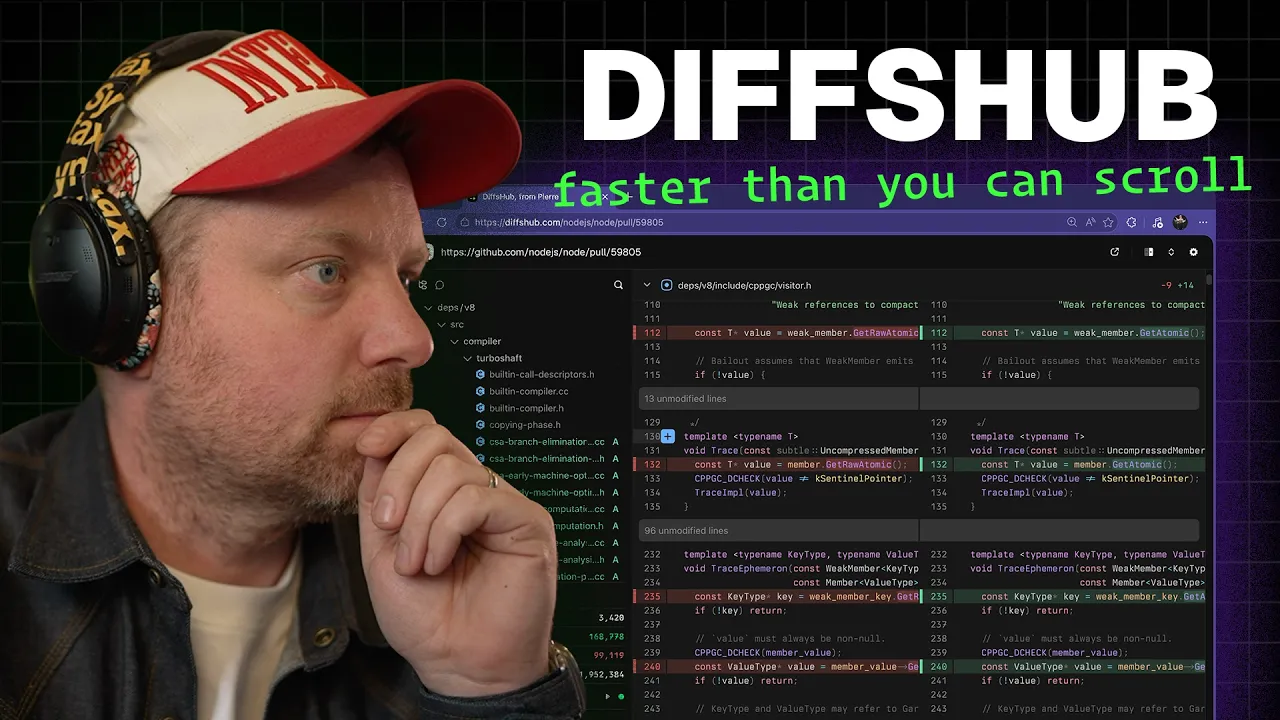
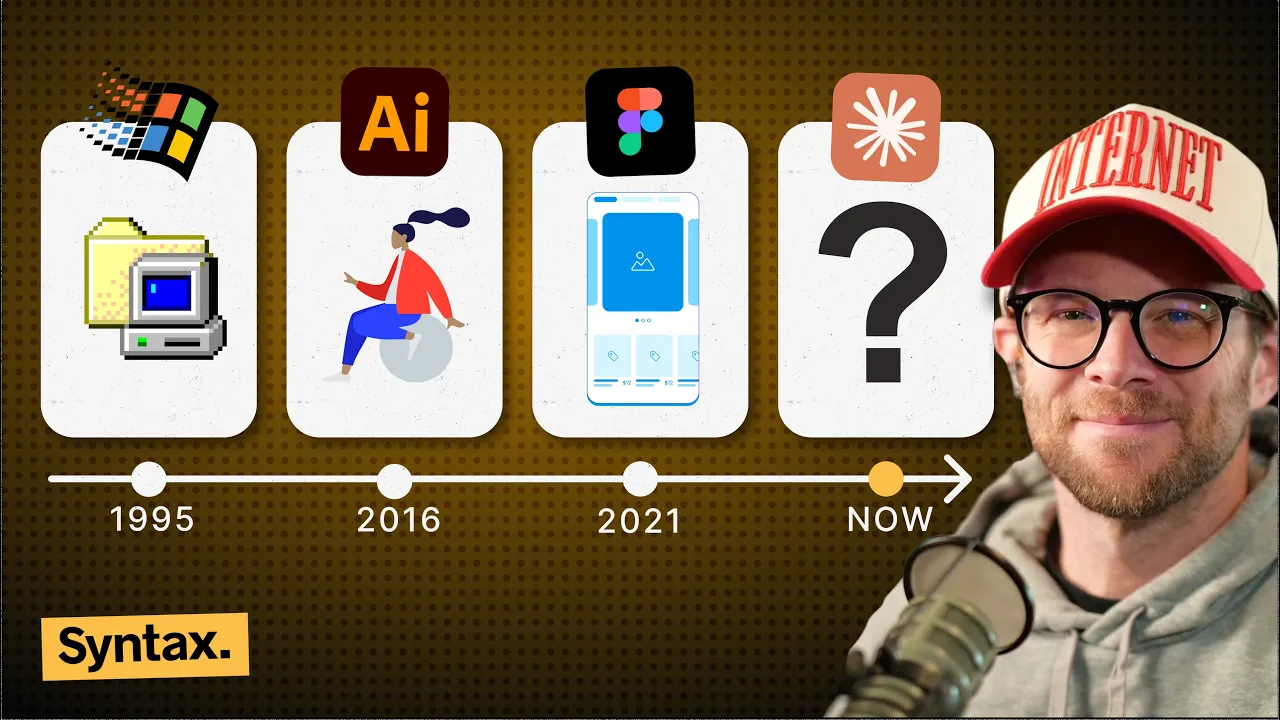






Get daily recaps from
Syntax
AI-powered summaries delivered to your inbox. Save hours every week while staying fully informed.