
Syntax
Hosted by Wes Bos and Scott Tolinski since 2017, Syntax has published over 900 podcast episodes on full-stack web development, covering everything from HTML, CSS, JavaScript, server side languages, databases, deployment environments, and more. In 2023 Syntax.fm joined forces with Level Up Tutorials adding 2000+ free video tutorials to our library. Wes Bos is co-host of Syntax and a web development educator. Constantly learning, he creates web development courses focused on JavaScript, TypeScript, React, CSS, Node.js and whatever else comes his way. Scott Tolinski is co-host of Syntax and the creator of Level Up Tutorials. In his free time Scott is a dedicated Bboy (breakdancer) & enjoys pushing himself athletically through dance, working out and snowboarding. CJ joined the team to help make YouTube videos that dive deeper into topics covered on the podcast. He is a full stack software developer and the host of Coding Garden. Syntax is brought to you by Sentry (https://sentry.io)
Can AI Make Good Design?
The video surveys how AI influences design and UX, arguing that while AI can assist with exploration, tooling, and repetitive tasks, it cannot fully replace human design judgment or create truly high-quality, user-centered experiences. It covers topics from design tokens and programmatic design to the limits of extrapolation, the importance of UX thinking, drift and consistency in design systems, and practical cautions about overreliance on AI for creative outcomes.
This React Library Makes Videos For You
In this conversation, Johnny explains Remotion’s origins, its rise with AI-assisted code generation, and the balance between open-source spirit and sustainable monetization. The discussion dives into Chrome’s HTML-in-Canvas prototyping, CSS vs. canvas animation, prototyping workflows, and future directions like Media Bunny, Web Codeex, and integrated motion-graphics tooling.
can you draw a UI with only the code?
A design challenge where two designers must recreate a weather UI card solely from HTML/CSS, with a minute to plan, ten minutes to draw, and a mid-session hint. The video follows their approaches, styles, and later critiques comparing their results to an official solution.
Why does this keep happening?
A discussion of the Shy Halude worm and a broader supply-chain attack that compromised multiple npm, PNPM, and other popular packages by hijacking GitHub Actions caches and inserting a post-install payload. The speakers explain how the compromise propagated through shared caches, how credentials were harvested, and outline defense strategies—from secure review practices and default package-manager protections to dev containers, monitoring with Sentry, and tighter controls on release pipelines—to mitigate future attacks.
Bun Rust rewrite ⟡ Local First w/ Jazz ⟡ Remix 3 finally here ⌁ Syntax Weekly ⌁
A live Syntax Weekly episode where the hosts discuss recent web development news, tooling rewrites, and emerging frameworks, with audience input and live demos of projects built using new stacks like Bun, Remix, Remix 3, Jazz tools, and local first databases.

Skills Skills Skills
The video centers on the concept of “skills” for AI agents, with Scott Tolinsky and Wes Boss sharing their favorite skills and how they use them to extend agent capabilities—from hot tip skills and agent browser to HTML, Dex, Remotion, and Hyperframes. They discuss practical design principles, the pitfalls of rigid scripts and over‑reliance on AI-generated content, and emphasize keeping skills well‑structured, maintainable, and truly useful rather than flashy.
Date pickers suck, we fixed them
Three contenders race to build the best date picker using natural language input, fast interaction, and smart parsing, then test with real users to compare design, ease of use, and user joy. The video ends with a recap of results, design decisions, and takeaways for building flexible date input components.
The Real Pricing of LLMs
The episode surveys current AI tooling costs, how pricing is shifting to usage-based models, and the broader implications for developers. It also covers practical coding topics from UI best practices and browser primitives to package management, security warnings, and getting back up to speed with the latest workflows.
Managing Deadlines + Stress
The episode tackles handling stress and deadlines in software projects, advocating for slowing down to plan, document, and surface blockers before they derail work. It covers practical techniques like building a clear plan, using to-do and change-log systems, communicating early and often, and balancing planning with delivery to avoid crunch времени and quality issues.

The Web is Getting Interesting Again
The video showcases a curated set of design oriented sites and UI experiments, highlighting AI generated interfaces, interactive data exploration, and archival design projects, with insights on what makes these demos exciting and where they fall short.
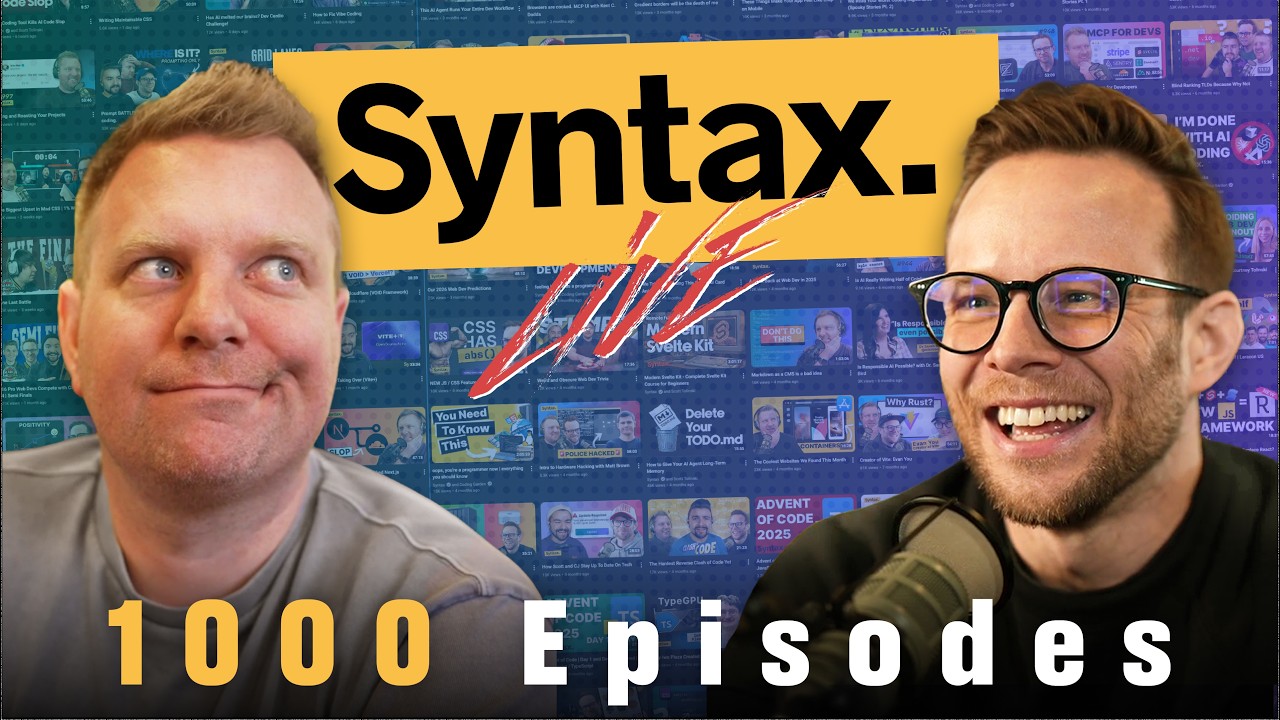
Syntax Episode 1,000!
The video marks Syntax’s 1,000th episode, with the hosts reflecting on the show’s history, growth, and the process that got them here. They introduce new team members, share behind-the-scenes stories from the early days, discuss data and transcripts, and chat about sponsors, production improvements, and future plans like live events and meetups.
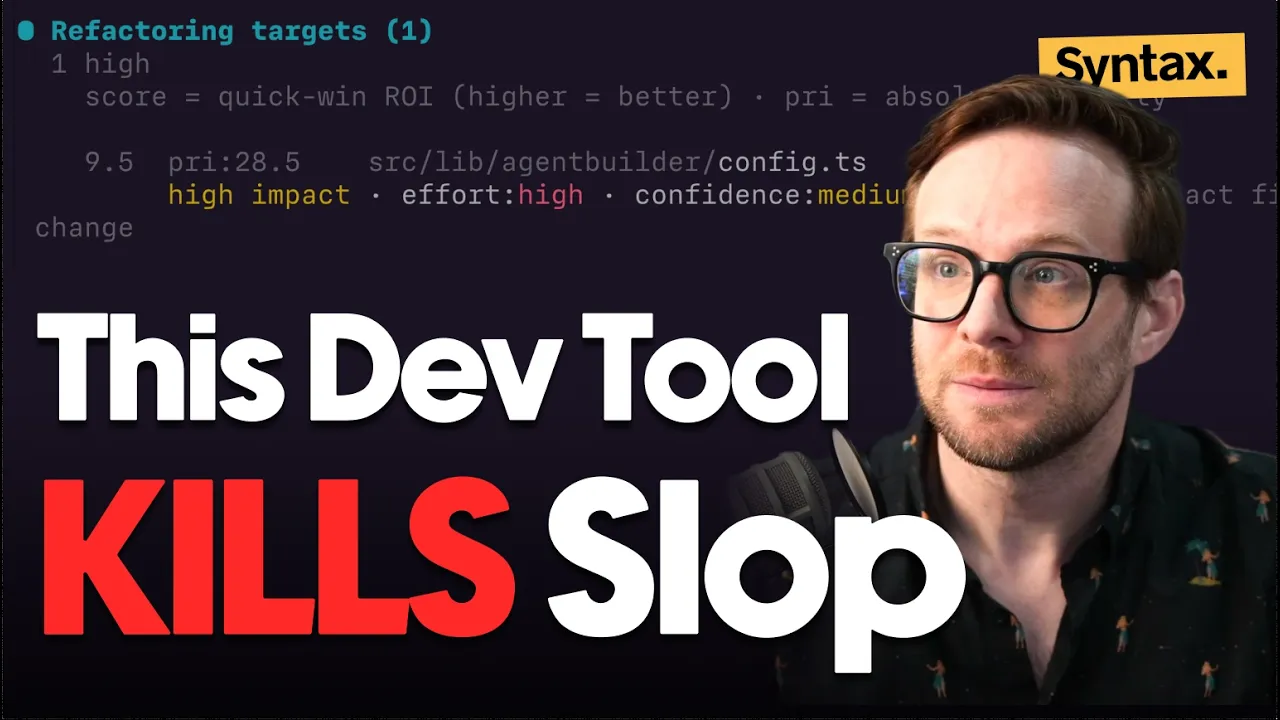
This Coding Tool Kills AI Code Slop
The video showcases a fast Rust CLI tool that analyzes code for dead code, duplicates, boundary violations, and more, with autofix and integration options to keep code clean from AI generated slop.


Get daily AI recaps from
Syntax in your inbox
Get AI-powered summaries delivered to your inbox. Save hours every week while staying fully informed.