Maybe we were wrong

Chapters6
Introduces the current AI hype around job disruption and frames the talk as a reassessment of how AI is impacting software developers.
Despite the doom-and-gloom hype, AI won’t obliterate software jobs, and competent developers remain essential as we watch tangible shifts in how AI is used in industry.
Summary
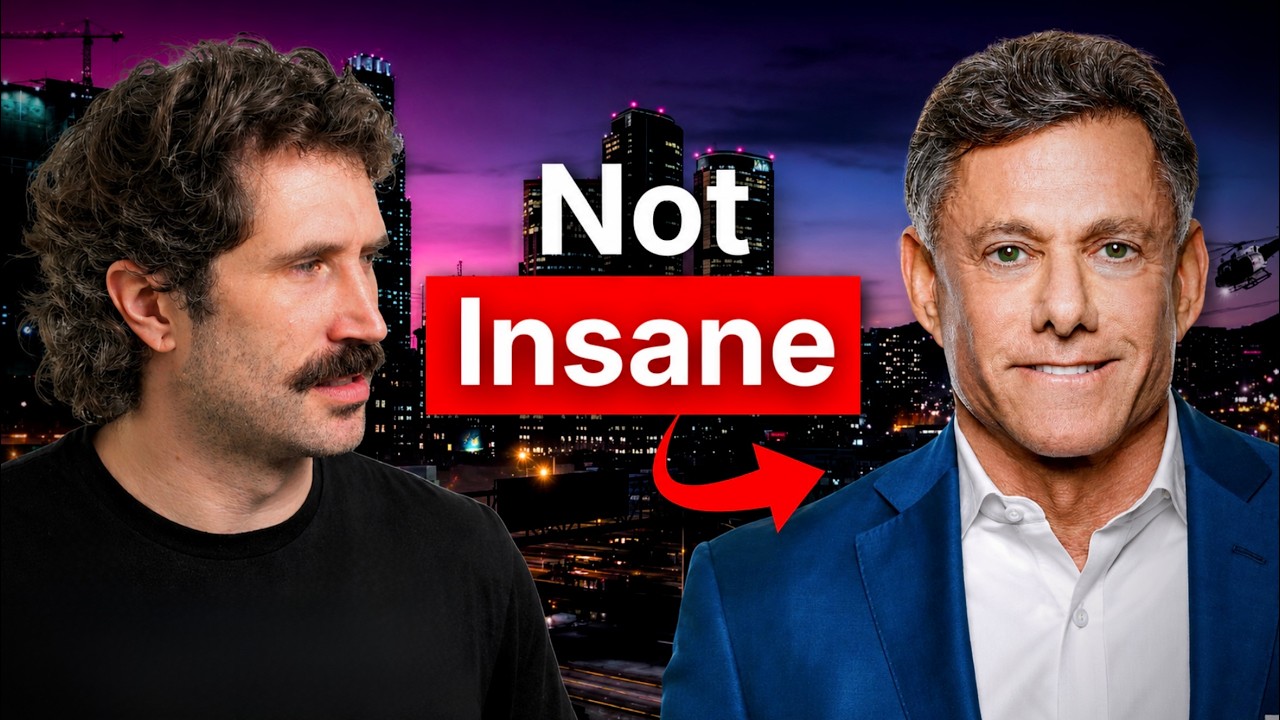
The PrimeTime’s video with Primogen provides a candid take on the recent AI-job discourse and what it means for developers. He references high-profile predictions about an impending job apocalypse and contrasts them with emerging statements from leaders like Sammy Alman and Goldman Sachs’ David Solomon, who suggest the impact may be less catastrophic than feared. The creator highlights a key moment when Uber’s COO questions whether heavy AI spending translates into real, feature-driven value, urging viewers to look past flashy metrics to actual product outcomes. He grounds the discussion with personal observations about how AI is shaping, but not replacing, thoughtful engineering work—emphasizing the ongoing importance of human decision-making, product thinking, and deep system design. Throughout, Primogen playfully critiques the “hype cycle” while acknowledging genuine progress in tooling, such as code generation and mockups, and points out that ultimate productivity gains should show up in meaningful user features and revenue. He weaves in relatable analogies—like neovim config obsession and multi-harness AI setups—to illustrate how developers experiment without losing sight of quality and maintainability. The video ultimately leans hopeful, arguing that competency and deliberate development practice remain essential, even as AI accelerates the iteration cycle. It ends with a reaffirmation of the human elements of programming and the importance of continuing to learn and build solid software despite the noise.
Key Takeaways
- Many tech leaders now question whether AI will actually cause a 25% or higher job apocalypse, suggesting the impact may be more nuanced and less about wholesale replacement.
- Uber’s stance on AI spend is that token usage alone doesn’t prove concrete feature payoff, emphasizing the need to connect AI effort to user-facing outcomes.
- Sam Alman’s updated position proposes that AI-driven layoffs are not as inevitable as previously claimed, indicating a shift in the narrative among industry insiders.
- Economic magnitudes aside, there is a growing belief that human interaction and good product design remain critical for valuable software, not just automation.
- Developers should leverage AI to explore multiple design versions and mockups quickly, but real implementation and maintainable architecture still require deliberate human effort.
- The video argues for balanced optimism: AI can accelerate software creation, but competency and thoughtful decision-making are more important than ever for long-term success.
Who Is This For?
Essential viewing for software developers, engineering managers, and tech enthusiasts who want a grounded read on AI’s real impact on jobs and product development, not just hype.
Notable Quotes
"I don't think we're going to have the kind of jobs apocalypse that some of the companies in our space advocate or talk about."
—Sam Alman’s stance at a Commonwealth Bank conference challenging doomist AI narratives.
"heavy AI spend is actually getting harder to justify as higher token usage fails to show clear payoff in consumer features."
—Uber COO commenting on the gap between AI metrics and real product value.
"What we're observing is not true in the data. Where is the productivity going?"
—Goldman Sachs CEO David Solomon questioning projected AI-driven productivity gains.
"AI is the greatest thing that has ever existed. Also, clearly not real."
—Primogen reflecting on hype versus reality of AI hype cycles.
"Competency is actually extremely important in learning how to program and being a good programmer is still in fact really important."
—Final takeaway emphasizing lasting value of skill and judgment in software development.
Questions This Video Answers
- Will AI actually replace a large percentage of software engineering jobs or will it mostly augment workflows?
- How can companies measure the real impact of AI investments beyond token usage and code commits?
- What evidence supports or refutes the idea of 10x productivity gains from AI in engineering?
- Why is hands-on competency still essential for developers despite powerful AI tooling?
- What are practical ways to use AI for exploring design options without compromising maintainability?
The PrimeTimeSam AlmanUber COO AI spendAI job market predictionssoftware development productivityAI tooling and product impactneovim/config analogiescloud code and harnessescompetency in programming
Full Transcript
The last couple years of being a developer has been uh you know I guess kind of interesting, right fellas? I actually have some good news here. Okay, things have been changing. Some whispers have been having and new news is hitting the front lines. It turns out being a software developer might actually be well, it might actually be pretty dang awesome. Now, if you haven't been in the software development realm for the last 3 years, let me do a quick recap for you. First off, you shouldn't teach your kids to code because honestly, you should let AI do that, says AI salesman number one.
You said AI could wipe out half of all entry-level white collar jobs and spike unemployment to 10 to 20% in the next 1 to 5 years. Yes. And of course, Daario here always just giving it to you straight. By the way, look at how happy he is. He is answering this question with such elacrity. He has never been more excited to tell you you are about to lose your job than I've seen any man on earth. This guy loves firing people. He loves firing people, not even from his own company. And if that's not enough for you, of course, last year we had Sam Alman, Sam Jippidity Alman just dropping the Death Star the day before big product announcements just letting everybody know, hey, what we're about to do, it's pretty big.
Now, of course, this is a very confusing message. Is he saying he's the bad guys? Is is that what he's saying? is does he release the Death Star? I'm still confused to this day. Like this post actually eats like it's an earworm. Okay, it eats me from the inside. Like what the hell happened here? Why why why would you post this? But the thing I wanted to talk about this this turning point that's happening is this right here. Look at this. Justin Sam Alman says AI probably won't trigger the job apocalypse he once predicted. Not only that, but Uber COO now says, "Hey, when you're spending a whole bunch of tokens, honestly, can't really tie it to features." So, there's something just kind of happening in our world.
So, maybe some news realizing how important it is to have competent and good developers. It's like the timeline is almost kind of oddly healing in a way. So, we of course we absolutely have to go over this. I got a lot of Yeah, okay. The vindication gap is going to land on this video. But more importantly, I want to do a quick thank you to the sponsors. Hey, is that HTTP? Get that out of here. That's not how we order coffee. We order coffee via ssh terminal.shop. Yeah. You want a real experience? You want real coffee?
You want awesome subscriptions so you never have to remember again? Oh, you want exclusive blends with exclusive coffee and exclusive content? Then check out Kron. You don't know what SSH is? Well, maybe the coffee is not for you. Okay, first let's talk about Sammy Jippy Alman right here saying, "Hey, maybe he was wrong." Here's kind of exactly what he said. This, of course, is from a Commonwealth Bank of Australia conference in Sydney just last Tuesday. It says this, "I don't think we're going to have the kind of jobs apocalypse that some of the companies in our space advocate or talk about." By the way, I love the fact that he says advocate.
Like, there's actual companies in his space advocating for everybody to lose their jobs. You know who we're talking about, okay? You know who Sammy boy is talking about. He's not talking about, you know, minstal AI. The bro's talking about Anthropic. He's just like, "Yo, Anthropic, they really want you to lose the jobs here." M it could also be to be fair this could also be some sort of jab at Musk as well. I can't really tell but either way very hilarious. I thought there was going to be more impact on entrylevel white collar jobs being eliminated by now than has actually happened.
I now think I understand more about why it hasn't and I'm obviously grateful. But that is an area where my intuitions were just off. We really do care about our interactions with people, he added, which he said, for better or for worse. Updated me to thinking that the jobs picture is likely going to be very different than we thought. Okay. Whoopsie. Turns out maybe people like to talk to people and interact with people and building great products. Actually, turns out it just might take people. Might take people to do that. Huh. Crazy. I I just thought we were going to get metered intelligence.
I thought I thought you stole the internet, took everything, compressed it down into the sweet next token prediction, and then sell us back to us, and then we pay for it. And it's just like that, and that's how the world works. Of course, Sam's actually not the only one. Goldman Sachs CEO David M. Solomon says that AI won't eliminate 25% of the jobs. He's just saying, "Hey, it turns out people spend their time in more productive ways." And he makes some cases down here saying, "Hey, did like any other technology ever do this? And what we're observing is not true in the data." So, this is actually kind of a positive development.
I'm actually pretty excited about this. I would love to see things actually healing from this craze where you have all these CEOs that have been told for the last two years of these companies like, "No, bro. Bro, I'm just letting you know you got to just like, dude, just like fire everybody. You don't need them because you got AIS, dude. You got Open Claw. Open Claw is going to do everything. You just say, "Yo, million-dollar sass. No mistakes." And bam, in just a few minutes, crunching some claw four points. Actually, 4.6. 4.7 is kind of trash.
We all think it's trash. Okay. 4.6. 4.6. And boom, you're going to have yourself a million dollar SAS. I am so happy that this is starting to crumble because this is something that has needed to crumble now for a while because it is ridiculous. There is so many people right now that at their jobs are being forced to to like a certain level of AI output. And if they don't make it, they're like heads on the chopping block. Even if it's not a good idea. Like they don't even get the option of going, "Hey, is this good or bad?" It's like, no, use it or that's bad.
Like, if you don't use it, that's bad. It's like, well, maybe it's not always the best thing. And where this is really starting to show is this right here. This the Uber COO saying that heavy AI spend is actually getting harder to justify as higher token usage fails to show clear payoff in consumer features. Now, this of course is a headlining item. So, let's actually watch the video as opposed to, you know, seeing what Twitter has to say. Let's let's look at the actual video. Let's hear what he has to say. I know, novel concept, right?
You make your head explode, right? When you hear companies talking about, hey, 25% of code commits uh over the last quarter were AI driven um or you know our token usage went from X to Y or percentage of employees, you know, all all these sort of numbers. Um, and it's amazing and I think it's like this massive transformation of society, but then you sometimes go and you talk to your senior engineering leaders and you're saying, okay, how many projects that were on the cutting room floor got moved above the line because of the, you know, productivity gains because 25% of our code commits were via cloud code last last quarter.
That link is not there yet, right? like you're not I mean I think maybe implicitly there there's more that is getting shipped but it's it's it's very hard to draw a line between one of those stats and okay now we're actually producing like 25% more useful consumer features and this is the COO of Uber like this guy has fully committed to this AI kind of adventure in fact they spent within the first four months their operating year budget for AI like these people were committed and now after all this are like, "Okay, wait, wait, wait, wait, wait, wait.
Maybe not everything that glitters is gold. Perhaps there are some things that we don't really see these implicit features that he was talking about. Maybe there's more bug fixes, which I'm a little bit dubious on that one. But nonetheless, like maybe things have been changing a little bit and now we are shipping a bit faster, but there's no material impact. What we thought would be these huge gigantic windfalls are in fact just not showing up in the actual data." And this of course gets me to the linear CEO post which I really think just nails this whole thing which is we keep hearing about the 10x or the 100x productivity gains in engineering and knowledge work.
But outside of model labs I haven't seen the corresponding 10x to 100x revenue growth across the market or increase in quality. Where is the productivity going? This is so good because you know where the productivity is going. All these people talking about this just incredible increase in productivity. what they're really saying. They're like, "Dude, bro, I've just set up the greatest harness ever. Oh my gosh, you will not believe how many different versions of Cloud Code I have running. Like, I got GStack on top of the P stack. I got all the stacks going so hard.
I got TRT coming in hot. Like, we're doing everything. I'm going to make the most crazy commits ever. Like, I've just spent the last three months sharpening the sword. Honestly, it reminds me a lot of neoim config enthusiasts." Now, remember back in the day, maybe like a year ago to 5 years ago, maybe this guy got made fun of a lot. You know why I got made fun of? Because oh, I was always playing around with my neim config. I wanted the perfect experience and everyone was like, "How could you do that? Now what's it's I swear today is just the same story again, which is, oh, you know what we really need?
We need to make the greatest agent harness." Like that's what we're actually missing, bro. Bro, it's just one more harness and then we'll actually be able to write infinite free highquality code forever. It'll be so fast. It'll be so amazing. Just one more harness, bro. Bro, it's just like I'm almost there. My system prompt is like 98%. It's so close. Also, I do love the in like this line right here because if you really think about what he's saying is, hey, it's all the labs. They're making like 10 to 100x more money. Where's everybody else's money from all these from all these AI productivity gains?
Huh? Because if everybody really is 10 to 100x more productive, wouldn't that show up in a bunch more revenue? Kind of crazy that the only people making money are the people selling shovels, huh? I mean, they are seeing 10 to 100x revenue. Geez, that seems a little strange, isn't it? See, the thing that I think people are missing about this whole AI craze and all that is that sure, there's a bunch of people that go zero to one with AI and they're like, "Wa, bro, this is the coolest thing ever, but there's a bunch of us who want to go say from 30 to 60, right?
We're actually in the further part of the project." And so what I end up personally doing, which is something I do right here, is I go off and I talk about everything I want to build to the AI. And then I have it implement a bunch of different versions of it. And I go, "Okay, well, what if we change this? How about we put all the responsibility over here?" And I can see like five different versions of the exact same thing and go, "Huh, okay. I like this. Yeah, I like that. Okay, I like this." Like, it is demonstrabably helping me see a bunch of different versions to really understand what makes a good interface.
But it's not this like 100x improvement. I'm not even sure if I'm actually improving the speed in which I'm actually making these features. Maybe my understanding is a bit faster. Maybe the ideas I'm coming up with are a little bit more solidified. But maybe also just sitting down with a pen and piece of paper and drawing out my ideas would have made the exact same impact. See the thing that I think most people are missing. People that actually instead of building say the zero to one projects, right? There's a whole bunch of like flashy kind of shallow projects that people make and they're like, "See, yo, bro, this is so fantastic." No, like trying to make deep integrated products that actually take a long time to think about and actually take a long time to come up with good ideas.
When you use AI, it increasingly makes things more brittle and more difficult. No matter what you're doing, you have to take a step back and actually work through the problems yourself. And this is one thing that I've really appreciated about AI. I can come up with an idea. I can kind of type out what it should be and then I can say, "Hey, go build me a mock version." I can look at the mock version and go, "Okay, yeah, I hate all these parts. This is just going to be a nightmare to maintain. This is going to be a source of bugs.
Let's change things up. How about you do it this way?" Then I can look at go, "Okay, I actually really like how this is looking, but I would really like this thing moved over here. I'd like this." And then look at it again. And so you can see this right here. This is me working through how would animations look in an immediate mode UI. Well, now I've had three swings at it and I go, "Okay, I actually really like this. This actually looks pretty good. Now I get to implement the thing." And this is what I think we're seeing is that when you really use this as a means to actually help you build real software, there's still just so much decision-m and time spent thinking about how things should actually look that yeah, exploration is cheaper than it's ever been before, but actual implementation still feels really heavy.
And if anything, making good decisions now almost feels harder because of how fast you can move. Anyh who, I just wanted to talk about this for a little bit because I feel like there's just there's so much in our kind of world right now that's it's doom and gloom or it's just absolute hyping. It's like no, AI is the worst thing. No, that's clear clearly that's not real. Or B, it's like AI is the greatest thing that has ever existed. Also, clearly not real. Like yes, it is absolutely magic. You can describe with practically broken English and have something come out that approximately looks like what you're describing.
Like honestly truly that is a magical human feat. I hope that I never stop being amazed by that because honestly that's wild. You could never have convinced me 6 years ago like that was going to happen in my immediate future. It's just want to yap about something maybe a bit more positive that hey actually I think I think a lot of good things are still ahead of us. I I still think we got a lot of good time and I still think competency is actually extremely important in learning how to program and being a good programmer is still in fact really important.
Hey, the name is the primogen.
More from The PrimeTime



Get daily recaps from
The PrimeTime
AI-powered summaries delivered to your inbox. Save hours every week while staying fully informed.