
Y Combinator
All the world is changing around technology and you may contribute a line of code. What will yours be? Subscribe for startup ...


Thin Harness, Fat Skills: The New Way To Build Software
Gary Tan shares his comeback as a builder, detailing how he pivoted from investor back to hands‑on coding with OpenClaw, Cloud Code, and a suite of “GStack” tools. He explains the shift toward agentic, high‑automation workflows, the philosophy of token maxing, and the balance between human agency and machine power, while reflecting on his journey, testing practices, and the cultural implications for YC founders and the future of personal AI.

How Razorpay Became India’s Largest Payments Company
The interview with Harshil (Razorpay) covers the importance of trust in B2B, the early struggles of building a payments platform in India, and how customer-centric, trust-based relationships helped Razorpay survive regulatory hurdles and a major crisis. It also touches on strategic pivots (education to startups), lessons on staying founder-focused amid competition, and how AI is reshaping product development and speed to market while maintaining a human-centric support approach.
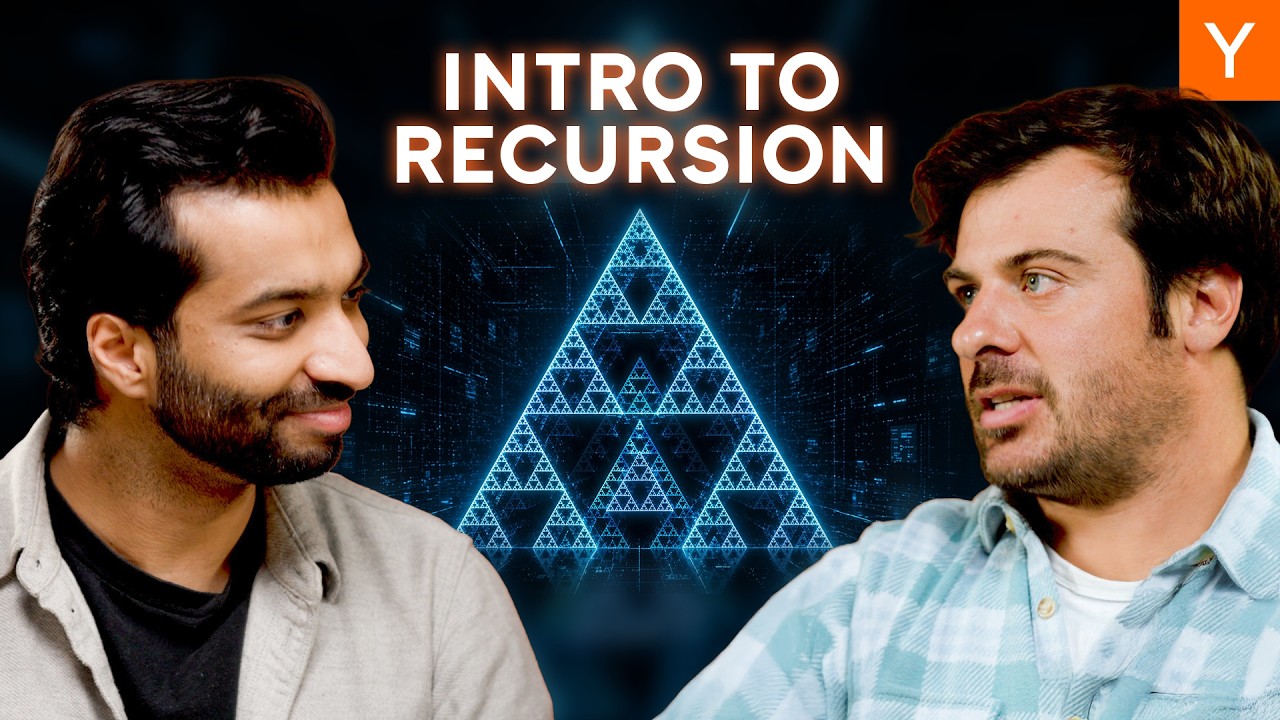
Beyond Bigger Models: Recursion As The Next Scaling Law In AI
The conversation surveys recursion-based approaches to improving AI reasoning, focusing on HRM (Hierarchical Recurrent Models) and TRM (Tiny Recursive Models) as alternatives or complements to simply making models bigger. They compare how these architectures use outer refinement loops, fixed-point iterations, and memory/caching to enable deeper or more efficient computation, discuss training vs testing dynamics, and explore bioplausibility, external memory concepts, and the potential for combining recursion with large language models to push performance beyond traditional scaling.
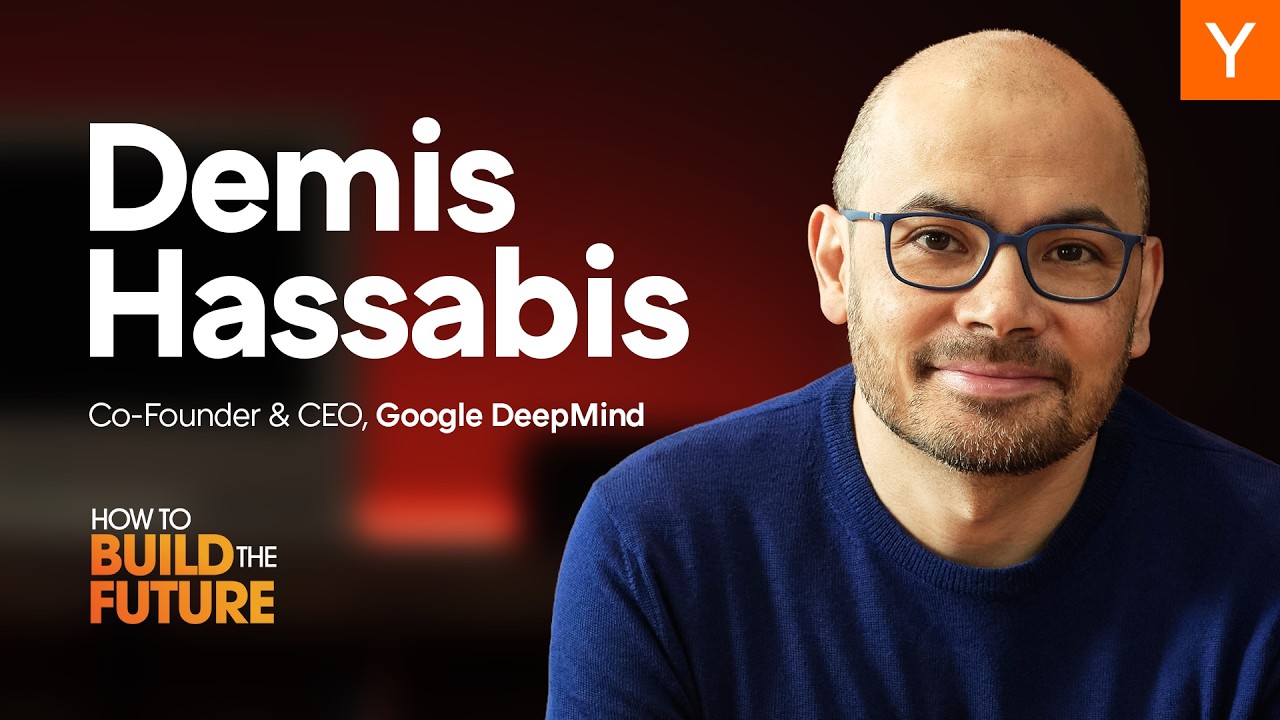
How to Build the Future: Demis Hassabis
The discussion revolves around how to reach artificial general intelligence, emphasizing continual learning, long-term reasoning, memory, and agents that actively solve problems. It covers the current state and future directions of DeepMind's Gemini and other AI projects (including AlphaGo/AlphaFold), the balance between large models and distillation, open-source accessibility, edge computing, multimodal systems, and the role of AI as a tool to advance science and discovery, with reflections on creativity, testing, and responsible deployment.
Replit's CEO On The Only Two Jobs Left In The Company Of The Future
Amjad explains Replet’s vision to empower non-developers to turn ideas into deployed software with minimal coding, highlighting a shift from traditional developer tools to creator-focused experiences. He discusses integrating AI agents and multimodal interfaces, YC-driven growth, and the evolving mix of personal, enterprise, and entrepreneurial use cases, including the move toward autonomous agents and a stronger emphasis on education, security, and scalable product development.

How To Build A Company With AI From The Ground Up
Diana from YC explains that AI will redefine how startups are built and run, not just boost productivity. The core idea is an AI-native operating system: every workflow becomes an intelligent closed loop, the organization becomes queryable and artifact-rich, and new roles (IC/operator, DRRI, AI founder) emerge to steer a company with AI at the center. She also outlines practical shifts—AI factories, token-maxing, and leaner teams—so startups can operate thousands of times faster than incumbents.

Inside Garry Tan's Claude Code Setup
Gary describes a new era of software driven by agents and open-source tooling, sharing how his project GStack and Conductor help turn code into an AI-enabled engineering team. He walks through practical workflows (office hours, design reviews, and multiple design approaches) and demonstrates browser-based automation, adversarial reviews, and parallel project management to rapidly prototype and land features. The talk emphasizes iterative planning, user-centric design, and leveraging automation to scale software development.

How Stripe Built Their New Website
In this Design Review episode, Katie Dill walks through Stripe's refreshed homepage, explaining why the 2020 site needed an upgrade as Stripe’s product and audience evolved. She dives into the new design language, the Bento section, AI-assisted prototyping, and the team’s process for keeping the story clear, human, and scalable while balancing aesthetics, usability, and performance.



Get daily AI recaps from
Y Combinator in your inbox
Get AI-powered summaries delivered to your inbox. Save hours every week while staying fully informed.