Deindexed Overnight: The SEO Nightmare That Wasn’t What It Seemed

Chapters10
An in-depth case study of a site abruptly removed from Google's index after a coordinated investigation, detailing how the de-indexing occurred and the steps taken toward recovery.
A hacked ‘www’ homepage briefly deindexed the site, teaching the importance of monitoring all URL versions and acting fast to fix security gaps.
Summary
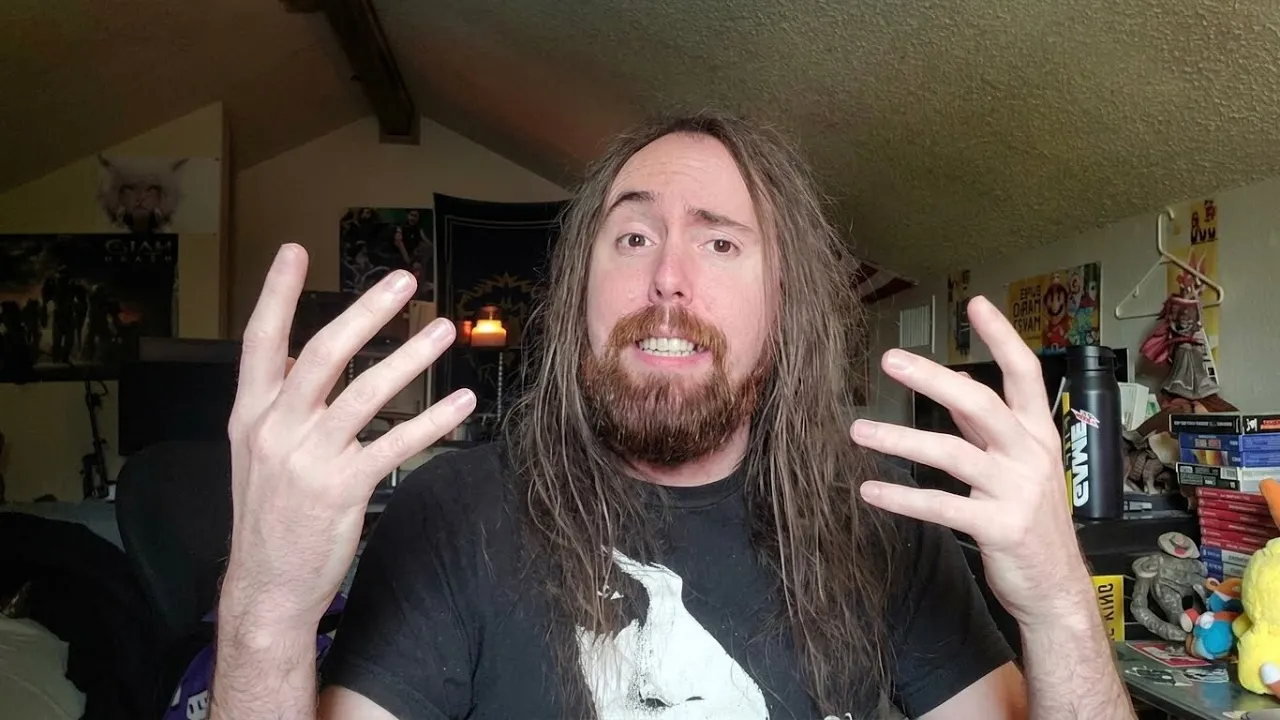
Edward Sturm breaks down an eye-opening SEO case study from Glen Gabe about a site that vanished from Google overnight. The trouble began with a simple but alarming email: “We are not in Google's index.” Glenn Gabe’s audit revealed a surprisingly narrow trigger—a hack affecting only the www version of the homepage, which redirected to a gambling site and tripped a broader spam flag. The investigation highlights how critical it is to check every Google Search Console property, not just the primary domain, because the www HTTPS variant was the missing piece that exposed the problem. Glenn explains that, despite no manual action initially, a later alert confirmed a “major spam problems” action that ultimately impacted the entire site. The team cleaned the hack within an hour, filed a reconsideration request, and saw the action lifted the next day; the site quickly reappeared in search results. The story emphasizes the lag between security events and manual actions in Search Console, and it showcases practical steps to prevent a repeat: monitor all prefixes, secure DNS, and avoid relying on AI-generated content as a growth lever. Edward Sturm also underscores the broader lesson about mounting AI content—“mount AI”—and why it’s risky for YMYL sites. The episode ends with concrete takeaways and a plug for Glenn Gabe’s write-up, which inspired this detailed walkthrough.
Key Takeaways
- Add every prefix and variant to Google Search Console (HTTPS, nonwww, www, domain property, and key directories) to catch issues that a single view misses.
- The www version of a site can be hijacked without immediate visible signs in the nonwww property, so monitoring DNS and www is essential.
- Manual actions can lag behind real-time site issues, so be prepared for a period of ambiguity while Google reviews the case.
- If one page (the www homepage) gets hacked and redirects elsewhere, a whole site can be flagged as spam—even if the rest of the site is clean.
- Do not scale AI-generated content indiscriminately; mount AI patterns can trigger spikes that attract scrutiny and penalties for YMYL sites.
- Resolve security holes quickly (e.g., misrouted DNS or deprecated web apps) and document changes for faster reconsideration when issues arise.
Who Is This For?
Essential viewing for SEO teams and site owners managing YMYL brands who want to understand deindexation risks, multi-version monitoring, and rapid incident response.
Notable Quotes
""We are not in Google's index.""
—The initial alarm email that starts the investigation.
""That was a pretty stressful few days for my client, and I appreciate them letting me write this post again.""
—Glen Gabe reflects on the pressure and permission to publish the case study.
""Fix this problem now. Update your pages to meet Google spam policies and then submit a reconsideration request.""
—Google's manual action notification describing the issue.
""Make sure to set up all versions of your site in Google Search Console as properties.""
—Advice highlighting the need to monitor every site variant.
""AI content isn't spammy or egregious, nor was it there to game Google's algorithm, but there was quite a bit of it when I audited the site last year.""
—Context for why AI content was investigated and how Mount AI is discussed.
Questions This Video Answers
- How can I recover after a Google deindexation due to a hacked www homepage?
- What is Mount AI and why should I avoid mass AI-generated content for E-A-T sites?
- Why should I monitor www and nonwww properties separately in Google Search Console?
- How long does a Google reconsideration take after a manual action for spam problems?
- What security mistakes let a site’s www entry become hijacked and how can I prevent it?
Google Search ConsoleDeindexationWebsite SecurityGlen GabeMount AIAI-generated contentYMYL (Your Money Your Life)DNS securitywww vs nonwwwAzure DNS
Full Transcript
This is an insane realworld SEO case study where a site was completely removed from Google's index overnight, completely removed. The situation started with a simple email. We are not in Google's index. And what followed was a full investigation into what caused the de-indexing, how it was diagnosed, and how the site ultimately recovered. This is a great great write up by Mr. Glenn Gabe. You're going to like it. I read it last night. I said, "This is amazing." So, it starts, "Wednesday was a relatively normal day for me in Googleland. I was auditing client sites, still digging into the March 2026 core update movement, and posting the latest SEO and AI search news across social media.
But then an interesting email arrived. It was from a company I helped last year, and the subject line said it all. We are not in Google's index." Well, that caught my attention. It's a company in a YML niche that has been impacted by several major updates in the past, but has worked hard to improve over time. YM means, if you don't know, it means your money, your life. So, this is health, this is finance. These are niches where the information that somebody gets will directly impact their wallet or their body. And Google has tighter algorithms, stricter algorithms for niches in YM L.
Google is less tolerant of spam signals and requires even more authority, topical authority. So like a link from you know a healthline or something or a.gov site or aedu Glen Gabe continues also they have been doing quite well in Google Wise over the past 6 months while they continue to work on improving quality across the site content user experience technical SEO etc. The site has a footprint of about 20,000 URLs. So, it's not a huge site, but it's not small either. I can't go into too much detail about their focus or content, but there is a programmatic aspect to the site.
In addition, I covered an important topic with them during the audit last year, which was AI generated content. There are pockets of AI generated content across a number of pages on the site and it definitely concerned me. And if you follow me on social media or read my blog, you know I am not a fan of sites publishing 100% AI generated content and especially for your money your life content. I coined the term mount AI and for a good reason. I actually didn't even know that Glen Gabe came up with Mount AI and I've been talking about it a lot and it's what you see with scaled AI generated content and you see tons of rankings coming in really fast, traffic increasing super super fast.
Google picking up on the signals for organic traffic, increasing so much rankings, increasing so much other signals that there are with with pushing out mass amounts of AI generated content and ultimately you see sites getting hit and then it just spikes down and it looks like a mountain. So that's what Glen Gabe thought this might be. Is that the case? Let's continue. Glenn says, "To clarify, the entire pages aren't AI generated, but some sections were. The AI content isn't spammy or egregious, nor was it there to game Google's algorithm, but there was quite a bit of it when I audited the site last year.
After the audit, they have been working to address that situation by publishing more human content, but it's taking time to address across the entire site. And again, there was always human content, but just sections of AI generated content mixed in. Back to that email. As you can guess, with an emergency email arriving about being de-indexed, my first thought went straight to AI and programmatic content. But as with any good mystery, things may not be what they seem in the early stages of the story. In this post, I'll cover what took place, how I troubleshooted the situation, what my client found, and how the situation ended up.
Also, I want to thank my client for letting me publish this case study. I think it could help other site owners that might find themselves in a similar situation. It was an interesting one, that's for sure. Let's get started. And it really could. When I read this, I said, "Oh, yeah. This could definitely help other people." So, the email, help, we've been completely de-indexed. After receiving the email, I immediately ran a quick site query. Yep, the site was completely de-indexed. That's a big hammer for Google. So, something was clearly not right. They were nuked from the SERs.
Proof gone. And so he he just put the their homepage he put site colon and their homepage into Google and Google showed absolutely nothing except for try Google search console if you own this site. Glenn continues next I jumped into Google search console to check for manual actions or security issues. There was not a manual action yet and the security viewer was clear as well. Note that does not mean the site didn't have a manual action. Manual actions can be delayed and I explained that to my client. And without a manual action, you must put your SEO detective hat on and start investigating the situation.
That's where things got interesting. Based on what I explained before, my first thought was the AI generated content since it was across a number of pages on the site. It wasn't the full content of the page, but there was a lot of it in sections within pages. So, was this a manual action for scaled content abuse, or was there something else at play? I immediately dug into Google Search Console to see what I could find. There were properties set up for the core URL prefix versions of the site. HTTPS, nonWW property, a domain property, and then some directory properties.
And I share in compact keywords that you should add all prefixes to Google search console. And what follows is a good example of why you should do that. Compact keywords is the thing on my shirt. It's my SEO course. And I get emails. I used to get emails. I put in a reason into the course explaining why you should do this. Before that, I used to get emails like, "Why should we add all these domain variations?" And this is a perfect example of why you should. So, Glenn continues, "But one important property was missing, and it's one I always recommend setting up.
That's the HTTPS www property, even if a site isn't using that version. I'll come back to this important finding soon." So, for example, if you're using https but no www, you just go straight to the domain name. You should still have the www monitored in your Google search console. Glenn says when digging in the core URL prefix property for the site, https nonwww look totally normal in the performance reporting. Clicks and impressions were chugging along as usual with a decent increase based on the March 2026 core update. Again, they have been working hard to improve over time.
But then I started digging into the other properties and it didn't take long to find something that looked very off. When checking the domain property, which covers all protocols and subdomains, I noticed a huge spike in impressions and clicks on one specific day. Filtering by page revealed it was the homepage of the non-cononical version of the site, httpsswwww. It oddly spiked like crazy on one day. The site jumped to nearly 12,000 clicks per day out of the blue. And checking the queries that page ranked for yielded a critical problem. Here it comes. All of the queries were gambling related.
Yep, the site was hacked. And it was just the www version of the homepage that was hacked, which was redirecting to some gambling site. And since my client was just checking the canonical version of the site, https nonwww, they didn't even realize this happened. The domain property revealed the problem, but they weren't checking that property. Also, having the https www version setup would have revealed the issue as well, but that wasn't even set up. Here are the gambling queries when you isolated the www homepage. The visibility tools picked this up as well, and you could see the various SER screenshots that were captured during the hack showing the www homepage with a new favicon title and snippet.
And again, when you click through, the hacked page redirected users downstream to a gambling site. Remember, this was a site covering a your money, your life topic. Oof. I immediately emailed my clients explaining they were hacked and included all of the screenshots. They moved quickly to clean up the problem and close the security hole. I'll cover what that security vulnerability was soon, but they cleaned everything up very quickly within an hour or so, but they were still de-indexed and were confused about the next steps. When I got to this part of the story, when I was reading this last night, I was on the I'm not going to lie, I was on the edge of my seat of like, oh my gosh, can they can can they recover?
Can they fix this? How how are they going to how are they going to move forward with this? How long is it going to take? They didn't even get a manual action yet. Glenn continues, "I told my client when they first emailed me that a manual action was probably on its way, and I was right." There we go. The next morning, 3:00 a.m. Eastern time to be specific, the manual action arrived, and it was for quote unquote major spam problems impacting the entire site. interesting that Google used quote unquote major spam problems and that it impacted the entire site since it was only the homepage of the www subdomain.
But regardless, the entire site was impacted. In Google's notice, it says, "Fix this problem now. Update your pages to meet Google spam policies and then submit a reconsideration request." This is the exact message that Google gave along with major spam problems. The description is pages on this site appear to use aggressive spam techniques such as scaled content abuse, cloaking, scraping content from other websites and/or repeated or egregious violations of Google's spam policies for web search. And Google says affects all pages. So, if the digging hadn't been done, this message wouldn't have made it clear what the problem was.
Like Glenn wrote, it was only the homepage of the www subdomain, but the entire site was impacted. So, here we go. My client immediately filled a reconsideration request explaining that they were hacked, that they cleaned up the situation, etc. Now, they just needed to wait for Google to review the request. I was hoping that would happen quickly, but you never know. This is was really like, oh my gosh, like they could wait a month, they could wait a week, they could wait not long at all, they could wait 3 months, they they could wait a year.
What's going to happen? And Glenn says, but quick it was. The next morning, I noticed all of the pages were showing back up in the SERs via site query, even though my client hadn't received a message back from Google yet about the reconsideration request. I notified my client immediately, and they were thrilled to see the site back ranking where it should be. And then the message from Google finally showed up a few hours later in Google Search Console and via email. The reconsideration request was approved and the manual action lifted. and you see that message in Google search console reconsideration requests approved for the site.
So this next part is about the security hole and how to avoid things like this if you want if you're concerned that this could happen to you. So Glenn wrote, "Once I sent the information through about the www version of the homepage getting hacked, the technical lead for my client moved quickly to rectify the situation." He also explained how this happened via email. I'll provide the details below. I hope this can help some site owners out there that might have a similar setup. I.e. the following bullets could help you avoid opening a security hole or if you get hacked, how to close a security hole quickly.
So, here are the bullets. Nothing on our site uses www and we had redirect rules driving all requests to nonwww. And all of our site monitoring was pointing at nonwww versions of our site. That was a mistake. Our wwwns entry pointed to an old Azure web app that helped with the redirects among other things. We forgot about this www entry and decommissioned the old web app. As soon as Azure released the web app name and corresponding DNS entry, someone else grabbed it and pointed it at their spam site. I'm kind of amazed Azure allowed something so sketchy to run on their platform, but this is undoubtedly harder to monitor than you'd think.
So no warnings or flags were triggered and we didn't even think to look at the www. It was easy to go fix the www DNS entry but then it takes a bit of time to have DNS propagate and then Google to see that the problem had been rectified. So if your site is resolving as nonwww then make sure you know how www is being handled. Don't just monitor the nonwww version make sure you monitor www as well. If not, someone could eventually hack it, take control, redirect users to any site they want, including spammy or dangerous sites.
And the manual action lagged a bit, so there was about a day of stress while figuring this all out. Then they filed a reconsideration request, and the action was lifted the following day. I'll end with some final bullets for site owners based on this situation. Make sure to set up all versions of your site in Google Search Console as properties. that includes a domain property https www h h h h h h h h h h h h h h h h h h h h h h h h h h h h h h h h h h h h h h h h n n n n n n n n n n n n n n n n n n n non www, http www, http important directories, etc.
All versions monitor all versions of your site from a security and performance perspective. If your site only resolves at www or nonwww, make sure you are monitoring the other version. Ensure DNS is handled properly for your site. As this case demonstrated, what seems like one minor change yielded an opportunity for hackers to take control of the www version of the homepage. Then all hell broke loose. Manual actions can take time to show up in search console, even when the site is already being impacted in the search results. So there's a lag that can be confusing for site owners.
Just understand this can happen as you dig into the situation. Also, don't make any rash decisions until you know what the manual action is for and that you definitely have a manual action. When investigating the problem, dig into each Google Search Console property and look for strange surges or drops. In this situation, the HTTPS www version of the homepage surged like crazy. Isolating that page and viewing the queries yielded the problem. Slice and dice your Google Search Console reporting. You can often find the culprit. Although AI generated content wasn't the cause of this manual action, you should still be very careful with how you utilize AI content and scale it.
Do not just scale 100% AI generated content and think that will be okay over the long term. I have covered what I call mount AI many times across social media. Beware. And this amazing blog post wraps up. Glenn says, "That was a pretty stressful few days for my client, and I appreciate them letting me write this post again. I hope it can help some site owners out there that might run into the same type of vulnerability with their own sites. This case demonstrates how one page getting hacked led to an entire site getting flagged as spam.
Then they were de-indexed and removed from the search results. To add insult to injury, manual actions can often show up down the line after the site is impacted in the search results. So, make sure you stay on top of site security. Then you can hopefully avoid a situation like this. The good news is that my client is back in the index. The manual auction is removed. They are ranking where they were and their business is humming again. Oh, and you better believe they are now monitoring the www version of this site. And we get a very happy ending from Mr.
Glen Gabe. Thank you to Glen Gabe for writing that. Thank you to Gog and Gotra for sending me that. And thank you for watching this episode. If you watch this on YouTube or listening if you listened on Spotify or Apple Podcast, this is episode 1 of the Edward Show. This is my daily digital marketing podcast 1 days in a row doing this show. If you want to see me doing search engine optimization, sharing my screen, showing how I find keywords, showing how I do link building, showing how I do a technical audit, a site audit, showing how I make bottom offunnel conversion-based SEO landing pages, showing how I structure my sites for these landing pages and so much more.
That is my SEO course, compact keywords.com. If you haven't checked it out yet, you are going to love it. And that is all for the show. Thank you, thank you, thank you for watching and listening. And I will talk to you again tomorrow.
More from Edward Sturm










Get daily recaps from
Edward Sturm
AI-powered summaries delivered to your inbox. Save hours every week while staying fully informed.