Schema Doesn’t Boost AI Citations (New Ahrefs Study)

Chapters11
A breaking study argues that adding schema has little to no impact on AI citations, challenging the long-held SEO belief that structured data boosts AI visibility and prompting questions for agencies offering schema services.
Ahrefs’ new study suggests adding JSON-LD schema rarely increases AI citations, urging focus on relevance and authority instead.
Summary
Edward Sturm reviews a breaking Ahrefs study that interrogates whether schema markup actually boosts AI citations. The key finding is that adding JSON-LD between August 2025 and March 2026 did not produce a meaningful lift in citations across Google AI Overviews, Google AI Mode, or ChatGPT. In fact, AI Overviews showed a small decline, while AI Mode and ChatGPT showed tiny, statistically indistinguishable gains. Sturm notes that pages with schema tend to be on technically stronger sites with more authority, so correlation could be driving past results. The deeper analysis uses a four-test comparison and a matched-difference-in-difference approach to isolate schema’s effect, consistently finding no positive impact. He concludes that for pages already cited by AI, schema is unlikely to push them higher; for pages not yet seen by AI, schema might aid crawling or indexing, but the study doesn’t prove this directly. Sturm also emphasizes practical SEO: prioritize relevance, authoritative content, and user-focused signals over schema as a guarantee of AI citations. He reiterates his pragmatic stance on schema, suggesting use only if it aligns with target SERPs FEATURE, and shares his personal skepticism about schema’s impact on entity recognition. The episode also plugs his SEO course and reiterates his daily publishing streak. Overall, the takeaway is clear: schema is not a reliable lever for boosting AI citations, and traditional SEO fundamentals remain paramount.
Key Takeaways
- Adding JSON-LD schema produced no meaningful uplift in citations on Google AI Overviews, Google AI Mode, or ChatGPT in Ahrefs’ study.
- AI Mode saw a 2.4% increase and ChatGPT a 2% increase, but these changes were statistically indistinguishable from zero.
- AI Overviews declined by 4.6% after schema was added, though the drop is small and not conclusively caused by schema.
- The responsible interpretation is that pages that already perform well in AI are driven by other signals (authority, links, content quality), not schema alone.
- For pages not yet seen by AI, schema might help with crawling/indexing, but the study does not provide direct evidence for this scenario.
- Edward Sturm advocates focusing on relevance and authority rather than relying on schema to gain AI citations.
- Despite the findings, there are still valid uses for JSON-LD, such as rich results, voice assistance, and downstream entity recognition.
Who Is This For?
This is essential viewing for SEOs and content marketers evaluating whether schema markup is worth the investment to boost AI citations, especially for sites already performing well in AI rankings. It’s also valuable for agency teams weighing schema services for clients.
Notable Quotes
"Schema markup is much more common on pages cited by AI than pages that aren't."
—Cites a core correlation observed in the study that spurred the deeper investigation.
"Adding schema produced no major uplift in citations on any platform you see Google AI Overviews, Google AI Mode and Chat GPT."
—Main experimental finding emphasized by Sturm.
"If adding schema had no effect on citations either way, we'd expect treated pages and match controls to decline together at the same rate."
—Illustrates the careful interpretation of the data and the concept of control vs. treatment groups.
"The most consistent finding is that not much really changed. Schema had no clear positive or negative effect."
—Summarizes the overall conclusion of the four tests.
"My overall advice with schema... add schema if your target SERPs are using it so you get more clicks."
—Practical takeaway from Sturm’s experience and guidance.
Questions This Video Answers
- Does JSON-LD schema actually increase AI citations for new or existing pages?
- Can schema markup help with crawling or indexing if a page isn’t seen by AI yet?
- What signals most reliably drive AI citations if not schema?
- Should I offer schema services to clients if it doesn’t boost AI citations?
- How should I prioritize SEO investments given Ahrefs’ findings on AI citations?
JSON-LDSchema.orgAhrefs studyAI citationsGoogle AI OverviewsGoogle AI ModeChatGPTSEO fundamentalsentity recognitiontechnical SEO
Full Transcript
Schema officially doesn't work for LLMs. This is a breaking study from one day ago. I'm recording this on May 12th. The study was released May 11th. We tracked 1,885 pages adding schema. AI citations barely moved. It's from Hrefs. Hrefs does some of the best research, super thorough research. This is huge because for a long time, structured data, you heard you hear this everywhere from SEO gurus. add structured data so you will get cited a lot more. LLMs are machines and machines need machine readable data which is schema. That's what people have said. This study flies in the face of all of that.
And if you are paying an agency for schema implementation so you get quote unquote surfaced more in LLMs or if you are an SEO agency and you're wondering if this is something that you should offer, this study should be very valuable. It says, "We kicked off this study by analyzing 6 million URLs and found that schema markup is much more common on pages cited by AI than pages that aren't." Then there's a graph and it says AI cited pages were almost three times more likely to have JSONLDLD than non-sighted pages. That's a big gap and the kind of stat that gets shared in LinkedIn carousels and conference slides is proof that schema is an AI visibility lever.
But we weren't satisfied with the data since it could easily have been correlation, not cause. Schema markup tends to live on betterm maintained, more technically sophisticated sites, and those same sites publish stronger content, build more authority, earn more links, and do all the other things that get pages cited. Schema could be doing real work, but it could also just be riding the wave of every other signal. So, we couldn't actually answer the question SEOs really care about. If I add schema to my page, will I get cited more by AI? To find out, we ran a second study designed to isolate the effect of adding schema.
Here's what we found. And there's a big line. Adding schema didn't boost citations on any platform. We tracked 1,885 web pages that added JSONLDD schema between August 2025 and March 2026, matched them against 4,000 control pages, and measured citation changes. across Google AI overviews AI mode and chat GPT adding schema produced no major uplift in citations on any platform you see Google AI overviews it actually had a 4.6% decrease says small but statistically significant decline relative to match controls with Google AI mode it had 2.4% increase chat GPT a 2.2% 2% increase. And of these increases, the study says statistically indistinguishable from zero.
These percentages come from our most reliable analysis, a match difference in difference test. In this test, both AI mode and chatpt treated pages perform slightly better than control pages on average, but the differences are small enough that they could easily be random noise across thousands of URLs. AI overview showed a 4.6% 6% decline, which is small but statistically significant relative to the matched control pages. So overall, we can't tell whether the schema did a tiny bit of good or nothing at all. There's an entire section on AI overview pages dropped 4.6%. It says before anyone reads this as adding schema hurts your AI overview citations, there are two things you need to bear in mind.
One, the absolute size is small. We're talking about an average loss of around 12 daily citations per page in a sample where most pages were getting hundreds. And two, both treated and matched control pages were already on a steep downward trajectory before schema was added. The kind of decline you'd expect from AI overviews pulling back from these specific types of content for reasons unrelated to schema. That said, if adding schema had no effect on citations either way, we'd expect treated pages and match controls to decline together at the same rate, which is broadly what we see for AI mode and chatbt.
The fact that treated pages declined slightly more suggests schema had a small negative effect, but it could also reflect other factors. We can't tell which one it is from this data alone. There's a section how we isolated the effect of adding schema using brand radar. Shea, which is one of HF's data scientists, pulled a few million URLs in AI overviews. She then retrieved the HTML history from our crawler database, labeled whether each URL contained script type application LDJSON, and spotted the date that schema presence transitioned from false to true. This left her with 1,885 pages that introduced JSON LD between August 2025 and March 2026.
Finally, to analyze all of that data, she used agent A, our new AI marketing agent. For each page, Jiba knew two key dates. The last day our crawler checked the page and found no JSONLDLD. The first day, our crawler detected JSLD on the page. JBA measured how many times each page was cited by Google AI overviews, Google AI mode, and chat GPT in the 30 days before and 30 days after the treatment date. And treatment is just a standard term for the moment the change is applied to something that they're measuring. Citations across all of AI search were moving during this period.
AI overviews were contracting. AI mode was exploding. If Jiba had just done a simple before and after comparison, it would have been measuring the platform trend, not the schema effect. So for each treated URL, she picked three control URLs from different domains with similar pre- period citation levels that had never added JSONLDLD. Comparing two groups of pages that were getting cited at the same rate, where the only difference was that one group added schema made it easier to isolate what schema actually did. And there's this huge section, four separate tests, all pointing in the same direction.
We looked at the data four different ways to make sure any conclusion held up under scrutiny. In each test, we asked a slightly different version of the question. Did schema do anything? You only really believe a finding when several of them agree. And in this case, they do. And there's a crazy deep breakdown of the test. You can click the article in the description for this episode to see it yourself. It's really deep breakdown. The conclusion of this deep breakdown of the tests is all four tests told the same story. No citation growth in AI mode, no citation growth in chat GPT, and a small AI overview decline.
That's real, but small enough that we definitely can't pin it on schema. The most consistent finding is that not much really changed. Schema had no clear positive or negative effect. So there's this part for people who are like, well maybe schema will help you get cited in the first place and it says we studied pages that were already being cited heavily by AI. If a page is already getting picked up, our data suggests that adding schema isn't going to push it higher within LLMs. But for pages that aren't being seen by AI systems at all, schema markup might still play a role in helping them get crawled, parsed, or indexed in the first place.
Our study can't speak to that directly, but our recent experiment from search viou answers a related question. They tested whether five major AI systems, chatbt, Claude, Perplexity, Gemini, and Google AI mode, actually use schema markup when fetching a page in real time. Spoiler, none of them did. During direct retrieval, every system extracted only visible HTML content. Jason LD, hidden micro data, and hidden RDFs were all ignored. And I've shared this on the show so many times. I always talk about Mark Williams Cook duck test, which says this. That was episode 956 of the show. Do LLM actually use schema?
The duck test that broke SEO? And it and it showed this. So this is the conclusion for the study. Why 53% of AI cited pages have schema and what that doesn't prove for pages already getting cited by AI. Adding JSONLDD schema didn't boost citations on Google AI mode or chat GPT and showed only a small decline in AI overviews that we clearly can't attribute to schema. So why are 53% of AI cited pages running schema? Because the sites that add structured data tend to also invest in technical SEO, publish authoritative content, build links, maintain their pages, and rank well in regular search.
AI systems are more likely to retrieve this kind of content. So cited pages overindex on all of those signals at once. Strip schema out and it's very likely the rest of the signals still carry the page through to citation. If you're already doing the rest of the SEO work, well, JSONLDD is not going to be the unlock. And if you're not, schema by itself probably won't make up for that. There are still, of course, many good reasons to use JSON LD schema, rich results, voice assistance, knowledge graphs, downstream entity recognition. But if the only reason you're adding it is to get more AI citations on pages that are already visible, our data doesn't support that bet.
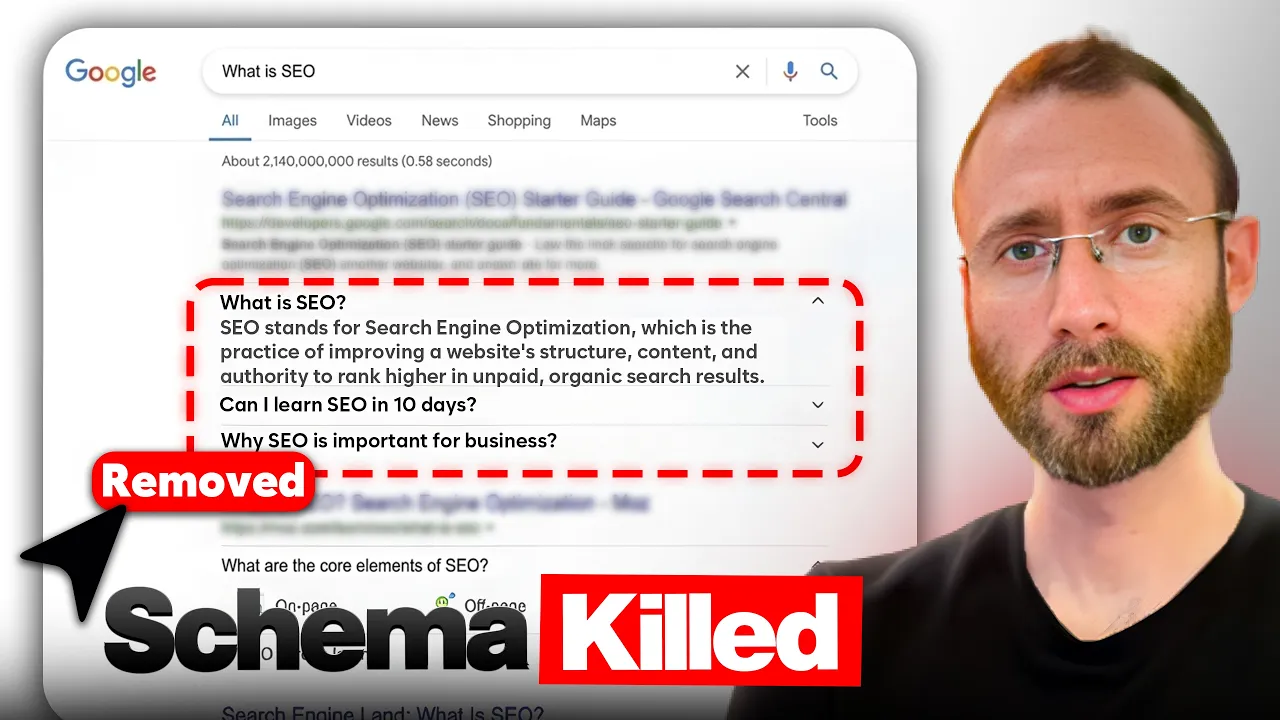
I'm not even convinced. This is Edward speaking now. I'm not even convinced that schema helps with entity recognition. I've tried it a few times myself. People might say maybe for a new brand, but also if you just have a thorough about page with all of your links to everything, that might have the same effect. My overall advice with schema, and I shared this just two days ago when I made an episode about how FAQ schema is getting deprecated by Google FAQ schema was one of the most widely preached schema types. Now, Google is saying it doesn't matter.
They're not going to use it. My advice is add schema if your target SERs are using it so you get more clicks. That's it. That simple. If you see special SER features for keywords that you care about, screenshot the SER, give it to Chat GPT or another LLM and say, "What is causing these SER features?" Make sure it's schema, and if it's schema, then add it. But that's it. Gurus have been yelling for years to add structured data for LLMs. And that always struck me as really suspicious. It just never clicked. It didn't make sense how just randomly adding schema to your page is going to give you a magical data pipeline into chat GPT that's going to make you get more citations.
And when it comes to normal SEO, you see Google ignoring schema all the time. All the time. And we've seen this for years. So look, I would encourage you if you doubt this, if you're like, I'm I I still don't believe this, I would encourage you to read the study yourself. I'm just saying you're way better off focusing on relevance, having relevant content on authority, an authoritative site, authoritative pages, distributing that authority well, and then reducing pogo sticking, having content where people are not going back to the search engine results pages to find better content.
And if you do those things, then you will rank better with better content so that AI finds you and cites you more. And that's everything that I got for you on this episode of the show. If you want to learn my methods of SEO that are focused on moving the needle towards getting customers, towards getting users, towards getting leads, that's what you want with SEO. I have a 13 and 1/2 hour SEO course, compact keywords. Maybe if you've been watching this show for a while, maybe you heard of it. Maybe you've heard of me talk about it on every single show.
And there's a reason for that. It's really that good. I literally I say this all the time. I update it constantly. I updated it. I put up an update to it yesterday and the day before. I am constantly improving it. I spent a year making it and I'm always making it better and I will continue making it better. It's fun for me to to have the most effective SEO course. I hope you will check it out. That's at compactkeywords.com. And just remember, focus on SEO that matters. This is episode 1,043 of the Edward Show. 1,043 days in a row doing this podcast.
Have not missed a single day since starting. If you watch us on YouTube, thank you so much for watching. If you listened on Spotify or Apple Podcasts, thank you so much for listening. And I will talk to you again tomorrow. Bye now.
More from Edward Sturm


Related Videos
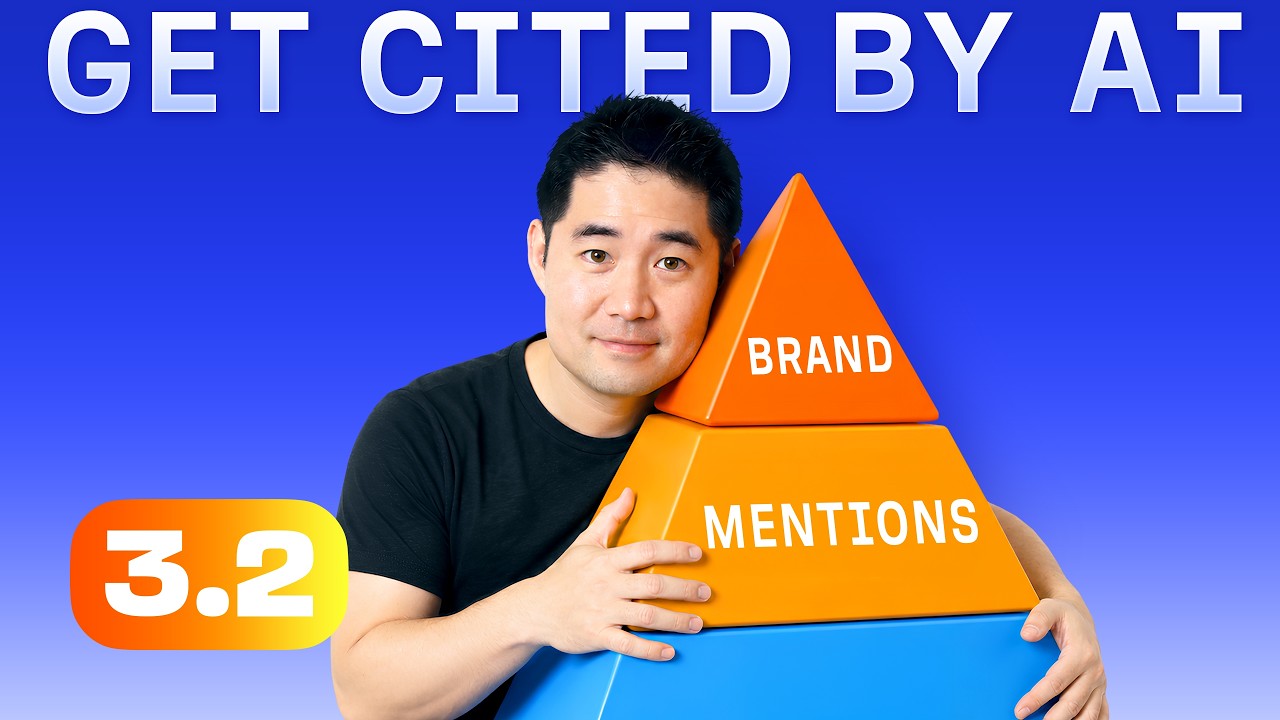
Brand Mentions for SEO: How to Get Cited by AI (3 Tiers) | 3.2. AEO Course by Ahrefs
 Ahrefs
 00:06:05
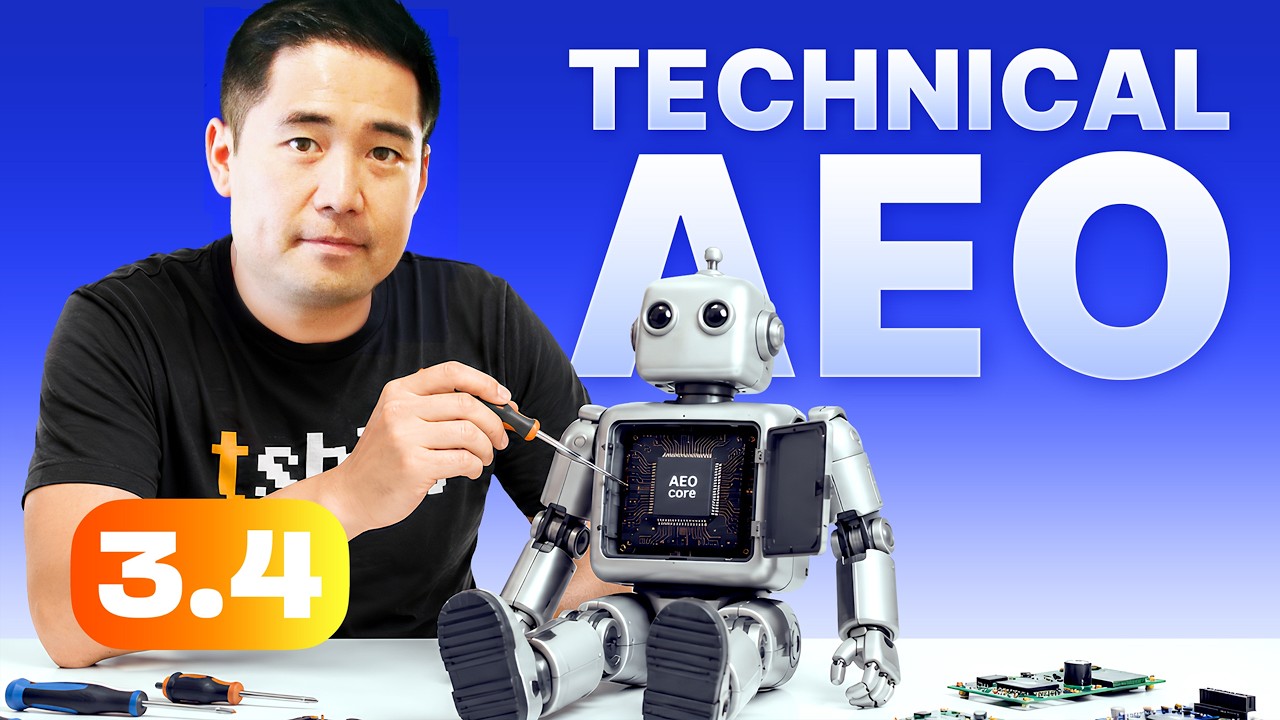
Technical SEO for AI: Robots.txt, GPTBot & llms.txt Explained | 3.4. AEO Course by Ahrefs
Ahrefs 00:07:58

Digital Marketing Strategies Full Course 2026 | Digital Marketing Strategy Training | Simplilearn
 Simplilearn
 07:52:59
![SEO Full Course 2026 [FREE] | SEO Tutorial For Beginners | Complete SEO Training | Simplilearn thumbnail](https://rewiz.app/images?url=https://i.ytimg.com/vi/JPmrnFEQNRU/maxresdefault.jpg)
SEO Full Course 2026 [FREE] | SEO Tutorial For Beginners | Complete SEO Training | Simplilearn
Simplilearn 05:13:58
![SEO Full Course 2026 [FREE] | SEO Tutorial For Beginners | Complete SEO Training | Simplilearn thumbnail](https://rewiz.app/images?url=https://i.ytimg.com/vi/-0XqkDNkQHU/maxresdefault.jpg)
SEO Full Course 2026 [FREE] | SEO Tutorial For Beginners | Complete SEO Training | Simplilearn
Simplilearn 05:13:59
![SEO Full Course 2026 [FREE] | SEO Tutorial For Beginners | Complete SEO Training | Simplilearn thumbnail](https://rewiz.app/images?url=https://i.ytimg.com/vi_webp/jF71pyWlxx4/maxresdefault.webp)
SEO Full Course 2026 [FREE] | SEO Tutorial For Beginners | Complete SEO Training | Simplilearn
Simplilearn 05:13:04
Get daily recaps from
Edward Sturm
AI-powered summaries delivered to your inbox. Save hours every week while staying fully informed.