Let's Map Out Your AI Search Strategy

Chapters13
Introduces hosts, topic, and how the session will run including a live poll and Q&A.
Exposure Ninja’s Tim and Charlie map a practical, battle-tested AI search strategy to future-proof visibility and conversions across AI-driven answers and traditional SEO.
Summary
Exposure Ninja’s webinar with Charlie and Tim Cameron Kitchen lays out a concrete, five-element framework for AI search optimization. They differentiate AI search from traditional SEO, stressing that content and positioning must adapt to how AI tools surface and cite information. The session walks through five core areas: technical AI performance (foundations, schema, crawlers, analytics), building a prompt library (topic prompts tied to buyer intent), AI sentiment and visibility analysis (using MindMyBrand and other tools to close perception gaps), AI competitor research (learning from who’s succeeding in AI responses), and target citations and topics (multimedia and PR-driven sources that AI tools reference). Real-world case studies (Zugu, The Ordinary, Riverford, and a global financial education institution) illustrate how AI visibility translates into traffic and revenue, with highlights like a 243% AI traffic lift and a 395% ROI. The presenters reveal practical tactics: how to categorize AI traffic in GA4, how to avoid blocking AI crawlers, and how to approach outreach for editorial citations. They also showcase the MindMyBrand tool for sentiment tracking and the process for turning findings into an actionable to-do list—prioritizing fixes, prompts, competitor insights, and content/PR experiments. The session closes with a transparent offer for an AI search audit from Exposure Ninja, including pricing, guarantees, and a Q&A that tackles training bots, prompt optimization, multimodal SEO, and tooling choices. Overall, the go-to playbook emphasizes proactive visibility in AI conversations, not just website optimization, to capture share of voice and conversions in the AI-first era.
Key Takeaways
- Technical AI performance is foundational: fix crawlers, 404s, redirects, and schemas first, then layer on more advanced AI-specific optimizations.
- Prompt library design should target buyer-intent prompts across three stages (problem identified, problem recognized, ready to buy), and be validated with tools like Peak or Semrush for visibility.
- MindMyBrand helps quantify how AI tools currently talk about your brand, revealing sentiment gaps and knowledge gaps to close with targeted content and PR.
- AI competitor research isn’t just about who ranks highest; it’s about understanding why certain brands appear in AI answers and replicating successful strategies across content and citations.
- Citations and topics (digital PR) are critical for AI mode and AI overviews: being cited in high-authority sources (ZDNet, Wired) can cause AI tools to recommend your brand in answers.
- Multimodal and video content matter, with YouTube being a frequently cited domain; transcripts help, but primary benefit comes from broad surface-area presence across formats.
- Exposure Ninja offers a structured AI search audit (about one month, two to three hours of client involvement) with a money-back guarantee if 5x ROI isn’t achieved in the first year.
Who Is This For?
Marketing leaders, SEO/Content teams, and digital PR professionals at mid-market and enterprise brands who are navigating the AI-first shift and want a concrete, auditable playbook to gain visibility in AI answers and improve conversions.
Notable Quotes
"AI search is such a new area and lots of people are still working on their strategies."
—Tim frames the session as practical guidance for an evolving field.
"We’re going to look at exactly how to do this... the five areas of the AI search optimization audit."
—Tim outlines the core structure of the session.
"The traffic quality is very high from AI search and getting more of it typically means more conversions."
—Charlie emphasizes outcomes from AI visibility.
"What you want is chat GPT to say, 'Yes, there are lots of options and you should go for this one because this, this, and this are all things that you have decided.'"
—On sentiment/visibility goals for AI answers.
"If you implement the recommendations in full and the AI search doesn't pay for itself at least 5x in the first year, we'll refund you."
—Exposure Ninja’s ROI guarantee for the AI search audit.
Questions This Video Answers
- How can I map AI prompts to buyer intent for better AI search visibility?
- Should I focus on YouTube and other video sources to improve AI search recommendations?
- What’s the best way to measure AI traffic in GA4 for AI search campaigns?
- How do I identify which competitors are most influential in AI responses and copy their winning tactics?
- What is MindMyBrand and how can it help shape AI tool sentiment about my brand?
AI search optimizationAI overviewsAI modePrompt libraryMindMyBrandAI sentiment analysisAI competitor researchDigital PR for AICitations and topicsGA4 AI traffic grouping
Full Transcript
Hello everyone and welcome to our webinar. I am Charlie, CEO at Exposure Ninja and I'm joined by my colleague Tim Cameron Kitchen who you may know from our YouTube channel who is Exposure Ninja's founder. And today we're going to be talking about AI search strategies and live mapping out exactly what you need to do to create an AI search strategy for your business. I would love to hear where you're tuning in from today. So, please drop it in the chat if you've just joined us. And a little bit of housekeeping. So, our webinar is going to be about an hour long with time for Q&A at the end.
If you have questions, please toggle over to the Q&A tab and drop your questions in there. There's absolutely no silly question at all. We would love to hear any questions that you have. AI search is such a new area and lots of people are still working on their strategies. So, please, please, please say. Now before we get into it, we are also going to start a poll that should be appearing for you now which asks are you optimizing your website to appear in AI searches yet? Yes, no, or I am starting right now immediately on this webinar.
Okay, it's looking like okay, just over 60% of people have already started this. So that's a great place. We've got about 30% or so who are starting right now, which is great to hear. Hopefully that's why you're in the webinar. and then a small percentage who are no not yet at the stage of mapping out our search strategy. All right, Tim, I'm going to hand over to you to kick us off. Great. Thanks, Charlie. Hello, everyone. Good to be back. I haven't done one of these for a little while, so it's uh good to flex out the old gray matter and see if this thing still works.
Um, today we're going to be talking about your search strategy. And I'm actually going to take you through the process that we use at Exposure Ninja when we are designing a search an AI search optimization strategy for one of our clients. So we do these AI search optimization audits and we're going to run through the exact process that we do um when we are designing a search strategy for a client whether it's a you know small and mediumsiz company or a huge enterprise global brand. So you get to see behind the curtain I guess as to exactly what we do.
So just to give you an idea on the structure of today, um we're going to go through some upfront stuff about why AI search is really important. Judging by the results of the poll, I don't need to teach you why it's so important, but nevertheless, we're going to look at some statistics which show the direction of search uh direction of travel in this area. It is really a um a very exciting time to be in digital marketing and in search particularly because this really is a shift that is happening right in front of our eyes.
So lots of opportunity if we get on the right side of this. We're then going to go through the five areas of the AI search optimization audit. And I'm going to explain exactly what each area is, why it's important, show you some examples, and then at the end give you some action items that you can add to your to-do list. So, if you're um if you got a pen and paper at hand, then that would be good. Pen and paper. You probably got a Google doc at hand, also very good. Um and that will allow you to keep track of all the things that you might need to add to your marketing to-do list.
Of course, you will get a copy of the slide deck and a recording of the presentation as well if you want to go through any areas later on. Exposure Ninja can help you with this work as well if you need to, but I'll talk about that at the end very briefly and then we'll have some time for Q&A too. So, good to see everyone. Yes, Tim, before we jump in, someone is saying that they're getting a clickity clack static from your mic. I'm getting a little bit of it, too. Not sure if there's anything doade out.
What can I do to fade that out? What does it sound like? Like a little clicketity clacketing. Like a clicky clacketing. Someone in the audience might be able to describe that better. They're saying static. Julie says not for her. So, um, okay. Well, let's try something. Charlie, do a dance for 10 seconds while I switch mic sources. Unfortunately, not a trained dancer here. Oh, Charlie. I know. I've let let the team down. We can change this over. You're going to have to let me know if this works or not. Well, people are saying it sounds better already.
Thanks for your patience, everyone, and Dale for the dance emojis. Okay. Is that better people? Let me know if that's any better. It's perfect for me. There we go. Hopefully we haven't destroyed it for Julie. Um, okay, great. Let's get stuck into this then. We've we've wasted enough time on soundchecking. Let's go. In the words of Keen. Um, so who is this for? Well, if any or all of this sounds familiar, then the good news is you're in the right place. If chat GPT and AI overviews are recommending your competitors instead of you, that's exactly what we're going to look at today.
These tools are non-deterministic, meaning the answers are different every time, but still you can influence how often you are showing up and how often you're being recommended by these tools. Um, so if you find that your competitors being recommended more and you'd like yourself to be recommended a bit more, then perfect. We're going to look at exactly how to do this. If your Google traffic isn't what it once was, then two things. Firstly, you're in the right place. Secondly, your experience is not uh unique. Lots of people, lots of businesses are seeing a drop in organic search traffic as a result of people getting their answers from AI search tools, including Google's AI overviews across many businesses that we see.
The decline in Google um organic traffic is uh is very consistent. Um, we do have clients of course that are seeing significant increases in Google organic traffic, but this is typically because we are expanding their visibility. We're expanding their surface area in search, but like for like traffic is typically down. So, we'll cover exactly what to do about that. If you want to get in marketing shape for the new AI search world, this is a really sort of fundamental moment. I think in my career in digital marketing there have been three shifts so far where we see new businesses built, we see incumbents uh deincumbed and we see challenges arise and I think the first one of those was the origination of search.
When I started running Google ads back in what 2006 they were a fairly new thing and it was very cheap and you can make a lot of money and you saw businesses come immediately because Google was this new thing and lots of people were weded to the old way. they haven't really prepared and uh we saw entire business models created like comparison sites then social media in the sort of 2010s when that became really popular and now with AI search this is for me one of the most important shifts that we're seeing that we have seen uh online and we are seeing user behavior change dramatically and very quickly.
So it's up to us as marketers whether we get on the right side of this or whether we get on the wrong side of this. So if you're here then you're obviously committed to getting on the right side of this. If you're doing SEO like you were 5 years ago, then we have to have a chat. Good news is you're in the right right place and we're going to get this sorted. There are some fundamental differences between AI search optimization and traditional SEO. Even though some marketers would like there to be no differences, and even bizarrely, some marketing agencies claim that there are no differences between traditional SEO and AI search optimization.
Um, there clearly are. And the tasks that we'll look at today demonstrate the importance of having an AI search visibility strategy is distinct from a traditional SEO strategy because these things are quite different. You need a different set of tools and unfortunately it's a bit more complex and requires a bit more work. And if you're throwing more money into Google ads than you like, then again join the club. Most people who are spending money on Google resent having to do that. But the good news is that AI search can offer an alternative. The traffic quality is very high from AI search and uh getting more of it typically means more conversions.
So if any or all of this sounds familiar, good news, you are in the right place. So here's why we are all here. This is the um similar web chart showing the global popularity of websites by monthly visits. And look at that rise for of chat GPT there. In the space of two years, we've gone from position 20th, which is already astounding for a business at that point that was only a year old to being number five, the most popular websites online. I should also say that the um rise in AI more generally is is even more profound than this chart is showing because now if you look at that top 10 list, I'd say all of them except Wikipedia and to an extent WhatsApp are building generative AI into their core product.
So, if we want to be found, if we want our businesses, our products and services to be found in this new era of marketing, AI is is undoubtedly the the channel that we all need to be focusing on. Here's another area that this shows up that doesn't often get as much attention as I think it should. One of the patterns that we see with user behavior is that people will do their research on chat GBT. They will find the products, the services, the brands that they want to buy on chat GPT and then they will head over to Google to make that purchase.
To the business, this just looks like, oh, I've just had a conversion from Google and maybe it was a branded search conversion or maybe it was a direct conversion straight to our website, but they don't necessarily see the research journey that happened behind that. We obviously need to be found in those research journeys. Those research journeys that can happen almost entirely in chat GBT or even in AI mode or AI overviews. These research journeys can happen entirely in the search results without anybody ever visiting our website. The first time we might see them come to our website is because they found us in these AI answers.
The AI tool has sold them on our product or service and they've decided to come and make a purchase or book a call or, you know, fill in a form. So, we really need to be in that conversation. Long gone are the days where people would just rely on our own website for information about our products and services. They're now learning about us on third-party tools which are trained on a wide range of information around the internet. So, we really need to rethink how information about our products and services is shared. This is not just a um a change in search engine.
This is a fundamental shift in user behavior and what we as marketers need to do to get in front of people. The numbers are also showing up um from this shift in AI search. So 80% of people make half their purchase decisions within AI tools. That's according to our own state of AI search report. There's a little bit of anchor man about that stat, isn't there? But we are seeing that people are they're making buying decisions like we are probably making buying decisions. I bet if you drop in the chat, what's the most expensive thing that you have decided to buy on AI based on the information from AI search?
For me, it was a car, right? People are making actually, you could say a business. Um, people are making big purchase decisions on AI. If we're not being found there, we are not being in those decisions. And not just being found, but being talked about in the right way. It's our job as marketers to shape that conversation as well, even though we're not present there in the room. 31% conversion rate. a 31% higher conversion rate from chat GBT traffic than non-branded organic traffic according to search engine land. Um, this traffic is high quality. We frequently see it and in fact I bet for a bunch of people on this webinar that AI search traffic will be your highest converting traffic source except branded search traffic which often weirdly comes from AI.
It's just someone going to Google to make the purchase after they've learned about you. So all of this combines AI chatbots represent new marketing channels and there is first mover advantage for us if we choose to take it. Businesses will be grown significantly because they have good visibility in AI. Other businesses will see a drop in revenue, drop in profitability. There will be businesses that die because they didn't have enough AI search visibility. So it's up to us to do what we want with this information. But hopefully today we give you a bit of a playbook to identify your strategy through all of this.
We're going to talk very briefly about um where this information comes from, how we've refined the approach that we're going to go through in today's session. So Exposure Ninja has been working with a range of clients on exactly this stuff since the very very early days. We were the first to figure out how to rank in Google's AI overviews before they were even live, before they were called AI overviews. and we shared that information in our YouTube videos. We think we're the first people to do that. Since then, we've worked with a lot of brands of all different shapes and sizes.
Some examples that we're going to look at in today's session include Riverford, The Ordinary, the cosmetics brand, and Zugu, an e-commerce brand. But lots and lots of businesses contact us for our help on this topic. And today the process that we're going to take you through is the process that we go through in this initial AI search optimization audit so you can apply this um and implement it for your own business. In fact, just to start with a couple of case studies so you can see how this can imp impact revenue for Zugu fantastic um brand that makes this amazing um amazing range of of iPad and device cases.
So 243% increase in AI traffic. uh so traffic from AI tools and that led us to beat our revenue target by 123%. So big big results there as a result of AI visibility. And Tim, the legendary founder of Zugu, said, "Honestly, everyone I've been in contact with, Exposure Ninja, has been a breath of fresh air. Very transparent and no BS. I'm forever grateful." Uh BS meaning uh not balance sheet. Um a much larger brand, um but also a brand that has benefited from our approach with AI search optimization. The Ordinary this skincare brand and um this campaign with them generated 395% ROI meaning one pound in generates 39 £3.95 out or $1 in $3.95 out.
Or is it $4.95 out? I'm not sure. Um, but yeah, significant ROI on a a very wellestablished brand with a very wellestablished marketing team stacked to the rafters of beasts and we're still able to generate some really significant results, including 428% revenue increase from their blog traffic, which is significant, right? This isn't a blog that was started on, you know, a Sunday afternoon by someone who just wanted to crank out some stuff on chat GBT. This is a very wellestablished marketing team for a very wellestablished multinational brand. And still the stuff we're looking at today can have significant improvement in their ranking and visibility and and uh the number of times that they are mentioned by these AI tools.
In fact, leading to a 24% organic purchase lift. This is a huge business and these are significant numbers just demonstrating the impact of AI search. And I guess backing up what we were saying about this being a really profound platform shift. And Allison, our contact at The Ordinary, said, "We've been an incredibly valuable partner in evolving our digital marketing strategy." Again, this is a very wellestablished team. They are no slouches. Um, so, uh, very significant results there. And this campaign actually won a global search award, um, as well. Okay. Uh, one more example and then we're going to get stuck in.
This is for a global financial education institution, which I've been reminded again and again. I'm contractually not allowed to tell you who this is. uh but significant revenue there coming from AI significant increase in the number of AI sess AIdriven sessions on their website and the number of mentions of their brand in AI search results as well and of course you've seen us talking about AI all over YouTube are sick of both me and that thumbnail picture but there we go you're going to get a few more before the end of the year no doubt our wonderful Charlie travels the world telling people all about AI search optimization and they lap up both her presentations and all the examples.
And today we're going to show you the exact road map to get those examples. And uh we've also just released our own software tool called mine my brand. This helps give you an overview of how these AI tools are seeing your brand. We're going to talk about this a bit later on. The problem of course with all of this is that AI models don't use Google's ranking algorithms. So the old SEO playbook doesn't really work here. Now, I've put a little asterisk there because although these AI tools don't directly use Google's algorithm, they do often have a web search component in the background.
And that web search component does use ranking algorithms, of course. But what we mean by this is it's not enough to just rely on the traditional SEO ranking toolbox. You need a new set of tools here because these tool these AI search tools are much more sophisticated. they are um they're compiling lots of different answers from different places. They have different selection criteria. They're able to and I use this very loosely think in a very different way to traditional search. So we need to bring a different approach with our AI search optimization. So there are really three pillars that we're going to cover today.
So these are are kind of the the three yeah I don't know the three categories of work that we're going to be looking at and then there are five elements that we're going to cover in more detail. Okay so these three categories of work firstly technical foundations and don't worry we're going to go through all of this so you don't need to take notes on this piece but this is about making sure you've got a really well ststructured website with really high crawability no errors using schema properly. Okay, we need those technical foundations to be in place if we're really going to build.
We need clear positioning and content. This is something that's maybe slightly different from the world of traditional SEO. We need to make sure that we are super clear about how you want your brand positioned in these AI conversations because these AI tools are having direct conversations with the user. What do they say about your brand? How do they talk about your products? What are the features that they highlight? Well, that to an extent is up to us with our content. And we need to make sure we're super clear about how you're positioning your brand, your products, and your services in that content if we want to shape the conversations these AI tools are having with their users.
That's something we didn't really have to think about with traditional SEO because people would land on our website and that's where they would learn about our products. With AI, we're one step removed from that. So we need to influence the input which is the content that these AI tools find online so that they know what information to take to their users. And then the tools that we use to do that are digital PR, getting citations and reviews. You need to have a great reputation online. We're going to cover all of this later on. So those are the three pillars and then there are five elements that we're going to dis that we're going to cover today which fall into those pillars.
First up, we're going to assess your technical AI SEO, your tea technical AI performance. We're going to build out your prompt library, do the AI sentiment and visibility analysis, do some competitor research, and then finally, we're going to target citations and topics. We're going to start with our vegetables, the AI technical performance. This is for me by far the most boring bit of the whole thing, but we'll get it done at the start. We're just going to give you a to-do list that you can hand to your developers or hand to your agency and say, "Go and fix this stuff and then we can get on with the more fun stuff." Sound good?
Sounds good to me. So, technical AI performance. Why is this stuff important? If we get this wrong, it can negatively impact everything else you do. Okay? And to an extent, technical AI performance from at least from my perspective is something that you mainly get wrong rather than getting super right. So, what do I mean by that? It's a bit like running shoes. Let's say that you're going to go and enter a marathon and you're you're thinking about getting some running shoes. You might go into the running shop or I might go into the running shop and say Arthur, there's a pair of running shoes that Mo Farah wears.
I'm going to buy those because if I w if I buy those running shoes, I'm going to win the marathon. Let's be honest, I'm not going to win the marathon if I buy Mo Farah's running shoes. Right? Mo Farah's running shoes, they give him a bit of an extra boost in performance, but they really don't win him the marathon. his ability as a runner helps him win that marathon. And in that way, they're a bit like good technical AI optimization. But I can get this choice very wrong. If I wear my regular footwear to enter the marathon, I am absolutely not going to win that marathon.
So good technical AI optimization won't win you the race, but it can lose you the race if you get it wrong. So if we implement schema, we're not going to all of a sudden be seen all over all of these tools. It's not the winning unlock. But if we don't implement schema, we're definitely not going to see that information in the AI search results. So what does this actually look like when we're doing this stuff for clients? What are some of the things that we do in this area of technical AI performance optimization? Well, one of the things that we'll do is make sure that the data is actually showing up properly in Google Analytics in G4.
So, we'll do things like create a session channel group uh called AI performance traffic where we'll lump in all of the different AI search tools so that when we're benchmarking performance, we can see exactly how much traffic is coming from all of these different AI search tools. That allows us to monitor how it's performing over time, see what the impact is, and see the performance of that traffic as a whole. It's a relatively straightforward thing to do. You just head into J4. You go to settings, channel group, add. You drag all the uh different setting different AI tools into that group.
You have to add new ones when new ones come out. But that then gives you a really nice clear uh group of all of your AI search traffic, which doesn't exist by default in J4. Other things that would would you would want to do in this section would be looking at the AI crawlers and how they're able to access your website. Are you blocking any of these? So we'll find often that like in this example from Muma Mobile for for example that um actually they were blocking some of these AI callers unknowingly. They didn't intend to.
it wasn't part of their plan, but maybe they had a plugin where someone had ticked a box that looked like it needed ticking or they'd installed something that by default blocked him. And there you go. Before they know it, they're blocking the crawlers from Gemini, Perplexity, and Chat GPT, which makes it very difficult for those tools to get access to their website. And therefore, it makes it very difficult for those tools to recommend and site the content on their site. Your website might be absolutely fine, but you might use a content delivery network like Cloudflare.
And Cloudflare has this new AI scrapers and crawlers toggle that kind of looks like you'd want a ticket, right? The trouble is then it's going to block the robots from scraping your content for AI applications like model training. You might think, great, I'll do that. These AI tools aren't paying me anything for my copyright information. They're just they're the pirates, right? I don't want to I want to block them. Well, the trouble is, how are they going to learn about your brand? How are they going to learn about your products and services if you block them?
So, there's lots of tools like this that have been created to help the internet which actually prevent us from getting the visibility that we might need. We also want to look for things like 404s or URL structure, making sure we got redirects in place so that these AI tools can find their way across your website in a simple way so they can get the information that they need. We also implement schema as part of this. So schema is a kind of standardized format that you can have information about products, your uh business locations, reviews, um your organization information.
This is a standardized way of presenting that information in the background uh code of your site. AI tools love schema because it allows them to understand really easily the different entities that a website is covering and we'll recommend implementation of this as well. So this um this AI the the technical AI performance piece is really about making sure you've got a good technical foundation to work from. None of these things on their own are going to transform your visibility in a positive way, but they might unlock it if you've been inadvertently preventing yourself from having visibility.
So the action steps here identifying the necessary technical SEO fixes and technical AI fixes. Prioritize all of these according to their ease of implementation and the impact. So if you're blocking crawlers for example, that would be a very impactful thing. That's relatively easy to do. So that would be a very high priority. You're then going to assign implementation. It's unlikely that any of the people on this call are going to be doing this stuff unless you absolutely love the uh the technical side of things. You're going to give this to a developer just like I do.
If we need any of this stuff done at Exposure Ninja or Elite or Pyramid, we give it to one of the developers at Exposure Ninja to go and do because that's their specialist area. It would take me eight hours and I get it completely wrong and I get so fed up it will take them much less time hopefully. But then we check the work. We make sure that it's showing up properly. We go and check search console. We go and use the AI tools to make sure that we've got the visibility that we need. So once we've got that ticked off, we know we've got a solid foundation.
And again, if you're looking at any of this thinking, I really need some help with this. The Exposure Ninja AI search audit can do all of this for you if you need. I'm not here to sell you this AI search audit, but if you want some help with this, we can absolutely do this. Um, and you can book a call uh to talk to the team and they'll run you through exactly what's included. We'll talk about it a bit later on anyway, but if you need some help, it is there. Okay, so that's the vegetables done.
Now we can get on with the fun stuff. Um, the next step is to build your prompt library. Tim, what is your prompt library and why is this important? We want to make sure that you're targeting the right topics and queries to get visibility for. And I've put revenue in brackets because at Ian, we like to target prompts that result in revenue. So, we all know what prompts are, right? These are the questions. These are the things people type in to these chat tools in order to get a response. So whereas with traditional uh SEO we had keywords.
These are the things people type into the search bar, with AI search optimization, we have prompts. These are the questions that people ask. And we want to make sure that we choose the prompts that are going to be most valuable to our business if we're being recommended, if we're being cited in those answers. Now, AI tools work very differently to traditional search. With traditional search, Google serves you a cached version of the search results a lot of the time, which means it's showing you the same search results as somebody searched for last time. And um we as users have been conditioned to search in a particular way in search engines.
You might lots of people type plumber London every day on search engines. People don't typically type that type of thing into chat GPT. They're much more conversational. Chat GPT has all the memories and um personalized information about you. It has context. It has a conversation history. So actually the prompts that people are searching for inside these AI tools tend to be much longer tail, much more complex, much more unique. So unlike with traditional search, we're not necessarily tracking every single um search result, every single prompt that somebody might be asking. Instead, what we want to do is identify prompts that are representative of the topics and the queries that people are asking.
And typically, those are the ones that are going to generate some revenue for the business. So, we want to build this prompt library, which might look something like this. This is for a workplace, a workforce management software client of ours. And this uh prompt library is going to cover a whole bunch of different topics. It's going to cover people who are asking questions which imply they might be about to buy a solution or they might they be relevant for a solution even if they don't know it exists. So something like how to simplify shift planning for hourly workers that might be searched for by somebody who is a good customer for workforce management software even if they don't know that that thing exists yet.
So we want to get in the conversation. and we want to get in the answer from chat GPT or Gemini or Claude or whatever platform we're targeting. We want to get in that answer. So, we want to add that to our prompts library, which is going to allow us to track our visibility for that prompt over time as we're implementing all of the other stuff we're looking at today. So, this prompt library gives us a sort of a baseline to track our visibility across all of these tools. And these prompts in the library are going to typically be three flavors.
The first flavor is going to be people who have identified that they've got a problem. Um, so these flavors essentially are stages of the buyer journey. Let's say that we're selling heat pumps. We're Elite Renewables. By the way, if you need a heat pump and you're in the sorry or greater London area, elite renewables.co.uk. So, we might target prompts um that are searched for by people who know that they have a problem. Let's say somebody is looking at the current crisis energy bills. are thinking, "How do I cut my energy bills? I know I've got a problem.
I don't know what the solution to that problem is, but this is the sort of thing that I might be asking chat GBT." Now, Elite might decide that how to cut energy bills is a prompt that they want to optimize for. They want to get content in that response. They want to get chat GBT recommending Elite Renewables for that prompt. The next level is people that know they've got a problem. They've also identified a potential solution. So an example of a prompt in this space might be how much does it cost to run a heat pump?
Okay, so these people I know I've got a energy bill problem and I think that heat pump might be the solution. So how much does it cost? I'm starting to interrogate the solution. I'm starting to qualify that as a potential um avenue for me. So I'm going to want some prompts around that type of topic as well. And then finally the ones that are closest to the sale once that person has decided I've got this problem. this is going to be a good solution. Now, I need to narrow down my selection. They might be searching for something like, "What are the most reliable heat pumps for large homes?" So, we're going to want prompts that cover each of these different categories in our prompts library.
Once we've got those prompts, we will research them. We'll prioritize them. We'll check them in a tool like Peak, uh, which is, uh, the tool being used here, one of the tools that we use. There are lots of tools that can do this. You can use peak, you can use profound, you can use semrush. We use all three of them. And what these tools allow you to do is check the volume of um searches or queries like this. And it might not be this exact query. It might be related queries. It might be very close queries because remember there are lots of variations almost infinite variations of each of these queries.
But this gives you an indication of how popular this query will be. You can also see your current visibility. So when this prompt is um put into the AI search tool, how what percentage of the time is your brand represented in that answer? That gives you a visibility score. Uh the sentiment about your brand as well, which we're going to cover later on, position, so whether you're recommended first or second or third or whatever. And then any other brands that are being mentioned in that answer. We'll come back to that a bit later on. But it's really important that we get some validation for the prompts in our prompt library.
We don't just want to guess and say yes, this is going to be the perfect prompt for us. Only to find that actually nobody's really searching for it. None of our competitors are in it because it's not really relevant to us and we have no visibility in it anyway. So, we need to put some data behind our prompt library suggestions um so that we can check we're actually targeting the right things in the first place. So, the action steps um that you want to follow in this section. By the way, Caleb has asked a great question.
Keep that. We're going to answer that in the FAQ section at the end, Kevin. So, the action steps for you at this stage, compiling customer feedback and online research. This is um this is to to help you identify the prompts that you want to show up for. Customer feedback is immensely useful. It's actually the first thing we do when we acquire a business. I've set the exposure ninja team on go and get some customer feedback. They'll then call the customers of the brand. They'll find out how do you describe this product? Why did you choose this business?
What other problems do you have? What types of things are you looking for? What we're really looking to do is calibrate ourselves to how the audience thinks about this product, this brand, this solution, this service. If we can get that language right, that can inform our choices of prompts. What we don't want to do is use really technical or industry specific prompts only to find that actually that's not what the audience is searching for at all. Online research can also help us with this. If you're on Reddit, for example, you might see people searching and talking and discussing about the thing that you do, but they're going to be doing it in plain language.
So, it can be really useful to do this type of audience research if you're new to a market or actually the other way, if you're super experienced in a market, you've been in the industry for ages. Sometimes it can be helpful to go and recalibrate yourself because you realize that you understand things at such a high level, you no longer talk in the same language as your customer, which is something that we see time and time again. So that's the first stage in picking up your prompt library is to do that initial kind of calibration research.
You'll typically have some sort of SEO keyword research that has been done either by you or by your agency. If it's Exposure Ninja, we'll have done some keyword research for you. This can then inform your prompt selection as well. Your keyword research and your prompts aren't going to be the same, but you might be able to take some lessons from your keyword research and adapt them for your prompts. You're then going to prioritize your key prompts based on how relevant they are to your business, how likely they are to turn into money, and of course, all the things like your sentiment, your uh your visibility in them already, and how frequently they're being searched.
You're then going to add all those prompts from your prompt library into your trackers, whether you're using Peak, Profound, Seamrush. This is going to allow you to monitor how the things that you're implementing from this game plan we're designing together are moving your visibility, increasing your visibility over time. This is really important. We need to be tracking something. We need a speedometer so we can see what we're doing is working. Otherwise, we're just sort of stabbing around in the dark hoping that things make a difference. And again, if you'd like help, this is part of the AI search audit that we do for people.
Um, Exposure Ninja can help. We'll talk about that at the end. But if you're implementing this yourself, these are the steps that you take. And if you got any questions, stick them in the Q&A or stick them in the chat. We'll pick them up at the end because we're going to have some time for Q&A. I hope. I hope. Um, we're actually running slightly behind time, but we'll be fine. We'll be fine. We'll catch it up, right? Uh, the next stage is AI sentiment and visibility analysis. This is really, really important. And this is another baseline activity, but this can guide us to the areas that we need to put the most attention into.
Our goal here is not just to be mentioned by AI tools. We don't just want chat GBT to say, "Oh yeah, there's a whole bunch of different options and here's five of them and one of them is you." What we want instead is chat GBT to say, "Yes, there are lots of options and you should go for this one because this, this, this, and this, and this, this, this, and this are all things that you have decided." We want to make sure that these AI tools are equipped with the information that they need to actually sell your product to their audience.
Not just mention you as one of a range of options. That's good, but it's much better if they're like a welle equipped, well-trained salesperson. That's going to get you a better result, right? So, how do we do this? Well, first thing we need to do is work out what they're saying about you right now. We need to understand what these AI tools think of you right now so we can then close the gap between that and what you want them to think of you. This is why we built mindbbrand which you can check out at mindmybrand.com.
All you need to do here really simple platform. You put in your website and mine my brand will tell you what the AI tools think about you. So here we've put in Riverford. We can see that sentiment that chat GPT in this case has about brand positive overall perception. We can see that price point um is premium with mainstream accessibility that pricing is above budget supermarket shopping. That's what chat GBT thinks about Riverford. So this is a great way to just get a quick sense check on how these AI tools are already talking about you.
One of my favorite aspects of my my brand is this strengths and weaknesses table which shows you where your perceived strengths and where your perceived weaknesses are based on the AI tools output. So let's look at that top option for weaknesses. Uh Riverford has premium pricing compared with supermarkets. So what do we actually do with this? Let's say we see something like this that we want to influence. We don't really want these AI tools to say, "Oh, yeah, you could try Riverford, but they're kind of expensive against supermarkets." Like, how do we actually shape that?
Well, the first thing is now that we know this is happening, we can build into our content strategy a kind of mitigation plan. So, let's say that we're going into a recession or we think that people are having a tough time economically at the moment. We not might not want um ChatGpt to tell people that we're expensive compared to supermarkets. What we might want instead is for ChatGpt to say, "Yeah, Riverford's a really good option and actually much cheaper than takeaways or much cheaper than restaurants." So, we might want to reframe that conversation around pricing so that we've got a more expensive anchor so that Riverford is positioned as the more budget uh more budget friendly option.
So, this would allow us to then go, "All right, well, let's produce some content comparing Riverford versus takeaway or Riverford versus restaurant and see how much people could save." If we put that content online and we get content about that sort of topic published online, we can start to influence how these tools are talking about Riverford's price. Now, it's going to take time. It's not going to work 100% of the time. We're not going to convince Chat GBT that Riverford is cheaper than supermarkets because it is plainly not. But we can start to influence the way that this conversation happens.
But we can't do any of that if we don't know what these tools are saying about us in the first place. And that's where my my brand is super useful. We can also analyze uh sentiment scores. So tools like peak, like profound, um like semrush will give sentiment scores or a version of. This shows whether these AI tools are positioning your brand positively, neutrally, or negatively in each different prompt. So, is Riverford worth the price? We've got 100% visibility for that prompt on this AI platform. But the sentiment's only 54. So, it's neutral sentiment. So, that's saying probably it's kind of hedging that answer.
Is Riverford worth the price? Maybe. Yeah, but it's expensive compared to supermarkets. So, it's offering quite a balanced response. So if we want to influence this again, we need to provide lots of information, lots of content on different websites about how Riverford is worth the price and it's worth the price because XY Z. So tracking sentiment scores against each of these prompts helps us to identify gaps in our content strategy that we can fill down the line. Holly has asked, do you have the link for mine brand? Yes, it's minemybrand.com. And uh I think we can get a little button there.
Oh yeah, Charlie's just linked it. Cool. So, your action steps with the AI sentiment analysis. Firstly, identifying the sentiment and knowledge gaps. If these AI tools don't know certain things about your brand, we need to make sure they've got that information. If they have certain sentiment which is inaccurate or you want to adjust it or you want to um rebalance it, then we also need to provide content that covers that. First step, identify what those gaps are. We when we're doing an AI search audit for people, we also audit their existing content. If Chat GPT is saying Riverford is expensive compared to supermarkets, it hasn't just made that up.
It's picked that up from training data and from websites talking about Riverford. So, we go and find where those mentions are, what the context is. Some of it will be on Riverford's own website, some of it will be on third party websites. So, we go and find where that information is contained. That then allows us to plan how to close those gaps by covering those topics in content on our own website and on thirdparty websites as well. So all of that feeds into the content strategy in the future. So when you're working with your content teams, you can feed that into when we're talking about which topics we want to cover, when we're doing digital PR, what the stories that we want to push out.
This then influences all of that. Does this make sense? Um, Ella says, "Using Shopify." Great question, Ella. Let's get that in the FAQ and we can cover that at the end. And again, if you need help with this, this is what Exposure Ninja does as part of the AI search audit. You know the story, right? Three things covered. Number four, AI competitor research. This is the juicy stuff where we get inside your competitors, figure out what they're doing well so we can copy it, figure out what they're doing poorly, so we can ruthlessly exploit it and pummel them into the ground.
Why is this important? AI tools are already recommending your competitors. You're never going to stop them from recommending your competitors. In the early days of SEO, we could get like positions one, two, three, four, and five in the Google search results. Like three of them would be your your own website, then you'd have like a directory site, then you have a video. you just like completely sew up the first half of the top page. These AI tools are a lot more balanced than that. They want to suggest different brands, products, and solutions. And that's okay.
We just want to make sure we know how those brands are doing it so that we can learn from them. The good news is that with all of this stuff, it's relatively hidden in plain sight if you know what you're looking for. So, we can reverse engineer why these AI tools are recommending a particular brand. And you can then take that learning and apply it to your brand. So let's say when you're doing your competitor research, you find that one of your competitors is always being recommended by Chat GPT or Gemini or whatever and you when we dig in, we find, oh, it's because they've got this amazing knowledge base on their website.
They've got loads of information that they publish and it's being cited. These AI tools are pulling from it all the time. Great. We know that big knowledgebased content on your website, that's going to work because it's already working for your competitor. Maybe another competitor is really visible because they've got loads of coverage on user generated content sites. They're always being talked about on Reddit. They've got loads of YouTubers talking about them. Great. We know if we add that piece to your strategy, we can get some of that good stuff as well. Third option, maybe your third competitor is always being seen in magazine and uh you know, content editorial type sites.
Great. Let's add that to the mix as well. So by looking at what your competitors are doing well and taking the good bits, we can stack them. Of course, it depends how aggressive you want to be with this. But if we stack the best bits from all of your competitors into your strategy, obviously we can approach a stage where you can build an insurmountable lead as you get first mover advantage against businesses which in many cases if your competitors aren't visible often at this stage of AI search optimization, it's because they've been sort of accidentally winning rather than deploying these strategies in an AI search optimization way, if that makes sense.
So if you start doing that, you can build a really good early lead before they catch up, before they even realize that this is all a thing. We'll do this again using a tool like Peak, which allows us to, you know, you got that prompt library, right? You've put your prompt library in, you can then see all of the different competitors that are showing up in the responses for those prompts. And this allows you to build up a good understanding of who's winning across all of the prompts that you're tracking. In this case, we're working with this client here.
when I work. So they've got two competitors that are more visible across their responses. They've got deputy and they've got home base. We can see the sentiment when I work as a 66. So pretty reasonable but actually sort of towards the bottom of the pack here. We can start to look at what deputy and home base are doing to get that visibility and we can start copying that stuff. Um actually we can copy what anyone is is is doing. we can even if they're not particularly visible, they will be really visible for some prompts. So, we can work out why and we can duplicate that.
So, you end up sort of filtering the best bits across all of them. But having a look at their visibility across the prompts you're tracking is a good start. You can even do this across the um website content that is being cited most often by the AI tools for your prompts. Does that make sense? So what we're looking at here is the web pages that are being cited most often by the AI tools for the prompts that we've chosen to track. Okay. So what this means is this website is the one that is cited most often by the AI tools when the people search for these prompts.
And we can see which of your competitors are visible um in these responses. So we can see that this little blue C which is uh Clockify. We can see that Clockify is pretty visible across all of these. Okay, we can see that who's the uh the next blue one, home base. They are pretty visible. Uh that one, that one, that one. So, you can build up a picture of who's got the most visibility and where they're showing up and whether you have also been mentioned in these articles. So, this gives you a bit of a an insight into what your competitor's content strategy has been.
We're going to feed all of this into the final step. So it's really good to have this sort of uh knowledge this information about where your competitors are being seen. So the action steps for this section identifying your top competitors in AI responses. Important distinction here. This doesn't necessarily mean your top business competitors. So you might have that you know you've got that company that's on the the dart board in the boardroom and you really want to destroy them. They're chipping away at your market share and they're really annoying and they've just hired your best people and you absolutely hate them and the voodoo dollar has been destroyed.
They might not be your top AI search competitors. There might be other businesses in a completely different space to you, but they are really visible in your AI in the AI responses that you're targeting. Yeah. So, say you're say you're selling a service. Well, there might be a software company that's really visible in your in the prompts in the responses to the prompts you're targeting. Well, they are your AI search competitor because it's them you need to figure out how to unseat or figure out why they're being included in the responses that you're targeting. So, first step, identify your top competitors.
And these tools like Peak and Semrush will allow you to identify those top competitors and figure out why they're doing it, how they're doing it. You can then all of course all um add all of their stuff into your plans as well. Uh great. And we can help you with this. This is part of the AI search audit or you can just do it yourself using the steps here. Okay. Fifth aspect and then we're going to do some wrap-ups. Then we're going to do some FAQ. This for me target citations and topics is the most interesting bit and it's also uh potentially the bit that is most different to traditional SEO.
Um before we go through exactly what to do, let me show you the output of of this. Uh so here's an example. This is an article published on ZDNet or ZZDNet if you're in the UK. Um, I would bet that the majority of people call it ZDNet. This is an article called, "What is the best iPad Air Case?" Right now, we got our client Zugu case featured in this article. This is a great article and it's great to be featured in this for a few reasons. Firstly, the SEO benefit is nice because we've got a link here back to Zugu's website.
Happy days. That's a high authority domain. Gives us some good visibility in SEO. So that's box number one checked. Uh this is also really good because ZDNet has a quite textforward audience which is perfect for Zugu case. So we're going to get some eyeballs onto this which is really nice. Get some clicks through from people who've seen this because they're scouring ZDNet. That's really nice too. Uh other benefits, it's really nice PR. It's really good credibility. That's great as well. But when it comes to AI search optimization, this sort of stuff is absolutely freaking turbo fuel because the next day when you ask Perplexity, what are the best iPad Air cases?
Perplexity is pulling from this article to recommend Zugu as the top iPad Air case. There's 16 sources to this article. Of course, the name of the game is to get featured. get your products featured in as many of these sources as possible and the sources will be different for different AI tools and different on different days. But you see the power of this, right? If this article is being cited as a source, we get the brand featured in the article. We get the brand featured in the AI answer. Really powerful. Here's another example. This one on Wired again got them featured.
Best overall folio case. Has to be said they got a sick product which makes this possible. If they had a terrible product, not going to be possible. Doesn't matter how much PR you do. You got a bad product, the more you market it, the worse things get. You got a great product, the more you market it, happy days. Great product, really well marketed, if we do say so ourselves. And next day, Gemini is referencing that article to tell people the best iPad Pro case is Zugu. Okay, this is why this uh sort of digital PR approach is so powerful for these AI tools.
AI mode, which is Google's like more in-depth version of AI overviews, continues to reference those two articles. So, name of the game, pretty obvious. We want to work out which content is influencing the AI responses. Item number B, insert your brand there. Pretty simple, right? Well, those four words are pretty hard work. And there's a whole team of Exposure Ninja beasts who spend their entire lives doing this for people. So, it's not massively straightforward and it takes a a fair bit of time if you ever tried to do it, but the power of getting this stuff done is is difficult to overstate.
It really is amazing once you get featured in these types of content. Now, how do you find these? Well, you can look for uh the citation sources. So, the top citation sources um that these AI tools are drawing from, you can use peak to identify these. PEC, I think Charlie has um linked to that. You can also use a tool like Profound or Semrush or with this AI visibility toolkit um which you can get free trial of at exposuringinja.comrushy1. Uh these tools will give you the top websites that you want to get recommended on if you want to get inside the AI answers.
Some of these are userenerated content sites like Reddit and YouTube. You can see that peak has categorized them as UGC. Some of these are competitors. Connect stream here is a competitor. People managing people is tagged as an editorial site. So this means there's a writer, there's a journalist. You can reach out to them. You can get your brand product services featured in there. Uh some of them are corporate. Actually, I'd say this is miscatategorized because Zapia writes about lots of different um brands. You can still get your coverage there. It's more like editorial. And then of course we've got uh when I work's own website which is categorized as you.
So what we're doing here we're working out the uh websites that we want to get featured on. When we're doing this for clients we end up with a list of target citations. These are like the holy grail. These are the publications, the pages that we want to get the brand featured in. We then go after the editors, the journalists, the writers, the contributors of these articles. We might not get in this version. we might not get in the 20 best payroll software for construction company in 2026 article, but we might find out when we talk to that writer that they're about to start the research process for the best payroll software for construction companies in 2027 article so we can get featured there.
Or we might find out they're just going to judge up the 2026 version and they'll be happy to include us. So, it's a bit of a slow burn. It's relentless. There's a whole bunch of rejection. Sounds a bit like my uh my dating in the 20s and 30s. Um but if you keep going, you'll get there. Actually 20s. I met Kate when I was 29. Yeah. I hope she doesn't watch this. Uh right. So your action steps for this stage. Identify your prioritized list of publications. We want to identify those publications that are most cited by the AI tools.
We want to reach out to the writers and journalists who are contributing those articles and collaborate with them to get featured. Again, this isn't massively easy. I'm not saying, you know, it's 10 to 5 on Friday. I'm going to do 5 minutes of journal outreach and get covered in ZDNet and wired. That ain't happening, right? This is something that you've got to wake up and you've got a gritty will. You've got an absolute steely determination to get this done. You know, you've just been to the gym and smashed your head against the wall for 10 hours and you're ready now to go and do some jouro outreach.
It's hard work. We've got a team of people at Exposure Ninja who, you know, we all admire and we bow down as they walk because they are really good at that. Not everybody's good at this. I'm terrible at this, but if you know one of those people, get them to do it because they can deal with a lot of rejection like Caleb and I. Um, and if you'd like help, of course, we can help you with this. This is part of our AI search optimization audit. We will identify those publications and uh we can identify the writers and the the people who are responsible for writing those.
We won't do the outreach as part of the AI search optimization audit. We will just show you what you need to do to get the coverage that you need um in order to uh to get this visibility. So, we have covered the five areas. We're going to do some Q&A um in just a second. So, we've looked at assessing the technical AI performance. This is your marathon shoes. We've built your prompt library. That's the um the whole bunch of prompts that you're going to track your performance against that represent the topics and the queries that you want to get visibility for.
We are going we've talked about how we're going to use mind my brand to work out what these tools are saying about you so we can identify the gaps. We've done the AI competitor research so we can see what your competitors are doing well, how they're doing it, even if it's accidental so we can adopt and apply this. And then we've uh dealt with the rejection. We've identified the target citations and topics that we want to get our brand featured in if we're going to get these AI tools singing about us relentlessly. So, right now you're thinking, "Oh my gosh, I've got a bit of a to-do list, Tim, already.
You've just given me a whole bunch more stuff. You absolute bastard. You've got three options, three choices. Choice number one, which I'll be honest, most people on the outside world would take. I don't think our our audience is this category at all, but a lot of people on the outside world will be to ignore all of this. Hope that it all goes away. I wish I hadn't gone to that webinar from Tim. He's just given me a whole bunch of things to do on my to-do list. Uh maybe this AI thing was just going to blow over.
Maybe it'll all turn out to be a dream and we'll just go back to the old days of traditional SEO and I can just work with my keywords and my my blog topic research. Unfortunately, I don't think that's going to be the case. Um but if that's your choice, then uh crack on. The second option is to do this yourself. You can do this audit process that we've looked at in today's session. You will need some internal expertise in AI search, but you might have that if you spend your time on the exposure ninja videos, if you go through all our podcasts, all our tutorials, all our articles, you might be confident enough to be able to do this stuff for yourself.
It's probably going to take a tool. Well, you're definitely going to need a tool like PKI or Profound. They're not super cheap. They're not ridiculously expensive, but they're definitely more expensive than SEO tools. We can get you a free trial. Charlie shared a link. And you're probably going to need, it says 40 hours there. I would think that that's maybe a little bit on the conservative side. So, it takes our team about 40 hours to do one of these. And they do this stuff all day long. So, I think depending on your level of expertise, you might need 40 hours, you might need 60, you might need 80.
But say you've got, you know, enough time to spend a day a week on this and you allow yourself five weeks, five, maybe one or two months, then you might be able to put all of this together and that's definitely a good thing to do. If you got no budget, this is absolutely what you should be doing. Your other option is that Exposure Ninja can do this for you. We actually charge a lot less than you might imagine for this. Um, I'd be interested to see what you think the price for all of this would be.
Um, I actually think it's really cheap. I buy a version of this for all of our uh all of the businesses that we buy. But the whole audit takes about one month. We go through everything that we've looked at today and more. We then turn all of this into a presentation which we give to you and any other stakeholders in the business. We've done this for huge multinational brands where they've had their entire marketing teams and their PR teams and their content teams in a room in like an auditorium asking us questions like we can present the whole thing.
Your total involvement on this route is about two to three hours and that includes the presentation at the end. So it's very low touch if you're already completely overwhelmed and busy. So how much do we charge for all of this? There's two versions. The standard version is $5995. That's GBP. Uh that makes it about $8,000. That covers everything that we've talked about. So the performance benchmark, seeing how much traffic we're already getting from these AI tools and giving you that um channel group in uh in G4, we do the technical AI review and the schema.
So making sure you're working from a a good base. You've got your marathon shoes. Uh we've got the AI sentiment and visibility analysis. We go quite in depth with this to understand exactly what these AI tools are talking about. We don't just use the readout from a single tool. We use lots of tools. We use our own analysis as well. We create you your prompts library and we prioritize these prompts um through all three stages of the uh the buyer journey there. We do some competitor research identifying what two key competitors are doing to get the visibility they've got.
We give you a target citations and topics and we turn all of this into a bunch of actionable recommendations which we present to you and your team in a presentation. You of course then get the deck to go and implement all of those recommendations. That's $595 um about $8,000 that works out. If you're interested in this, there's a button. The next step is to just book a call with one of the team. You can talk through with them, make sure it's right for you. We don't offer it to everyone. If it's right for you, great.
We can give you more information. We can take you through the process. If it's not right for you, that's completely cool. We're not here to like hardcore sell you anything. We've got a limited uh availability for these anyway. So, if it's not right, it's not right. That's completely fine. Uh we also have a more advanced version of this, which we typically run for larger brands. Um, same basic stuff but just more detail, more depth in every area. And we're able to deliver this in person if you like. UK only, although if you live in Barbados or Fiji or something, then yeah, just give us a shout.
Um, same information, but more competitors and more prompts. So, this typically works for larger businesses that have a wider range of products or services that we need to maintain visibility for. So, those are your two options. If you're interested, like I say, Charlie's going to put a link on the screen so you can book a call with one of the team to talk this through and make sure it's a good option for you. Um, or you can just drop us a a contact through our website at exposurinja.com. Okay. Um, right. We have some time for Q&A.
Actually, before that, these AI search orders are fully guaranteed. So, if you implement the recommendations in full and the AI search doesn't pay for itself at least 5x in the first year, we'll refund you. You'd have to be a tiny business, like literally a like one man band perhaps or you're selling something that like three people in the world like if this doesn't pay for itself because the leverage that you can get from these audits is so significant. So, we're happy to guarantee it with a money back guarantee and you get all of the deck and everything that you can pass to your team and you can make this the basis of your AI search strategy moving forward for the next 12 to 18 months.
Okay, all of that said, Q&A. Any questions, please stick them in the chat. Uh we will also go through the ones that have already been asked. Hey Charlie, how's it going? Hey Tim, it's going great. Thank you for a fantastic presentation. We've got quite a few questions. So I'm going to quick fire them uh at you and you can see see that you can do your best. Should we allow training bots to crawl our website? Yeah. So the the the training bots are the you know when when OpenAI for example is training its next large language model like GPT6 or whatever um it will crawl around the internet learning what it can about all of the things.
If you want your business information to be included in GPT6 or claude 3.7 then yes you want to allow training boss. If you don't want these tools to know anything about your business, then no. I would say you probably want to allow the training bots because sometimes these tools will recommend businesses, products, and services without visiting the website at all, without going online to do a background search. And they can only do that if they know about you from the training data. So, personally, I'd allow everything. All right, next question. This was the highest upvoted question that we've had in which is from Caleb.
How can I find which prompts our customers are actually using? Yeah, this is um this is definitely part art, part science. I think talking to your customers is a really good thing. A lot of marketers don't really have time to do this, which is why we do a lot of it exposure ninja. It's why I get the exposure ninja team to do it for the new businesses that that we acquire. So they can work out what sort of language the customers are using. Um, and then once you've got like a range of different queries, you're going to run that through the uh the the AI tools and maybe some traditional keyword research tools as well to find out what are the most common queries that people are using.
So, you're never going to get this absolutely perfect and it might be that every single one of your customers has asked a different question and there's absolutely no crossover at all, but you can you'll usually start to spot some patterns about the sort of language that your customers are using. And it's that type of thing which you'd use in your prompt library. Okay. Absolutely. I've got another question on prompts from Holly which is how can you improve the prompts that you're tracking? What would you do with them? Would you use more keywords on your website?
Would you create more blogs, email campaigns, social posts? Yes. To all of them. Yes. um what we do with these in the AI search audit will recommend a content strategy that um that covers all of these prompts. So let's say that you've got visibility for let's say there's a topic I'm going to use heat pumps because it's always on my brain. Let's say you've got heat pumps as a topic that you want more visibility on. There are going to be related queries to heat pumps which you maybe don't have so much visibility on. So when we do the AI search optimization audit, we will recommend a a sort of a pillar content strategy that will see you covering this topic from all of the different angles.
Okay. So once we do that, once we cover it from all of the different angles, we'll say, right, you're going to have this core pillar content, which is the perfect guide, the the ultimate guide to heat pumps. Then there's all of these supplementary pieces of content that you're going to publish about different subtopics in that topic which are going to cover all of the different variation prompts around that. So we we basically need to cover all of these topics from every imaginable angle on your website. So it means more blogs, it means more website content, more knowledgebased content.
Then you've got stuff that you can send out via your emails, via your social media you can make videos about. So it just means approaching things in a you know much more rounded way. In the olden days of SEO, we'd find one particular keyword, we just make a blog for that keyword. I think those days are over because we need to cover everything from so many different approaches. Absolutely. I love this question from Caleb. Tim, this was about the my my brand strengths and weaknesses. How can Caleb turn those weaknesses into a useful to-do list of work that's going to have a positive impact on AI search?
Well, positive, we hope. Yeah, there will always be weaknesses because these AI tools want to present a balanced recommendation to their users. So, they will always find something. I think if we go back to the Riverford example where pricing was something that was often cited, it's about you're never going to like completely remove that. What you can do is reframe that conversation. So if let's say that you are more expensive than some of your competitors, maybe you can produce some content on your website comparing your price against other options. Let's say that you're offering a software solution where you could compare that to hiring someone to do that work or against a custom solution.
So you can try and reframe that pricing conversation against the more expensive anchor so that when those AI tools are talking about your pricing or where someone says you know how much is Caleb software they say oh it's this much but compared to hiring someone you're actually saving a bit of money. So we can try and just reframe that by giving these things more context and and a different context uh when they're talking about your your your weaknesses. So, um, there are also times, sorry, there are also times where the thing that they're talking about is actually not accurate.
They just don't have enough information about you or they've got mistaken or they've confused your brand with someone else's. And in those cases, having some content about that topic directly can be all it takes to to remove that weakness. Absolutely. I think we've got a few e-commerce businesses in here because we've got some up votes on this saying, "Using Shopify, does that help ensure the AI technical stuff is sound?" Should do. Should do. Um, what's your take, Charlie? My take on this is that if you're on Shopify, then you can definitely make AI search work.
You've got things like Sidekick, the AI assistant that is meant to help with tasks like this. That means you can actually ask it questions, basically ask for data analysis. I don't think it's going to be able to tell you exactly what you need to do to show up in the AI searches that you care about. So, you're still going to have to go through the process of prompt tracking, deciding what your prompt library looks like and making those optimizations. But there's definitely some helpful things in there and things like, you know, Shopify magic is there for writing product descriptions, all which are extremely important if you're an e-commerce business actually trying to optimize for AI search.
So yes, but actually you still got to do a lot of the work yourself, I'm afraid. Yeah. And and I think just for the if we're just talking about the technical stuff, so the things like you know schema and uh redirects and all of those things, Shopify is a really robust platform and has thought about a lot of that stuff. But I don't think we've come across a platform that's completely watertight. So it's always worth having somebody particularly if you're adding like layers of plugins um and and extensions in. A lot of these things can interfere with some of the some of the functionality.
So always worth having someone who's really technical look over these things and you know with our with our Shopify clients we will still do a bunch of work on the technical side is nothing handles it straight out of the box. Perfect. I've got two questions that are kind of similar from Pete and Caroline. So I'm going to squish them together. For B2B tech companies, how important is multimodal SEO for search visibility? Should we just focus on text authority signals or other things? And then Caroline asks, "How useful is video content for AI search? Do we want to add transcripts to it?" Um, yeah, good question.
I think YouTube is the number one domain that is cited in uh AI overviews. I think YouTube for sure is an important channel if you can use it. I know it's not always easy. It also sort of naturally transcribes all of the content as well. So it can feed into AI overviews and AI mode. So that's definitely important. If we're talking about true multimodality like you know voice and image and things like that, all of these tools are pretty textbased at the moment. Unless you're going to, you know, somehow get your brand mentioned on all the video training data that that they're feeding these songs on to to build these models in the first place.
There's not really too much more that you can do with that, but for sure any any surface area that you can possibly get, be it video, be it podcast, be it text, is probably going to help because you never know what the balance of those three that these models are being trained on is. So if in doubt, be everywhere. All right, final question comes in from Julie. How often would you need to redo an AI search audit like this? That's a good question. I think it depends how much activity and how honestly some of it is how rapidly these models develop.
Um I would say this is probably something that you might redo every year but honestly somebody might come out with a new model that just completely blows everything else out of the water and we need to completely reconfigure everything. We've seen for example a change in the types of websites that are cited by chat GBT. it's sometimes going to more third-party websites being cited, other times relying on the brand's own website um for for the information it provides to users. So, it's not the sort of thing that you're going to have to redo on a quarterly basis.
And honestly, a lot of the recommendations are going to stand for the future of AI as as it looks like it it will operate in the in the moment. So, I'd say maybe brace yourself for doing it once every year, but the future years won't be from scratch obviously because you've already done part of the work. So, it's just a bit of a fine tuning of the of the one that you do this year. Yeah. I mean, hopefully your future years will just be showing lots of positive growth, so you're already on the right track and you won't need to redo whole things like your prompt library from scratch because a lot of those bones are still going to be the same skeleton that you had that you want to continue with.
Amazing, Tim. Thank you so much for getting through all of those uh quickfire Q&A. Not that quickfire. If anyone has additional questions that they want to ask, you can find me and Tim on LinkedIn. always more than happy to answer your questions. If you want to talk to one of our team about an AI search audit or what your current situation looks like in AI search, just hit the book a call button below. And if you missed any of the webinar, a couple of people said they had power outages. Oh, terrible during it. Then it's going to be in your emails over the next couple of hours once we've finished.
Thank you so much, Tim. Anything you want to add? Yes. Um, there's actually a few more questions and I don't mind sticking around for a few minutes to to to nail them out. you know, you know me, I like to run over. Um, just quickly, Alejandra says, "Is the blog business slightly over since LLMs are recommending everything?" That's a very good question. The answer is no, because even if you are um even if your information is being cited and referenced in the AI answers, you will still pick up clicks from that. And actually, I think there is a massive business there.
For example, that ZDNet article earlier, ZDNet, if it's working in partnerships with brands, is not only selling the viewers on ZDNet, it's now directly able to influence the AI tools. So, if I'm running a blog right now, I'm selling the brands that I'm working with on giving them access to my blog content, giving them recommendations in my blog content, knowing that's pulling through into the AI search tools. So, I think there's there's lots of potential there. Um, Caleb says, "Do you support integrated campaigns? Could you help my PPC2?" Absolutely, Caleb. Exposure Ninja does SEO, AI, search optimization, paid search, web development, conversion optimization, and email marketing.
So, we can help you with all of those things. And actually, we wouldn't do one without looking at the others and how they're impacted. So, absolutely, we can help you there. Rebecca, as a service business, there are many companies that have similar business names in the area. For that reason, AI overviews pulls wrong information from competitor sites. How do you go about that, Rebecca? You got to dominate them. You got to absolutely decimate them on every level. Elite Renewables, there's a whole bunch of businesses called Elite Renewables. We own one of them. We are working on exactly this problem now by just being we're publishing more.
We're getting it ranked better than them. We're just trying to crush them on every metric. So eventually they give up and say, "Right, we're going to change our names because people can't find us anymore." That's definitely one solution. Um, okay. I think we're we're good there. Thanks Charlie. Thanks everyone
More from Exposure Ninja

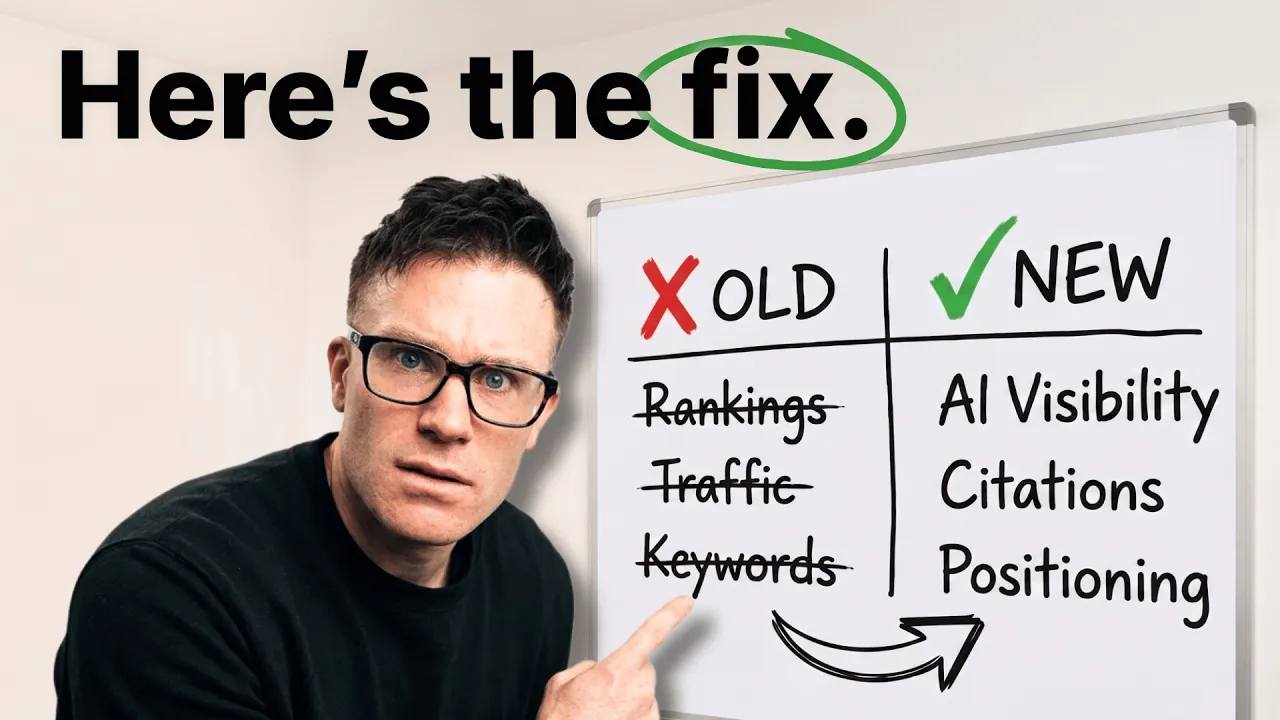

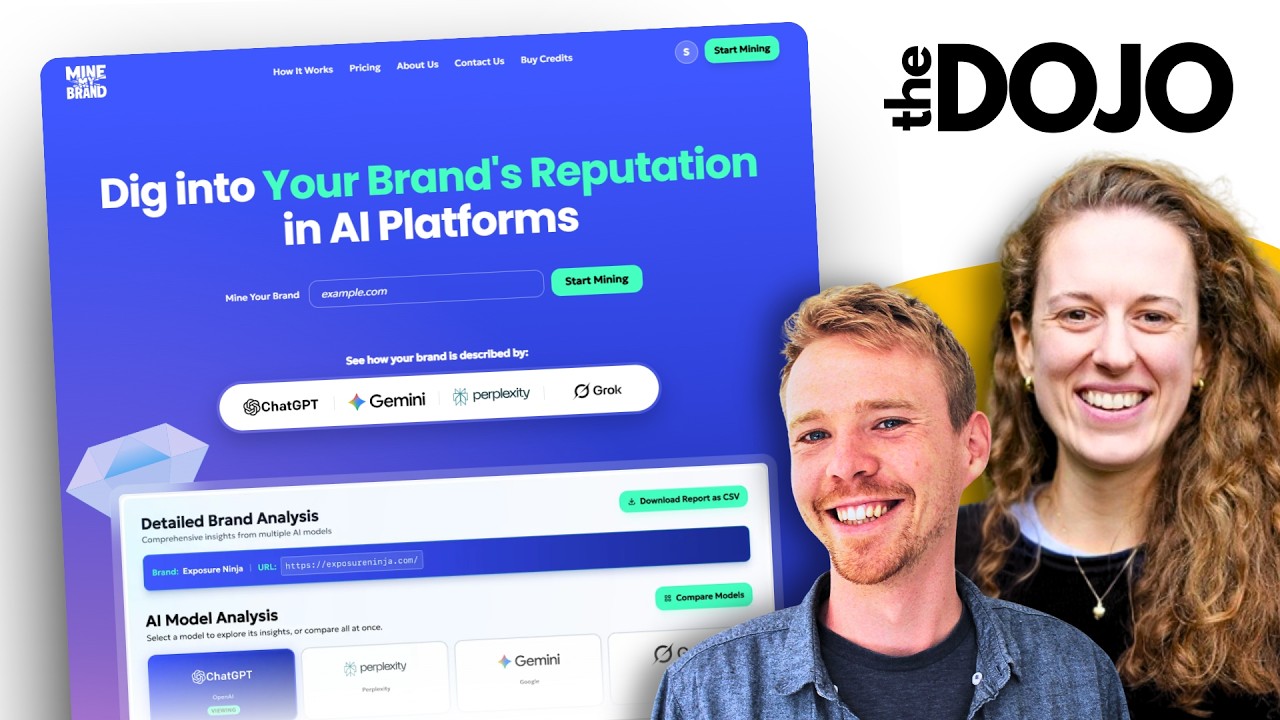





Get daily recaps from
Exposure Ninja
AI-powered summaries delivered to your inbox. Save hours every week while staying fully informed.