Sundar Pichai: CEO of Google and Alphabet | Lex Fridman Podcast #471

Chapters16
Sundar reflects on how technology transforms lives, the high risks and self-correcting nature of humanity, and his optimistic view that collective effort can steer AI toward beneficial outcomes, despite concerns about its dangers.
Sundar Pichai shares a deeply personal arc from a Chennai childhood to leading Google and Alphabet, reveals his views on AI’s promise and risks, and sketches a future where AI augments creativity, collaboration, and global access to knowledge.
Summary
In this candid interview with Lex Fridman, Sundar Pichai reflects on growing up in Chennai, the relentless pull of technology, and how early access to tools like a rotary phone shaped his worldview. He connects his upbringing to Google’s mission of access to knowledge, and he explains how the company is pursuing AI first, responsibly, with a long horizon in mind. Pichai digs into the practicalities behind major bets—merging Brain and DeepMind, scaling TPUs, and building Gemini—with a focus on making AI useful, safe, and broadly accessible. He also weighs the societal implications of AI, from productivity gains to the ethical responsibilities of platforms like Gemini and Gemini-powered search, and he shares a nuanced take on AGI timelines, existential risk, and the potential for AI to amplify human creativity. The conversation touches on AR/VR through Google Beam and Australia-sized visions for Android XR, while revisiting Chrome’s origin story and the moonshot culture that keeps Google pushing the envelope. Throughout, Pichai remains warm, measured, and relentlessly optimistic about humanity’s ability to solve hard problems together. He concludes with a call to nurture curiosity, empathy, and purpose in an era of rapid technological change.
Key Takeaways
- AI will be the single biggest productivity multiplier in history, with Gemini and related tools enabling vast leaps in creativity, coding, and information access.
- “The underlying technology is becoming so capable… it’s not clear what the ceiling is” when discussing AI progress and the potential for self-improving systems.
- Google’s approach to AI mode in search preserves links and human-curated web while offering a context-rich, conversational layer on top of results.
- The merger of Brain and DeepMind was a pivotal, carefully managed transition that leveraged strengths from both teams to accelerate AGI-focused research.
- TPUs and scalable infrastructure remain critical to training and deploying large models; the pace of advancement depends on compute, data, and engineering discipline.
- AI can widen access to knowledge through translation, multimodal interfaces, and better search experiences for non-English speakers.
- Chrome’s creation was driven by a belief in faster, safer, more minimal browsers; it helped unlock Ajax-era web applications and defined a generation of web software.
Who Is This For?
Essential viewing for AI enthusiasts, product leaders, and engineers who want to understand how one of the tech industry’s most influential leaders thinks about AI strategy, product development, and the long arc of technological progress.
Notable Quotes
"There was a 5-year waiting list and we got a rotary telephone… that became a five-minute thing."
—Pichai recounts his childhood tech access and the transformative power of technology.
"AI is the most profound technology humanity will ever work on. It’ll be more profound than fire or electricity."
—Articulates the central belief driving Google’s AI strategy.
"If pedom is actually high at some point all of humanity is aligned in making sure that’s not the case… I’m optimistic on the P-doom scenarios."
—Discusses AI risk with guarded optimism and shared responsibility.
"The best way to get the most out of people is to work with mission-oriented, inner-driven teams."
—Leadership philosophy and people management insight.
"AI mode will be a separate tab but still links back to the web—it's a continuum, not a replacement."
—Explains how AI-enhanced search integrates with traditional web results.
Questions This Video Answers
- How does Sundar Pichai define the 'AI first' strategy at Google?
- What were the motivations and challenges behind merging Brain and DeepMind?
- What will AI mode changes mean for the future of Google Search and ads?
- How does Sundar view AGI timelines and existential risk in the next decade?
- What role will robotics and autonomous systems play in Alphabet's future?
Sundar PichaiLex Fridman Podcast 471Google DeepMindGemini AIAI ModeGemini ProChromeTPUsAI safetyAGI timelines“,
Full Transcript
There was a 5-year waiting list and we got a rotary telephone, but it dramatically changed our lives. You know, people would come to our house to make calls to their loved ones. You know, I I would have to go all the way to the hospital to get blood test records and it would take 2 hours to go and they would say, "Sorry, it's not ready. Come back the next day." 2 hours to come back. And that became a five-minute thing. So as a kid like I mean this light bulb went in my head you know this power of technology to kind of change people's lives.
We had no running water you know it was a massive drought. So they would get water in these trucks maybe eight buckets per household. So me and my brother sometimes my mom we would wait in line get that and bring it back home. many years later like we had running water and we had a water heater and you could get hot water to take a shower. I mean like so you know for me everything was discreet like that. Uh and so I've always had this thing you know firsthand feeling of like how technology can dramatically change like your life and like the opportunity it brings.
I think if pedom is actually high at some point all of humanity is like aligned in making sure that's not the case right and so we'll actually make more progress against it I think so the irony is so there is a self-modulating aspect there like I think if humanity collectively puts their mind to solving a problem whatever it is I think we can get there so because of that I think I'm optimistic on the pdoom scenarios But that doesn't mean I think the underlying risk is actually pretty high. But I'm uh you know I have a lot of faith in humanity kind of rising up to the to meet that moment.
Take me through that experience when there's all these articles saying you're the wrong guy to lead Google through this. Google is lost. It's done. It's over. The following is a conversation with Sundar Pachai, the CEO of Google and Alphabet on this the Lex Freedman podcast. Your life story is inspiring to a lot of people. It's inspiring to me. You grew up in India, whole family living in a humble two- room apartment, very little, almost no access to technology. And from those humble beginnings, you rose to lead a $2 trillion technology company. So if you could travel back in time and told that, let's say, 12-year-old Sundar that you're now leading one of the largest companies in human history, what do you think that young kid would say?
I would have probably laughed it off. Um, you know, uh, probably too far-fetched to imagine or believe at that time. You would have to explain the internet first for sure. I mean computers to me at that time. You know I was 12 in 1984. So probably uh you know by then I started reading about them. I had seen one. What was that place like? Take me to your childhood. You know I grew up in Chennai. Uh it's in south of India. It's a beautiful bustling city. Lots of people, lots of energy, you know, simple life.
Definitely like fond memories of playing cricket outside the home. We just used to play on the streets. All the neighborhood kids would come out and we would play till it got dark and we couldn't play anymore barefoot. Um, traffic would come, we would just stop the game, everything would drive through and you would just continue playing, right? Just to kind of get the visual in your head. You know, precomputers there's a lot of free time now. Now that I think about it, now you have to go and seek that quiet solitude or something. Newspapers, books is how I gained access to the was information at the time, you will.
Uh my grandfather was a big influence. He worked in the post office. He was so good with language. His English, you know, his handwriting till today is the most beautiful handwriting I've ever seen. He would write so clearly. He was so articulate. And so he kind of got me introduced into books. He loved politics. So we we could talk about anything and you know that was there in my family throughout. So uh lots of books, trashy books, good books, everything from iron rand to books on philosophy to stupid crime novels. So books was a big part of my life.
But that kind of this soul it's not surprising I ended up at Google because Google's mission kind of always resonated deeply with me this access to knowledge I was hungry for it but definitely have you know fond memories of my childhood access to knowledge was there so that's the wealth we had uh you know every aspect of technology I had to wait for a while I've obviously spoken before about how long it took for us to get a phone about 5 years but it's not the only thing a telephone. There was a 5-year waiting list.
Uh and we got a rotary uh telephone. Mhm. But it dramatically changed our lives. You make calls to their loved ones. You know, I I would have to go all the way to the hospital to get blood test records and it would take 2 hours to go and they would say, "Sorry, it's not ready. Come back the next day." 2 hours to come back. And that became a 5m minute thing. So as a kid like I mean this light bulb went in my head you know this power of technology to kind of like the opportunity it brings.
So, you know, that was kind of a subliminal takeaway for me throughout growing up. And, you know, I I kind of actually observed it and felt it, you know. So, we had to convince my dad for a long time to get a VCR. Do you know what a VCR is? Yeah. I'm trying to date you now. But, you know, because before that, you only had like kind of one TV channel. Mhm. Right. That's it. Um, and so, you know, you can watch movies or something like that, but this was by the time I was in 12th grade, we got a VCR.
You know, it was a uh like a Panasonic, which we had to go to some like shop, which had kind of smuggled it in, I guess, and that's where we bought a VCR, but then being able to record like a World Cup football game and then or like get put like video tapes and watch movies like all that. So like you know I had these discrete memories growing up and so you know always left me with the feeling of like how getting access to technology drives that step change in your life. I don't think you'll ever be able to equal the first time you get hot water to have that convenience of going and opening a tap and have hot water come out.
Yeah. It's interesting. We take for granted the progress we've made. If you look at human history, just those plots that look at GDP across 2,000 years and you see that exponential growth to where most of the progress happened since the industrial revolution and we just take for granted. We forget how how far we've gone. So our ability to understand how great we have it and also how quickly technology can improve is quite poor. Oh, I mean it's it's extraordinary. You know, I go back to India now. the power of mobile. You know, it's mind-blowing to see the progress through the arc of time.
It's phenomenal. What advice would you give to young folks listening to this all over the world who look up to you and uh find your story inspiring who want to be maybe the next Bachai who want to start create companies uh build something that has a lot of impact in the world. Look, it's you have a lot of luck along the way, but you obviously have to make smart choices. you're thinking about what you want to do. Your brain is telling you something. But when you do things, I think it's important to kind of get that listen to your heart and see whether you actually enjoy doing it, right?
That that feeling of if you love what you do, it's so much easier and you're going to see the best version of yourself. It's easier said than done. I think it's tough to find things uh you love doing. Um but I think kind of listening to your heart a bit more than your mind in terms of figuring out what you want to do I think I think is one of the best things I would uh tell people. The second thing is I mean trying to work with people who you feel at various points in my life I worked with people who I felt were better than me right kind of like you know you almost are sitting in a room talking to someone and they're like wow like you know you know and you want that feeling a few times trying to get yourself in a position where you're working with people who you feel are kind of like stretching your abilities is what helps you grow I think uh so putting yourself in uncomfortable situations and I think often you'll surprise yourself.
So I think being open-minded enough to kind of put yourself in those positions is maybe uh maybe another thing I would say. What lessons can we learn maybe from an outsider perspective for me looking at your story and gotten to know you a bit. You're humble, you're kind. Usually when I think of somebody who has had a journey like yours and climbs to the very top of leadership, they're us in a cutthroat world, they're usually going to be a bit of an So what wisdom are we supposed to draw from the fact that uh your general approach of is of balance, of humility, of kindness, listening to everybody?
What's what's what's your secret? I do get angry. I do get frustrated. I I have the same emotions all of us do right in the context of work and everything. Uh but a few things right I I I think you know I over time I figured out the best way to get the most out of people. uh you know you kind of find missionoriented people who are in the shad journey who have this inner drive to excellence to do the best and and you know you kind of motivate people and and and you can you can achieve a lot that way right and so it it often tends to work out that way but have there been times like you know I lo lose it yeah but you know not maybe less often than others uh and maybe over the years less and less so because you know I find it's not needed to achieve what you need to do.
So losing your has not been productive. Yeah. Less often than not I think people respond to that. Yeah. They may do stuff to react to that like but you you actually want them to do the right thing and and and so you know maybe there's a bit of like sports you know you know I'm a sports fan in football coaches uh in soccer uh that football uh you know people people often talk about like man management right coaches do right I think there is an element of that in our lives how do you get the best out of the people you work with you know at times you're working with people who who are so committed to achieving if they've done something wrong they feel it more than you you do right so you treat them differently than you know occasionally there are people who you need to clearly let them know like that wasn't okay or whatever it is but I've often found that not to be the case and sometimes the right words at the right time spoken firmly can reverberate through time also sometimes the unspoken words you know people can sometimes see that like you know you're unhappy without you saying it and so sometimes the silence can uh deliver that message even more sometimes less is more um who's the greatest uh soccer player of all time Messi or Ronaldo or Pelle or Maradona I'm going to make you know in this question is this going to be a political answer no I I I will tell the truthful answer because uh answer it is you know it's been interesting because my son is a big Cristiano Ronaldo fan And uh so we've had to watch LC Classicos together, you know, with that dynamic in there.
I so admire CR7s. I mean, I've never seen an athlete more committed to that kind of excellence. And so he's one of the all-time greats, but you know, for me, Messi is it. Yeah. Yeah, when I see Leon Messi, you just are in awe that humans are able to achieve that level of greatness and genius and artistry. When we talk, we'll talk about AI, maybe robotics and this kind of stuff, that level of genius. I'm not sure you can possibly match by AI in a long time. It's just an example of greatness. And you have that kind of greatness in other disciplines, but in sport, you get to visually see it unlike anything else.
and just the the timing, the movement, this is genius. I had the chance to see him a couple weeks ago. He played in uh San Jose. So um against the Quake. So I went to see it, see the game. I was a fan on the had good seats. Knew where he would play in the second half hopefully. And uh even at his age, just watching him when he gets the ball, that movement, you know, you're right, that special quality, it's tough to describe, but you feel it when you see it. Yeah, he still got it.
Uh, if we rank all the technological innovations throughout human history, let's go back uh maybe the history of human civilizations 12,000 years ago and you rank them by the how much of a productivity multiplier they've been. So uh we can go to electricity or the labor mechanization of the industrial revolution or we can go back to the first agricultural revolution 12,000 years ago in that long list of inventions. Do you think AI when history is written a thousand years from now do you think it has a chance to be the number one productivity multiplier? It's a great question.
Look, many years ago, I think it might have been 2017 or 2018. Um, you know, I I said at the time like, you know, AI is the most profound technology humanity will ever work on. It'll be more profound than fire or electricity. So, I have to back myself. I, you know, I still think uh that's the case. You know, when you asked this question, I was thinking, well, do we have a recency bias, right? You know, like in sports, it's very tempting to call the current person you're seeing the greatest Yes. player, right? and and so is there a recency bias and you know I do think uh from first principles I would argue AI will be bigger than all of those I didn't live through those moments you know two years ago I had to go through a surgery and then I processed that there was a point in time people didn't have anesthesia when they went through these procedures at that moment I was like that has got to be the greatest invention humanity has ever ever done right so look We we don't know what it is to have uh lived through those times but you know and many of what you're talking about were kind of this general things which pretty much affected everything you know electricity or internet etc.
But I don't think we have ever dealt with a technology both which is progressing so fast, becoming so capable. It's not clear what the ceiling is and the main unique it's recursively self-improving, right? It's capable of that. And so the fact it is going it's the first technology will kind of dramatically accelerate creation itself like creating things building new things can can improve and achieve things on its own right I think like puts it in a different league right and so uh different league and so I think the impact it'll end up having uh will far surpass everything we've seen before uh obviously with that comes a lot uh important things to think and wrestle with, but I definitely think that'll end up being the case, especially if it gets to the point of where we can achieve superhuman performance on the AI research itself.
So, it's a technology that may that's an open question, but it may be able to achieve a level to where the technology itself can create itself better than it it could yesterday. It's like the move 37 of alpha research or whatever it is, right? Like, you know, and when when Yeah, you're right. when when it can do novel self-directed research obviously for a long time we'll we'll have hopefully always humans in the loop and all that stuff and these are complex questions to talk about but yes I think the underlying technology you know I've said this like if you watched seeing AlphaGo start from scratch be clueless and like become better through the course of a day you know like you know kind like kind of like you know really it hits you when you see that happen even our like the V3 models if you sample the models when they were like 30% done and 60% done and looked at what they were generating and you kind of see how it all comes together it's kind of like I would say it's kind of inspiring a little bit unsettling right as a as a human so all of that is true I think well the interesting thing of the industrial revolution electricity like you mentioned.
You can go back to the again the agricultural the first agricultural revolution. There's um what's called the Neolithic package of the first agricultural revolution that it wasn't just that the nomads settled down and started planting food. But all this other kinds of technology was born from that and it's included in this package. It wasn't one piece of technology. It's there's these ripple effects, second and third order effects that happen. Everything from something silly like silly profound like pottery that can store liquids and food uh to something we kind of take for granted but social hierarchies uh and political hierarchy.
So like early government was formed cuz it turns out if humans stop moving and have some surplus food they start coming up with uh they get bored and they start coming up with interesting systems then trade emerges which turns out to be a really profound thing and like I said government there I mean there's just uh second and third order effects from that including that package is incredible and probably extremely difficult if if you ask one of the people in the nomadic tribes to predict that it would be impossible. It's difficult to predict. But all that said, what do you think are some of the early things we might see in the quote unquote AI package?
I mean, most of it probably we don't know today, but like you know the one thing which we can tangibly start seeing now is you know obviously with the coding progress you got a sense of it. It's going to be so easy to imagine like thoughts in your head translating that into things that exist. That'll be part of the package, right? Like it's going to empower almost all of humanity to kind of express themselves. Maybe in the past you could have expressed with words but like you could kind of build things into existence, right? You know, maybe not fully today.
We are at the early stages of VIP coding. You know, I've been amazed at what people have put out online with V3, but it takes a bit of work, right? You have to stitch together a set of prompts, but all this is going to get better. The thing I always think about, this is the worst it'll ever be, right? Like at any given moment in time. Yeah, it's interesting you went there as kind of a first thought. So the exponential increase of access to creativity, software creation, are you creating a program, a piece of content for to be shared with others, games down the line, all of that like just becomes infinitely more possible.
Well, I think the big thing is that uh it makes it accessible. It unlocks the cognitive capabilities of the entire 8 billion. No, I agree. Look, think about 40 years ago, maybe in the US there were five people who could do what you were doing. Mhm. Like go do a interview, you know, and you know, but today think about with YouTube and other other products etc. Like how many more people are doing it? So I think this is what technology does, right? Like when the internet created blogs, you know, you heard from so many more people.
So I think but but with AI I think that number won't be in the few hundreds of thousands it'll be tens of millions of people maybe even a billion people like putting out things into the world in a deeper way and I think it'll change the landscape of creativity and makes a lot of people nervous like for example uh whatever Fox MSNBC CNN are really nervous about this part like you mean this dude in a who could just do this and and use and YouTube and and and thousands of others, tens of thousands, millions of other creators can do the same kind of thing.
That makes him nervous. And now you get a podcast from Nobook LM. That's about five to 10 times better than any podcast I've ever done. True. I'm I'm joking at this time, but maybe not. And that changes. you have to evolve because I on the podcasting front, I'm a fan of podcasts much more than I am a fan of being a host or whatever. If there's great podcasts that are both AIs, I'll just stop doing this podcast. I'll listen to that podcast. But you have to evolve and you have to change and that makes people really nervous, I think.
But it's also really exciting future. The only thing I may say is I do think like in a world in which there are two AI, I think people value and uh choose just like in chess you and I would never watch Stockfish 10 or whatever and Alph Go play against each like it would be boring for us to watch but Magnus Carlson and Gish that game would be much more fascinating to watch. So it's tough to say like one way to say is you'll have a lot more content and so you will be listening to AI generated content because sometimes it's efficient etc.
But the premium experiences you value might be a version of like the human essence wherever it comes through going back to what we talked earlier about watching Messi dribble the ball. I don't know one day I'm sure a machine will dribble much better than Messi but I don't know whether it would evoke that same emotion in us. So I think that'll be fascinating to see. I think the element of podcasting or audiobooks that is about information gathering that part might be removed or that might be more efficiently and in a compelling way done by AI but then it'll be just nice to hear humans struggle with the information contend with the information try to internalize it combine it with the complexity of our own emotions and consciousness and all that kind of stuff but if you actually want to find out about a piece of history, you go to Gemini.
If you want to see Lex struggle with that history, then you look or other humans, you look you look at that. But that the point is it's going to change the nature uh continue to change the nature of how we discover information, how we consume the information, how we create that information. The same way that YouTube change everything completely, change news, it change and that's something our society is struggling with. Yeah, YouTube look YouTube enabled I mean you know this better than anyone else. It's enabled so many creators. There is no doubt in me that like we will enable more filmmakers than there have ever been right.
You're going to empower a lot more people. Um so I think there's an expansionary aspect of this which is underestimated. I think I think it'll unleash human creativity in a way uh that hasn't been seen before. It's tough to internalize. The only way is if you if you brought someone from the 50s or 40s and just put them in front of YouTube, you know, I think it would blow their mind away. Similarly, I think we would get blown away by what's possible in a 10 to 20 year time frame. Uh do you think there's a future?
How many years out is it that let's say let's put a marker on it? 50% of content in a compel good content 50% of good content is generated by V4 56. You know, I think depends on what it is for. Um, like you know, maybe if you look at movies today with CGI, there are great filmmakers like you still look at like who the directors are and who use it. There are filmmakers who don't use it at all. You value that. There are people who use it incredibly. You know, think about somebody like a James Cameron like what he would do with these tools in his hands.
But I think there'll be a lot more content created like just like writers today use Google Docs and not think about the fact that they using a tool like that like people will be using the future versions of these things like it won't be a big deal at all to them. I've gotten a chance to get to know Darren Aronowski well. He's been really leaning in and trying to figure it's it's fun to watch a genius who came up before any of this was even remotely possible. He created Pi, one of my favorite movies, and from there just continued to create a really interesting variety of movies.
And now he's trying to see how can AI be used to create compelling films. You have people like that. You have people I've gotten to just know uh edgier folks uh that are AI first like Door Brothers. Both Areronowski and Door Brothers create at the edge of the Overton window of society. You know, they push whether it's uh sexuality or or violence. It's edgy like artists are, but it's still classy. It doesn't cross that line. Uh whatever that line is, you know. Um Hunter S. Thommpson is this line that the uh the only way to find out where the edge where the line is is by crossing it.
Uh and I think for artists that's true. That's kind of their purpose. Sometimes comedians and artists just cross that line. I wonder if you can comment on the weird place that puts Google because Google's line is probably different than some of these artists. What what's your how do you think about specifically Vio um and Flo about like how to allow artists to get do crazy but also like the responsibility of like um not for it not to be too crazy. I It's a great question. Look, part of you mentioned Darren uh you know he's a clear visionary, right?
Part of the reason we work started working with him early on VO is he's one of those people who was able to kind of see that future get inspired by it and kind of showing the way for how creative people can express themselves with it. Look, I think when it comes to allowing artistic free expression is one of the most important values in a society, right? I think you know artists have always been the ones to push push boundaries expand the frontiers of thought uh and so look I think I think that's going to be an important value we have so I think we will provide tools and put it in the hands of artists for them to use and put out their work those APIs I mean I almost think of that as infrastructure just like when you provide electricity to people or something you want them to use it and like you're not thinking about the use cases on top of it.
So it's a paintbrush. Yeah. And and so I think that's how obviously there have to be some things and you know society needs to decide at a a fundamental level what's okay, what's not. Uh we'll be responsible with it. Um but I do think you know when it comes to artistic free expression I think that's one of those values we should work hard to defend. Uh I wonder if you can comment on um maybe earlier versions of Gemini were a little bit careful on the kind of things you would be willing to answer. I just want to comment on I was really surprised and uh pleasantly surprised and enjoy the fact that Gemini 25 Pro is a lot less careful in a good sense.
Don't ask me why, but I've been doing a lot of research on Jenghask Khan and the the Aztecs. Uh, so there's a lot of violence there in that history. It's a very violent history. I've also been doing a lot of research on World War I and World War II. And earlier versions of Gemini were very um basically this kind of sense, are you sure you want to learn about this? And now it's actually very factual, objective, uh, talks about very difficult parts of human history and does so with nuance and depth. It's it's been really nice.
But there's a line there that I guess Google has to kind of walk. I wonder if it's and it's also an engineering challenge how to how to do that at scale across all the weird queries that people ask. What um can you just speak to that challenge? How do you allow Gemini to say again, forgive, pardon my French, crazy but not too not not too crazy. I think one of the good insights here has been as the models are getting more capable, the models are really good at this stuff, right? And so I think in some ways maybe a year ago the models weren't fully there.
So they would also do stupid things more often and so you know you're trying to handle those edge cases but then you make a mistake in how you handle those edge cases and it compounds. But I think with 2.5 what we particularly found is once the models cross a certain level of intelligence and sophistication you know they are they are able to reason through these nuanced issues pretty well. And I think users really want that right like you know you want as much access to the raw model as possible right but I think it's a great area to think about like you know over time you know we should allow more and more closer access to it maybe obviously let people custom prompts if they wanted to and like you know and you know experiment with it etc.
uh I I think that's an important direction but look the first principles we want to think about it is you know from a scientific standpoint like making sure the models and I'm saying scientific in the sense of like how you would approach math or physics or something like that from first principles having the models reason about the world be nuanced etc uh you know from the ground up is the right way to build these things right not like some subset of humans is kind of hard coding things on top of it. Uh so I think it's the direction we've been taking and I think you'll see us continue to push in that direction.
Yeah. I actually asked uh I gave these notes I took extensive notes and I gave them to Gemini and said can you ask a novel question that's not in these notes and it wrote Gemini continues to really surprise me really surprise me. It's been really beautiful. It's incredible model. Uh the the question it's it it generated was you meaning Sundar told the world Gemini is turnurning out 480 trillion tokens a month. Uh what's the most life-changing fiveword sentence hiding in that hast stack? That's a Gemini question, but it made me it gave me a sense.
I don't think you can answer that, but it gave me it made it woke me up to like all of these tokens are providing little aha moments for people across the globe. So that's like learning that those tokens are people are curious. They ask a question and they find something out and it truly could be life-changing. Oh, it is. I look I know I had the same feeling about search many many years ago. You you know you you definitely you know this tokens per month is like grown 50 times in the last 12 months. Is that accurate by the way?
Yeah, it is. You know it is it is accurate. I'm glad it got it right. Um, but you know that number was 9.7 trillion tokens per month 12 months ago, right? It's gone gone up to 480. You know, it's a 50x increase. So there's no limit to human cur curiosity. Uh, and I think it's it's one of those moments. Uh, maybe I don't think it is there today, but maybe one day there's a fiveword phrase which says what the actual universe is or something like that and something very meaningful. But I don't think we are quite there yet.
Do you think the scaling laws are holding strong on um there's a lot of ways to describe the scaling laws for AI, but on the pre-training on the post-training fronts? So the flip side of that, do you anticipate AI progress will hit a wall? Is there a wall? You know, it's a cherished micro kitchen conversation. Once in a while I have it, you know, like when Demis is visiting or, you know, Dennis, Cori, Jeff, Gnome, Sergey, a bunch of our people like we sit and uh, you know, you know, talk about this, right? And um, look, I we see a lot of headroom ahead, right?
I think uh, we've been able to optimize and improve on all fronts, right? uh pre-training, post-raining, test time, compute, tool use, right? Over time, making these more agentic. So, getting these models to be more general world models in that direction like V3 uh you know, the physics understanding is dramatically better than what V1 or something like that was. So, you kind of see on all those dimensions. I I feel you know progress is very obvious to see and I feel like there is significant headroom more importantly you know I'm fortunate to work with some of the best researchers on the planet right they think uh there is more headroom to be had here uh and so I think we have an exciting trajectory ahead it's tougher to say you know each year I sit and say okay we're going to throw 10x more compute over the course of next year at it and like will we see progress sitting here today I feel like the year ahead we'll have a lot of progress and do you feel any limitations like that the bottlenecks compute limited uh data limited idea limited do you feel any of those limitations or is it full steam ahead on all fronts I think it's compute limited in this sense right like you know we can all part of the reason you've seen us do flash nano flash and pro models but not an ultra model.
It's like for each generation, we feel like we've been able to get the Pro model at like I don't know 80 90% of ultra capability, but ultra would be a a lot more uh like slow and lot more expensive to ser. But what we've been able to do is to go to the next generation and make the next generation's pro as good as the previous generation's ultra. Yeah. But be able to serve it in a way that it's fast and you can use it and so on. So I do think scaling laws are working. But it's tough to get at any given time.
The models we all use the most is maybe like a few months behind the maximum capability we can deliver, right? because that won't be the fastest, easiest to use, etc. Also, that's in terms of intelligence. It becomes harder and harder to measure uh performance in quotes because, you know, you could argue Gemini Flash is much more impactful than Pro just because of the latency. It's super intelligent already. I mean sometimes like latency is uh maybe more important than intelligence especially when the intelligence is just a little bit less in flash not it's still incredibly smart model.
Yeah. And so you you have to now start measuring impact and then it feels like benchmarks are less and less capable of capturing the intelligence of models, the effectiveness of models, the usefulness, the real world usefulness of models. Uh another kitchen question. So lots of folks are talking about timelines for AGI or ASI artificial super intelligence. So AGI loosely defined is basically human expert level at a lot of the main fields of pursuit for humans and then ASI is what AGI becomes presumably quickly by being able to self-improve. So becoming far superior in intelligence across all these disciplines than humans.
When do you think we'll have HGI? Is 2030 a possibility? Uh there's one other term we should throw in there. I don't know who who used it first. Maybe Karpati did AJI. Have you have you heard AJI? The artificial jagged intelligence sometimes feels that way right both there are progress and you see what they can do and then like you can trivially find they make numerical errors or like you know counting Rs and strawberry or something which seems to trip up most models or whatever it is, right? So uh so maybe we should throw that term in there.
I feel like we are in the AJI phase where like dramatic progress some things don't work well but overall you know you're seeing uh lots of progress but if your question is will will it happen by 2030 look we constantly move the line of what it means to be AGI there are moments today you know like sitting in a way in a San Francisco street with all the crowds and the people and kind of work its way through I see glimpses of it there. The car is sometimes kind of impatient trying to work its way uh using Astra like in Gemini Live or seeing uh you know asking questions about the world.
What's this skinny building doing in my neighborhood? It's a street light, not a building. You you see glimpses. That's why I use the word AJI because then you see stuff which obviously you know we far from AGI too. So you have both experiences simultaneously happening to you. I'll answer your question, but I'll also throw out this. I almost feel the term doesn't matter. What I know is by 2030 there'll be such dramatic progress. We'll be dealing with the consequences of that progress both the positives uh both the positive externalities and the negative externalities that come with it in a big way by 2030.
So that I strongly feel right whatever we may be arguing about the term or maybe Gemini can answer what that moment is in time in 2030 but I think the progress will be dramatic right so that I believe in will the AI think it has reached AGI by 2030 I would say we will just fall short of that timeline right so I think it'll take a bit longer it's amazing in the early days of Google deep mind in 2010 they talked about a 20-year time frame to achieve uh AGI So which is which is kind of fascinating to see.
But you know I for me the whole thing seeing what Google brain did in 2012 and when we acquired deep mind in 2014 uh right close to where we're sitting in 2012 you know Jeff Dean showed the image of when the neural networks could recognize uh a picture of a cat right and identify it. you know this is the early versions of brain right and so you know we all talked about couple decades I don't think we'll quite get there by 2030 so my sense is it's slightly after that but I I would stress it doesn't matter like what that definition is because you will have mind-blowing progress on many dimensions maybe AI can create videos we have to figure out as a society how do we we need some system by which we all agree that this is AI generated and we have to disclose it in a certain way because how do you distinguish reality otherwise?
Yeah, there's so many interesting things you said. So, first of all, just looking back at this recent now feels like distant history uh with Google brain. I mean that was before TensorFlow before TensorFlow was made public and open sourced. So, the tooling matters too combined with GitHub ability to share code. Then you have the ideas of attention transformers and the diffusion now and then there might be a new idea that seems simple in retrospect but will change everything and that could be the post training the inference time innovations and I think Shad Cen tweeted that Google is just one great UI from completely winning the AI race meaning like UI is a huge part of it like how that intelligence uh uh I think Logan Cop project likes to talk about this right now.
It's an LLM but it become like when is it going to become a system where you're talking about shipping systems versus shipping the particular model. Yeah, that matters too. How the system is um manifest itself and how it presents itself to the world that really really matters. Oh hugely so. There are simple UI innovations which have changed the world right and uh I absolutely think so. um we will see a lot more progress in the next couple of years is I think AI itself uh on a self-improving track for UI itself like you know today we are like constraining the models the models can't quite express themselves in terms of the UI to to people um but that is uh like you know if you think about it we've kind of boxed them in that way but given these models can code uh you know they should be able to write the best interfaces to express their ideas over time, right?
That is an incredible idea. So the APIs are already open. So you you create a really nice agentic system that continuously improves the way you can be talking to an AI. Yeah. But it a lot of that is the interface and then of course the incredible multimodal aspect of the interface that Google's been pushing. These models are natively multimodal. They can easily take content from any format, put it in any format. They can write a good user interface. They probably understand your preferences better that over time like you know and so so all this is like the evolution ahead, right?
And so um that goes back to where we started the conversation. I like I think there'll be dramatic evolutions in the years ahead. Maybe one more kitchen question. uh this even further ridiculous concept of P doom. So the philosophically minded folks in the AI community think about the probability that AGI and then ASI might destroy all of human civilization. I would say my PDM is about 10%. Do you ever think about this kind of long-term threat of ASI and what would your P doom be? Look, I mean for sure. Look, I've uh both been uh very excited about AI.
Uh but I've always felt uh this is a technology, you know, we have to actively think about the risks and work very very hard to harness it in a way that it it all works out well. Um on the PDOM question, look, it's you know, won't surprise you to say that's probably another micro kitchen conversation that pops up once in a while, right? And given how powerful the technology is, maybe stepping back, you know, when you're running a large organization, if you can kind of align the incentives of the organization, you can achieve pretty much anything, right?
Like, you know, if you can get kind of people all marching in towards like a goal uh in a very focused way, in a mission-driven way, you can pretty much achieve anything. But it's very tough to organize all of humanity that way. But I think if pedom is actually high at some point all of humanity is like aligned in because of that you know I I I I think I'm optimistic take on the pdoom scenarios, but that doesn't mean I think the underlying risk is actually pretty high, but I'm uh you know, I have a lot to the to meet that moment.
That's really really well put. I mean, as the threat becomes more concrete and real, humans do really come together and get their together. Well, the other thing I think people don't often talk about is probability of doom without AI. So, there's all these other ways that humans can destroy themselves. And it's very possible, at least I believe so, that AI will help us become smarter, kinder to each other, uh more efficient. uh it it'll help more parts of the world flourish where it would be less resource constrainted which is often the source of military conflict and tensions and so on.
So we also have to load into that what's the pdoom without AI with AI Poom with AI Poom without AI cuz it's very possible that AI will be the thing that saves us saves human civilizations from all the other threats. I agree with you. I think I think it's insightful. Uh look, I felt like to make progress on some of the toughest problems would be good to have AI like pair helping you, right? And and like you know, so that resonates with me for sure. Yeah. Quick pause. Bathroom break. You know, let's do that. If notebook LM was the same compel like what I saw today with Beam, if it was compelling in the same kind of way, blew my mind.
It was incredible. Oh, I didn't think it's possible. I didn't My was like, can you imagine like the US president and the Chinese president being able to do something like Beam with the live me translation working well? So, they're both sitting and talking, make progress a bit more. Uh yeah, just uh for people listening, we took a quick bath break and now we're talking about the demo I did. We'll probably post it somewhere somehow, maybe here. the I got a chance to experience beam and it was it's hard to it's hard to describe in words how real it felt with just what is it six cameras.
It's incredible. It's incredible. It's it's one of the toughest products of you can't quite describe it to people even when we show it in slides etc like you don't know what it is you have to kind of experience it on the world leaders front on politics geopolitics that there's something really special again with studying World War II and uh how much could have been saved if Chamberlain met Stalin in person and I sometimes also struggle explaining to people articulating Why I believe meeting in person for world leaders is powerful. It just seems naive to say that but there is something there in person and with beam I I felt that same thing and then I'm unable to explain all I kept doing is what like a child does you look real you know and I mean I don't know if that makes meetings more productive or so on but it certainly makes them more uh the same reason you want to show up to work versus remote sometimes that human connection I don't know what that is.
It's hard to it's hard to put into words. Um there's some there's something beautiful about great teams collaborating on a thing that's that's not captured by the productivity of that team or by whatever on paper. Like some of the most beautiful moments you experience in life is at work pursuing a difficult thing together for many months. There's nothing like it. you're in the trenches and yeah, you do form bonds that way for sure. And to be able to do that like somewhat remotely in that same personal touch, I don't know, that's a deeply fulfilling thing.
I know a lot of people I I personally hate meetings because a significant percent of meetings when done uh poorly are are don't don't serve a clear purpose. So, but that's a meeting problem. That's not a communication problem. If you can improve the communication for the meetings that are useful, that's just incredible. So yeah, I was blown away by the great engineering behind it and then we we get to see what impact that has. That's really interesting. But just incredible engineering. Really impressive. Oh, it is. And obviously we'll work hard over the years to make it more and more accessible.
But yeah, even on a personal front outside of work meetings, you know, a grandmother who's far away from our grandchild and being able to, you know, have that kind of an interaction, right? All that I think will end up being very mean. Nothing substitutes being in person, but you know, it's not always possible. You know, you could be a soldier deployed, right, trying to talk to your loved ones. So, I think uh you know, so that's what inspires us when you and I hung out last year and took a walk. I remember I don't think we talked about this but but I remember uh you know outside of that seeing dozens of articles written by analysts and experts and so on that um Sundar Pay should step down because the perception was that Google was definitively losing the AI race has lost its magic touch in the uh rapidly evolving uh technological uh landscape and now a year later it's crazy you showed this plot of all the things that were shipped over the past year is incredible and Gemini Pro is winning across many benchmarks and products as we sit here today.
So, take me through that experience when there's all these articles saying you're the wrong guy to lead Google through this. Google's lost, it's done, it's over to today where Google is winning again. What were some low points during that time? Look, I um I mean lots to unpack. Um you know, obviously like the main bet I made as a CEO was to really uh you know, make sure the company was approaching everything in a AI first way. Really, you know, setting ourselves up to develop AGI responsibly, right? and and and make sure we're putting out products uh which which embodies that things that are very very useful for people.
So look, I I knew even through moments like that last year, uh, you know, I had a good sense of what we were building internally, right? So I'd already made, you know, many important decisions, you know, bringing together teams of the caliber of brain and deep mind and setting up Google deep mind. There were things like we made the decision to invest in TPUs 10 years ago. So, we knew we were scaling up and building big models. Anytime you're in a situation like that, a few aspects, uh, I'm good at tuning out noise, right? Separating signal from noise.
Do you scuba dive? Like, have you? No. You know, it's amazing. Like I'm not good at it, but I've done it a few times. But sometimes you jump in the ocean, it's so choppy. But you go down one ft under, it's the calst thing in the entire uh universe, right? So there's a version of that, right? Like you know, uh running Google, you know, you may as well be coaching Barcelona or Real Madrid, right? Like you know, you have a bad season. So there are aspects to that but you know like look I I'm good at tuning out the noise.
I do watch out for signals you know it's important to separate the signal from the noise. So there are good people sometimes making good points outside. So you want to listen to it. You want to take that feedback in. But you know internally like you know you're making a set of consequential decisions. Right? As leaders you're making a lot of decisions. Many of them are like inconsequential like it feels like but over time you learn that most of the decisions you're making on a day-to-day basis doesn't matter. like you have to make them and you're making them just to keep things moving but you have to make a few consequential decisions right and and uh we had set up the right teams right leaders we had world-class researchers we were training Gemini internally there are factors which were for example outside people may not have appreciated I mean TPUs are amazing but we had to ramp up TPUs two that took time, right?
And and uh to scale, actually having enough TPUs to get the compute needed, but I could see internally the trajectory we were on and and be, you know, I was so excited internally about the possibility. To me, this moment felt like one of the biggest opportunities ahead for us as a company. That the opportunity space ahead over the next decade, next 20 years is bigger than what has happened in the past. Um, and I thought we were set up like better than most companies in the world to go uh realize that vision. I mean you had to make some consequential bold decisions like you mentioned the merger of deep mind and brain.
Uh maybe it's my perspective just knowing humans. I'm sure there's a lot of egos involved. It's very difficult to merge teams and I'm sure there are some hard decisions to be made. Can you take me through your process of how you think through that? Do you go to pull the trigger and make that decision? Maybe what were some painful points? How do you navigate those turbulent waters? Look, we were fortunate to have two world-class teams. Uh but you're right, like it's like somebody coming and telling to you, take Stanford and MIT, right? And then put them together and create a great department, right?
And and easier said than done. Uh but we were fortunate, you know, phenomenal teams, both had their strengths, you know, they were run very differently, right? like uh brain was kind of a lot of diverse projects bottoms up and out of it came a lot of important research breakthroughs. Deep mind at the time had a strong vision of how you want to build AGI and so they were pursuing their direction. But I think through those moments luckily tapping into um you know Jeff had expressed a desire to be more to go back to more of a scientific individual contributor roots.
You know he felt like management was taking up too much of his time. uh and and and Demis naturally I think uh you know uh was running deep mine and was a natural choice there but I think it was you were right you know it took us a while to bring the teams together credit to Deis Jeff Kai all the great people there they worked super hard to combine the best of both worlds when you set up that team a few sleepless nights here and there as we put that thing together we were patient in how we did it so that it works well for the long term, right?
And and some of that in that moment, I think yes, with things moving fast, uh I think you definitely uh felt the pressure, but I think we pulled off that uh transition well and you know, I think I think uh you know, they've obviously uh doing incredible work and there's a lot more incredible things ahead coming from them. Like we talked about, you have a very calm, eventempered, respectful demeanor. During that time, whether it's the merger or just dealing with the noise, uh did were there times where frustration boiled over? Like, did you uh have to go a bit more intense on everybody than you usually would?
Probably. You know, probably right. I think I think in the sense that you know it was a moment where we were all driving hard but when you're in the trenches working with passion you're going to have days right you disagree you argue but like all that I mean just part of the course of working intensely right and uh you know at the end of the day all of us are doing what we're doing because uh the impact it can have we're motivated by it it's like uh you know for many of us this has been a long-term uh journey and so it's been super exciting the positive moments far outweigh the kind of stressful moments just early this year I had a chance to celebrate backto back over two days like you know Nobel Prize for Jeff Finton and the next day a Nobel Prize for Dennis and John Jumper you know you worked with people like that all that is super inspiring is there something like with view where you had to like put your foot down maybe with less uh versus more where like I'm the CEO and we're m we're doing this to my earlier point about consequential decisions you make there are decisions you make people can disagree pretty vehemently and but at some point like you know you make a clear decision and you you just ask people to commit right like you know you can disagree But it's time to disagree and come it so that we can get moving and whether it's put putting the foot down or you know like you know it's it's a natural part of what all of us have to do and you know I think you can do that calmly and be very firm in the direction you're making the decision and I think if you're clear actually people over time respect that right like you know if you can make decisions with clarity I find it very effective in meetings where you're making such decisions to hear everyone out.
I think it's important when you can to hear everyone out. Sometimes what you're hearing actually influences how you think about and you're wrestling with it and making a decision. Sometimes you have a clear conviction and you state so look I uh I you know this is how I feel and you know this is my conviction and you kind of place the bet and you move on. other big decisions like that. I'm kind of intuitively assume the merger was the big one. I think that was a very important decision uh you know for for the company to to meet the moment.
I think we had to make sure we were uh we were doing that and doing that well. I think that was a consequential decisions. There were many other things. We set up a AI infrastructure team like to really go meet the moment to scale up the compute we needed to and really brought teams from desperate parts of the company kind of created it to to move forward. um you know bringing people like getting people to kind of work together physically both in London with Deep Mind and what we call Gradient Canopy which is where the Mountain View Google Deep Mind teams are.
But one of my favorite moments is I routinely walk uh like multiple times per week to the graining canopy building where our top researchers are working on the models. Sergey is often there amongst them, right? Like you know just you know looking at uh you know getting an update on the model seeing loss curves. So all that I think that cultural part of getting the teams together back with that energy I think ended up playing a big role too. What about the decision to recently add AI mode? So Google search is the uh as they say the front page of the internet.
It's like a legendary minimalist thing with 10 blue links. Like that's when people think internet they think that page and now you're starting to mess with that. So the AI mode which is a separate tab and then integrating AI in the results. I'm sure there were some battles in meetings on that one. Look uh you know in some ways when mobile came you know people wanted answers to more questions. So we're kind of constantly evolving it. But you're right this moment you know that evolution uh because the underlying technology is becoming much more capable you know you can have AI give a lot of context you know but one of our important design goals though is when you come to Google search you're going to get a lot of context but you're going to go and find a lot of things out on the web so that will be true in AI mode in AI overviews and so on but I think to our earlier conversation We are still giving you access to links but think of the AI as a layer which is giving you context summary maybe in AI mode you can have a dialogue with it back and forth.
Mhm. On your journey right and but through it all you're kind of learning what's out there in the world. So those core principles don't change but I think AI mode allows us to push the we have our best models there right uh models which are using search as a deep tool really for every query you're asking kind of fanning out doing multiple searches like kind of assembling that knowledge in a way so you can go and consume what you want to right and and and that's how we think about it I got a chance to listen to a bunch of Elizabeth Liz Reed yeah describe this two things stood out to me that you mentioned.
One thing is what you were talking about is the query fan out which I didn't even think about before uh is the the powerful aspect of integrating a bunch of stuff on the web for you in one place. So yes, it provides that context so that you can decide which page to then go on to. The other really really big thing speaks to the earlier in terms of productivity multiplier that we're talking about that she mentioned was um language. So one of the things you don't quite understand is it through AI mode you make for non-English speakers you make sort of let's say English language websites accessible by in the reasoning process as you try to figure out what you're looking for.
Of course, once you show up to a page, you can use a basic translate. Yeah. But that process of figuring it out, if you empathize with a large part of the world that doesn't speak English, their like web uh is much smaller in that original language. And so it unlocks again unlocks that huge cognitive capacity there that we don't, you know, you take for granted here with all the bloggers and the journalists writing about AI mode. you forget that this now unlocks um because Gemini is really good at translation. No, it is I mean the multimodality, the translation, uh its ability to reason, we are dramatically improving tool use.
Uh like I as putting that power in the flow of search, I I think look I'm I'm super excited with AI overviews. We've we've seen the product has gotten much better. we know we measure it using all kinds of user metrics. It's obviously driven strong growth of the product uh and you know we've been testing AI mode you know it's now in the hands of millions of people and the early metrics are very encouraging. So look I I I'm excited about this next chapter chapter of search for people who are not thinking through or aware of this.
So there's the 10 blue links with AI overview on top that provides a nice summarization. You can expand it and you have sources and links now. Yep. Embedded. Yeah, I believe at least Liz said so. I actually didn't notice it, but there's ads in the AI overview. Also, I don't think there's ads in AI mode. uh when ads in AI mode. So now when do you think I mean it's okay we should say that in the '9s I remember the animated gifts banner gifts that take you to some shady websites that have nothing to do with anything.
AdSense revolutionized advertisement. It's one of the greatest inventions um in in recent history because it allows us for free to have access to all these kinds of services. So ads fuel a lot of really powerful services and at its best it's showing you relevant ads but also very importantly in a way that's not super annoying. Mhm. Right. In a classy way. So uh when do you think it's possible to add ads into AI mode and what does that look like from a classy non-anoying perspective? Two things. early part of AI mode uh will obviously focus more on the organic experience to make sure we are getting it right.
I think the fundamental value of ads are it enables access to deploy the services to billions of people. The second is ads are the reason we've always taken ads seriously is we view ads as commercial information but it's still information and so we bring the same quality metrics to it. I think with AI mode to our earlier conversation about I think AI itself will help us over time figure out you know the best way to do it. I I think given we giving context around everything we I think it'll give us more opportunities to also explain okay here's some commercial information like today as a podcaster you do it at certain spots and you probably figure out what's best in your podcast.
Um I I think so there are aspects of that but I think you know I think the underlying need of people value commercial information businesses are trying to connect to users all that doesn't change in a AI moment but look we will rethink it you've seen us in YouTube now do a mixture of subscription and ads like obviously you know we we are now introducing subscription offerings uh across everything and so as part of that we can optim the optimization point will end up being a different place as well. Do you see a trajectory in the possible future where AI mode completely replaces the 10 blue links plus AI overview?
Our current plan is AI mode is going to be there as a separate tab for people who really want to experience that but it's not yet at the level where our main search page is but as features work we'll keep migrating it to the main page and so you can view it as a continuum AI mode will offer you the bleeding edge experience but it'll work will keep overflowing to AI overviews and the main main experience and the idea That AI mode will still take you to the web to the human created web. Yes, that's going to be a core design principle for us.
So really, if users decide, right, they drive this. Yeah, it's just exciting, a little bit scary that it might change internet because you Google has been dominating with a very specific look and idea of what it means to have the internet and to as you move to AI mode. I mean, I it's just a different experience. Um, I think Liz was talking about I think you've mentioned that you ask more questions, you ask longer questions, dramatically different types of questions. Yeah. Like it actually fuels curiosity. Like I think it's for me, I've been asking just a much larger number of questions of this blackbox machine, let's say, whatever it is.
and and with AI overview, it's interesting like I because I still value the human I still ultimately want to end up on the human created web but I like you said the context really helps it helps us deliver higher quality referrals right you know where people are like they have much higher likelihood of finding what they're looking for they're exploring they're curious their intent is getting satisfied more so all that's what all our metrics It makes the humans that create the web nervous. The journalists are getting nervous. They've already been nervous. Like we mentioned, CNN is nervous because of podcasts.
Um, it makes people nervous. Look, I I I think news and journalism will play an important role, you know, in the future. Uh, we're pretty committed to it, right? And uh so I think making sure that ecosystem in fact I think we'll be able to differentiate ourselves as a company over time because of our commitment there. So it's it's it's something I think you know I definitely value a lot and and as we are designing we'll continue prioritizing approaches. I'm sure for the people who want they can have a fine-tuned AI model that's clickbait hit pieces uh that will replace current journalism.
Uh that's a shot of journalism, forgive me. Uh but I I find that if you're looking for really strong criticism of things that Gemini is very good at providing that. Oh, absolutely. It's better than anything the for now I mean people are concerned that there would be bias that's introduced that as the AI systems become more and more powerful there's incentive from sponsors uh to roll in and try to control the output of the AI models. uh but for now the objective criticism that's provided is way better than journalism. Of course the argument is the journalists are still valuable but then I don't know the crowd search journalism that we get on the open internet is also very very powerful.
I feel like they're all super important things. I think it's good that you get a lot of crowdsourced information coming in, but I feel like there is real value for high quality journalism, right? And and I think these are all complimentary. I think like I view it as I find myself constantly seeking out also like try to find objective reporting on on things too. uh and and sometimes you get more context from the crowdfunded sources you read online but I think both end up playing a super important role. So there's uh you spoken a little about about this de talked about this is sort of the the slice of the web that will increasingly become about providing information for agents.
So we can think about as like two layers of the web. One is for humans, one is for agents. Do you see the AI agents? Do do you see the one that's for AI agents growing over time? Do you see there still being long-term 5 10 years value for the human created human created for the purpose of human consumption web or will it all be agents in the end? Yeah. today, like not everyone does, but you know, you you go to a you go to a big retail store, you love walking the aisle, you love shopping uh or grocery store, picking out food, etc., but you're also online shopping and they're delivering, right?
So, both are complimentary and like that's true for restaurants, etc. So, I do feel like over time websites will also get better for humans. they will be better designed. Uh AI might actually design them better for humans. So I I expect the web to get a lot richer and more interesting and uh better to use. At the same time, I think there'll be an agentic web which is also making a lot of progress and you have to solve the business value and the incentives to make that work well, right? like for people to participate in it but I think both will coexist and obviously the agents may not need the same I mean not may not they won't need the same design and the UI paradigms which humans need to interact with uh but I think both will both be there I have to ask you about Chrome uh I have to say for me personally Google Chrome probably I don't know I'd like to see where I would rank it.
But in this temptation, this is not a recency bias, although it might be a little bit, but I think it's up there top three, maybe the number one piece of software for me of all time. It's just incredible. It's really incredible. The browser is our window to the web. And Chrome really continued for many years, but even initially to push the innovation on that front when it was stale, and it continues to challenge, it continues to make it more uh performant. so efficient, just innovate constantly. Uh, and the the the Chromium aspect of it. Anyway, uh, you were one of the pioneers of Chrome, pushing for it when it was an insane idea, probably one of the ideas that was criticized and doubted and so on.
So, can you tell me um the story of what it took to push for Chrome? What was your vision? Look, it was a such a dynamic time uh in around 2004 2005 with Ajax the web suddenly becoming dynamic in a matter of few months, Flickr, Gmail, Google Maps all kind of came into existence, right? like the fact that you have an interactive dynamic web. The web was evolving from simple uh text pages, simple HTML to rich dynamic applications. But at the same time, you could see the browser was never meant for that world, right? Like JavaScript execution was super slow.
uh you know the browser was far away from being an operating system for that rich modern web which was coming into uh coming into place. So that's the opportunity we saw like uh you know it's an amazing early team. I still remember the day we got a shell on WebKit running and how fast it was. uh you know we had the clear vision for building a browser like we wanted to bring core OS principles into the browser right like so we built a secure browser sandbox each tab was its own not these things are common now but at the time like it was pretty unique uh we found an amazing team in our Denmark uh with a leader who built a V8 the JavaScript VM which at the time was 25 times faster than uh any other JavaScript VM out there.
And by the way, you're right. We open sourced it all and you know and put it in Chromium too. But we really thought the web could work much better um uh you know much faster and you could be much safer browsing the web. And the name Chrome came was because we literally felt people were like the the the Chrome of the browser was getting clunkier. We wanted to minimize it. And so that was the origins of the project. Definitely obviously uh highly biased person here talking about Chrome. Uh but you know it's the most fun I've had uh building a product from the ground up and you know it it was an extraordinary team.
Uh had uh my co-founders on the project were terrific. So definite fond memories. So for people who don't know Sundar it's probably fair to say you're the reason we have Chrome. Yes. I know there's a lot of incredible engineers, but pushing for it inside a company that probably was opposing it because it's a crazy idea because um as everybody probably knows, it's incredibly difficult to build a browser. Yeah. Look, I uh Eric who was the CEO at the time, I think it was less that he was opposed to it. He kind of firsthand knew what a crazy thing it is to go build a browser.
And so he definitely was like this is, you know, there was a crazy aspect to actually wanting to go build a browser. But um he was very supportive uh you know everyone the founders were I think once we started you know building something and we could use it and see how much better from then on like you know you're you're really tinkering with the product and making it better it came to life pretty fast. What uh wisdom do you draw from that from um pushing through on a crazy idea in the early days that ends up being revolutionary?
what for future crazy ideas like it. I mean this this is something Larry and Sergey have articulated clearly. I really internal internalized this early on which is you know their whole feeling around working on moonshots like as a way when you work on something very ambitious first of all it attracts the best people right so that's an advantage you get number two because it's so ambitious you don't have others working on something crazy so you pretty much have the path to yourselves right it's like way more self-driving number three it is even if you end up quite not accomplishing what you set out to do and you end up doing 60 80% of it, you'll end up being a terrific success.
So, so you know that's the advice I would give people, right? I think like you know it's just aiming for big ideas has all these advantages and and it's risky but it also has all these advantages which people I don't think fully internalize. I mean you mentioned one of the craziest biggest moonshots which is Whimo. Uh it's when when I first saw over a decade ago a way more vehicle a Google self-driving car vehicle. It was it was for me it was an aha moment for robotics. It made me fall in love with robotics even more than before.
It gave me a glimpse into the future. So it's incredible. I'm truly grateful for that project for what it symbolizes. But it's also crazy moonshot. is for for a long time has been just like you mentioned with scuba diving just not listening to anybody just calmly improving the system better and better more testing just expanding uh the operational domain more and more first of all congrats on uh 10 million paid robo taxi rides uh what lessons do you take from Whimo about like the the perseverance the persistence on that project I look really proud of the progress uh we have had with whimo one of the things I think we were very committed to you know the final 20% can look like I mean we always say right the first 80% is easy the final 20% takes 80% of the time I think we definitely were we're working through that phase with whimo but I was aware of that so but you know we knew we were at that stage we knew we were the technology gap between while there were many people many other self-driving companies we knew the technology gap was there in fact right at the moment when others were doubting Whimo is when I don't know made the decision to invest more in Whimo right because so uh so in some ways it's it's counterintuitive uh but I think look we've always been a deep technology company and like uh you know is a version of kind of building a AI robot that works well And so we get attracted to problems like that.
the caliber of the teams there uh you know uh phenomenal teams and so I know you followed the space super closely uh you know I'm talking to someone who knows the space well but it was very obvious it's going to get there and you know there's still more work to do but we you know it's a good example where we always prioritized being ambitious and safety at the same time right and and and equally committed to both and and pushed odd and you know couldn't be more thrilled with uh how it's working uh how much people love love the experience and it this year is definitely we've scaled up a lot and we'll continue scaling up in 26 that said uh the competition is heating up you've been uh friendly with Elon uh even though technic is a competitor but you've been friendly with a lot of tech CEOs in that way just showing respect towards them and so on what do you think about the robo taxi efforts that Tesla is doing.
Do you see it as competition? What do you think? Do you like the competition? We are one of the earliest and biggest backers of SpaceX uh as Google uh right so uh you know thrilled with uh what SpaceX is doing and fortunate to be uh investors as a company there right and and look we don't compete with Tesla directly we are not making cars etc right we building L45 autonomy we're building a way driver which is general purpose and can be used in many headings. They're obviously working on making Tesla self-driving too. I've just assumed it's a the facto that Elon would succeed in whatever he does.
So like you know you know that that that is uh not something I question. So but I think we are so far from these spaces are such vast spaces like I I think about transportation the opportunity space. The Whimo driver is a general purpose technology we can apply in many situations. So you have a vast green space. Uh in all future scenarios, I see Tesla doing well and you know way more doing well. Like we mentioned with the Neolithic package, I think it's very possible that in the quote unquote AI package when the history is written, autonomous vehicles, self-driving cars is like the big thing that changes everything.
Imagine over a period of uh a decade or two just a complete transition from manually driven to autonomous in ways we might we might not predict it might change the way we move about the world completely. So that you know the possibility of that and then the second and third order effects as you're seeing now with Tesla very possibly you would see some um internally with Alphabet maybe Whimo maybe some of the Gemini robotics stuff it might lead you into the other domains of robotics because we should remember that Whimo is a robot. Mhm. It just happens to be on four wheels.
So you you said that the next big thing we can also throw that into AI package. The big aha moment might be in the space of robotics. What do you think that that would look like? Dispoint team is very focused on Gemini robotics, right? So we are definitely building the underlying models. Well, so we have a lot of investments there and I think we also pretty cutting edge in our uh research there. So we are definitely driving that direction. We obviously are thinking about applications in robotics. We'll we'll kind of work seriously. We are partnering with a few companies today.
But it's an area I would say stay tuned. We are you know we are yet to fully articulate our plans outside but it's an area we are definitely committed to driving a lot of progress but I think AI ends up driving that massive progress in robotics. The field has been held back uh uh for for a while. I mean the hardware has made extraordinary uh progress. Uh the software had been the challenge but you know with AI now and uh and and the and the generalized models we are building uh you know we are building these models getting them to work in the real world in a safe way in a generalized way is the frontier we're pushing pretty hard on.
Well it's really nice to see the the models and the different teams integrated to where all of them are pushing towards one world model that's being built. to from all these different angles multimodal. You're ultimately trying to get Gemini. So the same thing that would make AI mode really effective in answering your questions, which requires a kind of world model is the same kind of thing that would help a robot be useful in the physical world. So everything is aligned. That that is what makes this moment so unique because running a company for the first time you can do one investment in a very deep horizontal way on top of it you can like drive multiple businesses forward right and you know and that's that's effectively what we are doing in Google and alphabet right yeah it's all coming together like it was planned ahead of time but it's not of course it's all distributed I mean if uh Gmail and sheets and all these other incredible services.
I can sing Gmail praises for years. I mean, it's just just revolutionized email, but the moment you start to integrate AI Gemini into Gmail, I mean, that's the other thing. Speaking of productivity multiplier, people complain about email, but that changed everything. Email, like the invention of email changed everything. And it's been ripe. There's been a few folks trying to revolutionize email. Some of them on top of Gmail, but that's like ripe for innovation. not just spam filtering, but you uh you you demoed a really nice demo of personalized responses, right? Personalized responses. And it at first I was like at first I felt really bad about that.
But then I realized that's there's nothing wrong to feel bad about because will you uh the example you gave is when a friend asks you know you went to whatever hiking location uh do you have any advice and they just searches through all your information to give them good advice and then you put the cherry on top maybe some love or whatever camaraderie but theformational aspect the knowledge transfer it does for you I think there'll be important moments like it should be like today if you write a card in your own handwriting and send it to someone that's a special thing.
Similarly, there'll be a time I mean to your friends maybe your friend wrote and said he's not doing well or something…
Transcript truncated. Watch the full video for the complete content.
More from Lex Fridman



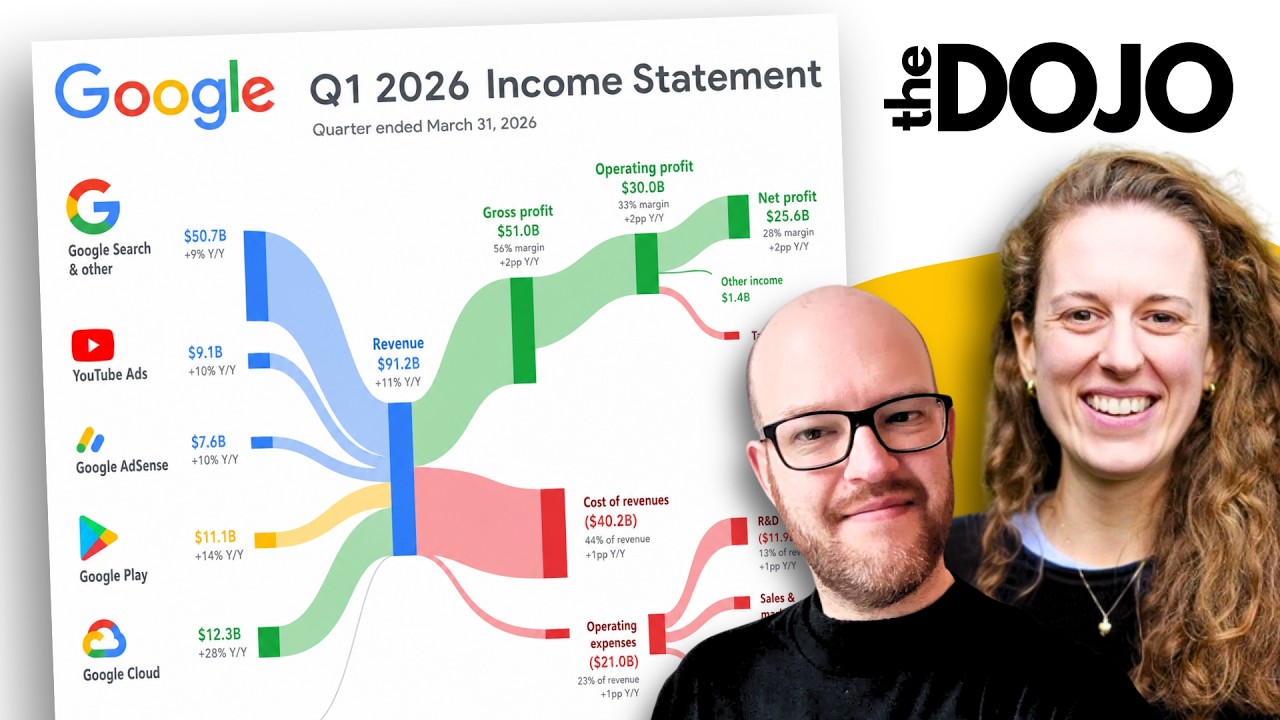



Get daily recaps from
Lex Fridman
AI-powered summaries delivered to your inbox. Save hours every week while staying fully informed.