Claude Code STACKS Just Changed EVERYTHING

Chapters9
The speaker urges viewers to stop using Replit and start learning the stack concept as the foundation for building apps.
Switch from Replit to an integrated stack: Astro + Superbase or Convex for backend, with Claude helping automate setup and deployment.
Summary
Income stream surfers presents a practical take on moving away from Replit toward a full-stack approach that combines a frontend like Astro or Next.js with a hosted backend service such as Convex or Supabase. The creator argues that a stack—frontend plus backend—lets you build scalable SaaS apps more safely and efficiently, with the backend provided as a service including auth and data storage. He demonstrates how easy it is to spin up Astro projects, connect them to Convex or Supabase, and run a basic signup flow with password authentication. Claude Code is shown as an assistant that can scaffold projects, start locally, and even wire up production-style endpoints without needing deep server management. The video also touches on SEO considerations (Astro’s strengths versus Next.js) and mentions Harbor Build as a competitor to Replit. Throughout, the creator emphasizes trust in managed backends for security and reliability and showcases practical workflows for quickly building and testing ideas, even suggesting alternative tools like Google Stitch for design inputs and markdown-based design files. He closes with plug-ins and affiliate links, plus a reminder to explore his other channels focused on Shopify and AI-enabled content.
Key Takeaways
- Backends-as-a-Service (BaaS) like Convex and Supabase provide auth, database, and serverless functions, enabling you to ship apps without managing your own server.
- Astro is recommended over Next.js for SEO benefits and easier Markdown-driven content, especially when paired with a Astro + Supabase/Convex stack.
- Claude Code can create and configure a local Astro + Supabase project, including a basic signup with password, demonstrating a low-friction path from zero to a working app.
- The workflow shown favors starting with a frontend (Astro/Next.js) and a hosted backend (Convex or Supabase) to reduce security risks and operational burden.
- Replit is criticized as a less transparent or flexible option, while Harbor Build is positioned as a competitor that also connects to Supabase to rapidly bootstrap projects.”
- Learn one full stack approach (frontend with Astro or Next.js + backend with Convex or Supabase) to shortcut app deployment and maintenance.
- Using Claude Code as a prompt-driven assistant can accelerate scaffolding, auth setup, and basic CRUD flows without deep server expertise.
Who Is This For?
This is essential viewing for indie developers, makers, and startups evaluating how to move from browser-based IDEs to a robust, hosted stack. If you want to ship SaaS ideas quickly with solid backend capabilities, this video lays out a practical path and tool options.
Notable Quotes
""If you're still using Replit, I want you to watch this video, try everything that I'm explaining in this video, and stop using Replit. Do this instead.""
—Sets up the central claim that Replit is not the best long-term solution and hints at a better stack approach.
""A stack is just this, right? It's how your app sits on the internet... Once you've got a stack, you can basically build anything with that stack.""
—Defines what a stack is and why it's foundational for building apps.
""Learn one of these two things, and you get a back end as in functions that run, you get you get auth, you can do everything, AI calls, anything.""
—Explains the core benefits of using Convex or Supabase for backend needs.
""Astro plus superbase or Astro plus convex are probably what I would recommend, right?""
—Offers a concrete pairing recommendation for building the stack.
""You can export this design.md file, give that to Claude, tell it to make it from here as well.""
—Shows Claude Code's role in design-to-build workflows.
Questions This Video Answers
- how do I start a frontend with Astro and a hosted backend like Supabase?
- what are the advantages of using Convex as a backend service over traditional servers?
- can Claude Code really scaffold a full Astro + Supabase project without coding?
- what's the difference between Astro and Next.js for SEO in 2026?
- how secure is a backend-as-a-service like Supabase or Convex for beginner projects?
Replit critiqueAstroNext.jsAstro SEOConvexSupabaseBack-end as a Service (BaaS)Claude CodeHarbor BuildMySQL (as an option)
Full Transcript
If you're still using Replit, I want you to watch this video, try everything that I'm explaining in this video, and stop using Replit. Do this instead. Guys, Replit is just literally code code for people who don't know anything about stacks, right? You don't need to know technology, you don't need to know how everything works necessarily. You just need to understand stacks, right? So, a stack is just this, right? It's how your app sits on the internet, or how the how your website sits on the internet, right? Once you've got a stack, you can basically build anything with that stack, right?
So, for a stack to be complete, you need front end, and you need back end, right? But back end, more recently, in 2026 and with AI, etc., they've become back end as a SaaS, right? So, an example of that is Superbase, or another example of that is Convex. Learn one of these two things, and you get a back end as in functions that run, you get you get auth, you can do everything, AI calls, anything, and it's not just a back end sitting on a server, right? This is a whole new concept, well, not new, it's been around for years and years, but it's newish to me, right?
So, you have your front end, which, you know, let's just take this as an example. This is just my SaaS. So, the front end, this is the front end dashboard, this is the front end marketing website, right? Let's take the dashboard because it's a better example, okay? This is just Next.js. I would honestly recommend looking at Astro, just because in my experience, it's actually better for SEO. Next.js has some problems with SEO, sometimes it um blocks indexing. Also, if you're using some kind of auth system, it might also be blocking indexing. So, be careful with that, test things, make sure they're working, etc., right?
Only when I click a button, does it talk with my back end, which is actually Convex, right? So, when I, for example, if I press here scan next 50 pages, what this is going to do is it's going to scan 50 pages of this website using my back end, which is convex. So, this is my live production convex, and as you can see, this is the scan right here. These are the server logs. But, this isn't running on my server, it's running on convex's server. And if you're just starting out, I recommend that you start out with this structure.
Another one that you're probably more familiar with is superbase. They do basically the same thing, superbase and convex, just so you know. By the way, there is a link for superbase in the description of this video. This video is not sponsored by superbase, but if you don't have a superbase account, use my link, you may as well. And I would actually probably recommend convex over superbase. To be honest, I prefer convex, but superbase is actually a really, really good alternative, and it's less like hands-on. You don't even need to know how to like click on a dashboard or anything.
It literally will just do everything for you, right? Um AI can connect to superbase through SMTP, and it will just control it for you. But, that's all you need, right? So, these two things, superbase and also convex, they give you everything. They give you the back end, they give you database, and they also give you auth. You don't need anything else, right? Literally. So, learn a stack, right? Once you've got a stack, you can even copy the stack that uh Replit gives you, right? I think they use Vite. I'm not 100% sure. I would definitely recommend Astro, though.
It's really, really easy, and not only that, it's got really good documentation. It's open source, and also um it uses markdown files, so like you can go in and edit them yourselves. It's not actually code, it's markdown, so another really, really big positive there. The actual content is markdown, right? It's also really, really good for SEO. It has a ton of SEO plugins. So, Astro plus superbase or Astro plus convex are probably what I would recommend, right? So, it's super easy to start one of these projects, right? You might be like, "Oh, yeah, but with Replit I can just write and it just does it, right?" Just watch.
Let's just go on Claude here. I've got a lot stuff open, guys. Uh this is the Claude desktop app, so I'm not even using um terminal, right? So, I don't want to confuse people. So, we go here. Let's just add a new folder. Let's go and we'll just open this new folder I just made called Astro Superbase. And then just watch how simple this is, right? Make me a new project with a locally running Superbase plus Astro project connected with basic um sign up with password. Right? And then just press enter. I'm not doing anything special here.
I'm not doing anything crazy. It will probably be able to do this very, very easily. I have skills, but I'm just going to say deny here. I'm just going to say um don't use skills. Just because I you know, I don't want to get too complicated complicated here. If you don't know what you're doing with skills or whatever, let's just skip that and let's see what it can do without skills. So, this is just doing uh npm create Astro latest, right? Well, this is all Replit does just in the cloud for you, right? So, it's not doing anything special here.
Like literally, because I know a stack, I know how to get started instantly with this project, right? Now, it's just doing Superbase in it, which is just starting a Superbase thing, right? Like a project. It'll run locally, and then you can later just push it to a live Superbase, right? But just to show you guys how easy this is. You can even use something simple um like MySQL or whatever. The reason I would like recommend using Superbase or Convex is because they have a full backend integrated into them. So, you don't need your own server running on your own thing that could be easily attacked, right?
By using Superbase or Convex, you're kind of saying like, "I'm putting my trust in these companies to keep me safe." Instead of you just going on DigitalOcean or whatever and creating a project and hoping that it's safe. This just seems like a smarter idea. I think as well Replit uses Superbase, so again, it doesn't do anything special. Harbor Build, which I'm releasing, which I did mention here. This is coming from someone who is about to release Harbor Build, by the way, which is a tool that is in direct competition with Replit. It does the same thing on Harbor, right?
It just connects to your Superbase and just starts a Superbase project. It does the same with Stripe. Like it's it's not that difficult to make something that builds uh apps for people these days, I wouldn't say. Guys, just a quick shout-out to my other channel. If you are interested more in SEO, Shopify, using AI for uh Shopify stores and things like that, just Google Shopify Surface. I should be the first thing that comes up. If not, just search on YouTube for Shopify Surface. There'll also be a link in the description. Go and subscribe to this channel, guys.
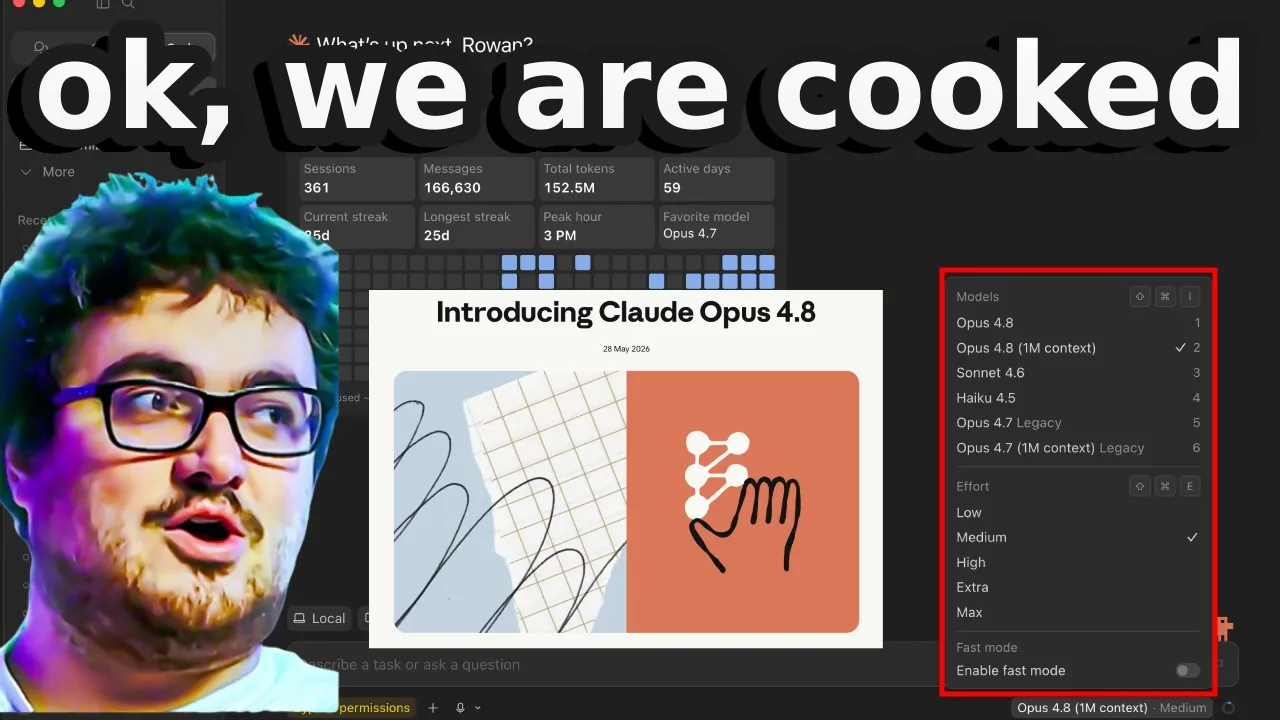
I'm making more and more content on it. I just started releasing content again yesterday. Uh this one is how to connect Claude Code to Shopify. This one is how to do product descriptions, product titles with Claude Code inside Shopify. I have a lot more videos coming. I don't know, this thumbnail doesn't really look like me, but uh that's fine. Uh I'm using Chat GPT for these thumbnails, if you're curious. Yeah, so just so everyone knows, I'm using Opus 4.7 uh on the $200 Claude plan. I wouldn't recommend anything else, to be honest with you. Maybe Codex actually on the $20 plan.
If you don't want to spend too much money, you can use Codex 5.5, GPT 5.5 as an alternative to using Claude Code. It's 20 bucks a month and you can get a free trial, I believe. You could get the same kind of build quality out of that, for sure. Okay, so this is saying that it's done now. So, if you just go up to the top here, click terminal. Do not be overwhelmed by the terminal. Okay, so my my internal uh Claude one wasn't working, so I'm just going to do npm run dev here. Uh as you can see, it says npm run dev.
And then I'll do edit Oh, sorry. Shell, new tab. And then I'll do Supabase start. Okay. And then there we go. Obviously, this is very basic. You need to then build the app, whatever it might be. But yeah, just for now, let's go to sign up. Let's do random email. Well, not random, obviously. There we go. Signed in. So, that works. So, we have a basic auth system. Now we can easily go and build something else, right? You can use Google Stitch, import the code if you don't want to design it yourself. So, yeah, something like Google Stitch works extremely well.
Just give it a prompt, right? And it will just design like an entire system for you. And then you take this and you import it, right? So, you can export in loads of different ways. I think there's a design.md file somewhere as well. Maybe it's here. Yeah, design.md. So, you can export this design.md [snorts] file, give that to Claude, tell it to make it from here as well. So, there's a lot of options, guys, for the actual design and the actual building. And it's very, very just It's very much just like Claude, do this for me.
Give it a prompt, and it will just do it, right? So, with all that being said, guys, I think I'll leave the video there. Do me a favor, guys. Go and sign up for Shopify Surfers, and also go and check out Harbor SEO, the tool I mentioned before. There will be links in the description to both of them. Harbor is an AI SEO content generator, which I'm trying to make the best and cheapest on the market. Thank you so much for watching. If you are watching all the way to the end of the video, you're an absolute legend.
And I'll see you very, very soon with some more content. Peace out.
More from Income stream surfers














Get daily recaps from
Income stream surfers
AI-powered summaries delivered to your inbox. Save hours every week while staying fully informed.