They cant keep this private - Samsung S26 Ultra Teardown

Chapters12
The host starts the teardown, arguing that Samsung hid notable hardware improvements during the launch and that the teardown will expose these changes.
Samsung’s Galaxy S26 Ultra teardown reveals a 37% light-gain telephoto upgrade and a larger vapor chamber, with hidden hardware tweaks the launch glossed over.
Summary
JerryRigEverything’s detailed teardown of the Samsung Galaxy S26 Ultra exposes hardware upgrades glossed over at the Unpacked event. The Sky Blue model shows a dimmer screen when privacy mode is on, suggesting Samsung sacrificed some glare resistance to keep brightness high. The video dives into the S Pen compatibility, noting the newer hole is slightly smaller than the S25’s, but that isn’t the main story. The star of the teardown is Samsung’s revamped periscope camera, boasting a 50 MP sensor and a 37% light-gathering improvement via the All Lenses On Prism (ALOP) design, which positions all lens elements on a prism to funnel more light. JerryRigEverything removes the back panel with a new anti-clamp tool and highlights increased battery protection, including a 5,000 mAh cell and a 60W charging setup with dual power adapters. The reviewer also points out a larger vapor chamber delivering 21% better thermal performance, and notes the camera modules are surprisingly tiny on the new board. He compares the S26 Ultra’s telephoto to the S25 Ultra, confirming 5x optical zoom with enhanced light capture but acknowledges that the overall upgrade pace feels incremental. Finally, he pauses to question whether the $1,300 price tag matches the real-world gains and teases future hardwareStatus updates for true innovation. If you’re curious about how Samsung achieved the brighter telephoto and what’s inside the slim motherboard, this teardown is a must-watch for a hardware-focused take from JerryRigEverything.
Key Takeaways
- The S26 Ultra’s periscope camera gains 37% more light reaching the sensor, achieved by an All Lenses On Prism (ALOP) design.
- The new 50 MP telephoto retains 5x optical zoom with stabilization but is 22% shorter than last year’s model.
- Samsung increases charging speed to 60W and adds dual power adapters to support the higher power draw.
- The vapor chamber is 15% larger and delivers a 21% boost in thermal performance, taking up more internal space.
- The privacy mode on the S26 Ultra reduces brightness noticeably, indicating a potential compromise between privacy and brightness.
- The S Pen slot and compatibility show only minor changes from the S25, with the pen’s housing fit evolving slightly.
- The teardown exposes seven Phillips screws at the bottom and eleven at the top, underscoring internal access without shattering the back glass.
Who Is This For?
Tech enthusiasts who want a boots-on-the-ground look at Samsung’s internal hardware changes, especially fans comparing the S25 and S26 Ultra and curious about real-world value for the $1,300 price tag.
Notable Quotes
"There are a total of seven Phillips head screws holding in the bottom and 11 screws up at the top holding down the motherboard."
—JerryRigEverything details the screw count as a key entry point for the teardown.
"Samsung upgraded their Periscope camera's hardware by 37% and forgot to mention how they accomplished it during the launch event."
—Uses the teardown to reveal the hidden hardware improvement in the camera system.
"All Lenses On Prism. This allows for 37% more light into the camera unit, magnifying that light through the prism and onto the lens."
—Explains the core innovation behind the improved telephoto performance.
"The 50-megapixel telephoto camera, and they barely even mentioned it during the launch event."
—Calls out a notable spec that wasn’t heavily highlighted at launch.
Questions This Video Answers
- How does the All Lenses On Prism design improve photo brightness on the S26 Ultra?
- What exactly is the 37% light-gain improvement in Samsung's telephoto camera, and how is it achieved?
- Is the S26 Ultra worth upgrading from the S25 Ultra given the camera and cooling updates?
- What changes in the vapor chamber contribute to better thermal performance on the S26 Ultra?
- How does the S26 Ultra's privacy mode affect display brightness and usability?
Samsung S26 UltraAll Lenses On Prism (ALOP)Periscope camera upgrade50 MP telephoto camera60W fast chargingVapor chamber coolingS Pen compatibilityGalaxy S25 Ultra comparisonTeardown tooling
Full Transcript
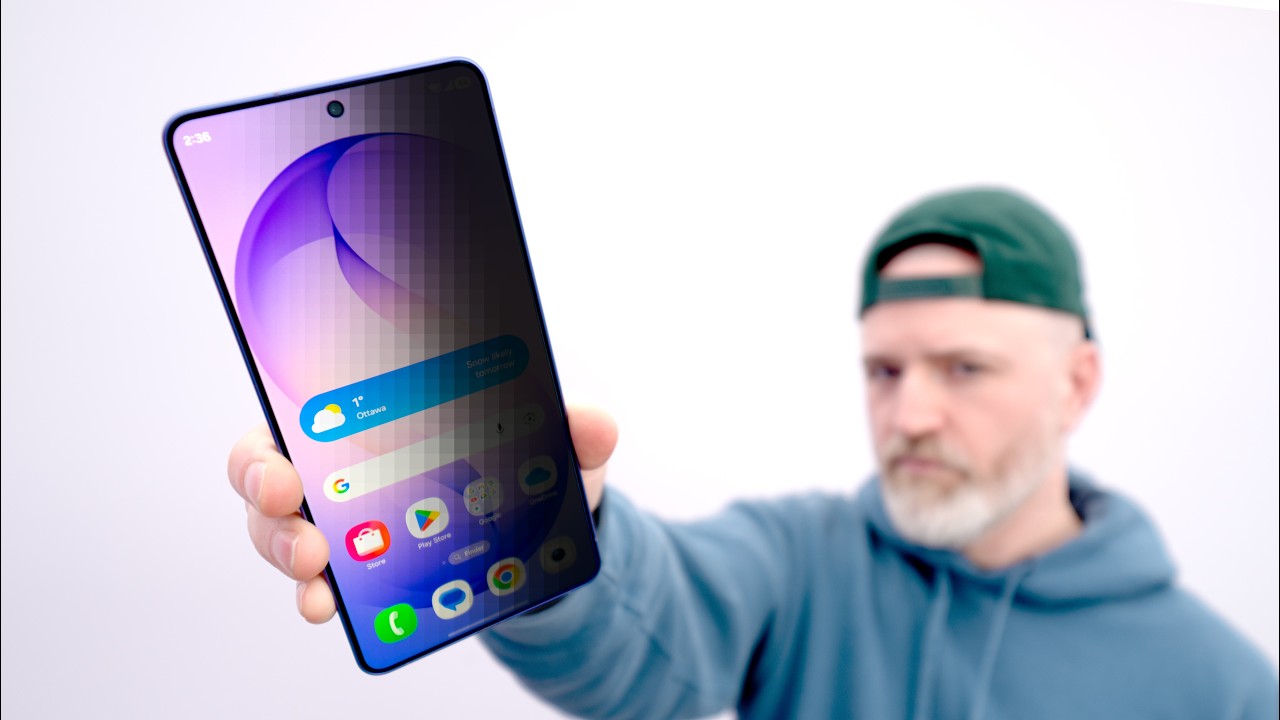
Spicing things up today just because I want to, the teardown is happening first. There are a few things Samsung conveniently left out of their Unpacked event when bragging about the new S26 Ultra, and these things need to be exposed to the world. They focus so much on AI that they forgot to mention the hardware improvements, and the improvements are substantial. I have a separate phone and will be doing the durability test tomorrow. This one is the Sky Blue variant, and it looks like the rumors are true: the S26 Ultra is not as glare-resistant as the S25 Ultra from last year.
The anti-glare finish probably interfered with the new privacy screen, which we'll delve into more in the durability test, but as you can see by turning on the privacy mode, it reduces the brightness a whole lot. And Samsung probably needed every bit of brightness that they could get. You can see the instant dimming happen when I toggle it off and on. It's even more noticeable when I zoom in with the microscope; you can see we lose like half the pixels when privacy mode is engaged. So, that anti-glare coating was probably the first thing eliminated to keep as much light on hand for the screen.
But the exterior screen is not what we're here for. Checking the S Pen compatibility between the S25 and S26, we can see that last year's pen is a tad more girthy and doesn't quite fit in the new hole, which is good to know. But the pen is also not what we're here for. We're here because Samsung upgraded their Periscope camera's hardware by 37% and forgot to mention how they accomplished it during the launch event. So, we're going to have to go in and find out ourselves how it works all on our own. Getting the back panel off is pretty easy.
I've got my new anti-clamp here, which should allow me to lift up on the back glass and slice away the IP68 adhesive under the panel. That way, I can remove it in one piece without shattering the glass. It almost feels like cheating using this new tool, but if it keeps the back glass in one piece, I'll cheat all day long, especially since Samsung is not doing a good job of selling replacement parts to the general public. Unfortunately, though, we do have a problem. It appears as if I have misplaced my screwdriver. Luckily for everyone, though, I remembered that my channel sponsor, Ridge, happens to include a spare screwdriver inside each of their new wallet boxes.
So, I'll just open up one of Ridge's new iridescent front-pocket wallets so our work can continue. It's also worth noting that Ridge is having their 13th-anniversary sale today where you can get up to 40% off. Ridge is dropping a new Iridescent Forged Fetty, Green Flash, New Ryu, and Golden Horizon style wallets, and these designs are pretty wild. All of them come with a lifetime warranty. I've carried a Ridge wallet in my own pocket for the past 7 years, and while I personally think Ridge is the best, you don't have to take my word for it since they've sold more than 5 million wallets and you can try it free for 99 days.
If you don't like it, just send it back. I've got the bright orange wallet so it's easier to keep track of, and every time I travel, I have a Ridge power bank in my bag as well as a 45-watt power adapter with two USB-C ports since I always need to charge more than one thing at a time. You can get your own at ridge.com/jerryrig to take advantage of that 13th-anniversary sale. ridge.com/jerryrig Why am I here again? Oh yeah, we're looking for a screwdriver. Turns out that Ridge uses a T5 screwdriver and we need a Phillips, but luckily I found what we need.
The Galaxy S26 Ultra is still turned on, which we can rectify by just turning it off. There are a total of seven Phillips head screws holding in the bottom and 11 screws up at the top holding down the motherboard. When those are gone, I can pop off the rear wireless charging coil. This guy can charge up at 25 watts this year instead of 15, and it can reverse-wireless charge headphones and other phones at 4.5 watts, which is the exact same as last year. You can't do a whole lot with 4.5 watts, though. Even OnePlus, may they rest in peace, had 10-watt reverse wireless charging.
There is another tinier coil of wires that rests over the top of the S Pen. This is to sense the location of the pen as well as to wirelessly charge the internal capacitor on the S Pen itself. What's super nifty is that the parking garage for the S Pen slot is completely sealed off from the rest of the phone. The dock itself can fill up with water or liquid, but none of that liquid can then enter the device. Well, now it could obviously, but before I took off the plastic cap, it could not. It's going to be really cool seeing this on the teardown skin.
With the S Pen back in its home, I'll disconnect the battery. And I will disconnect the battery. Samsung has finally increased the charging speed to 60 watts this year and added dual power plugs to help handle that increased load and power transfer. I'll unplug the extension ribbon and the display ribbon just like little Legos and pop out the lower loudspeaker plastics. We can see the red rubber ring and waterproofing mesh over the loudspeaker opening, but at first glance, there do not appear to be any balls inside. No fear; if we crack the speaker open a bit, all of the balls are still there piled up inside. The balls help the speaker sound less tinny and more full.
Since the foam balls decrease the echo of the tiny box, it's a good thing. Removing the rest of the extension ribbons helps us get a better look at the internal battery, all 5,000 mAh of it. The good news is that the battery itself is extremely easy to take out. Huge thumbs up for that. And apparently, dogs are in fact allowed. If you understand that reference, you're one of the OGs for sure. Setting the battery off to the side, we get a glimpse of Samsung's new vapor chamber. This year it is 15% larger and has a 21% increase in thermal performance, and I believe it.
This vapor chamber takes up quite a lot of real estate inside of the phone. Down near the charging port board, this is the USB-C 3.2 port that can handle 60 watts worth of fast charging. It has the SIM card tray and green emotional support bracket. Kind of cool. Samsung still has a water damage indicator sticker near the SIM card tray. This will turn pink and tattle on you if steam or water gets inside of your phone. The microphone hole has its own waterproofing mesh, and the rectangular haptic vibrator motor is placed in the center of the phone right below the battery.
Heading up to the main board so we can get access to those camera modules, we pop out the upper stereo speaker first. This doubles as the earpiece and clearly has blue balls inside. We don't need to break this one open. I'll unplug the front-facing camera. This guy is glued in, so don't remove it unless you absolutely have to. Then the motherboard comes free. We have the new thermal interface coup on the back, and we can unplug the Lego-style ribbon connectors from the cameras that we came here to see. It's absolutely wild how small this motherboard is. Yeah, it's double-stacked and double-sided, but it's just barely larger than my watch.
Technology is pretty cool on the inside; I'm glad you're subscribed here with me. Speaking of which, the coolest update that Samsung has given us this year, besides the ultra-large vapor chamber, of course, is the 50-megapixel telephoto camera, and they barely even mentioned it during the launch event. This year's camera is not quite as long as it was last year, if you remember all the way back to last year. Hold on, let me just refresh your memory real quick since I do have an extra S25 Ultra periscope camera that we can compare to this year's S26 Ultra's telephoto.
While I pop it out, do keep in mind that both cameras are still 50 megapixels and both cameras are 5x optical zooms with stabilization. The difference between the two is how much light can reach the sensor at the end of the lens, and that is where Samsung has given us a mind-blowing 37% improvement, from f/3.4 down to an f/2.9, while reducing the overall camera length by 22%. Samsung accomplished this new lens design with what they call an ALOP. Maybe it's "A-LOP" or "A-loop," but either way, it stands for All Lenses On Prism. We'll take a look at this year's S26 Ultra first, and as you can see, just like the acronym implies, all the lenses are on the prism.
This allows for 37% more light into the camera unit, magnifying that light through the prism and onto the lens. It's also really cool to see the different colored coils of copper on every side. Just like in the LEGO Smart Brick, these coils help with the positioning and optical image stabilization of the lens. I can remove the camera lenses to see the prism underneath, and we still find the camera sensor is off to the side, perpendicular to the prism and lens modules. Apple uses a tetraprism telephoto design that keeps the sensor parallel with the lenses. I do have a teardown on that camera as well if you want to watch it later—you know, normal activities.
Making our way to the outdated, 37% less light-receiving telephoto camera on last year's S25 Ultra, we see that the prism actually came first, blocking a good chunk of the light. Then the much smaller lens elements appear later in the food chain, right before the camera's sensor at the end of the row. More light directly correlates with better pictures, especially when there isn't much light to work with or while using Samsung's new night mode they call Nightography. And for reference, Apple didn't even improve their aperture at all between the iPhone 16 Pro Max and the iPhone 17 Pro Max.
I mean, to be fair, Apple's aperture is still larger than Samsung's, even with this new upgraded hardware—it's an f/2.8—but we don't need to worry ourselves about these minor details. What matters most is that Samsung almost caught up, and this new All Lenses On Prism design is pretty cool. Normally at this point, we might rip off the screen to see the rest of the vapor chamber, but I think we've seen enough destruction for one day. A vapor chamber is kind of just a vapor chamber. The S26 Ultra is a decent upgrade over last year, but I still wouldn't rush out to buy a new one if you have a phone that was made in the last 2 or 3 years.
The changes happen slowly. I'm curious, though: do you think these upgrades are worth 1,300 bucks? Let me know down in the comments. And as always, I'll keep you updated on when true hardware innovation happens, so make sure you're subscribed. And look at that—everything still works except for the cameras. The discount code for Ridge's 13th-anniversary sale is down in the description, right next to my teardown skin, since it's always fun to see the insides of your phone from the outsides without ever taking it apart. Thanks a ton for watching. I'll see you around.
More from JerryRigEverything


Get daily recaps from
JerryRigEverything
AI-powered summaries delivered to your inbox. Save hours every week while staying fully informed.