Samsung Galaxy S26 Ultra Review: There's a Catch

Chapters7
Introduces the privacy display idea and notes how it changes viewing angles to protect privacy.
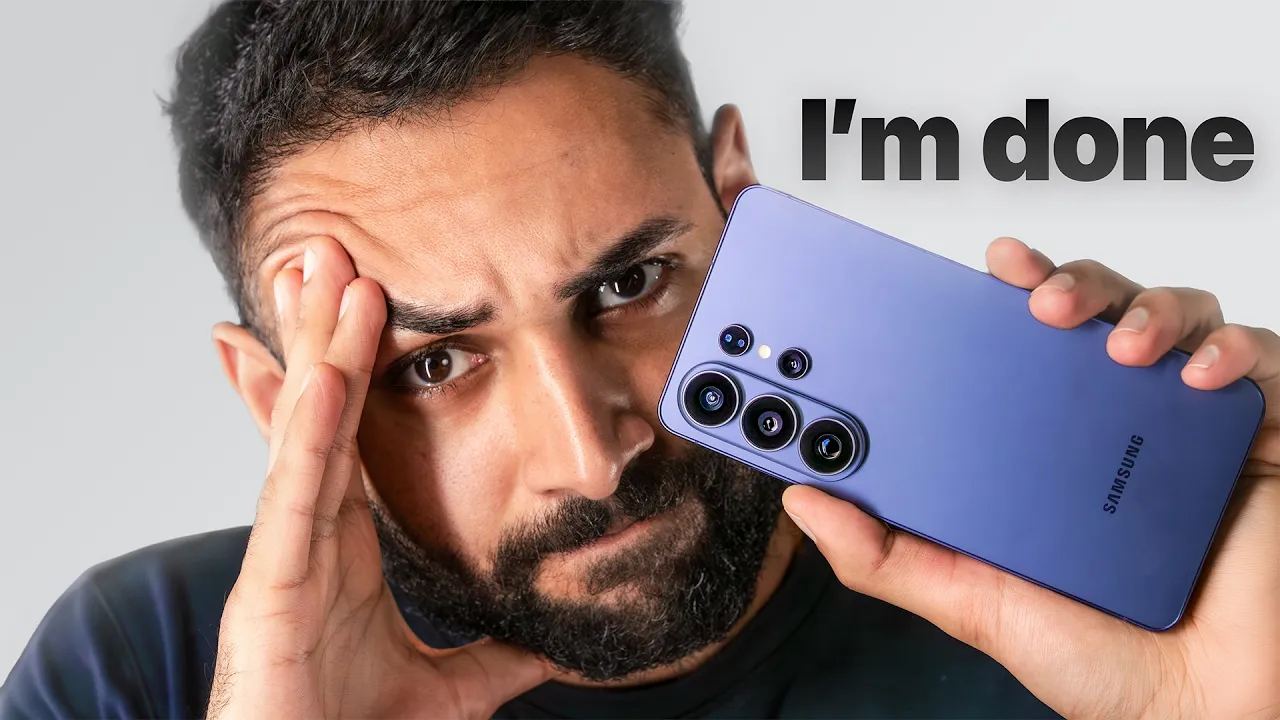
Samsung’s Galaxy S26 Ultra nails a groundbreaking Privacy Display, but that trade-off-heavy feature comes with quirks and a hefty price tag.
Summary
Marques Brownlee breaks down the Galaxy S26 Ultra with his characteristic eye for trade-offs. He praises Samsung’s new Privacy Display, which can block viewing angles in selected apps and even upsize its effect to specific pixels, but notes that turning it on halves the effective resolution and slightly lowers peak brightness. He also critiques the design tweaks—thinner, rounder chassis with a larger camera plateau—that affect usability (and the S Pen entry) and discusses the Snapdragon 8 Elite Gen 5 for Galaxy with solid, if not transformative, performance gains. Beyond hardware, Brownlee analyzes software and AI features, calling many of them “slop” or optional, while acknowledging some useful tools like call screening and Audio Eraser. He cautions that skin-deep hardware updates don’t always justify the price, especially since the base S26 and S26 Plus feel like afterthoughts compared to the Ultra’s ambitions. Overall, he calls the Ultra “super cool” and technically impressive, but questions the value proposition at $1,300 when other flagships push tougher performance or new innovations (like silicon carbon batteries or magnets). And he ends with a reminder to vote with your wallet.
Key Takeaways
- Privacy Display uses two pixel types—wide-angle and narrow-angle—so turning it on hides half the pixels and halves resolution while maintaining perceived brightness.
- The display is 6.9 inches, 1440p, 1-120Hz, but ships with 1080p out of the box by default for battery life reasons.
- Camera changes include a bigger main-aperture sensor and a larger 3X/5X aperture, improving light intake but slightly worsening minimum focus distance on the main camera.
- Horizon Lock brings ultra-stable, cropped Quad HD video up to 60fps using the 200MP sensor’s crop and stabilization tech.
- Silicon options feature the Snapdragon 8 Elite Gen 5 for Galaxy, with AI-focused NPU work and better efficiency than last year’s model.
- Software AI features are plentiful (call screening, Audio Eraser, Photo Assist), but Brownlee views them as optional and potentially portable via updates.
- Pricing remains aggressive for the Ultra at $1,300, while base S26/S26 Plus start at $900 and feel like an afterthought next to the Ultra.
Who Is This For?
Tech enthusiasts who crave flagship camera and AI features but want a clear picture of the trade-offs, especially potential buyers weighing the Ultra against the base S26 models and other premium phones.
Notable Quotes
"This is a genuinely... useful... innovation. It's really, it's special that it's actually a new hardware feature, which we really don't get that often in the smartphone world these days."
—Brownlee hails Privacy Display as a rare, genuinely useful hardware innovation.
"So turn on Privacy Display and you turn off the wide-angle pixels and you leave only the narrow-angle pixels."
—Explains how the Privacy Display technically works by disabling wide-angle pixels.
"But to be totally clear, this is still a really good display. if you're a pixel peeper like me, just know what you're getting into."
—Honest caveat about the display quality for pixel-sensitive users.
"Horizon Lock takes advantage of this huge 200-megapixel sensor and crops in to shoot ridiculously stable, still Quad HD video up to 60 frames per second."
—Describes the standout video stabilization feature.
"But I can at least say it's a really good phone with some clever new features. I just think the price is probably the most ultra thing about this phone."
—Summarizes value proposition and pricing skepticism.
Questions This Video Answers
- Is the Samsung Galaxy S26 Ultra worth the price for its Privacy Display feature?
- How does Horizon Lock stabilize video on the Galaxy S26 Ultra?
- What exactly are the two pixel types used for Privacy Display on the S26 Ultra?
- What AI features come with Galaxy AI, and are they worth enabling daily?
- How does the S26 Ultra compare to the S26 and S26 Plus in value and design?
Samsung Galaxy S26 UltraPrivacy DisplayHorizon LockAPV log codecSnapdragon 8 Elite Gen 5 for Galaxy200MP camera sensorAI features in Galaxy AIS Pen design and magnetsSmartphone display technologySmartphone pricing strategies
Full Transcript
You know, we can still hear what you're... What? ... Nevermind. You might remember all my impressions of the phone were based on footage of it before actually getting to hold it in person... And those impressions were pretty positive. But... not a lot is actually new with this phone. Just a few things that are new are pretty interesting. But I have been using this phone for about a week now, and the more I've used it and the more commentary I've seen about it online, the more... I feel the need to remind people... about trade-offs. Every... feature in every phone is a trade-off.
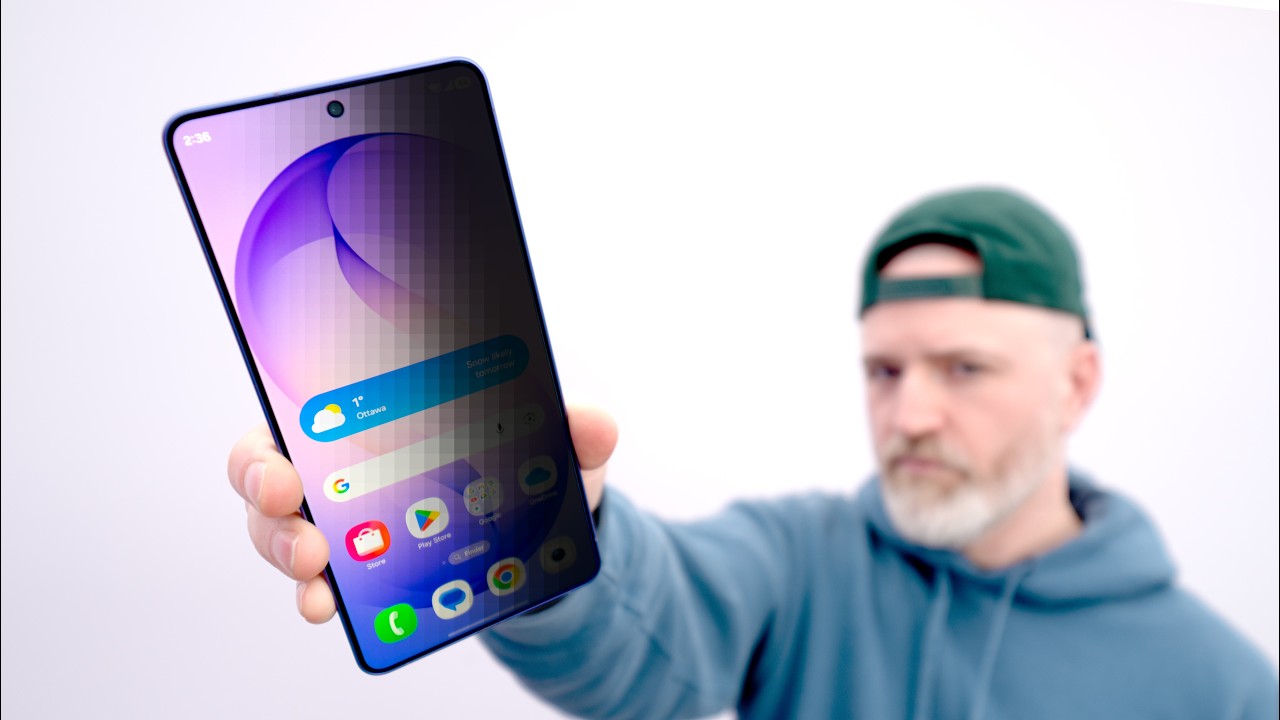
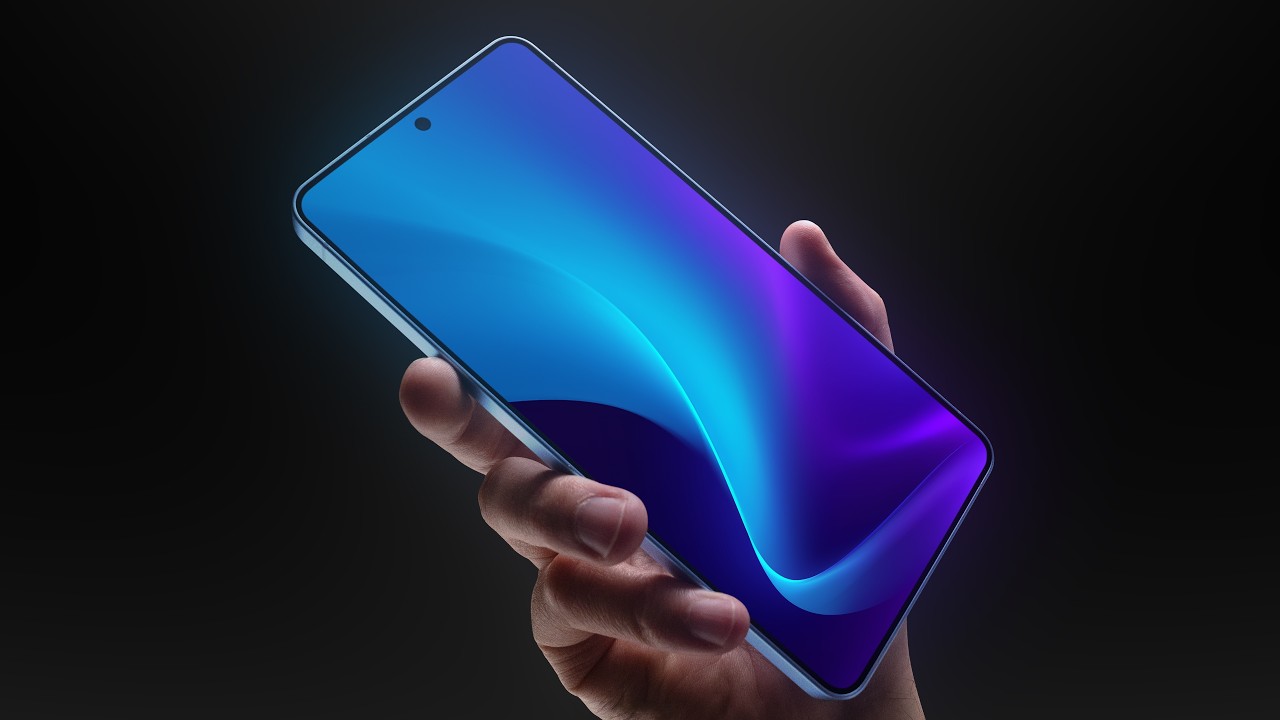
And this new display is maybe one of the most interesting case studies in that in a long time... So on paper, you know it's a lot of the same numbers as last year, right? It's a 6.9-inch big OLED display, 1440p resolution, one to 120Hz, et cetera. But they've added this one massive new feature, the Privacy Display. Incredibly useful feature. You toggle it on or off whenever you want, and when it's on, it instantly limits the viewing angles pretty dramatically, preventing anyone from looking over your shoulder or snooping... Now yes, you could always just buy a cheap 20, $30 screen protector like this one that does that through polarization...
unlike that screen protector, this actually blocks all viewing angles, horizontal or vertical, off-axis. But also because it's built into the display, you can turn it on for just the pixels you want to when you want to. So maybe only in certain apps, so you can have it only block out your banking app and your texting app, or even only block out incoming notifications, which is incredible. This is a genuinely... useful... innovation. It's really, it's special that it's actually a new hardware feature, which we really don't get that often in the smartphone world these days. But like I said, everything is a trade-off...
The way they pulled this off is they essentially have two types of pixels on this new display. Wide-angle pixels that you can view from everywhere, and narrow-angle pixels that seem to have some type of focusing lens on them, so you can only see them from straight on. So when you're just using the phone like normal, all the pixels are on, but when you decide to turn on the Privacy Display, it simply turns off the wide-angle pixels and it leaves only the narrow-angle pixels. So you achieve that privacy filter effect. But now that also means you just turned off half the pixels.
So your resolution is actually quite literally cut in half and you can actually... see it like there's blockier edges around text and smaller details and fine contrast here. I literally bought a microscope for this. So... this... is Privacy Display off like normal. And this is Privacy Display on. You can see those pixels literally turning off. So yes, less resolution and also yes, peak brightness is a bit lower. You normally don't notice that because they cleverly adjust the output of the pixels that are staying on to keep the perceived brightness about the same. But if you're at a high enough brightness, you will actually see it get a little dimmer when you turn the feature on.
And even in regular use, that means this display is... slightly worse all the time. I mean think about it, if you've added a narrow focusing lens to half of your pixels, that means that your viewing angles are going to be slightly worse all the time because half of these pixels now have permanently poor viewing angles. It also appears to have a different coating on the display that's not quite as good at the anti-reflective thing... that was so good on S25 Ultra. And it also turns out it's still an 8-bit display simulating 10-bit color instead of a full native 10-bit display like so many others have added.
But I think that Samsung knows that... most people... are not pixel peepers. Like even on this display, this is a 1440p screen, but out the box it's set to 1080p by default for everyone... because they assume that most people would rather have the slightly longer battery life as a trade-off over like a perfect screen. So nerds like me will lock in and immediately switch to 1440p in the settings right out the box... and we will notice more, the slight resolution differences and viewing angle differences. And we'll upvote every comment on Reddit that chastises Samsung for using the 8-bit display again...
But at the end of the day, this is the trade-off that they decided to make... to have this one really cool feature... that they probably believe will sell more phones. But to be totally clear, this is still a really good display. if you're a pixel peeper like me, just know what you're getting into because there are better-looking displays that you can get for your 1,300 bucks, ironically probably also manufactured by Samsung. But if that's your number one priority, there's other places you can look. Also, subscribe for more phones under microscopes! Here's another trade-off: this new design.
And it's not even really that new of a design. They just made the phone a little thinner, a little lighter and a little rounder at the corners to make it look like the rest of the flagship phones that they make. But even that... comes with downsides. Like since the corners are more round, that means the part where the S Pen goes into the phone is capped with a slight curve... instead of totally flat. So now the S Pen can only go back into this phone this one way, unlike last year where it was flat and so you didn't really have to think about that at all.
Also, since the camera bump is now a camera plateau with rings on top of it, it's bigger, which combined with a slightly thinner body... means this phone rocks this viciously on a table. When I'm trying to type with no case... I'm sure most people just throw a dbrand case on it and call it a day, but, yeah, it's not nothing. And switching back to aluminum sides from titanium, honestly, makes no real difference to using the phone. But it does mean people will be able to make fun of you for copying the iPhone's titanium for no reason.
The new chip is the Snapdragon 8 Elite Gen 5 for Galaxy, so I benchmarked it against the OnePlus 15, which is a Snapdragon 8 Elite... Gen 5. Similar scores, slightly higher actually for the Samsung version, but still right around the yearly 20 to 30% CPU improvements expected. Really? Samsung seems to be much more focused on NPU, which... is around the AI generating... features on the phone, which we'll get to in a second. We'll get there. But yeah, the performance is generally... it's great. It's almost a formality at this point. Hey, are animations smooth? Yep! Can it handle heavy multitasking and gaming?
The redesigned vapor chamber with less volume inside the phone is doing just fine, and battery life is actually slightly better despite having the same 5,000 milliamp hour battery again because the chip and software are a bit more efficient. Standby time still not quite as magical as some of its competitors, but... it's really good battery life, and this phone charges slightly faster at a peak 60 watts. Now I do have to say though, and if you're a subscriber, you probably know exactly where I'm about to go with this. No Qi2 magnets?? That seems like it would have been a no-brainer.
And I know you want to sell lots of cases with magnets in them, Samsung, but... wouldn't you also want to maybe win an MVP Phone of the Year award, too? And then... no silicon carbon battery, which you know, I know you've had battery scares in the past, Wouldn't you want to be eligible for a Most Improved award, I think a phone that isn't slightly thinner, but that does have more battery and magnets built in would have been pretty universally appreciated. I'm just saying. Mrwhosetheboss, Arun. He just did his battery test that highlights the slightly better battery life of S26 Ultra over the last gen, but it also kind of shows it getting dunked on by some silicon carbon battery phones from last year.
At this point, it's not surprising that they're still playing it safe here, but it's also still kind of frustrating because it feels like the ceiling for this phone could have been so much higher, so much more... Ultra. These cameras are mostly the same as last year, but I think that actually undersells how good they are. There's a bigger aperture on the main camera, the 3X is about the same, and then a bigger aperture on the 5X as well. So both of these cameras let more light in and get all the benefits that come with that, including slightly softer bokeh with close-up subjects.
And as a photographer, I feel like I'm always going to take the faster lens when I can get it. The minimum focus distance, though, on the main camera definitely got worse, so I don't know if that's a direct trade-off. There is still macro mode, but I did notice that downgrade from the main camera... Not a disaster, but just something to notice. The more noticeable camera changes, though, are actually the ones enabled by software, so the APV log codec was added. It works great! They also added this super aggressive stabilization feature called Horizon Lock, and it's not the first time we've seen it, but it is one of the best executions we've seen of it.
It takes advantage of this huge 200-megapixel sensor and crops in to shoot ridiculously stable, still Quad HD video up to 60 frames per second is pretty sick! In general, video footage with the slightly wider aperture on the main camera looks good. All of the talking head footage on the latest AutoFocus episode with the Polestar 4 was shot on this S26 Ultra, so if you want to look at way more footage from this phone, I'll link that below the like button. The rest of what's new on an S26 Ultra... could be described as software. It's a word you could use.
Slop is another word I could use. The word Samsung would probably like me to use is "agentic." But Nah. There's a ton of AI features crammed into this phone now, ranging from call screening, which is very welcome and very useful for screening unknown numbers, to Audio Eraser, which does a good job of pretty naturally removing a good amount of background noise in videos, all the way to Photo Assist, which lets you edit photos to create entirely new scenes that never actually happened. It's a lot, and you can scroll through the Galaxy AI tab on this phone and see a lot of the new stuff in here.
I think, honestly, take it or leave it. Like, you can choose to use as much of it as you want. You can go full slop mode and use all of it all the time or you can kind of just never use any of it. I will say, I didn't get Now Nudge to work once, and I also tried many things with the AI text-based photo editor, and to its credit it refused many of the things I tried to make it do. So, you know, yay for safeguards, I guess. I'm just not convinced any of this is a reason to buy this phone, especially when a lot of it could, and probably should, make its way to other Samsung devices across the lineup—older stuff—through a software update.
So then lastly, while I have your attention, I would just like to take this opportunity to say that the base S26 and S26 Plus are not good deals anymore. those phones feel like afterthoughts. The designs are basically unchanged—fine—but they've also had basically the same cameras since S23... They got rid of millimeter wave. It's also an Exynos chip in a lot of regions outside of the US... and they got rid of the 128 gig version, which I think is good, but they just kept the 256 gig at the same price. So that just means the price of entry is higher...
It's now $900... baseline. You can get a lot more phone for $900... but Samsung doesn't really seem to care. Just wanted to put that out there while I had you. You probably have to vote with your wallets to get Samsung to actually do anything. You know, this S26 Ultra is $1,300 starting, so it's also very pricey. But I can at least say it's a really good phone with some clever new features. I just think the price is probably the most ultra thing about this phone. You know, like, it's a big phone, sure... and it's got ultra-ish cameras and chip.
But aside from that, this feels like an S26 Plus Plus... Pro Max... Does that make sense? But it doesn't have a super advanced new silicon-carbon battery or super-fast charging or wireless charging... And it also doesn't have magnets, and they still don't have Bluetooth in the S Pen... But they do have one super cool, very advanced, one-of-one feature that is in no other smartphone... And that's the trade-off that they've bet on. Thanks for watching. Catch you guys in the next one... Peace!
More from Marques Brownlee



Get daily recaps from
Marques Brownlee
AI-powered summaries delivered to your inbox. Save hours every week while staying fully informed.