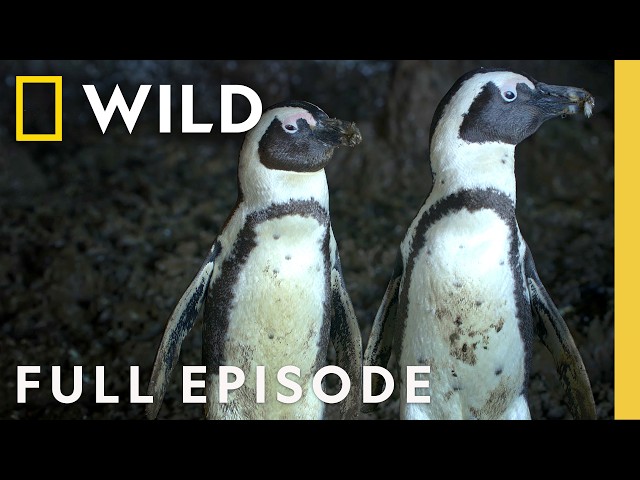
Secret Lives Of Animals Around the Globe | MEGA Episode Special | National Geographic

Chapters3
The chapter highlights how savanna elephants live in large, tightly knit family groups guided by matriarchs, relying on learned navigation of difficult terrain, complex communication, and strong social bonds to survive—while male bulls pursue independence and face increased risks in a changing landscape.
Epic global wildlife tour: elephants, octopuses, and penguins reveal surprising intelligence, social bonds, and bold survival strategies you won’t forget.
Summary
National Geographic’s Mega Episode Special blends science and storytelling to reveal the secret lives of animals from Africa’s savannas to Indonesia’s reefs and Antarctica’s seas. Paula Kahumbu and Joyce Poole illuminate African elephants’ family-based culture, communication, and complex social decisions like cliff descents for water and grieving Tolstoy’s loss. The octopus sequences, guided by Dr. Alex Schnell and Krystal Janicki, showcase individual personalities, tool use, and extraordinary problem-solving in short-lived lives, including a coconut octopus crafting movable shelters and even a shield against a mantis shrimp. Penguins steal the show with high-stakes parenting, rock-hopper and macaroni dynamics, interspecies mating curiosity, and leopard seal gauntlets that test the odds of survival in a warming Southern Ocean. Throughout, the film underlines one theme: intelligence isn’t human-centric—behavior, memory, and culture emerge in many forms as animals navigate changing worlds.
Key Takeaways
- Elephant matriarchs lead risky water-necessity descents, guiding a 600-foot cliff climb with coordinated tail supports and careful ground-testing by each step (Zimbabwe savanna).
- Joyce Poole demonstrates elephants’ infrasonic vocalizations and complex call combinations (rumble, roar, trumpets) that enable sustained, miles-spanning conversations and social bonding.
- Coconut octopus hunts by self-taught problem solving, using shells as portable shelters and even re-purposing objects to create shields during encounters with predators like mantis shrimp.
- Octopuses’ brains have three times more neurons than humans in their heads (relative to body size), enabling rapid learning, memory, and innovative tool use in short lifespans.
- Gentoo penguin parenting strategies expand to twin chicks and risk management against leopard seals, including strategic positioning in crowds and energy-efficient walking.
- Rockhopper and macaroni penguin interspecies pairing (rockaroni) challenges traditional species boundaries and demonstrates potential gene flow implications for adaptation.
- The documentary ties human-caused changes to animal futures, highlighting poaching pressures, habitat loss, and climate-driven range shifts across species.
Who Is This For?
Nature enthusiasts and wildlife science fans who want concrete, story-driven examples of animal intelligence, social networks, and survival tactics in a changing world.
Notable Quotes
"I speak to elephants. I rumble to them if they seem upset. I say hello and things."
—Joyce Poole describing her method of decoding elephant calls.
"The way that these elephants use this landscape is something that has been learned and passed on from generation to generation."
—Paula Kahumbu on cultural transmission in elephants.
"Right in front of our eyes. She solves the problem of being so exposed in this desert-like landscape, bringing along her own shelter to use the next time that she might venture out."
—Dr. Alex Schnell on the coconut octopus using a shell as shelter and future planning.
"I have never been able to see something like this. We have a mixed pair where each member of the couple belongs to a different species."
—Popi Borboroglu on rockhopper-macaroni mixed mating.
"To survive here, you've just got to be so tough."
—Narrator describing Gentoo penguin father strategies against leopard seals.
Questions This Video Answers
- How do elephant matriarchs influence herd decisions during droughts?
- What makes octopuses such effective problem solvers in short lifespans?
- Can penguin parenting strategies shift with climate change and predators like leopard seals?
- What is rockaroni—how did a rockhopper and macaroni penguin form a mixed pair?
- How do scientists study animal intelligence across such diverse species?
ElephantsAfrican elephants social structureElephant communicationSavanna ecosystemCoconut octopusOctopus intelligenceTool use in invertebratesFuture planning in animalsPenguinsGentoos and rockhoppers penguins','Macaroni penguins','Inter-species mating in the wild','Leopard seal predation
Full Transcript
NARRATOR: They've roamed our planet for six million years. Powerful giants. Yet gentle... and caring. (groaning) They love... they grieve... but there is so much more to elephants. DR. PAULA KAHUMBU: This is amazing. NARRATOR: They have thoughtful conversations. (rumbling) DR. JOYCE POOLE: It’s not just noise. It has meaning. NARRATOR: They negotiate and make deals. They navigate the modern world. As we unlock their secrets, we begin to see just how much like us elephants really are. For every elephant that walks the earth, one thing rings true. Their success rests on the strength of their relationships. For African elephants, nothing matters more than family.
And here on the savanna, they live in the biggest groups of all. (grumbling) This four-month-old calf has been born into a thirty-strong family. (snort) Around him, a tight-knit network of aunts, cousins and sisters, all looking out for each other. (trumpet) (bird squawking) His mother is the highest ranking in this family. But she faces a major dilemma. A brutal dry season has taken hold in Zimbabwe. (groan) She knows of a water source, but to get there, they’ll have to take a perilous path. Dr. Paula Kahumbu is one step ahead of the herd. She's here to find out how big families navigate the difficulties of the harsh climate.
But in 30 years of studying savanna elephants, she’s never witnessed anything like this. To think that the elephants have to come from up here... ...to get to that water. They’ve got to get down this cliff. It’s already making me feel very unsteady. And my legs feel weak. I can’t imagine what it’s like for elephants. Oh, here they come. It’s really hot. They need water. But they could easily tumble and fall off these cliffs. NARRATOR: The decision to lead her family over a 600-foot cliff edge rests with the matriarch. It’s a tough choice. They desperately need water, but it means a treacherous descent for her baby.
(grunt) Her mind is made up. Her sisters seek out the safest path. PAULA: Wow. Look at that. Unbelievable. They reach out with their trunks and they roll it up into a little fist and touch the ground in front, and then place their foot exactly where their trunk went as a way to test the ground. Really surprising for me, I’ve never seen that before. And they all seem to do it. NARRATOR: One slip, and gravity will take its toll. Weighing 3 to 4 tons, their bodies aren’t built for such a steep descent. Together, the females keep the youngest calves hemmed in.
(calf squawks) (clattering) (honk) PAULA: For these little babies, it’s really hard work coming down this escarpment. Their mothers can't turn around the way they would normally to reassure their babies. So their mothers reach out behind, like a soothing touch, as a way of staying in contact with each other. It’s amazing how important their tails are to them. (growling) The matriarch’s son is really struggling. It's a particularly steep slope here, and this poor little guy is sliding. They’re over halfway down now. They must have at least a couple of hundred feet left to go. All of them, even the baby, have got some streaks of moisture on the side of their faces.
And that’s a secretion that reveals a level of stress. The whole family is in a state of some tension as they navigate these narrow, steep paths down this gorge. (grunting) (trumpeting) It's an incredible achievement for such a young calf. His mother relied on her family's support and the wisdom of savanna elephants who’ve gone before her. PAULA: The way that these elephants use this landscape is something that has been learned and passed on from generation to generation. Once the first elephants figured out how to navigate this incredibly treacherous terrain, they taught the others, and they taught the others.
And they’ve continued to use this pathway. For generations they'll continue doing the same things as part of their culture; that’s how they transmit knowledge. It’s what makes them so successful as a species. Relief for the whole family. The adults suck up the 40 gallons of water they need a day. While the calves enjoy a muddy reward for their efforts. For the next 14 years or so, this baby's female relatives will continue to share their knowhow. But like all males, when he reaches adolescence, he'll leave the family and have to find his own way on the savanna.
This vast, wooded grassland stretches across 27 African countries. An area larger than the entire United States. The habitat can support huge herds. And the largest mammals to walk the earth. The abundance of food and space allows their extended families to roam together. But, in this spectacular wilderness, the success of every family depends on their ability to communicate. For the last 48 years, Dr. Joyce Poole has been eavesdropping on elephant families. (Joyce snoring) (elephant grumbling) Learning their language. I speak to elephants. I rumble to them if they seem upset. I say hello and things. Their vocabulary is very large.
Elephants have over 30 vocalizations. There are rumbles, the low-frequency calls, there are roars. There are trumpets. There are cries. (elephant roaring) Wants to suckle. Yeah. Ahh-roo. So that’s when it escalates. That's when the suckle rumble didn't work and then you have to escalate, so saying "Mom, put your leg forward." Mama’s not being very cooperative. There’s an allomother, just like a babysitter. She doesn’t have any milk, but she can comfort the baby. Females from the age of about three, four years old will try and take care of babies. That was called a baroo-rumble. It’s a kind of "aagh-ooo." Like, "oh, poor me." And the allomother responding with a reassuring coo-rumble.
Okay. That’s lovely. See how reaching back there, she’s trying to show the baby where to suckle. So even though the allomother is not able to produce milk like Mom does, she does provide comfort, and that forms a close bond. He's still making that little sound, that's like I want, it's a, it's a suckle rumble, but it’s a more complaining one. Obviously it’s not getting any milk. Okay, now it’s going to Mom to get some real milk. Argghh... Suckle rumble. There, she puts her leg forward to let the calf suckle. Very cute. NARRATOR: After decades decoding the calls of savanna elephants, Joyce has discovered a language more elaborate than we ever imagined.
JOYCE: Elephants do combine different types of calls. They can combine and make a rumble-roar-rumble. Or a roar-rumble or a rumble-trumpet. A snort-trumpet. (rumble-roar) What we don't know is whether, by combining those two different types, they’re making, in a sense, a new word. Elephant conversations can be incredibly complex. All of their rumbles contain infrasonic components, that is, below the level of human hearing. And elephants can hear these powerful rumbles from miles away. And also pick them up as vibrations through their feet and trunk. Sometimes they can back-and-forth for up to an hour. Literally having a kind of conversation.
They're having a discussion about something, it’s very obvious. They’re so like us. They communicate about some of the same things that we do, and this communication is part of the glue that holds the whole family together. NARRATOR: Negotiating, planning and caring for one another. Savanna elephants are the most sociable of all elephants. And the need to be part of a big family is deep-rooted in their DNA. But for males, puberty means independence. Roaming up to 15 miles a day, they search for food, water and mates... across a landscape that’s changing fast. What was once pristine savanna is now human settlement and farmland.
Elephants that trespass run the risk of conflict with people. So, bulls stick together for companionship and safety. It's a daunting time for young males venturing into adulthood. Jasiri is 12 years old. Like many preteens, he's bold... (growls) ...and prone to taking risks. He’s known this gang of friends since childhood. Where play fights were once for fun, sparring now plays a vital role in building skills, strength and confidence. (tusks clacking) (clacking) Jasiri is proving himself. But he'll need a mentor if he’s to navigate life on the savanna. And he has set his sights high. Standing close to 11 feet at the shoulder, this is one of the biggest bulls around.
Approaching a hero is always intimidating. Jasiri won’t match him for size for another 25 years. But he holds his nerve. He keeps following. If Jasiri can join the older bulls, he’ll have the benefit of their wisdom and protection. PAULA: Not much is really known about the bulls. We tend to think of them as loners. But now we're beginning to understand that their social lives are much more complex than that. NARRATOR: Paula Kahumbu is on home turf, catching up with some old friends. PAULA: Jasiri is much younger than any of these bulls, but he wants to be in their gang.
They have the ultimate leader. This is Tolstoy. He’s magnificent. He’s 51 years old. He’s a hero for all the bulls in this area. His tusks are almost too long to walk. You can see he has to raise his head to walk through vegetation. He’s like a mammoth. We’re so lucky to have these super tuskers. There are only about 25 left in the world. Each tusk weighs well over 100 pounds, and that’s why so many have been killed by ivory poachers. Even though Tolstoy is coming up from behind, he's probably the one deciding where they go, when they go and what they do.
Tolstoy is the king of this group. He’s beautiful. One of the most amazing things that you see with the super tuskers is that they are surrounded by this group of other large bulls. The local people around here call them their askaris, and that means their bodyguards. His tusks are so long, that makes him vulnerable to anybody who wants to attack him. Tolstoy is calling, and they’re all gathering. They are eating together. They're actually facing each other, that shows that there's a lot of trust and camaraderie amongst them. They’re like a family. There’s Jasiri sneaking in.
I can imagine every kid would want to go and hang out with the big, strong, powerful, successful giants like Tolstoy. (roaring) Jasiri was clearly irritating the big guy with the broken tusk. In the family groups, the babies get the best of everything. But in the male group, you have to respect the elders. (snapping) (gasps) Oh, my God, he's gonna bring down the whole tree. Everyone’s getting super excited about this. (cracking) That was a success. They brought down the tree, and they didn’t hurt anybody. And now it’s time to feast. Jasiri is terrified of being beaten up again, so he's off to the side, trying to avoid coming head to head with that big bull again.
You can see a lot of jostling and positioning going on here. There’s definitely a hierarchy. When you look at Tolstoy, it’s very clear that he’s in charge. But he's not a fierce, aggressive leader. He’s really gentle. He’s very tolerant. It’s hard not to like him. Just like the females, bull elephants have close friendships. But all elephants have become vulnerable targets for poachers. And more young elephants are finding themselves alone. Nzou was just two years old when her entire family was killed by poachers. She was orphaned for their ivory. Rescuers tried to introduce her to other elephants, but Nzou didn’t fit in.
(bird chirping) Her need for a family never faded. So she took matters into her own hands. (zebra snorts) Nzou is now 50 years old and part of an altogether different clan. She is matriarch to her very own herd of buffaloes. (buffalo lowing) And it appears her misfit family has even learned to understand her rumbles. She may think she's one of them, but unlike buffaloes, elephants like to eat on the move. So for 16 hours a day, they must follow as she browses. Nzou’s instinct to lead is strong. But she’s missed out on years of learning from her elders.
She's had to figure out her own management style... ...to keep her extraordinary family disciplined and on track. (trumpets) From an early age, elephants are hardwired to be sociable. And it's now known that friends help relieve the stress of traumatic events. This very special herd is made up entirely of toddlers. Each one an orphan with its own devastating story of habitat loss, human conflict or drought. Up to 25 young elephants are taken in at the Reteti Sanctuary each year, joining one big, adopted family on the long road to recovery, as they learn the lessons needed to return to the wild.
Among them is Long’uro. Hyenas found him trapped in a well... and left him with a life-changing injury. His buddies are able to use their trunks to select a single leaf and tackle whole branches. But Long’uro struggles for even slim pickings. But then, something remarkable. A simple act of kindness. Recognition of a friend in need. For elephants that can live for over 60 years, these bonds of friendship are essential and destined to last a lifetime. But within one generation, 60% of savanna elephants have been lost. On average, 55 are killed illegally every day. (wind whistling) An eerie silence An icon has fallen.
The mighty Tolstoy is dead. Infection spread from a spear wound after he strayed onto farmland. Rangers have removed his famous ivory to keep it from poachers. PAULA: The death of Tolstoy is a big shock to everyone who knows him. I feel very sad that this amazing animal, um, is, is gone because he was looking for food. That’s all he was doing, looking for food. Losing such an important animal says a lot about our failure to deal with the challenges of people living close to elephants. Tolstoy isn’t just any other elephant. The younger bulls went to him for his wisdom and guidance.
And losing him might put them in some disarray because he was so valuable in terms of his role in his community, his role among elephants and his place in our hearts. NARRATOR: Word spreads fast. One by one, his friends and family arrive to pay their respects, each gently touching his body. (grunts) There’s a ritual to their grief. Their actions speak to the depth of their bonds. Bonds that endure beyond death. For savanna elephants, family really is everything. It's their support, their friendships and their deepest connections. But most of all, it's the gift of wisdom to help the next generation find its way...
...and their best hope of survival in a changing world. [Narrator] Beneath the waves, lives a mysterious creature, older than the dinosaurs. Octopus! So incredibly alien. Changing color in an instant. Shapeshifting into almost anything. They are the planet's true masters of disguise. Now we're discovering, they are one of the most intelligent beings on the planet. Two years immersed in their world, reveals they use tools. -I felt completely shocked at the level of sophistication that I was witnessing. [Narrator] Think creatively. Communicate with other species. And maybe even dream. -I wonder sometimes if the octopuses are dreaming about me, wondering what I am, who I am.
[Narrator] We're just beginning to understand what they have to tell us. -I have just had a conversation with an octopus. [♪ theme music plays] [Narrator] The island of Sulawesi. 3000 miles of lush, densely forested coastline. But beneath the water, things look very different. A few scattered reefs are the only refuge in an underwater desert. Any animal going out in the open, is vulnerable. To survive here you need brawn or, brains. This is a coconut octopus. At 18 months old, she's already halfway through her short life. Like all octopuses, her mother died after she was born.
She's been alone her whole life. Every single thing she's learned about the world, she's taught herself, and with astonishing speed. Most importantly, how to hunt. As she crushes her crab with her powerful bird-like beak, the succulent scent of her meal attracts attention. She could lose her dinner, or her life! There's nowhere to hide. But even in her short life, she's learned how to make a run for it. Clasping the crab in two arms, she uses the others like feet. It's called stilt walking. But she can't run forever, it's time to take cover. And she's not called a coconut octopus for nothing.
[♪ playful music] She uses her propulsive siphon, like a leaf blower, to blast away sand clogging the shell. Using an object to solve a problem is known by scientists as tool use. A sign of great intelligence. Just 0.1% of animals are thought to use tools. Making a hideout earns her a place in this exclusive club. [♪ majestic music] Scientists believe we've barely scratched the surface of octopus smarts. National Geographic explorer and animal psychologist Dr. Alex Schnell researches octopus intelligence in the wild. [Dr Alex Schnell] I really want to understand what's going on inside the octopus mind.
But we're only just discovering how they're using that brainpower. [Narrator] Alex suspects these octopuses are capable of even more advanced tool use. -I cannot wait to see the individual. [Narrator] Local expert Benhur Sarinda is here to help her research. -Let's give it a go. -Let's let's try it. [Dr Alex Schnell] I wanna learn if their tool use has a type of ability that we call future planning. This is the ability to carry tools for future use, and it's a hallmark of intelligence. We've only ever seen it in chimpanzees and crows and humans. [♪ mysterious music] [Narrator] A coconut octopus.
But that's no coconut. This small female is using a clamshell, because it has a big advantage. Portability. Even when you've got eight arms, two shells are a handful. But so worth it. A large shoal of hungry mullet, is a frightening sight for a fist-sized octopus. [♪ anxious music] Her clam shells are the perfect safe house. [♪ curious music] Different type of shell, same genius tool use. And to Alex's amazement, she's not done yet. When she finds the right spot, she starts work on a more permanent shelter. This octopus has a remarkable understanding of how these shapes fit together.
She manipulates the shells to fit just so. It's what Alex has been hoping to see! [Dr Alex Schnell] Right in front of our eyes. She solves the problem of being so exposed in this desert-like landscape, bringing along her own shelter to use the next time that she might venture out. [Narrator] With no parental training and short life spans, octopuses learn fast. Within months they have to master problem solving and possibly plan for the future. Octopuses don't just make simple plans. They can devise complex and cunning strategies. When the tide turns here on this volcanic archipelago, the retreating Atlantic leaves behind tidal pools.
And the churning water brings with it, a visitor from the deep. Cut off in one of the pools is a hungry island octopus. Six months old, his hunting skills are all self-taught. He's about to take the ultimate risk. Sally Lightfoot crabs. An octopus favorite. The turning tides now exposes one of their favorite things to eat, fresh algae. Mmm, so mouthwatering. But to get to it, takes a leap of faith. [♪ dramatic music] The young octopus won't get as much as a snack by staying where he is. He needs a plan. Muscles in his eyes change the shape of the lens, so he can focus out of water.
And see the best way to the jumping crabs. It's a dangerous journey. Sure, he's smart, but is he willing to bet his life on a strategy? [splashing] He's going for it. He'll dry out and die in 20 minutes. One wrong move and he's truly cooked! [♪ Latin music] Finally, he makes it! It's time for the next step of his master plan. Positioning rocks to make the perfect cover. The trap is set. Well-earned brain food. The island octopus has thought up, tested, and executed, a killer hunting technique. [♪ upbeat music] Six months old, entirely self-taught, and already an accomplished strategist.
So how do octopuses come up with all these smart ideas, despite living such short lives? To understand that, you need to know them as individuals. Extreme diver, Krystal Janicki, has logged more than 600 hours in the freezing waters off Canada's southern Pacific coast. It's a strange and otherworldly place to explore. The cold water is rich in oxygen and nutrients. Turbocharging life, and pushing it to extremes. Lurking in the deep is a colossus. The giant Pacific octopus is the biggest octopus It can reach up to 30 feet from arm-tip to arm-tip. The length of a school bus.
By diving with these giants for so many years, Krystal has begun to recognize and build relationships with individual octopuses. [Krystal Janicki] When you lock eyes with an octopus it's such a special moment. [bubbles] I get a real sense that they want to connect with us, that they want to learn from us. They have such curious minds. Maybe they're not so different from us after all. [Narrator] Krystal is a citizen scientist, and her face time with octopuses has led to a realization. Every animal has a distinct personality. While they're all smart, each uses its brain power in different ways.
The best way to see it, is to follow one on a hunt. To reach her full size, this giant Pacific octopus needs to eat at least 6 meals a day. [Krystal Janicki] It's amazing to think that she started out as a hatchling the size of a grain of rice. These octopus have one of the fastest growth rates of any animal. [♪ rock music] [Narrator] Her favorite food, red rock crab is no easy catch. They're agile and fast. But they're up against, a mastermind. Octopuses are hard-wired for learning. [Krystal Janicki] So they have such incredible brains, such incredible knowledge, and the way they learn and grow so fast, blows my mind.
[Narrator] When it comes to building neurons, critical brain connections for intelligence, octopuses have three times more capacity than humans. They're perfectly primed for new information. Every hunt is a chance to learn. [Krystal Janicki] Over time, I started to notice how quickly they can problem solve and adapt on the fly. [Narrator] Using her taste-sensitive suckers, she feels for crabs hidden in the rocks. No luck with that strategy. But a genius can change tack, fast. She flushes the crabs out into open terrain. Then all of a sudden, she's gone. [Krystal Janicki] She disappears within seconds. And then I see her, tucked into the rocks.
I'm not sure if she's searching for something or if she's hiding. [Narrator] Her plan becomes clear. An ambush. She releases toxins that liquify the crab's insides, making crab soup. Her tactic is creative, clever, but more importantly, it's hers. [♪ emotional music] With no family to nurture or guide them, they seem to spend their short lives working out how they want to do something. The more they experience, the more they learn. And all beyond human speed. One of the biggest questions is just how octopuses retain all this information. In the Caribbean, tucked safely in her den, this island octopus is sleeping.
She's earned it. [♪ soft piano music] She spends her days hunting in a complex world, full of obstacles, and enemies. To help navigate it, scientists believe that octopuses have an especially sharp memory for geography. They might be able to build a mental map of visual landmarks. And remember what they touch and taste. Like a multisensory GPS. This built-in roadmap points them to food. It's also a lifesaver. Barracuda are dangerous. Like most octopuses, she fires ink to create a distraction. But it's her memory that provides an escape route. A direct path back to her den. She might sleep for 4 hours.
But her mind may not be entirely offline. It could be downloading. [♪ cheerful music] [air hissing] Dr C.E. O'Brien is fascinated by the secret of octopus sleep. In particular, the role sleep plays in octopus learning. [Dr C .E. O'Brien] Over the course of 24 hours, the octopus spends about 60% of the time actually sleeping. I was very excited when I first saw the octopus sleeping, because it is a behavior that had only been observed in the lab before. [Narrator] To document her sleep, Dr O'Brien places a small camera at the mouth of her den. [Dr C.E.
O'Brien] I can tell she's asleep um, by the dilation of her pupils. It becomes a very narrow slit. So for about 40 minutes, she'll be a very pale color, very quiet, very little movement, you'll just see her breathing. Then after about 40 minutes, she'll show something like REM sleep. So very suddenly there'll be changes in color. [♪ magical music] You'll see movement of her mantle, her arms, her suckers. It really seems like when she's in that active sleep that she is experiencing dreams. It reminds me of a dog when it's sleeping and it's moving its paws and its whiskers um, probably dreaming of chasing a squirrel or a rabbit.
[Narrator] This similarity to a dog may be no coincidence. [Dr C.E. O'Brien] In mammals and birds, sleep plays an important role in memory consolidation and learning, so it's very likely that octopuses sleep for the same reasons. So it's possible that she's consolidating the memories of the new path that she took while she was foraging. Remembering where a particular tasty crab was, or maybe a particularly nasty eel was. I wonder sometimes if the octopuses are dreaming about me. Um, maybe she's dreaming about my face sticking in her den, who I am, why I'm there. [Narrator] If octopuses really do dream, it could explain how they're able to retain so much knowledge, in such short lives.
[bird cawing] But what if everything they know about the world isn't just remembered, but used as the raw material for brand new ideas? Dr Alex Schnell and Benhur Sarinda have returned to the den of the coconut octopus. The octopus has already shown Alex tool use, using a shell to hide from predators, but Alex hopes that if she's patient, she may get to see something even more astonishing. Creativity. [Dr Alex Schnell] When we're looking for glimmers of intelligence, we traditionally focus on animals that are more closely related to us, but to find it in an octopus, that's so distantly related from humans, that would completely reframe the way we think about intelligence in the animal kingdom.
[Narrator] Her clam shell hideout is safely tucked into the sand. It's the perfect location. But you can't always pick your neighbors. A mantis shrimp has moved in next door. The octopus would gladly eat her tiny new neighbor. But this standoff isn't as one-sided as it looks. The shrimp may be small, but he's highly aggressive, highly territorial, and armed with the fastest punch in the animal kingdom. See that leg with the white club-like tip folded down in front? That's a defiant fighting pose known as the meral spread. See that punch? Well, you can't, because it's as fast as a bullet.
And 50 times faster than the blink of an eye. A mantis shrimp's high-powered punch can kill animals much larger than themselves. It's brains versus prawn. Time to see what being one of the fastest learners on the planet gets you when your back's against the wall. The octopus blasts the shrimp with water. But this tiny terror is just too fast. And his punch too painful. Then, Alex witnesses something extraordinary. The octopus has an idea. She picks up the building blocks of her house, and repurposes them. She's imagined herself a shield. [Dr Alex Schnell] I just couldn't believe what I was seeing.
I was screaming underwater. Coming out of her den and grabbing that shell to use it as a shield, it was such a beautiful example of really complex intelligence. [Narrator] Taking a familiar object and reimagining it? That's behavior never filmed before. -I felt completely shocked down there today at the level of sophistication It reshapes the way we think about the octopus mind and just what they're capable of. Scientists often look for answers in animals more closely related to us, like chimpanzees, elephants, and whales, but to get a bigger picture of how intelligence evolved, we need to look at diverse species, and the octopus is key.
[Narrator] Octopuses may have no parents to guide them. And live such short lives. But from the moment they're born, they use their minds, memory, and remarkable ability to innovate not just to survive, but to thrive in their underwater world. [Narrator] Emperors rule mainland Antarctica. But other penguins live off the edge... ...in some of the most treacherous waters -This is a seriously dangerous place to be a penguin.. [Narrator] The Southern Ocean... -Look at them all just piling in! [Narrator] ...Home to some of the fastest growing colonies on earth. 40 million penguins crowd its isolated shores. -There's just penguins everywhere.
[Narrator] Two years immersed in their world like never before. We reveal the secrets of their success. -That was magic! [Narrator] Now in the face of a changing planet... ...some remarkable penguins thrive... ...by taking risks. -Look at the speed under the boat! [Narrator] Defying traditions. Even standing up to giants. Out here the bigger the risk, the bigger the reward. [♪ gentle music playing] [Narrator] In the northernmost reaches of Antarctica. One colony of penguins is defying the odds This is Cuverville Island. Home to 12,000 gentoo penguins. Unlike most species, gentoo numbers are on the rise. At two and a half feet tall, they're the third largest of all the penguins.
This father devotes four months of every year to raising chicks This is his third round at fatherhood. He’s doing his part to help build one of the fastest growing penguin colonies on the planet. National Geographic Explorer and cinematographer Bertie Gregory... [Bertie] Just look at this place. [Narrator] ...is here to uncover why gentoos are thriving while other penguins aren't. -We've arrived at the Antarctic Peninsula. An 800-mile finger of land jutting into the Southern Ocean... The biggest change is the amount of exposed rock, which is what the Gentoos need to nest on. As Antarctica warms, more of it is being revealed.
And it's one reason they're so successful. But gentoos aren't the only penguins who make their homes on rock, so there's gotta be more to it. [Narrator] One possibility is their approach to parenting. Emperors only have one chick a year. But like all gentoos, this father has twins. It doubles his chances of passing down his genes. But it's twice the work. Each chick needs 700 calories a day. That's like feeding a toddler four Big Macs. Normally one parent alone can't meet this demand... And is often forced to abandon the chicks. But this father seems to be on his own.
There's been no sign of the twins' mother for days. Now he needs to eat. The chicks' future depends on whether he returns. The 100-yard trek to the water is a long way on 4-inch legs. But his awkward waddle is actually one of the most efficient walks of any animal. Using almost 25% less energy than a human. And flippers do help with balance. Gentoos can hunt alone... ...but he knows he'll be better off... ...in a group. But not because they're friends... This isn't Happy Feet. It's the Hunger Games. He knows from experience not all will make it home.
As a single father better one of them than him. [♪ suspenseful music playing] [Bertie] See how they're all just stacking up at the water's edge? The big question is who's going to go in first? Why are they looking so nervous? I'm getting in. A leopard seal! About 700 pounds. They’re wily predators with no fear. The grizzly bears of the sea. And a set of teeth like you wouldn’t believe. It just kept trying to get around the back of me. While I might not be on the menu, the penguins definitely are. This is a, a seriously dangerous place to be a penguin.
[Narrator] This leopard seal can take six penguins a day. The single father can't afford to be one of them. Scientists believe he manages the risk... ...strategically. His plan... seek cover and blend in. Get to the middle of the pack, and stay there. -Here they go! Look at them all just piling in. This looks like total chaos, but it's all part of a strategy. You think if you're a leopard seal waiting in the water and suddenly 100 penguins come over your head. It's going to be really hard to single one out. They're doing these amazing evasive maneuvers where they jink back and forth.
Their wings are like a fighter jets... they're shorter, flatter, and denser than flying birds. Look at the speed under the boat! Gentoos are the fastest penguin in the world! They can hit 22 miles an hour. But that's still slower than a leopard seal. This first 100 meters is the most dangerous. You know, the leopard seal's tactic is to ambush in the shallows. So it's every penguin for themselves. There's a lep there, there a lep! It's not about being the fastest penguin, it's about just not being the slowest. Eesh. Poor thing. I mean the leopard seal's got to eat, this is the circle of life, but it's a pretty brutal way to go.
[Narrator] By sticking in the middle, the twins' father makes it safely out of the shallows. And the rewards are worth all the risk. He'll swim up to 12 miles... feasting on the bounty of the Southern Ocean. [Bertie] I've never seen so many gentoo penguins all in one place out in open water; there must be a lot of food around. The Antarctic Circumpolar Current brings cold, nutrient-rich water full of krill, fish, squid, and gentoos can eat them all. They have the most diverse diet of any penguin here. So as the oceans change, and food sources come and go, Gentoos continue to thrive.
[Narrator] Out in the safety of the open ocean, the gentoo father must decide... ...does he give up on his twins and stay out at sea... ...or, return to face the leopard seal, and try to save his chicks from starving? Managing impossible choices is the hard reality of life in the Southern Ocean. 750 miles north towards South America, where the Southern Ocean meets the Atlantic. Another successful penguin gambles with its life just to get home. [Narrator] This courageous youngster is a southern rockhopper. She's been growing up at sea for 4 years. Now she's come of age and returned home to find her life partner.
She's two-thirds the size of a gentoo just a foot and a half tall. But rockhoppers can do something gentoos can't. Her distinctive gait explains their name. More of a hop than a waddle. Perfect for climbing... Which is helpful when you live on a cliff... ...eight stories high. Vertical mobility has helped them conquer some of the world's toughest islands... More than half a million rockhoppers call this home. And now the young female must find her one. Choosing a partner is risky business. Most mate for life. And rockhopper courtship takes some getting used to. They're among the most hot-tempered penguins Single males build nests to impress females...
But in a colony this crowded, space is tight. So they have to fight for their real estate. The best spots to raise chicks are sheltered from the wind, but also have easy access to the ocean. She's looking for someone in the right part of town. A mate tough enough to protect her kids... ...who will also care well for his family. The strong, sensitive type. Ooh, what about him? He's got great hair! The brighter the crest, the healthier the male. And he's got a great looking nest. Around here stones are status. They help keep nests dry.
But he's already taken. And here she comes. Just walk away. What about him? He looks single. But he just lets the other males take his stones... Perhaps he's old or tired. She can do better. Wait... what is that? [rockhopper call] [Narrator] The young rockhopper hears a melody... it's intoxicating. Song plays a huge role in courtship. A confident song could mean a strong mate. And this guy is louder than your average rockhopper! And 50% larger. And there's something weird going on with his eyebrows. Because he's a different species. He's a macaroni penguin... And he's definitely caught her eye.
He's one of only 30 macaronis on the Falklands. But why he's here is a mystery. The macaronis' stronghold is nearly 1,000 miles to the east. Beyond singing, macaroni penguins do one thing really well. Make more macaronis. There are more than 12 million. More than any other penguin on the planet. And this is their New York City, over 2 million macaronis. In a colony this big... real estate is at a premium. Unlucky males who can't find a quality place to build a nest... have no chance with the females. Which could be why some frustrated penguins leave...
...in search of a new life. And it's possible that's why this macaroni's ancestors made the journey to the Falklands. Where he found his rockhopper. But mating with an outsider is a huge risk. Interspecies penguin couples have only been recorded a handful of times. The probability of them having chicks is historically low. -Wow... look at you. [Narrator] National Geographic Explorer and penguin scientist Popi Borboroglu is trying to figure out why some penguins still take this chance. [Popi] I've been working with penguins for 35 years now and I have never been able to see something like this.
We have a mixed pair where each member of the couple belongs to a different species. We don't really know why this is happening in the wild. Maybe the female rockhopper thinks that the male macaroni will be able to protect her chicks better. Nobody's messing with the adult macaroni male you know, he's a big guy. Two individuals of different species coming together like this as a couple. Who knows where it could lead? [Narrator] They seem the perfect pair.... But the odds are against them. Even if they succeed in having chicks... there's no guarantee they'll survive, or be able to have chicks of their own.
Back on the Antarctic Peninsula, this is the longest the gentoo twins have ever gone without eating. With no sign either parent they've now taken... ....to begging their neighbors for food. But gentoos can't afford to feed someone else's chicks. The twins need their father back and soon. And there he is. [♪ uplifting music playing] He's got a belly full of food yet he's not giving it up. He's making the twins compete... for their dinner. It's possible his tough love parenting has a purpose. He could be making them stronger and more resilient. Making sure they're not last when it's time to head to sea.
The winner gets to eat. Mmmm, regurgitated krill. For the loser? There's always next time. Like right now. Their father still has plenty more food. He can run these drills again and again, up to dozen times a day. He's determined to make it work on his own. -To survive here, you've just got to be so tough. And soon it's going to be time for the next generation of gentoo to run that leopard seal gauntlet. Gentoos take big risks for big rewards. And that's why they're a rare success story when other penguins are really struggling. [wind] [Narrator] Back in the Falkland Islands...
...the rockhopper macaroni couple is in uncharted waters. Their huge gamble Has paid off. [Popi] Oh wow! They're all fat, they look healthy. This is so great! The chance to see this in the wild is amazing for science, because there are so many new things that we can discover. [Narrator] A rockhopper mom... And macaroni dad... Make rockaroni chicks. Filmed in the wild for the first time ever. -Rockaronis are absolutely fantastic. When two species come together like this, it introduces new genes into the next generation. This couple is so special. One in a million couples like this can really reshape species, or even create a completely new one.
We are literally witnessing penguin evolution before our eyes... [Narrator] If the young rockaronis continue to defy the odds... And have chicks of their own... This could be the special blueprint that helps penguins survive a changing world. But first they have to grow up. Rockaroni chicks are bigger... so they need more food. Like rockhoppers, macaroni fathers are dedicated stay at home dads... He won't leave the nest for at least 3 weeks. So their mother has to do all the fishing. She might just about meet demand if she takes the shortcut. A route carved in stone by her ancestors.
To a secret cove. The easiest path to the water for miles. [♪ inspirational music playing] As the first wave enters... ...the mother seems happy to wait her turn. An ambush... The rockhopper mother is safe. She learns why here... ...it's not always good to be first. A sea lion... a 600-pound killer... ...with a taste for blood. Each victim a parent. She'll have to find another way. The safest option would be a grueling 2-hour climb... over the island. It's a setback this colony doesn't need. Industrial fishing and warmer waters have helped push rockhopper numbers down 70% from a century ago.
They might travel 100 miles or more to find the remaining fish. And with her bigger rockaroni chicks, she's got to go the extra mile. [Narrator] For the macaroni father... ...Mom's long trip is taking its toll. The chicks are hungry. Shag birds won't eat them... But, they're a nuisance. Big Mac's size is proving useful. Luckily... mom is almost home. But, exhausted and weighed down by her full belly... She's taking her chances... And coming back through the cove. She needs to stay lost in the crowd. But she's so full... she's trailing behind. [♪ dramatic music playing] She's completely out of hops.
But this mother... is a fighter. Never filmed before... She shouts down a beast... 70 times her size. Her rockaroni chicks... are all that matter. She's changed the game. Redefined the hierarchy. She is a legend. But to them... ...she's just mom. They've got the best of both their parents... Big, brave... And loud. They don't know it yet but their unconventional rockaroni family might just be the future.... From the beginning, penguins broke the mold. And for millennia, swapping wings for flippers paid off. These masters of sea... [Bertie exclaims] ...and land... ...found ways to conquer the most extreme places on Earth.
And a glimpse into their secret world has revealed..... -Look at the speed under the boat! [Narrator] ...how they do it. -It’s been a really special couple of years, spending so much time with these fascinating animals. I've got to know them as individuals through the most critical moments in their lives. [Narrator] The youngster learning the lessons of his clan. -I reckon he’s got it in him. [Narrator] The devoted new parents determined to get it right. And the most vulnerable. [Bertie] Come on, little chick. [Narrator] Who defies the odds. [Bertie] Well done! [Narrator] There’s so much more to penguins than we ever imagined.
But as our world and theirs collide... ...they're facing threats they've never experienced before. [Bertie] Whether they live in the icy wilds of Antarctica or the lava rocks of the Galapagos the environment is changing faster than they can keep up with. Penguins have always shaped their own destiny, but now their future lies in our hands.
More from National Geographic


Get daily recaps from
National Geographic
AI-powered summaries delivered to your inbox. Save hours every week while staying fully informed.