Vibe Coding PROFITABLE AI Agents (2026 tutorial / beginner friendly)

Chapters14
Overview of the opportunity to build AI driven sas products and sell them as recurring revenue.
Olly Rosewell shows how to vibe-code profitable AI agent SaaS apps using Cursor, Trigger.dev, Superbase, and Claude, then price and scale them for recurring revenue.
Summary
Olly Rosewell explains a practical playbook for building sellable AI agent SaaS products from scratch. He emphasizes creating tools that automate painful, repetitive workflows for real businesses, then packaging them into simple dashboards billed monthly. The video walks through a concrete tech stack—Cursor for rapid product building, Trigger.dev to run automated tasks at scale, Superbase for isolated customer data, and Claude as the AI brain—plus Firecrawl for robust web scraping and Exa for high-quality research. Olly outlines three example products (Content Forge, Lead Intel, Social Atom) that automate blog content generation, company research, and LinkedIn posts, each designed for agencies, B2B teams, or founders building personal brands. He breaks down the economics, showing costs per customer and ROI calculations that justify $47–$127 per month pricing when deployments run for dozens of customers. Practical deployment details include daily runs, logging, retries, and how Trigger.dev eliminates server management while handling long-running tasks. The video also covers common mistakes (building for yourself, overbuilding) and a clear two-month roadmap toward $5k MRR, with a path of validation through early pilots and systematic outreach. Olly keeps the tone founder-friendly, stressing that nontechnical founders can ship real software with AI and a solid front end, without becoming a full-time ops shop.
Key Takeaways
- Identify a painful repetitive workflow in a real business (e.g., content research, competitor analysis, lead research) and plan an AI-driven automator that saves time.
- Use Cursor to rapidly build the frontend and automation, Trigger.dev to run tasks for hundreds of customers, Superbase to isolate customer data, and Claude as the AI brain for core tasks.
- For a 47–127 USD/month SaaS price, your hourly-rate-driven savings (e.g., 10 hours/week saved) can justify paying customers and scale to 5k+ MR.
- Three example products—Content Forge (SEO content for agencies), Lead Intel (B2B research/outreach), Social Atom (LinkedIn content from research)—demonstrate concrete value chains and outputs.
- Trigger.dev supports long-running tasks with logs and retries, avoiding typical timeouts and enabling transparent debugging for every customer workflow.
Who Is This For?
Aspiring AI SaaS founders and nontechnical builders who want to launch legitimate, scalable AI agent products quickly, validate demand with pilots, and grow to five-figure monthly recurring revenue.
Notable Quotes
"This isn't a side project. This is a real business and it's very cheap to run."
—Emphasizes the viability and low operating cost of AI agent SaaS.
"Trigger.dev runs it for all customers and then you just post all the data in their front end."
—Highlights how the execution flow scales across customers.
"It's very cheap to run. Trigger.dev is literally free. So I effectively serve hundreds of customers for free because trigger.dev is very very cheap slashfree."
—Explains cost advantages of the chosen stack.
"You can charge $47 to $97 if you're saving customers x amount of hours per month."
—Links perceived value to pricing strategy.
"The secret ingredient is that all the data is passed to Claude and then for cents on the dollar Claude does the jobs for me."
—Describes core AI cost efficiency of the model.
Questions This Video Answers
- How do I build an AI agent SaaS with Cursor and Trigger.dev from scratch?
- What are realistic price tiers for AI agent SaaS products in 2026?
- Which tools are essential for launching a low-cost AI SaaS with long-running automations?
- How can I validate demand before building an AI-powered content or lead research tool?
- What are common pitfalls when turning manual workflows into AI-driven SaaS products?
Full Transcript
What's going on, guys? This is Oliver, formerly from Response and a few other software tools, and now running rosewell.dev, where I teach people how to build um and sell software apps, and papers.com, which is my AI social media tool. In this video, I wanted to talk about building AI agent SAS products. So, I don't mean AI agents in the sense of uh you know, N8N or make.com, anything like that. I mean literal um you know assets that you can build for companies and sell them for a monthly recurring uh cost so you can build a software and actually exit it or you know make a lifestyle um income whatever it may be.
Basically the opportunity that is wide open right now is that every business has repetitive workflows that they currently do pay to automate. Right? You've got marketing agencies that spend hours and hours a week u you know writing client content. You have e-commerce stores that manually research competitors. You've got companies doing lead research by hand. Content creators who write their posts one by one, whatever it may be, and then SEO agencies that produce client reports or, you know, create content for their SEO uh clients, that kind of thing. You can build AI agents that solve these problems and then package them as SAS products and then charge X amount per month, right?
So my um content tool is just $19 a month, but when you know you get hundreds and hundreds of customers and then you can sell that assuming churn is low, you can sell those tools for you know multiple multiple um sort of like percentage. [snorts] What's going on guys? This is Oliver, software tools that I've since exited and now running papers.com, which is my AI content tool, and rose.dev, which is my book, where I teach people how to vibe code and sell their own software. In this video, I wanted to talk about the opportunity of building AI agents, um, vibe coding them from scratch.
And I don't mean with N8N or Make.com. Those tools are great, but it's hard to build like a sellable asset in my opinion. This video is going to explain how to actually vibe code those apps and sell them to customers. Right now, the opportunity is that every business has repetitive workflows they pay to automate. So whether that's content creation or whether that is um you know competitor [clears throat] research, whether it's writing posts online, whether it's writing blogs or whether it's client reports, whatever it may be. and we can create um from scratch uh tools that you know automate those processes and then sell them to those customers.
So let's assume blog forge which is just a madeup thing. These are all madeup SAS businesses. U you know scrapes competitor blogs, writes SEO articles, charges agencies x amount per month and then it's built by one person. Uh lead intel which researches companies and writes outreach charges x amount per month. You get 18,000 MR at 60 customers. Content atom which generates LinkedIn posts from research charge X amount per month. Right? I have a papersule.com which helps people uh you know with agents create um you know research and then create posts across X LinkedIn, Reddit, whatever it may be um all in one place and then post them right and again people are paying for that tool so they can save time on researching and creating that content themselves and again I'm making real money from that.
So what you're going to look at is how can I automate a process that takes someone a long time, usually has a creative element to it that takes a while or has mental bandwidth involved and then charge people for that. So the tech stack that makes this possible. So cursor which is where you build it. Trigger.dev is where the agents actually run for customers and we'll talk about that again in a bit. Superbase is the database where all of your customers data is isolated and kept you know private and then claude API which is the AI brain you ch you you know you pay um for the API and then the you know the customers get what they need and then with firecrawl it scrapes websites exa is the research engine right and I use all of these different tools you don't have to use all of them but that's what I use to build my agents now how this model works right so forget get building tools for yourself.
Here's how you build and sell AI agents that you vibe coded from scratch, right? So, you identify a painful repetitive workflow and you find businesses that manually do something expensive and timeconuming. So, it might be agencies writing blog posts. It might be e-commerce stores researching competitors or it might be B2B sales team spending hours per week, you know, researching um potential leads and then actually reaching out to them. Okay, so step two is build an agent that automates that using cursor and trigger.dev and Superbase and Cursor builds the automation. Trigger.dev runs it for all customers and then Superbase stores that customer data.
You then package it as a SAS with a simple web interface where customers connect their data sources, configure what they need, they see results in that dashboard and they keep coming back every single day. And then you charge monthly and you price based on value delivered. So for example, if you're saving customers x amount of hours per month, you can charge $47 to $97. If you replace a $2,000 per month c, you know, um colleague or employee, sorry, or VA, you can charge more and then or you can generate, you know, revenue for a customer and then charge a percentage or a flat rate.
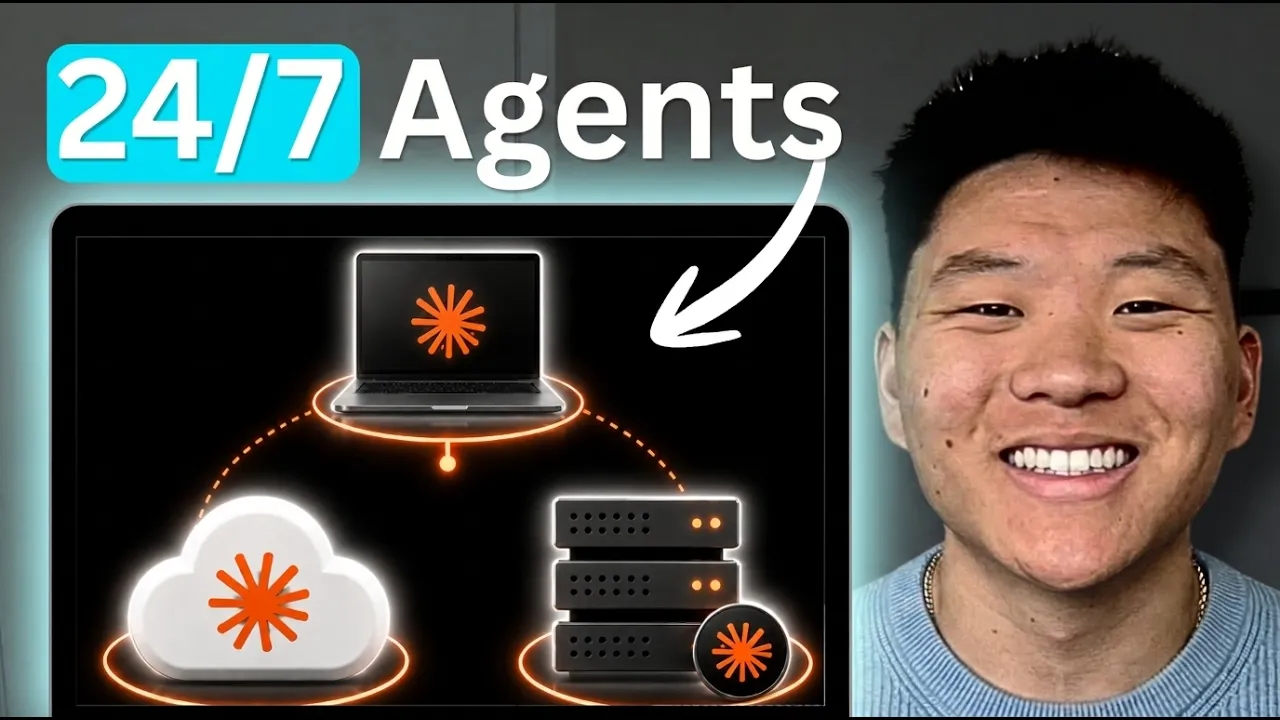
The technical architecture, which I'll go through in detail in another video, is that you have customer A, customer B, and customer C. They're all unique users inside your database. And every day, trigger.dev will just take all of their data, create the content or do the task for them, and then obviously post all the data in their front end. So when they log in, they see the data, the data flow. When customer A uses your product, right? For example, let's say it's a it's a customer research one. So when they log in, they configure what websites they want to scrape.
The trigger.dev task which you've vibe coded runs. Firecrawl scrapes all of their target websites then feeds all of that data to claude API and then the result is saved to superbase and then obviously it shows up on their front end. An example is papers.com which is my software. You log in, you tell the app a bit about you, you give it your website, you give it your um offer or what you're selling, and then every single day, Paper schedule writes content for you for X, Reddit, LinkedIn, Blue Sky Threads, whatever it may be. Um, and from there, then you just get to post on autopilot.
that saves people hours per week, sometimes hours per day, and then they're happy to spend money on that because it saves them time and it actually writes good content and not AI slop, right? So, they never see trigger.dev, they never see Superbase or Claude, etc. They just see your product working and the agent is running in the background. And the business model is, let's assume tier one is $47 per month, tier 2 97, tier 3127. Right? Now, what it costs you to serve them is $20 a month for cursor. Trigger.dev is literally free. So, I um effectively serve hundreds of customers for free because trigger.dev is very very cheap slashfree.
Superbase is zero for me. Um but it can be $25 a month on the you know next tier. Claude, it costs me somewhere around you know for the entire month it cost me something like 50 cents per customer, right? when they're if I'm charging them $19 or $29 or $59 a month, 50 cents is just not it's just not a lot, right? Firecrawl is say 30 cents per customer and Exa is say 20 cents per customer. So you're looking at you know less than a dollar per month uh to actually manage those customers when they're when they're you know essentially paying you upwards of 20x what that is.
Now, why this stack? Cursor is to build the products fast. Okay, AI handles the coding. Nontechnical founders can build real software products with AI. Trigger.dev is this infrastructure thing where you just upload code and it runs um for one customer or thousands of customers. And it's the same code and it's just no extra cost to actually deploy it except for the cost of trigger.dev which is just based on time. So if my agent runs for 30 minutes, they charge you for 30 minutes, which is like thousands and thousandth of a penny, right? Or thousand thousands of 1 cent.
And then obviously if it's running for hours and hours, it might cost you a dollar or two. Do you know what I mean? Like it's very very cheap. Superbase is obviously free. The customer logs in and they see only their data. And free tier handles, you know, dozens of customers. Then claude API. Every time I actually, you know, ask trigger.dev, dev the agent to do something. The secret ingredient is that all the data is passed to Claude and then for cents on the dollar um Claude does the jobs for me. So for example, let's say the job um to visualize it is that you log in and you say I I want to scrape apple.com every day to see what their updates are.
I scrape apple.com with firecrawl every day and then I pass it to Claude and Claude updates me on whether anything has changed or whether there's any new releases on apple.com and all you have to do is post all of that data into Superbase and they get to see it every day. Now firecrawl is reliable web scraping. It handles pay walls, pagionation, whatever it may be. And it works when other scrapers fail and it's very cheap. And then exa is is basically this really super fast research, right? So it finds better sources for you than Google and it is your advantage.
It's very very cheap. This isn't a side project. This is a real business and it's very cheap to run. Now here's why you need trigger.dev, right? I'm not affiliated with them. They're just very very good. It's very cheap. The problem every every solar founder hits when trying to automate things is that you build something that works on your computer, but then you need it to run automatically in the cloud and like at scale for thousands of customers. And suddenly you're dealing with, you know, what happens if it bugs out? How do retries work? What if the API fails?
What if this fails? What if that fails? Can I make it run every Monday at 9:00 a.m. or 10 a.m. or 1 p.m.? Paperchedule.com, for example, runs every day at 9:00 a.m. So every day at 9:00 a.m., trigger.dev dev creates all of the content for my um for my clients and then sends it to them and they're just happy to get the email that says, "Hey, we've got some content for you." Now, what [snorts] you get with trigger.dev is it just runs, right? There's no timeouts. Your agent can take 5 minutes or 5 hours. It doesn't matter.
It doesn't time out. Most automations tools time out after, say, 30 seconds, right? Trigger.dev just runs permanently. Your research agent can read 50 websites. your video processing agent takes two hours. All of that is fine. It'll just do it, right? So, automatic doovers when things break. So, APIs fail, the internet hiccups, websites go down, whatever it may be, it doesn't matter. It just retries and you can actually see what happened. So, every time your agent runs, you get a full log of what it did, what steps did it take, how long did each step take, what data did it receive, etc.
Where did it fail if it failed? I'll just tab out and show you an example of my agent running and creating the content for clients. Right? So, as you can see, this is a trigger.dev run that ran for um around 23 minutes. Right? And as you can see, it starts the daily content generation. It processes um 10 users for example um at once inside of my app. Then what it does is creates um the calls to Gemini which is what I use to create the content. It processes the user then it saves their content to my app.
And as you can see when you enter the content studio that agent just saves all of the stuff to Superbase and all users see is their content every day. Right? So as you can see every single day my users log in and all of the posts are ready to post um to their platforms. LinkedIn, Reddit X for example. And obviously from there as well, my agent with trigger.dev actually creates the content tree. So every single day users get a content tree and over the next say 30 days, the content is going to be created for those platforms and with that content tree.
But obviously all you see on your side, the user just sees the stuff that it's done, but you see all of this. So if ever there's an error, if ever there's a failure, so as you can see, uh the user had no email address because they, you know, because their account was deleted or I I unsubscribed them, whatever it may be, it just skips that and it just carries on going and going going until it's all done. And then every single day with resend, users get um an email. This is just my test server. It just says, "Hey, we've written seven new posts for you today um based on this, five tweets, etc.
just go ahead and jump into the app, right? But obviously what you're seeing is this entire log. So if we go back to the rest of the um content, like we said, you can schedule anything for any time. So every day, mine runs at 9:00 a.m. Run this every two hours. Run this daily. You set it and you forget it and then it's done, right? There's no server management. You're not managing servers, dealing with crashes. It's all handled by trigger.dev. And could you build this all yourself? Technically, yes. It would just be very, very hard.
So, real SAS product that you can build and sell. Product one is content forge. So, SEO content generator for agencies. Here's what it does. Marketing agencies connect their clients competitor blogs and every morning at 9:00 a.m. The system scrapes competitors, analyzes the content strategy with Gemini or with Claude API, generates 30 keywordrich article ideas, writes three full articles, and delivers them to the clients in a dashboard just like I showed you. Target customer is marketing agencies with say five to 20 clients. They're currently hiring writers. They're spending a lot of money on content and they need consistent output.
The product they see is just a dashboard and each client has their competitors, the article ideas, the queue, the keywords and the published articles. Then your app can just oneclick export to WordPress or web flow etc. Word doc, excuse me, whatever it may be. and that is what you'll sell. The time to build is one to two weeks, less than a week if you're fast. Time to first customer is two to four weeks with trial periods or free trials or pilots, whatever it may be. Product two is lead intel, so B2B company research and outreach.
Here's what it does. It's a sales team um tool that adds company names to a list and then scrapes them. So sales teams will add their potential prospects to a list. The system calls firecrawl to scrape the company websites, exit to research recent news on those companies, claw to generate pain points, emails, whatever it may be, and then saves everything to an organized dashboard. The product they see is a dashboard where they upload a list of companies. They see the research progress in real time because the agents can actually stream the progress of the agent back to the front end.
So in other words, you can see the agent working. There's a dashboard with the company profiles, pain points, fit scores, etc. And then they can oneclick export. And there's Slack, Slack notifications when research completes. All of this is easy to set up. Now, product three is Social Atom, which is LinkedIn content from research. So, here's what it does. Users add a topic or a company. The system uses Exa to research the topic. It finds articles, data, studies, etc. Claw generates 20 LinkedIn posts with hooks and insights and data and calls to action, saves to a content calendar, and then you can use a scheduling tool or an API to connect it to LinkedIn and then they can post to LinkedIn.
And that's basically what paper schedule does. My app, the target customer is founders, consultants, etc. They're building personal brands. They need consistent posting and they want data and recent newsbacked information and content to post. So here's what you'll need. Cursor for $20 a month, which is free trial. Download from cursor.com and this builds your entire software, the front end, the apps, and the trigger. Sign up at trigger.dev. Get your API key and just post the entire documentation from trigger.dev into cursor and say here's the agent I want to build. Superbase is free. Versel is free.
And then the ROI formula is that all you have to do is calculate the hours saved per week times your hourly rate. for example. So cost to maintain minus at the end. So minus cost to maintain. So example is lead research takes a company 10 hours a week. Your time is worth say $100 an hour which is conservative for a founder. That's $1,000 a week in time value four companies. And then agent costs $50 a month to run on trigger.dev. And then the ROI is you save companies almost $4,000. Right? Even if you value your time or someone else's time at $50 an hour, saving 10 hours a week for them is $2,000 a month.
So the agents pay for themselves instantly if you charge, for example, $97 or $47 or $39, whatever it may be. So start with these, right? Tier one is build these ones first. So lead customer research, meeting notes, content monitoring, whatever it may be. Here's when not to build an agent. You don't automate um an agent if you do it less than once per week yourself. It requires complex human-led judgment calls. It involves sensitive data and not comfortable with AI handling. The manual process itself take less takes less than five minutes. So say researching one competitor that doesn't take very long but researching hundreds takes a while.
So consider how you can automate things at scale instead of automating stuff that already takes, you know, people less than 10 minutes or five minutes. And if you're still figuring out the process yourself, don't do it. So I've been writing content for years to build my software tools. I know what good content is and how to build good content. How to build YouTube channels, how to build X accounts, LinkedIn accounts, whatever. So I've I know what good content looks like. So that's why I built an agent to do that. So perfect the process manually then automate it.
Now a path to say 5k MR which is the path that I'm on with paper schedule.com right my brand new software. Month one is you build and launch. So build content forge launch a simple version get a couple of beta customers with XDMs Facebook DMs LinkedIn outreach cold email YouTube videos etc. First paying customers come in the second month or the second week maybe. Then from there, systematic outreach. So cold outreach to agencies, start them on trials, convert some of them, and then obviously month four, things like word of mouth, you can run ads, etc.
And then from there, you can scale outreach to thousands of emails per day, LinkedIn outreach, X outreach, whatever it may be. Then month seven, for example, you cross 5K. Right? Now, mistake one is building for yourself instead of customers to wrap this up. Right? So wrong. I need this tool so others must as well. The right thing is I've talked to 10 potential customers who will pay for this. Okay. So before you build validate demand DM 20 people in your target market and ask them do you currently do X manually? How much time does it take?
What do you currently pay for alternative solution? And what you can do as well is look up on YouTube like the best automations from N8N and make what are the ones that people are doing. If people are doing like video generation or article generation or they're doing um image generation or they're doing, you know, um competitor research, look at those and think, well, I can build that with trigger and cursor. I don't have to use N8. I don't have to use make and you can slap it on a really nice front end and then just run it from there.
Would you pay extra month for a tool that automated this, etc.? Mistake two is overbuilding. So don't spend three months building every feature guys before getting a customer. The right thing to do is to build the core automation in one week and your first version needs a core automation which say could be scrape analyze save a basic dashboard to see results and then a way to export data and then a stripe checkout. Now if you guys have any questions about this let me know. But I'll see you guys in the next video and I'll probably build an AI agent for you guys to show you how it works and then we can go from there.
Take care.
More from Olly Rosewell










Get daily recaps from
Olly Rosewell
AI-powered summaries delivered to your inbox. Save hours every week while staying fully informed.