🚨🚨 Omacon 2026 🚨🚨

Chapters7
Opening remarks praise sponsors and set the stage for a one-track Omicon program focused on Linux, Omachi, and hands-on demos.
Omacon 2026 showcases a jam-packed, passion-fueled look at bespoke Linux desktops, Omachi, and the AI-augmented future of personal computing in a hands-on, community-driven setting.
Summary
The PrimeTime’s Omacon 2026 keynote lineup dives deep into the why behind the Omachi/Linux obsession: treating computers as crafted objects rather than mere tools. David (Prime) leads a narrative that blends tech philosophy with practical milestones—ranging from the birth of Omachi to its explosive community growth (roughly 50,000 ISO downloads per month and nearly half a million since inception). He weaves in Tangible milestones like deploying cloud-based mirrors and a robust Arch-like AUR/pacakge path, then pivots to hardware momentum with Panther Lake and Dell XPS support, showing how modern hardware and open software can finally dance. Chris Power (Typcraft) and others share concrete tooling philosophies (single-key navigation in Omachi, Ether for theming, and AI-assisted customization) that illustrate how users can compose highly personal, keyboard-centric workspaces. The event also doubles as a living gallery of personal “cathedrals”—homespun setups, demos from the demo scene, and the underappreciated joy of crafting something beautiful and functional. Be prepared for a running thread about sovereignty, open licensing, and the balance between bespoke software and commercial services. Linux on the desktop is no longer a fringe dream—it’s a mutable, user-empowering movement. The day culminates in a vibrant afterparty and hands-on demos (including Dreamcast and arcade-style captures) that celebrate the social and tactile joy of computing together.
Key Takeaways
- Omachi now reaches about 50,000 ISO downloads per month, with total ISO distribution approaching half a million downloads and roughly 5 petabytes served via Cloudflare mirrors.
- Omachi’s growth is driven by a simple, personal setup philosophy: a preinstalled, targeted environment that works out of the box across Windows, Linux, and macOS, lowering entry barriers.
- AI tooling and single-command launch concepts (as demonstrated by Omachi/Typcraft styles) enable nearly instant access to apps and surfaces, dramatically changing how users interact with their desktops.
- Hyperland and other modern tiling environments show how Lua-based configs, software-defined layouts, and programmable compositors can dramatically reduce setup time and increase customization across hardware.
- Dell’s Panther Lake integration and LVFS DKMS-based updates demonstrate how OEM collaboration can deliver power-efficient, Linux-friendly laptops with near plug-and-play support.
- Omachi’s governance model prioritizes user interest and community discussions (instead of centralized feature bets), helping the project evolve with real-world needs.
- The event champions a philosophy where elegance, ergonomics, and sovereignty in computing are as valuable as raw performance or productivity gains.
Who Is This For?
Essential viewing for Linux enthusiasts, power users and developers who want a hands-on, design-forward take on desktop Linux, bespoke configurations, and AI-assisted tooling. It’s also a rich primer for teams curious about OEM partnerships and open hardware/software ecosystems.
Notable Quotes
"We are descendants of the fire and rain. Do you remember I dream about you by the pyramids?"
—David frames the event as a celebration of nerd culture and historical tech passion.
"A single track event. We have a schedule popping up here in just one second."
—Kickoff remark highlighting the streamlined, focused format of Omacon.
"The mission we're on when we're trying to use it to do something could be done in a million different ways."
—Prime articulates why bespoke setups matter—usability and aesthetics vs. one-size-fits-all.
"What the hell did you see two years ago that I didn't see? AI is the most incredible wonder."
—Toby (Shopify) reflects on AI’s transformative potential and its impact on how people interact with computers.
"The computer is an object that should be beautiful and usable—so we surround ourselves with beauty that makes us aspire for more."
—Core aesthetic philosophy driving Omachi and Omicon’s ethos.
Questions This Video Answers
- How did Omachi start and why is it resonating with Windows and Mac users?
- What makes Hyperland and Omachi different from traditional Linux desktops?
- Can Dell Panther Lake and LVFS backport updates improve Linux laptop experiences on XPS laptops?
- How can AI tooling reshape desktop customization and productivity on Linux?
- What does it take to build a bespoke Linux environment that’s both beautiful and practical for everyday use?
OmachiOmacon 2026The PrimeTimeHyperlandDell Panther LakeLVFSDKMSAI in developmentLinux desktopCloudflare mirrors
Full Transcript
Bye-bye. Money up now. money. Moneybody. resting in shadows while lying You're going to be rush in my head. Come and see about me. You know you can find me by the tear you shy. You know, you can find me by the We are descendants of the fire and rain. Do you remember I dream about you by the pyramids? every know you can. me by the you know I die for you already for you know I die for you for Heat. Heat. N. My love for you. My love for you. My love for you. love for you out of me.
My love for you. love for you. My love for you. My love for you. My love for you. love for you has brought me out of me. My love for you has brought me out of me. My love for you has brought me out of me. My love for you has brought me out of me. My love for you has me out of me. My love for you. My love for you. My But you brought me out of me out ofst without your heart. I'm lost without you. Now your love is taking me your heart of me.
All right, welcome to Omicon. It is amazing to see all of you here. And before I get going with my little contribution, I just want to extend a huge thank you to Shopify for hosting us, to Toby for graciously offering the space, to Tanya for being the mastermind behind organizing everything, to to Jen for the incredible aesthetics, all the visuals that have been designed for this, the custom screen savers, the logos. Awesome. And Sophia for being organizing here in the space. This would absolutely not have happened if it wasn't for Toby, Shopify, and that entire team.
So, give him a huge round of applause. So, this is a single track event. We have a schedule popping up here in just one second. Yep. um where you'll see I will start off talking a little bit about omachi omac and after that going to have a sitdown with Toby where we're going to talk about the malible computer and then the rest of the day is packed with 20-minut sessions and plenty of breaks and plenty of opportunity to geek out, nerd out and enjoy just a focus on fun computers. So that's what we're going to do today.
And then after we're done, there is the Tupal afterparty at Hex, I believe. I hope everyone has had a chance to uh look at that and attend if you're able to. That'll be great. So, with all of that, I'll get started. Very dramatic introduction here. I love, by the way, that we have not just one screen, we have a tiled screen set up with four tiles that'll pop in one by one in honor of our Hyperland goodness. And the first thing I want to focus on is why we are here. Why I have decided to embrace Linux and the experience that I hope we can share with far more people and that is a celebration of computers which sounds perhaps a little odd.
Aren't we using computers all day long? Isn't computers used by everywhere in all circumstances? Yes, they are. And how many people are grateful for that incredible privilege? Not very many these days. It seems like the rhetoric and the narrative from almost every angle is how computers are the problem and the root to all evil in the world. And I find that to be very curious because I have played with computers now for about 40 years. I got my first computer back in uh 80 more than 40 years. 85 I think was when I got my first Armstrong.
And as much as I got it for something specific to play video games, I also found very quickly that I simply fell in love with the computer as an object. It was not just about a purpose. It was not just about doing something with it, achieving something with it, having fun with it. No, it was also the computer itself. It was the keys. It was the aesthetics. It was simply being in front of that screen and having a direct interaction with this medium that allowed me to do seemingly everything. And that has been the spellbinding experience of the last 40 years both as a career and as a hobbyist.
And I find it um curious that there's not more of an appreciation now. When I came up with the internet in the mid 90s, we had all these great tech magazines. We had wired, we had red herring, we had all of these areas of the media celebrating computers, celebrating people doing amazing things with computers. And now it seems we have the opposite more of the time. We have people telling us all the bad things that can happen with computers when we got to get away from that. We need a full reboot and reset and a celebration of computers as objects.
And not just because it's computers, but because humans create incredible objects that are far more than just about achieving some end. If you take the humble rich wrist watch, in my opinion, this is the greatest wristwatch of all time. This is the Rolex Daytona. It has about 300 tiny little parts in it that add up to an experience of telling the time that could be done with an also very nice $20 Casio. Computers are like that in many ways, too. And the way we use them are like that in many ways, too. That the mission we're on when we're trying to use it to do something could be done in a million different ways.
often far simpler, often far um less costly perhaps or less cumbersome, already prepackaged, but then it wouldn't be ours. Part of the fun of playing with computers in the way that we do, us in this room, is that we get to take the case back off. We get to tinker with 300 little balance wheels and springs and escapements and feeling like we're part of the clockwork. We're not just consumers of it. Another object that I love is the Leica rangefinder camera. I've been an avid family photographer for 13 years is my oldest now and most of my favorite shots I've taken with this camera.
This is in many ways not a good camera because it requires a lot of you. You have to line up this weird ghost image inside of that viewfinder to get a focus. You're manually moving a little dial underneath to get it all to line up. And that seems anoristic. It seems odd. It seems out of fitting. You could just use your phone. Yeah, but it wouldn't be anywhere near as fun. And I'm doing this in part because I want to have fun with that engagement. I want to handle beautifully crafted objects that have been created by people with a deep love for photography, with a deep love for watchmaking.
These are the parallels that we should be drawing on as computer users, as people who love the computers as objects. The final example I use here is the car. I love cars. I love beautiful cars. This, in my opinion, is one of the most beautiful cars made in the last 15 years. It's a fancy Toyota, also called a Lexus. And I like this card so much I bought it two times. So, this is why it's up here. It is an incredible machine that has a purpose just like any other cars. It can get you from A to B.
But all the interaction points that you touch, all the little dials have been crafted by someone who cared far more than I knew anyone could care about a volume dial. That level of appreciation for creating beautiful mechanical uh electronical or digital products. I want to surround myself with that. I want to be in that mold where as much of what I do and I interest myself in is created by the kind of people who would care about this small stuff. And when it comes to computers, we should aspire to exactly the same thing. Sweating every pixel, sweating every interaction and making it something that's truly at the light for its own sake.
Not just because it's more productive, not just because it can achieve some goal faster, but because it's simply a joy to use. We need to surround ourselves with beautiful things that make us aspire for more. Now, I've shown you three luxury objects. The great thing about computers is that that luxury in a digital form is available to nerds like this. nerds like us who are not going to spend tens of thousands of dollars on a watch, but will happily spend maybe three times as much pouring in 200 hours at what could have been a billable rate of $200 an hour, aka $40,000, rising our Linux setup and think nothing of it.
That level of luxury engagement um is really endearing. And the second thing that's endearing here is that this is a shared endeavor. We're not making just these digital watches and aspirational computers for ourselves in isolation. No, we're making it together. And I also don't think we have quite enough of this. This is one of the reasons why we're here in this room right now because some of the fondest memory I have of my entire existence was land parties in the mid to late 90s having to get together to simply enjoy both computer games but also computer demos also setting up BBS's exploring the early internet that is a special kind of love.
I've been reading this beautiful book by CS Lewis called the four loves and I'll read just one small segment on it. You become a man's friend without knowing or caring whether he is married or single or how he earns his living. What of all these unconcerning things matters of fact to do with the real question? Do you see the same truth? That is the foundation of friendship. That is the foundation of Omicon. And that is why we're here today to see the same truth to rally around that same. Now, this specific incarnation of that Omicon came together as a curious throwaway tweet when I was excited back in July of last year, just a few weeks after Omachi had been released for the first time.
time and I think like would it'd be fun just to get together and as things often happen on the internet it doesn't take much more than one reply to suddenly turn a fleety idea into okay we're doing this it's happening and then just some random stranger Sammy saying that sounds a little silly shouldn't it just be Amicon and just going yeah it should that small interaction of like just airing an idea. It would be fun to have a bunch of nerds together to talk about this stuff to turning it into a conference with at least the first speaker confirmed and then someone revising what the branding should be is incredible.
But that was not the first part of my Linux pilgrimage. that started um a little while ago, about two and a half years I guess at this point when I first had enough of Apple and their shenanigans to the point that I was willing to throw out every beautiful piece of MacBook that I had in my office and try something else. And the first version of that turned out to be Amakup, which was kind of um a prototype for what um eventually came to be. It is, by the way, still around. I'd like to do a version two of it.
I think it's it's very lovely, but it served a greater purpose in my mind now as the kickoff point, as the starting point of getting into this stuff because I don't stand here as a 20-year expert on Linux, on rising, on Neoim, on any of the wonderful tools that now consume such a huge part of what I enjoy about computers. I literally discovered all of those things two years ago. 35 years into a career of computers and playing with computers and loving computers. Only two years ago did I discover basically what I now spend an enormous amount of my time on.
I think that is unique and very special. Now this whole thing also came to be as a fun side quest while doing something else. So, um came to be in the downtime of last year's 24 hours of Lama when you spend uh two weeks in France getting ready for this amazing race and then you have all these days where nothing happens. Well, I had my computer and I had spent a year on Amakoup and I thought, you know what? Um there's room for something more. And I spend a lot of my time on a website that if you showed it to mere strangers, they'd go like, "Whoa, whoa, whoa, calm down here.
This is a HR violation. Um, this subreddit seems u somehow illicit." But Unix porn on Reddit is an incredible place of creative demonstration. One of the things I really loved about computers in the late 80s, early 90s was the demo scene. the AmIGGA and the Commodore 64 demo scene. This engagement with the computer to create art, to create beautiful things, vivid colors, just all for the sake of it. And I found that on this subreddit on Unix porn and a lot of what is going on here, well, all of what's going on here is Linux Rising.
People building bespoke, beautiful systems that look nothing like the computing experience that most people use when they use a major vendor. And I thought, this is fascinating. Now, I didn't actually want all of this exactly, but I wanted some of this in some form. And the way it became more concrete was actually with YouTube. YouTube is this other incredible gift I would say to the geeks of today. We can find experts who have explored terrains on all sorts of esoteric topics. And Chris Power, who runs the Typcraft channel, did that for me with Hyperland and the plethora of auxiliary projects that you need to actually create a full system.
And I was spending my time at Lama watching YouTube videos up in my little uh French hotel room and getting inspired of, oh, I should try that and I should try that thing. And I had this long list of all these projects I wanted to try. And then I was also watching this other dude on YouTube, um, Prime, who I'd been following for a while, and he had this one video from, I think, four years ago detailing how his setup worked. And what I really took away from this was, oh my god, I am not cool enough to use a split keyboard like that yet.
That would be amazing to graduate to that at one point. But in the meantime, I can pick up some pointers here. And one of the pointers I picked up that really became a cornerstone of how Umachi worked was the idea that every program is accessible on a single key command that you jump directly to everything. that it's not even the graduation to something like um Raycast or other launchers where you hit a and then you start typing then you jump to something which is a big step up from finding something in a dock and clicking on it but still nothing like having a single command that oh um super return just boom pops up a terminal super shift return boom now you got a browser and that experience and seeing it on YouTube was really inspiring.
So those two influences was absolutely key to forming this to forming Amachi and which is why it's so very lovely that we're going to hear from both Chris Power and from Prime later today which by the way just quick aside I love so much that um we still use handles. This is one of the things I remember from the old Amigga demo scene day. Mine was Webster. I don't know why it was Webster, but that was my handle back in 94. We got Prime, we got Vax, whose real name I actually literally only learned like I think two weeks ago when you had to put it into something and reveal your hidden identity.
Um, that kind of fun, that kind of levity, that kind of blending of an art world of halfway banksy um, mysteriousness, I think is just really fun that we can do that and at the same time produce these products that then take off. Because what was so interesting with omachi for me was I felt like I'd already done a version of this with coupoop and there had been people who were interested in that and they started using it but it was it was modest. Omachi was not modest. Very quickly after this launched, um, tons of people started using it right away.
Quite to my surprise, because I was thinking, do you know what? This is a very personal system. Actually, this is my setup. It has all these programs pre-installed that perhaps is not something that everyone is going to want to use. And in that encapsulation, that understanding, I think is a realization. This is what we respond to, at least in this space. We do not respond to generally products that start from the beginning trying to be everything for everyone, trying to appeal to every computer user out there. No, we respond to something far more targeted. And when we do, we can end up with something that's a much better fit.
It's not a one-sizefitit all glove that kind of sits shappily on your hand. No, it's a number nine. I use a number nine. Did you use number nine? Wonderful. It just fits so much better. Today we're doing about 50,000 ISO downloads a month. Over the period that uh we've even had an ISO, which was uh not something that was there from the beginning. Um I think we've done almost around half a million downloads which is actually kind of a lot and far far more than what coupoop uh achieved. Now all of this by the way is uh served up deliciously by cloudflare.
I think we've done about almost five pabytes worth of ISOs which is actually a sizable chunk. And this interaction with Cloudflare was a good um illustration too of what I thought I could bring to the Linux world. Just like a little bit of modernity, like mirrors. Are you [ __ ] kidding me? Like we're we're still finding uh people who can fit a little server in their university's uh basement and that's how we're going to distribute all the software. Why? We've had these content distribution networks for about 25 years. Could we could we adopt them? could we use them?
Um, yes, we could. And then of course also Discord, which actually was not something I had used at all since uh or before starting with Amachi and uh very quickly thereafter we had about 30,000 users on there. But but even more than that, what I loved seeing both from the early days of Umachi and now is all the creative setups, all the beautiful setups people are putting this operating system into. There is an enormous amount of care by an enormous amount of people for their computing environment for the computing object that it is more than just a terminal.
It is more than just a tool to get something done. No, it is an environment in and of itself. We should be celebrating these kind of personal cathedrals. We should be building more of them. We should be encouraging them. we should be um egging each other on to do more of this, surround ourselves with more beautiful things. Now, what I really appreciate too about what's going on with Amachi is that it is not just speaking to the already converted choir. This is a list of operating systems uh accessing omachi.org. And you can see it's actually a quite neat even three-way split between Windows existing Linux users and the Mac.
And I think that is one of the key elements of this new influx, this new vibe is that it's not just the same scene. We're introducing new blood, new perspectives, new expectations about how things are supposed to work. One of the things people often celebrate about Arch is the Arch wiki. It's an amazing resource. There are all these little recommendations and tips and tricks on how you can get esoteric software or hardware working with Arch and wonderful. Isn't that great? But couldn't we just solve all this [ __ ] so no one had to read the [ __ ] manual?
What if you just bought a new computer, slapped on an ISO, and everything worked? Even the god, even the Ethernet adapter, such that you did not have to search through some [ __ ] wiki to figure out the basics of your machine. We can do this. We can solve this if we choose that. That is something that we want to care about. If we choose that the right of passage to starting to use Linux does not need to go through this needless drudgery of just getting the core hardware up and running. Now that's great and that's our little bubble as it's growing.
But what's neat about this time now too is that it's growing outside of that too. Linux is on an incredible run right now. a run it has not seen on the client side in all the time that I've been watching. The joke literally since 97 or 98 whenever it was coined that the year of Linux of the desktop was going to happen actually might happen after 25 years of prophecy. We are nearing an absolution here. We are nearing the fact that this is happening. Um, when I saw that combined with my own kind of foray here, I went like, you know what?
Part of the problem here is that too many organizations are kind of pussy-footing it. They're like, "Ah, that's neat. We'll try a little bit." So, I went when I come say like, "Fuck it. We're burning the boats. Let's go. We're all just moving into this. Yeah, it's not going to work quite right, and you're going to have to figure some stuff out, and there's going to be some gripes. I was just listening to gripes last week about someone who couldn't get on a hotel Wi-Fi network with Amachi because we haven't solved that problem fully. And I was like, great.
Here's a new mission for you. You should solve this and reap the glory of curing this problem once and for all for everyone. And Linux is full of these quests. It's incredible. It's like one of those RGBs. You show up and there's like there's a little gnome over there and she's like, "Oh, if you go off here to the dragon, you can get all this if you just beat the old witch with the stick." And you go like, "Oh, that sounds like a good quest." And then there's a [ __ ] ogre over there. You're like, "Oh, we should go over there.
We should beat them with the big whatever ships." You're like, "Oh, that's a good quest." There are endless quests. Every day there's a new quest and you are invited to take any which one of them and you can absolutely solve them and hop on board. Now that led to a really curious experience in the early days of Omachi where we had or where I saw a lot of this over there, a lot of love, a lot of people being really excited and I was like, ah, you know what? This is not right. This is way too positive.
This is not the internet that I know. There is not balance in the universe yet. And then lo and behold, three months later, some of this showed up. And I was like, "Ah, now I know it's real. Now I know we have something." When the haters finally arrive and start [ __ ] on your project, you can bask in the glory that you have made a small dent. And the first thing folks got really excited about was the definition of the word distro. What is a distro? What's just a script? And actually is bash kind of bad.
These were these amazing discussions we got to have and I just basked in it in the glory that we had provoked this existential distro and they also had a point. Let's be fair. The first version of Amachi was a arch postinstalled script. Now by the way so was the first version of Ubuntu as I'm told. So was the first version of Fedora. Um these also built on pre-existing packages and pre-installed afterwards. This is how most things bootstrap. This is how almost everything starts. It starts as this rickety barely functioning promise of something better. And so did Amachi.
Um so we quickly had to learn a lot of things. One thing was like how the hell do you build an ISO? What is actually needed to go into this thing to get something to boot and install? a new operating system in a smooth easy manner. I didn't know that. Omachi was well down the line and I was using it. I had no clue how ISOs were built. Well, to figure it out and Ryan and I did and then suddenly there was an ISO and then like, oh [ __ ] now one of one of the main attack points.
This is not a DRO. It doesn't have an ISO. Boom. It has an ISO. So So what now, bro? Oh, well, I mean, you don't have your own package uh mirror. Well, we had to figure out how to do that, too. In part because, um, as I'll get into with the packages, the AUR, the Arch user repository, which is incredible public resource. Um, right when Umachi was taking off was getting attacked by Chinese hackers for some reason. Still haven't figured out quite why, but it was down for quite a long time and therefore you could not install the Machi because we were depending on AUR packages and everything was just break.
[ __ ] Now we got to figure out how to get a proper mirror. Also because we wanted things to be fast and art is still stuck in little computer under the university desk mirror setup and we wanted to use something faster. So we got a mirror. Then finally we started building packages too. She said we would not have to rely on the AUR. Incredible. And suddenly it was a dro. It's delightful what can happen when you just don't stop. When you start and you just keep going and there's like, well, it doesn't do that. Okay. Well, let me go away for two minutes.
Now it [ __ ] does. And it doesn't do this. Well, okay. We can fix that, too. And if you do that enough times, eventually you fix everything. But why now? Why is there this surge right now around Linux? Not just about Amachi, but as I've shown in other parts of it. Well, one reason is that the existing offerings in the operating space have gotten shittier. Amazingly so, given all the time, money, and millions of manh hours poured into it. Microsoft and Windows is seemingly worse than it's ever been. So that's nice if you're trying to do something else.
Like there's a comparative advantage that just keeps improving just by the fact that your alternatives just going sliding down this slob rain into something shitty where your [ __ ] start menu is made in React and that's why it takes two and a half seconds to open. What the [ __ ] Great. Thank you. Is there a mole? Is there a line Linux mole inside of Microsoft getting them up to all this stuff? Yeah. Yeah, you should you should build your startup menu in React. That that'd be great. And then everyone else goes like, "No, you you really shouldn't.
You should just make it fast and not crash and not be full of [ __ ] ads." All right. Um, so this slide, this Microsoft slob slide, um, has inspired a bunch of people who have been using Microsoft and Windows for a long time to give Linux another try. This is Lionus Tech Review who four years ago tried to switch to Linux and it wasn't ready. It wasn't good enough. So, he didn't stick with it. Well, Schllo has just inspired him to try again. And and this time, it's going better. We fixed more of the things on the list of things that were broken.
In a short period of time, Linux has become a credible alternative for gaming. Tens of thousands of games are now running awesomely on Linux. It's gotten so bad that Microsoft is apologizing for how bad it is and promising to do better. Now, I don't give them high odds of actually putting this put to fruition, but if it did, wonderful, too. This is the wonders of competition. If Linux is suddenly comparably better and it forces Microsoft to become better, everyone gets to use better computers. Yay. But here's the one I personally care a little more about.
Uh, Mac OS Tahoe because I've been a Mac user or was a Mac users for damn near 20 years. What the [ __ ] is this? Is someone dancing on Steve's job's grave and pissing on his tomb just for the sheer fun of it? How did the company that cared about the radi to the nth degree and celebrated it ended up with [ __ ] this? It looks worse than the inconsistencies between terrible. It's gotten so bad that even the biggest super fans of Apple, like John Grouper over at Derek Fireball, is saying it would make more sense if we found out that the team behind redesigning the UI for Tahoe was hired by Meta a year ago sabotage their work.
The Mac look clownish and amateur. This is the biggest super fan for Apple. Oh. Uh, and here's another good one from John T. Tahu is the worst user interface update in the history of the Mac. Every change is either wrongheaded, poorly executed, or both. The bad ideas embodied in Tahoe reveal an Apple design team of humor human computer interaction. Ouch. Uh, these two guys were part of the six colors report card that's been going out every year. This is the rating for Apple's OS quality at D+. Now, that sounds bad, but uh, wait until you hear how Apple's relationship with developers is going.
That's a D minus. And um, it's not like a Dminus where, well, I used to be failing and I'm on the way up. Uh, no. It's a long slide down the same slob route that um that Microsoft was on. Now, the great thing about this, as I said, with Microsoft is um if you're trying to do something else, we can hardly believe our luck. There are now so many people who are willing to give alternatives a try because the two main titans of the industry are fumbling so hard that even their biggest fans are giving them a B a D or a D minus on the report card.
Now, um this is one of the techniques I really uh try to study from, uh one of the absolute saints of letting your opponents just [ __ ] their own stuff up is uh St. Gabe uh of Valve who have managed to bring Steam into the leadership position largely by just not screwing over players. Really good, really good strategy. Now meanwhile all this is happening that uh Microsoft and Apple are doing their best to create opportunity for Linux. Um other people actually helping in a positive direction. This is Lehutan from Intel celebrating the fact that the Panther Lake chips made in Arizona are [ __ ] awesome.
I will co-sign that. There's finally something happening on the other side of the chip equation. Apple has been able to walk away with every accolade for the last five years since the introduction of the M chips for very good reason. They were incredible chips and they were so far ahead of what everyone else was doing. It was frankly embarrassing and embarrassing for Intel most of all that they managed to squander this. But in 2021, Pat Gallinger, CEO at the time, set off on a daring mission called 18A to bring Intel back in the game. And five years later, here's the wafer that proves it.
Um, one of the reasons a lot of people disliked PCs for a very long time was the fact that the battery life was trash. Absolute trash. Now, it gotten better in the last few years. There's Luna Lake last year and AMD had something that was sort of kind of passable, but Apple was far ahead. Isn't competition amazing? Isn't it just great that uh this is a test of the XPS14? Uh absolutely trouncing Apple on one of these benchmarks. Even if it wasn't trouncing it, just catching up would have been a huge achievement and key to what we needed.
It's not just about battery life, though. Uh, Panther Leg's new chips are absolutely competitive. They are about on par with an M3 in single core performance and about on par with an M5 in multiore performance. We did not used to have this. We didn't have this 5 minutes ago. A chip that was both battery efficient and really damn fast. Now we do. As I mentioned with St. Gabe, he has uh tirelessly been improving the situation of gaming on Linux to an enormous degree. And this is absolutely key to why there is this new surgeons. Much of the improved statistics for Linux uh market share come from this.
But there's also this guy. I don't know if you've noticed, but uh AI has sort of been occupying some folks over the last few years. And um I know that things haven't always been great between Nvidia and Linux, but um do you know what operating system the new DDX Spark runs? Oh [ __ ] it runs Linux. So even though Linus gave him the finger, he still didn't hold that much of a grudge that he's not leaning into this. All the AI workloads in the world are running on Linux. And Nvidia doesn't hold a grudge at all.
Even their consumerf facing services like GeForce Now are being rolled out for Linux, making the small number of games that you can't run natively on Steam available through cloud gaming. And this is before we even talked about what's coming from Snapdragon who managed to poach one of the key teams from Apple who apparently had all the secrets to how you built Mchips and took it over there and is now delivering some u amazing performance with the Snapdragon stuff. Closing the gap on the final part of the equation where Intel and x86 isn't quite there yet.
single core performance. Snapdragon X2 Elite chips that also run ARM are on par with the cores that Apple putting out. Incredible. So that's what happening on the hardware side. On the software side, something very interesting has been happening to over the last 10 to 15 years. The total near death of key important desktop applications that aren't on the web or in the terminal. Basically every piece of important new software created in the last 15 years ended up as a web app. Now there's a lot of people who didn't like that for various reasons. Linux folks should be thrilled.
The fact that the greatest application platform in the world works flawlessly on Linux and always has is a huge part of the reason why Linux is now a viable alternative to these other giants. And then of course the rise of the terminal brought on by the rise of AI. What a curious set of circumstances that it just so happened to be that last year with the introduction of cloud code um and all the other CLIs for AI. They were all terminal driven. Tailwind tailwind tailwind. All this adds up to the fact that we can now create a new kind of computer that's competitive in a new way by a bunch of geeks who look like this.
us together create a new kind of computer that is not trapped in this old fight between stallman on the one side being a radical single-mindedly dogmatic individual who has done wonderful things for open source but holy [ __ ] I do not want him to be our emperor be or on the other hand this uh strange looking enterprise sales guy um who represent another part of software that I don't care for much either. Not even this guy who I otherwise would put in the pantheon of heroes of the beautifully designed computer represent exactly what we're trying to build.
Now, part of that is that all those guys had a single-mindedly obsession with owning everything. About a decade ago, I wrote a piece called Reconsider that I'll just read from here. Part of the problem seems to be that nobody these days is content to merely put their dent in the universe. No, they have to [ __ ] own universe be in the market. They have to dominate it. It's not enough to serve customers. they have to capture them. Well, we don't have to do any of those things. If we just want to build beautiful computers mainly for ourselves and others who love them, we can put that small dent in the universe and leave these other three guys to wrestle for world supremacy.
Now, the kind of computer I want to build is a pro computer. And I'll explain what that means. It's a computer made for and by people who love them. It's going to be pragmatic, ergonomic, aesthetic, and sovereign like peace. The pragmatism comes in large part by open licensing. This is open source, not the kind of open source stallman wants us to put out where it infects everything and all of it has to be that way, but a base that's that while inviting great commercial services. There's nothing evil about commerce. There's nothing evil about capitalism in the way that it provides us with free options to spend our money.
Great. I even put my own [ __ ] commercial apps straight into the operating system because I use them every day. And also, do you know what? That seems fair. I built the [ __ ] thing. Dell just showed up. Well, it didn't just show it up. I've had a relationship with Dell for 15 years buying their computers on the server side, but um Mr. Dell, Michael showed up not too long ago and said like, "Hey, well, he didn't say." I reached out to Michael and said, "Please, can I have your awesome new Panther Lake machine? Looks great." And Michael replied, "Sure, let's do something." And now, not only have we done something, we have built an incredible feat of releasing the first DRO that is fully compatible with Panther Lake, um, with the XPS series, and that's amazing.
Um, but we're also just embracing all computers, even Apple, who I do not generally care for in their current incarnation as a company. I love their vintage. We can bring all these computers into into this world. Second, these computers have to be ergonomic. And a key part of the ergonomics is they have to be keyboard friendly. This is probably one of the biggest insights I had after watching Prime demonstrate his setup is that everything should be reachable instantly from the keyboard in a way where I'm just dancing through it all. Now, that requires a trade-off where usability sits higher than learnability.
It's going to take a while. This is pro. This is fine. spend an afternoon getting familiar with it. Every other computer is chasing us or learnability first and foremost and we'll put it before usability at any point of the day. aesthetics. So for me there's a direct correlation between beauty and truth. There's a direct correlation between the environment that I am in and the comfort and joy I take out of it. And do you know what? When it came to computers, we used to know this. This is a [ __ ] gorgeous machine. This is a Danish computer designed in 1981 to just do I don't know some math stuff.
It has an amber phosphorus display that looks absolutely gorgeous. How can we buy these computers today? Why don't computers look like this now? Even the Commodore 64, the first computer that I use. Look at those browns, man. Look at those browns. Look at the goddamn interface you had when you started it up. The color coordination. This wasn't just black on white DOS [ __ ] This was someone who knew something about colors. My beloved Armstra. Look at that [ __ ] keyboard. A red escape key, a blue enter key, green keys, integrated cassette player, everything a boy could ever want.
These are some uh VHS tapes from the 80s. How did we lose the ability to do this? We know that this was possible, that everyday ordinary things could look this [ __ ] cool. Holy [ __ ] This is a scene out of aliens. One of my favorite movies, Alien. Aliens is also my one of favorite movies. But Alien computers in the movies look amazing. Why don't ours Why can't they look like this? Why can't they We don't have sound on this thing. Maybe we don't have sound. I want this running through my veins when I'm using my computer.
I want this mix of the 70s and the future retro going together. This is uh Space Cold's demo for the party 2 in or called the start the state of art. This was done in uh 880 kilobytes. [ __ ] incredible. We used to do this. We have not lost neither the power, the wisdom or the skill. The future should look like the future. That was the operating principle for the design of the Cybert truck. Our computers should look like the [ __ ] movies. They should look like they belong on a set and they should be gorgeous. Absolutely gorgeous.
Absolutely gorgeous. These were three themes by the three contributors. We have Taha, Biana, Old Yabov. Um, incredible. Finally, sovereignty. The last S&Ps here. Now, sovereignty is really important because um, it gives you the fortitude to tell people to [ __ ] off and to say, "I'm not doing that." And that's really important. I am a big believer and supporter and frequent users of the words [ __ ] off. Mostly just in my head, but sometimes also on Twitter. But even more important than that kind of sovereignty is the kind of sovereignty Kathy Sierra talks about that we should be upgrading our users, not just the product.
That value is less about the stuff and more about the stuff it enables. Build better cameras, build better photographers. That applies directly to the Linux experience as it was and as it is in a lot of communities that you have a scenario where nothing [ __ ] works and then almost an impossible wall to climb before you get your bespoke masterpiece. Do you know what it's very commendable the kind of people who were able to set up Hyperland from scratch with the entire ecosystem of everything and spend 150 hours doing that. Jesus, you have my respect. That is hard work for a very small niche of individuals.
And there's a much much broader set of people who would have fun getting to the same place on less of a wall and more of a ramp. Um, and a big part of that is that you got to start with something that is approachable, that is delicious, that is appetizing off the gate when you don't know how all the things are supposed to fit together. The other thing is when you want to change things, it's got to be approachable. Uh, Omachi is built in Bash. It's basically all Bash. Bash has gotten bashed a lot over the years by programmers who think it's a shitty programming language.
I think it's amazing. It is one of my all-time favorite programming languages. Exactly. Because it's so [ __ ] shitty at doing something as basic as designing an array. because then you just don't use arrays. And there's a lot of software that doesn't need arrays. There's a lot of software that just needs if else installed this piece of software. Bash is great. Do you know what else is great? AI. AI is incredible with Linux for getting things off the ground and changed. Update my way bar to include a calendar when hovering over the clock. That's a prompt that uh I saw someone did and then their OS just changed and it did that.
What? That's not how this works in MacOSS land. That's not how this works in Windows land. You can't just [ __ ] change your operating system with a single prompt. On Linux, you can. Finally, um you should be able to make it look amazing. Barely known color coordination. Just going like, "Hey, that's a really cool backdrop. Um if I get BA's ether here to do some stuff, my whole computer looks different. All of it. I'm game for that." Now, you're going to break it. You're going to break your computer when you do it like this. That's great.
This is kinugi. When This cup breaks, you put it together and it looks better. It's got [ __ ] gold now. And the gold is your sweat, blood, tears, and learnings that go into it. That's the kind of computers we should have. That's the kind of peace we should put in the pot. And that's what is all about. Thank you. And now we're going to continue that discussion with uh Toby who is not only the CEO of Shopify who's lend us this amazing space but also happens to be um a bit of my mentor on the AI side, a person who uh dragged me into this new world even when I was quite reluctant.
I want to first understand what the hell did you see two years ago that I didn't see and most other programmers with the kind of lineage and existing investment into skills and setups fail to see. Uh hey everyone, thanks having me. I'm such a I um briefly I I'm so bullish on uh conferences early around um uh new takes on technology. I I I I like it's um uh we met first time I think in uh 2004 San Diego or some 2005 maybe um Rubiccom and like just like getting people together um who all again see some uh important truth behind something being uh fantastic.
It's just like you you you end up spending time with people that um you are going to keep track of and running in over and over and over again around the most exciting parts of the technology industry. And I love this keynote David because there's like just the sheer joy and wonder that we should all experience looking at the gifts that we have been g uh given here that the gifts that are made by some of people in the room and some um just the technology industry as at a large it is such a modern marvel that what's happening there.
It's so positive some it's so good and it's just like like feels underappreciated and under acknowledged in such a profound way that um I I'm glad that there's like pockets where people do this. Um, I find it just like incredibly important to like consult your sort of inner 16-year-old when uh as you go through life because otherwise everyone sort of does this thing about regret minimization which I mean not enough people actually do that either but like the people who do make better choices but they kind of make boring choices because at the end of a life life you you you want to get the important things right and you um at this point have forgotten the most the small daily delights that might actually um reveal much larger truth to and our inner 16year-olds would all be uh telling us, "Holy [ __ ] let's go.
Let's build like our own operating systems and let's go build our own technology and also race race cars and you know." So anyway, so you come back from Lear and I was like, "How was Lamar?" Which to me is like probably the coolest thing anyone on planet Earth could possibly be doing. And it's like, "Yeah, someone missed the pit, but like Hyperland, man, that's really good." So that was like that's not what I expected to hear. So um uh so quickly I AI look I AI is the most incredible wonder. It's the uh we've uh we many of us I you and I have seen many platform shifts in our careers which is a gift to see one.
We've seen many. This is the craziest one. Um larger than I think internet even coming to town in in in the way it's going to eventually um sort of uh affect everyone and um you know building technology company what you learn is you have to look at the trend lines over everything else. It's like you need multiple points on the graph and you need to connect those things. You need to figure out if it's sublinear, super linear or or or linear. Um and uh then you connect those things and with AI just was super obvious what it was getting to.
Now even I have been utterly surprised by December. Something like the magic that happened with Op in in last December is just like unprecedented and just it became so unbelievably good that like um I'm I I I've gotten a whiplash from it as well. But um what's so interesting and so so Shopify like itself gives like a wonderful angle to this. We we ship this sidekick thing which you know as um a lot of software has these co-pilots in it. Um and we ask people very special. We ask them to be uh reaching for independence, reaching for, you know, being entrepreneurs, which is a really really uh public and courageous thing to do.
And so um help giving help along the way with some AI they can ask the dumb questions to they are too afraid to ask uh everyone else they know is important. And what we heard from them and maybe this is back to your question has been really fascinating to them. A lot of them said like, "Hey, this sidekick thing is um you guys finally fixed computers." Like I have listened to you tech nerds talk about all the things that computers can do all this time and then I sit down and try it and they can't do any of this [ __ ] stuff.
Now I ask a question and it answers. Or I ask him to do something, it does it. And it's like like finally I can see why what why you all were so excited about. And I think this is kind of an important sort of moment. we actually humanize computers here in a very real way and I think we can actually spread the joy of this malleability of computers to uh many many many more people but um future we are going to go into I think that's spot on and where it's spot on in particular is I didn't even touch this but um in particular would not have existed with AI and the reason I say that is I would not have had the [ __ ] patience to troll through the forum supposed to figure out why the driver for the webcam didn't work.
I just I don't have that kind of patience to wait for it. But when you can ask an AI who can do all that trolling for you and find the answer and then just do it, it feels magic in the same way that I felt the magic of the Commodore 64 and you're like, are you telling me like you put in this tape and now we have a video game we can play at home? That's incredible. And I think a lot of people have gotten a taste of that but quite late and this is why I'm still curious as to what were the early data points that you saw because I have talked about this AI things for a while being excited about it in sort of future sense not thinking like this was going to hit now in the same sense and then clearly there were other people who saw something earlier that made them convinced that we were all we were five minutes away from the takeoff that we have experienced.
Now I think the combination was uh just briefly there was like like um after the auto reggressive language models started working really just means next token prediction um like it just sort of inversely spawned a lot of new thought on how the brain actually does its thing how you know how the parts of the brains contribute to each other and and there's excellent books on this topic now um I I was privy to some of this conversation and people understood basically the implications of what it means means to have to predict the next word. If you think of Naga like if if you ever read a Nagata Christie novel that which is like goes all the way through and then and the killer is is the sentence to have any intuition about what the next word is.
You have to understand the entire novel to this point like you you have to attend to everything and make a value judgment. So once next token prediction actually works you have generalized intelligence. And so you you you combine this with again um the the the the unbelievable um uh effectiveness of the pre-training the fact that around like very quickly people figured out this sort of chain of thought thinking which ended up like being vaguely a pointer at like how we um can keep going in the post-training and um frankly of computation and compute and realizing what leads to um it just like you connect those things on a graph and you just kind of know where it is.
So you can't again you can't fully predict because there's a thing called groing which happens at various sizes of training where something special happens that is sort of unprecedented. Um and uh we we seeing another instance of this right now right now in the ability to code but honestly the the prediction is is is one thing it's it's honestly just like um first you have to figure out what what's true and then figure out what to do about it. And I think we need to um like we have invented this industry, this entire world of computation um um and we made our own dense based on um foundational assumptions about computations and computers and their use that I think are now invalidated and we get to actually in invent a much better word like what what does um and I think this is why I'm equally bullish on you know Unix Linux and um Omaki and its incarnations of this Because um if like sorry I'm being longwinded about this but like um even my own company like what we built um um is there was not enough people who could make computers truly um dance right like not like not everyone could program there's very few and so we what what happened is we had to collect people who could do it in companies um that then look after the sort of most valuable problems like commerce is one um um and um figure out how to um build software that is so configurable that it actually works for everyone.
Um I built Snow Devil the first version on my life and I um uh it took me two one and a half months until I started selling the first snowboards. So after that um okay and after after that um uh It was it was very quick building software for myself. Bespoke software is just much much much much faster to do. It took me a year and a half with two other friends to actually build the generic Shopify um so that it was um uh usable by people and it took 20 years to make it like as good as it is today.
I hope so. Now we're going back to a world where everyone can get bespoke software. Um like the computer is incredibly malleable and you can basically just say what you want um uh to it. If you want the calendar on hover, you can just tell it and it will be able to do this. And even if it fails today, um it'll succeed tomorrow or you just need to steer it slightly better. Yeah, I think that's the part that I'm still wrapping my head around just how much of my interaction now goes through that mode. I mean, as someone who's been programming for well over 20 years, been used to reach for I'm going to write some code here to switching over almost overnight from heavily skeptic that this is real, that this is how it's going to be, then seeing the results of it and going like, okay, well, this is just how we make computers do the things we want now.
Is is fascinating. In that vein, I'd love if you could talk a little bit about some of your own personal uh experience with the Malible computer. Um maybe the way you've set things up with your personal memory system, how you've been taking notes for a long time and how you made all of that accessible to the computer to the AI to give it back to you in form of insights in the time that you need it. Yeah, I was I was super lucky with this. I kind of lucked out in a way that like um I just like I I I mean I always took a lot of notes.
Um I I just think this really really important um um to to to sort of have a log of things. I I sort of always had tools that I built for that's that's been the extent of my programming um just to stay with it because it's my hobby, not my day job. Um for um maybe that has changed again. Um, but like it's u I had tools that like send me a random quote for my Kindle on Mondays and email and like um just sort of show me the the notes from like just a year ago and five years ago like in the mornings like it just all these kind of that was the sort of extent of it.
Um so so I was in love with that and just started collecting all these kind of things like etling my Kindle highlights in there and you know I'm fascinated with amount of um just like accidential chronographical autobiographal uh uh um autobiographies in normal computing. I bet you if you open your Wi-Fi networks and browse through them in order you can basically reconstruct so much of your life because you you see the various hotels that you travel to and like it's just fascinating. So bring all of this in, turn it in markdown was just my mo already and like after we sort of figured out rag and like like this became just more and more and more valuable.
All of this just exploded now with open claw and like what happened there. Um I my sort of tool game around this has just like like accelerated because of the AI got better. I did this QMD thing which now is like my kind of favorite thing because I I I'm reconnecting with how wonderful it was to like do open source gifts for people that then people use and so on. So it's just like all this stuff is only possible because of the the incredible march of AI. But more importantly, why like is it's just like I you know I love a sentence you can just do things right like it's it's it feels like the the um um most important rallying cry of all the people I admire the most.
the people who again built uh build companies, the people who build software. Um and and it's just people who are just don't they they they respect the world around them but not so much that they defer to it. They they they they say they realize like everything is around them is made by people who are just no different from them. um and in fact or we're very different from them and therefore you have something to add and just like go and uh you know come back from Lemore with Omaki and uh or or any of these kind of things and I just um so many people have something to contribute but not have the means and then the time and the luxury to then do something about it and the amount of people who can do something about it is going to be so vastly higher now um that just I I think we should be um looking at uh like predicting an absolute golden age of software coming um Um, you know, auto research specifically will make all software fast.
Um, that's just what we're seeing inside of Shopify right now. It's just bonkers what's happening just with basically one new slash command in uh, Pi or any of the clankers you you choose to use. And so, you know, like this is just all happening every single week. There's like the craziest thing I've ever seen. Um, um, we get to run into like each other like every couple months and we just like, okay, [ __ ] First moment is like compare notes. What have you seen? What have I seen? like we have to divide and conquer at this point which is so fun and um ex is the distributed global brainstorm around all this this stuff.
So it's just like one of the most fun parts of um uh history. Um, so yeah. Um, it's just like I don't know. I I I'm at a point that like I'm sure you like do this too, but like some like uh when I'm on Omar Key and like I see someone post a screenshot of a cool Wi-Fi testing tool or whatever like it's just like I just like open my Pi and just paste the screenshots in and said and say go to Waybar and give me this too, right? Like it's just like incredible. So yeah, I think that that's a really key point.
For a long time, Linux's problem with adoption was it lacked killer apps. There were certain things that people needed to use. They weren't available on Linux. Therefore, they couldn't use Linux. It seems we're very rapidly moving past that to the point as you say, here's a picture of the app I want. I'm going to get some version of it. If it's simple enough, I'm going to get a great version of it. If it's slightly more advanced, it maybe it's going to take some tweaking. But this idea that we can make any piece of software for any platform as we see fit.
We had a shared experience where well the shared experience was you did and I watched but you building this um race analysis software while we were at a race test. And I thought that was interesting in and of itself and it turned out to be very cool. But what I thought was extra cool was it started as a CLI tool. You created this raise analysis tool and then you just thought that's not the right form factor. I actually need a full guey and you had it turn into to a Mac app in this case. How are you seeing this sense that like software no longer is tied to a platform.
We can move it between platforms. How far along are we from saying, "Oh, I want Photoshop native on Linux. I'm gonna get it on Thursday. Um I mean I think they're absolutely there. It's just not there. Like it's not like this is why it's so important to tinker with these things because I think the uh the realization of what's possible is lagging enormously with uh like just uh the to the capabilities of what's possible. It's just it's an awareness game. Um, frankly, like um I think and and there's also like obviously um harrowing implications of what I'm saying here, but like every piece of software that exists on planet Earth is essentially just a prompt for a better piece of software that could exist uh that that fits your unique circumstances now.
And um um you can sort of suck the brains out of any piece of software by just basically giving the clanker like an web browser and having it have a go at it. Now the thing that you're getting out of this is not like a competitor to to the thing that you uh uh interrogated. It is a bespoke version to you. And it's like I I think there's actually some real kind of wonder in that like because my sense is that ability will also just feed back onto the software that where the information that which you started with through sharing and like also like doing this wonderful thing about competition and um because again it's now so much more tractable to make great software.
Again back to the um actual race analysis thing. It's just like you know again the computer is a tool for a purpose right like and you don't have to settle for the software that you use in our case like every single time someone connects a thing that gets data from the car and then we open it in one thing like a software which is like from the looks like from the '9s and then um it's it's amazing software. It does its job but we do the same analysis every single time. Find the corners align the traces and like figure out who where the skills issues are usually with me.
And um so that analysis is so repetitive that it just like seems very auatically true that like you can also define it once explain it to a system and then it just applies it like the corners don't tend to move like the people don't move the ashalt around of on the racetrack. So um after you know where they are you can analyze them and do it over and do it over the entire files in every single lap and then get conclusions of a quality that is beyond even what the pros can potentially pull out of looking at a screen for a moment.
Um, and those are all just steps you can take. And in fact, I bet you a lot of this what I just said could be literally caused to exist um at least in a 2y environment um from the transcript of my example here. Um that's all the prompt that it will need to get started and then you then you steer from there. No, that's not because you fully outsource everything to the computer by way like it's not oneshot things like then we did this like it was like many rounds and I think all programmers are massively underestimating how much impact their steering has on the process.
Um we sort of associate uh typing with and and and effort with work but that's actually wrong. That was a side effects of how we um project work right now onto the machines. um that we have or did in the past. Um it's the it's the understanding of a system uh that is the true programming, right? It's a it's the steering and the choices that you make the trade-offs because there's an infinite proh possibility space for any kind of um like there's an infinite possibility space in the game of go for instance that is like complet like um chess has more moves than the universe has atoms and so um it just like the the the steering the the aesthetics the choices the um do you want do you accept lockin or do you need sovereignty these kind of major major philosophical conversations that you talk with your principles about are the way you are going to impact the final system and it takes very different shape and I think that's going to be the most important type of work that we're doing.
One thing I'm curious about and I jump back and forth between these modes uh sometimes multiple time on a single day is trying to internalize where all this is going while living in the present. While living in the present where not every time I give Claude or some other model this steering I think is great steering I get something that I want to keep. Do you have any of that where it feels like it's it's very tempting to live in what we would imagine two model hops from now is and then you got to square with the present day reality that it doesn't actually always kind of give you what you want or in the way or is even perhaps productive that you can get trapped in some of these loops.
I'm curious how you see the sort of how do we square where it looks like it's going with what we have today. I I've um I well look the progress is so fast that this is um like if if something doesn't quite work you can just wait a minute. Um so it's like we we sort of at the side part of the core of um um the uh processes so fast. I do think well it's that makes it even more imperative to ask things that it can't do frequently because it's it's like interrogating the boundaries of the capabilities um actually teaches you a lot about um you know what software is what input what you do again it's called mostly context engineering now because what you're doing is like you're providing the context sometimes in the form of a code base that you start the agent in but often in the in the words um to make it so for that the system can plausibly solve the task at hand.
And if that doesn't work, often that has implications for the context that you have provided, right? Like maybe there's a read me missing, maybe there's an agent empty missing. Often a skill could be added um that uh explains how to you know debug or performance optimize Ruby codebase and then it can do a much better job because it can benefit of all these kind of things. So um the reason why this is so important to do now is because the baseline of what it can do one like one shot without requiring anything from you keeps going up.
And why is this therefore important? Well look um a lot of us here like probably similar vintage right like we a lot of us are probably of the similar ages. Um we all um at least many of us here have seen similar platform shifts in in in in the past and we have we remember the amstats and the like amiggas. We remember the 360 uh 368 um 360. Thank you Jesus. Um and um uh the um we knew what their boundaries were and it's surprising how often that's actually valuable like knowing the sort of relative speeds of the various things that like just like when then when then when then when we have interns at Shopify we have we we obviously we have to explain the difference in speed of IO to network to to to memory and it's just like this intuitive stuff that we'd never even think about for people who understand computers from back in the day when they had to have a spinning disc that could literally listen to as it was speeding up when then you did IO.
So I think that's important. So understanding them at the at their limits at at their is is only possible for a short while longer I think and um exploring them right now is something that you can't really reproduce later. That's great. Let's end there. Thank you so much to Thanks for having me. And all right. Hey, originally we were going to have Beyond come up, but we're going to take the 20-minut break now. Shockingly, DHH went over. I know. I can't believe this has actually happened. Oh my gosh. So, we're going to do a 20-minut break and then Bejorn, you're going to come up here.
That means bear, by the way. Learned it from him. There you go. So, break now. Hands in. All right. Yeah. Where are we in that schedule? I have no [ __ ] idea. Uh, we're at 11:20. So, effectively took the slop. Okay. So, what we can do is compress a little bit. We had an hour and a half. Yes. I believe you. Keep it good. I love I believe in your love. This year we've had to lose our space. We've lost We've lost dancing. All these things that we took for granted. We've lost dancing. You lost dancing.
Hold on. space. We've lost dancing. We've lost hugs with friends and and people that we loved. All these things that we took for granted. We've lost dancing. We've lost dancing. If I can live through We've lost dancing this next six months. day by day. We've lost dancing. If I can live through this, what comes next will be marvelous. You lost your We going to make it lost. Dancing it dance. What comes next I'll be waiting for you till you for for Hey Do you think about me? Do you think about me? You keep me on looking for Can't see you deep inside.
I'm not broken. I'm freeze. I'm not broken. I don't need you tonight for the rest of my life outside. Nice. N d N. N down n I don't want to be broken and quiet, shut off and tired at times. I don't want to be distant and colds. Maybe just something to thin the blood. I don't want to be woken up and I'm a different person every night. I am a broken mirror. Shut my eyes and I'm a different my And I'm a different room that I touch. I want to be acting the fool. Subtle and cool.
It's all that I want. So slip a drop into my lemonade, but nothing takes the pain away. I know that you understand. I don't want to be who I am. I am a broken broken shut. Every night I broken mirror shut my eyes and I'm a different rip off my Quiet. Let's do this. Get this. I'm get down. for us. So close. my days on my night and you know I'm going to get you summer. We were all knocked down the summer I need my love. It's too much. So close the only It's the summer baby.
Summer follow I met you and I piece it together. Lights in the moon. I will follow you. I will follow you. I will follow you. music when the road is long and it's hard to face it together of the No, it goes like a normal. I think we're basically really comfortable. Hey, hey, Heat. Heat. out. got Baby got drug. Keep it real. Baby microphone on. Hello. All right, everybody. We need the butts in the seats. If you can hear me, you got to be quiet now. Hey, I'm looking at you. Yeah, I'm looking at you.
You guys get get in your seats right now. Andre's get in your seat. Don't make me come around and tell everybody to get in their seats. Hey, you in your seat. Yeah, it's time to start. It's time. It's time, you know. We're we're we're moving along here. Okay. Thoughtless in your seats. All right. If you can hear me, you got to stop talking. If you can hear the Wi-Fi password. I don't know if I'm supposed to say it on stream. Stream. No hacking. Okay. We're not doing that right now. Um, ask somebody that's not on the microphone.
Thank you. I leak everything. This is like a first time I didn't leak something. All right, we have a really amazing talker coming up. We're not really doing introductions. So, Bejorn, come up here. You're going to crush it. All right. Can you all hear me? Perfect. There. Right. Yeah. Let's try again and wait for a screen. Here it comes. All right. So, my presentation today is that your rise is mid, but let's fix that in 10 seconds. Everything I do today mostly will be live demo. So let's see how this goes. So this is Ether, right?
Uh you probably saw it in the introduction and uh so let's do this in less than 10 seconds. Okay. Yeah. Let's find a wallpaper on uh from Wall Haven using the safe to work wallpapers and we click extract to extract the colors from the wallpaper and click apply. Now your rise will be better than it was before. This is how quickly. Oh, I thought it was muted. Uh, but that's fine. This is how quickly you can create your own theme in Omachi using either. It's really really uh really nice. It's all done on top of what was made right before how it works in Omachi.
Uh, but of course it has a lot of things around it. We'll go through that later. Uh so my next part here now will be just how does theming work in Omachi just to go a bit into detail here. Oh wrong button. All right. So um let's just take two themes uh two like easy straightforward ones. You have the default Tokyo night theme from OMG. You can see on the left side there uh this is the uh file system. So you have the backgrounds f folder with um is it four images wallpapers that's being used.
You can see it has numbers from zero to three. That means the 01 the swirl buck that you see uh like the main wallpaper that's being used by the tokenite is will be the first one and then like if you use the selector you just go through like 0 to three. So that's the reason for a naming convention here. Um all the themes have uh a file called colors tunnel. Uh this file you can add your own custom colors. So you can define the well more or less the entire operating system the way you want.
Of course that's not including GT key styling and stuff like this. But it's what comes with chief more or less. Um so my example is I will just create a barebones theme uh where we can see how it works. That's on the right side just a background image and it has the color tunnel file. Um the icons theme for uh for your icons and of course for neim because that's what I'm using. Right. Are you ready for a live demo? Yeah, wrong. Just find the correct. Yeah, let's just do it from the beginning. Okay, there it is.
So this is how the colors.com file looks like. You can see you have some accent color, cursor color, foreground background and selection foreground and background. So that's the uh new additional colors you have for example selecting stuff in your terminal. Let's just do it like this. There you can see the color. Um, but you also have the uh good old ANC color definitions that's that's being used by thermal. This is our colors from zero to 15. I'll go through what that really means because the naming convention is not great. Um, but this is what it takes including my neim lua file of course which is customized based on my own color scheme.
uh but I made this for um Omocon and let's see how it works how it looks like. So you can just set it using the terminal or you can also use uh the the the graphical user interface but I just call it omicon and this changes it. So this is what's needed to make a theme work in Omachi nothing else. And let's just look how this is how it looks more or less. It's really cool. Uh you don't need to spend that much time, right? In these days, you can use AI. You just have an ID.
You want this warm kind of coy forest kind of theme and just put that into AI and just update my uh call the tunnel and then you just have a new team like this. Really, really cool. Um just to explain a bit uh about this anti colors. Um these tables are made using AI because I know prime doesn't like marked on tables in AI. So that's why I did it like this. Uh but where you can see here like what's for example color four. What does that even mean? because you don't know just looking at color four does it mean um so I added a descriptioner this is usually blue that's the placement that's the main colors 0 to 7 that's the main colors used by terminal uh the colors from 8 to 15 that's the bright colors now even though it says it's black red green and that's the usual position that you would use these colors doesn't mean you need to put red in the red position like the Saka Jade theme for example is using more green colors and different positions there.
But like for how it's supposed to work, red goes to red because that's for error messages and stuff like this. So that's uh how it works. yes. Uh so in OMG you have a lot of uh predefined templates uh like for hyperland for uh your terminal and many other templates. Um but when I joined this community was it I think it was in July on discord um you quickly saw that many people wanted their custom um I mean rise the custom application working right that's not part of Omar. Uh so later I'm not sure how long a time ago it was but it was introduced so you could have custom templates.
So in this example I've used um the cava um terminal like this visualizer for music right uh as an example um where you can just put a template height within the omachi themed uh folder uh in this case it's cava.com.te template and then it will just use some some variables to update the um your template and transform it into your configuration file, right? We can will look at the u files afterwards. So when you um yes and then of course it will not just work by default. it will create temp no I mean the configuration file for you but you need to apply it somewhere as well so the system picks it up right um and that's where the hooks come come in right you have this for example as a user a theme set hook that will run when you uh set a new theme so it will just run bash code within this hook more or less uh so what I did here was um adding some bash uh and configuration just to uh update um and set the correct theme name for Kava and move the file into the correct directory in Kava.
Right, let's have a look at it if I can find the correct location. Yeah, here it is. So, here you can see this is the Kava config template file. You have the background accent and some gradient stuff and color four, five, six and accent here again. And you have a uh hook. So this is more or less the hook that will uh move everything where it's supposed to be. Update naming and reload cover. So it might be some music here now. Let's just start cover. Here you can see this is how it looks. And uh let's just reset everything back to the main theme.
Let's close it there. So, let's see that it works. Start some music from Clamp. Nice lowfi music. Yeah, there you can see it. So, let's hope it works when you do this live theme set up. And you can see it changes. So this means you can do whatever you want in OMG. It's not limited to the templates that are predefined. Yeah. So that's how it basically works in OMG. Of course, there's more to it than this uh but I won't go into all the details here. So now I just want to show how like Ether works.
Um so the way I describe it is kind of Adobe Lightroom for omachi theming. Um, ether was made firstly, it was a while back just as a demo, right? It was based on GTK and just using the default components in Gnome and uh use Pywall as the color extraction uh back end and image magic and stuff like this, right? But it's uh grown into more like this fullyfledged tool that has much as the um the um default operating system. Of course, you can use it for L's, I mean other districts as well, but it's not that great compared to in OMI.
Um, yeah. Yes. Um, Ether can do many things. So, I just added a few things here like it has the extraction, right? Uh, different modes for extracting. Uh, it has a contrast checking tool. So you can see that it's uh it it's uh accessible if that's something that concerns you. Of course, if it's just your private team, it's probably not that uh nothing you need. But of course, if you are going to put it out on the internet so other people use it, it's great to have a a great contrast. It has a wall heaven integration.
It has an image editor and a lot of uh templates and of course it has a command line interface mode. But let's just look into the U interface how it really works. So you saw this initially. I found the wallpaper. Let's do this one more time. Let's just use the same wallpaper. Uh and you can see up there is the size. Okay. We can do it a bit more like this. It has an auto detect mode. That's the default that I set up. So you can click extract and you can see the colors there are putting into like this is the color zero that you saw from the tunnel file right this is the one for red and so on so on and this is the bright ones but it had different ones like monochromatic if you just want something like this instead because some people do let's just apply and see how it works then you can see the theme is like this and if you want more pastel colors.
There you go. Uh it has more material colors and muted and so on. We can just look into the material how that looks. It was a bit more darker colors. So you can see it's that easy. Um it's also easy to change how this looks and feel because many people of course you get this wallpaper, you do an extraction but it doesn't quite feel right. It's okay. So let's just extract it one more time. Let's say some people want more vibrance to it. Then I just have sliders for it. So you can just do it like this.
If you want it more or less…
Transcript truncated. Watch the full video for the complete content.
More from The PrimeTime




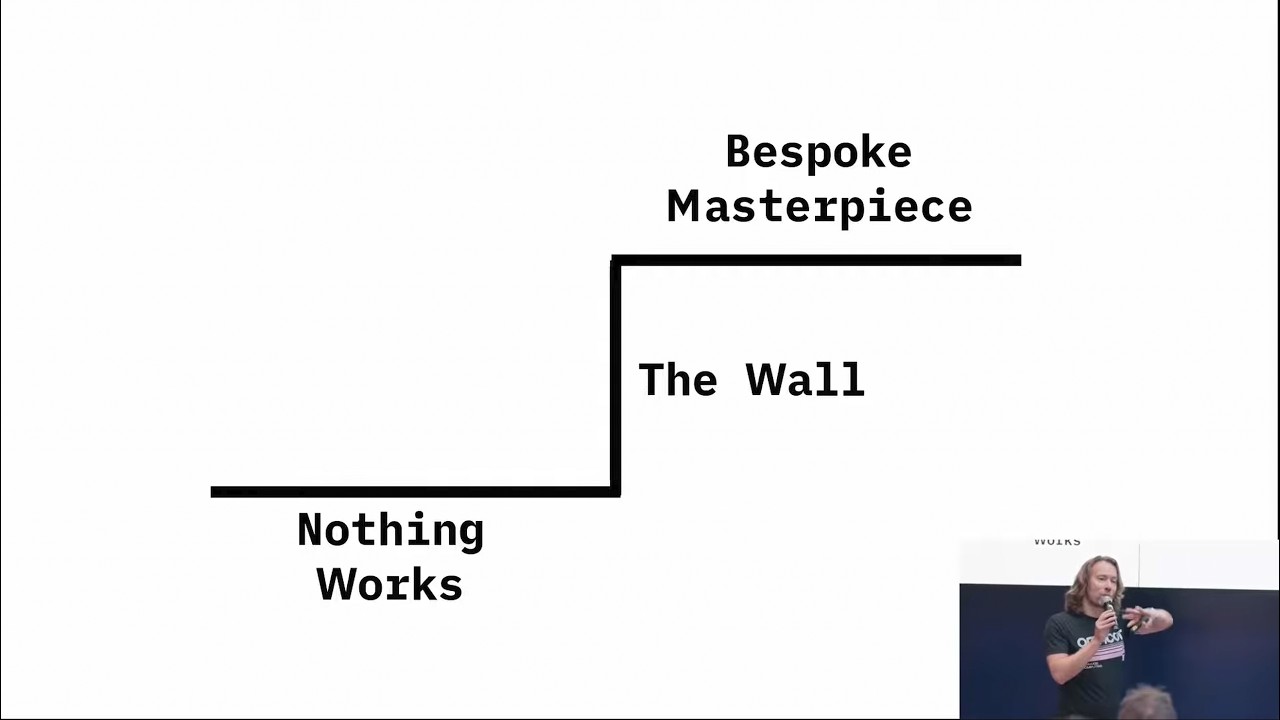


Get daily recaps from
The PrimeTime
AI-powered summaries delivered to your inbox. Save hours every week while staying fully informed.