This ONE Sentence Turns a Client’s “No” Into a “Yes”

Chapters18
When a client says they’re not interested, it may reflect timing or perceived value rather than a hard refusal. The chapter introduces a single sentence to keep the door open and explains how to distinguish real no from not-yet scenarios.
One simple, strategic line keeps conversations alive after a “no,” turning hesitation into a pathway for future engagement and potential clients.
Summary
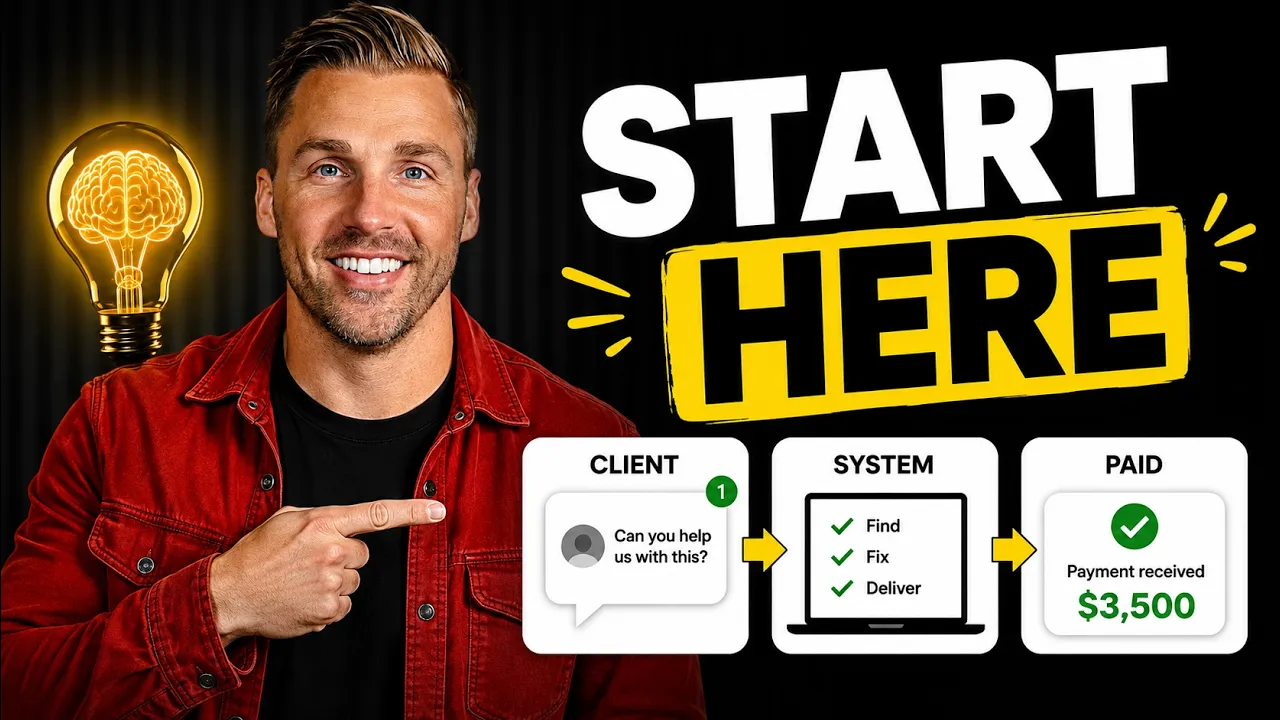
Adam Erhart breaks down a practical tactic for handling client hesitation without being pushy. He emphasizes that a client saying “we’re not interested” often means they’re comfortable or timing is off, not that the idea is dead. The pivotal moment is delivering a precise sentence designed to keep the door open, not to close the deal on the spot. Erhart explains the psychology behind the response, showing how small, low-pressure asks reduce resistance and invite comparison rather than confrontation. He then details a concrete follow-up process: a short two-minute Loom video with three parts (greeting and context, a screen-share audit of the client’s listing, and a concise fix), plus a measured four-step follow-up sequence that adds new value each time. Importantly, he notes that success hinges on upfront research tailored to the prospect’s situation, such as review counts or current site performance. He also covers alternative openers for timing-only objections and a practice-centered mindset shift from selling to helping. The video ends with a pitch for High Level, the software he uses to automate this outreach system, and an invitation to a free master class and extended trial. The takeaway is clear: when you don’t get an immediate yes, stay in the conversation with precise, low-pressure nudges that demonstrate value and let the prospect decide.
Key Takeaways
- Use the line: "Would it be okay if I showed you one thing we do differently just so you have something to compare it to? No pressure either way." to keep conversations alive after a hesitating response.
- Create a 2-minute Loom video following a three-part structure (15 seconds intro, screen-share audit with visible data, 30-second fix) to show value without a hard sell.
- Follow up with four value-added messages that each introduce something new (observation, information, or reminder) rather than generic nudges, timing out after four touches.
- Research first: tailor the message with specifics about the prospect’s situation (review counts, missed calls, outdated pages) to give the conversation weight.
- Offer a low-friction exit (“No pressure either way”) to lower guard and increase the likelihood of a response or a future re-engagement.
- The method works best when the prospect is busy or unsure, not when they have a hard no, and it scales across multiple outreach targets (10–20 businesses daily).
- Erhart promotes High Level as the platform to automate the system and provides a 30-day free trial with his agency OS and templates.
Who Is This For?
Essential viewing for consultants and agency owners who cold outreach to small businesses and want to convert hesitant prospects into ongoing conversations. Great for solo operators and teams scaling client acquisition without high-pressure pitches.
Notable Quotes
""What I'm going to show you is the one sentence that keeps the door open instead.""
—Sets up the central tactic of the video and frames the approach as keeping conversation alive.
""They're not saying no. They said in business owner language, 'I'm comfortable.'""
—Explains the underlying reason behind hesitation and reframes the objection.
""Would it be okay if I showed you one thing we do differently?""
—The exact opening line that keeps the conversation open and invites comparison.
""The video follows a three-part structure. Part one is 15 seconds... Part two is the most important part... Part three is 30 seconds.""
—Outlines the Loom video structure used to deliver value without a hard sell.
""Not a calendar link, not a pitch deck, just a short two-minute Loom video... and you're done.""
—Describes the practical deliverable that moves the conversation forward.
Questions This Video Answers
- how to respond when a client says not interested without losing the lead
- what to say after a prospect says we already have someone
- how to structure a low-pressure follow-up sequence for sales outreach
- what is the three-part Loom video structure for client audits
- how to use a simple sentence to keep conversations going after a hesitation from a prospect
Adam Erharthigh level CRMclient outreachLoom videothree-part video structurefour-step follow-up sequenceprospect research sales psychologyminimally invasive closingagency OS
Full Transcript
When a client says, "We're not interested," that doesn't always mean, "Leave me alone forever." Sometimes it just means they're comfortable with what they have, or the timing feels off, or they don't quite see the value yet. And that's a completely reasonable place for them to be. The problem is, most people respond to that moment in a way that ends the conversation right there. They either back off completely or they start explaining harder. And both of those usually make things worse. What I'm going to show you is the one sentence that keeps the door open instead.
Not because you should never take no for an answer. I mean, some people are genuinely not interested, and that's fine. But this is about knowing the difference between a real no and a not yet. I built three different seven-figure agencies, worked with over 1500 small businesses, run thousands of campaigns, and today I do it all as a oneperson agency with zero employees. And what changed more client conversations for me than anything else was one sentence. And I'll give it to you word for word in just a minute. But first, let me show you why the usual responses don't work.
Because once you see it, the right response becomes obvious. When a prospect pushes back, and by pushes back, I mean says anything like, "We're not interested." Or, "We already have someone," or, "Now's not a good time." Most people do one of two things. They either retreat instantly, like they just touched a hot stove, or they start explaining harder, which somehow makes the whole thing worse. And both of those responses come from misunderstanding what's actually happening. So, here's what's actually happening. Many of the times, a prospect says, "We're not interested." Picture this. A business owner is reading your message.
They've already got someone running their marketing. It's not amazing. It's not terrible either. It's just good enough to avoid changing anything. Now, your message shows up and immediately their brain goes, "Do I really want to go through the hassle of changing this? New agency, new conversations, risk something breaking." So, they say, "We're not interested." But notice what they didn't say. They didn't say, "This is a bad idea." They didn't say, "Go away and never contact me again." They didn't say no. They said in business owner language, "I'm comfortable." That's it. And comfortable is not rejection.
It's hesitation. And hesitation is something you can work with. This is why the sentence that works here isn't trying to close them. All it's trying to do is keep the conversation going. So, here's exactly what to do when a potential client says, "We're not interested," or, "We already have somebody working on this." You might want to write this down. That's great. Most of the businesses I work with already had someone, too. Would it be okay if I showed you one thing we do differently just so you have something to compare it to? No pressure either way.
Now, let me break down why every part of that sentence is doing exactly what it's supposed to do. saying, "That's great." Well, this shows that you're not arguing with them two seconds into the conversation, which already puts you ahead of most people out there. I mean, they were braced for a counter and you didn't give them one. Most of the businesses I work with already had someone, too. Well, this tells them that their situation is normal. And it also quietly implies that those businesses found a reason to change without having to say it directly. Their brain just fills in the gap on its own.
And people are much more likely to trust a conclusion that they came to themselves rather than one that you tried to force on them. Would it be okay if I showed you one thing we do differently? Well, here you're asking for a tiny yes and you're only asking them to look at one thing, not to evaluate your entire offer. That's a very small commitment to make just so you have something to compare it to. Well, here you've just given them a completely logical reason to keep talking. They're not agreeing to buy anything. They're just comparing.
And that's easy to say yes to as well. And in many cases, it can make them feel somewhat irresponsible if they didn't at least take a look at an alternative option. No pressure either way. Well, this one is all about handing them an easy way out, a easy exit. And here's what's interesting about that. When you give someone a genuine exit, it lets them know that they're in control and so their guard drops. And most of them don't take the exit. The whole sentence does one job. Keep the conversation alive without turning it into a sales performance.
Now, there's one more thing that determines whether this actually works. Because the sentence only lands if you've actually done the research first. If you're sending this to a business that you know nothing about, it sounds kind of hollow. The one thing we do differently needs to be specific to their situation, their review count, their missed call situation, their broken website, something like that. When it's specific, people pay attention. But when it's generic, it gets ignored. The sentence is the tool, but the 30 seconds of research you're going to do ahead of time, that's what gives it the weight.
Now, some people are still going to say no. That's fine. But for those that say yes, here's exactly what you send them. Not a calendar link, not a pitch deck, just a short two-minute Loom video, which is a free screen sharing software. You're going to show your screen, put your face in the corner, send them the link, and you're done. The video follows a three-part structure. Part one is 15 seconds. Say something like, "Hey, Mike, I came across your HVAC business on Google, and I noticed a few things I thought might be useful. Wanted to show you what I found." There's no sales pitch here.
You're not listing off your credentials. Just tell them what you found and that you want to show them some stuff. Part two is the most important part. Here, you're going to pull up their Google listing on your screen. You're going to point at their review count. You'll show their competitor with 10 times as many reviews. You can click through to their website and show them the missing booking page or the outdated contact form. Again, you're not telling them they have a problem. You're showing them on their business with their own website and their own name on the screen.
That's completely different from a sales pitch. That's evidence. That's research. That's a strategic audit with things that they need to be aware of. Part three is 30 seconds. Pick the biggest problem that you see and briefly explain how you'd fix it. For example, I would say something like, "If I were working with you, the first thing I'd set up is an automated review system." So, every time a job is completed, a review request goes out automatically. Most businesses I work with go from getting one or two reviews a month to 10 or 15. That alone usually starts moving them up in the Google results.
Then you wrap it up saying something like, "Anyway, just wanted to share what I found. If you want to talk about it, I'm around. If not, no worries at all." That's the whole video. Two to three minutes tops. And here's what it does that a sales call can't. It lets them watch on their own time. They can pause it. They can re-watch the part where you show their listing. And they can make a decision without any pressure in the room. A lot of people who would never get on a call with you will watch a two-minute video.
And a lot of those people will reply. Bit of a side note here, but I still make these sometimes even when I'm not actively looking for new clients. It's just good practice and keeps the skills sharp. And occasionally someone replies like 6 months later, ready to move forward. There's really no downside at all to leaving a useful video in someone's inbox. Now, what happens after you send it? Well, most people send the video and then they wait. But sitting around waiting is where deals go to die. So, you, my friend, need a follow-up sequence. Not an aggressive follow-up sequence, not just checking in 15 times in a row, but a follow-up sequence.
The key, though, is that each message needs to add something new. Could be a specific observation, a useful piece of information, or a low pressure reminder that you're still there. Here's the sequence I use. Message one is the Loom video that we've already covered, and that goes out the same day they say yes. Message two goes out the next day if there's no reply. And this is where most people go wrong. They just bump the original message by saying something like bump or my all-time least favorite, just checking in. Instead, like I said, you want to add something small and specific.
Try this. Hey, name forgot to mention. One of the fastest things I've seen work for business type is an automated review request that goes out after every job. I cover that in the video. happy to send it over if you want to take a look. That's not just a reminder. This gives them a reason to actually request and then watch the video, which is completely different from just checking in. Message three then goes out 2 days after that. And this one acknowledges the awkwardness directly. And I love this because I've never considered myself a salesperson like ever.
But I do really like helping people and I do really like making money and sales is the way you do that. So here's what this message looks like. Hey, name. I know cold messages are not exactly anyone's favorite part of the day. I just figured if there's a chance this is useful, it's worth one more note. Happy to send over what I found whenever works for you. That works because it names the awkward thing that everyone's thinking about. See, most people aren't annoyed at you specifically. I mean, they don't even know you, but they are tired of generic pitches.
So, acknowledging that puts you on their side. Message four is the last one, and it goes out 2 days after that. Here's how this looks. Hey, name, before I close your file, I just wanted to check one last time. If the timing's just been off, I'm still happy to share what I found. If not, no worries at all. and I won't reach out again. Just hit reply and let me know and I can send it right over. The before I close your file part creates a natural deadline without any pressure and a surprising number of replies come in on this one because people finally have a clear reason to respond instead of just letting it sit there.
After that though, move on. Four messages with no reply means this isn't the right person right now. Now, some people will tell you to keep going. send five, six, seven messages, but there's a point where follow-up stops being persistence and starts being the reason that they're never going to work with you. Four is enough to catch someone who's genuinely busy, and anything after that is just damaging your own reputation. Now, there's also a second version of the opening sentence for a slightly different situation. You see, sometimes a client won't say, "We're not interested." Instead, they'll say something like, "We're not really looking right now." Or, "Now's not a good time." That's about timing and not interest.
So, different thing needs a different response. So, here's what the response looks like to that situation. Totally understand. Timing matters. Would it be all right if I sent you just one quick thing that might be useful whenever the timing is right? Takes about 2 minutes to look at. Same logic as before. No pressure. A small ask keeps the door open. Another one that you're going to run into occasionally is, "We tried something like this before and it didn't work." It doesn't come up as often as the first two, but it's worth having a response ready because it's a trickier one to navigate and most people fumble it.
So, for that one, try this. That's actually really useful to know. A lot of the businesses I work with said the same thing before we started. Usually the issue is the system, not the idea. Would it be okay if I showed you exactly how we handle that just so you can see what's different? The most important part about this response is that you're not arguing with their experience. You're validating it and offering to show them something specific. So that's three situations and three responses, but the same underlying principles in all of them. But now here's why this actually matters.
If you're reaching out to somewhere between 10 and 20 businesses a day, call it a hundred a week, you might get three or four responses, maybe one or two of those are ready to move forward. The rest say no, we're not interested. And most people treat every single one of them as a closed door. But if even a few of those people who push back turn into, "Okay, send me what you found." You've just created more conversations and more potential clients without doing any more outreach over a week, a month, a year. That adds up to a significant number of conversations you would have just walked away from.
Some of those become clients. Some of them become referrals. All of them are opportunities that only exist because you didn't close the tab too early. Now, full disclosure, this doesn't work every time. Some people genuinely aren't interested. And that's completely fine. The goal here isn't to push or persuade or talk someone into something that's just not right for them. It's just to make sure that when someone says no or not interested, it's actually a no and not just that they were busy or tired or hadn't seen enough yet to say yes. If you want the full system behind getting these conversations started, the outreach messages, the follow-up sequences, the audit that gives you something specific to show them, it all runs inside a software called High Level, which is the same platform that I've used to build three different sevenfigure agencies and run everything today with zero employees.
I've set up an extended 30-day free trial through the link below. And when you start, I'll drop my entire agency OS into your account on day one. the outreach templates, the follow-up automations, the review workflows, all of this is pre-built and ready to install in one click into your account, plus thousands of dollars in bonuses, including scripts and frameworks and trainings and templates covering everything that you need to get clients and deliver results. And if you want to see the complete picture, how to find clients, what to offer them, and how to scale this into a real agency, I broke the whole thing down in a free master class that I've got linked up right here.
So tap or click that now. We'll see you in there just a
More from Adam Erhart



Get daily recaps from
Adam Erhart
AI-powered summaries delivered to your inbox. Save hours every week while staying fully informed.