How they use YouTube SEO to Get Millions of Views

Chapters8
Topic selection should start with what people actively search for, not viral potential. This leads to steady, compounding views over time.
Think beyond click-bait: use YouTube and Google SEO together, pick topics people actually search for, and optimize for AI-powered search to attract lasting, high-intent views.
Summary
Ahrefs delivers a counterintuitive blueprint to YouTube success: stop chasing viral, flashy tactics and instead win by aligning with both YouTube and Google search signals. Creator Daniel from Ahrefs explains that the saturation of click-baity formats makes results mediocre, so a handful of channels succeed with boring titles, simple thumbnails, and basic edits—focusing on topics people search for month after month. The key starting point is the search-first formula: identify topics with proven monthly search demand on both YouTube and Google using Ahrefs Site Explorer’s organic keywords report. Teacher’s Tech exemplifies this by sticking to standard thumbnails and non-hyped titles, yet racking up over a million subscribers largely through search-driven views. The video emphasizes that much of the traffic comes from Google search, with an eye-opening note that 456,000 views come from Google for a single channel’s entire catalog. The ranking checklist is the real differentiator: include the exact target keyword in the title, craft helpful video descriptions with the keyword near the top, and add timestamps to create chapters that appear in search results. A crucial optimization tip is to ensure the title and thumbnail work together without duplicating messaging—let the title carry the keyword and the thumbnail convey why watchable. Beyond that, the video urges creators to speak their target keywords and related terms aloud, aligning on-page content with what Google’s AI understands about video content. Finally, Ahrefs points to a transformative opportunity: AI search is reshaping ranking, with YouTube already appearing prominently in Google's AI overviews, so optimizing for AI-driven queries can unlock millions of free views over time. The overall message is practical and repeatable: pick proven topics, optimize thoroughly for YouTube and Google, and leverage AI search to scale traffic long-term.
Key Takeaways
- Use Ahrefs Site Explorer to identify YouTube keywords that rank in Google by filtering top three related keywords in the organic keywords report for youtube.com.
Who Is This For?
Creators and marketers who want steady, long-term growth on YouTube by leveraging search optimization rather than flashy virality. Essential for anyone trying to bootstrap a channel with predictable, high-intent views from Google and YouTube alike.
Notable Quotes
"Everyone on YouTube is using the same playbook. Click-baity titles, crazy thumbnails with shock faces, and an edit that's optimized for retention."
—Sets up the contrast between common tactics and the opposite approach being promoted.
"They're not fighting for the YouTube algorithm's attention, they're fighting for Google's."
—Key idea: optimize for Google search as a source of views.
"The titles contain the exact keyword people are searching for."
—Demonstrates the core of the ranking checklist in practice.
"Google's VP of Search, Liz Reid, said that Google can understand audio content and video content at a level we couldn't years ago."
—Justifies why speaking target keywords in the video helps rankings.
"Literally, 2 minutes of work for potentially thousands of passive views."
—Illustrates the value of adding chapters and timestamps.
Questions This Video Answers
- How can I find YouTube topics that also perform well on Google?
- What is the ranking checklist for YouTube SEO in 2024?
- How is AI changing YouTube search and how can creators leverage it?
- Why should thumbnails and titles complement rather than repeat each other?
- What role do video transcripts and spoken keywords play in ranking on YouTube?
YouTube SEOGoogle SEOAI searchBrand RadarAthlean-XTeacher’s Techranking checklistCTR and thumbnailskeyword researchtopic ideation
Full Transcript
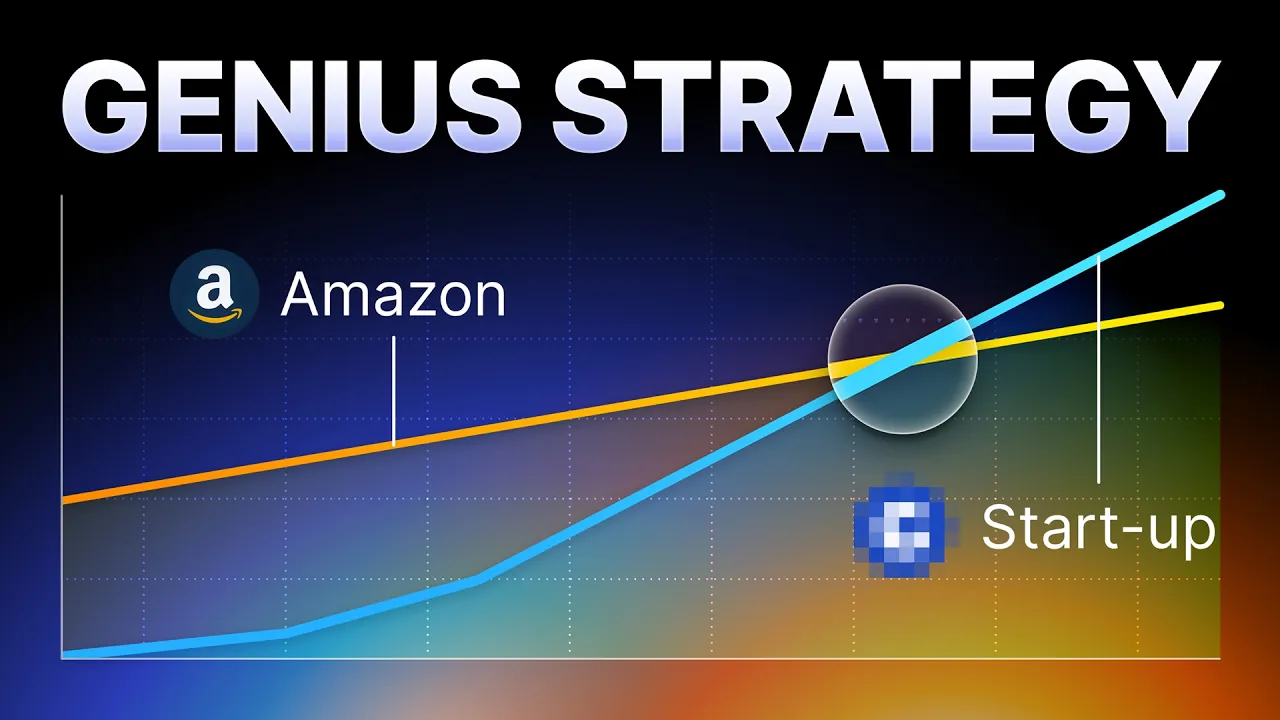
Everyone on YouTube is using the same playbook. Click-baity titles, crazy thumbnails with shock faces, and an edit that's optimized for retention. But when everyone does the same thing, it leads to saturation and mediocre results. But I found a handful of YouTube channels doing the exact opposite. Boring titles, simple thumbnails, and basic edits. And they're pulling in millions of free views every single month. And that's because they're not fighting for the YouTube algorithm's attention, they're fighting for Google's. And in this video, I'm going to break down exactly how these channels use YouTube SEO and Google SEO, so you can get these kinds of results for yourself.
And it all starts with step one, the search first formula. When choosing topics for YouTube, most people do one of two things. They either copy other successful YouTubers, or they follow their heart and make something they want to talk about. And sometimes these videos go viral. Huge spikes in browse and suggested views. Dopamine hit is unreal. But for most people, it's basically gambling because you just don't know if people will be interested in that topic, or if YouTube will spread that video. So, your results will be wildly inconsistent with zero predictability. Now, the channels I found rarely go for these Hail Mary videos.
Instead, [music] they choose topics people search for every month in both Google and YouTube, whether it's trending or not. And this leads to consistent views that compound over time. That's exactly what Teacher's Tech does. The thumbnails are pretty standard. The titles aren't click-baity at all, just tutorials on basic tech topics. [music] And despite having over a million subscribers, their new videos don't get hundreds of thousands of views in a few days [music] like typical large YouTube channels do. But here's the thing. His channel got over 16 million views this past month, and just look how consistent his views are month to month.
These aren't viral hits, they're search hits. Someone types a problem into YouTube or Google. This channel's video shows up, and it happens every single day. Now, most of his traffic comes from YouTube organic search, but I actually checked all 507 of his videos to see how much traffic he gets from Google. And according to Ahrefs Site Explorer, it's an estimated 456,000 views [music] from Google search alone. And just look at that views graph. See how consistently it ramps up? Beautiful. So, how do you find topics like this for your niche? Go to Ahrefs Site Explorer and enter www.youtube.com/watch.
Then go to the organic keywords report to see the keywords YouTube ranks for in Google. [music] Then just set a filter for top three keywords where keywords include words related to your niche. And now you've got a list of keywords people actually search on YouTube and [music] Google. But here's where most people mess things up. They pick a keyword, stuff it into the title and tags, and hope for the best. But that's not what separates the channels getting millions of search views from everyone else. The real difference is all about what goes into step two, the ranking checklist.
I want to show you a channel that's arguably the best at this. Over 4 million subscribers, [music] over 8 million monthly views, and millions of those are coming from Google search. But here's the wild part. When they publish a new video, it only gets a few thousand views in the first week. That's because this channel isn't built on virality, it's built around search. And nearly [music] every video follows the ranking checklist. Their titles contain the exact keyword people are searching for. Just look at their most popular videos. How to watch movies for free. How to get Microsoft Office for free.
Excel tutorial for beginners. Nothing clever, just exactly what people type into Google and YouTube. And that's the point. Their descriptions are actually summaries of what the video covers, and the target keyword is right [music] there in the first couple of lines. This matters because Google and YouTube often pull those lines directly into their search results. So, your description isn't just for an algorithm, it's your pitch to anyone who scrolls past your video. They add timestamps to every video, which YouTube turns into chapters. And those chapters can show up in Google for very specific queries, giving your video more visibility for free.
Literally, 2 minutes of work for potentially thousands of passive views. Now, those are the fundamentals, and most people stop there. But the channels pulling millions of views from search do two more things that make all the difference. First, they make the title and thumbnail work as a team. The easiest framework you can follow is to let the title handle the keyword, and let the thumbnail sell the click. They should complement each other, not repeat each other. For example, if your title says, "Open Cloud tutorial for beginners," your thumbnail doesn't need to say that, too. In Kevin's thumbnail, the text says, "Painless setup," because the setup is kind of painful.
The title tells you what the video is, and the thumbnail tells you why you should watch it. This matters for rankings because CTR is a ranking factor. [music] And even if it wasn't, if nobody clicks your videos, no one's going to watch it. Second, and this is the one most people completely ignore, they actually say their target keyword and related terms in their video. [music] And this comes straight from the horse's mouth. Google's VP of Search, Liz Reid, said that Google can understand audio content and video content at a level we couldn't years [music] ago.
Meaning, they don't just read the transcript, they understand what the video is actually about. YouTube is literally listening to what you say and watching what you show. So, if your video is about how to create pivot tables, say, "I'm going to show you how to create pivot tables." [music] Talk about rows, columns, filters, calculated fields. Everything someone needs to know to actually create one, and show those things on the screen as you talk about them. This isn't about keyword stuffing, it's just about [music] being thorough. And thoroughness is exactly what people and search engines want [music] for these types of queries.
Now, one more thing before we move on. Before you even start scripting, search your target keyword on YouTube and Google. Look at what's already ranking. If the top results are all step-by-step tutorials, make a step-by-step tutorial. If they're all listicals, make a listical. Don't reinvent the format because YouTube and Google know what people want when they search a query. Now, if you do these first two steps right, you can build a channel that gets consistent search traffic for years. But there's a third step that could be the single biggest opportunity on YouTube right now, because search isn't just Google and YouTube anymore, it's AI, the new search, which is changing everything.
Search has changed. More people are using AI tools to get answers to their questions. And even in traditional search, features like Google's AI overviews are taking clicks away from regular organic results. Now, while most websites are getting hurt by the shift, [music] YouTube is actually benefiting. According to our data, YouTube is the most cited domain in Google's AI overviews, and it's near the top for pretty much every other AI tool, too. Some creators are already seeing massive results from this, and most of them don't even realize why. Take Athlean-X, a fitness channel that's fully capitalizing on the new generation of search.
According to Ahrefs Brand Radar, their videos are appearing for over 6,000 fitness-related queries just in Google AI overviews, and over 15,000 in AI mode. And these queries add up to millions of searches happening every single month. So, if you're not thinking about AI search for your YouTube videos, you're leaving free views on the table. And as AI search continues to grow, that gap is only going to get bigger. So, how do you find topics to optimize for AI search? Just enter a popular brand or YouTube channel into Brand Radar, and go to the topics report.
Then set a filter where the domain mentioned is youtube.com. Now, you can see exactly which queries AI is pulling YouTube videos into, so go and create content around those topics. And as for how to actually rank there, it comes back to what we already covered. Pick the right keyword, make a thorough, well-optimized video, and be comprehensive without wasting people's time. Now, YouTube SEO traffic isn't exactly as exhilarating as going viral. There's no overnight explosion of views. There's no dopamine rush from watching your numbers spike. But it creates a different kind of excitement. The kind where you know that every view is a high-intent, free, passive, [music] and consistent view that won't fade over time.
So, go and do it, and I'll see you in the next one.
More from Ahrefs












Get daily recaps from
Ahrefs
AI-powered summaries delivered to your inbox. Save hours every week while staying fully informed.