Their $800K Business Runs on Google. One Move Might Kill It

Chapters7
The chapter introduces Alex and Andra, a software‑review site heavily reliant on Google traffic, and highlights red flags that could threaten their business if search updates hit their rankings.
A software review site scaled on Google traffic learns hard lessons about diversification and remains committed to lasting, user-first content.
Summary
Ahrefs’ video follows Alex and Andra, a husband-and-wife team whose software-review site rode Google traffic to over $800k/year. The host explains why relying on a single channel can be perilous, highlighting past updates that wiped out even giants like G2 and Capterra. The core drama centers on how the couple’s domain acquisition and smart redirects fueled a dramatic traffic surge, yet also raised questions about long-term resilience. The analysis underscores the distinction between helpful content and algorithm-driven volatility, and it reveals practical steps to reduce risk—diversifying traffic, expanding “best of” content, and exploring LinkedIn and Reddit as additional channels. The host advises cautious site redesigns, thorough redirects management, and ongoing content optimization to stay ahead of updates. Ultimately, the video champions authentic, user-focused software advice—and a willingness to adapt before a Google shake-up forces the decision. A recent uptick in traffic suggests momentum is on their side, but the lesson remains loud: build for longevity, not just search rankings.
Key Takeaways
- Relying on Google for 70% of traffic is risky; major updates can erase revenue overnight, as shown by industry benchmarks discussed in the video.
- Strategic domain acquisitions with high backlink authority can dramatically accelerate growth, as demonstrated by the Companies.tools redirect benefiting key pages.
- Top 6 pages driving 70% of organic traffic—loss of any one could devastate traffic; diversify with more 'best of' and category-specific content.
- Diversification beyond Google, including YouTube and LinkedIn, helps build a more resilient audience and revenue stream.
Who Is This For?
Essential viewing for SaaS-focused publishers, SEO managers, and founders who depend heavily on Google traffic and want practical strategies to diversify and future-proof their businesses.
Notable Quotes
"If your traffic is 70% in Google, we've seen what happens. We've seen people's businesses get wiped out before."
—Sets up the central risk of relying on Google-only traffic.
"The companies.domain came with a gold mine of backlinks."
—Explains how the domain acquisition accelerated growth.
"Redesigning a site that's already getting a ton of valuable traffic is risky. One wrong move… and your traffic can vanish overnight."
—Highlights migration/redesign risk and the redirects you must manage.
"Helpful content is in the eye of the beholder. And when the beholder is Google's algorithm, all bets are off."
—Emphasizes algorithmic volatility vs. content quality.
"Diversifying where your traffic comes from is key to building a strong and resilient online business."
—Wraps up the diversification strategy recommended by the host.
Questions This Video Answers
- How can I diversify website traffic beyond Google for a software review site?
- What should you consider before a site redesign or migration to minimize SEO risk?
- What is programmatic SEO and how can it impact growth for niche sites?
- Which channels beyond Google are most effective for B2B SaaS content marketing?
- How do backlinks from top sites affect domain authority and rankings in practice?
AhrefsGoogle algorithm updatesProgrammatic SEOBacklinksDomain acquisitionRedirect strategyInternal linkingSite redesign riskDiversification strategiesLinkedIn marketing
Full Transcript
If your traffic is 70% in Google, we've seen people's businesses get wiped out before. Do you really think that efficient app is immune to these kinds of updates? Um, I would personally be looking to exit. Meet Alex and Andra, a husband and wife team running a software review site built on the backbone of Google search traffic. But when Google's algorithm starts wiping competitors off the map, you've got to wonder, are they next? But they have a sneaky edge. Authenticity. So our tagline is no software reviews because we want to be straight up. We've been consulting for a decade.
We are just giving the same advice that we would give to a customer or friend in written and video format. How many visitors do you get from Google versus YouTube percentage- wise? We're around 70% like Google organic, maybe 30% YouTube. And how much money are you making from the site as a whole? When we were consulting, we were doing around 400k in revenue and we've managed to double that with the new business model. They're making over $800,000 a year, but what they don't know is their site might be at serious risk. I'm here to show them the red flags and how they can avoid the same mistakes that have wiped out countless businesses that have relied too heavily on Google.
Let's get into it. Obviously, traffic is very impressive, especially in this niche being very competitive. Your traffic value is even more impressive. So, traffic value is the amount of money it would cost to get this traffic if you're paying in Google Ads. I'm curious, what do you think is the main reason for the success of your site? Programmatic SEO. Programmatic SEO is when you use templates to automatically generate pages at scale. Efficient app has created a way to automatically create versus pages to compare various tools like help scout versus zendesk. My thought is that Google views us more properly versus just a blog.
We are actually putting a lot of intent around the structure of our site. But after digging into their site, it was clear to me that programmatic SEO wasn't the main reason behind their explosive growth in organic traffic. What was driving it? They had no idea. Your content is very well written. The effort that you put in your YouTube videos is apparent. But can I Yeah. Can I be honest? Like I feel like you know more than we do. So Okay. So in my opinion, much of the success comes down to a domain that you acquired.
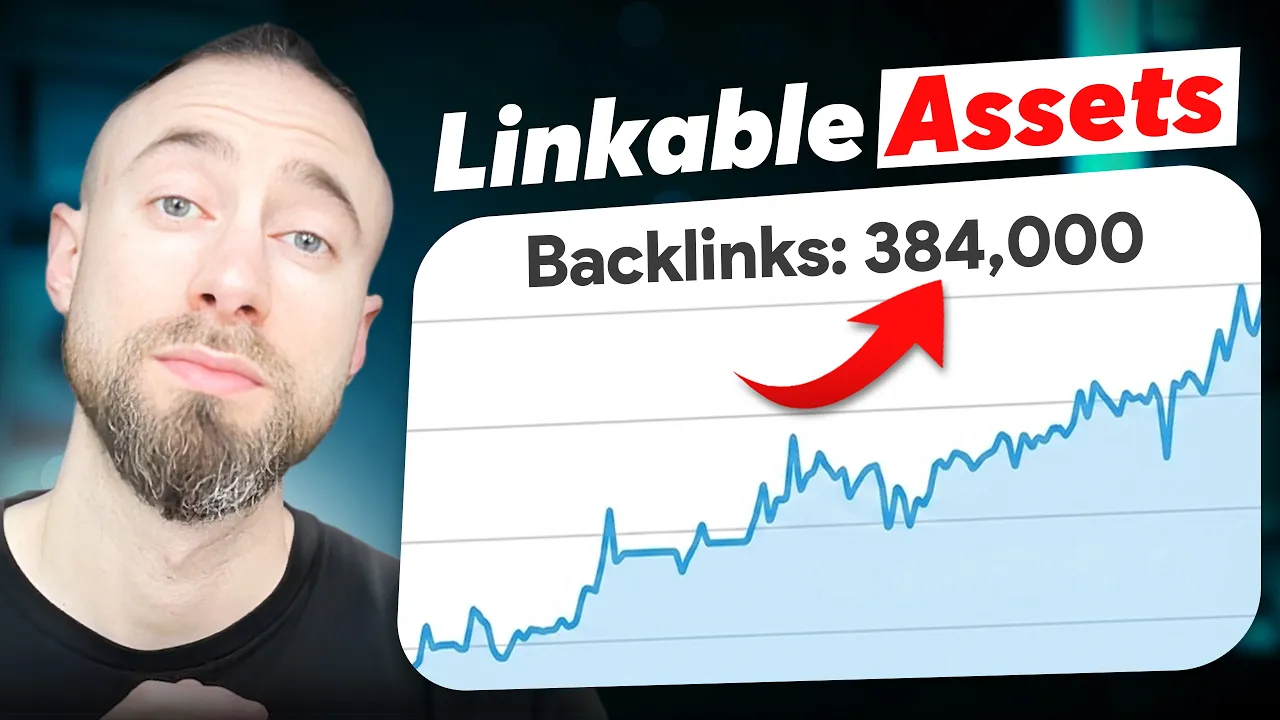
Okay. And you're now redirecting to your domain. Do you know which domain I'm talking about? Companies.tools. Companies. The companies. Domain came with a gold mine of backlinks. links from huge sites like Zapier, New York Post, Web Flow, and hundreds more. And in Google's eyes, backlinks are like votes of trust. In general, the more you have from credible sites, the higher you rank. But here's where it gets smart. Instead of just redirecting the old site to their homepage, Alex pointed those links straight into one of their most important pages, the stacks page, giving it a boost in authority.
From there, that boost spreads across the site through links to their other key pages. And for backlinks that were pointing to specific tool pages like this one, Alex redirected them straight to the matching page on a fish app. Sure, landing on a domain like this might involve some luck, but how they used it, that was pure strategy. And the price they paid honestly blew me away. I'm going to show you something cool. So, you made the redirects around here, right? according to Href's 2,830 monthly organics. And when you made that those redirects, you start getting exponential growth.
Like it looks like a meme stock, but it's not going down, right? You've done the site structure well, you ramped up your content. Uh the link profile basically gave what you had fuel. And so as soon as those redirects came in, it's just like and so like you know, Google saying things like, "Oh, links don't matter as much." Proof is in the pudding, right? As we see here, redirects made, bang, bang, bang, bang, bang, bang, bang. And all of a sudden, you get this kind of traffic. And because of things like your internal linking structure, having great links, there's a very clear correlation from the day that you made those redirects to when you started to get traffic growth.
Little bit of luck on that side, which is great. I would never reject luck. Well done. It was all in the plan. How much money were you making from the site before you acquired that domain? Maybe like seven grand a month. Six grand a month. How much did you buy it for? Three and a half. $3,500. Okay. You paid three and a half for it. You are making roughly seven. So you have effectively 10x your monthly revenue from that one acquisition. I want a $3,500 acquisition like that. But when I looked closer, I saw something I couldn't ignore.
Yeah, the growth was impressive, but it was starting to flatline. And anytime I see a curve like this, I get nervous because I've seen how the story ends. A small creator builds a life-changing site, traffic takes off, and then one Google update, poof, wipes it all out. And unless something changes, I was afraid Alex and Andra might be next on Google's hit list. So, I pulled up their top pages, and that's when things started to make sense, and not in a good way. Let's take a look at what you've done here. very impressive traffic growth up to here and now we're kind of stagnating right is we're kind of doing this thing and I don't know how much longer this is going to go on for.
I don't know if it's going to go up next or I don't know if it's going to go down next. No one knows. So I want to show you the top pages report and we see that your top pages for browsers and that that's 41% of your organic traffic. Yeah. Right. 41%. And even if this page doesn't drive direct revenue, it's still bringing people to your site. Some of those people will go and explore and 41% is a lot. Yeah. Yeah. And then we start seeing some of your commercial stuff here. So best scheduler 7.4%.
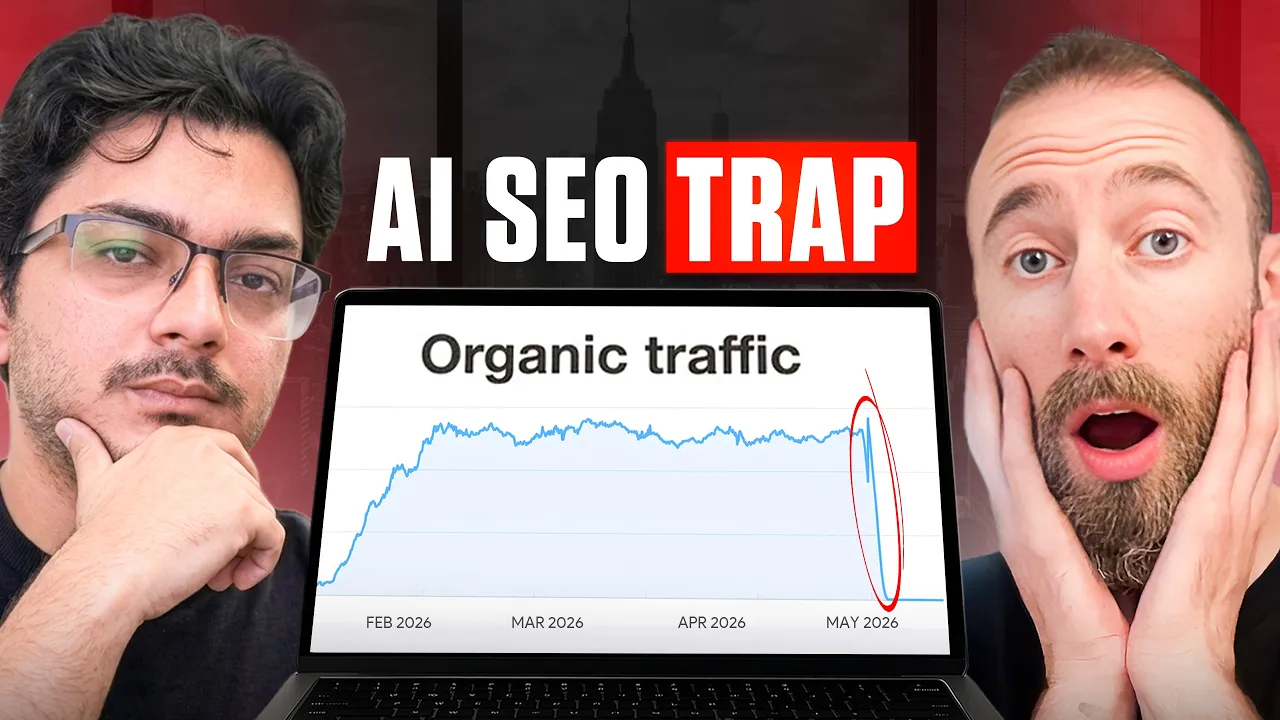
7.2%. Six basically 7% your top six pages account for roughly 70% of your organic traffic. So if you lose traffic to one of those pages, that's a lot of traffic that you're losing. Yeah. I'm going to show you something else. And I'm sure you've already seen these before. G2, one of the biggest sites, also had that parabolic type growth and they kind of had that stagnating growth up, down August 2023, nobody saw it coming. Huge mega site goes from 3.8 million monthly organics down to 592,000. They are back down to basically June 2019 levels. They just lost like 5 years in traffic from from where they grew to Capterra.
Same idea. They lost all their traffic too, but this time May 2024. Do you really think that efficient app is immune to these kinds of updates? If it can happen to the two largest players where we've seen large sites taking over SERs, are you guys immune? I don't think we've ever thought we're immune. Like I don't think we've ever thought that we figured out Google. I think we always just think about is this content helpful? Would I like to read it? And if we lose all of our traffic, I would start asking ourselves questions. And I've tried to reverse engineer it to to get back with creating more useful content.
But here's the thing. Helpful content is in the eye of the beholder. And when the beholder is Google's algorithm, all bets are off. We've seen it with the helpful content update. Sites doing everything right still wiped out overnight. Because the hard truth is, it's not just about good content. So, taking advice directly from their playbook, I told them exactly what I'd tell a friend if they asked for my advice. Given the circumstances of what's happened to the biggest players in the space, I would personally be looking to exit. If your traffic is 70% in Google, we've seen what happens.
We've seen people's businesses get wiped out before. Is there a number that you have in mind that would actually make you think about it? Yeah, I think we still feel like this is just the beginning. I like to think of decisions of like if I got to my deathbed, how would I feel about this? And if I sold just because I was fearful that we would lose everything, I would not feel congruent with that. This was the moment it clicked. Alex and Andra weren't just building a site to make money. They genuinely love software. They care about helping people pick the right tools.
And once I realized that, my mindset shifted. My goal wasn't just to help them survive a Google update. It was to help them build something that lasts, something that's algorithm proof. So, we started talking about how to take some risk off the table and how to futureproof their business. So, basically, when I'm looking at how to grow traffic, the first thing I do is I look at what's working for us now and how do we do more of that. So, if we look at your top pages report, your top pages, the ones sending you the most traffic are all your best of pages.
Best, best, best, best best. So, let's see here. Let's see how many of these best pages you have that are ranking in the top 100. So, 76 pages. And we can kind of see here in the traffic chart that this is the majority of your traffic, if not all of it. So, I would be looking to split this up even more. So, like let's assume that best browsers goes to zero for whatever reason. I would be looking at how do I get more best of listicles to rank like this. So how do we find topics like that?
Keyword research, right? The place that I would start is in chat GBT and I'd say give me a list of categories that a software review site might write about. So for example, CRM, SEO tool, project management, and you end up with this huge list of seed keywords is basically what they are. And so I'm going to just take this list and I'll take it to keywords explorer. And if we just kind of paste these in here and go to the matching terms report. So what we're going to do is we're going to narrow this down to just keywords that include the word best.
So we know that that's going to surface a bunch of listicles. So we're looking here. Have you created something on best AI chatbot? No. Apparently no competition. The whole point of this is that we want to take risk off. This all works for SEO. This all works for Google. But I would love to see you guys just continue to diversify beyond Google. So, we know that you're doing YouTube. We have a 7030 split roughly in traffic and revenue. But to go even further, so have you tried LinkedIn? Gosh, no, we have not. Not properly. So, my natural thought is you're selling B2B software.
Yeah, it's on LinkedIn. Most people in SEO focus on ranking in Google, but what if the traffic isn't going to individual websites at all? You see, a core fundamental of marketing is to show up where your audience already spends time. And what I was about to show them was a perfect example of that. So we have here these best of keywords of random softwares. So let's copy all of them. Let's go back to keywords explorer and paste all these in there. And I'm going to go to the traffic share by domains report. So it's going to show us which websites are eating up most of that traffic.
Reddit is by far number one. You'd think that it'd be some software review site. No, it's Reddit. Is taking 22% of the traffic for these keywords. Why not go and post on Reddit? A way that you can do that actually is just look here. So, of the however many keywords we put in, 49 of those, Reddit is ranking high. So, go here, click through, and go write your response here because we know that they're getting consistent traffic. Okay, that's fair, right? So, now you're working a little smarter. You're not going through Reddit and searching for CRM.
You know which pages are ranking that are getting consistent traffic from Google. It's a super simple way to get exposure. Diversifying where your traffic comes from is key to building a strong and resilient online business. The whole goal here is simple, take risk off the table. But then Alex and Andre dropped something on me that can be extremely risky if you don't do it right. Well, we are relaunching our site. We hired engineers to rebuild it from scratch. We'll be rewriting a lot and structuring it differently. And there's just a lot more scalability and giving people better answers.
Are are you redesigning or are you migrating? Same domain, same site structure. Now that you're getting traffic, you're you're kind of worried of what could happen. If we're trying to mitigate risk, I would be careful. Yeah. Okay. Like if you're just doing it just cuz you're tired of the look and whatever, I don't think that's a good reason to to do that. So like with more with migrations, the risk is higher. you you really want to pay attention to redirects in the case that you're moving to a different domain, but also internal linking. If you said that you're keeping the same pages, you want to make sure that you know which internal links are on those pages, which might be moving the needle.
And you can start making changes after you've done it successfully. If you're going to put this redesign in, I would crawl your site with a site audit and then recrawl it after you've made the changes. And then you can actually compare the changes in site audit. So you can see what's changed. Have internal links been removed from this page? Are we starting to see massive 404s or 500 error somewhere that we just can't see cuz we have too many pages? Redesigning a site that's already getting a ton of valuable traffic is risky. One wrong move, some bad redirects, an unintentional sitewide no index tag, lost internal links, or a hundred other things, and your traffic can vanish overnight.
I'm just interested if we're having this conversation a year from now. So much will have changed. A lot will change. That will be interesting to see where we're at in a year. Alex and Andra aren't just running a business. This is personal. They'd rather bet on themselves. Risk it all rather than sell out and walk away not knowing what could have been. All of this can go away tomorrow. And I think this is the unfortunate part of having an SEO business. Him bringing up that acquisition. the magnitude at which he speaks to it is it does actually hit a little bit cuz it feels like we actually have worked really hard it's like I don't feel like that is the thing that has resulted in us finding success in this so it is a weird dichotomy and I guess hearing that be said um and it feel and the hope is that that was not solely the reason I I can I can get behind it being a part of the reason.
You could hear it in Alex's voice because when you've spent years pouring everything into something, it's tough to hear that a domain acquisition and some redirects might be seen as the reason for your success. The backlings helped, but that's not the full story. The driving force behind the business was years of effort, obsession, and the relentless focus Alex and Andra have for helping people pick the right software. But the truth is, even with all that hard work, it can still go away tomorrow. That's the reality of building a business that relies on algorithms. No matter the platform, the rules can change overnight.
But what no update can take away is how much they care about what they've built. They're not in this just for traffic or even wealth. They're in it because they love software. They love helping people. And since this recording, it looks like their Google traffic is on the rise again. If you want to learn how to get free traffic to your site just like Alex and Andre did, check out our free SEO course for beginners right here on
More from Ahrefs






Get daily recaps from
Ahrefs
AI-powered summaries delivered to your inbox. Save hours every week while staying fully informed.